
Roseroot (Rhodiola rosea)
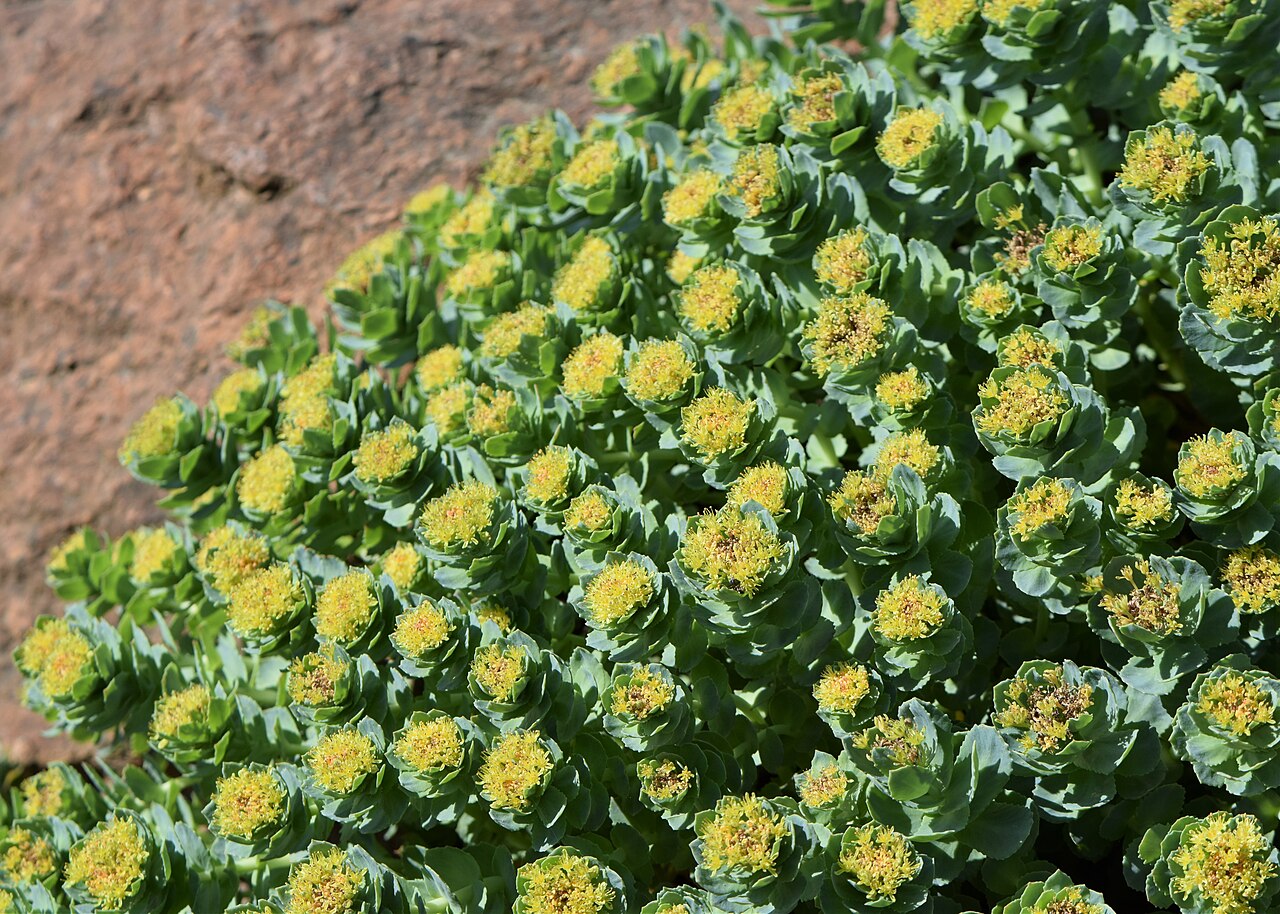
Rhodiola rosea, known as Roseroot and also sold as golden root or arctic root, is a succulent perennial in the stonecrop family (Crassulaceae). It forms clumps of thick, leafy stems 4 to 16 inches tall, packed with fleshy, blue-green leaves, and topped in early summer by flat clusters of small yellow (male) or reddish-green (female) flowers. The thick rootstock smells faintly of roses when it is cut, which gives the plant its name.
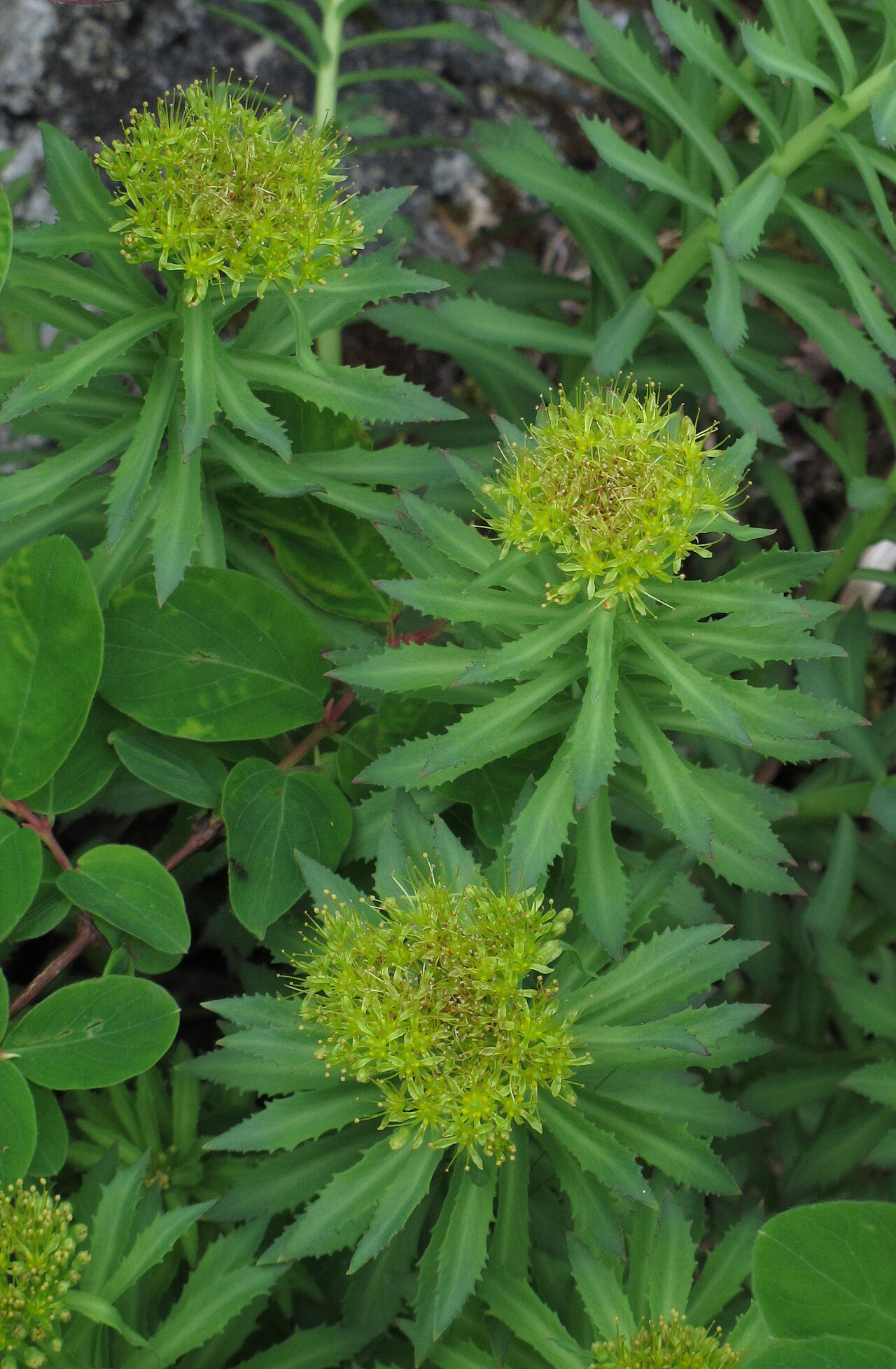
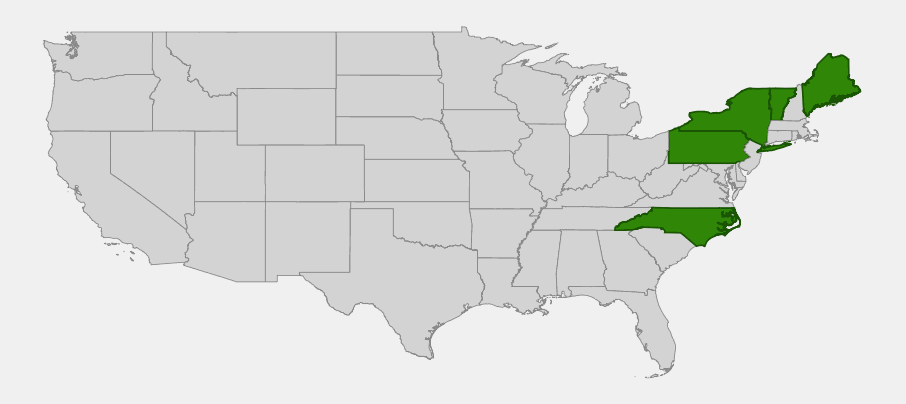
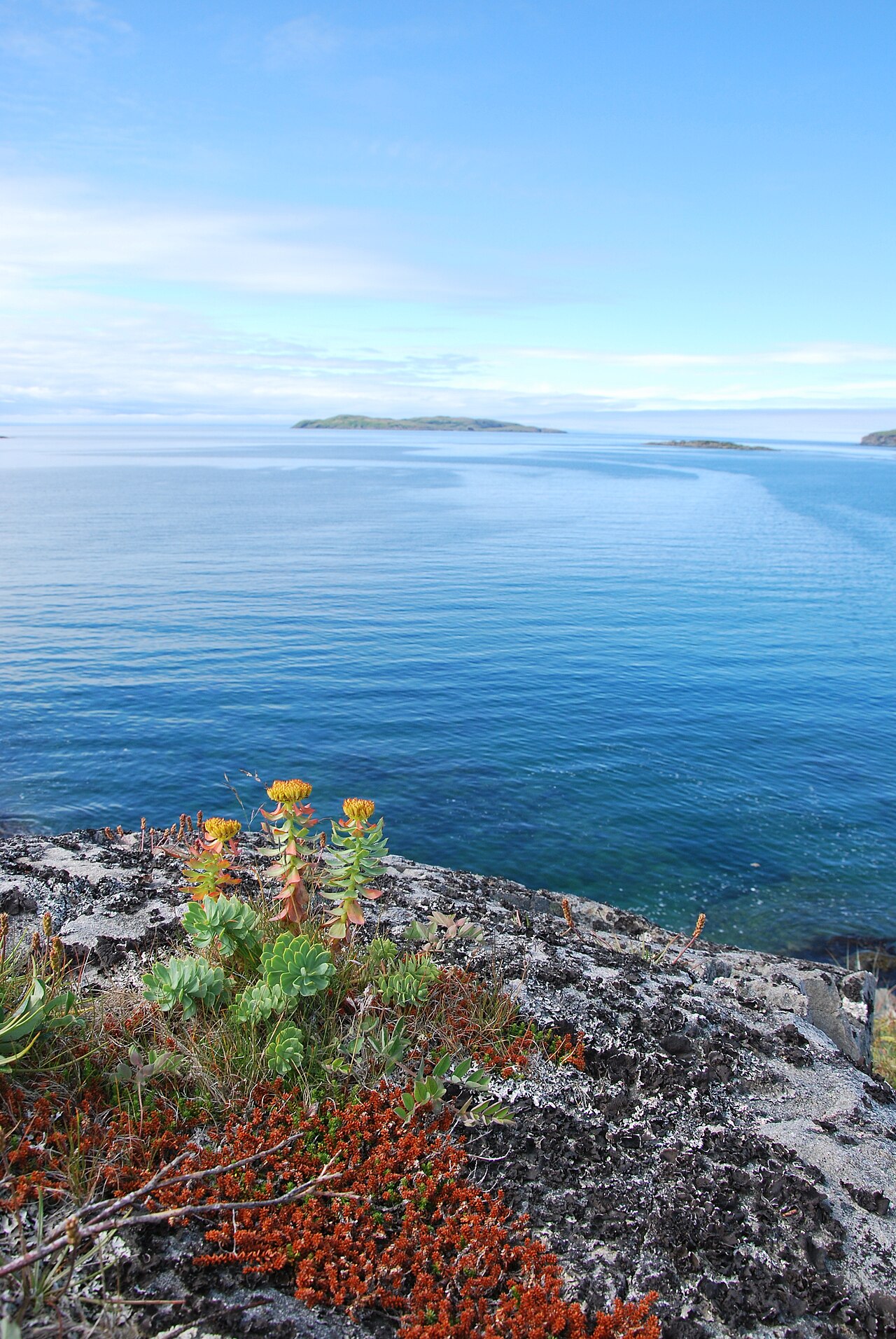
Roseroot is a plant of cold, exposed places around the Northern Hemisphere: arctic and alpine slopes, sea cliffs and rocky shores in northern Europe, Asia and northeastern North America. In the United States it reaches the southern edge of its range. USDA PLANTS lists it as native in Maine, Vermont, New York, Pennsylvania and North Carolina, where it grows on sea cliffs, mountain ledges and cold, wet cliffs in river gorges.
Roseroot is best known today as an herbal supplement marketed for stress and fatigue. This guide explains how to recognize the wild plant, where it grows in the eastern United States, how to grow it in a rock garden or trough, and what the evidence says about its use.
Identification
Look for a low clump of unbranched, leafy stems crowded with flat, fleshy, blue-green leaves, each stem ending in a dense, flat-topped cluster of tiny four-parted flowers.
Growth Habit
Roseroot grows from a thick, scaly, branched rootstock (caudex) that sits at or near the soil surface. Each spring it sends up a tuft of unbranched stems 4 to 16 inches tall. Old plants form dense clumps more than a foot across. The stems die back in fall, leaving the rootstock covered in brown scale leaves.
Leaves
The leaves are alternate, stalkless, flat, fleshy and blue-green to gray-green, about 1/2 to 1 1/2 inches long, oval to oblong, and usually have a few teeth near the tip. They overlap closely along the stem, so a stem looks like a small, leafy column. In fall they can turn yellow, orange or red.
Flowers
Plants are usually dioecious: a plant has either male or female flowers. The flowers are tiny, with four (sometimes five) narrow petals, packed into a dense, flat or domed cluster 1 to 2 1/2 inches across at the stem tip. Male flowers are yellow, with eight long stamens. Female flowers are greenish, often tinged red or purple. They bloom from late May to August, depending on latitude and elevation.
Fruit & Seeds
Each female flower develops four or five small, erect, reddish follicles about 1/4 inch long. By late summer the fruiting heads turn bright orange-red, which makes female plants very showy on cliffs. The follicles split open to release many tiny, winged seeds.
Look-alikes
Western roseroot (Rhodiola integrifolia) of Alaska and the western mountains has dark red to purple flowers. Queen’s crown (R. rhodantha) has pink flowers in an elongated cluster. Garden sedums such as Hylotelephium have larger, often pink flowers with five petals and grow from fibrous roots, not a thick, rose-scented rootstock.
Quick Facts
| Scientific Name | Rhodiola rosea (syn. Sedum rosea) |
| Family | Crassulaceae (stonecrop family) |
| Plant Type | Clump-forming succulent perennial |
| Mature Height | 4–16 in |
| Mature Spread | 8–18 in |
| Growth Rate | Slow |
| Sun Exposure | Full sun to part shade |
| Water Needs | Moderate; moist but very well drained |
| Soil Type | Gritty, rocky, well-drained soil; cliff crevices and gravel |
| Soil pH | Slightly acidic to alkaline (about 6.0–8.0) |
| Bloom Time | Late May–August |
| Flower Color | Yellow (male); greenish to red (female) |
| Fall Color | Yellow, orange and red; red seed heads |
| Fruit | Small, erect, orange-red follicles |
| Deer Resistant | Moderately |
| USDA Hardiness Zones | 1–7 |
Native Range
Roseroot has a circumpolar range across the cold regions of the Northern Hemisphere, including Iceland, Scandinavia, the British Isles, the Alps, the Carpathians, Siberia and central Asia, Greenland and eastern Canada from Nunavut and Quebec to the Maritime provinces and Newfoundland. Plants in Alaska and the western mountains are generally treated as a different species, western roseroot.
In the United States, USDA PLANTS lists Rhodiola rosea as native in Maine, Vermont, New York, Pennsylvania and North Carolina, and the Lady Bird Johnson Wildflower Center database also lists Tennessee. Go Botany (Native Plant Trust) describes it as native in eastern Maine and southern Vermont and introduced in Connecticut, so Connecticut is left off the map here. On the Maine coast it grows on sea cliffs, headlands and rocky shores. Farther south it survives only in small, isolated populations on cold, wet cliffs and ledges, relicts of the colder climate after the last ice age.
These southern populations are rare, and the plant is tracked by state natural heritage programs in several states. Never dig roseroot from the wild. Buy nursery-propagated plants or seed from reputable sources.
📋 Regional plant lists featuring Roseroot: New Hampshire, Maine & Vermont · New York, Pennsylvania & Northern New Jersey · Delaware, Southern New Jersey & Long Island · North & South Carolina
Growing & Care Guide
Roseroot is a cold-climate plant. It is easy in northern gardens with cool summers and good drainage, and challenging in hot, humid summers south of about zone 7.
Light
Full sun in cool climates. Where summers are warm, give it morning sun and afternoon shade. It needs bright light to stay compact; in too much shade the stems stretch and flop.
Soil & Water
Plant it in gritty, very well-drained soil: a rock garden, a raised bed with plenty of gravel, a stone wall pocket or a trough. Its wild sites are often wet from seepage or sea spray, but water drains away quickly. Keep the soil evenly moist during spring and early summer and avoid soggy soil, especially in winter, when wet crowns rot. Mature plants tolerate short dry spells thanks to their fleshy leaves and rootstock.
Planting Tips
Set the crown at the soil surface, never buried, and top-dress around it with gravel. Plant in spring. Grow a few plants if you want seed or the showy red fruiting heads, since you need both a male and a female plant. Good companions are other small cold-climate plants such as saxifrages, harebells, crowberry and dwarf junipers.
Pruning & Maintenance
Little care is needed. Cut back the old stems in fall or early spring. Divide crowded clumps every few years in early spring. Watch for slugs on new growth and for crown rot in wet, warm conditions.
Propagation
Sow seed on the surface of a gritty mix in fall or late winter and leave it outdoors or give it four to six weeks of cold, moist stratification; it needs light to germinate. Seedlings grow slowly and take two to four years to flower. Established clumps can be divided in early spring, making sure each piece has a bud and some root.
Landscape Uses
- Rock gardens: a tidy blue-green clump for gravel and crevices
- Troughs & containers: thrives in a gritty, freely draining mix
- Seaside gardens: tolerates wind and salt spray in cool coastal areas
- Green roofs: a candidate for cool-climate extensive roofs
- Herb gardens: a source of roots for people interested in its traditional uses
Wildlife & Ecological Value
On cold cliffs and arctic slopes, roseroot is one of the most conspicuous early-summer flowers, and its nectar is used by the insects that pollinate tundra plants.
For Pollinators
The flowers offer accessible nectar and pollen. They are visited mainly by flies, small bees, bumble bees and beetles, which carry pollen from male to female plants.
For Birds
Seed-eating birds may take the tiny seeds, but the plant is not an important bird food. Cliff-nesting seabirds sometimes nest among roseroot clumps on northern sea cliffs.
For Mammals
The succulent leaves are grazed by sheep, deer, reindeer and caribou in many parts of its range. In some regions it survives mainly on ledges out of reach of grazing animals.
Ecosystem Role
Roseroot is a long-lived perennial of thin, rocky soils, where it helps hold soil in crevices and adds organic matter. Its southern populations are glacial relicts, valuable for the genetic diversity they hold and as indicators of cold microclimates.
Cultural & Historical Uses
The name Rhodiola comes from the Greek rhodon, “rose,” for the rose scent of the cut root. It has been used in folk medicine for centuries in Scandinavia, Russia and other cold regions. The Vikings reportedly used it to boost strength and endurance, and Alaska Native peoples and Inuit ate the young leaves and stems.
Roseroot is now one of the most popular herbal supplements in the world, marketed as an “adaptogen” for stress, fatigue and mental performance. A number of small clinical trials suggest it may help some people with stress-related fatigue, but the evidence is limited and inconsistent, and products vary widely in quality. Talk to a doctor before using it, especially if you take other medications or are pregnant.
Heavy demand has led to overharvesting of wild roseroot in parts of Siberia and central Asia, and it is protected in several countries. Commercial supplies now increasingly come from cultivated plants, grown in places such as Scandinavia and Canada.
Frequently Asked Questions
Is roseroot native to the United States?
Yes. USDA PLANTS lists it as native in Maine, Vermont, New York, Pennsylvania and North Carolina. It is rare in most of these states and grows mainly on cliffs and rocky coasts.
Why is it called roseroot?
The thick rootstock smells like roses when it is cut or dried. The genus name Rhodiola also means “little rose.”
Is roseroot the same as Rhodiola supplements?
Yes. Most Rhodiola supplements are made from the roots of Rhodiola rosea. Buy cultivated plants or seed if you want to grow your own; never dig it from the wild.
Can I grow roseroot in my garden?
Yes, in cool climates (roughly zones 1–7) in full sun to part shade and gritty, well-drained soil. It struggles in hot, humid summers.
Is roseroot a sedum?
It is in the same family, the stonecrops (Crassulaceae), and was once called Sedum rosea, but botanists now place it in the separate genus Rhodiola.

Looking for a nursery that carries Roseroot?
Browse our native plant nursery directory: Maine · New York & North Carolina · Pennsylvania & Vermont

