
Hart’s-tongue Fern (Asplenium scolopendrium)
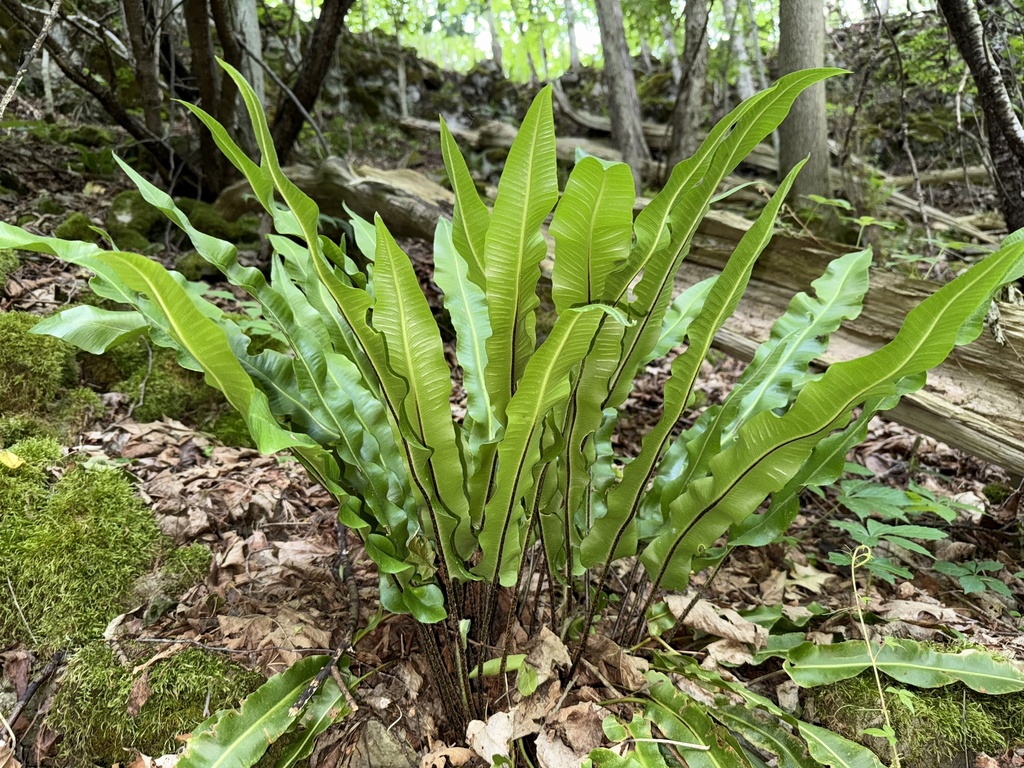
Asplenium scolopendrium, the Hart’s-tongue Fern, is an evergreen fern with glossy, strap-shaped fronds that are not divided into leaflets at all. Each frond is a single, smooth-edged blade with a heart-shaped base, and it looks more like the leaf of a lily or a tongue than a typical lacy fern. The name compares the frond to the tongue of a hart, an old word for a male red deer. In older books it is listed as Phyllitis scolopendrium.
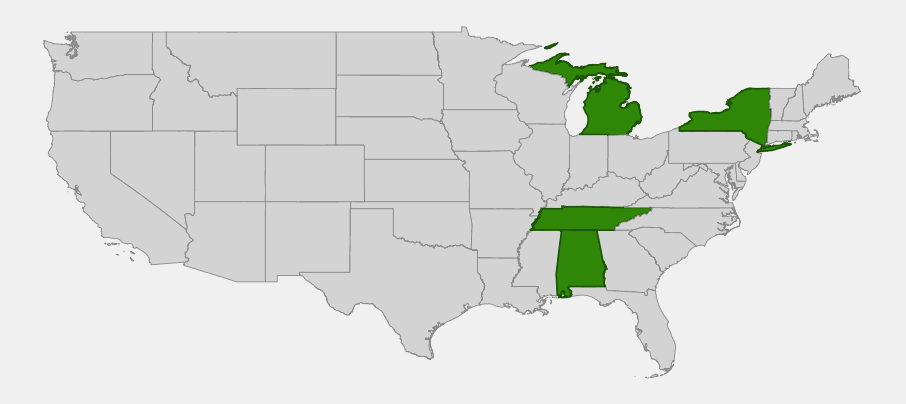
The species grows in Europe, western Asia and North Africa as well as North America, but the native American plant is a separate, much rarer variety, American hart’s-tongue fern (Asplenium scolopendrium var. americanum). It is one of the rarest ferns in the United States. It grows on moss-covered limestone in cool, humid, shady woods and sinkholes in central New York and Michigan’s eastern Upper Peninsula, with tiny relict populations in caves and sinkholes in Alabama and Tennessee. Most of the world’s American plants grow in southern Ontario. The U.S. Fish and Wildlife Service listed the variety as threatened in 1989.
The hart’s-tongue ferns sold in garden centers are almost always the European plant and its frilly cultivars, which are easy, handsome ferns for shady gardens on limy soil. The native American variety is protected and is not in the nursery trade. Never dig it or collect it from the wild: illegal collecting has already wiped out plants at some southern sites. This page covers how to recognize the native fern, where it grows, and how to grow hart’s-tongue fern responsibly.
Identification
Look for a clump of evergreen, undivided, tongue-shaped fronds with a heart-shaped base, growing on mossy limestone in deep shade. The rows of spore cases on the back of the frond confirm it.
Growth Habit
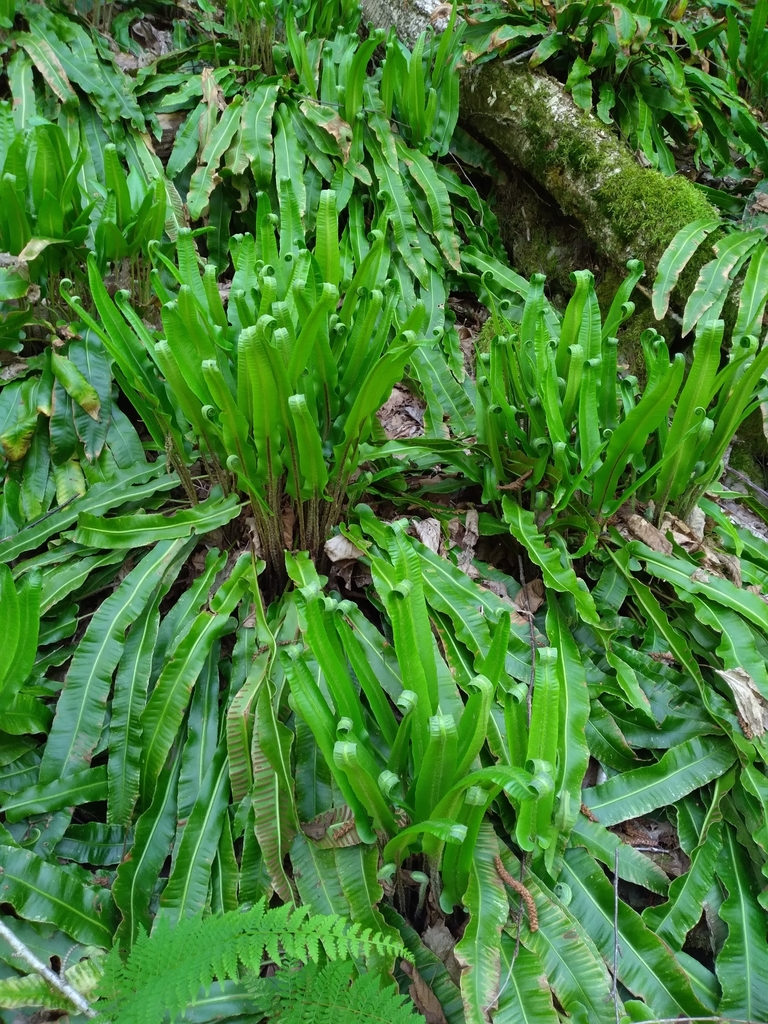
Hart’s-tongue fern grows from a short, upright rhizome and forms a loose rosette or arching clump of fronds. Plants of the American variety usually have from a few to a few dozen fronds and spread slowly, so that large colonies have often been building up for a very long time. The fronds stay green through the winter and are replaced gradually as new ones unroll in spring.
Fronds
The fronds of the American variety are usually 4 to 16 inches long and about 1 to 2 inches wide, on a short, scaly stalk. The blade is simple and undivided, strap-shaped to narrowly lance-shaped, with a smooth or slightly wavy edge, a pointed or blunt tip and a heart-shaped (cordate) base with two rounded lobes. They are leathery, bright to dark glossy green and have a prominent midrib. European garden plants are usually larger, with fronds up to about 2 feet long.
Sori & Spores
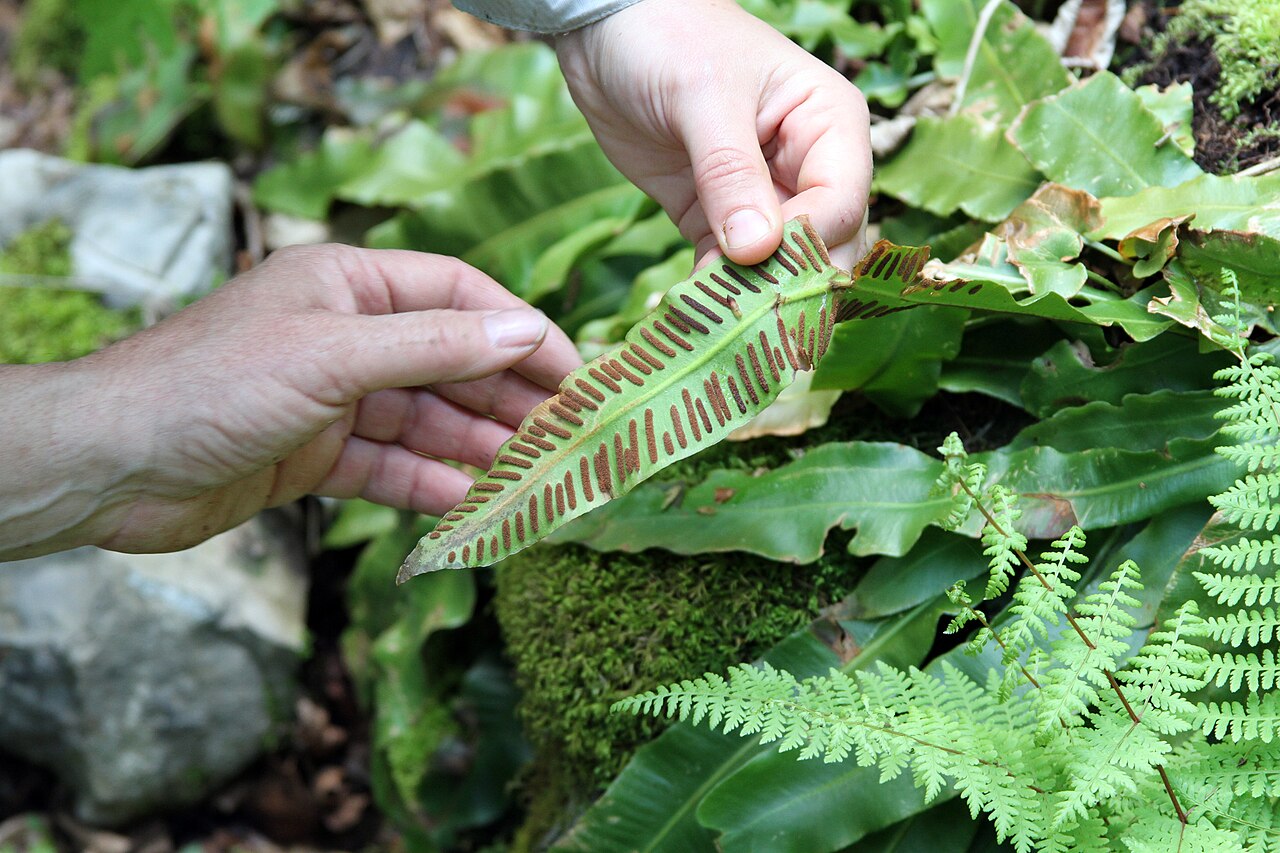
The spore cases (sori) are the best feature to check. They are long, narrow lines on the underside of the frond, set in pairs that face each other and slant out from the midrib at a regular angle, like the bars of a herringbone or the legs of a centipede. Each pair is covered at first by two thin flaps (indusia) that open along the center line. The sori are pale at first and turn brown as the spores ripen, mainly in summer and fall.
Varieties
American hart’s-tongue fern is a tetraploid (it has four sets of chromosomes), while the European plant is a diploid. The two look very similar; the American plants tend to have smaller, narrower fronds and fewer stalk scales. Because the differences are slight, the variety is usually identified by where it grows. Some botanists treat it as a subspecies. Plants in the mountains of southern Mexico and Hispaniola are related and have been named var. lindenii.
Look-alikes
No other native fern in eastern North America has an undivided, strap-shaped frond with a heart-shaped base. Its close relative walking fern also has undivided fronds and grows on mossy limestone, but its fronds are narrower, taper to a long, whip-like tip that roots where it touches the ground, and have short, scattered sori. Young leaves of wild ginger, trout lily or bellwort can look similar at a glance on the forest floor, but none of them have spore lines on the back.
Quick Facts
| Scientific Name | Asplenium scolopendrium (native U.S. plants: var. americanum) |
| Family | Aspleniaceae (spleenwort family) |
| Plant Type | Evergreen fern with undivided fronds |
| Mature Height | 4–16 in (European garden forms to 2 ft) |
| Mature Spread | 8–24 in |
| Growth Rate | Slow |
| Sun Exposure | Part shade to full shade |
| Water Needs | Medium; steady moisture and high humidity |
| Soil Type | Humus-rich, well-drained soil over limestone or dolomite |
| Soil pH | Neutral to alkaline (about 7.0–8.0) |
| Bloom Time | None (fern); spores ripen summer–fall |
| Flower Color | None |
| Fall Color | Evergreen |
| Fruit | None; spores in paired, linear sori |
| Deer Resistant | Generally |
| USDA Hardiness Zones | 4–8 |
Native Range
USDA PLANTS lists hart’s-tongue fern as native in Alabama, Michigan, New York and Tennessee, as well as Ontario in Canada. USDA also lists records from New Jersey and Maryland, but those are not native populations: the New Jersey plants are a remnant of a 1936 effort to protect the fern by planting material from New York, and the Maryland record is a naturalized European plant. They are left off the map. European plants have also escaped from gardens in a few places, including the Pacific Northwest.
The largest U.S. populations are in central New York, mainly in Onondaga and Madison counties, where the fern grows along the Onondaga Limestone escarpment, in plunge basins, ravines and sinkholes such as those at Clark Reservation State Park. In Michigan it grows on the Niagara Escarpment in the eastern Upper Peninsula. Far to the south, small relict populations survive in a few limestone caves and sinkholes in northern Alabama, including Fern Cave National Wildlife Refuge, and in a single county of southern Tennessee. These southern outposts are outlying remnants from a cooler past, and they are at real risk of being lost.
Everywhere it grows, the American variety needs the same narrow conditions: moss-covered limestone or dolomite boulders and ledges, deep shade under hardwoods or hemlock and northern white cedar, cool temperatures and constant high humidity from seeping water, waterfalls, caves or sinkholes. These limits explain why it is so rare.
📋 Regional plant lists featuring Hart’s-tongue Fern: Alabama, Georgia & Mississippi · Michigan, Wisconsin & Eastern Minnesota · New York, Pennsylvania & Northern New Jersey · Delaware, Southern New Jersey & Long Island · Kentucky & Tennessee
Can You Grow It?
Yes, but grow the right plant. The American variety is federally threatened, is not sold, and must never be dug from the wild or collected from protected sites. Hart’s-tongue ferns in garden centers are the European form, which grows well in shady gardens and needs the same care described here. If you want to support the native fern, visit it on public trails, stay on the paths, and support the land trusts and agencies that protect its habitat.
Light
Part to full shade. The fronds scorch and yellow in afternoon sun. A spot on the north side of a building, under deciduous trees or in a shady rock garden is ideal.
Soil & Water
Give it humus-rich, well-drained soil that stays evenly moist, ideally with limestone gravel, crushed limestone or old mortar mixed in. It is one of the few ferns that prefer neutral to alkaline soil. Water during dry spells; it does not tolerate drought or waterlogged soil. Like the wild plants, garden plants do best where the air stays humid.
Planting Tips
Plant nursery-grown plants in spring or early fall, with the crown at soil level, in a crevice between rocks, on a shady slope or at the base of a wall. Space plants about a foot apart. Its glossy, solid fronds contrast well with lacy ferns and fine-textured woodland plants.
Pruning & Maintenance
The fronds are evergreen. Cut off any tattered or winter-burned fronds in early spring before the new ones unroll. Mulch with leaf litter to keep the roots cool and moist. Watch for slugs, which sometimes chew the fronds.
Propagation
Hart’s-tongue fern can be grown from spores sown on sterile, moist, limy compost under cover, and nurseries also propagate it by dividing older clumps and by tissue culture. Research programs have grown the American variety from spores and tissue culture for reintroduction, but this is conservation work under permit. Never collect spores, fronds or plants from wild populations of the American variety.
Garden Uses
- Shade gardens: a bold, glossy, evergreen accent among lacy ferns
- Rock gardens: fits shady limestone crevices and stone walls
- Winter interest: fronds stay green through most of the winter
- Containers: European forms grow well in shaded pots and troughs
- Education: a striking example of a rare, protected native fern
Wildlife & Ecological Value
As a fern, hart’s-tongue has no flowers or fruit, but its evergreen fronds add winter cover to cool limestone habitats that are home to many rare plants, mosses and invertebrates.
For Pollinators
Ferns reproduce by spores and do not need pollinators. Its value is as part of a rich, moist, shaded habitat used by many small insects, snails and spiders.
For Birds
Birds do not eat the fronds, but the mossy, shaded ravines and sinkholes where it grows are used by forest birds such as winter wrens and thrushes.
For Mammals
The leathery fronds are seldom browsed by deer, although small mammals may shelter among the rocks and fronds.
Ecosystem Role
It is an indicator of a rare habitat type: cool, humid, moss-covered limestone in deep shade. Where it survives, the habitat is often also home to other uncommon ferns, mosses and liverworts. Its rarity reflects how few places have those conditions, and how easily logging, quarrying, trampling and changes in shade or humidity can destroy them.
Cultural & Historical Uses
The species name scolopendrium comes from scolopendra, the Greek and Latin word for a centipede. The paired, slanting lines of spore cases on the back of the frond look like a centipede’s many legs. The common name compares the whole frond to a deer’s tongue.
The European plant has been grown in gardens for centuries. Victorian fern collectors in Britain collected and named hundreds of frilled, crested and forked forms, and some of them, such as the ‘Crispum’ and ‘Undulatum’ groups, are still sold today.
The American hart’s-tongue fern was listed as threatened under the U.S. Endangered Species Act in 1989, and conservationists have studied how to grow it from spores and tissue culture and return it to its old sites. In Alabama, one of its last sites lies within Fern Cave National Wildlife Refuge, where public access to the cave is not allowed.
Frequently Asked Questions
Is hart’s-tongue fern native to the United States?
Yes. A rare native variety, American hart’s-tongue fern (var. americanum), grows wild in New York, Michigan, Alabama and Tennessee. The hart’s-tongue ferns sold in nurseries are the European form.
Is American hart’s-tongue fern endangered?
It is listed as threatened under the U.S. Endangered Species Act. It is protected, so never dig, cut or collect it from the wild.
Where can I see American hart’s-tongue fern?
Central New York has the most accessible U.S. populations, for example at Clark Reservation State Park near Syracuse. Stay on trails and do not climb the mossy rocks where it grows.
Can I grow hart’s-tongue fern in my garden?
Yes, with nursery-grown European plants. Give them shade, steady moisture and humus-rich soil with some lime, in USDA zones 5 to 8 or so.
Why are the fronds not divided like other ferns?
Hart’s-tongue fern simply has an undivided blade, which is rare among ferns. The rows of spore cases on the back show that it is a true fern, related to the spleenworts.


