
Mistletoe Cactus (Rhipsalis baccifera)
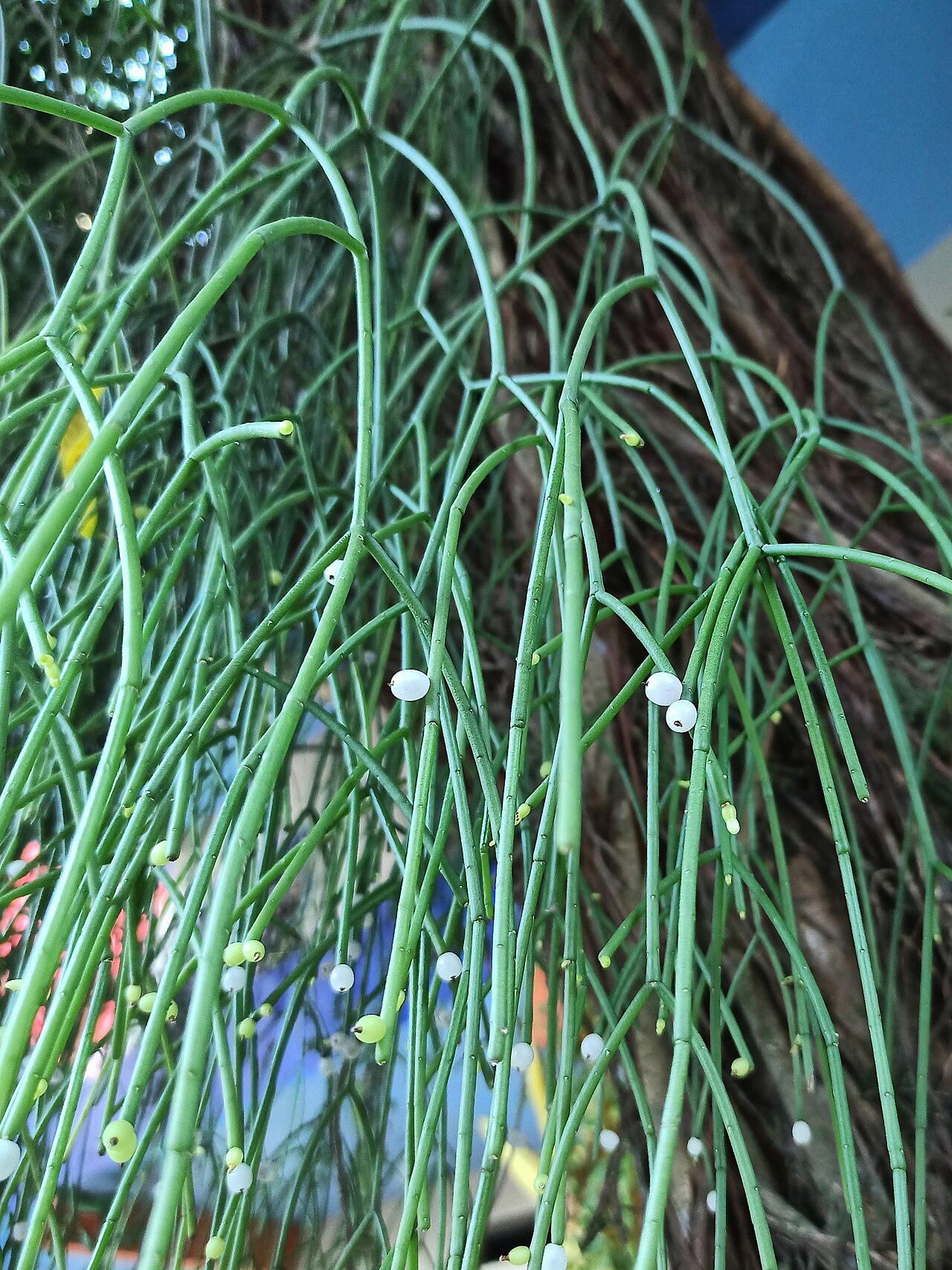
Rhipsalis baccifera, the Mistletoe Cactus, is a spineless, epiphytic cactus that grows on tree branches and rocks rather than in the ground. Its slender, pencil-thin green stems branch and hang in long curtains, often 3 to 6 feet long, and in winter and spring it bears tiny creamy flowers followed by round, pearly white berries that look like mistletoe fruits.
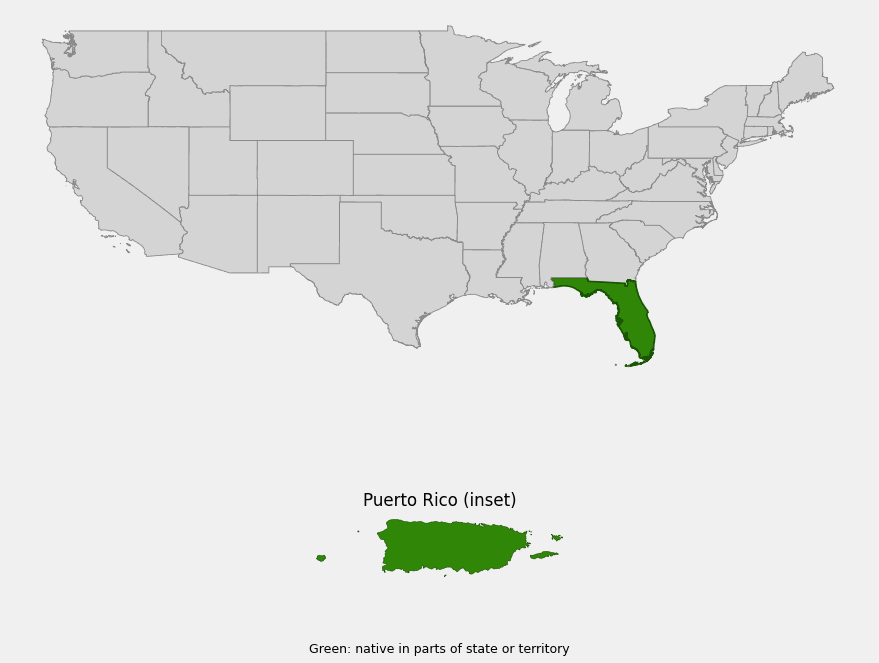
It is native to Florida and Puerto Rico in the United States, and to the West Indies, Mexico, and Central and South America. It is also the only cactus that grows wild outside the Americas, in tropical Africa, Madagascar and Sri Lanka. In Florida it is very rare, known from a few hardwood hammocks, and it is listed as endangered by the state.
Mistletoe cactus is also a popular, easy houseplant for hanging baskets. Unlike desert cacti, it comes from humid forests, so it likes bright indirect light, regular watering and an airy, bark-based potting mix. Outdoors it can be grown only in frost-free gardens, roughly USDA zones 10 to 12.
Identification
Look for a hanging, spineless cactus with clusters of smooth, cylindrical green stems about the thickness of a pencil lead to a pencil, tiny whitish flowers along the stems, and round white berries.
Growth Habit
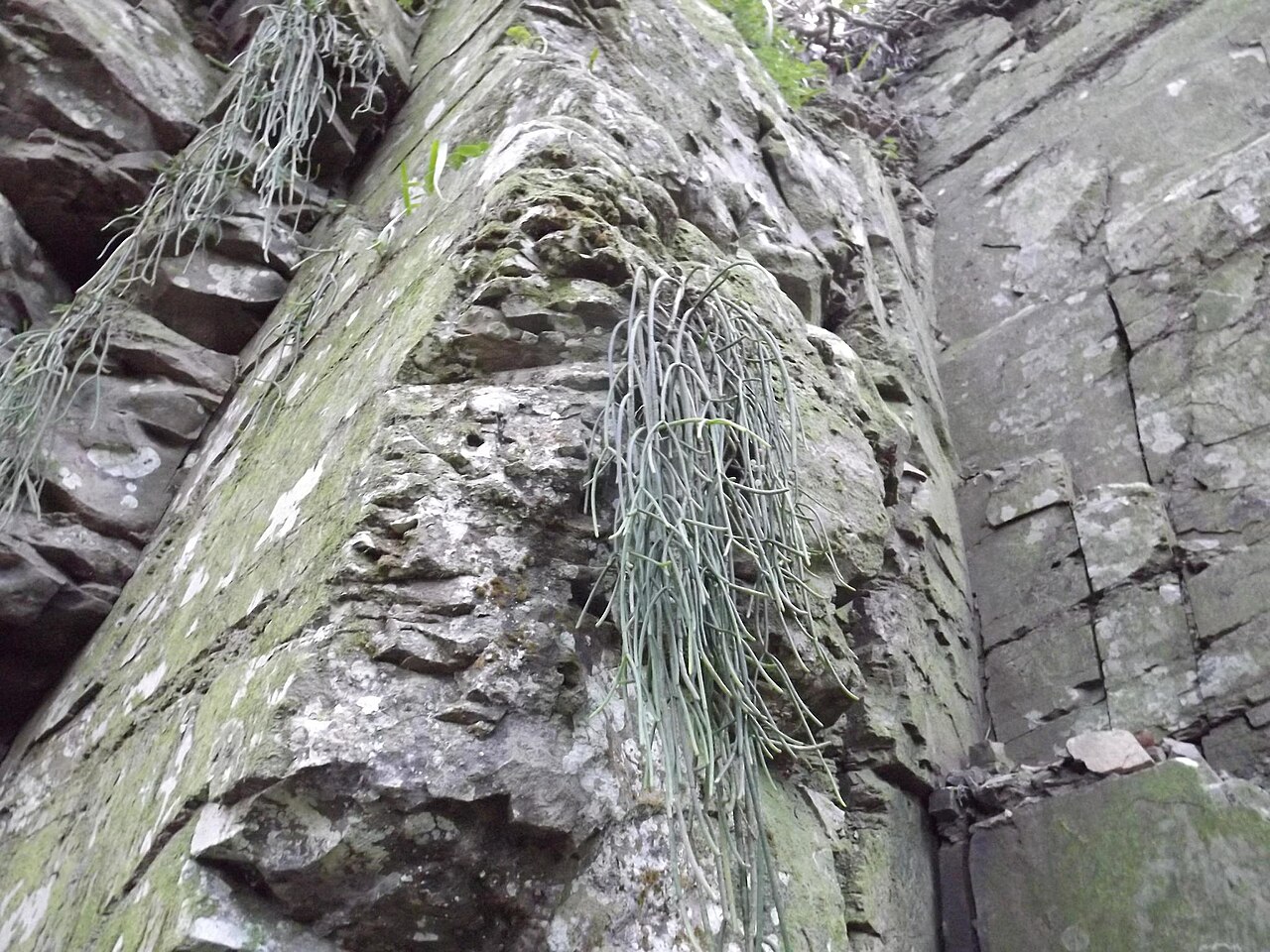
Mistletoe cactus is an epiphyte: it grows perched on the trunks and branches of trees, and sometimes on rocks, taking water and nutrients from rain, humidity and debris rather than from the host. It is not a parasite and does not harm the tree. Young stems may grow upright, but they soon arch and hang down in dense clumps. Stems branch at their tips in small whorls or pairs, so the plant builds up a mop of hanging strands.
Stems
The stems are smooth, round in cross-section, bright to yellowish-green, and about 1/8 to 1/4 inch thick. They have no leaves and no spines. Tiny areoles (the cactus structures that bear spines in other species) are spaced along them, sometimes with a few small bristles on young growth. The stems carry out photosynthesis instead of leaves.
Flowers
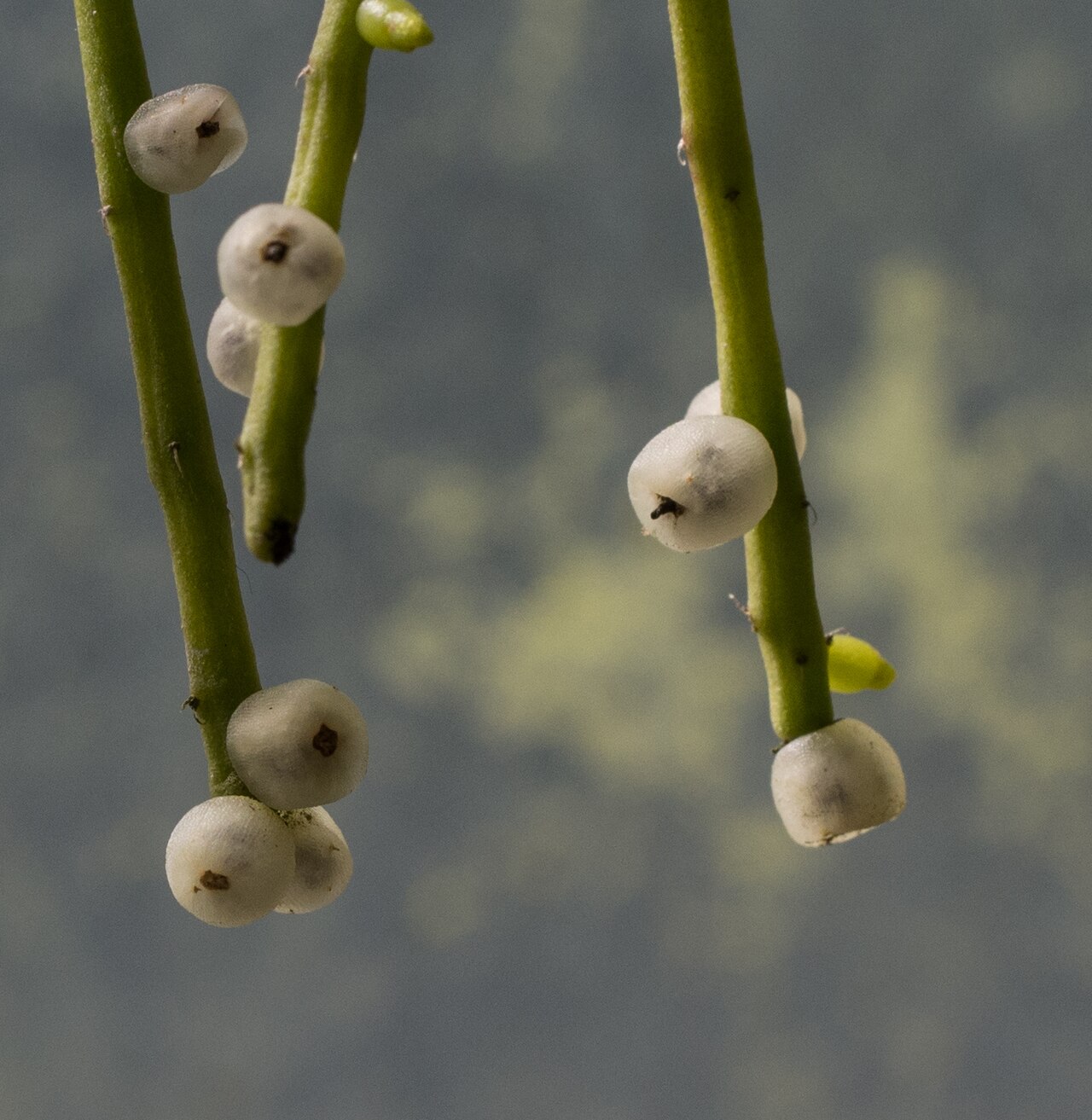
The flowers are tiny, about 1/4 inch across, creamy white to greenish, with several small petals and many stamens. They open singly along the sides of the stems, mainly in winter and spring. They are easy to overlook.
Fruit & Seeds
The fruit is a round, smooth, translucent white berry about 1/4 inch across, sometimes tinged pink. It holds a few tiny black seeds in sticky pulp. The berries look very much like those of true mistletoe, which is the source of the common name and the species name baccifera, meaning berry-bearing.
Look-alikes
No other wild cactus in Florida or Puerto Rico looks like it. The hanging strands can resemble Spanish moss from a distance, but Spanish moss is gray, wiry and scaly, and mistletoe cactus is green and fleshy. True mistletoes (Phoradendron) have leaves and are parasites that grow out of the host’s branches. Several other Rhipsalis species are sold as houseplants; they differ in stem shape (flattened, angled or very thin) and fruit color.
Quick Facts
| Scientific Name | Rhipsalis baccifera |
| Family | Cactaceae (cactus family) |
| Plant Type | Epiphytic, spineless cactus |
| Mature Height | Stems hang 3–6 ft or more |
| Mature Spread | 1–3 ft |
| Growth Rate | Moderate |
| Sun Exposure | Part shade; bright indirect light |
| Water Needs | Moderate; let the mix dry slightly between waterings |
| Soil Type | Epiphytic; airy bark-based mix, never heavy soil |
| Soil pH | Slightly acidic to neutral (about 5.5–7.0) |
| Bloom Time | Winter–spring |
| Flower Color | Creamy white to greenish |
| Fall Color | None; evergreen |
| Fruit | Round, translucent white berries |
| Deer Resistant | Not applicable; grows on trees |
| USDA Hardiness Zones | 10–12 |
Native Range
In the United States, USDA PLANTS lists mistletoe cactus as native to Florida, Puerto Rico and the U.S. Virgin Islands. In Florida it is very rare. USDA records it from Miami-Dade and Monroe counties at the southern tip of the peninsula, with an outlying record from Seminole County in central Florida. It is listed as endangered by the state of Florida. In Puerto Rico it grows on trees and rocks in moist and wet forests.
Beyond the United States, it ranges through the West Indies, Mexico, Central America and South America south to Argentina. It also grows wild in tropical Africa, Madagascar, the Mascarene Islands and Sri Lanka, the only cactus with a natural range outside the Americas. Botanists have long debated how it got there: by migrating birds carrying its sticky seeds long ago, or with people on ships. The Old World plants are different enough to be treated as separate subspecies, which suggests they arrived long ago.
It grows on the trunks and branches of trees in humid forests, hardwood hammocks, cloud forests and swamps, and sometimes on mossy rocks and cliffs, from sea level into the mountains.
📋 Regional plant lists featuring Mistletoe Cactus: North & South Florida · Puerto Rico
Growing & Care Guide
Mistletoe cactus is one of the easiest cacti to grow, as long as you treat it like a forest plant rather than a desert plant. Buy nursery-grown plants or cuttings; it is widely sold as a houseplant. Never collect it from the wild, especially in Florida, where it is a state-listed endangered plant.
Light
Give it bright, indirect light or filtered sun, like the light under a tree canopy. An east or north window, or a spot a few feet back from a bright south or west window, works well indoors. Hot, direct afternoon sun can bleach or redden the stems, and deep shade makes them thin and weak.
Soil & Water
Use a very airy, fast-draining mix, such as orchid bark mixed with a peat-free or regular potting mix and perlite, in a pot with drainage holes. Water thoroughly when the top inch of mix is dry, usually every week or two in spring and summer, and less in winter. It needs more water than a desert cactus but rots if it sits in soggy mix. It likes humidity, and misting or a humid bathroom helps in dry indoor air.
Planting Tips
Grow it in a hanging basket or on a high shelf so the stems can trail. Outdoors in zones 10 to 12 (South Florida, Puerto Rico, Hawaii), it can be tied onto the rough bark of a shade tree with some sphagnum moss, where it will root and grow like a wild plant. Protect it from frost, and keep indoor plants above about 50°F. It can spend summer outdoors in a shaded, sheltered spot.
Pruning & Maintenance
Little care is needed. Trim long or damaged stems at a branch point to keep the plant tidy. Feed lightly with a diluted balanced or cactus fertilizer once a month in spring and summer. Repot every few years, when the mix breaks down; it prefers being slightly pot-bound. Cooler, drier conditions in winter often encourage flowers and berries.
Propagation
Stem cuttings root very easily. Cut a piece 3 to 6 inches long, let the cut end dry for a day or two, and set it in moist bark mix or perlite. Roots form within a few weeks. It can also be grown from seed cleaned from the sticky berries and sown on the surface of a moist, fine mix, but this is slow.
Landscape Uses
- Hanging baskets: long, trailing green stems indoors or on a shaded porch
- Houseplants: tolerates average home conditions and bright indirect light
- Tropical tree gardens: can be mounted on tree trunks in frost-free gardens
- Pet-friendly collections: listed as non-toxic to cats and dogs by the ASPCA
- Conservation education: a rare Florida native and the only Old World cactus
Wildlife & Ecological Value
Mistletoe cactus is part of the tree-dwelling (epiphyte) community of tropical and subtropical forests, along with orchids, bromeliads and ferns.
For Pollinators
The small flowers are visited by bees and other small insects. Many Rhipsalis plants can also set fruit by self-pollination, which helps isolated plants reproduce.
For Birds
Birds eat the white berries and spread the sticky seeds, which cling to their beaks and feet or pass through their gut and are left on tree branches, much as with true mistletoe. This is why new plants appear high up in trees and why many botanists think birds carried the species across long distances.
For Mammals
Mammals play little role, though monkeys and other tree-dwelling animals in Central and South America may eat the fruit.
Ecosystem Role
Like other epiphytes, mistletoe cactus adds structure to the forest canopy. Its clumps trap moisture and debris and give shelter to tiny insects, spiders and other invertebrates. In Florida, it is one of many tropical epiphytes that reach their northern limit in the hammocks of the southern peninsula and the Keys.
Cultural & Historical Uses
The genus name Rhipsalis comes from the Greek rhips, meaning wickerwork, after the plant’s slender, flexible stems. The species name baccifera means berry-bearing. In Spanish-speaking countries it has names such as cola de caballo (horse’s tail) and cactus muérdago (mistletoe cactus).
Its natural range across the Atlantic has puzzled botanists for more than a century. Every other cactus is native only to the Americas. Most researchers think the sticky seeds traveled with birds, or perhaps with people, and that the African and Asian plants have since changed enough to be named as separate subspecies.
Rhipsalis belongs to the same group of forest-dwelling cacti (tribe Rhipsalideae) as the Christmas cactus and Easter cactus, which are also epiphytes from humid tropical forests. They share a preference for bright shade, regular water and airy mixes.
Frequently Asked Questions
Is mistletoe cactus native to the United States?
Yes. USDA PLANTS lists it as native to Florida, Puerto Rico and the U.S. Virgin Islands. In Florida it is very rare and listed as endangered by the state.
Is mistletoe cactus a parasite like mistletoe?
No. It grows on trees but takes nothing from them. It only uses the bark as a place to grow. It is named for its white berries, which look like mistletoe fruits.
Is mistletoe cactus toxic to pets?
It is listed as non-toxic to cats and dogs by the ASPCA. As with any houseplant, chewing it may still cause mild stomach upset.
How often should I water a mistletoe cactus?
Water when the top inch of its mix is dry, usually every 1 to 2 weeks in the growing season and less in winter. It needs more water than desert cacti but should never sit in wet soil.
Why are my mistletoe cactus stems turning yellow or red?
Usually too much direct sun, too little water or a root problem from soggy mix. Move it to bright indirect light and check that the pot drains well.

Looking for a nursery that carries Mistletoe Cactus?
Browse our native plant nursery directory: Florida

