
Walking Fern (Asplenium rhizophyllum)
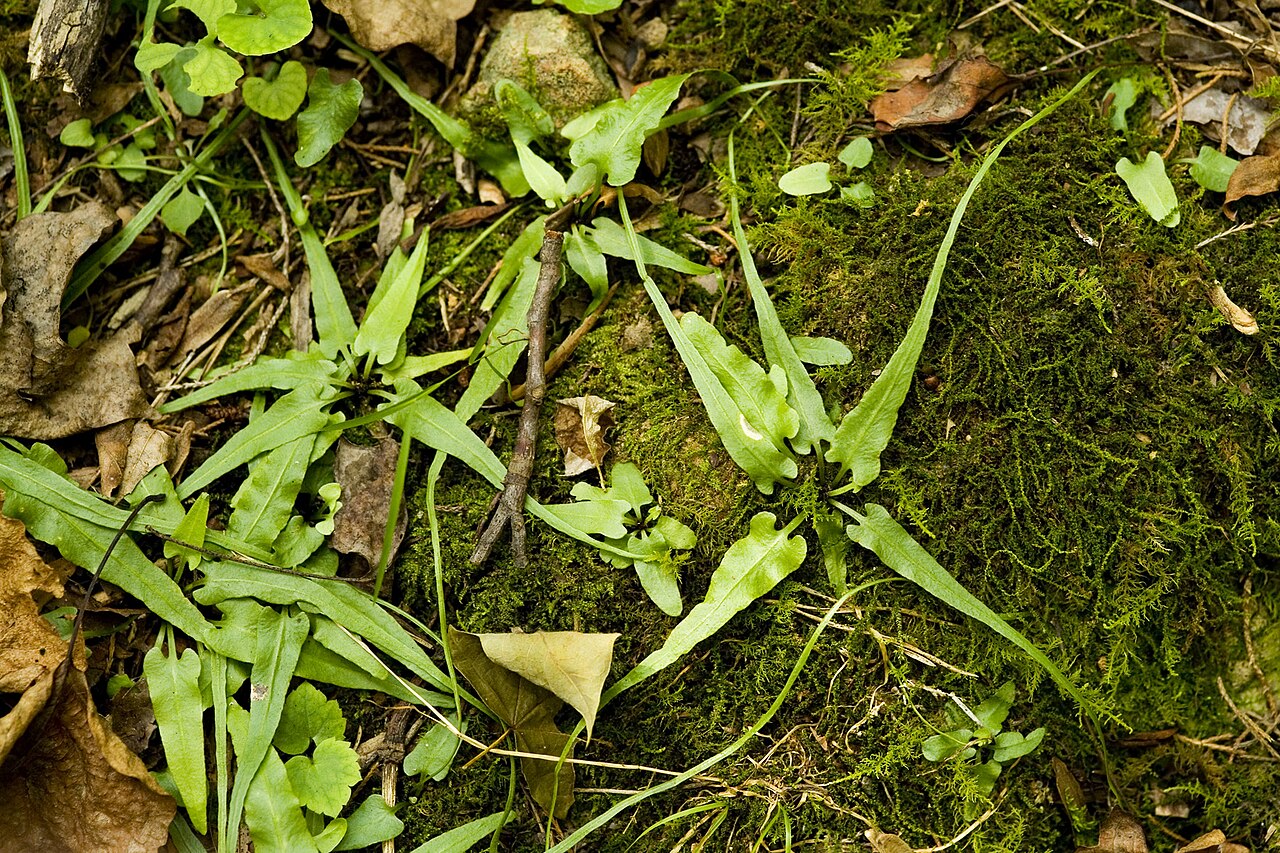
Asplenium rhizophyllum, the Walking Fern, is one of the most distinctive ferns in North America. Instead of the lacy, divided fronds most people picture, it has simple, evergreen, strap-like leaves, heart-shaped at the base and drawn out into a long, slender tail. Where a tail touches moss or soil it roots and grows a new plant, so over the years a colony “walks” across a rock face in a chain of linked plants.
Walking fern grows on shaded, moss-covered boulders, ledges and cliffs in eastern woodlands, most often on limestone or other lime-rich rock. It is a member of the spleenwort family and was long placed in its own genus as Camptosorus rhizophyllus, a name still used in older field guides. It is closely related to ebony spleenwort, and the two hybridize in the wild.
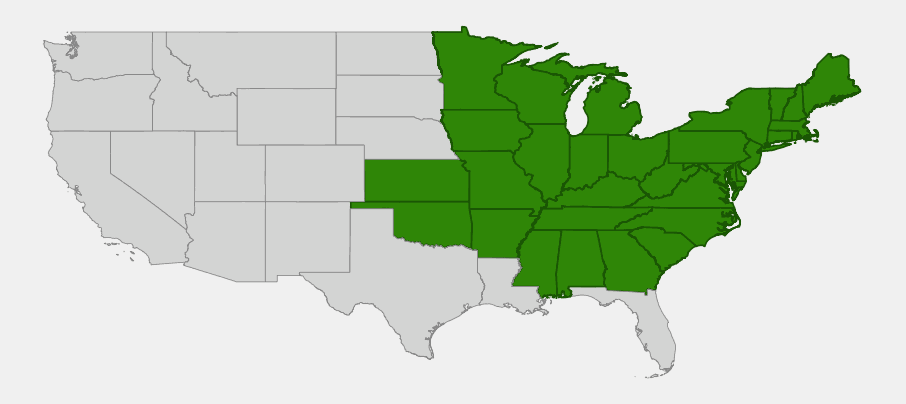
Walking fern is native from New England and the Great Lakes south to Georgia and Alabama and west to Minnesota, Kansas and Oklahoma. It can be grown on a shaded, mossy rock in a woodland or rock garden, but it is slow and particular, and wild colonies should never be collected. Buy only nursery-propagated plants.
Identification
No other native fern in eastern North America looks quite like walking fern. Its simple, tapering fronds and rooting tips make it easy to identify once you have seen it.
Fronds
The fronds are evergreen, simple and undivided, usually 4 to 12 inches long and up to about 1 inch wide at the base. Each one is broadest near the base, which is heart-shaped and often has small rounded or pointed lobes (auricles), and tapers gradually to a long, narrow, whip-like tip. The fronds are leathery and grow in loose rosettes, often lying flat on the rock or arching outward.
Walking Tips
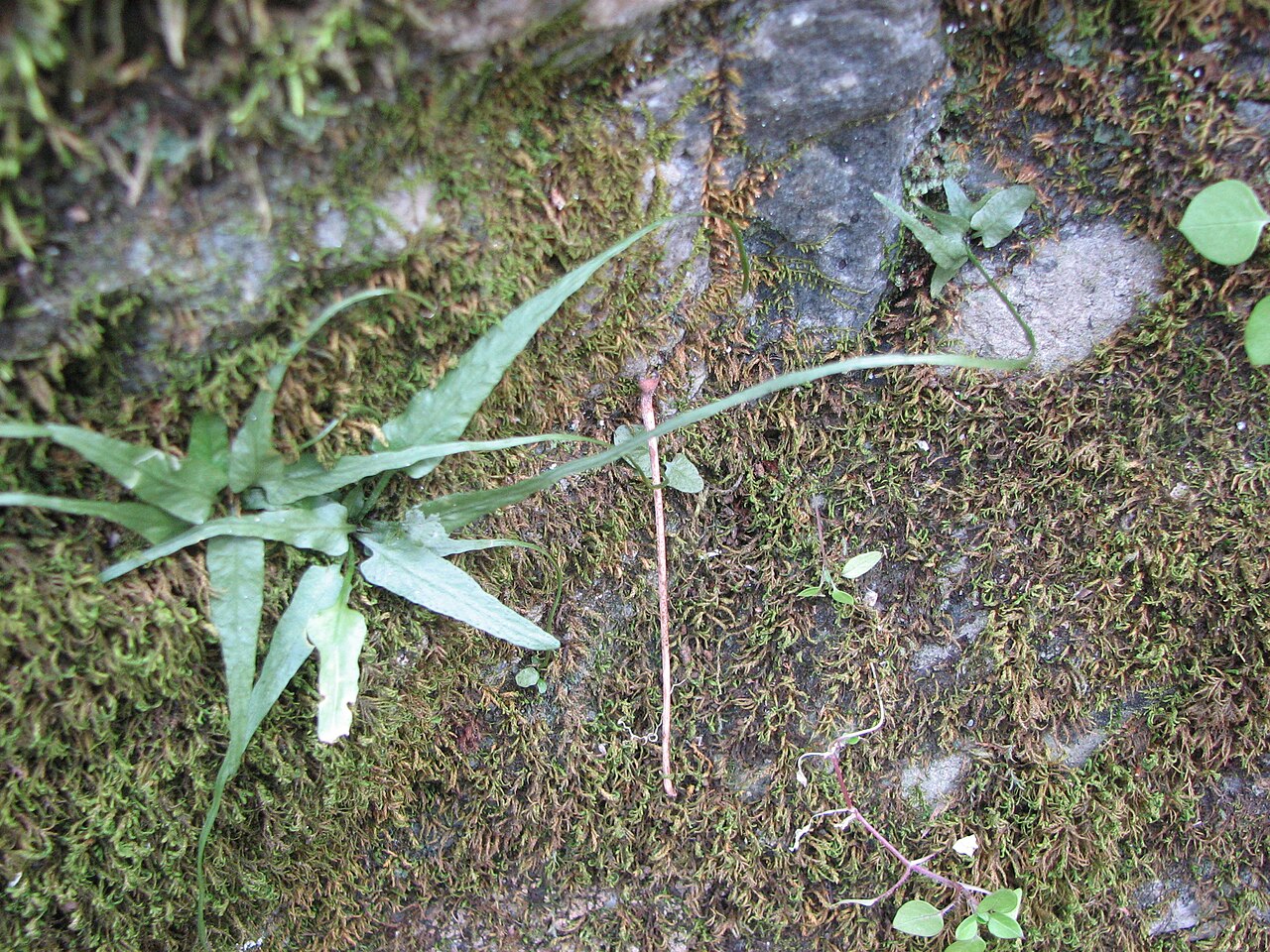
The tip of a mature frond often bends down, touches moss or soil and forms roots and a bud, which grows into a new plant. That plant in turn sends out its own fronds, so a colony can spread across a boulder in a chain of plants linked tip to base. The species name rhizophyllum means “rooting leaf”.
Sori
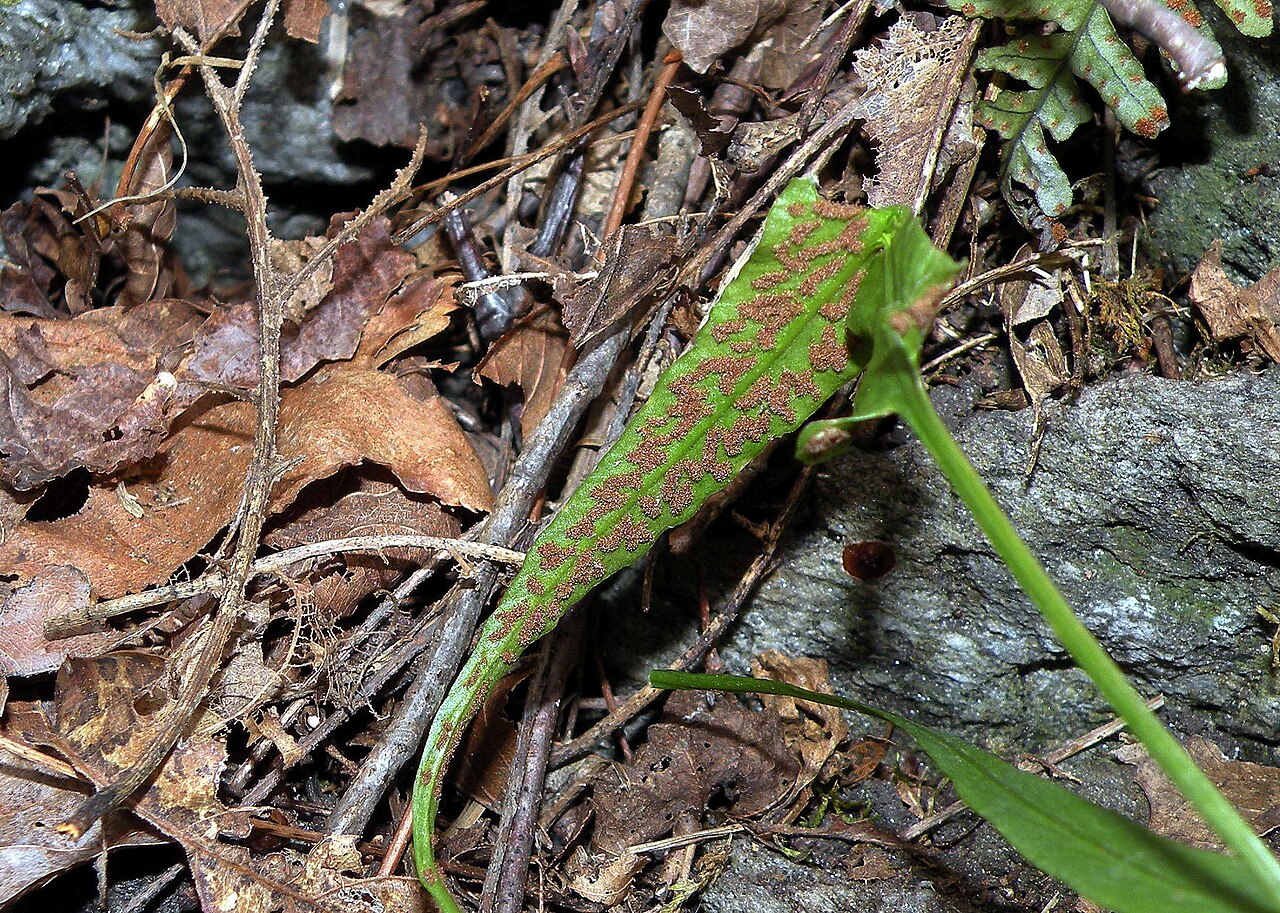
On the underside of fertile fronds, the spore clusters (sori) are narrow and irregular, lying along veins that join into a net-like pattern. Some sori sit in pairs that face each other. This netted vein pattern is unusual among North American spleenworts.
Similar Species
Hart’s-tongue fern (Asplenium scolopendrium) also has simple fronds, but they are wider, blunt-tipped and do not root at the tips, and the North American variety is rare. Scott’s spleenwort (Asplenium × ebenoides), the hybrid between walking fern and ebony spleenwort, has fronds that are lobed or partly divided near the base and taper toward the tip.
Quick Facts
| Scientific Name | Asplenium rhizophyllum (syn. Camptosorus rhizophyllus) |
| Common Names | Walking fern (USDA), American walking fern, walking spleenwort |
| Family | Aspleniaceae (spleenwort family) |
| Plant Type | Small evergreen fern |
| Mature Height | 2–6 in; fronds 4–12 in long, lying flat or arching |
| Mature Spread | Colonies spread slowly across rock faces |
| Growth Rate | Slow |
| Sun Exposure | Part shade to full shade |
| Water Needs | Medium; constant humidity, moist moss on rock |
| Soil Type | Thin moss and humus on rock, usually limestone or other lime-rich rock |
| Soil pH | Near neutral to alkaline (about 6.5–8.0) |
| Bloom Time | Does not flower; spores ripen summer–fall |
| Flower Color | None |
| Fall Color | None; evergreen |
| Fruit | None; narrow sori on the frond undersides |
| Deer Resistant | Yes; rarely browsed |
| USDA Hardiness Zones | 4–8 |
Native Range
Walking fern is native to eastern North America. USDA PLANTS records it from 31 states and the District of Columbia, from Maine and the rest of New England west through New York, Pennsylvania and the Great Lakes states to Minnesota, Iowa, Missouri, Kansas and Oklahoma, and south to Georgia, Alabama, Mississippi and Arkansas. In Canada it grows in southern Ontario and Quebec.
It is most common in regions with limestone and other calcareous rock: the Appalachian Valley and Ridge, the Cumberland and Allegheny plateaus, the Ozarks, the Driftless Area of Wisconsin, Minnesota and Iowa, and parts of the Great Lakes region. It is scarce or absent on the Atlantic and Gulf coastal plains, where suitable rock outcrops are lacking.
It grows on shaded, moss-covered boulders, ledges, cliffs and rock outcrops in moist woods and ravines, usually on limestone, dolomite or other lime-rich rock, and less often on sandstone, shale or acid rock where moss and humus have built up. It is occasionally found on fallen logs or the bases of trees.
📋 Regional plant lists featuring Walking Fern: New York, Pennsylvania & Northern New Jersey · Ohio & Indiana · Michigan, Wisconsin & Eastern Minnesota · Kentucky & Tennessee · Nebraska, Kansas & Eastern Colorado · Connecticut, Massachusetts & Rhode Island · New Hampshire, Maine & Vermont · Maryland, Virginia & West Virginia · Delaware, Southern New Jersey & Long Island · Illinois, Iowa & Missouri · Alabama, Georgia & Mississippi · North & South Carolina · Arkansas, Louisiana, Eastern Oklahoma & Eastern Texas
Growing & Care Guide
Walking fern can be grown, but it is slow and particular. It needs a shaded, humid spot on a mossy rock, ideally limestone, and it does poorly in ordinary garden soil. It is very hard to transplant from the wild and should never be collected there. Look for nursery-propagated plants from specialist native fern nurseries.
Light
Give it part to full shade, out of direct afternoon sun. A north-facing rock, a shaded ravine wall or the shady side of a boulder in a woodland garden is ideal.
Soil & Water
It grows on a thin layer of moss and humus over rock, usually lime-rich. In a garden, set it in a crevice or pocket of a limestone or tufa rock filled with a gritty mix of leaf mold, sand and crushed limestone. It needs steady moisture and humidity but sharp drainage; it rots in soggy soil and shrivels in dry, exposed sites.
Planting Tips
Plant in spring in a shaded rock garden, trough or stone wall, tucking the roots into a crevice and pressing moss around them. Keep it moist while it establishes. It grows well with ferns such as maidenhair fern and woodland plants like sharp-lobed hepatica that share its liking for lime-rich soil.
Pruning & Maintenance
No pruning is needed. Remove fallen leaves that settle on the fronds in fall so they do not smother the plant, and keep the surrounding moss moist in dry weather. Avoid fertilizer.
Propagation
The easiest method is to let a frond tip root naturally on moss and then separate the young plant once it has its own roots and several fronds. Specialist growers also raise it from spores sown on sterile, moist media, which is slow. Take plantlets only from your own plants, never from wild colonies.
Landscape Uses
- Rock and trough gardens: an unusual evergreen fern for shaded crevices and mossy rocks
- Woodland gardens: adds a distinctive texture to shaded boulders and stone walls
- Nature study: an easy-to-show example of plants that reproduce by rooting leaf tips
- Conservation: colonies on limestone outcrops are worth protecting from trampling and collection
Wildlife & Ecological Value
Walking fern is a small plant with modest wildlife value, but it is part of the specialized community of mosses, ferns and wildflowers that grows on shaded rock outcrops.
For Pollinators
Ferns do not flower and produce no nectar or pollen, so walking fern has no value for pollinators. Its spores are spread by wind.
For Birds
It is not a food plant for birds, but the mossy rock faces it shares provide insects and nesting material for some woodland birds.
For Mammals
Deer and other mammals rarely browse it, partly because of its tough fronds and its habit of growing on rock faces out of reach.
Ecosystem Role
Walking fern is part of the moss-and-fern community of shaded limestone outcrops, which often supports uncommon plants. Its colonies help hold moss and thin soil on steep rock faces.
Cultural & Historical Uses
Walking fern has long fascinated naturalists and fern collectors because of its unusual way of spreading. Collecting from accessible outcrops can damage colonies, and it is uncommon toward the edges of its range.
Walking fern is a parent of several well-known hybrids. Crossed with ebony spleenwort it produces Scott’s spleenwort (Asplenium × ebenoides), and crossed with mountain spleenwort it gave rise to lobed spleenwort (Asplenium pinnatifidum), a fertile species of its own. Fern scientists have used this group to study how new species can arise through hybridization.
A close relative, Asplenium ruprechtii, grows in eastern Asia and is sometimes called Asian walking fern. It has similar simple fronds that root at the tips.
Frequently Asked Questions
Why is it called walking fern?
The tips of its fronds root where they touch moss or soil and grow into new plants. Over time a colony spreads, or “walks”, across a rock in a chain of plants linked tip to base.
Can I grow walking fern in my garden?
Yes, with care. It needs shade, humidity and a mossy rock or crevice, ideally limestone, with good drainage. Buy nursery-propagated plants from specialist fern nurseries and never collect from the wild.
Does walking fern need limestone?
It grows best on limestone and other lime-rich rock, but it also grows on other rock types where moss and humus have built up. Adding crushed limestone to the planting mix helps in gardens.
Is walking fern evergreen?
Yes. The fronds stay green through the winter, which makes colonies easy to spot on shaded rocks after the leaves fall.
Is walking fern the same as Camptosorus rhizophyllus?
Yes. Camptosorus rhizophyllus is an older name. Current references, including USDA PLANTS, place it in Asplenium with the other spleenworts.

Looking for a nursery that carries Walking Fern?
Browse our native plant nursery directory: Alabama & Arkansas · Connecticut, Delaware & Georgia · Illinois, Indiana, Iowa & Kansas · Kentucky, Maine, Maryland, Massachusetts, Michigan, Minnesota, Mississippi & Missouri · New Hampshire, New Jersey, New York, North Carolina, Ohio & Oklahoma · Pennsylvania, Rhode Island, South Carolina, Tennessee, Vermont & Virginia · West Virginia & Wisconsin