
Yerba Porosa (Porophyllum ruderale)
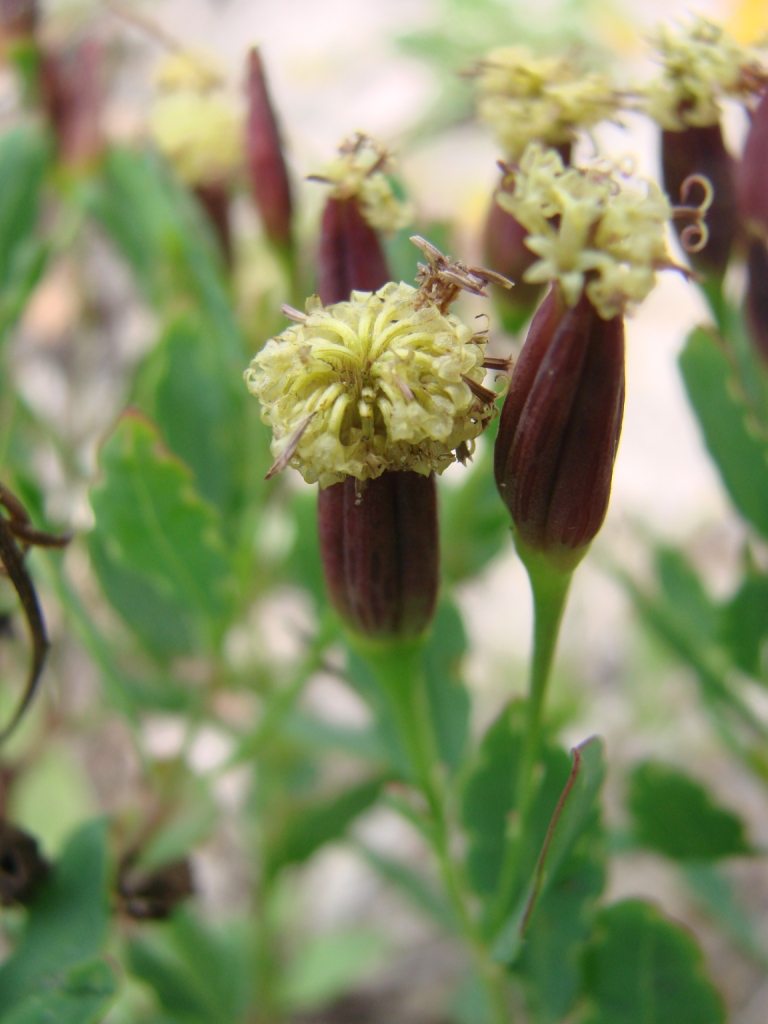
Porophyllum ruderale, called Yerba Porosa by USDA and best known to cooks as papalo or pápaloquelite, is a fast-growing, strongly scented herb in the aster family. It forms an upright, branching plant with smooth, oval, blue-green leaves and odd, petal-less flower heads that look like small purplish cups. Crush a leaf and you get a powerful smell often compared to cilantro, arugula, rue and cucumber all at once.
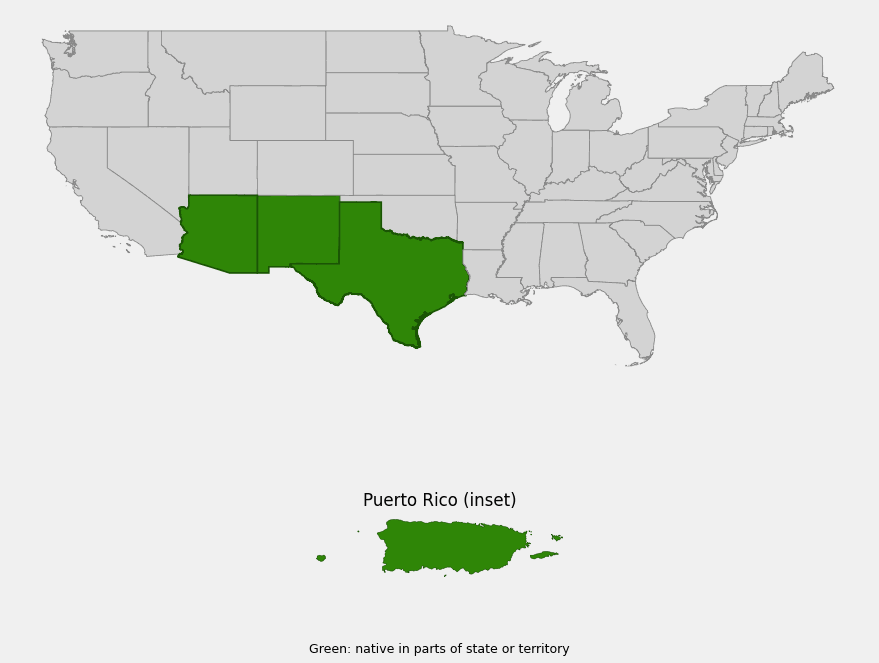
Papalo is a native of the Americas, growing wild from the southwestern United States through Mexico and the Caribbean to South America. USDA PLANTS lists it as native in the lower 48 states and in Puerto Rico. Our plants in Arizona, New Mexico and Texas belong to the large-headed subspecies, Porophyllum ruderale subsp. macrocephalum, the same plant grown in Mexican kitchen gardens.
This guide covers how to identify yerba porosa, where it grows wild in the United States, how to grow papalo as a summer herb, how it is used in Mexican cooking, and its value to butterflies and other insects.
Identification
Yerba porosa is easiest to identify by smell and by its leaves. Hold a leaf up to the light: it is dotted with clear oil glands, like tiny windows, especially along the edges. These glands give the plant its Spanish name, “porous herb,” and its genus name, from the Greek for “pore leaf.”
Growth Form
It is an annual, or a short-lived perennial in frost-free places, usually 1 to 3 feet tall and sometimes taller in rich soil. The stems are smooth, branching and often tinged purple, and the whole plant is hairless and slightly waxy, with a blue-green cast.
Leaves
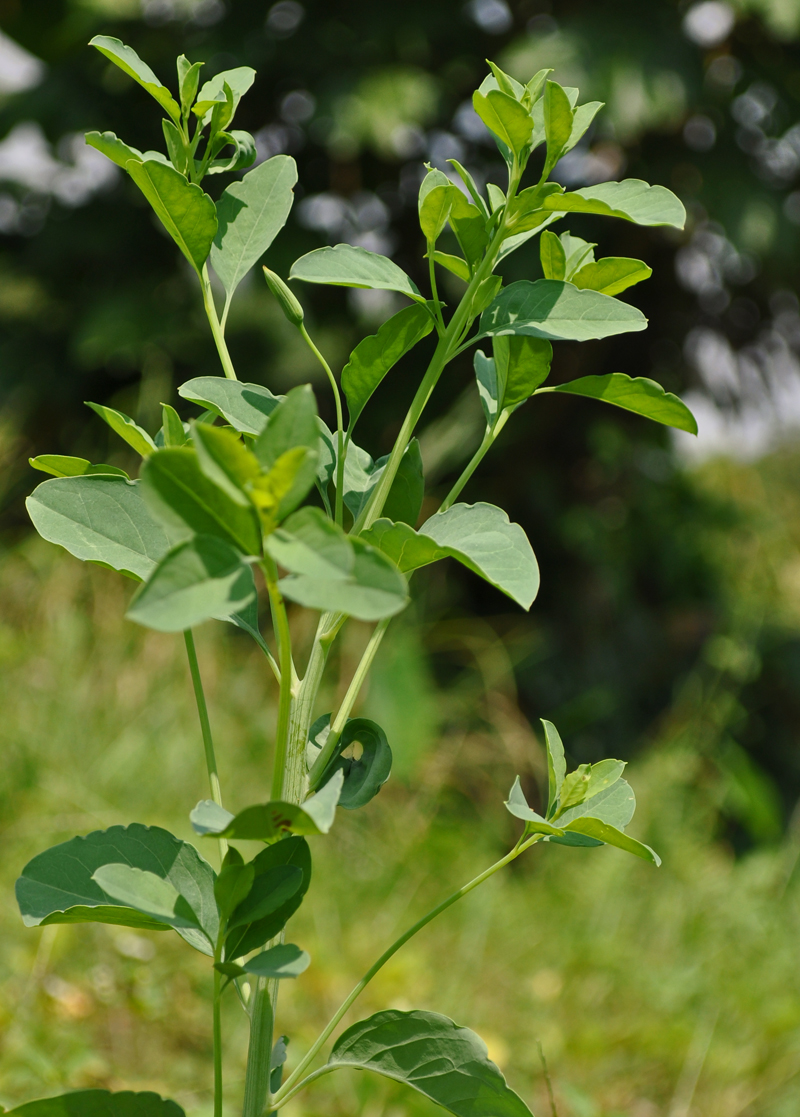
The leaves are alternate, oval to elliptic, about 1 to 2 inches long, with smooth or slightly wavy edges and a long stalk. Oil glands sit along the margin notches and scattered across the blade. Leaves high on the plant become narrower. The smell is strong enough that brushing past a plant leaves it on your hands.
Flower Heads
The flower heads are borne singly at the ends of long stalks. Each is a narrow, cylindrical cup about an inch long, made of five green to purplish bracts with glands of their own. There are no ray flowers (petals); the cup holds a tuft of many small tubular disk flowers, greenish yellow to purplish, with long styles sticking out. In the Southwest it blooms mainly from late summer into fall, and in frost-free areas through much of the year.
Seeds & Similar Plants
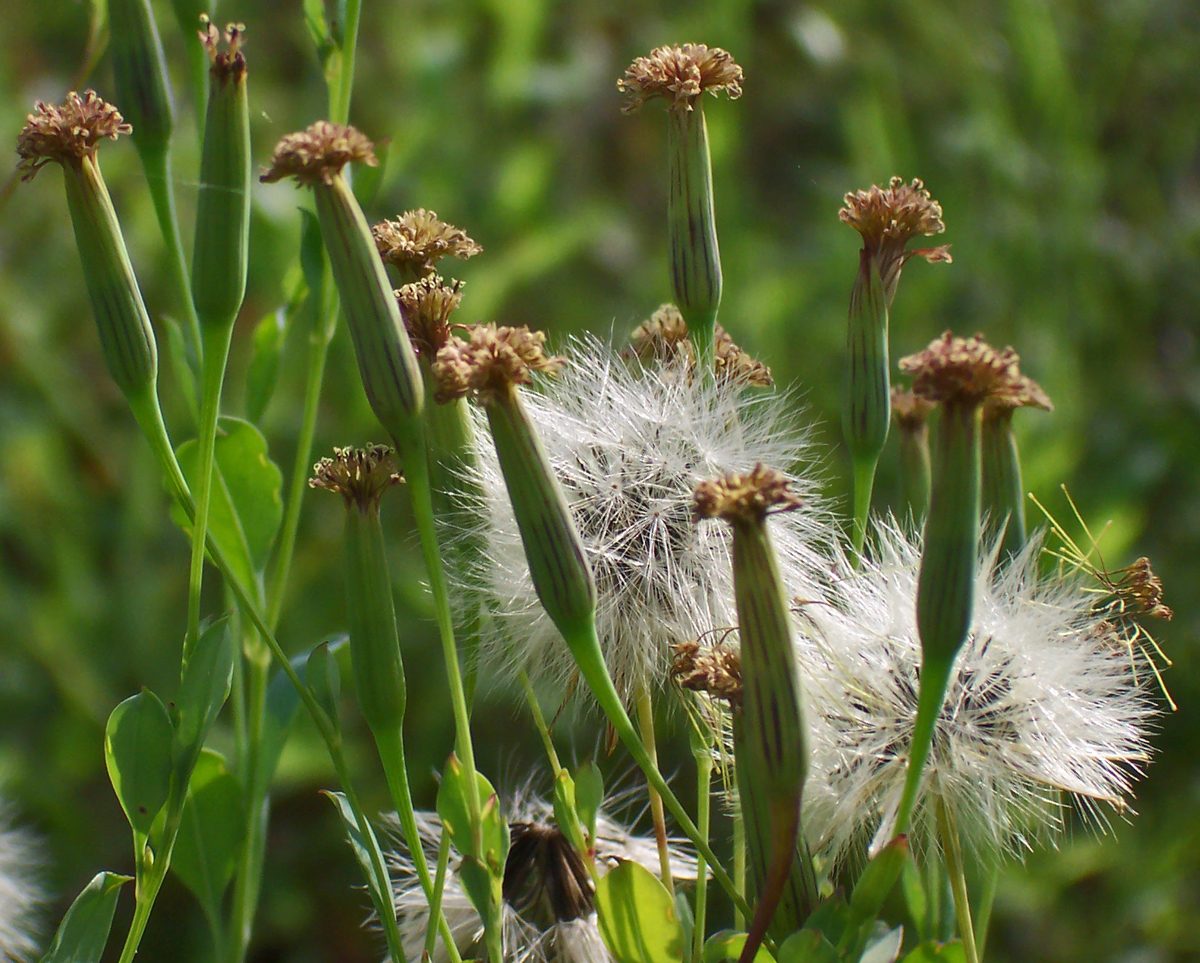
The seeds are slender, dark achenes topped with a fluffy tan to white pappus, so a mature head opens into a small dandelion-like puff. A related native, Odora (Porophyllum gracile), grows in the same deserts but is a smaller, shrubby plant with very narrow, almost thread-like leaves, while papalo has broad oval leaves.
Quick Facts
| Scientific Name | Porophyllum ruderale (Jacq.) Cass.; U.S. plants subsp. macrocephalum (DC.) R.R. Johnson |
| Family | Asteraceae (aster family) |
| Plant Type | Annual herb (short-lived perennial where frost-free) |
| Mature Height | 1–3 ft (occasionally to 5 ft) |
| Mature Spread | 1–2 ft |
| Growth Rate | Fast |
| Sun Exposure | Full sun to light shade |
| Water Needs | Low to moderate; tolerates drought |
| Soil Type | Sandy, gravelly or loamy well-drained soil; disturbed ground |
| Soil pH | About 6.0–8.0 |
| Bloom Time | Late summer to fall; much of the year where frost-free |
| Flower Color | Greenish yellow to purplish (no petals) |
| Fall Color | None; killed by frost |
| Fruit | Slender achene with a fluffy pappus |
| Deer Resistant | Generally yes; the strong scent deters browsers |
| USDA Hardiness Zones | Grown as a warm-season annual in all zones; perennial in 10–11 |
Native Range
Yerba porosa has an enormous range in the warm parts of the Americas, from the southwestern United States south through Mexico, Central America and the Caribbean to Argentina. USDA PLANTS lists it as native in the lower 48 states, Puerto Rico, the U.S. Virgin Islands and Navassa Island.
In the mainland United States, the wild plants (subsp. macrocephalum) grow in southern Arizona, southern New Mexico and Texas, especially south and west Texas. They favor washes, canyon bottoms, roadsides, field edges and other open or disturbed ground, often after summer rains. USDA also has a record from California, but California observations are of garden plants grown for the kitchen rather than wild populations, so we do not map it as native there.
In Puerto Rico and the Virgin Islands the typical subspecies grows as a weedy plant of pastures, roadsides and coastal scrub. Because papalo is so popular in Mexican and Bolivian cooking (where it is called quirquiña), it is now grown far outside its native range.
📋 Regional plant lists featuring Yerba Porosa: Arizona & New Mexico · South & West Texas · Puerto Rico
Growing & Care Guide
Papalo is one of the easiest herbs to grow in hot weather. Unlike cilantro, which bolts as soon as summer arrives, papalo thrives in heat, so many gardeners use it as a summer substitute for cilantro.
Light
Grow it in full sun for the most compact, flavorful plants. It tolerates light shade, especially in the low desert, where afternoon shade keeps the leaves tender. In containers, give it at least six hours of direct sun.
Soil & Water
Any well-drained soil works, from sandy to loamy, and it does not need rich soil or fertilizer. Water regularly while seedlings establish, then about once a week in hot weather; it tolerates dry spells but produces more tender leaves with steady moisture. Avoid waterlogged soil.
Planting Tips
Sow seeds outdoors after the last frost, when the soil is warm, barely covering them, or start them indoors 4 to 6 weeks earlier. Seeds usually sprout within one to two weeks. Space plants about 12 inches apart. In the low desert of Arizona and in south Texas you can sow in spring and again with the summer monsoon. Plants are killed by frost.
Pruning & Maintenance
Pinch the growing tips to keep plants bushy, and harvest young leaves often; older leaves are tougher and stronger in flavor. Let a few plants flower if you want seed, since they will drop seed and come back on their own the next year in warm climates. Remove seed heads before they open if you do not want volunteers.
Propagation
Grow from seed. Collect the fluffy seed heads when they turn tan and start to open, and store the seeds dry. Fresh seed germinates well; old seed loses viability quickly, so sow it within a year or two.
Landscape Uses
- Kitchen and herb gardens: a heat-loving cilantro alternative for salsas, tacos and sandwiches
- Containers: a pot near the kitchen door keeps fresh leaves handy all summer
- Pollinator and butterfly gardens: late-season flowers for butterflies and small bees
- Desert and wildflower plantings: a fast, self-sowing native annual for open ground
- Children’s gardens: a fun “smelly plant” with see-through dotted leaves
Wildlife & Ecological Value
Yerba porosa is modest to look at, but its late flowers and fluffy seeds feed a range of insects and birds in desert and tropical landscapes.
For Pollinators
Butterflies, small native bees, wasps and flies visit the tubular disk flowers for nectar, especially in late summer and fall when many desert plants have finished blooming.
For Birds
Seed-eating birds such as finches and sparrows pick at the ripening seed heads, and the plants shelter insects that birds feed to their young.
For Mammals
The strong-smelling foliage is usually avoided by deer and livestock, though rabbits will sometimes eat it in gardens.
Ecosystem Role
As a pioneer annual, papalo colonizes washes, roadsides and disturbed soils quickly after rain, shading bare ground and adding organic matter before slower perennials fill in. Its wind-dispersed seeds let it find new open patches each year.
Cultural & Historical Uses
Papalo has been eaten in Mexico since pre-Hispanic times. The name comes from the Nahuatl papalotl, “butterfly,” and quilitl, “edible green,” giving pápaloquelite. It is a classic table herb in central Mexico, served fresh in a glass of water or on a plate beside tacos, and it is essential in the cemitas sandwiches of Puebla. It is always used raw, because cooking dulls the flavor.
In Bolivia and Peru the related South American form is called quirquiña (or killi) and is chopped into fresh salsas such as llajwa. Elsewhere in Latin America the plant has many regional names, including tepegua and yerba porosa.
Its flavor is bold, so use a few leaves at a time. People sensitive to strong herbs should try a little first. The species has been studied for compounds in its essential oils, but it is a food herb, not a proven medicine.
Frequently Asked Questions
What does papalo taste like?
Papalo has a strong, bright flavor often described as a mix of cilantro, arugula, cucumber and citrus, with a slightly soapy, resinous note like rue. Use it raw and sparingly, a few torn leaves at a time.
Is papalo native to the United States?
Yes. USDA PLANTS lists Porophyllum ruderale as native in the lower 48 states and Puerto Rico. Wild plants grow in Arizona, New Mexico and Texas, and its range continues south through Mexico to South America.
Can I grow papalo instead of cilantro?
Yes, in summer. Cilantro bolts in heat, while papalo loves hot weather. Many gardeners grow cilantro in the cool season and papalo in summer.
Is papalo a perennial?
It is usually grown as an annual because frost kills it. In frost-free places it can live for more than one year, and it readily reseeds in warm climates.
How do I store papalo?
Use it fresh. Keep stems in a glass of water at room temperature, like cut flowers, for a day or two. The leaves wilt and lose flavor quickly in the refrigerator, and drying destroys most of the aroma.

Looking for a nursery that carries Yerba Porosa?
Browse our native plant nursery directory: Arizona · New Mexico · Texas

