
Hill Cane (Arundinaria appalachiana)
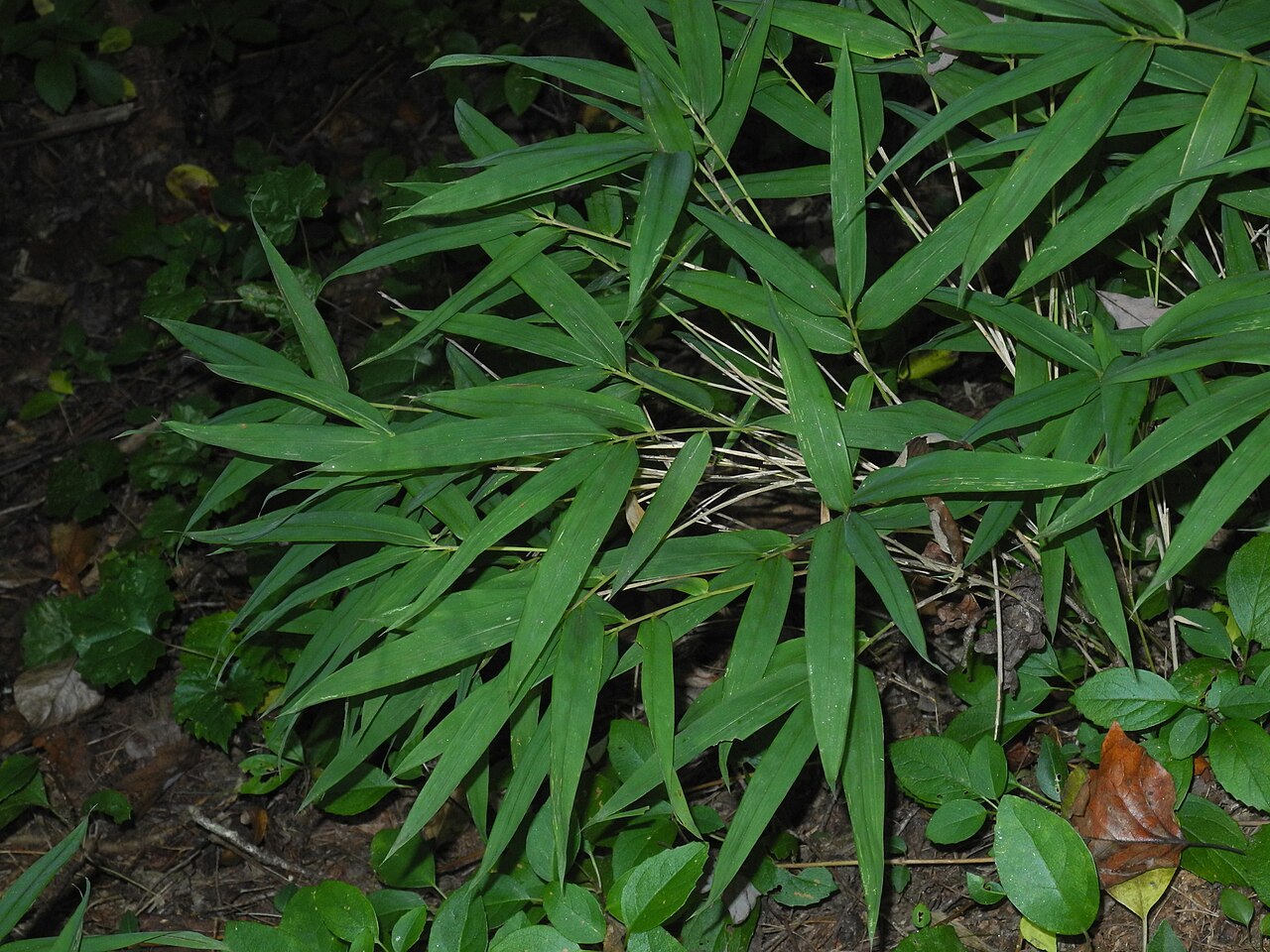
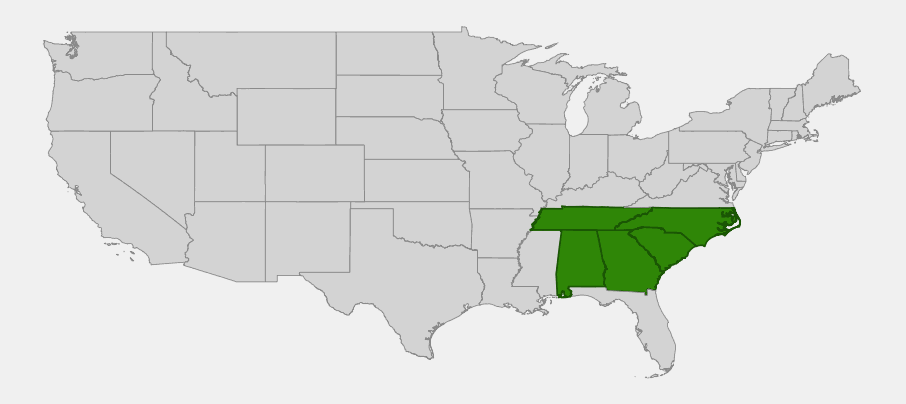
Arundinaria appalachiana, known as Hill Cane, is a small native bamboo of the southern Appalachian Mountains and their foothills. It is one of only three bamboos native to the United States, along with River Cane and Switch Cane. It forms loose, knee- to waist-high colonies of slender green culms on dry to moist wooded slopes, ridges and bluffs in Alabama, Georgia, North Carolina, South Carolina and Tennessee.
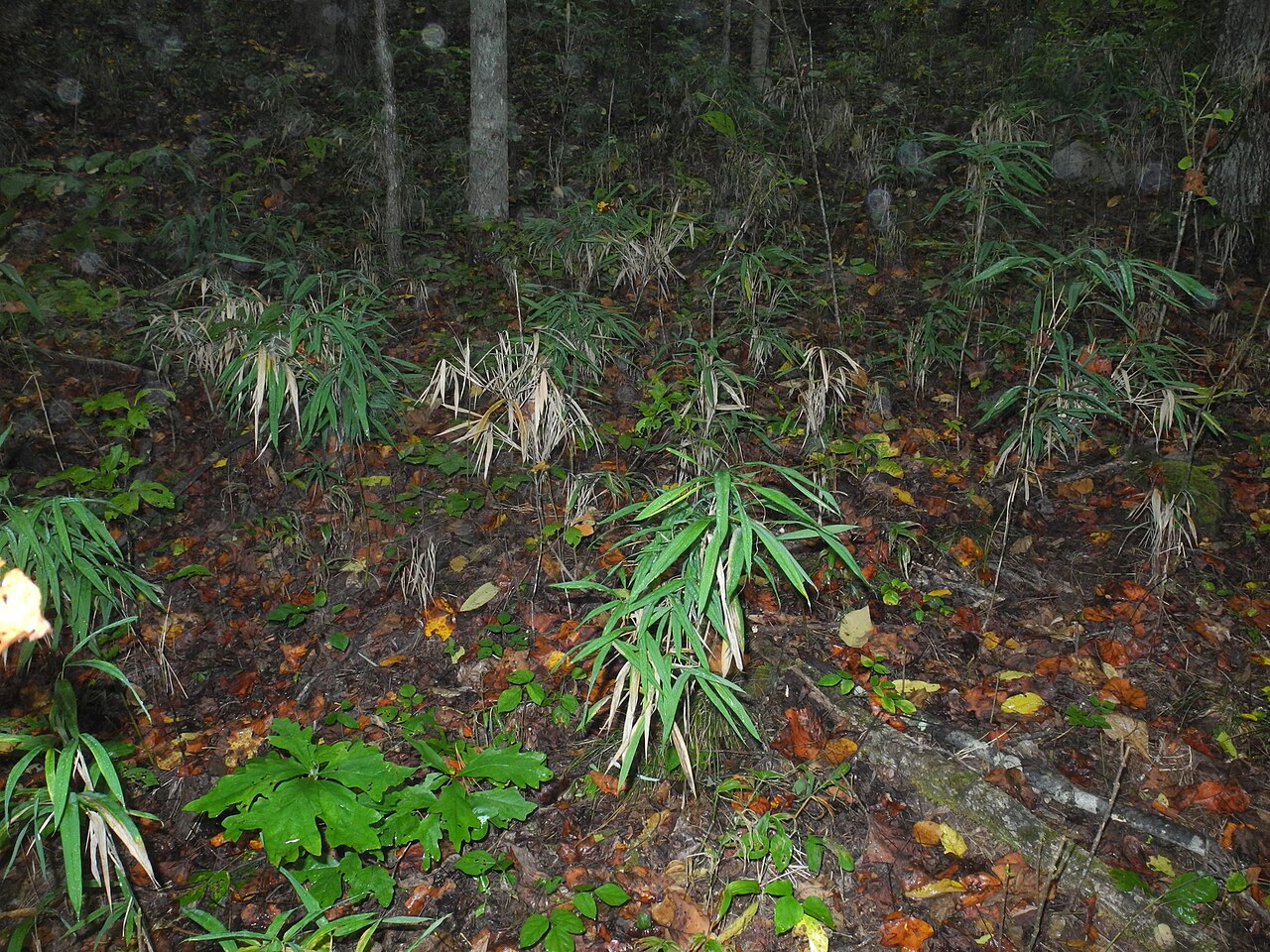
Hill cane was the last of the three to be recognized. Botanists had long lumped these upland plants with switch cane or river cane, until Jimmy Triplett, Alan Weakley and Lynn Clark described them as a separate species in 2006. What set them apart was a combination of features: shorter culms, leaves crowded into fans at the branch tips, a preference for upland forest rather than floodplains, and leaves that wither and fall in winter. That last trait is unusual among bamboos, and it makes hill cane look quite different from its evergreen relatives between November and April.
For gardeners, hill cane is an intriguing choice: a genuinely native bamboo that stays low, tolerates shade and dry soil, and spreads into a loose groundcover under trees. This guide covers how to identify it, where it grows, how to grow it responsibly, and its role in Southeastern forests and canebrake history.
Identification
Hill cane is easy to recognize as a bamboo, with its jointed, hollow culms and long, narrow leaves. Telling it from the other two native canes is harder, especially where their ranges meet in the Piedmont and on the Cumberland Plateau. Habitat, plant size and winter appearance are the most useful clues.
Culms & Rhizomes
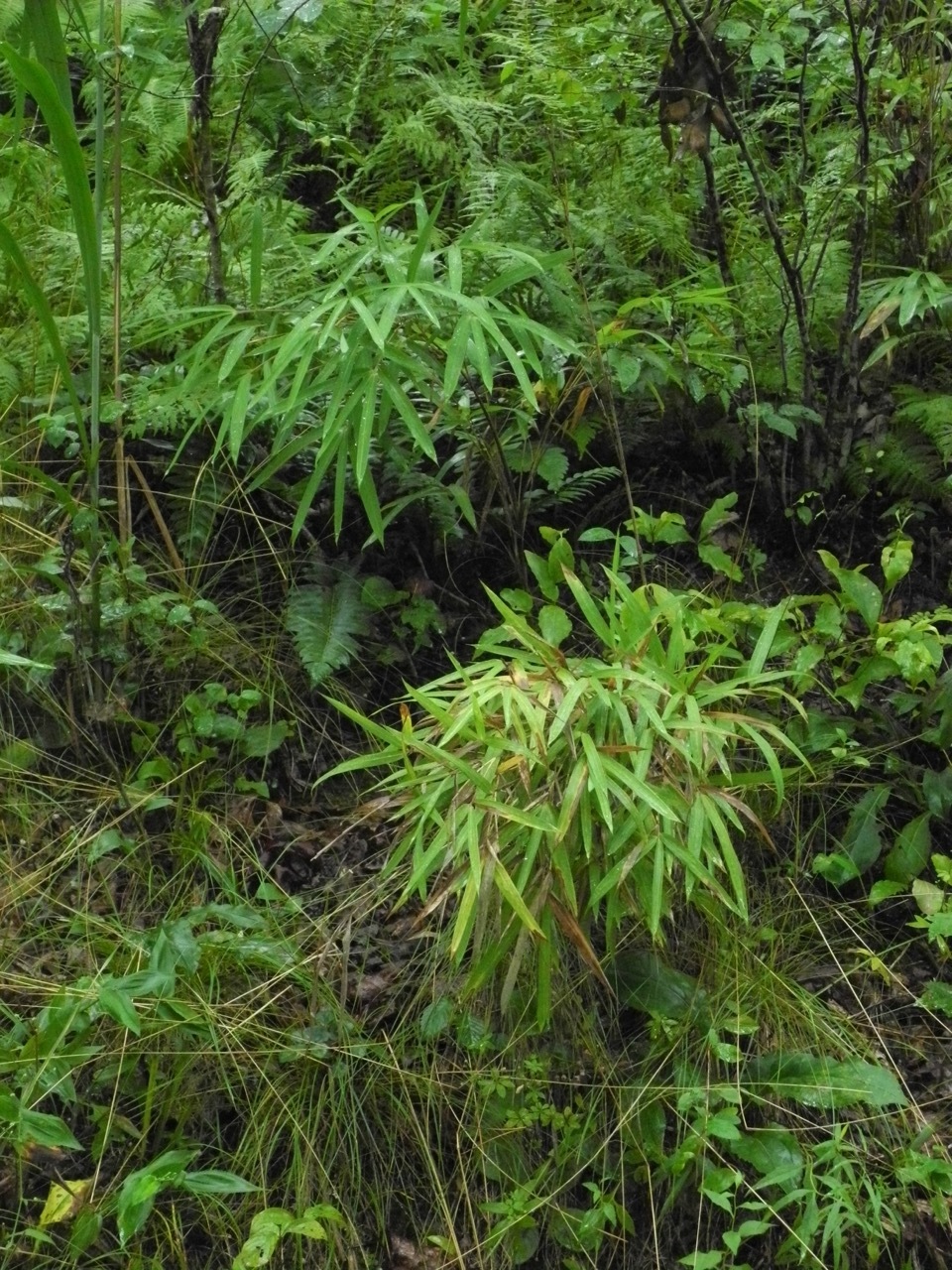
The culms (bamboo stems) are slender, usually under half an inch thick, and typically 1 to 3 feet tall, occasionally reaching about 6 feet in good sites. They are green at first and age to tan or grayish. Each culm rises from a creeping underground rhizome, so a single plant spreads into a loose colony of scattered stems rather than a tight clump. The rhizomes of hill cane, like those of its relatives, are long and running (leptomorph), and they send up new culms at intervals along their length.
Leaves & Branches
Short branches grow from the upper nodes of the culm, and each branch ends in a cluster of 3 to 8 or so leaves arranged in a flat fan. Leaf blades are lance-shaped, mostly 3 to 8 inches long and up to about an inch wide, with fine parallel veins and slightly rough margins. In fall the leaves turn pale and papery and most drop over winter, leaving bare culms. Switch cane and river cane keep most of their leaves through winter, so a cane colony that is leafless in January in upland woods is very likely hill cane.
Flowers & Seeds
Like most bamboos, hill cane flowers rarely and unpredictably. When it does, it produces small, reddish-purple spikelets on short branches, followed by grain-like seeds (caryopses). Flowering has been recorded across much of the growing season, but it is so irregular that most colonies are never seen in flower. In practice the plant is identified by its vegetative features.
Similar Species
River cane is far larger, with culms often 10 to 20 feet tall, and grows mainly in bottomlands and along streams. Switch cane is mid-sized, usually 3 to 8 feet tall, and grows in wet pine savannas, pocosins and stream margins on the Coastal Plain. Hill cane is the small cane of upland slopes in the mountains, foothills and upper Piedmont. Where the species overlap they can hybridize, and some plants are hard to place.
Quick Facts
| Scientific Name | Arundinaria appalachiana Triplett, Weakley & L.G. Clark |
| Family | Poaceae (grass family), bamboo subfamily Bambusoideae |
| Plant Type | Native running bamboo; colonial, winter-deciduous |
| Mature Height | 1–3 ft (occasionally to about 6 ft) |
| Mature Spread | Spreads indefinitely by rhizomes into loose colonies |
| Growth Rate | Moderate |
| Sun Exposure | Part shade to full shade; tolerates sun with adequate moisture |
| Water Needs | Low to medium; dry to moist, well-drained soils |
| Soil Type | Acidic loams, rocky and sandy upland soils |
| Soil pH | About 4.5–6.5 |
| Bloom Time | Rarely flowers; irregular when it does |
| Flower Color | Reddish-purple spikelets (rarely seen) |
| Fall Color | Leaves turn pale tan and mostly drop in winter |
| Fruit | Grain-like caryopsis (rarely produced) |
| Deer Resistant | Moderate; deer browse young shoots occasionally |
| USDA Hardiness Zones | 6–8 |
Native Range
Hill cane is a Southern Appalachian endemic. USDA PLANTS records it from five states: Alabama, Georgia, North Carolina, South Carolina and Tennessee. Its core range is the Blue Ridge Mountains and adjacent upper Piedmont of the western Carolinas and north Georgia, with extensions west through the Ridge and Valley and Cumberland Plateau of Tennessee and into northern Alabama.
Within that range it is a plant of upland forests. It grows on dry to moist slopes, ridges, bluffs and stream terraces under oaks, hickories and pines, often on rocky or thin acidic soils. It also turns up in openings, along woods roads and on the margins of mountain bogs. This upland habit is the key difference from river cane, which dominates alluvial bottomlands, and from switch cane, which is mostly a Coastal Plain wetland plant.
Because hill cane was only described in 2006, older herbarium specimens and state records often list it as Arundinaria gigantea or A. tecta, and its exact range is still being refined. It is not federally listed, but like all native canes it has lost ground to land clearing, fire suppression and development.
📋 Regional plant lists featuring Hill Cane: Alabama, Georgia & Mississippi · North & South Carolina · Kentucky & Tennessee
Growing & Care Guide
Hill cane is rarely sold, but a few Southeastern native nurseries offer it, and it is worth seeking out for naturalistic shade gardens within its range. Buy plants or divisions from a nursery or salvage source rather than digging from wild colonies. Expect a slow start: canes spend their first year or two building rhizomes before they spread.
Light
Hill cane does best in part shade or the dappled light under high deciduous trees, the conditions it has in the wild. It tolerates fairly deep shade, though growth is sparser there. In full sun it needs steady moisture to keep its leaves from scorching.
Soil & Water
Give it acidic, well-drained soil with some organic matter. It tolerates thin, rocky or sandy soil and moderate drought once established, which is unusual for a bamboo. Water regularly during the first growing season, then only in extended dry spells. Avoid heavy, waterlogged clay. If you have a wet site, river cane or switch cane is the better choice.
Planting Tips
Plant divisions or potted plants in spring, setting them at the same depth they grew in the pot, about 2 to 3 feet apart for a groundcover. A light mulch of shredded leaves helps keep the rhizomes moist. Although hill cane is far less aggressive than Asian running bamboos, it does spread by rhizomes. Give it room to colonize, or plant it where a path, lawn edge or root barrier will contain it.
Pruning & Maintenance
Very little maintenance is needed. The leaves drop naturally in winter, and you can leave them as mulch. Remove dead or broken culms in late winter. If the planting looks tired after several years, cutting the whole colony to near the ground in late winter will encourage a flush of fresh culms. Do not fertilize heavily: rich soil favors weeds more than cane.
Propagation
Propagate by dividing rhizomes in late winter or early spring, before new shoots emerge. Dig a section of rhizome with several nodes and at least one culm attached, keep it moist, and replant promptly. Seed is rarely available because the plant flowers so infrequently. Rhizome cuttings kept in moist potting mix in partial shade will usually sprout by early summer.
Landscape Uses
- Woodland groundcover: a loose, knee-high native “lawn” under oaks and pines in dry shade
- Slope stabilization: its running rhizomes help bind soil on wooded banks and road cuts
- Native bamboo collections: the only small, winter-deciduous bamboo native to North America
- Wildlife cover: dense patches give shelter to ground-nesting birds and small mammals
- Restoration plantings: re-establishing native cane in upland forest within its Southern Appalachian range
Wildlife & Ecological Value
Canebrakes, dense stands of native bamboo, were once among the most important wildlife habitats in the Southeast. Hill cane forms smaller, looser stands than river cane, but it plays a similar role in upland forests.
For Pollinators
Hill cane is wind-pollinated and flowers rarely, so it offers little to bees. Its value to insects is as a food plant: native canes are the larval hosts of several Southeastern butterflies, including the southern pearly-eye and several cane-feeding roadside-skippers, whose caterpillars feed on Arundinaria leaves.
For Birds
The low, leafy cover is used by ground- and shrub-nesting birds and by wintering sparrows. When native cane does flower and set seed, the grains are eaten by birds, wild turkeys and small mammals.
For Mammals
White-tailed deer browse tender young shoots, and rabbits and rodents use cane patches for shelter. Historically, canebrakes were prized grazing for bison and, later, for free-ranging livestock.
Ecosystem Role
Hill cane’s dense network of rhizomes holds soil on slopes and stream banks and slows runoff. Its leaf litter adds organic matter to thin upland soils. Native cane is adapted to periodic fire, which clears competing shrubs and stimulates new shoots, so its decline in many areas is linked to fire suppression as well as land clearing.
Cultural & Historical Uses
Native cane was among the most useful plants in the Southeast. Cherokee and other Southeastern peoples used cane, mostly the larger river cane, for double-weave baskets, mats, blowguns, arrow shafts, fish traps and building materials. The smaller hill cane would have been less useful for large items, but it grows in the same mountain landscapes that were the Cherokee homeland.
Early European travelers in the Southeast described vast canebrakes along rivers and in uplands. Most of them were cleared for farming or overgrazed by cattle and hogs in the 18th and 19th centuries, and today native cane survives mainly in fragments. Restoring canebrakes is now a conservation and cultural goal, supported by tribal programs and ecologists.
Hill cane is also a reminder that new plant species are still being described in the eastern United States. Its recognition in 2006 came from careful fieldwork, herbarium study and DNA analysis, and it changed how botanists understand the native bamboos of the region.
Frequently Asked Questions
Is hill cane a true bamboo?
Yes. Hill cane belongs to the bamboo subfamily of the grass family and is one of only three bamboos native to the United States. The other two are river cane and switch cane, both also in the genus Arundinaria.
Does hill cane spread like invasive bamboo?
It spreads by running rhizomes, but much more slowly and less aggressively than Asian running bamboos such as golden bamboo. It forms loose, low colonies rather than tall, impenetrable thickets. Still, plant it where it has room to roam or can be contained by a path or edging.
Why does my hill cane lose its leaves in winter?
That is normal. Hill cane is winter-deciduous: its leaves turn pale and drop in late fall and winter, and new leaves appear in spring. This trait helps distinguish it from evergreen river cane and switch cane.
How tall does hill cane get?
Most culms are 1 to 3 feet tall, and in rich, moist sites they can reach about 6 feet. That makes hill cane the smallest of the three native canes.
Can I grow hill cane outside the Southeast?
It is hardy to about USDA zone 6, so it can survive somewhat north of its native range. For a native planting, though, gardeners outside the Southern Appalachians should choose plants native to their own region. In the Southeast, river cane and switch cane are good alternatives for wetter sites.

Looking for a nursery that carries Hill Cane?
Browse our native plant nursery directory: Alabama · Georgia · North Carolina · South Carolina & Tennessee

