
Sanguinaria (Alternanthera ficoidea)
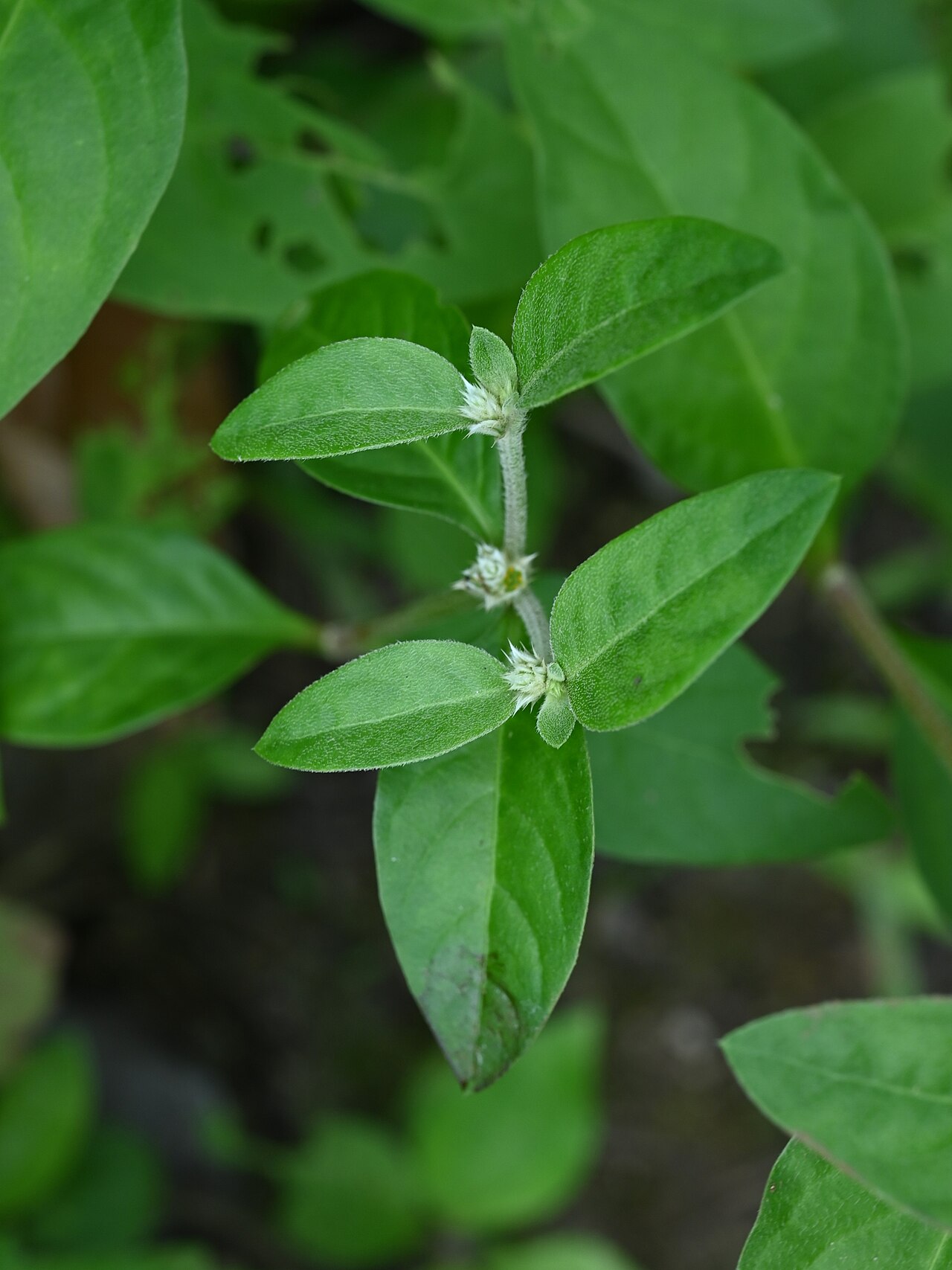
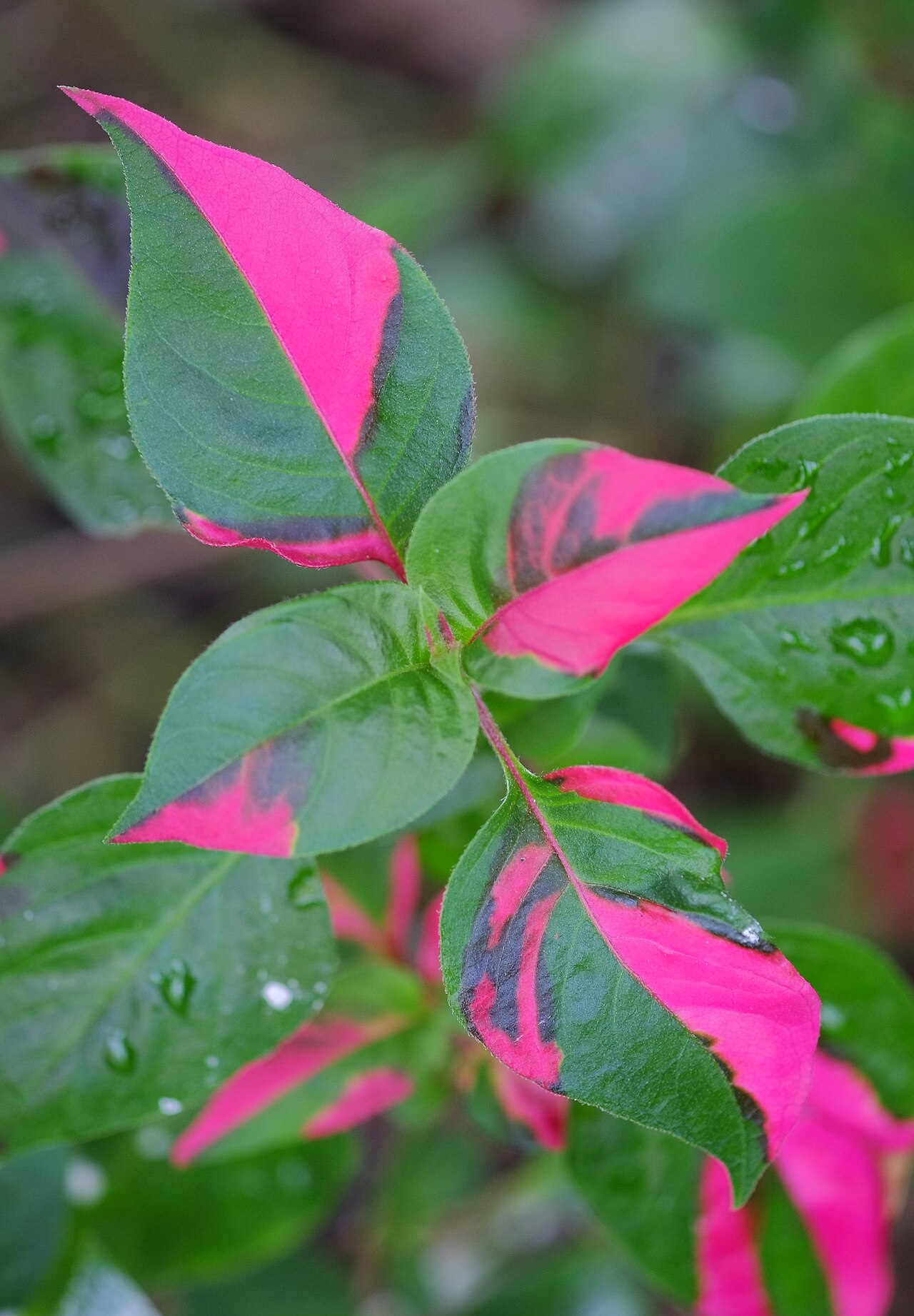
Alternanthera ficoidea, called Sanguinaria in Puerto Rico and known in gardens as joyweed, Joseph’s coat, calico plant, parrot leaf or Brazilian joyweed, is a low, branching herb in the amaranth family (Amaranthaceae). Wild plants have plain green, opposite leaves and small, papery white flower heads tucked into the leaf axils. Gardeners know it better through its many dwarf, colorful cultivars, with leaves splashed in red, pink, orange, yellow, cream or burgundy, which have been used for carpet bedding and edging for more than 150 years.
Within the United States, USDA PLANTS lists it as native only in Puerto Rico. Its wider native range covers the Caribbean, Mexico, Central America and tropical South America. In Florida, Hawaii, Guam and the U.S. Virgin Islands, USDA treats it as introduced, the result of escapes from gardens. (Not to be confused with the woodland wildflower Bloodroot, whose genus name is Sanguinaria.)
This guide covers how to recognize the wild plant and its garden forms, where it grows in Puerto Rico, and how to grow it as a groundcover or bedding plant in zones 10–13, or as a summer annual and houseplant elsewhere.
Identification
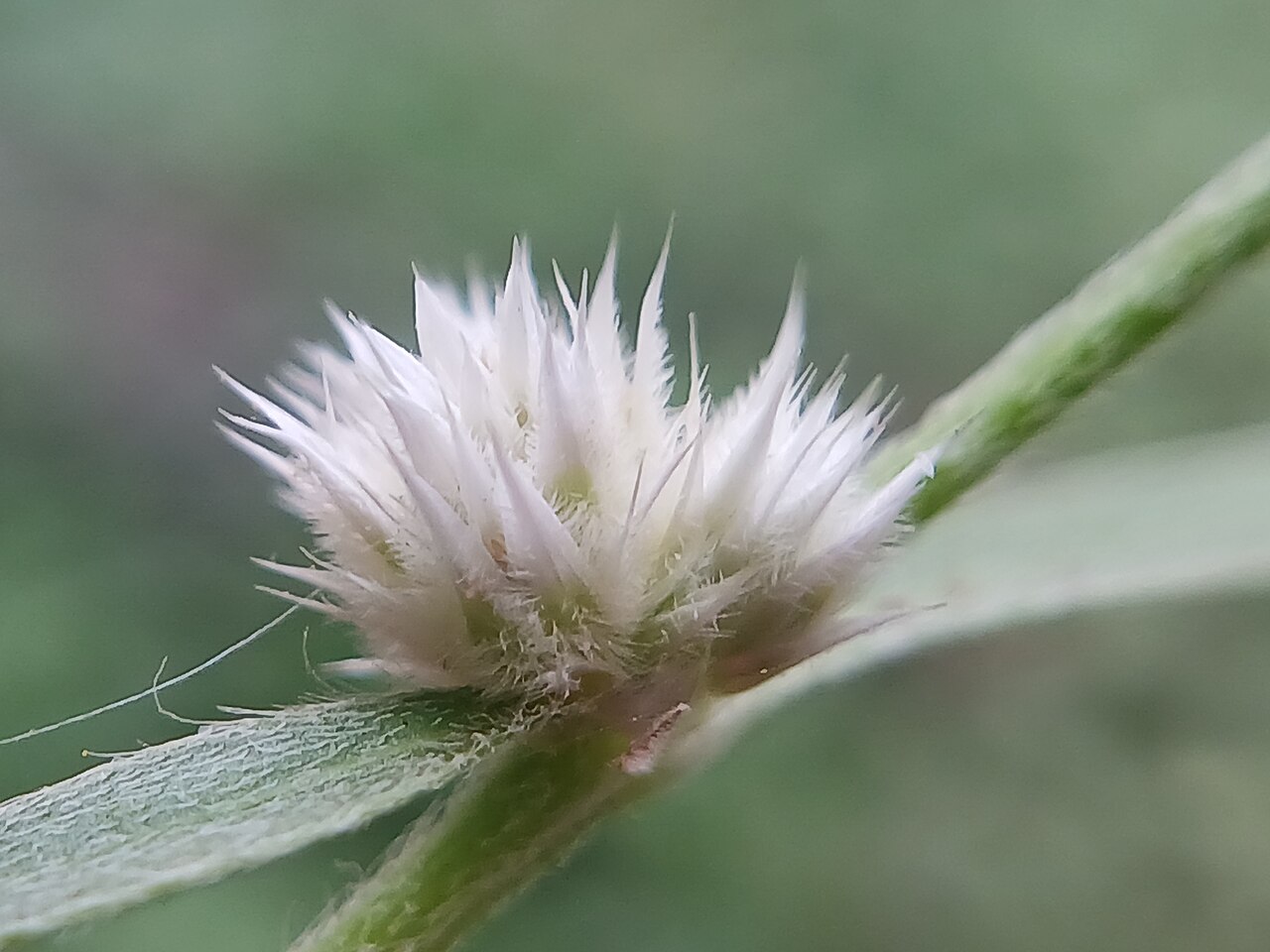
Several alternantheras are grown for colorful foliage, and the names in the trade are muddled: many plants sold as A. ficoidea are labeled A. bettzickiana, A. amoena or A. tenella, which some botanists treat as forms of this species. Wild sanguinaria is recognized by its opposite leaves, its stalkless, rounded white flower heads in the leaf axils, and its sprawling, much-branched habit.
Stems & Growth Habit
A perennial herb, upright to sprawling and often rooting where stems touch the ground, usually 6 to 20 inches tall in the wild. The stems are slender, branched, jointed and lightly hairy, especially at the nodes. Dwarf garden cultivars stay 3 to 8 inches tall and form tight mounds.
Leaves
The leaves are opposite, simple, ovate to lance-shaped or spoon-shaped, usually ¾ to 2 inches long, narrowing to a short stalk. Wild plants are plain green. Cultivated forms may be narrow and twisted, crinkled or broad, and colored red, pink, orange, yellow, cream, purple or bronze, often in patterns.
Flowers
The flowers are tiny and packed into small, round to oval, stalkless heads about ¼ inch long, one to several in each leaf axil. Each flower is surrounded by shiny, papery, white to straw-colored bracts and sepals, which give the head a spiky, chaffy look. They appear much of the year in the tropics.
Fruit
The fruit is a tiny, one-seeded, bladder-like utricle hidden inside the papery sepals. In cultivation the colorful forms are almost always grown from cuttings, because seedlings do not keep the leaf colors.
Quick Facts
| Scientific Name | Alternanthera ficoidea (L.) P. Beauv. |
| Family | Amaranthaceae (amaranth family) |
| Plant Type | Low, branching evergreen perennial herb; grown as a bedding plant or annual |
| Mature Height | 6–20 in wild; 3–12 in for garden cultivars |
| Mature Spread | 1–2 ft |
| Growth Rate | Fast |
| Sun Exposure | Full sun to part shade |
| Water Needs | Moderate; tolerates short dry spells |
| Soil Type | Average to rich, well-drained soil; tolerates rocky and disturbed ground |
| Soil pH | About 6.0–7.5 |
| Bloom Time | Much of the year in the tropics |
| Flower Color | White to straw-colored (small papery heads) |
| Fall Color | None; leaf color varies by cultivar year-round |
| Fruit | Tiny utricle hidden in the papery flower parts |
| Deer Resistant | Moderately; occasionally browsed |
| USDA Hardiness Zones | 10–13 as a perennial; annual or houseplant elsewhere |
Native Range
USDA PLANTS lists Alternanthera ficoidea as native in Puerto Rico. Outside the United States it grows wild through the Caribbean, Mexico, Central America and tropical South America. Herbarium collections from Puerto Rico come from many parts of the island, from the dry south near Salinas to the wet forests of Monte Guilarte in the Cordillera Central and the hills of Cayey and Patillas.
In Puerto Rico it grows on roadsides, rocky banks and road cuts, forest edges, open slopes and stream beds, and in pastures and other disturbed ground. It is most common in sunny or partly shaded places where the soil has been opened up.
Because its colorful garden forms are planted throughout the warm parts of the world, it has escaped and naturalized in Florida, Hawaii, Guam, the U.S. Virgin Islands and other tropical regions. USDA lists those populations as introduced, and this guide maps it as native only in Puerto Rico.
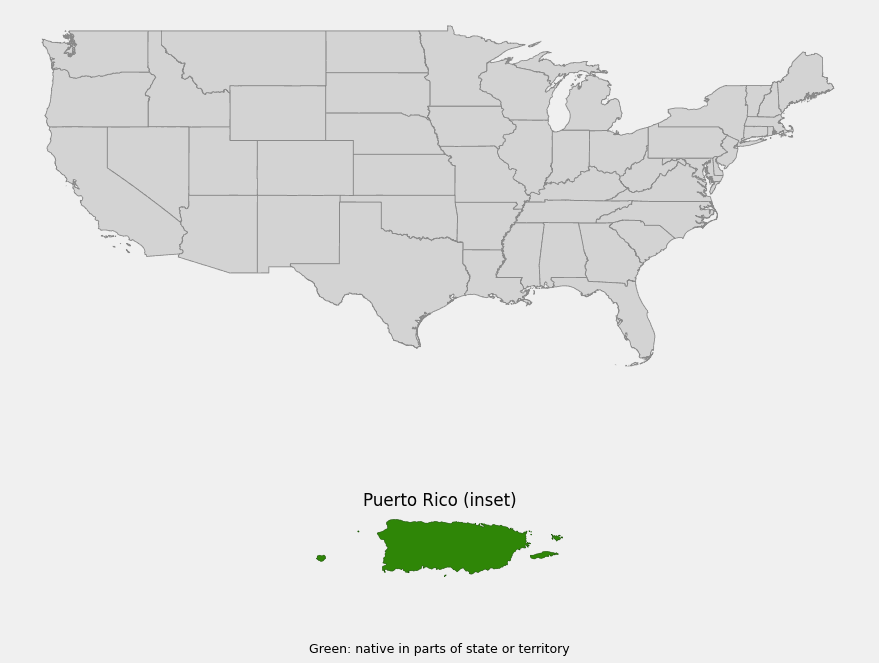
📋 Regional plant lists featuring Sanguinaria: Puerto Rico
Growing & Care Guide
Sanguinaria is one of the easiest plants for warm-climate gardens. The wild green form makes a tough, low groundcover in Puerto Rico, while the colorful cultivars are grown for their foliage as edging, carpet bedding and container plants. In cooler climates it is grown as a summer annual or overwintered indoors.
Light
Full sun brings out the strongest leaf colors in the cultivars. It also grows in part shade, but colors fade toward green and plants grow looser. Indoors, give it a bright window with some direct sun.
Soil & Water
It grows in most well-drained soils, from rocky banks to rich garden beds. Water regularly while plants establish, then whenever the top inch of soil is dry. It tolerates short dry spells but looks best with steady moisture. Avoid soggy soil, which rots the stems.
Planting Tips
Space bedding cultivars 6 to 10 inches apart for a solid carpet, and wild-type plants 12 to 18 inches apart. In zones 10–13 plant any time; elsewhere plant after frost danger has passed, as it is killed by frost and stalls below about 50°F (10°C). In Florida and Hawaii, where it has naturalized, keep it in tended beds and containers and do not plant it near natural areas.
Pruning & Maintenance
Shear the plants every few weeks during the growing season to keep them compact and dense; this is how the classic carpet-bedding patterns were maintained. Remove shoots that revert to green on colored cultivars. Feed lightly once or twice in summer. Watch for aphids, mealybugs and spider mites, especially indoors.
Propagation
Stem cuttings root easily in a week or two in moist soil or water, and this is the only way to keep cultivar colors. Before frost, take cuttings and keep them on a sunny windowsill over winter. Wild-type plants can also be grown from seed.
Landscape Uses
- Carpet bedding and edging: dwarf colored cultivars form tight, shearable patterns
- Groundcover in zones 10–13: tough, low cover for sunny banks and borders in Puerto Rico
- Containers and window boxes: colorful foliage that lasts all season
- Houseplant: bright, sunny windows; trim to keep it bushy
- Native roadside and bank plantings: the wild green form, in Puerto Rico only
Wildlife & Ecological Value
In Puerto Rico, wild sanguinaria is a small but useful part of the herb layer on banks, roadsides and forest edges, where it helps cover bare ground quickly.
For Pollinators
The small flower heads are visited by small bees, flies and other insects. They offer modest amounts of pollen and nectar, but bloom over a long season.
For Birds
Small ground-foraging birds may search its low stems for insects and the tiny seeds, but it is not an important bird food.
For Mammals
It has little direct food value for wild mammals.
Ecosystem Role
As a fast-growing, sprawling plant that roots at the nodes, it helps cover and hold bare, disturbed soil on slopes and road cuts during heavy tropical rains, and it shelters insects, spiders and lizards close to the ground.
Cultural & Historical Uses
Linnaeus described the plant as Gomphrena ficoidea, placing it with globe amaranths, and the French naturalist Palisot de Beauvois moved it to Alternanthera. The genus name refers to the alternately sterile and fertile stamens of some species, and ficoidea is usually explained as “like Ficoides,” an old name for the ice plants or fig-marigolds.
Colorful forms of Alternanthera became fashionable in Victorian Europe and North America for carpet bedding: elaborate, closely sheared floral clocks, crests and lettering laid out in public parks. Cultivars such as ‘Red Threads’, ‘Partytime’ and ‘Snow Carpet’ descend from that tradition and remain popular today.
In Puerto Rico and much of Latin America the plant has local names such as sanguinaria, and it has been used in traditional home remedies. Do not use it medicinally without professional advice.
Frequently Asked Questions
Is Alternanthera ficoidea native to the United States?
Yes, in Puerto Rico. USDA PLANTS lists it as native there and as introduced in Florida, Hawaii, Guam and the U.S. Virgin Islands, where garden plants have escaped.
Is joyweed (Alternanthera) toxic to pets?
Alternanthera is not known as a significantly toxic plant, and some related species are eaten as greens in the tropics. However, reliable toxicity data for this species are limited, so keep ornamental plants away from pets and children that chew plants.
Why are my alternanthera leaves turning green?
Too little light. Colored cultivars need full sun or very bright light to keep their reds, pinks and oranges. Also remove any plain green shoots, which can outgrow the colored ones.
Can I keep Joseph’s coat over winter?
It is killed by frost. In cold areas, take cuttings in late summer or pot up a plant and keep it in a sunny window at 55°F (13°C) or warmer, then plant out again after the last frost.
How do I make alternanthera bushy?
Pinch or shear it every few weeks during the growing season. It responds by branching heavily, which is why it has long been used for formal carpet bedding.

Looking for a nursery that carries Sanguinaria?
Our nursery directory does not yet include Puerto Rico. Browse the native plant nursery directory by state: Alabama–Arkansas · California · Colorado–Hawaii · Idaho–Kansas · Kentucky–Montana · Nebraska–Oklahoma · Oregon · Pennsylvania–Virginia · Washington · West Virginia–Wyoming

