
Arctic Cottongrass (Eriophorum callitrix)
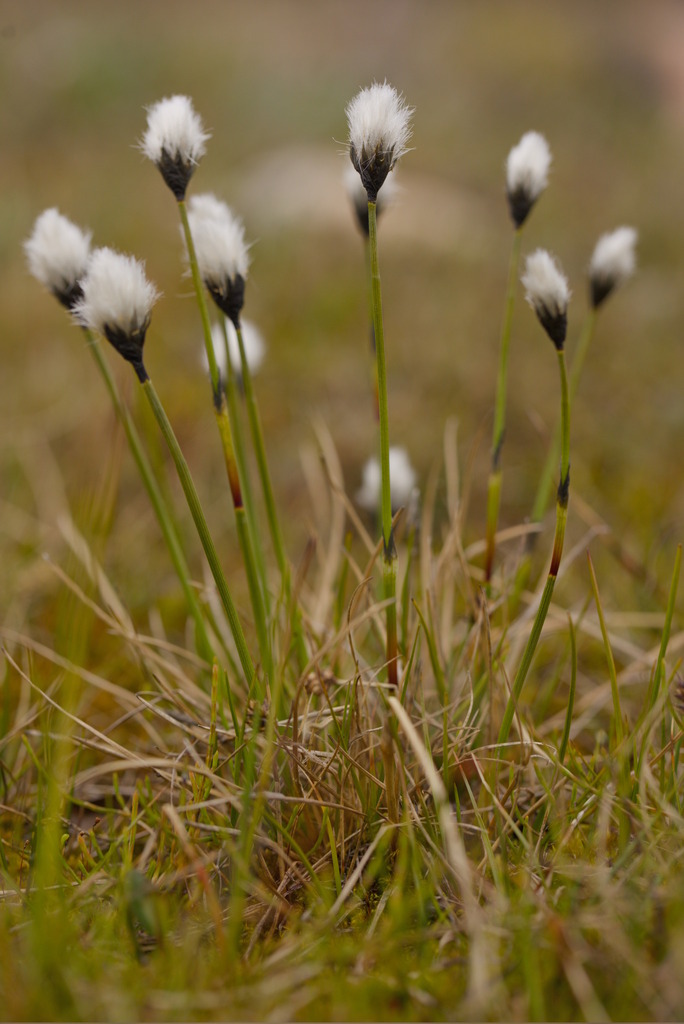
Eriophorum callitrix, known as Arctic Cottongrass or arctic cotton, is a small, tufted sedge of wet arctic and alpine tundra. In early summer each of its slender stems produces a single small spikelet, which soon develops into a round, snow-white tuft of silky bristles, the “cotton” that carries its seeds on the wind. Despite the name, cottongrasses are not grasses but sedges, in the family Cyperaceae.
It grows across arctic North America and Greenland and in northeastern Asia, reaching its southern limit in the United States on a few high plateaus in Montana and Wyoming. In Nunavut and across the Canadian Arctic it is one of the most familiar tundra plants.
Several other cottongrasses are native to the United States, including the Tussock Cottongrass (E. vaginatum), which also has single heads, the multi-headed Common Cottongrass (E. angustifolium), and the eastern Tawny Cottongrass (E. virginicum). This guide covers how to tell arctic cottongrass apart, where it grows, how it can be grown, and its value to tundra wildlife.
Identification
Arctic cottongrass is a small, clump-forming cottongrass with one head per stem. The key features are its dense tufts, its inflated, bladeless upper stem sheath, and its fine, short leaves.
Growth Habit & Leaves
It grows in dense tufts, without long creeping rhizomes, 4 to 16 inches tall at fruiting. The leaves are mostly basal, very narrow (about 1 mm wide) and channeled or thread-like, and much shorter than the flowering stems. The bases of the tufts are wrapped in brown, persistent old sheaths.
Stems & Sheaths
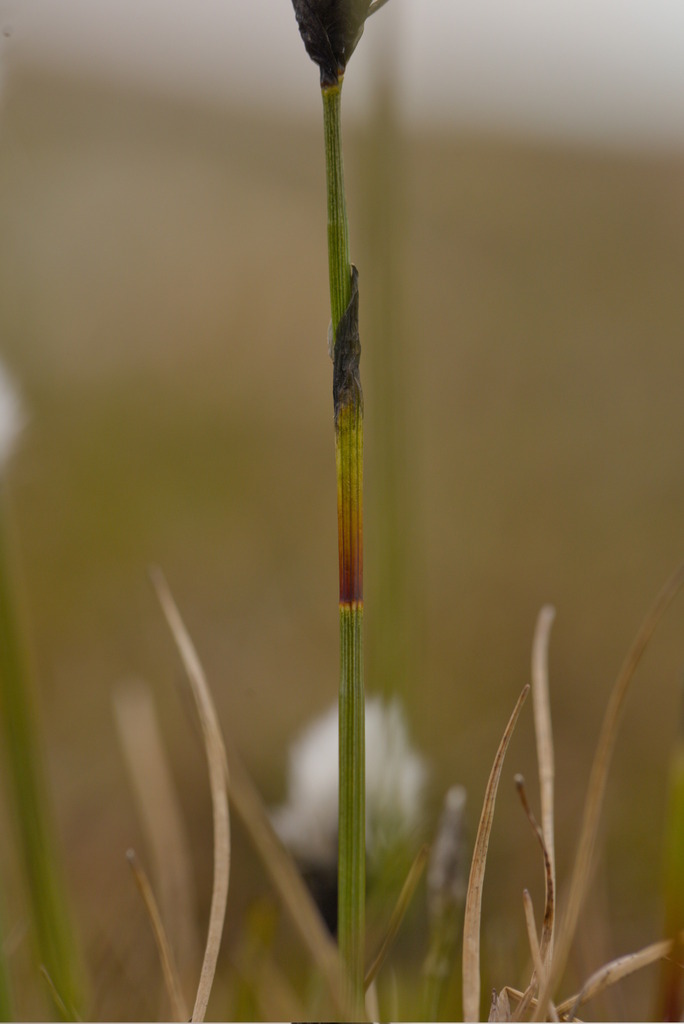
The stems are smooth, slender and round to slightly three-angled. The uppermost stem sheath is distinctly inflated and has no blade or only a tiny one, and it often has a dark tip. This inflated sheath is shared with tussock cottongrass but not with the rhizomatous single-headed species.
Flowers
In June and July each stem bears one erect spikelet, about ⅜ to ¾ inch long, with no leafy bracts below it. The spikelet is covered with blackish-gray to dark lead-colored scales, from which the tiny flowers and their yellow anthers emerge.
Fruit & Look-alikes
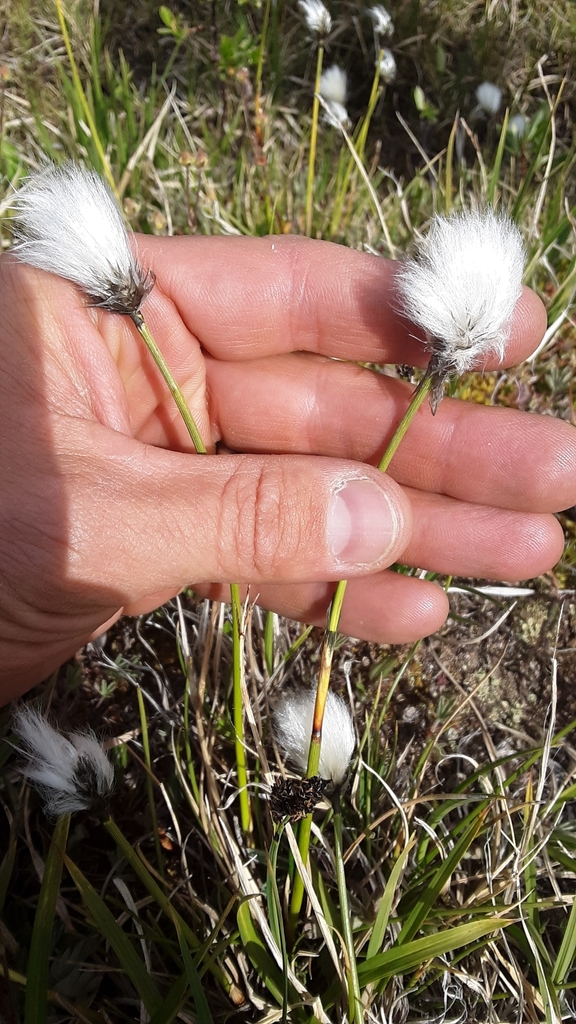
After flowering, the bristles around each tiny seed (achene) lengthen into a dense, round, bright white head about 1 inch across, in July and August. Tussock Cottongrass is generally larger and forms big, firm tussocks; botanists distinguish the two mainly by details of the spikelet scales and anthers. Scheuchzer’s cottongrass (E. scheuchzeri) also has single heads but spreads by rhizomes and lacks the inflated upper sheath. Common Cottongrass has several drooping heads on each stem, held above leafy bracts.
Quick Facts
| Scientific Name | Eriophorum callitrix |
| Family | Cyperaceae (sedge family) |
| Plant Type | Tufted perennial sedge (cottongrass) |
| Mature Height | 4–16 in |
| Mature Spread | 3–8 in clumps |
| Growth Rate | Slow |
| Sun Exposure | Full sun |
| Water Needs | Wet; saturated tundra and fen soils |
| Soil Type | Wet peat, silt or gravel; often calcareous |
| Soil pH | Neutral to alkaline (about 6.5–8.0) |
| Bloom Time | June–July; cottony heads July–August |
| Flower Color | Dark gray spikelet with yellow anthers; white cottony fruiting head |
| Fall Color | Leaves turn tan to reddish-brown |
| Fruit | Achenes with long white bristles |
| Deer Resistant | Grazed by caribou and muskoxen in its range |
| USDA Hardiness Zones | 1–4 |
Native Range
Arctic cottongrass is an arctic species found across northern Alaska and Canada, Greenland and northeastern Russia. USDA PLANTS lists it as native in Alaska, Montana and Wyoming. In Alaska it is widespread on the North Slope and in the Brooks Range, the western and interior tundra, and mountain areas farther south. In Canada it ranges from Yukon, the Northwest Territories and Nunavut to the northern parts of British Columbia, Alberta, Saskatchewan, Manitoba, Ontario and Quebec, Labrador and Newfoundland.
In the lower 48 states it is known only from a few alpine sites in the Rocky Mountains, most notably on the high plateaus of the Beartooth Mountains along the Montana-Wyoming border. These are outlying, relict populations of an arctic plant that found refuge on cold, wet alpine tundra after the last ice age.
It grows in wet, often calcareous tundra, fens, sedge meadows, lakeshores, pond margins, wet gravel and frost-heaved ground, typically where snowmelt keeps the soil saturated through much of the short summer.
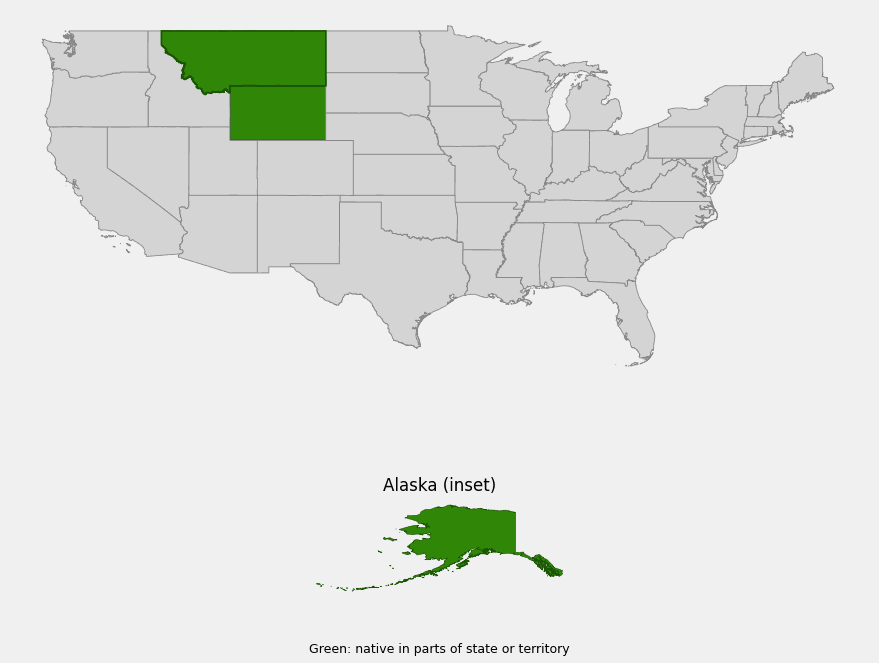
📋 Regional plant lists featuring Arctic Cottongrass: Alaska · Montana & Wyoming
Growing & Care Guide
Arctic cottongrass is an arctic and alpine specialist and is seldom grown outside its native range. It needs cold winters, cool summers, full sun and soil that stays wet. Plants are rarely offered commercially. Never dig it from the wild, especially from the rare alpine populations in Montana and Wyoming. Gardeners elsewhere who want cottongrass in a bog garden will have better results with Common Cottongrass or, in the East, Tawny Cottongrass.
Light
Full sun. It grows on open tundra with no shade.
Soil & Water
Constantly wet to saturated soil is essential. In a bog garden or pond margin, use a mix of peat and sand or gravel, and keep it wet with rainwater. It tolerates neutral to alkaline water better than many bog plants, reflecting its preference for calcareous tundra.
Planting Tips
Suitable only for cold climates, such as much of Alaska, where it can be planted in spring at the edge of a pond, wet swale or bog garden in full sun. Space small clumps 6 to 12 inches apart.
Pruning & Maintenance
Little care is needed. Remove dead leaves in spring if desired, and keep taller plants from shading it. Do not fertilize.
Propagation
It can be grown from fresh seed sown on the surface of wet, sandy peat and given a cold period, or increased by carefully dividing established clumps in spring. Seedlings grow slowly.
Landscape Uses
- Tundra revegetation: native cover for disturbed wet tundra and gravel pads in Alaska
- Bog gardens in cold climates: for its bright white summer heads
- Pond and wetland edges: in Alaska and other subarctic gardens
- Nature study: a characteristic flower of the arctic summer
Wildlife & Ecological Value
Arctic cottongrass is part of the sedge-dominated wet tundra that feeds many of the Arctic’s large grazers and nesting birds.
For Pollinators
Cottongrasses are wind-pollinated, but small flies and bees visit the flowering spikelets for pollen early in the summer.
For Birds
The wet tundra where it grows is the summer home of shorebirds, geese, ducks and ptarmigan. Geese graze the young shoots, and some birds use the cottony fluff to line their nests.
For Mammals
Caribou and muskoxen graze cottongrasses, especially the nutritious new shoots in early summer, and lemmings and voles feed on the leaves and stem bases.
Ecosystem Role
Its dense tufts help build and hold peat in wet tundra, and its seeds, carried by their cottony bristles, colonize bare, wet ground such as frost boils and disturbed gravel. Cottongrasses also transport oxygen to their roots through air channels, letting them thrive in waterlogged, oxygen-poor soils.
Cultural & Historical Uses
The species was named Eriophorum callitrix by the poet-naturalist Adelbert von Chamisso, and the name was formally published by the Russian-German botanist Carl Anton von Meyer in the 19th century. Eriophorum means “wool-bearing” in Greek, and callitrix means “beautiful hair.”
Inuit across the Canadian Arctic gathered cottongrass fluff to use as wicks in qulliq, the traditional stone oil lamps, and as absorbent material. Some peoples also ate the tender stem bases. Cottongrass heads are a familiar symbol of the brief arctic summer.
In the Beartooth Mountains of Montana and Wyoming, arctic cottongrass is one of several arctic plants that make the high plateau botanically unusual. These relict populations are sensitive to trampling and to warming, so staying on durable surfaces when visiting alpine wetlands helps protect them.
Frequently Asked Questions
Is arctic cottongrass a grass?
No. Cottongrasses are sedges (family Cyperaceae). The “cotton” is made of the long, silky bristles attached to each tiny seed, which carry it on the wind.
How is it different from tussock cottongrass?
Both have a single cottony head on each stem and an inflated upper stem sheath. Tussock cottongrass forms larger, firmer tussocks and is far more widespread, including in the eastern U.S. and Canada. The two are distinguished mainly by details of the spikelet scales and anthers.
Where can I see arctic cottongrass in the lower 48?
Only at a few alpine sites in the Rocky Mountains, chiefly on the Beartooth Plateau along the Montana-Wyoming border. In Alaska and arctic Canada it is common on wet tundra.
When does arctic cottongrass bloom?
The dark spikelets flower in June and early July, and the white cottony heads develop in July and August.
Can I grow arctic cottongrass in a garden?
Only in cold climates with cool summers and constantly wet soil, such as Alaska. In most of the U.S., common cottongrass or tawny cottongrass are better choices for a bog garden.


