
Hāpuʻu ʻIʻi (Cibotium menziesii)
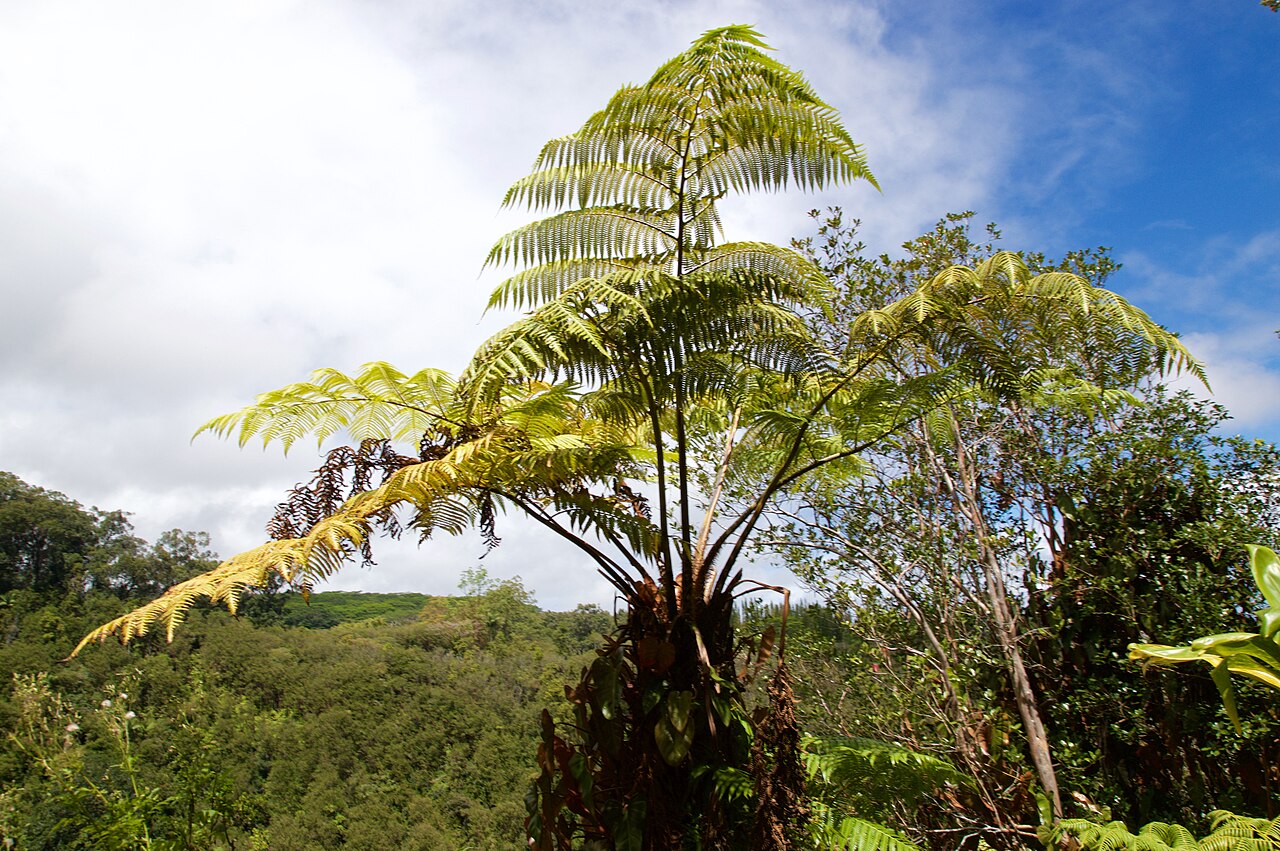
Cibotium menziesii, called Hāpuʻu ʻIʻi or simply hāpuʻu, is the largest of Hawaiʻi’s native tree ferns. It is endemic to the Hawaiian Islands and grows in wet and mesic forests on Kauaʻi, Oʻahu, Molokaʻi, Lānaʻi, Maui and Hawaiʻi Island. Mature plants form a stout, fibrous trunk topped by a crown of huge, arching, bright green fronds, and old plants can reach 20 feet or more. Under the native forest canopy, these tree ferns create the lush, layered understory that is typical of Hawaiian rain forest.
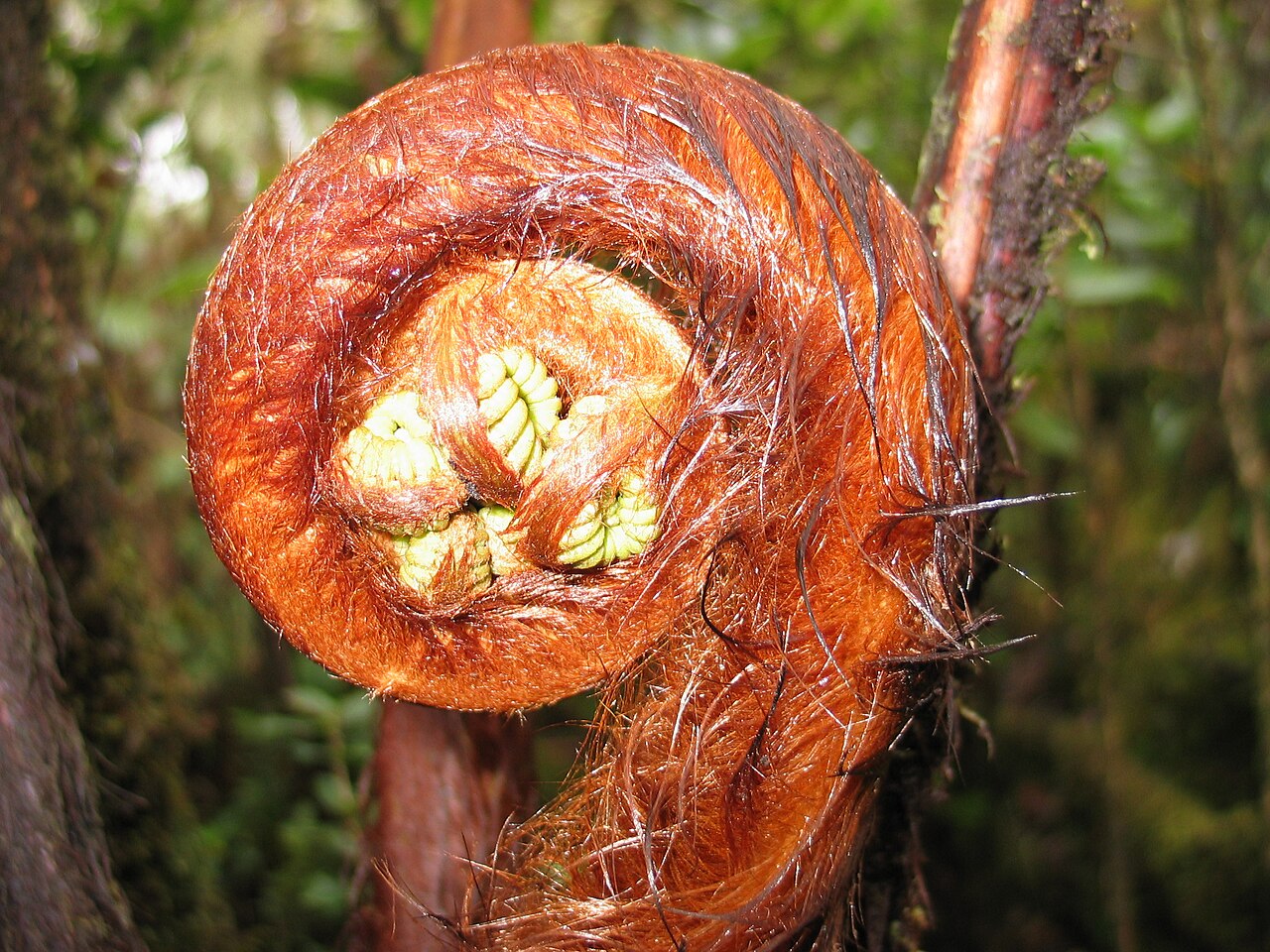
Hawaiʻi has several native Cibotium tree ferns. Hāpuʻu ʻiʻi is easiest to recognize by the stiff, coarse, reddish-brown to blackish hairs on its fiddleheads and frond stalks. The Hawaiian word ʻiʻi refers to these hairs, and the plant is sometimes called the “man fern.” By contrast, the more common Hāpuʻu Pulu (Cibotium glaucum) has soft, silky golden hairs (pulu) and fronds that are pale whitish beneath.
Tree ferns are now widely grown in Hawaiian gardens and sold as trunk logs that sprout when planted. This guide covers how to identify hāpuʻu ʻiʻi, where it grows in the wild, its role in native forests, its cultural importance, and how to grow it responsibly in Hawaiʻi or other frost-free, humid gardens (USDA zones 10–12).
Identification
Hāpuʻu ʻiʻi can be identified by its size, its trunk, and especially the hairs on its new growth. Compare several features, because the Hawaiian tree ferns hybridize and plants can be intermediate.
Trunk
The trunk is thick and upright, made of a dense mass of roots and old frond bases around a soft, starchy core. It grows slowly, about an inch or two a year in the wild, and on old plants may reach 20 to 30 feet tall, making it the tallest native tree fern in Hawaiʻi. Old trunks are often covered in mosses, ferns and seedlings of other plants.
Fronds
The fronds are very large, up to about 10 feet long or more, and are divided twice (bipinnate) into many narrow segments with slightly toothed or lobed edges. They are bright green and somewhat glossy on top and remain green on the underside. The broad, arching crown can be 15 feet or more across.
Hairs & Fiddleheads
The young fiddleheads and lower frond stalks are covered with stiff, coarse, shiny hairs that are dark reddish-brown to nearly black. These are noticeably harsher than the soft, golden or tan pulu hairs of hāpuʻu pulu and the other Cibotium species. The fiddleheads can be several inches across as they unroll.
Spores
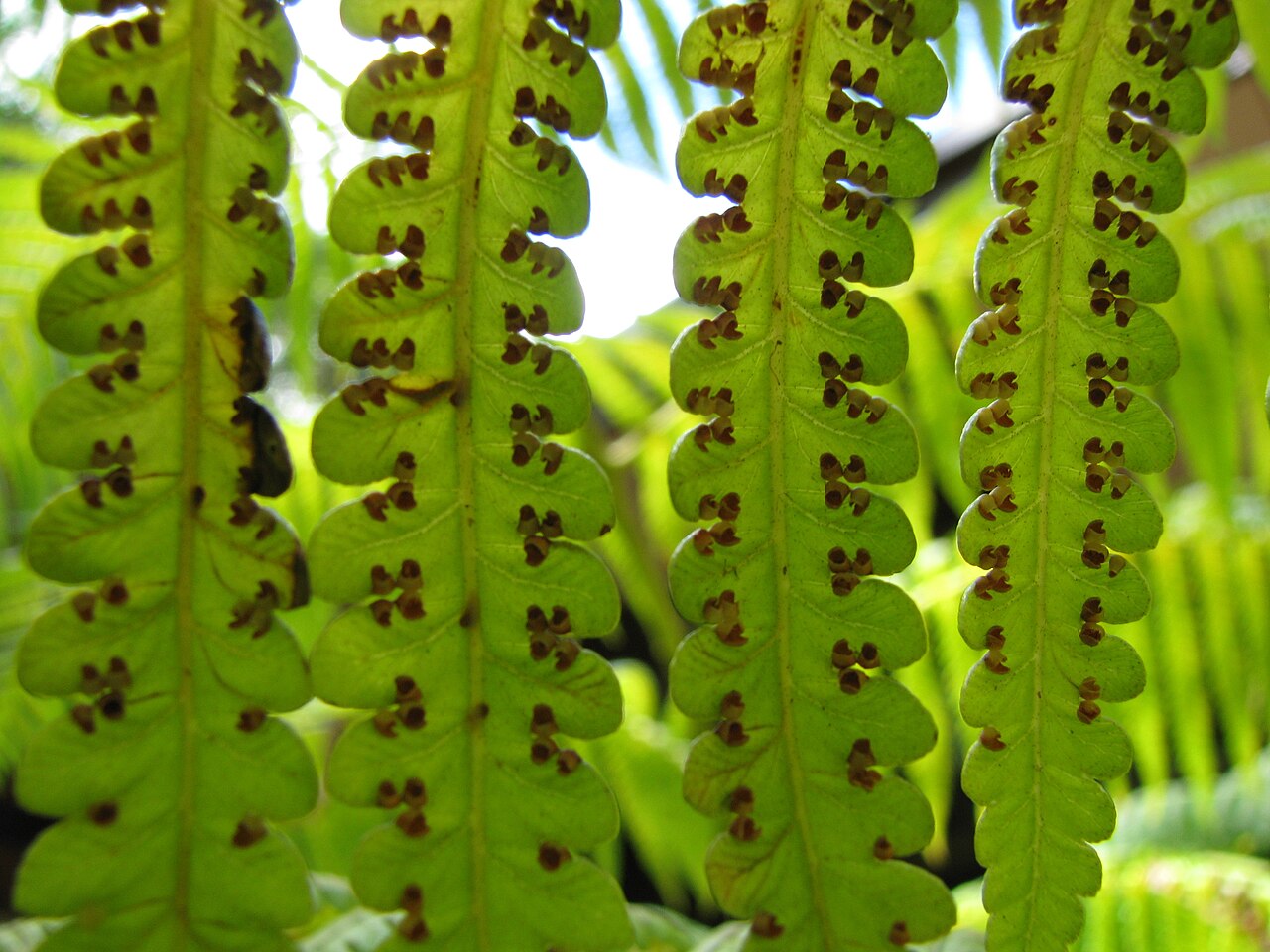
Spores are produced in round sori along the edges of the frond segments, at the tips of the veins. Each sorus is protected by a two-lipped, cup-like cover (indusium). Ripe sori turn brown, and the fine spores are released and carried by wind.
Look-alikes
Hāpuʻu Pulu has soft golden hairs and whitish frond undersides. The invasive Australian tree fern (Sphaeropteris cooperi) has a slender trunk with oval leaf scars, spiny stalks with pale scales and narrower fronds. It spreads aggressively into native forest and should not be planted in Hawaiʻi.
Quick Facts
| Scientific Name | Cibotium menziesii Hook. |
| Family | Cibotiaceae (Hawaiian tree fern family); formerly Dicksoniaceae |
| Plant Type | Evergreen tree fern; endemic to Hawaiʻi |
| Mature Height | 6–20 ft in gardens; to 30 ft in old forest |
| Mature Spread | 10–15 ft (frond crown) |
| Growth Rate | Slow |
| Sun Exposure | Part shade to shade; morning sun in cool, wet sites |
| Water Needs | High; constantly moist soil and humid air |
| Soil Type | Rich, humusy, well-drained volcanic or organic soil |
| Soil pH | Acidic, about 4.5–6.5 |
| Bloom Time | None (fern); spores produced through the year |
| Flower Color | None |
| Fall Color | None; evergreen |
| Fruit | None; spores in marginal sori |
| Deer Resistant | Damaged by feral pigs; deer and goats may browse |
| USDA Hardiness Zones | 10–12 (frost-free) |
Native Range
Hāpuʻu ʻiʻi is endemic to Hawaiʻi; it grows wild nowhere else. USDA PLANTS lists it as native to Hawaiʻi, and it occurs on all the main islands except Niʻihau and Kahoʻolawe: Kauaʻi, Oʻahu, Molokaʻi, Lānaʻi, Maui and Hawaiʻi Island.
It grows in mesic and wet forests, mostly between about 1,000 and 6,000 feet in elevation. It is commonly found in the understory of ʻōhiʻa and koa forests, in wet gulches and along forested ridges. On Oʻahu it is found in the Koʻolau and Waiʻanae Mountains, including near the summit of Mount Kaʻala. On Maui and Hawaiʻi Island it can be abundant in forest reserves and national parks, where it forms part of a dense tree fern layer with hāpuʻu pulu.
Native tree fern understories have declined where forests were cleared for ranching and agriculture, and where feral pigs damage the trunks. In the past, large numbers of hāpuʻu trunks were also harvested from forests on Hawaiʻi Island for use in landscaping and as plant-growing medium. Protected forests in national parks, state reserves and watershed partnerships now hold the largest healthy populations.
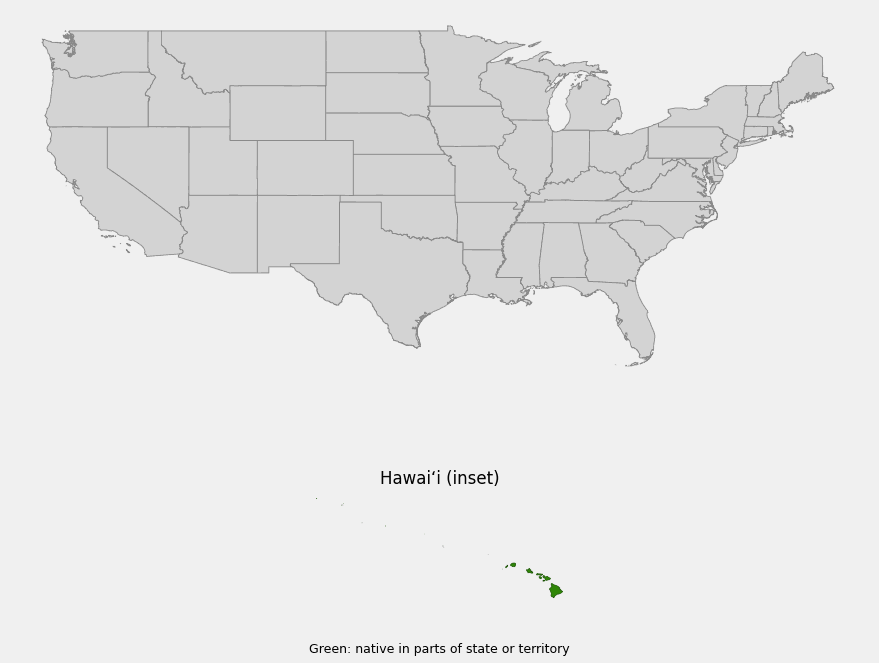
📋 Regional plant lists featuring Hāpuʻu ʻIʻi: Hawaii
Growing & Care Guide
In Hawaiʻi, hāpuʻu ʻiʻi is a superb plant for shady, moist gardens, especially at middle to upper elevations, where it grows into a dramatic tree fern. Elsewhere it can be grown only in frost-free, humid climates or in a large conservatory. It is not a practical houseplant because of its size and its need for high humidity.
Light
Give it partial to full shade, or morning sun with afternoon shade. In cool, cloudy, upland areas it tolerates more sun, but in hot, dry lowland gardens strong sun will scorch the fronds. Protect it from strong, drying winds, which tear the large fronds.
Soil & Water
It needs constant moisture. Plant in rich, humusy, well-drained, acidic soil, and keep both the soil and the trunk moist. Tree ferns take up water through the roots that cover the trunk, so in drier areas water the trunk as well as the ground, especially during dry spells. Mulch with leaf litter to keep the roots cool.
Planting Tips
Plant spore-grown or nursery-raised plants where possible. Trunk logs are often sold in Hawaiʻi; buy only from sellers who obtain them legally, for example from permitted land clearing, and never cut tree ferns from forests or protected areas. Plant a log about a foot deep, keep it upright and keep it watered until new fronds appear, which can take several months. Avoid planting the invasive Australian tree fern, which competes with native hāpuʻu.
Pruning & Maintenance
Cut off old, brown fronds close to the trunk to keep the plant tidy, but leave a few dead fronds if you like the natural “skirt” look. Never cut the growing tip at the top of the trunk, because the plant cannot regrow from below it. Feed lightly with a balanced organic fertilizer during the growing season, especially in containers.
Propagation
Hāpuʻu ʻiʻi is propagated from spores sown on a sterile, moist medium under high humidity. It is slow: sporelings take several years to form trunks. Trunk sections and fallen trunks can also root and produce new fronds, which is how logs sold in nurseries regrow.
Landscape Uses
- Shade and woodland gardens in Hawaiʻi: a dramatic tree fern for moist, shady sites
- Native forest restoration: rebuilds the tree fern layer under ʻōhiʻa and koa
- Tropical and conservatory gardens: a bold, architectural specimen in frost-free, humid climates
- Living mounts for epiphytes: old trunks naturally host native ferns, mosses and orchids
- Cultural plantings: an important plant in Hawaiian tradition
Wildlife & Ecological Value
Tree ferns are a structural backbone of Hawaiian wet forests, and hāpuʻu ʻiʻi supports many other species.
For Pollinators
As a fern, hāpuʻu ʻiʻi has no flowers and offers no nectar or pollen. However, the shaded, humid understory it creates is home to many native insects, including native moths whose larvae feed on ferns.
For Birds
Native forest birds such as the ʻapapane, ʻamakihi and ʻelepaio forage for insects among the fronds and trunks. The dense crowns also provide shelter and nesting sites in the forest understory.
For Mammals
Hawaiʻi has only two native land mammals, a bat and a seal, so hāpuʻu has few native mammal associates. Feral pigs are a serious threat: they knock over tree ferns to eat the soft, starchy core of the trunk. The hollowed trunks then collect water where non-native mosquitoes breed, which helps spread avian malaria to native birds.
Ecosystem Role
The trunks act as “nurse logs”: seedlings of ʻōhiʻa and other native plants, along with ferns, mosses and liverworts, often grow directly on them. The large fronds create the dense, shaded, humid understory typical of Hawaiian rain forest, and the plants help hold soil on steep slopes and capture rain and fog, which supports island watersheds.
Cultural & Historical Uses
The species was named in honor of Archibald Menzies, the Scottish surgeon and naturalist who sailed with Captain George Vancouver and collected plants in Hawaiʻi in the 1790s. The English botanist William Jackson Hooker described it in the 1800s.
Hāpuʻu were important to Native Hawaiians. The starchy core of the trunk was cooked and eaten, mainly in times of famine, and was also fed to pigs. The young fiddleheads of some tree ferns were cooked as food. In the 1800s the soft pulu hairs of the related hāpuʻu pulu were harvested in large quantities to stuff pillows and mattresses, an industry that damaged many tree fern forests.
In the 1900s, hāpuʻu trunks were cut and shipped across Hawaiʻi and to the mainland for landscaping and as a growing medium for orchids and anthuriums. Today, conservation groups encourage gardeners to use spore-grown plants or logs salvaged legally from land clearing, and to protect the tree fern forests that remain.
Frequently Asked Questions
What is the difference between hāpuʻu ʻiʻi and hāpuʻu pulu?
Look at the hairs on the fiddleheads and stalks. Hāpuʻu ʻiʻi (Cibotium menziesii) has stiff, coarse, reddish-brown to blackish hairs and green frond undersides. Hāpuʻu Pulu (Cibotium glaucum) has soft, golden, silky hairs and whitish undersides. Hāpuʻu ʻiʻi is also usually taller.
How tall does hāpuʻu ʻiʻi grow?
It grows slowly, but very old plants can reach 20 to 30 feet in wet native forests. In gardens, 6 to 15 feet is more typical, with fronds up to about 10 feet long.
Can I grow hāpuʻu as a houseplant?
Not easily. It needs high humidity, constant moisture and lots of space. It is best grown outdoors in frost-free, humid areas such as Hawaiʻi (USDA zones 10–12) or in a large, humid conservatory.
Is it legal to collect hāpuʻu from the forest?
Do not cut or dig tree ferns from forests, parks or reserves. Removing plants from state and federal lands is prohibited, and wild harvest damages native forests. Buy spore-grown plants or logs from nurseries that obtain them legally.
Is hāpuʻu ʻiʻi endangered?
No. It is not federally listed and is still common in protected wet forests. However, feral pigs, invasive plants such as the Australian tree fern, and past harvesting have reduced it in many areas.

Looking for a nursery that carries Hāpuʻu ʻIʻi?
Browse our native plant nursery directory: Hawaii

