
Button Cactus (Epithelantha micromeris)
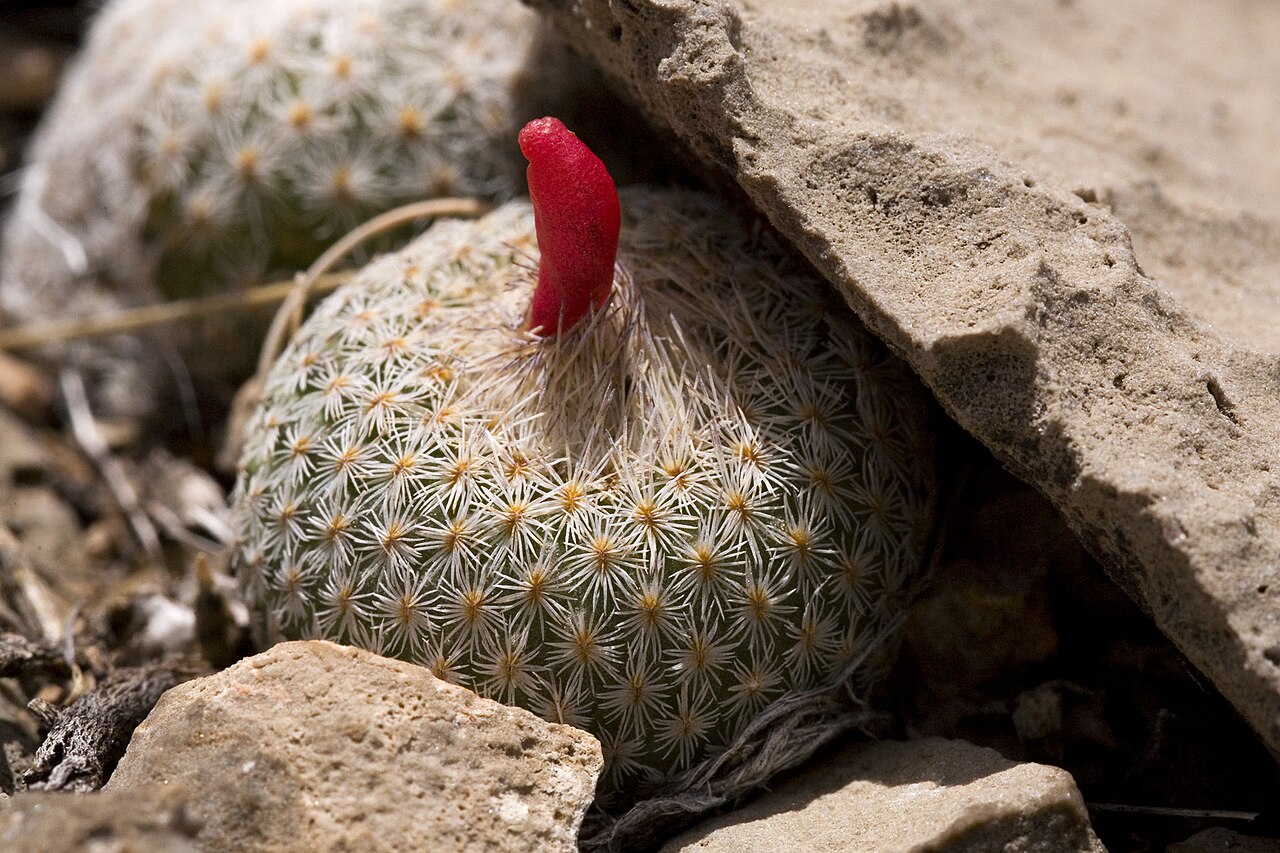
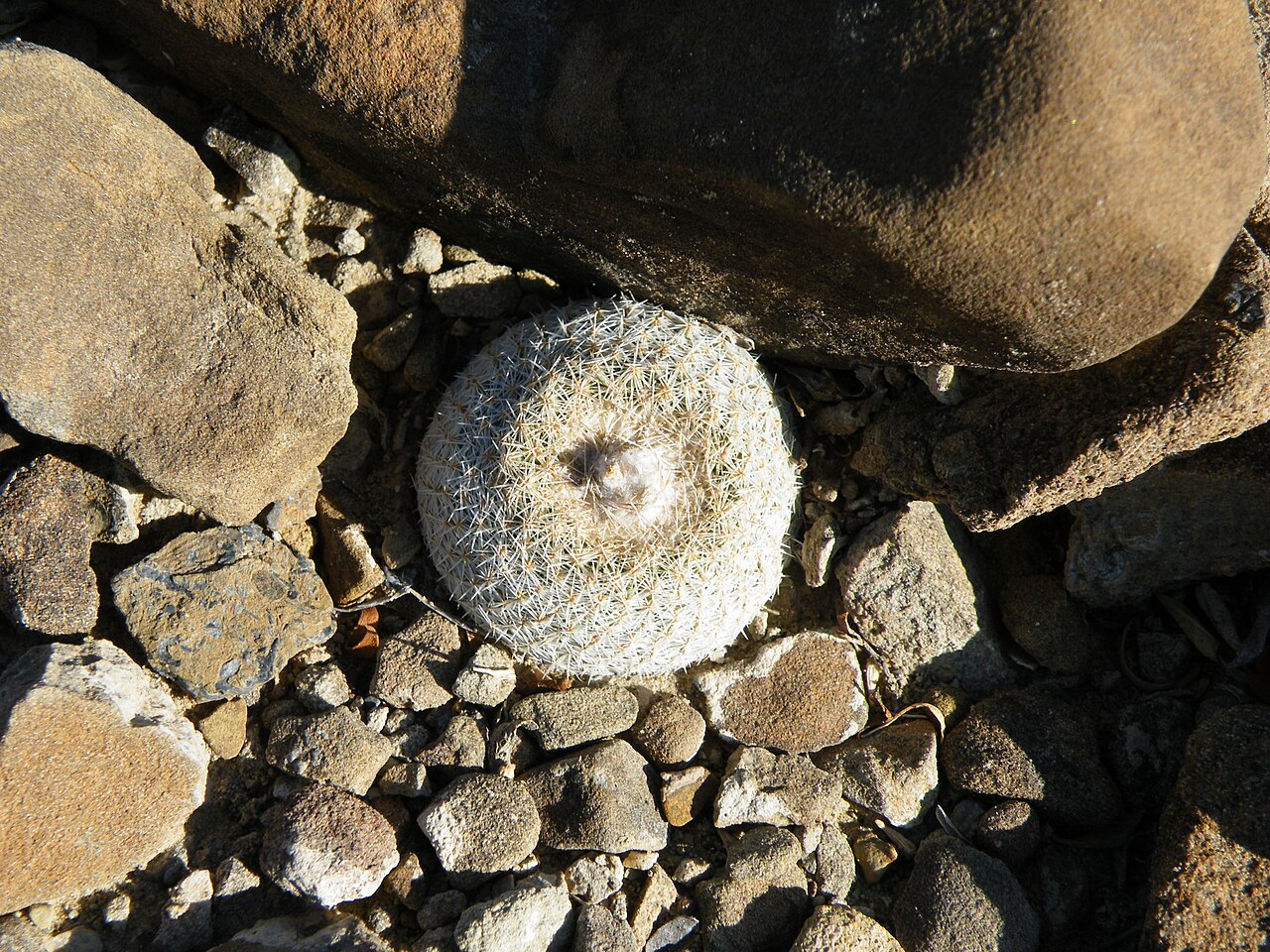
Epithelantha micromeris, known as Button Cactus or ping pong ball cactus (the USDA name is pingpong-ball cactus), is one of the smallest cacti in the United States. A typical plant is a gray-white ball about 1 to 2 inches across, so densely covered in tiny white spines that the green stem is hidden. It produces tiny pale pink flowers and bright red, club-shaped fruits that stand up from the top of the plant like little candles.
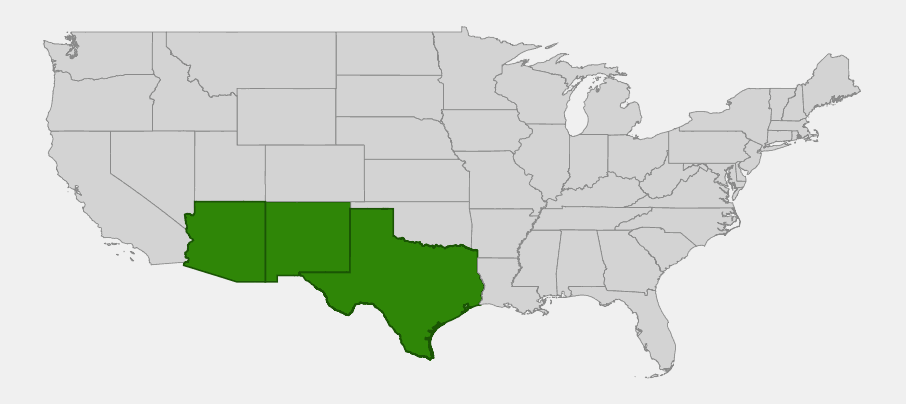
Button cactus is native to the Chihuahuan Desert. In the United States it grows in West Texas, southern New Mexico and southeastern Arizona, and its range continues south into northern Mexico. It is usually found on limestone hills, ledges and gravelly slopes, where it can be very hard to spot among pale rocks.
This guide explains how to recognize button cactus and its relatives, where it grows, how to grow it in a container or rock garden, and what role it plays in the desert. It is a favorite of cactus collectors, but wild plants should never be dug: always buy nursery-propagated plants grown from seed.
Identification
Button cactus is easy to recognize once you have seen it: a tiny, round, chalky-white cactus with no long central spines and, often, a few red fruits on top. Its small size is the main challenge, because it blends in with the gravel around it.
Stems & Growth Habit
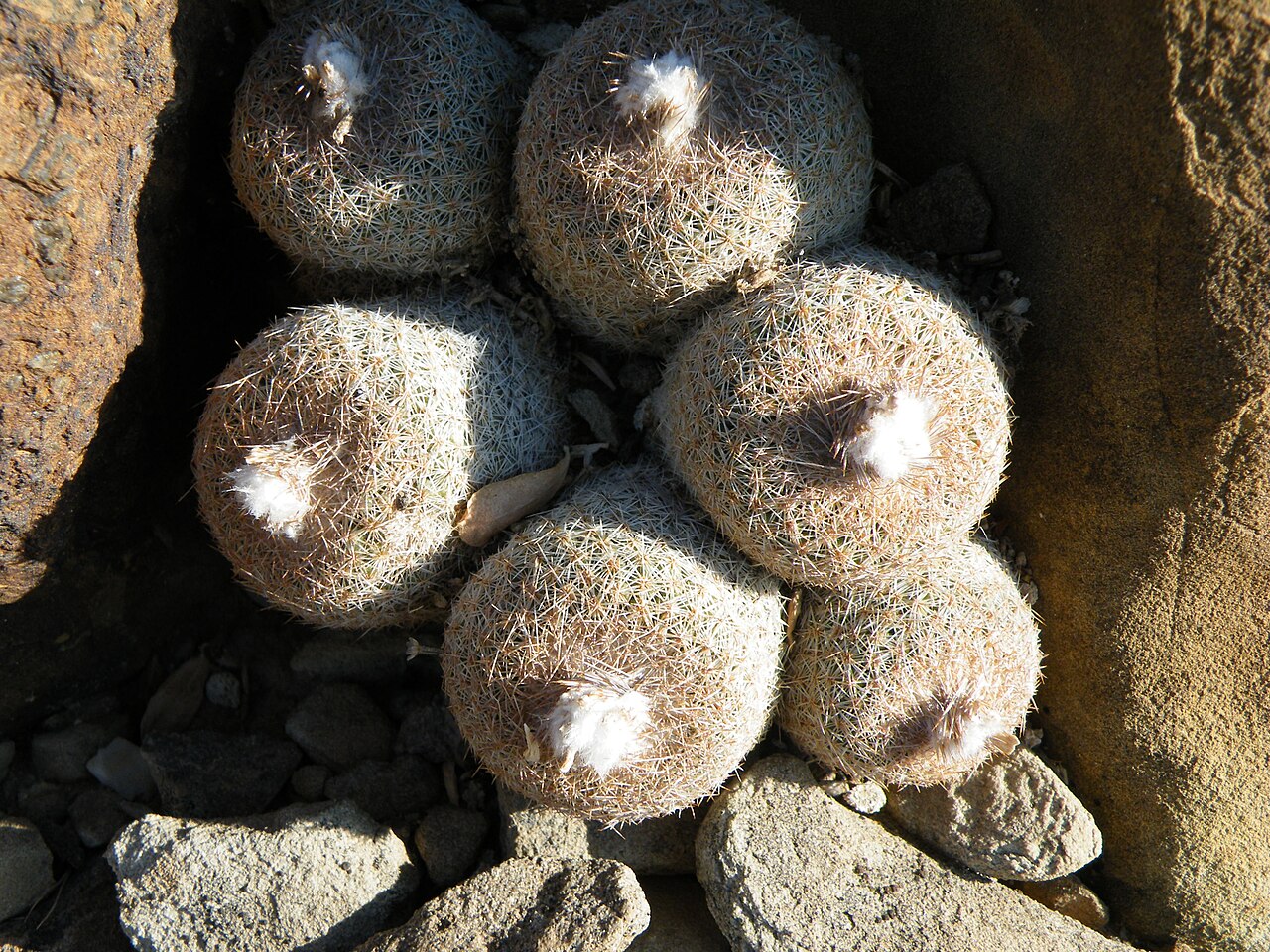
The stem is a small sphere or short cylinder, usually 1 to 2 1/2 inches in diameter and about as tall, with a slightly sunken top. Most plants are single, but some branch from the base and form small clusters of a few to a dozen heads. The stem surface is covered by tiny tubercles arranged in many spirals.
Spines
Each areole carries 20 to 40 or more very short white spines, mostly under 1/8 inch long, that lie flat against the stem and overlap those of the neighboring areoles. The result is a smooth, fuzzy, gray-white coat that makes the plant look like a little ball of cotton or a ping pong ball. The spines are soft-looking but can still prick. At the top, newer spines often form a small tuft.
Flowers
The flowers appear at the top of the plant, nestled in the woolly tuft, mainly from late winter into spring. They are tiny, only about 1/4 inch across, and pale pink to whitish. They open for a few hours in sunny weather and are easy to miss.
Fruit
The fruits are the most eye-catching feature: smooth, bright red, club-shaped berries about 1/2 to 3/4 inch long that push up out of the tuft at the top of the plant. Each holds a few shiny black seeds. The fruits are edible and were eaten by Indigenous peoples and ranchers in the region.
Similar Species
Other small white-spined cacti in its range are usually larger or have central spines. Little Nipple Cactus and other Mammillaria species have milky sap and larger, distinctly separate spine clusters. Spinystar and other Escobaria have stout central spines and much larger flowers. The cottony Living Rock Cactus has flat, warty, spineless tubercles. A close relative, Epithelantha bokei of the Big Bend region, is even smaller and has smoother, glossier spines; some botanists treat it as a variety of button cactus.
Quick Facts
| Scientific Name | Epithelantha micromeris (Engelm.) F.A.C. Weber ex Britton & Rose |
| Family | Cactaceae (cactus family) |
| Plant Type | Tiny globular cactus, single or clustering |
| Mature Height | 1–2 1/2 in |
| Mature Spread | 1–2 1/2 in per head; clusters to about 6 in |
| Growth Rate | Very slow |
| Sun Exposure | Full sun to light shade |
| Water Needs | Very low; keep dry in winter |
| Soil Type | Gritty, very fast-draining limestone gravel or rocky soil |
| Soil pH | Neutral to alkaline (about 7.0–8.5) |
| Bloom Time | Mainly late winter–spring; occasionally summer |
| Flower Color | Pale pink to whitish |
| Fall Color | Not applicable |
| Fruit | Bright red, club-shaped, edible berries |
| Deer Resistant | Yes |
| USDA Hardiness Zones | 7b–11 (outdoors only with sharp drainage) |
Native Range
USDA PLANTS lists button cactus as native in three states: Texas, New Mexico and Arizona. In Texas it grows mainly in the Trans-Pecos, from El Paso and the Big Bend region east to the Edwards Plateau edge. In New Mexico it occurs in the southern and south-central part of the state, and in Arizona it reaches the southeastern corner.
It is a plant of the Chihuahuan Desert and its grasslands. It usually grows on limestone: rocky hills, ledges, cliff bases, gravelly slopes and outcrops, often in the shade of a rock or a desert shrub, at elevations of roughly 2,500 to 5,500 feet.
Its range continues south into northern Mexico, including Chihuahua, Coahuila and Nuevo León, where several related forms are found. It does not occur in Canada.
📋 Regional plant lists featuring Button Cactus: Arizona & New Mexico · South & West Texas
Growing & Care Guide
Button cactus is a popular collector’s plant for windowsills, greenhouses and desert rock gardens. It is small and slow-growing and needs very sharp drainage, but it is not difficult if you keep it dry. Buy only nursery-propagated plants, which are usually grown from seed. Wild-dug plants rarely survive transplanting, and collecting them depletes small wild populations.
Light
Give it bright light: full sun outdoors in its native region, or a sunny south-facing window or greenhouse. In very hot, low-elevation gardens, light afternoon shade or the shelter of a rock mimics its natural habitat. Too little light makes the stem stretch and lose its tight white coat.
Soil & Water
Use a very gritty, fast-draining mix, such as two-thirds pumice, crushed limestone or coarse sand with one-third cactus soil. Water thoroughly only when the soil is completely dry during spring and summer, and keep it almost completely dry from late fall to late winter. Rot from wet soil is by far the most common cause of loss.
Planting Tips
Grow it in a small, shallow clay pot or in a raised, gravelly bed between rocks. Top-dress with gravel so the base of the plant stays dry. Outdoors it is best in the dry Southwest; in wet climates grow it in a pot that can be moved under cover.
Pruning & Maintenance
No pruning is needed. Repot every few years into fresh gritty mix. Watch for mealybugs and spider mites hiding among the spines, and avoid fertilizing more than once or twice a year with a weak cactus fertilizer.
Propagation
Grow it from seed sown on the surface of a sterile gritty mix in warm conditions; seedlings are tiny and slow and take several years to flower. Clustering plants can be divided by carefully removing offsets and letting them dry before potting. Some growers graft seedlings to speed growth.
Never Collect Wild Plants
Button cactus grows slowly and often in small populations, and cactus poaching is a real problem in the Chihuahuan Desert. Never dig or buy wild-collected plants, and remember that removing plants from public land or private land without permission is illegal. If you see one in the wild, photograph it and leave it in place.
Landscape Uses
- Containers and windowsills: a tiny, sculptural cactus for sunny windows, greenhouses and small succulent bowls
- Desert rock gardens: tucked into gravel or rock crevices in dry Southwest gardens, where it stays small and tidy
- Troughs and crevice gardens: combined with other small Chihuahuan Desert cacti and succulents
- Wildlife gardens: its red fruits are eaten by birds and small mammals
- Education: a good example of how dense spines shade and protect desert plants from sun and heat
Wildlife & Ecological Value
Button cactus is easy to overlook, but its flowers and fruits are part of the food web of the Chihuahuan Desert.
For Pollinators
The tiny pink flowers are visited by small native bees and other small insects during the brief hours they are open.
For Birds
Ground-foraging birds pick the bright red fruits, which stand up conspicuously against the white plant. Birds and ants help disperse the seeds.
For Mammals
Rodents and other small mammals eat the fruits and seeds. The dense spines protect the stem from most herbivores.
Ecosystem Role
Its dense white spines reflect sunlight and shade the stem, an adaptation to the hot, bright desert. As one of many small cacti of Chihuahuan Desert limestone hills, it is part of one of the most cactus-rich regions in the world.
Cultural & Historical Uses
The genus name Epithelantha comes from Greek words meaning “upon the nipple flower,” because the flowers form on the tips of the tubercles at the top of the plant. The species name micromeris means “small parts,” a reference to the tiny tubercles and spines.
The plant was first described by George Engelmann in 1856 as Mammillaria micromeris from collections made during the U.S. and Mexican Boundary Survey. Britton and Rose later placed it in its own genus.
The sweet red fruits, sometimes called chilitos, were eaten by Indigenous peoples and later by ranchers in the region. Today the plant is better known as a collector’s cactus, and seed-grown plants are widely available from specialty cactus nurseries.
Frequently Asked Questions
Why is it called ping pong ball cactus?
A single button cactus is about the size of a ping pong ball and is covered in short, flat white spines, so it looks like a small white ball sitting in the gravel.
Where does button cactus grow in the wild?
In the Chihuahuan Desert of West Texas, southern New Mexico, southeastern Arizona and northern Mexico, mostly on limestone hills and rocky slopes.
Are button cactus fruits edible?
Yes. The bright red, club-shaped fruits are sweet and edible and were eaten traditionally in the region. Leave wild fruits for wildlife, and only harvest from your own nursery-grown plants.
How do I care for a button cactus?
Give it bright light, a very gritty mix in a small clay pot, water only when the soil is completely dry in spring and summer, and keep it dry in winter. Overwatering is the main cause of failure.
Can I dig up a button cactus from the wild?
No. Wild plants rarely survive transplanting, collecting harms small populations, and removing plants without permission is illegal. Buy seed-grown plants from a reputable nursery instead.

Looking for a nursery that carries Button Cactus?
Browse our native plant nursery directory: Arizona · New Mexico · Texas

