
Lapland Azalea (Rhododendron lapponicum)
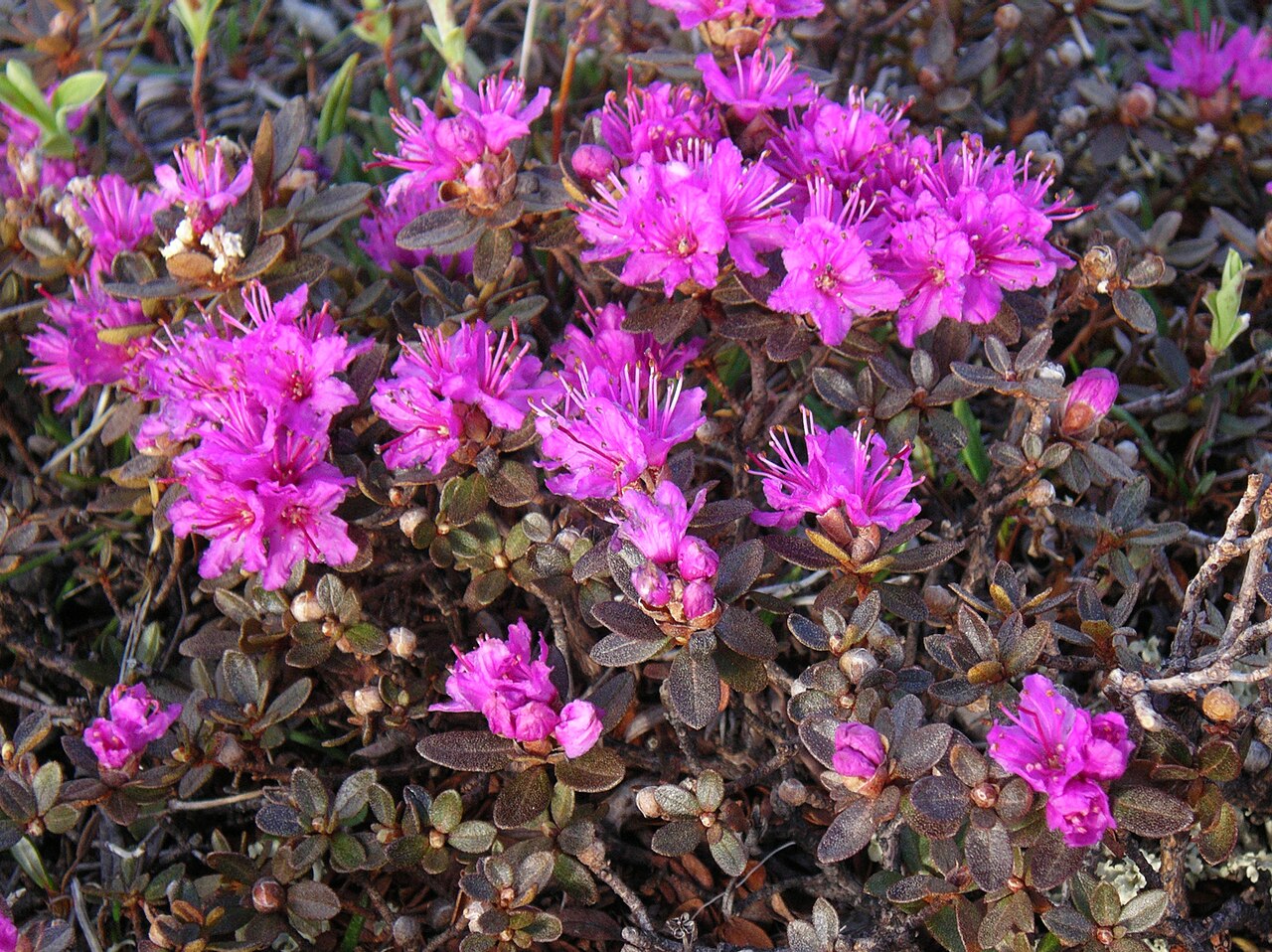
Rhododendron lapponicum, the Lapland Azalea, also called Lapland rosebay, is a dwarf, evergreen rhododendron of Arctic tundra and alpine summits. It grows as a low, dense mat or cushion, usually under a foot tall, with small, leathery, aromatic leaves. In early summer it is covered with clusters of bright magenta-purple flowers, one of the most colorful sights on the tundra. Although its common name says “azalea,” it is a true scaly-leaved (lepidote) rhododendron and keeps its leaves through the winter.
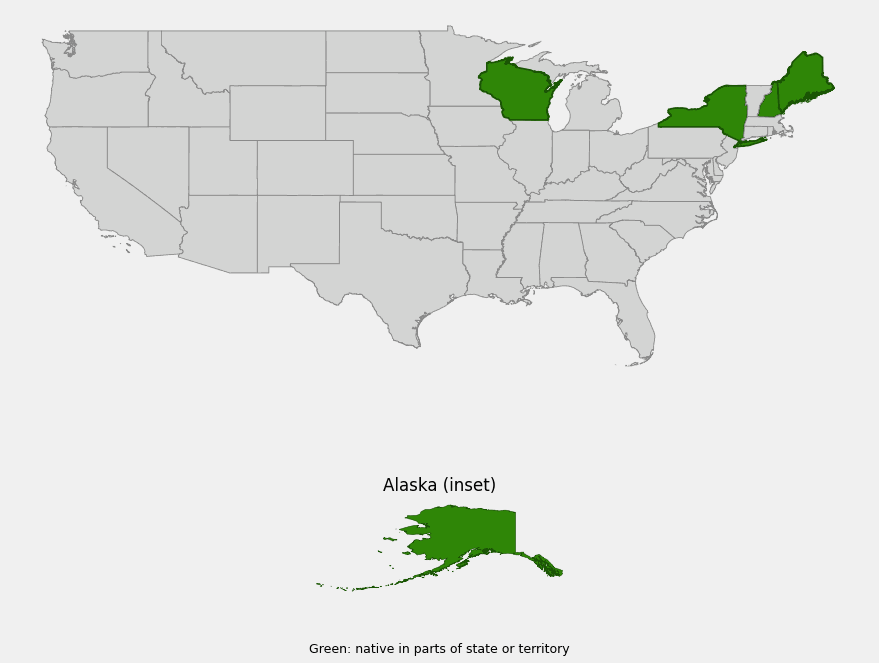
Lapland azalea is circumpolar: it grows across northern Scandinavia, Russia and Siberia, Greenland, Canada and Alaska. In the contiguous United States it survives only in a few cold, exposed places left over from the Ice Age: the alpine summits of the Adirondacks in New York, the White Mountains of New Hampshire and Mount Katahdin in Maine, and shaded sandstone cliffs along the Wisconsin River at the Wisconsin Dells. These southern outposts are rare and need protection.
Please never dig it from the wild. Its alpine and cliff habitats are fragile, wild plants almost never survive transplanting, and it is rare at the southern edge of its range. Safety note: like other rhododendrons, its leaves and flowers can contain grayanotoxins, which are poisonous if eaten. Keep pets and livestock from browsing it. This guide covers identification, native range, habitat, wildlife value and what it takes to grow it.
Identification
On Arctic and alpine tundra, Lapland azalea can be told from other low shrubs by its scaly leaves and its upright clusters of open, magenta flowers. Look closely at the undersides of the leaves, which are the key feature.
Growth Habit
It is a dwarf evergreen shrub, usually 2 to 12 inches tall, occasionally taller in sheltered spots. It is densely branched and often forms low mats or cushions on rocks and gravel. The twigs are covered with small, rusty-brown scales.
Leaves
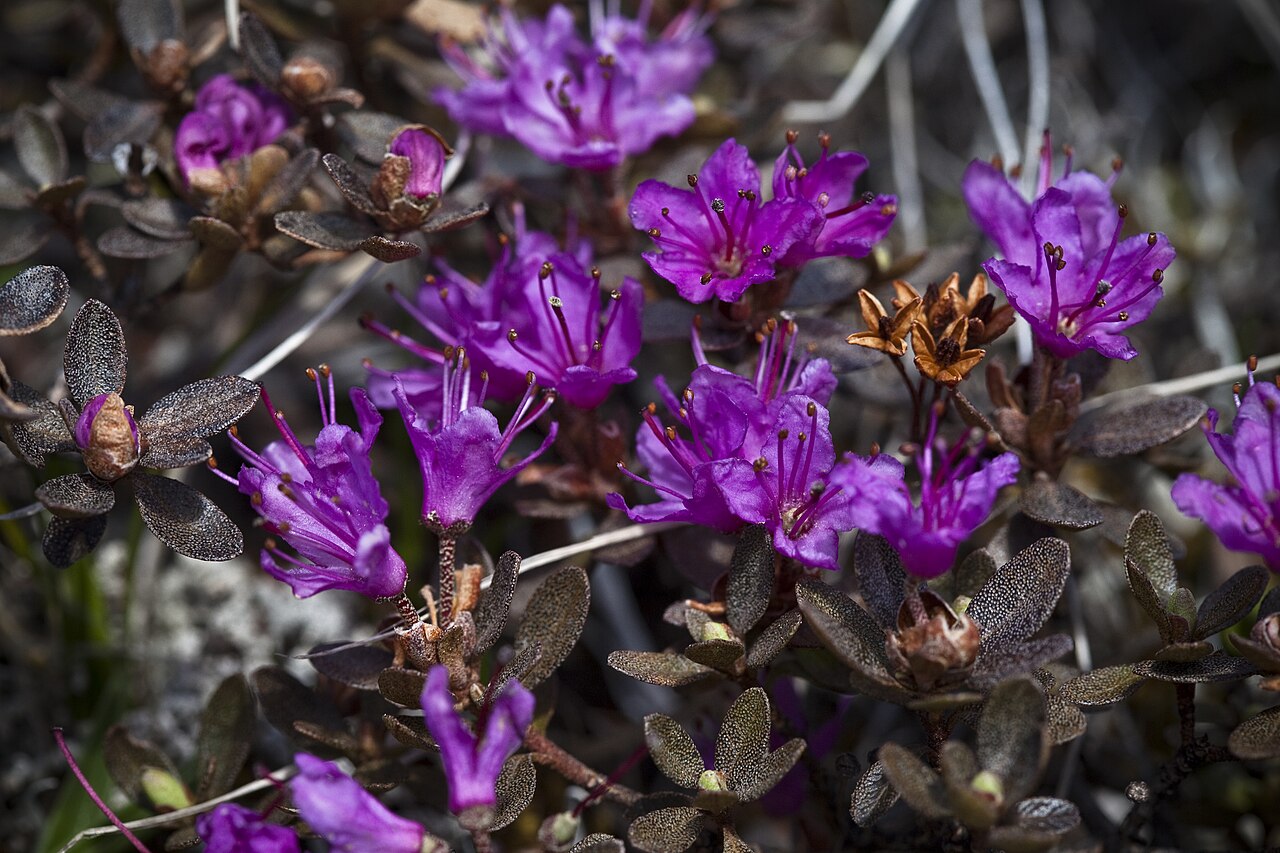
The leaves are alternate, oval to elliptic, about ¼ to ¾ inch long, thick and leathery, with rolled-under edges. They are dark green above, with scattered tiny scales, and densely covered with rusty-brown scales underneath. Crushed leaves have a resinous, spicy scent. The leaves stay on the plant through winter and often turn bronze or purplish in cold weather.
Flowers
The flowers appear from late May to July, soon after snowmelt, in small clusters of two to six at the branch tips. Each flower is about ½ to ¾ inch across, open and broadly funnel- to saucer-shaped, with five lobes. They are bright magenta-purple to rose-purple, rarely white, with five to ten long, protruding stamens. They are lightly fragrant.
Fruit
The fruit is a small, scaly, oval capsule about ¼ inch long, which splits open in late summer and releases many tiny, dust-like seeds that blow across the snow.
Look-alikes
Alpine Azalea grows in the same places but is smaller and flatter, with tiny opposite leaves and small pink, bell-shaped flowers. Labrador Tea has narrow leaves with woolly rusty hairs underneath and white flowers. Bog Laurel has pink, saucer-shaped flowers with stamens tucked into pockets in the petals.
Quick Facts
| Scientific Name | Rhododendron lapponicum (L.) Wahlenb. |
| Family | Ericaceae (heath family) |
| Plant Type | Dwarf evergreen shrub |
| Mature Height | 2–12 in (rarely to 20 in) |
| Mature Spread | 6–24 in |
| Growth Rate | Very slow |
| Sun Exposure | Full sun (cool climates); light shade on low-elevation cliffs |
| Water Needs | Medium; consistently moist but well-drained |
| Soil Type | Thin, gritty, rocky or peaty soil; alpine gravel and ledges |
| Soil pH | Acidic to circumneutral, about 4.5–7.0 |
| Bloom Time | Late May–July, soon after snowmelt |
| Flower Color | Magenta-purple to rose-purple |
| Fall Color | Evergreen; leaves bronze to purplish in winter |
| Fruit | Small scaly capsule |
| Deer Resistant | Yes (toxic foliage) |
| USDA Hardiness Zones | 1–5 |
Native Range
Lapland azalea is one of the most northerly rhododendrons in the world. Its range circles the Arctic, from Scandinavia across northern Russia and Siberia to Alaska, northern Canada and Greenland. In North America it is widespread on tundra and in mountains from Alaska and Yukon east across the Arctic to Labrador and Newfoundland, south in the Rockies of Alberta and British Columbia, and around Hudson Bay. Alaska plants include the typical variety and the small-leaved var. parvifolium.
Farther south it survives only as rare glacial relicts. In the Northeast it grows on the alpine summits of the Adirondacks in New York, the Presidential Range of New Hampshire and Mount Katahdin in Maine, where it grows among other Arctic plants above treeline. A famous disjunct population grows on cool, shaded sandstone cliffs and gorges along the Wisconsin River in the Wisconsin Dells, hundreds of miles from any other site. USDA PLANTS also lists Connecticut, but Go Botany describes its New England range as limited to northern New Hampshire and Maine, so Connecticut is not mapped here.
Its typical habitats are dry to moist tundra, rocky ridges, gravelly slopes, alpine heaths and ledges, and cliffs, often on acidic rock but sometimes on limestone. It needs long, cold winters, cool summers and good snow cover, which explains why its southern populations survive only in the coldest microclimates. These relict populations are rare and are threatened by trampling, climate warming and collection. It is considered rare in New Hampshire and Maine and is tracked as a rare plant in Wisconsin.
📋 Regional plant lists featuring Lapland Azalea: Alaska · New Hampshire, Maine & Vermont · New York, Pennsylvania & Northern New Jersey · Delaware, Southern New Jersey & Long Island · Michigan, Wisconsin & Eastern Minnesota
Growing & Care Guide
Lapland azalea is a plant for specialist rock gardeners in very cold climates. It is beautiful but difficult: it needs the cool summers, long cold winters and steady snow cover of its tundra and alpine home. In most of the United States, summer heat and humidity kill it. Admire it on alpine trails, and if you want to try growing it, use nursery-propagated plants.
Light
In cool, northern climates give it full sun, which keeps it compact and flowering. In warmer areas it needs shade from afternoon sun and a cool, north-facing site, similar to the shaded cliffs where it grows in Wisconsin.
Soil & Water
Plant in a gritty, very well-drained, acidic mix rich in organic matter, such as a blend of peat or leaf mold with coarse sand and gravel. The roots need steady moisture but cannot sit in water. Water during dry spells, and never let a container dry out completely.
Planting Tips
Buy only nursery-propagated plants from specialist alpine or rhododendron growers. Never collect plants or cuttings from the wild: it is rare in the lower 48 states, its habitats are fragile and wild plants transplant poorly. Grow it in a raised rock garden, a scree bed, a trough or a cool alpine house, with a mulch of stone chips around the crown to keep the roots cool. In snowy areas, a reliable snow cover protects it in winter.
Pruning & Maintenance
No pruning is needed. Remove dead twigs after flowering. Avoid fertilizer, or use only a little acid-loving plant food. Watch for root rot in wet, poorly drained soil, which is the most common cause of failure along with summer heat.
Propagation
It can be grown from the very fine seed, sown on the surface of a moist, acidic, sterile mix in a cool place; seedlings grow slowly. Specialist growers also take semi-ripe cuttings in summer and layer low branches. All of these methods are slow.
Landscape Uses
- Alpine and rock gardens: a jewel for cold-climate scree beds and troughs
- Arctic and alpine restoration: part of the low heath that holds soil on tundra and summits
- Botanical education: a living example of the Arctic plants that remain on mountaintops after the Ice Age
- Wildflower viewing: a highlight of early summer on Alaskan tundra and northeastern summits
Wildlife & Ecological Value
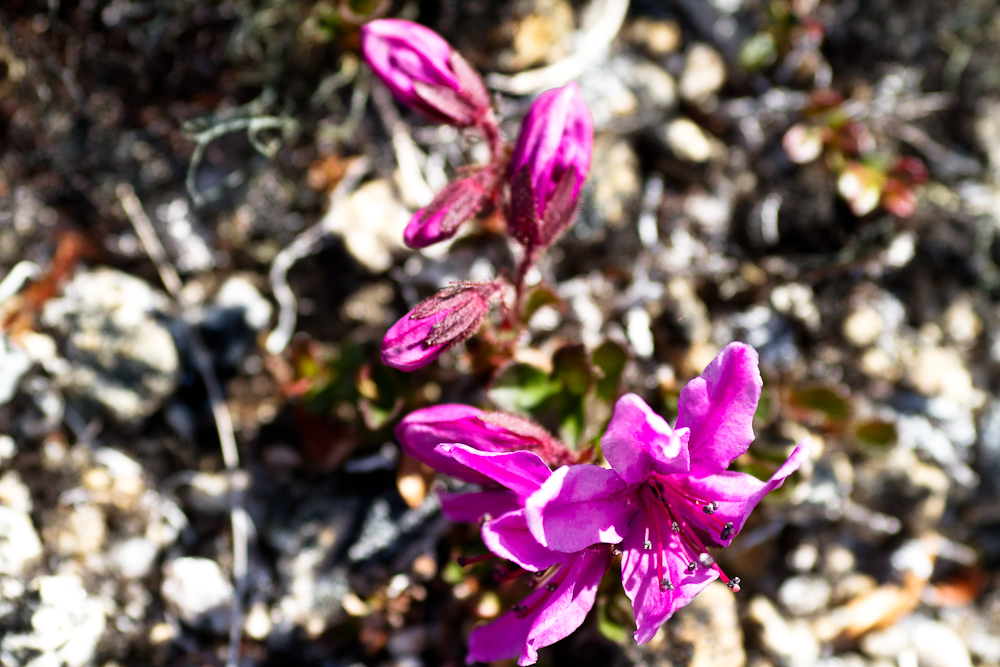
On tundra and alpine summits, where few plants flower and the season is short, Lapland azalea provides early nectar and shelter.
For Pollinators
Its bright, open flowers bloom soon after snowmelt and are visited by bumblebees, flies and butterflies, which are among the main pollinators in the Arctic. Go Botany notes that the flowers are probably important nectar sources for foraging insects in these cold habitats.
For Birds
Ptarmigan and other tundra birds shelter among the low shrubs and may eat the buds. The dense mats also give cover to ground-nesting birds.
For Mammals
Its leaves are poisonous and are generally avoided by grazing animals. Small mammals such as voles and lemmings shelter under the mats in winter.
Ecosystem Role
As one of the dwarf shrubs that form Arctic and alpine heath, Lapland azalea traps snow, holds thin soil in place and creates sheltered microhabitats for lichens, mosses and other plants. Its relict southern populations are important indicators of how Arctic-alpine plants respond to a warming climate.
Cultural & Historical Uses
Carl Linnaeus named this plant Azalea lapponica in 1753, after Lapland, the far north of Scandinavia, where he had traveled and studied its flora. The Swedish botanist Göran Wahlenberg moved it to Rhododendron in 1812, giving it the name used today. The common names Lapland azalea and Lapland rosebay both recall this origin.
In Scandinavia it is known as fjällros in Swedish and lapsk alpros in Norwegian, and it is a familiar early-summer flower of the mountains. Its leaves are strongly aromatic when crushed, but like other rhododendrons they can be toxic and should not be used as tea.
The small population on the sandstone cliffs of the Wisconsin Dells has long fascinated botanists. It is a living reminder that Arctic plants grew much farther south during the Ice Age, and that a few survived in cool, sheltered places as the climate warmed.
Frequently Asked Questions
Is Lapland azalea an azalea or a rhododendron?
It is a rhododendron. Botanically, all azaleas belong to the genus Rhododendron. Lapland azalea is a scaly-leaved (lepidote) evergreen rhododendron. The name “azalea” is traditional and comes from its old scientific name, Azalea lapponica.
Where does Lapland azalea grow in the United States?
It is widespread in Alaska. In the lower 48 states it is rare, growing on the alpine summits of the Adirondacks (New York), the White Mountains (New Hampshire) and Mount Katahdin (Maine), and on cliffs at the Wisconsin Dells.
Is Lapland azalea poisonous?
Like other rhododendrons, its leaves and flowers can contain grayanotoxins, which are poisonous to people, pets and livestock if eaten. Do not eat it or use it as tea.
Can I grow Lapland azalea in my garden?
Only in cold, northern climates with cool summers, and even there it is a challenge. Grow nursery-propagated plants in a gritty, acidic rock garden or trough. It will not survive hot, humid summers.
Can I dig up Lapland azalea from the wild?
No. Its southern populations are rare and protected, alpine habitats are very fragile, and wild plants almost never survive transplanting. Admire it on the trail and stay on paths, which protects alpine plants from trampling.

Looking for a nursery that carries Lapland Azalea?
Browse our native plant nursery directory: Alaska · Maine · New Hampshire & New York · Wisconsin

