
Fire Poppy (Papaver californicum)
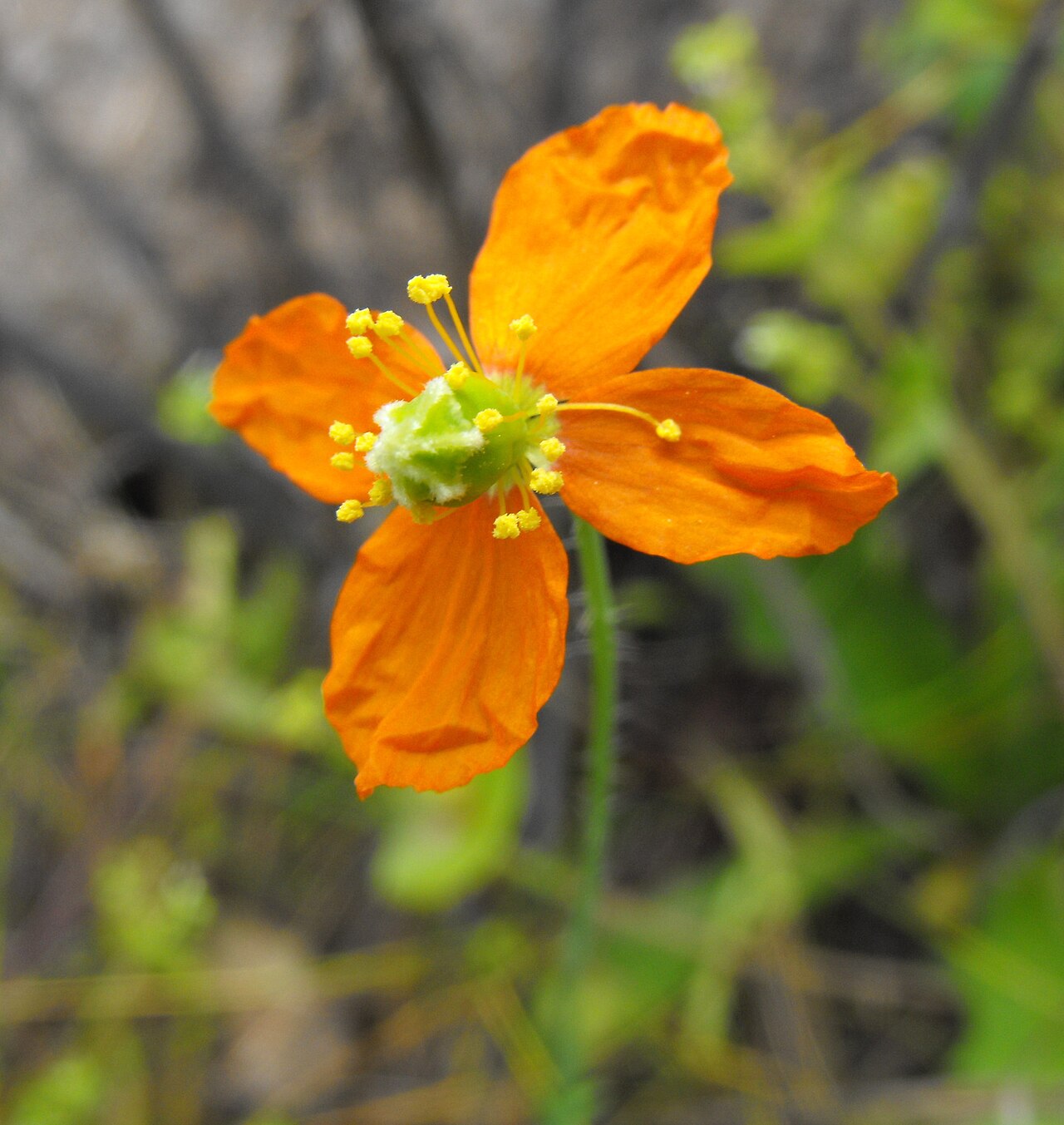
Papaver californicum, known as Fire Poppy or western poppy, is a slender annual wildflower of California’s chaparral and oak woodland, and one of California’s few native members of the true poppy genus, Papaver. Its four-petaled flowers, about 1 to 1 1/2 inches across, are a glowing orange to brick red, usually with a greenish spot at the base of each petal, and they nod in bud before opening on long, thin stalks.
Fire poppy is a true fire-follower. For years or decades after a fire its seeds lie dormant in the soil, and it is rarely seen in mature chaparral. In the first spring or two after a wildfire, though, it can appear by the thousands on burned slopes, then fade again as shrubs regrow. It also turns up in smaller numbers on landslides, road cuts and other disturbed openings.
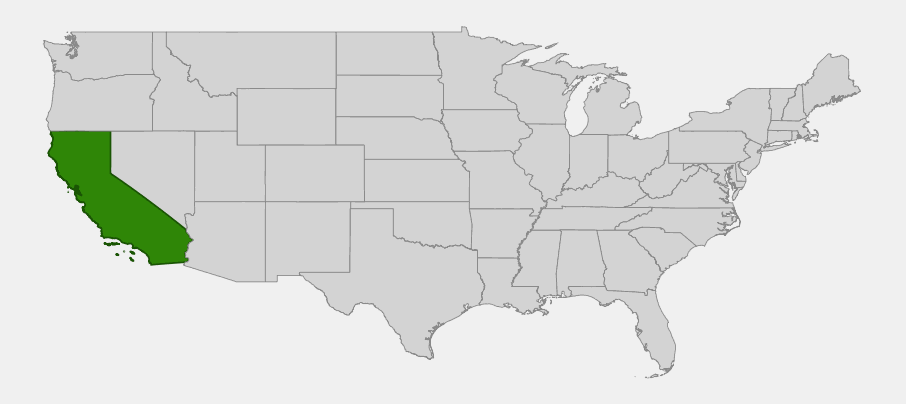
It is native only to California, in the Coast Ranges from the San Francisco Bay Area south through the Transverse and Peninsular Ranges to San Diego County. This page covers how to identify fire poppy, where and when to look for it, why it is difficult to grow, a toxicity note, and its role in fire-adapted ecosystems.
Identification
Fire poppy is easily mistaken at a distance for California poppy, but the details of its flowers, leaves and seed pods are quite different.
Growth Habit
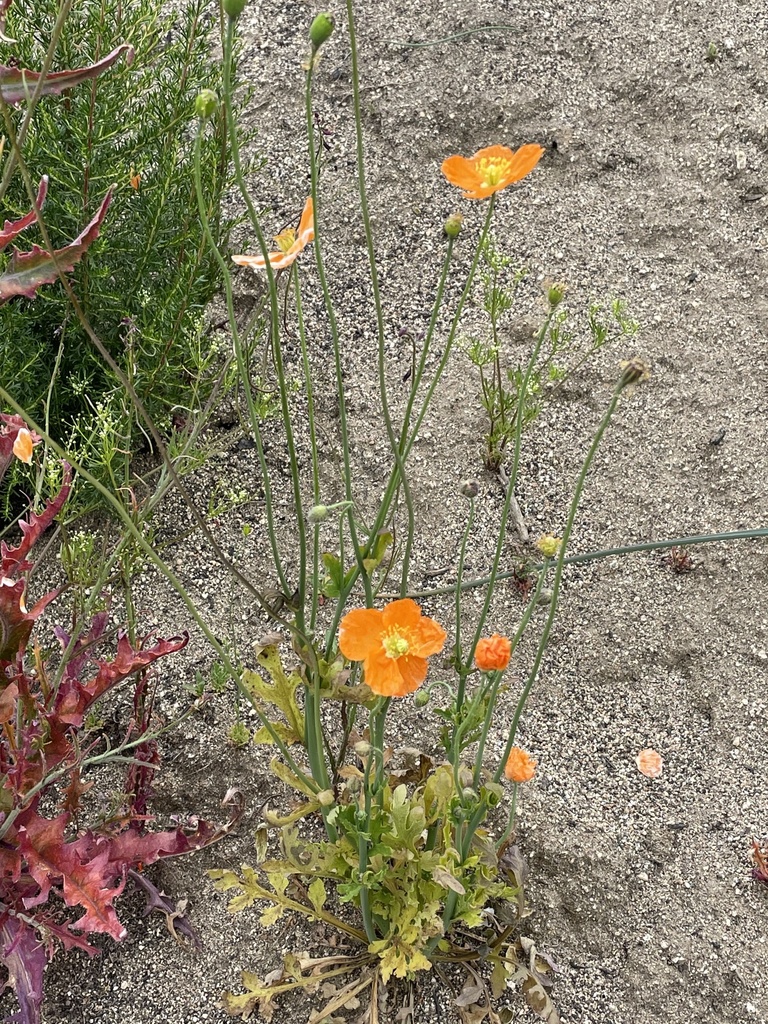
It is an annual, usually 1 to 2 feet tall, with slender, sparingly branched stems that are mostly smooth or with a few stiff hairs. Plants growing in dense post-fire stands are often single-stemmed and wiry.
Leaves
The leaves are mostly near the base and lower stem, 1 to 4 inches long, deeply divided into narrow, toothed or lobed segments, and sparsely bristly. They are green, unlike the blue-gray leaves of California poppy.
Flowers
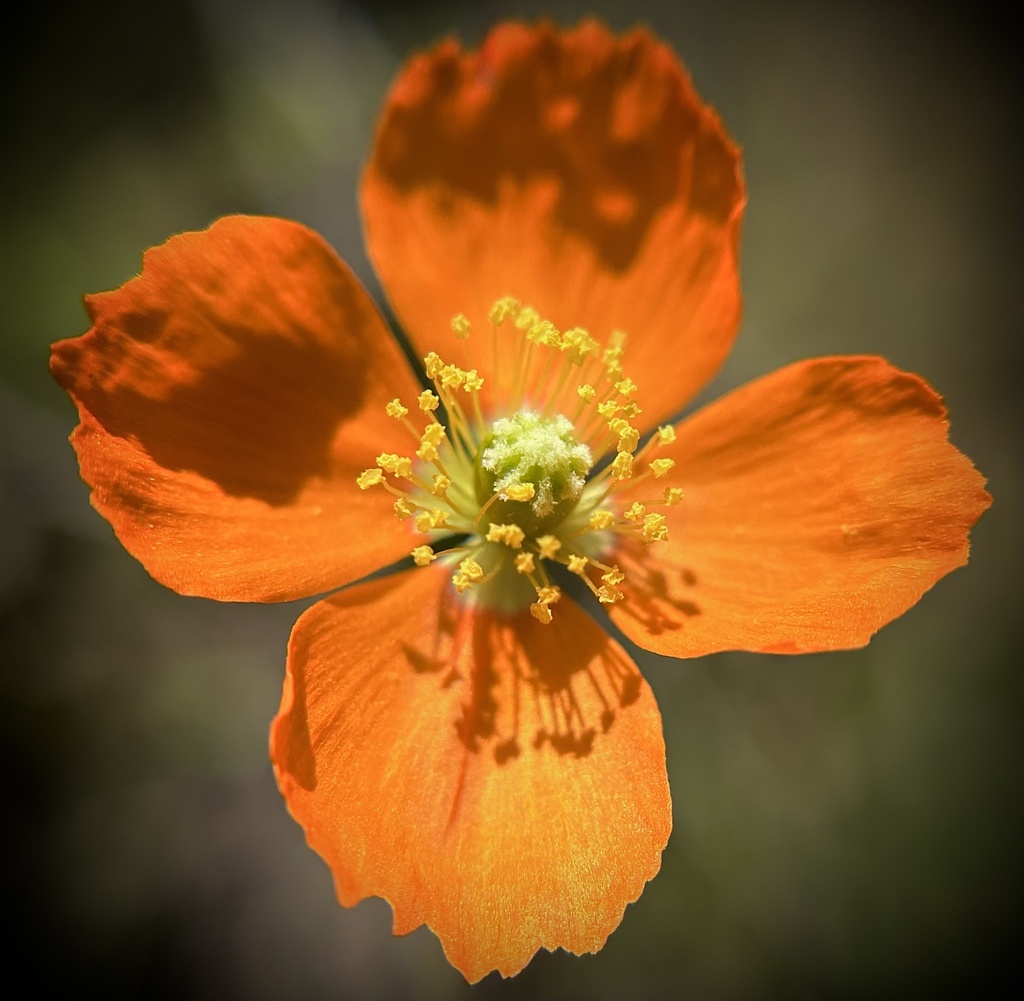
The flowers are borne singly on long, slender stalks, and the buds nod downward before they open. Each flower has four broad, rounded petals, orange to orange-red, typically about 1/2 to 3/4 inch long, often with a green to greenish-yellow spot at the base. Many yellow stamens surround a green ovary topped by a flat, lobed stigma disk. Flowering is mostly from April to May, sometimes from March into June.
Seed Pods
The fruit is a smooth, club-shaped to oblong capsule, about 1/2 to 3/4 inch long, capped by the flat stigma disk. When ripe, it releases tiny seeds through small pores just under the cap, like a salt shaker, as it sways in the wind.
Similar Species
California Poppy (Eschscholzia californica) has satiny orange to yellow flowers that sit on a flared rim, blue-gray, finely divided leaves, and long, narrow seed pods that split open; it has no stigma disk. Wind poppy (Papaver heterophyllum, sometimes placed in Stylomecon) has orange-red petals with a dark purple spot at the base and grows in similar places. Introduced corn poppy (Papaver rhoeas) is red with a black basal spot and is found near gardens and roads.
Quick Facts
| Scientific Name | Papaver californicum A. Gray |
| Family | Papaveraceae (poppy family) |
| Plant Type | Annual wildflower (fire-follower) |
| Mature Height | 1–2 ft |
| Mature Spread | 4–8 in |
| Growth Rate | Fast |
| Sun Exposure | Full sun to part shade |
| Water Needs | Low; relies on winter and spring rain |
| Soil Type | Well-drained, often rocky or sandy soils, including recently burned soil |
| Soil pH | About 6.0–7.5 |
| Bloom Time | April–May (March–June) |
| Flower Color | Orange to brick red, with a greenish basal spot |
| Fall Color | None; annual that dies by summer |
| Fruit | Club-shaped capsule releasing tiny seeds through pores |
| Deer Resistant | Yes, usually |
| USDA Hardiness Zones | Annual; grows in zones 8–10 |
Native Range
USDA PLANTS lists fire poppy as native only in California. It occurs in the inner and outer Coast Ranges from the San Francisco Bay Area, including Mount Diablo, south through the Santa Lucia Range, the Santa Ynez and Santa Monica Mountains and the San Gabriel Mountains, to the Peninsular Ranges of western San Diego County. It has also been reported from Santa Catalina Island.
It grows in chaparral, coastal sage scrub and oak woodland, typically on slopes and ridges below about 4,000 feet. After a fire it can be locally abundant across burned hillsides, especially in the first spring after a large burn. In unburned years it is scarce, usually found in small numbers on landslides, road cuts, shaded canyon slopes and other open, disturbed ground.
Its seeds are long-lived in the soil and germinate in response to cues from fire, such as smoke and chemicals from charred wood. This lets populations persist unseen through the long intervals between fires. Frequent repeat fires, invasive annual grasses and the conversion of chaparral to grassland can deplete these seed banks.
📋 Regional plant lists featuring Fire Poppy: California & Nevada
Growing & Care Guide
Fire poppy is not a common garden plant, and it is hard to grow reliably. Seed is occasionally offered by California native seed suppliers. Many gardeners find it more rewarding to visit a recent burn area in spring to see it in bloom. Never dig wild plants or strip seed from post-fire populations, which need to replenish their soil seed bank.
Light
Give it full sun to light shade. In the wild it often grows on open burned slopes, but also on partly shaded canyon slopes.
Soil & Water
It needs well-drained soil, ideally rocky, sandy or gravelly, with little competition. Rely on winter rains and water only during long dry spells in winter and spring. The plants die after setting seed in early summer.
Planting Tips
Sow seed in late fall, just before the winter rains, scattering it thinly on bare soil and pressing it in lightly. Germination is erratic because the seeds are adapted to respond to fire. Many growers treat seed with liquid smoke or commercial smoke-water products, or sprinkle a little powdered charcoal from burned wood over the sown area, to improve germination.
Pruning & Maintenance
No pruning is needed. Keep weeds, especially annual grasses, away from seedlings. Let plants drop their seeds before removing them in summer, though volunteer seedlings in following years are unpredictable.
Propagation
Propagate it only by seed. It resents root disturbance, so sow it where it is to grow, or in deep containers to be transplanted while very small.
Landscape Uses
- Wildflower viewing: look for spectacular displays on burned chaparral slopes the first spring after a fire
- Native annual gardens: an unusual orange accent for experienced growers of California wildflowers
- Post-fire education: a striking example of how chaparral plants recover from fire
- Restoration seed mixes: used in some burned-area plantings within its native range
- Rock gardens: suits gravelly, fast-draining spots with little competition
Wildlife & Ecological Value
Fire poppy is one of the plants that make the first spring after a chaparral fire so colorful, and it feeds pollinators at a time when the burned landscape has little else to offer.
For Pollinators
The open, bowl-shaped flowers produce plenty of pollen but little or no nectar. They are visited by native bees, beetles and flies that collect or feed on pollen, and beetles often crawl into the flowers.
For Birds
Seed-eating birds such as sparrows and finches forage on burned slopes, where the seeds of fire poppy and other fire-following annuals provide food.
For Mammals
Like other poppies, it contains alkaloids, and grazing mammals generally avoid it.
Ecosystem Role
Fire poppy is part of the short-lived flush of annuals that covers chaparral slopes after fire. These plants help hold soil, cycle nutrients released by the burn, and feed insects and birds while the shrubs resprout and regrow from seed. Their seeds then wait in the soil until the next fire.
Cultural & Historical Uses
The botanist Asa Gray described Papaver californicum in the 1880s. Because it can stay hidden as seed for long periods and then appear in masses after a fire, it is one of the most famous fire-followers in California, often featured in post-fire wildflower reports and native plant society outings.
Fire poppy has helped scientists study how chaparral plants use fire cues. Research on California fire-following annuals has shown that smoke and charred wood can trigger germination in many of these species, which helped explain how their seeds wait for decades in the soil.
Safety note: like other poppies, fire poppy contains alkaloids and should be considered toxic if eaten. Do not eat any part of the plant or use it as a tea, and keep pets and livestock from grazing on it. It is not an opium poppy, but poppy-family alkaloids can cause drowsiness, stomach upset and other symptoms. Handling the plant is generally harmless.
Frequently Asked Questions
Why is it called fire poppy?
Because it blooms most abundantly in the first spring or two after a wildfire. Its seeds lie dormant in the soil between fires and are triggered to germinate by smoke and charred wood. It also has fiery orange flowers.
Where can I see fire poppy?
Look on burned slopes of chaparral, coastal sage scrub and oak woodland in California’s Coast Ranges and southern mountains in April and May, especially the first spring after a fire. It is native only to California.
Is fire poppy poisonous?
It should be treated as toxic if eaten. Like other poppies, it contains alkaloids that can cause drowsiness and stomach upset. Keep children, pets and livestock from eating it.
How is fire poppy different from California poppy?
Fire poppy has four orange to red petals with a greenish base, green leaves, and a club-shaped seed capsule capped by a flat stigma disk. California poppy has blue-gray leaves, flowers on a flared rim, and long, narrow pods that split open.
Can I grow fire poppy from seed?
Yes, but germination is unpredictable. Sow seed in late fall on bare, well-drained soil, and consider treating it with smoke water or a dusting of charcoal from burned wood to mimic fire.

Looking for a nursery that carries Fire Poppy?
Browse our native plant nursery directory: California

