
Biennial Wormwood (Artemisia biennis)
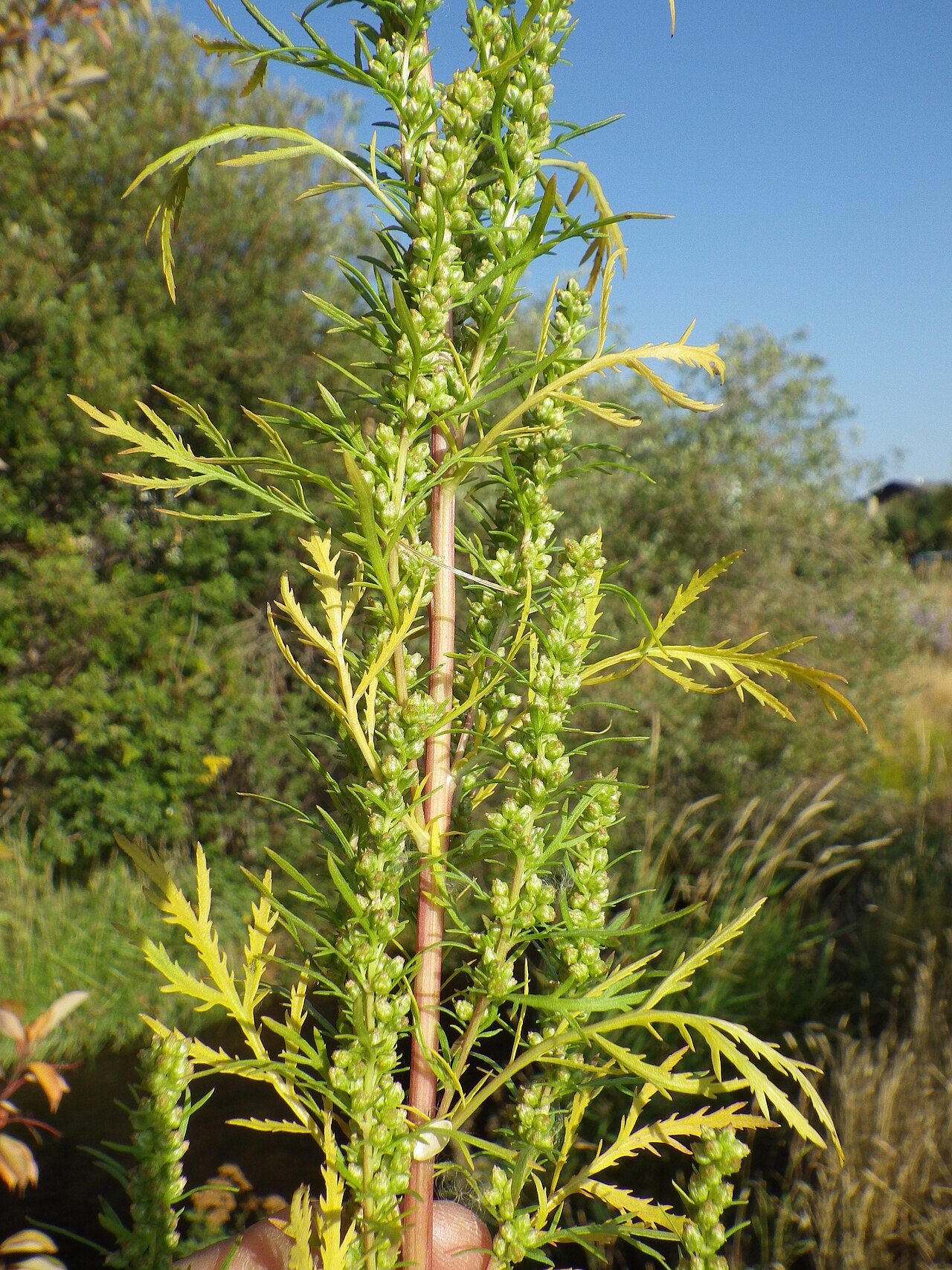
Artemisia biennis, the Biennial Wormwood or biennial sagewort, is a tall, narrow annual or biennial herb of riverbanks, lake shores and open, disturbed ground. It grows from a single stem into a slender, spire-shaped plant 1 to 6 feet tall, with finely divided, toothed leaves and dense spikes of tiny greenish flower heads in late summer and fall. It is a member of the same genus as Big Sagebrush and Louisiana Sage, but unlike most of its relatives it has little or no smell.
Biennial wormwood is an unusual native plant. It has spread so widely with agriculture and roads that its original range is hard to pin down. Most authorities, including Go Botany and the Burke Herbarium at the University of Washington, consider it native to northwestern North America, in British Columbia, Washington, Oregon and probably Idaho, and introduced elsewhere. It now grows across most of the United States and Canada and has also reached Europe.
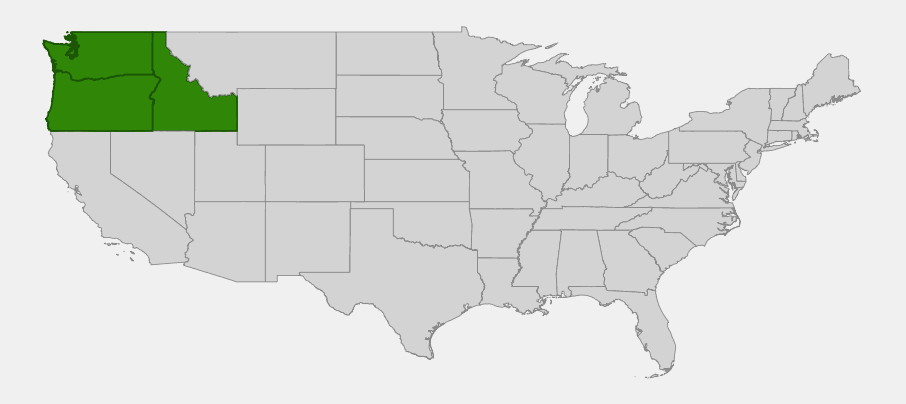
On this page, the native range shown is Washington, Oregon and Idaho. USDA PLANTS lists the species as both native and introduced in the lower 48 states and as introduced in Alaska and Canada, and it records it from nearly 40 states. Records east of the Rockies, in California and in Alaska represent plants that arrived with people, and in the northern Great Plains it has become a serious weed of crop fields. Grow or encourage it only within its Pacific Northwest home range.
Identification
Biennial wormwood is easy to recognize once you know its shape: a single, upright, often reddish stem with a long, narrow spike of crowded, green flower heads, and leaves cut into many sharply toothed segments. Crushing a leaf is a good test, because the strongly scented wormwoods it resembles smell sharply aromatic.
Growth Habit
Biennial wormwood usually grows as a single erect stem, 1 to 6 feet tall and occasionally taller, sometimes branched from the base. Despite its name, it often completes its life cycle as an annual, sprouting in spring and setting seed the same fall; others overwinter as a rosette and flower the second year. The stems are smooth, green to reddish, and grow from a taproot.
Leaves
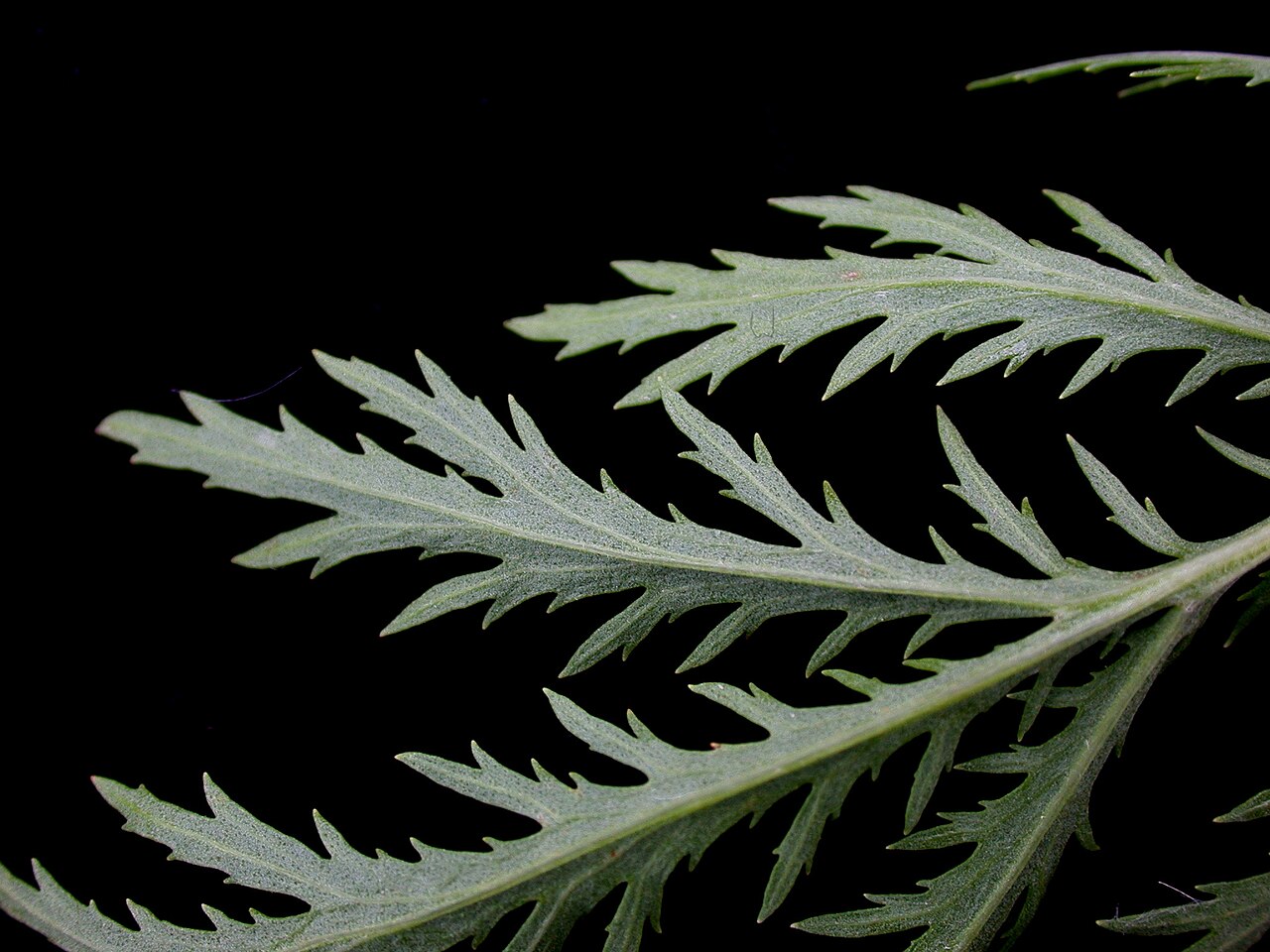
The leaves are alternate, 2 to 6 inches long, smooth and bright green on both sides. They are pinnately divided into narrow segments with long, sharp teeth, and the lower leaves are often divided twice. Unlike most Artemisia species, the foliage is hairless and has little or no odor when crushed.
Flowers
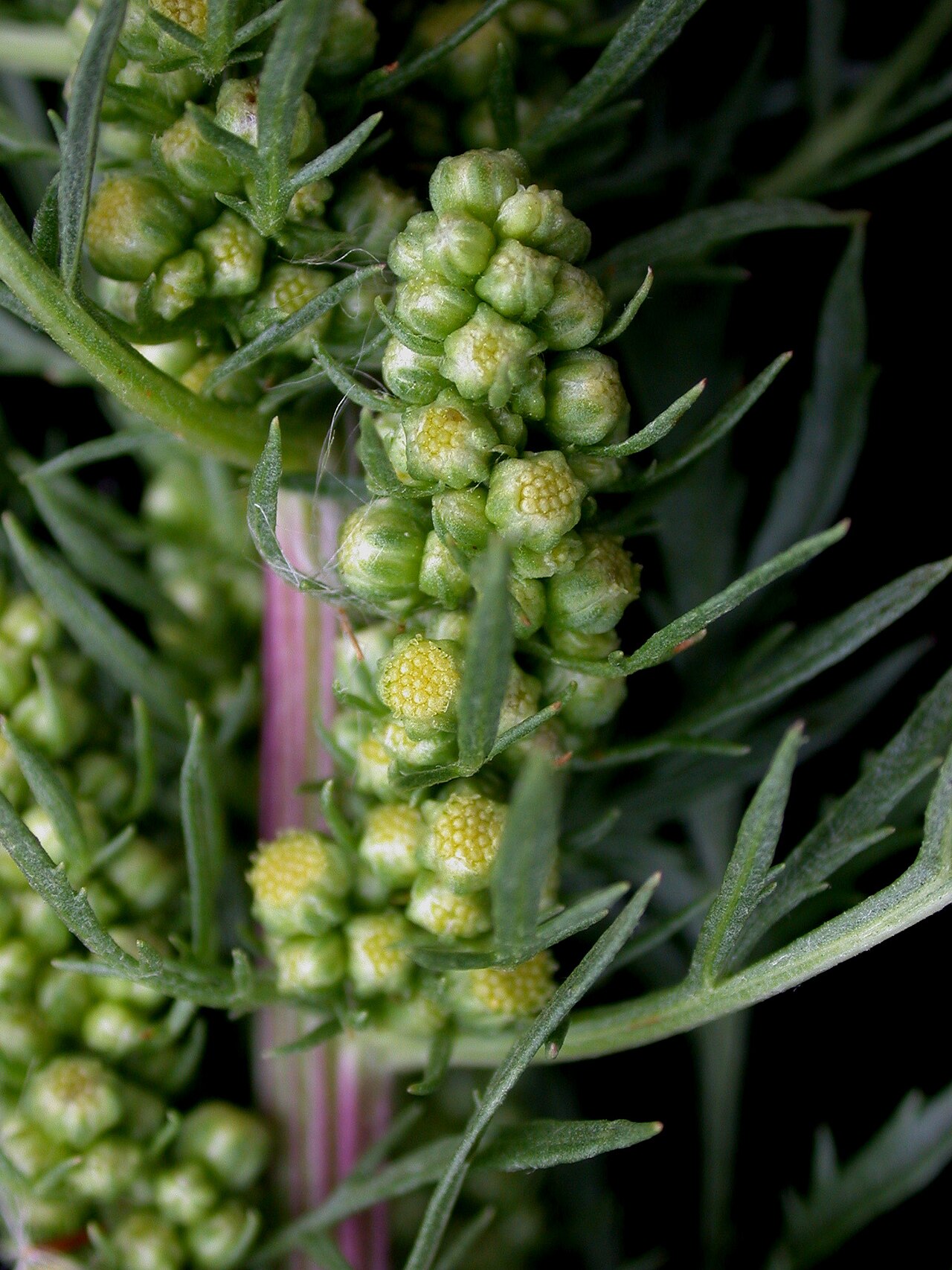
Flowering runs from about August to October. The flower heads are tiny, rounded and greenish to yellowish, about an eighth of an inch across, without showy petals. They are crowded in short, dense clusters in the leaf axils along the upper stem, forming a long, narrow, leafy spike. The flowers are wind-pollinated.
Fruit
Each head produces many tiny, smooth, brown achenes (seeds) less than a millimeter long. A large plant can produce a very large number of seeds, which is part of why the species spreads so readily on bare, disturbed soil.
Similar Species
Annual wormwood or sweet Annie (Artemisia annua), an introduced Asian species, has nodding heads on evident stalks and strongly aromatic foliage. Mugwort (Artemisia vulgaris), another introduced species, is a perennial with leaves that are white-woolly underneath. Native perennial wormwoods are usually gray-hairy and aromatic.
Quick Facts
| Scientific Name | Artemisia biennis Willd. |
| Family | Asteraceae (aster family) |
| Plant Type | Annual or biennial herb; taprooted |
| Mature Height | 1–6 ft |
| Mature Spread | 1–2 ft; narrow, spire-like |
| Growth Rate | Fast |
| Sun Exposure | Full sun |
| Water Needs | Medium to high; moist soil, tolerates periodic flooding |
| Soil Type | Sandy, gravelly or silty soils of shores and disturbed ground |
| Soil pH | About 6.0–8.0 |
| Bloom Time | August–October |
| Flower Color | Green to yellowish (inconspicuous) |
| Fall Color | Stems often turn reddish-brown |
| Fruit | Tiny brown achenes, produced in large numbers |
| Deer Resistant | Moderate |
| USDA Hardiness Zones | 3–9 (grows as an annual or biennial) |
Native Range
The Burke Herbarium describes biennial wormwood as native in Washington, where it occurs on both sides of the Cascade crest and in the Columbia River Gorge, and notes that it ranges east across most of North America to the Atlantic Coast, “where considered introduced.” Go Botany states that it is considered native to the northwestern United States but introduced and weedy in most of its current range, including New England. Minnesota Wildflowers likewise gives its origin as the Northwest. On this basis, the native range shown on the map is Washington, Oregon and Idaho.
Outside the Northwest the status is mostly clear. Calflora lists it as not native to California, USDA PLANTS lists it as introduced in Alaska and Canada, and Go Botany treats it as introduced in all six New England states. USDA records it from almost every state from Alaska and California to the Atlantic, including Montana, Wyoming, Colorado, Utah, Nevada, Arizona, New Mexico, the Great Plains, the Midwest and the Northeast. In the northern Great Plains it has become a notable weed of soybeans, dry beans and sunflowers, especially since the spread of no-till farming. Whether some interior western populations, such as those in Montana, are also native is uncertain, so they are not shown on the map.
In its native range it grows on sandy and gravelly river bars, lake and pond shores, streambanks, drying mudflats and other open, moist places that are periodically disturbed by floods. It also colonizes roadsides, ditches, irrigated fields and waste ground.
📋 Regional plant lists featuring Biennial Wormwood: Western Oregon & Western Washington · Idaho, Eastern Oregon & Eastern Washington
Growing & Care Guide
Biennial wormwood is not a garden ornamental and is not sold by nurseries. Within its native Pacific Northwest range, it is a natural part of shoreline and river-bar vegetation and can be left where it appears on its own in wild, sunny, moist areas. Outside that range it is an introduced weed, especially in crop fields, so do not plant or spread it there, and remove plants before they set seed.
Light
Full sun. It grows on open shores and bare ground and does poorly in shade.
Soil & Water
It prefers moist, sandy, gravelly or silty soil, such as river bars and pond edges that flood seasonally and dry out in summer. It tolerates poor and disturbed soils and some alkalinity.
Planting Tips
In native shoreline restorations in Washington, Oregon and Idaho, it usually arrives on its own from local seed and does not need to be planted. If you want it, scatter locally collected seed on bare, moist soil in fall or early spring, with permission from the landowner. Do not move seed outside the Northwest.
Pruning & Maintenance
No maintenance is needed in wild areas. As a short-lived plant it depends on bare soil and disturbance; it is crowded out as perennial plants fill in. To control it where it is unwanted, pull or mow plants before they flower in late summer, since each plant can produce a large amount of seed.
Propagation
Biennial wormwood grows only from seed. The tiny seeds germinate on bare, moist soil in spring, and some seeds may remain dormant in the soil for a few years.
Landscape Uses
- Shoreline restoration: a natural pioneer of river bars and pond shores in the Pacific Northwest
- Wildlife habitat: seeds feed small birds in fall and winter
- Wild areas: can be left to grow in sunny, moist, disturbed corners within its native range
- Botanical study: an example of a native plant whose range has expanded with agriculture
- Erosion control: its quick growth covers bare, flood-scoured soil until perennials take over
Wildlife & Ecological Value
Biennial wormwood is a short-lived pioneer plant, and its main value to wildlife is the large crop of seeds it produces each fall.
For Pollinators
The flowers are wind-pollinated and have no nectar to attract bees or butterflies, so it has little value for pollinators. Like other wind-pollinated wormwoods, its pollen may contribute to late-summer hay fever in some people.
For Birds
Sparrows, finches and other small seed-eating birds eat the tiny seeds, which stay on the dry stems into fall and winter. The tall stems also provide perches and some cover on open shores.
For Mammals
Small rodents may eat the fallen seeds. Deer and livestock eat it only occasionally.
Ecosystem Role
As a pioneer of bare, flood-scoured sand and gravel, biennial wormwood quickly covers newly exposed soil on river bars and lake shores, holding it until willows, sedges and perennials move in. Some of its seeds can persist in the soil, ready to sprout after the next flood or disturbance.
Cultural & Historical Uses
The species was described in 1794 by the German botanist Carl Ludwig Willdenow. The genus Artemisia is named after Artemis, the Greek goddess, or possibly after Artemisia, a queen of Caria who was said to be a botanist. The common name wormwood refers to the use of some Artemisia species to treat intestinal worms, and biennis refers to its two-year life cycle, though it often behaves as an annual.
Ethnobotanical records report that the tiny seeds were sometimes gathered and eaten, and that the plant was used in traditional medicine for stomach complaints and to treat wounds. These uses are historical; biennial wormwood is not a recommended food or remedy today.
Biennial wormwood is often cited as an example of a native plant that behaves as an introduced weed outside its home range. Spread by agriculture, railroads and roads, it has become a weed of crops in the northern Great Plains, where farmers report that it is hard to control, especially in no-till fields.
Frequently Asked Questions
Is biennial wormwood native?
Partly. It is considered native to northwestern North America, including Washington, Oregon, Idaho and British Columbia, and introduced across most of the rest of the United States and Canada. Go Botany, Calflora and the Burke Herbarium all treat populations outside the Northwest as introduced.
Does biennial wormwood smell like sage?
No. Unlike most wormwoods and sagebrushes, its leaves have little or no odor when crushed, which helps separate it from look-alikes such as sweet Annie (Artemisia annua).
Is biennial wormwood a weed?
Outside its native range, yes. It is a weed of soybeans, dry beans, sunflowers and other crops in the northern Great Plains and Midwest. In the Pacific Northwest it is a native pioneer of shores and river bars.
Is biennial wormwood an annual or a biennial?
Both. Some plants complete their life cycle in one year; others form a rosette the first year and flower the second. In crop fields, the annual form has become more common.
How do I control biennial wormwood?
Pull or mow plants before they flower and set seed in late summer. Because some seeds can persist in the soil, watch for new seedlings for a few seasons.

Looking for a nursery that carries Biennial Wormwood?
Browse our native plant nursery directory: Idaho · Oregon · Washington

