
Prairie Bundleflower (Desmanthus leptolobus)
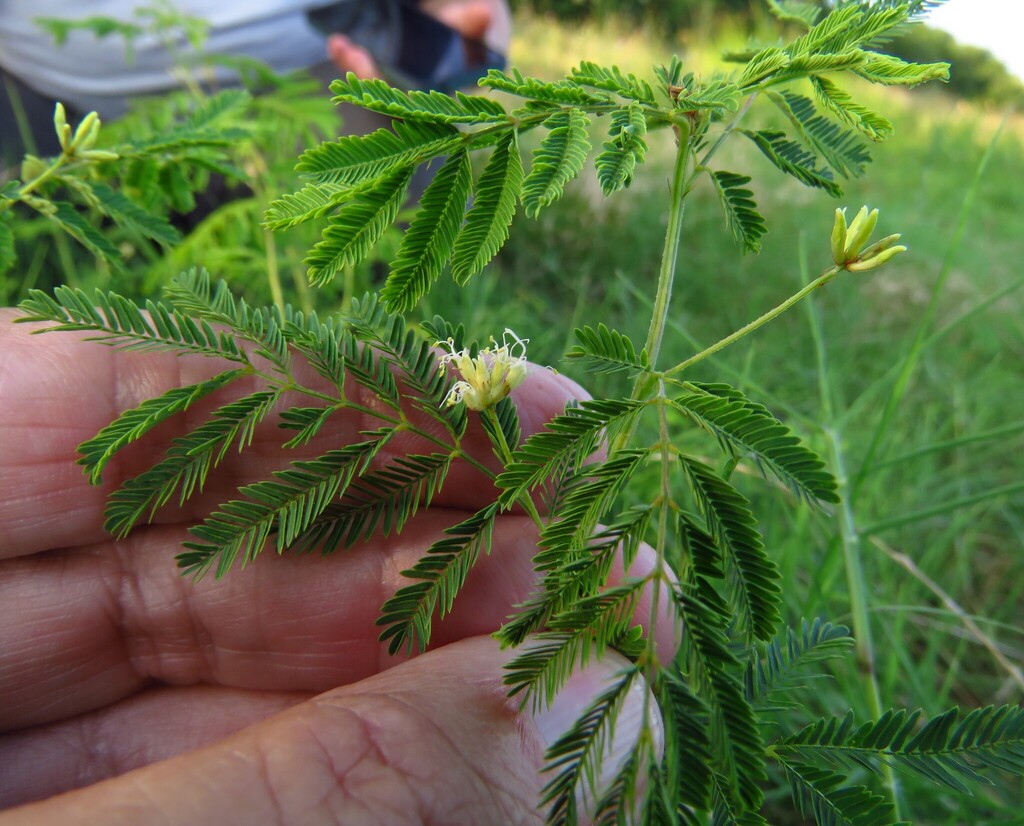
Desmanthus leptolobus, Prairie Bundleflower, also called slenderlobe bundleflower or prairie mimosa, is a low, sprawling perennial legume of the southern Great Plains. It has feathery, twice-divided leaves like a small mimosa, tiny white flower heads from late spring through summer, and loose clusters of slender, nearly straight seed pods that ripen dark brown.
It is native to Texas, Oklahoma and Kansas, where it can be locally abundant on rolling prairies, roadsides and disturbed ground, especially on the clay soils of the Blackland Prairie and Cross Timbers around Dallas and Fort Worth. It is a close relative of the much better known Illinois bundleflower, and like it, it is a nitrogen-fixing, deep-rooted prairie plant valued by quail and other wildlife.
This guide covers how to tell it from Illinois bundleflower, where it grows, how to grow it in a prairie or meadow planting, and why it matters for wildlife.
Identification
Prairie bundleflower is easy to overlook until it sets pods. The best clues are its sprawling stems, small few-flowered heads and loose clusters of narrow, straight pods.
Stems & Leaves
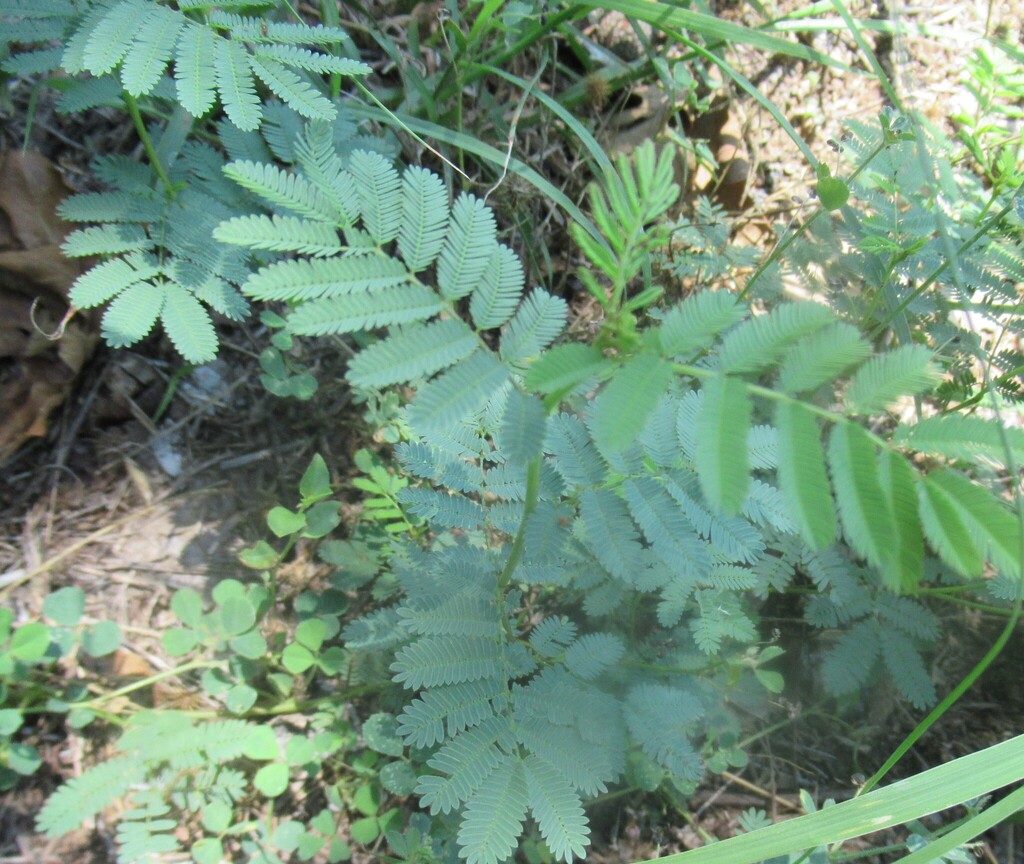
Several to many slender, reddish-green stems spread from a deep woody taproot, upright at first and then sprawling or trailing to about 3 feet long. The leaves are twice-divided, about 1 to 2½ inches long, with several pairs of side branches each bearing 15 to 25 pairs of tiny, narrow leaflets. A small gland sits on the leaf stalk below the lowest pair of side branches.
Flowers
From May through August, small round heads of a few tiny white to greenish-white flowers with protruding stamens appear on short stalks from the leaf axils. The heads are smaller and less showy than those of Illinois bundleflower.
Fruit
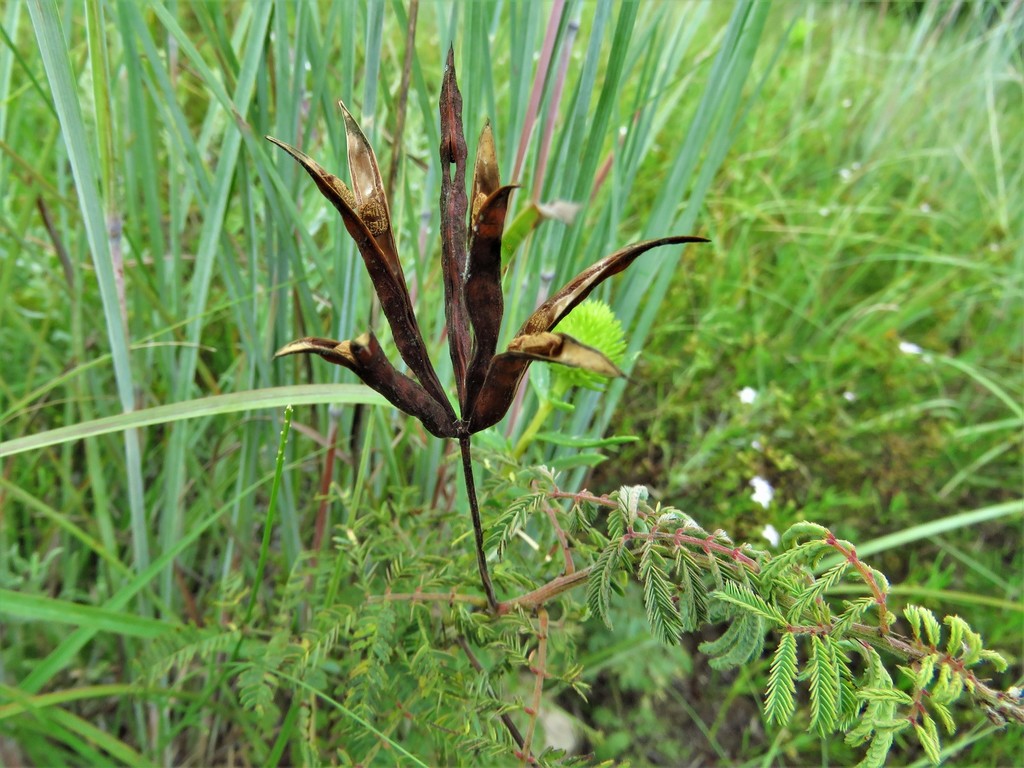
Each head produces a loose cluster of 2 to about 10 narrow, flat pods, about 1¼ to 2½ inches long and only about ⅛ inch wide, straight or slightly curved, that turn dark brown and split along both edges. The seeds are smaller and more elongated than those of Illinois bundleflower.
Look-alikes
Illinois bundleflower (D. illinoensis) is more upright, with larger, fuller flower heads and dense, round clusters of broader, strongly curved pods. Wild tantan (D. virgatus) of South Texas is woody and shrubby. Sensitive briars (Mimosa) have prickles and pink flowers.
Quick Facts
| Scientific Name | Desmanthus leptolobus |
| Family | Fabaceae (legume family) |
| Plant Type | Herbaceous perennial legume, sprawling from a taproot |
| Mature Height | 6 in–2 ft (stems trailing to about 3 ft) |
| Mature Spread | 1–3 ft |
| Growth Rate | Moderate to fast |
| Sun Exposure | Full sun |
| Water Needs | Low to medium; drought tolerant |
| Soil Type | Clay, loam or rocky limestone soils |
| Soil pH | About 6.5–8.5 |
| Bloom Time | May–August |
| Flower Color | White to greenish-white |
| Fall Color | None notable |
| Fruit | Narrow, flat pods in loose clusters |
| Deer Resistant | No; browsed by deer and livestock |
| USDA Hardiness Zones | 5–8 |
Native Range
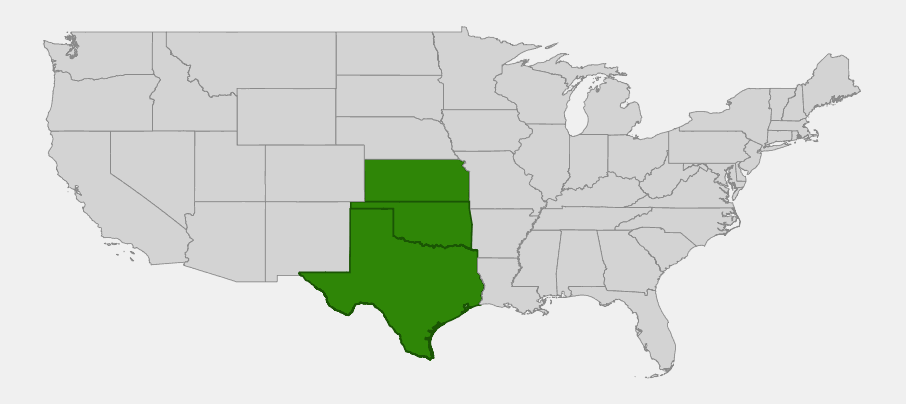
Prairie bundleflower is native to the southern Great Plains. USDA PLANTS records it from Kansas, Oklahoma and Texas, and also lists Missouri, but the Missouri herbarium specimens come from railroad grades and are labeled as introduced, so Missouri is not mapped here. It has also been reported as introduced in New Mexico.
Texas is its stronghold, especially the Blackland Prairie and Cross Timbers of north-central Texas, with scattered populations west to the Trans-Pecos and south toward the Coastal Bend. In Oklahoma it ranges across the central and southern parts of the state, and in Kansas it reaches its northern limit.
It grows in prairies, grassy openings, roadsides, pastures, vacant lots and other open, disturbed ground, usually on clay or limestone soils. It is often an early colonizer of reclaimed land and fades as shrubs and trees move in.
📋 Regional plant lists featuring Prairie Bundleflower: Nebraska, Kansas & Eastern Colorado · Arkansas, Louisiana, Eastern Oklahoma & Eastern Texas · South & West Texas
Growing & Care Guide
Prairie bundleflower is a modest-looking but useful native legume for prairie plantings, wildlife meadows and roadside restorations in the southern Plains. It is easy from seed, fixes nitrogen and tolerates heat, drought and heavy clay. Seed is offered by some native seed suppliers, but less often than Illinois bundleflower. Note: its roots contain tryptamine alkaloids; do not eat any part of the plant.
Light
Full sun. It thins out under taller vegetation or shade.
Soil & Water
It grows best in clay, loam or rocky limestone soils and tolerates both drought and occasional wet periods. No fertilizer is needed; as a legume, it makes its own nitrogen.
Planting Tips
Sow scarified seed in spring once soils warm, about ¼ inch deep, alone or in a prairie seed mix. Because its stems sprawl, plant it among short and mid-height grasses where it can weave through them.
Pruning & Maintenance
Very little care is needed. Mow or cut back in late winter. It self-sows lightly in open ground and is long-lived thanks to its deep taproot.
Propagation
Grow from seed. Scarify the hard seeds by nicking or rubbing with sandpaper, or soak them in hot water, before sowing. Seedlings develop a deep taproot quickly and resent transplanting.
Landscape Uses
- Prairie restoration: a native legume for southern Plains prairie and pasture seed mixes
- Wildlife meadows: seeds for quail and doves and foliage for deer
- Roadsides and reclamation: an early colonizer of open, disturbed soils
- Soil improvement: fixes nitrogen in poor or eroded clay soils
Wildlife & Ecological Value
Like other bundleflowers, prairie bundleflower is a quiet but valuable part of the prairie food web.
For Pollinators
Its small flowers offer pollen and nectar to small native bees, including sweat bees, as well as flies and other small insects. Its foliage is eaten by small legume-feeding insects that birds feed to their young.
For Birds
Northern bobwhite and other quail, mourning doves and other seed-eating birds eat the seeds, which ripen through summer and fall.
For Mammals
White-tailed deer and livestock browse the protein-rich foliage, and small rodents gather the seeds.
Ecosystem Role
Through root nodules with nitrogen-fixing bacteria, it enriches the soil for the grasses and wildflowers around it. Its deep taproot helps it survive drought and grazing, and it is one of the first perennials to return on bare or disturbed prairie soil.
Cultural & Historical Uses
John Torrey and Asa Gray described Desmanthus leptolobus in their Flora of North America (1840). The name leptolobus means “slender-podded”, for its narrow pods, and Desmanthus means “bundle flower”.
Bundleflowers have drawn attention from forage researchers because they are native, drought-tolerant, high-protein legumes. Prairie bundleflower is less studied than Illinois bundleflower, which has been bred for pasture use, but it plays a similar role in native grasslands.
Like several other bundleflowers, its root bark has been found to contain small amounts of tryptamine alkaloids. These compounds are one more reason never to eat wild plants you are not certain are safe.
Frequently Asked Questions
How is prairie bundleflower different from Illinois bundleflower?
Prairie bundleflower sprawls more, has smaller, few-flowered heads and loose clusters of narrow, nearly straight pods. Illinois bundleflower is more upright, with fuller heads and dense, round clusters of broad, curved pods.
Where is prairie bundleflower native?
In Kansas, Oklahoma and Texas, especially the Blackland Prairie and Cross Timbers of north-central Texas.
Is prairie bundleflower good for wildlife?
Yes. Quail and doves eat the seeds, deer browse the leaves and small bees visit the flowers. It also fixes nitrogen in the soil.
How do I grow prairie bundleflower from seed?
Scarify the hard seeds, then sow them in spring in full sun, in clay or loam soil. Seedlings grow quickly and are drought tolerant once established.
Is prairie bundleflower edible or toxic?
It is not a food plant, and its roots contain tryptamine alkaloids. Do not eat it.


