
Dwarf Marigold (Schkuhria pinnata)
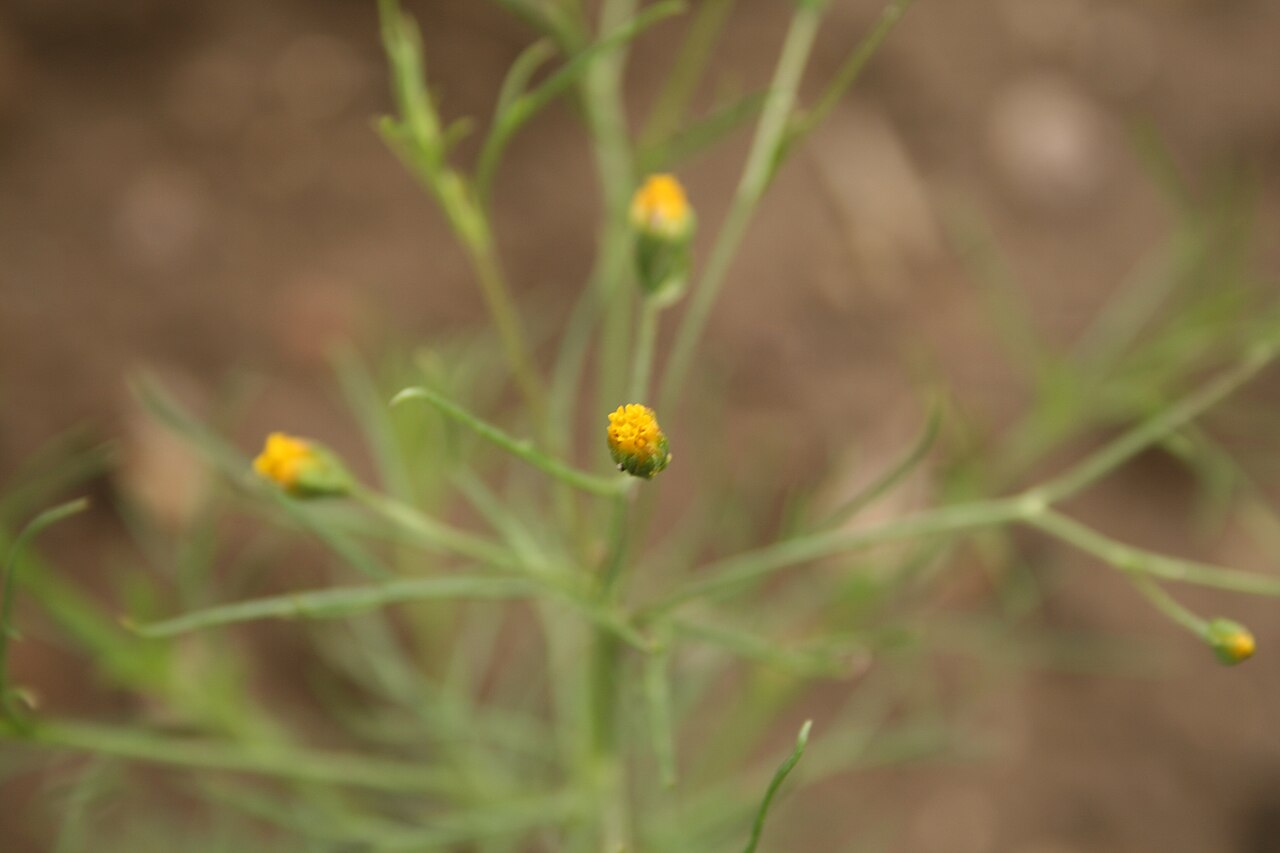
Schkuhria pinnata, known as Dwarf Marigold, dwarf Mexican marigold or pinnate false threadleaf (the USDA name), is a slender, much-branched annual of the sunflower family. It has thread-like, finely divided leaves dotted with tiny scent glands and dozens of small, narrow yellow flower heads that turn into silvery, star-like seed heads in fall. The crushed plant has a strong, bitter, marigold-like smell.
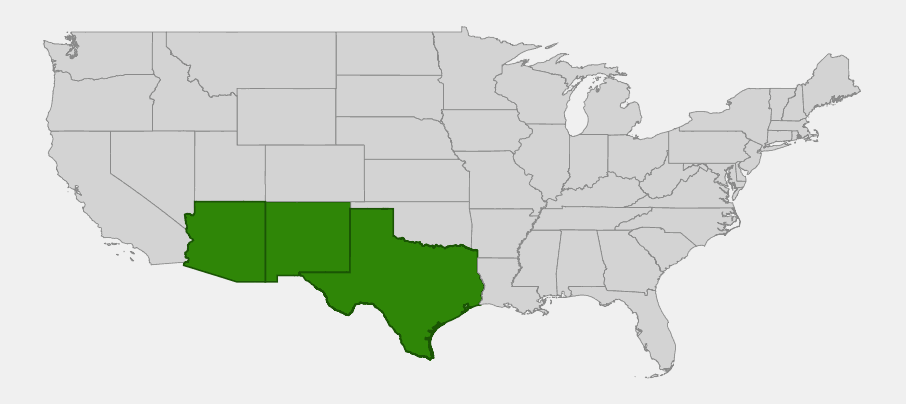
In the United States, dwarf marigold is native to the mountains and high grasslands of Arizona, New Mexico and Texas, where it comes up after the summer monsoon rains and blooms in late summer and fall. Its native range continues through Mexico and Central America to South America. It has also spread widely as a weed in Africa, Australia and other warm regions, where it is best known and where it has many local names, such as bitterbossie in South Africa.
This guide covers how to identify dwarf marigold, where it is native, how it behaves in gardens and restoration, its traditional medicinal uses, and the reasons to treat it with care outside its native range.
Identification
Dwarf marigold is a small, wiry, upright annual that is easy to overlook until it blooms. The combination of thread-like, gland-dotted leaves, narrow little flower heads and star-like seed heads identifies it.
Stems & Growth Habit
It is an annual with a single upright main stem, usually 8 to 20 inches tall, that branches repeatedly toward the top into an open, airy, broom-like crown. The stems are slender and smooth or nearly so and often turn reddish-purple in fall.
Leaves
The leaves are up to about 1 inch long and divided into three to seven or more very narrow, thread-like lobes, or the upper ones simple and linear. They are rough to the touch and dotted with tiny glands that give the plant its bitter, aromatic smell when crushed.
Flower Heads
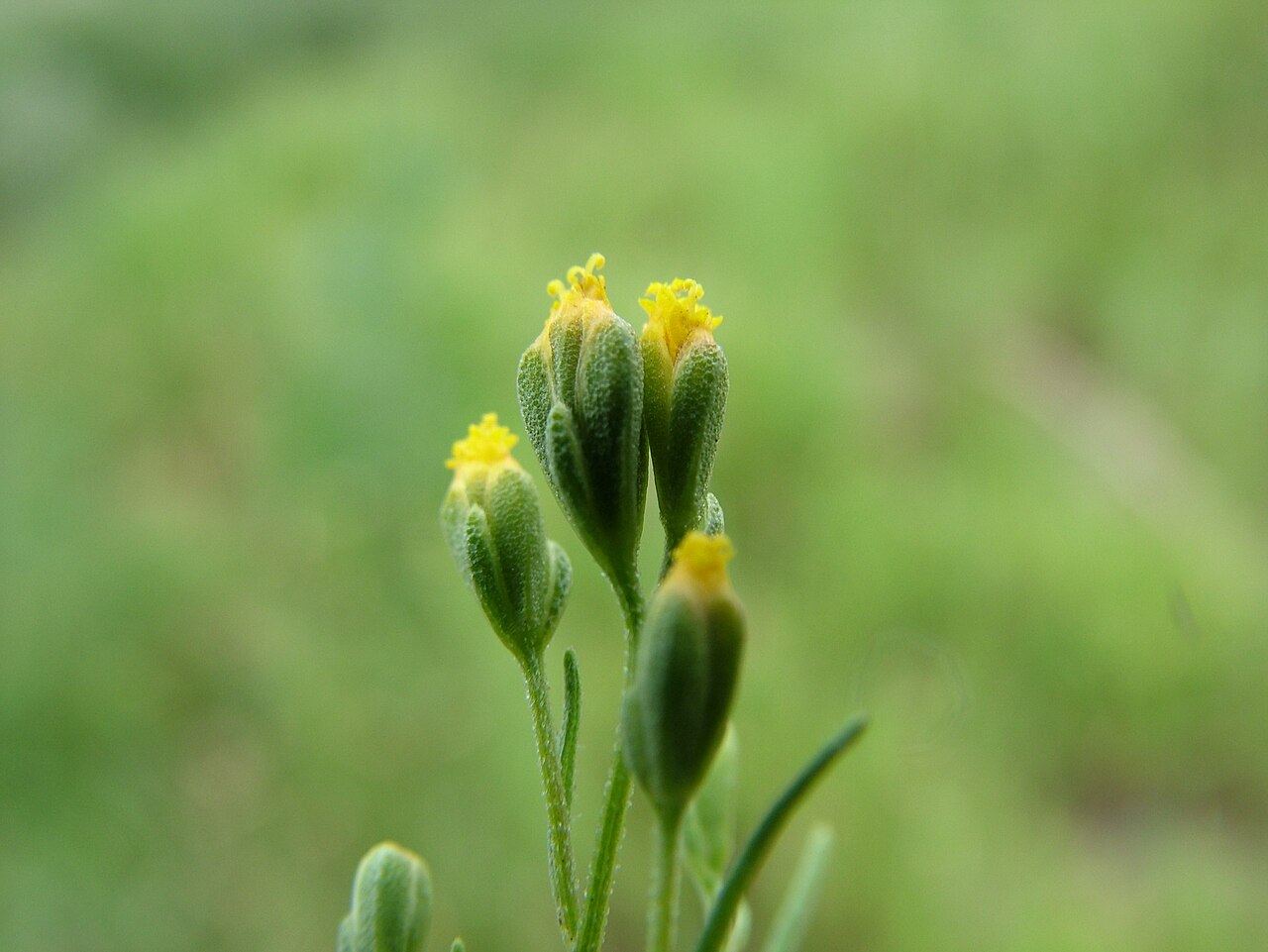
The heads are numerous, each on its own slender stalk. Each is narrow and top-shaped, about 1/5 to 1/4 inch long, with four to six green to purplish bracts that are yellowish or purplish at the tips and dotted with glands. Inside are usually a single tiny yellow to whitish ray flower (sometimes none) and two to six yellow disc flowers. The heads look more like slim yellow buds than daisies. Plants bloom from about August to October.
Seeds
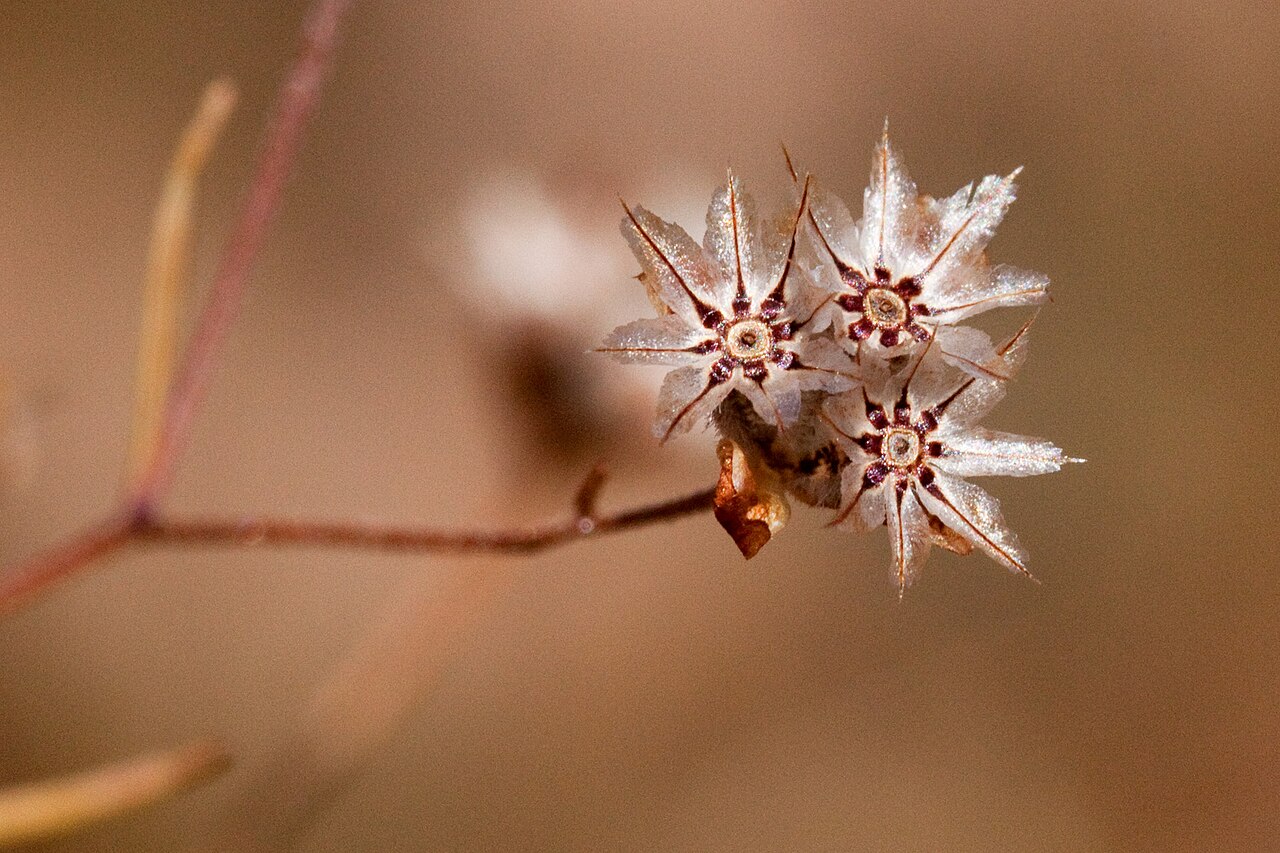
The seeds (cypselae) are black to buff, four-angled, about 1/8 inch long and hairy along the angles. Each is topped with a crown of eight white to tawny or purplish papery scales, which spread like a star when dry and help the seeds blow away or catch in fur.
Similar Species
Small marigolds such as Tagetes micrantha, which grows in the same mountains, are very similar but have more disc flowers and smooth bracts. Dahlberg Daisy and other Thymophylla have thread-like, gland-dotted leaves too, but their heads have showy yellow rays. Some floras also separate two related North American species, Schkuhria multiflora and S. wislizeni, which differ in the number of florets and in their pappus scales.
Quick Facts
| Scientific Name | Schkuhria pinnata (Lam.) Kuntze ex Thell. |
| Family | Asteraceae (sunflower family) |
| Plant Type | Annual wildflower (forb) |
| Mature Height | 8–20 in |
| Mature Spread | 6–12 in |
| Growth Rate | Fast (one season) |
| Sun Exposure | Full sun |
| Water Needs | Low; relies on summer monsoon rains |
| Soil Type | Rocky, gravelly or sandy soils; disturbed ground |
| Soil pH | About 6.0–8.0 |
| Bloom Time | August–October |
| Flower Color | Yellow (tiny heads) |
| Fall Color | Stems often reddish-purple; silvery seed heads |
| Fruit | Small hairy seeds with a star of papery scales |
| Deer Resistant | Yes; bitter, aromatic foliage |
| USDA Hardiness Zones | Annual (warm-season) |
Native Range
USDA PLANTS lists dwarf marigold as native in Arizona, New Mexico and Texas. In Arizona and New Mexico it grows mostly in the southeastern and southern mountains, including the Sky Islands and the Black Range. In Texas it is found in the mountains of the Trans-Pecos. USDA also has old records from Maryland and Massachusetts, but those are introduced waifs, and the Flora of North America notes it has persisted after plantings in Maine. Those states are not shaded on this page’s map.
It grows on rocky slopes, in canyons, open woodlands and grasslands, pastures and along roadsides, usually between about 5,000 and 7,000 feet. Like many Southwestern annuals, it germinates with the July and August monsoon rains and flowers in late summer and fall.
Beyond the United States, it is native through Mexico and Central America to South America. It has become naturalized and weedy in parts of Africa, Australia, Asia and elsewhere, where it can be a common weed of fields and roadsides.
📋 Regional plant lists featuring Dwarf Marigold: Arizona & New Mexico · South & West Texas
Growing & Care Guide
Dwarf marigold is rarely grown on purpose. In its native range in the Southwest it can be part of a native seed mix for grassland or roadside restoration, or allowed to come up on its own in a naturalistic garden. Outside the Southwest, and especially outside the Americas, don’t plant it, because it can become weedy.
Light
It needs full sun and open ground.
Soil & Water
It grows in rocky, gravelly or sandy soil with good drainage. In its native range, summer monsoon rains are all it needs; in a dry year, a few deep waterings in July and August help seedlings establish.
Planting Tips
Scatter seed on bare, lightly raked soil in late spring or early summer, before the monsoon, or let existing plants self-sow. It looks best mixed with grama grasses and other late-summer annuals and perennials in a meadow-style planting.
Pruning & Maintenance
No care is needed. Pull plants before they set seed if you do not want it to spread. Wear gloves if your skin is sensitive, since the gland-dotted foliage is strongly aromatic.
Propagation
It grows only from seed. Collect the star-tipped seeds when the heads dry in fall and store them dry until early summer.
Safety Note
Dwarf marigold is used in traditional medicine in Africa and Latin America, mainly as a bitter tea, and laboratory studies have looked at its extracts for antimalarial and antimicrobial activity. The plant is intensely bitter, and its safety as a medicine has not been established. Don’t use it as a home remedy, and don’t let children or pets chew it.
Landscape Uses
- Southwestern grassland restoration: a native monsoon annual for seed mixes in its native range
- Naturalistic gardens: an airy, fine-textured filler among native grasses in late summer
- Pollinator support: small late-season flowers for tiny native bees and flies
- Dried arrangements: its star-like silvery seed heads are pretty in small dried bouquets
- Botanical interest: a good example of a native annual that became a worldwide weed
Wildlife & Ecological Value
Dwarf marigold is a small part of the late-summer wildflower display in Southwestern mountain grasslands.
For Pollinators
The tiny yellow flowers attract small native bees, flies and wasps in late summer and fall, when many grassland plants are blooming after the monsoon.
For Birds
Seed-eating birds such as sparrows and finches may eat the small seeds from the dry heads in fall and winter.
For Mammals
Its bitter, aromatic foliage is avoided by most grazing animals, which is one reason it persists on overgrazed and disturbed ground.
Ecosystem Role
As a fast-growing annual, it quickly covers bare and disturbed soil after summer rains, helping limit erosion until perennial grasses fill in. Its seeds are spread by wind and by clinging to animals.
Cultural & Historical Uses
The genus Schkuhria honors Christian Schkuhr (1741–1811), a German botanist and illustrator. The species name pinnata refers to its pinnately divided leaves.
Across Africa and Latin America, dwarf marigold has a long history as a bitter folk remedy. In South Africa it is known as bitterbossie (“little bitter bush”) and has been used for colds, fevers and stomach complaints, and it has been studied by scientists looking for new antimalarial compounds. These uses are not proven safe.
North American botanists have treated the plants of the Southwest in several ways: as varieties of S. pinnata (such as var. guatemalensis and var. wislizeni), or as separate species. USDA PLANTS keeps them in S. pinnata, while the Flora of North America recognizes S. pinnata, S. multiflora and S. wislizeni separately.
Frequently Asked Questions
Is dwarf marigold native to the United States?
Yes. It is native to the mountains of Arizona, New Mexico and the Trans-Pecos of Texas, and from there south to South America. Records from the eastern United States are introduced waifs.
Is dwarf marigold a true marigold?
No. It belongs to the same sunflower family and the same tribe as marigolds (Tagetes), which is why it has similar gland-dotted leaves and a strong smell, but it is a different genus.
Is dwarf marigold safe to eat or use as medicine?
Its safety is not well established. It is intensely bitter and is used in traditional medicine, but those uses are not proven safe, so don’t use it as a home remedy and keep children and pets from chewing it.
Why is it a weed in Africa?
It is a fast-growing annual that produces many wind-dispersed seeds and grows well on disturbed ground. After being introduced from the Americas, it spread through fields and roadsides in many warm countries.
When does dwarf marigold bloom?
In its native range it blooms from about August to October, after the summer monsoon rains.

Looking for a nursery that carries Dwarf Marigold?
Browse our native plant nursery directory: Arizona · New Mexico · Texas

