
Sunset Hyssop (Agastache rupestris)
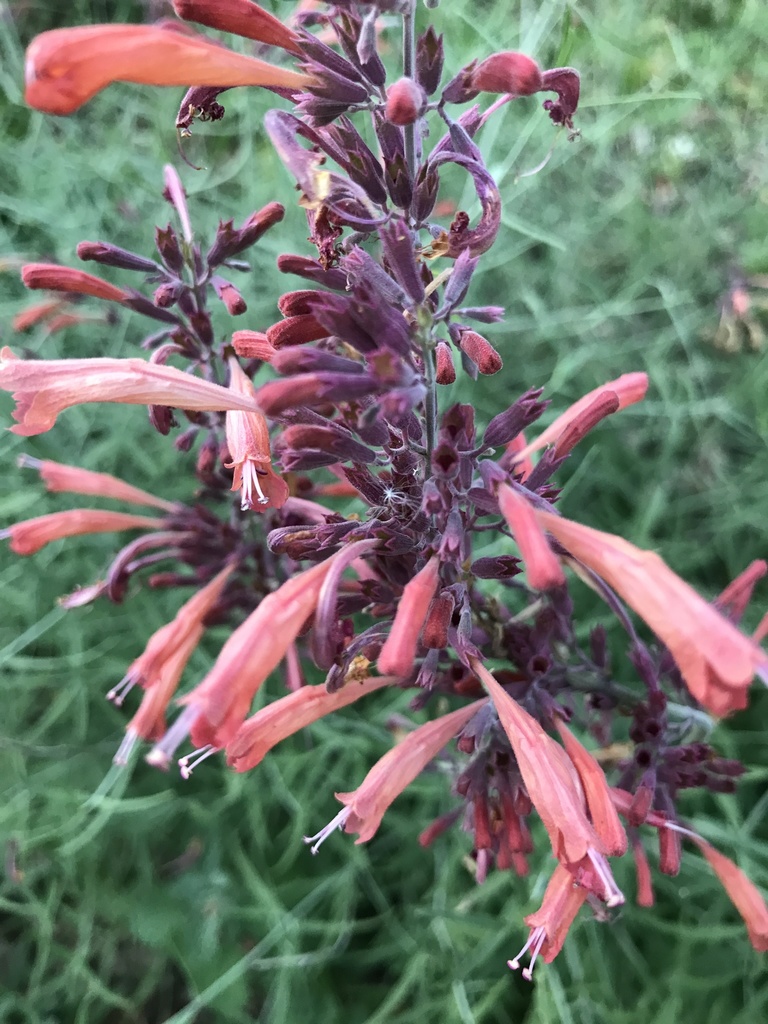
Agastache rupestris, Sunset Hyssop, listed by USDA as threadleaf giant hyssop and also sold as licorice mint hyssop or rock anise hyssop, is a bushy, aromatic perennial from the mountains of Arizona, New Mexico and northern Mexico. It forms a 2- to 3-foot mound of very narrow, gray-green leaves that smell strongly of licorice and mint, topped from midsummer to fall by spikes of salmon-orange tubular flowers set in rosy-purple calyces, a color combination that gives it the name “sunset.”
In the wild it grows on rocky, often granitic slopes and in canyons of open pine and pine-oak forest, at roughly 5,000 to 7,500 feet, in the mountains of central and southeastern Arizona and the Gila country of southwestern New Mexico. In gardens it has become one of the best-known Southwestern natives, a favorite of hummingbirds and a staple of water-wise and pollinator plantings from Colorado and Utah to California and well beyond its native range.
This guide covers how to identify sunset hyssop, where it grows wild, how to grow it successfully (the key is lean, fast-draining soil), and why it is such a good hummingbird and bee plant.
Identification
Agastache species are aromatic members of the mint family with square stems, opposite leaves and spikes of two-lipped tubular flowers. Sunset hyssop is easy to recognize by its very fine leaves and two-toned orange and purple flowers.
Growth Habit
A clump-forming perennial, sometimes woody at the base, with many upright, square stems 2 to 3 feet tall from a central crown. It does not spread by runners. In the wild it is often smaller and more open than in gardens.
Leaves
The leaves are opposite, very narrow and linear, about 1 to 2 inches long and only about 1/16 to 1/8 inch wide, gray-green to silvery, with rolled or smooth edges. Crushed leaves have a strong scent of licorice and mint, like anise hyssop but sharper. These thread-like leaves are the source of the USDA name threadleaf giant hyssop.
Flowers
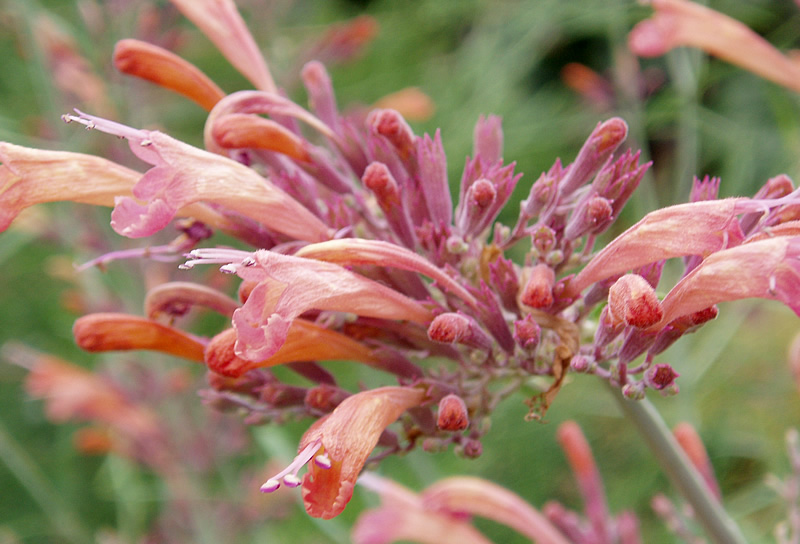
The flowers are about 1 to 1¼ inches long, with a narrow, slightly curved salmon-orange to coral corolla tube, two-lipped at the mouth, with the stamens just reaching or extending past the lips. They emerge from tubular calyces that are rosy pink to dusky lavender-purple and remain colorful after the corollas drop. Flowers are arranged in whorls along slender spikes 6 to 12 inches long. Bloom is from late July or August into October in the wild, and from midsummer to frost in gardens.
Fruit
Each flower produces four small, smooth, brown nutlets that remain in the dry calyces. The seed heads can be left for seed-eating birds.
Similar Species
Texas hummingbird mint (A. cana) has broader, gray, hairy leaves and pink flowers. Agastache aurantiaca, a Mexican species and parent of many hybrids, has broader green leaves and orange flowers. Many hybrid agastaches in the trade share its coloring, but the straight species has the finest foliage.
Quick Facts
| Scientific Name | Agastache rupestris |
| Family | Lamiaceae (mint family) |
| Plant Type | Aromatic herbaceous perennial, woody at the base |
| Mature Height | 2–3 ft |
| Mature Spread | 1½–2 ft |
| Growth Rate | Moderate to fast |
| Sun Exposure | Full sun |
| Water Needs | Low; drought tolerant once established |
| Soil Type | Lean, gravelly, sandy or rocky soils with fast drainage |
| Soil pH | About 6.0–8.0 |
| Bloom Time | Midsummer to fall (August–October in the wild) |
| Flower Color | Salmon-orange corolla with rosy-purple calyx |
| Fall Color | None; foliage stays gray-green |
| Fruit | Four small nutlets per flower |
| Deer Resistant | Yes; strongly aromatic |
| USDA Hardiness Zones | 5–9 |
Native Range
Sunset hyssop is native to the southwestern United States and northern Mexico. USDA PLANTS records it from Arizona and New Mexico. Herbarium collections show it in the mountains of central and southeastern Arizona, including Gila, Graham, Pima and Santa Cruz counties, and in southwestern New Mexico, where it grows in the Gila National Forest, along the forks of the Gila River and in the Black Range of Grant and Catron counties. Its range continues south into the Sierra Madre Occidental of Sonora and Chihuahua.
It is a plant of the Madrean pine-oak and ponderosa pine zone, usually at about 5,000 to 7,500 feet. Typical sites are rocky slopes, granitic outcrops, canyon sides and open, sunny clearings in pine and pine-oak forest, often on thin, coarse, well-drained soils.
Specimens from Colorado, Utah and other states come from gardens. It is widely cultivated and is hardy far north of its native range, but it is native in the wild only in Arizona and New Mexico.
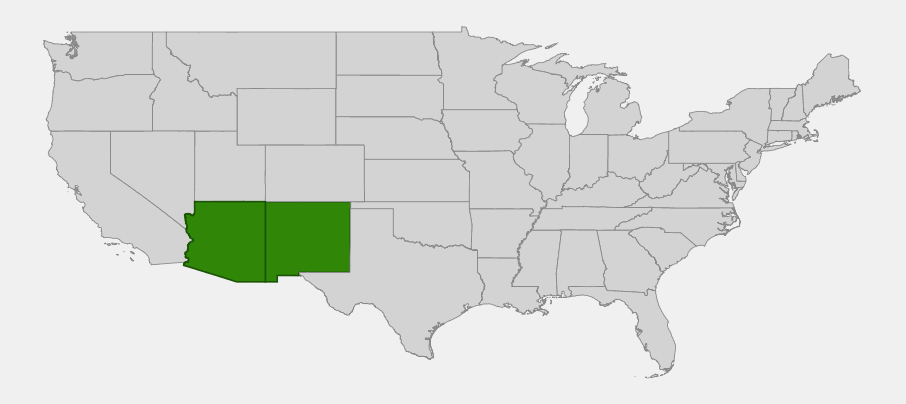
📋 Regional plant lists featuring Sunset Hyssop: Arizona & New Mexico
Growing & Care Guide
Sunset hyssop is widely available from nurseries, especially in the West, and is one of the most rewarding native perennials for hot, sunny, dry gardens. It was promoted by the Plant Select program of Denver Botanic Gardens and Colorado State University, which helped make it a garden standard across the Rocky Mountain region. Buy nursery plants rather than collecting from the wild. Its main enemy is wet soil in winter.
Light
Full sun. In shade it grows lanky and flowers poorly. In the low desert it appreciates a little afternoon shade.
Soil & Water
Plant it in lean, gravelly, sandy or rocky soil with excellent drainage; a slope, raised bed or gravel mulch is ideal. Rich, heavy or wet soil, especially in winter, causes crown rot and short life. Water regularly the first summer, then only during long dry spells. Do not fertilize.
Planting Tips
Plant in spring or early summer, so roots establish before winter, about 18 to 24 inches apart. Use gravel rather than bark mulch around the crown. It looks best in groups of three or more with other dryland plants such as penstemons, salvias, grasses and buckwheats.
Pruning & Maintenance
Leave the stems standing over winter; they help protect the crown and feed birds. Cut them back to a few inches in mid-spring when new growth appears. Plants are often short-lived (a few years), so let some seedlings grow or take cuttings to replace them.
Propagation
Seed germinates readily with light; surface-sow in spring, or give it a few weeks of cold, moist stratification for more even germination. Softwood cuttings from spring or early summer growth root easily. Named garden selections should be propagated by cuttings to stay true.
Landscape Uses
- Hummingbird gardens: one of the best late-season nectar plants for migrating hummingbirds
- Xeriscapes and rock gardens: thrives in lean, fast-draining soil with little water
- Pollinator gardens: visited by bees, butterflies and hawk moths
- Fragrance gardens: licorice-scented foliage released by touch
- Herb and tea gardens: leaves and flowers can flavor teas
Wildlife & Ecological Value
Sunset hyssop is first and foremost a hummingbird plant, but its long bloom feeds many other pollinators too.
For Pollinators
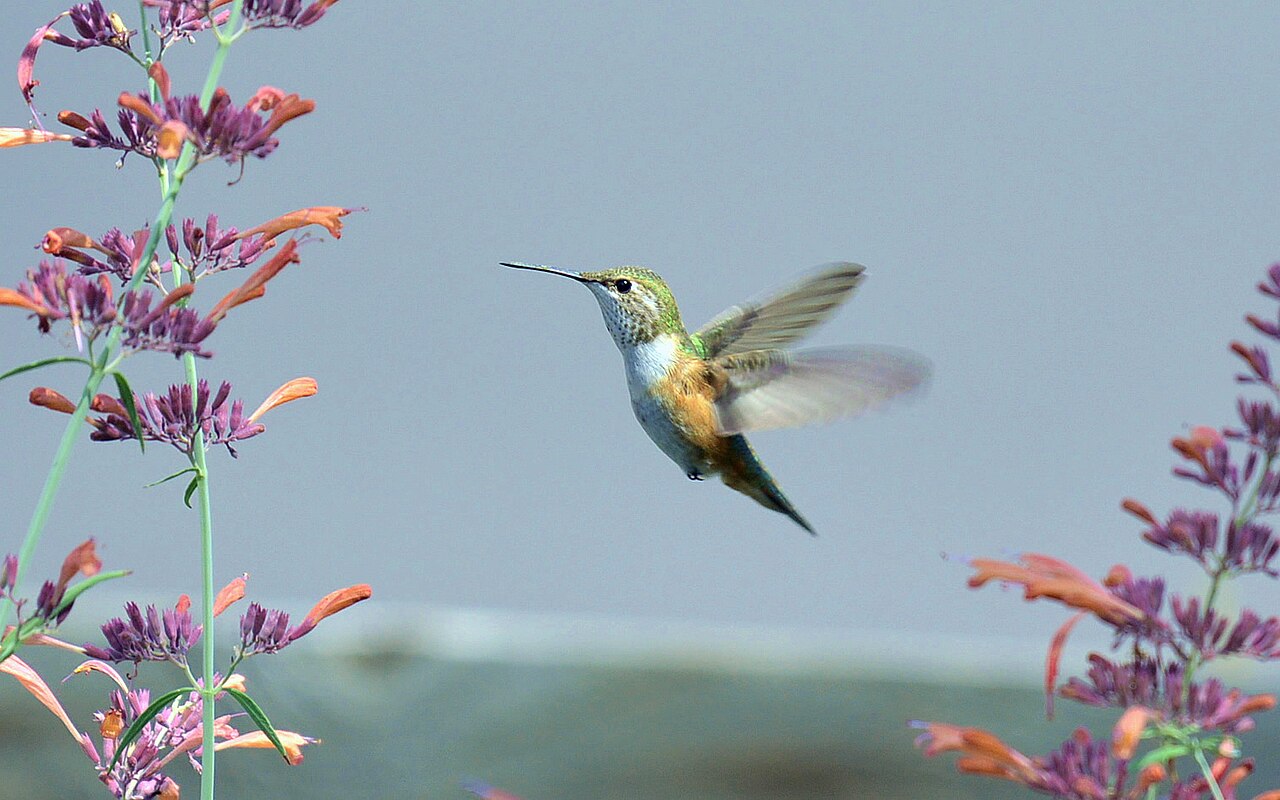
Its long, orange tubular flowers are classic hummingbird flowers, and it blooms in late summer and fall, just as hummingbirds migrate south through the Rockies and Southwest. Bumblebees, carpenter bees and other bees, butterflies and hawk moths also visit, and some bees rob nectar through holes in the flower base.
For Birds
Broad-tailed, rufous, black-chinned and other hummingbirds feed heavily on it in western gardens. Finches and other small birds pick at the seed heads in fall and winter.
For Mammals
The strongly aromatic foliage is avoided by deer and rabbits.
Ecosystem Role
In its native mountains it adds late-season nectar to open, rocky pine-oak slopes. Along with other Madrean plants such as scarlet bugler and Mexican salvias, it forms part of the fall “hummingbird corridor” of flowers that support migration through the Southwest.
Cultural & Historical Uses
Edward Lee Greene described the plant in the early 20th century as Brittonastrum rupestre; Paul Standley later moved it to Agastache. The epithet rupestris means “growing among rocks,” a reference to its habitat.
In the Southwest, the leaves and flowers of several agastaches, called hummingbird mints or giant hyssops, have been used to make a licorice- or mint-flavored tea. Sunset hyssop’s leaves have a strong, sweet anise scent and can be used the same way in small amounts. As with any herb, sample it sparingly the first time.
Since the 1990s, sunset hyssop has been one of the most popular of a wave of Southwestern agastaches in Western gardens, and it has been used as a parent of several hybrid hyssops with orange, coral and pink flowers. The straight species remains a favorite for its fine, silvery foliage and long fall bloom.
Frequently Asked Questions
Is licorice mint hyssop the same as sunset hyssop?
Yes. Licorice mint hyssop, sunset hyssop, rock anise hyssop and threadleaf giant hyssop are all names for Agastache rupestris.
Where is sunset hyssop native?
In the mountains of Arizona and New Mexico and south into northern Mexico, on rocky slopes in pine and pine-oak forest.
Why did my sunset hyssop die over winter?
The most common cause is wet soil around the crown in winter. Grow it in very well-drained, lean soil, avoid heavy mulch, wait until spring to cut it back, and expect plants to be short-lived even in good conditions.
Does sunset hyssop attract hummingbirds?
Yes. It is one of the best hummingbird plants for western gardens, especially during the late-summer and fall migration.
Can I make tea from sunset hyssop?
The aromatic leaves have been used for a licorice-mint tea, like those of other agastaches. Use small amounts and only from plants not treated with pesticides.

Looking for a nursery that carries Sunset Hyssop?
Browse our native plant nursery directory: Arizona · New Mexico

