
Coast Rockcress (Arabis blepharophylla)
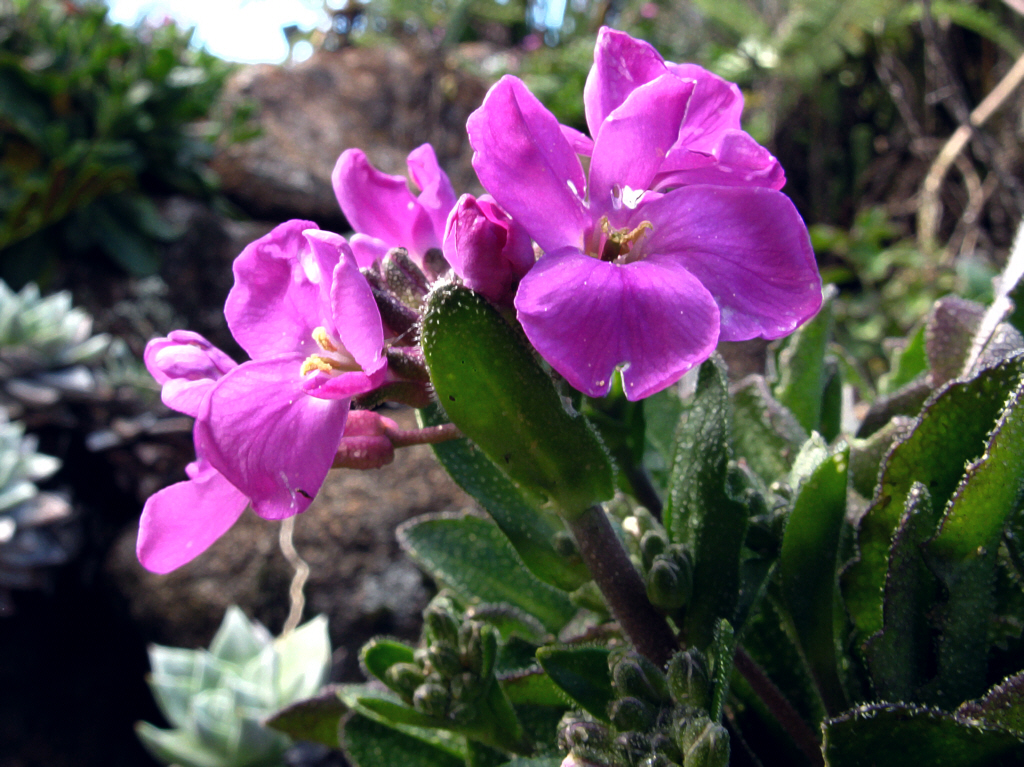
Arabis blepharophylla, known as Coast Rockcress (also coast rock cress and, in USDA PLANTS, rose rockcress), is a small perennial wildflower of the mustard family that grows only in California, mainly on rocky coastal bluffs and grassy hillsides of the San Francisco Bay Area and the nearby Central Coast. From late winter into spring it raises clusters of vivid rose-purple, four-petaled, sweetly fragrant flowers over tight rosettes of dark green leaves.
The species name blepharophylla means “eyelash leaf,” for the stiff hairs that fringe the leaf edges. It is one of the earliest and showiest native wildflowers of the Bay Area coast, often blooming in February and March among rocks and lichens on windswept headlands.
Though uncommon in the wild, coast rockcress is widely grown in gardens. Selections such as ‘Spring Charm’ (‘Frühlingszauber’), which holds the Royal Horticultural Society’s Award of Garden Merit, and ‘Rote Sensation’ (‘Red Sensation’) are sold in nurseries across the U.S. and Europe as rock garden and edging plants, so many gardeners grow this California native without knowing where it comes from.
Identification
Coast rockcress is easy to recognize in bloom: a low rosette of fringed, dark green leaves topped by short clusters of bright rose-purple, four-petaled flowers on rocky coastal ground in early spring.
Leaves
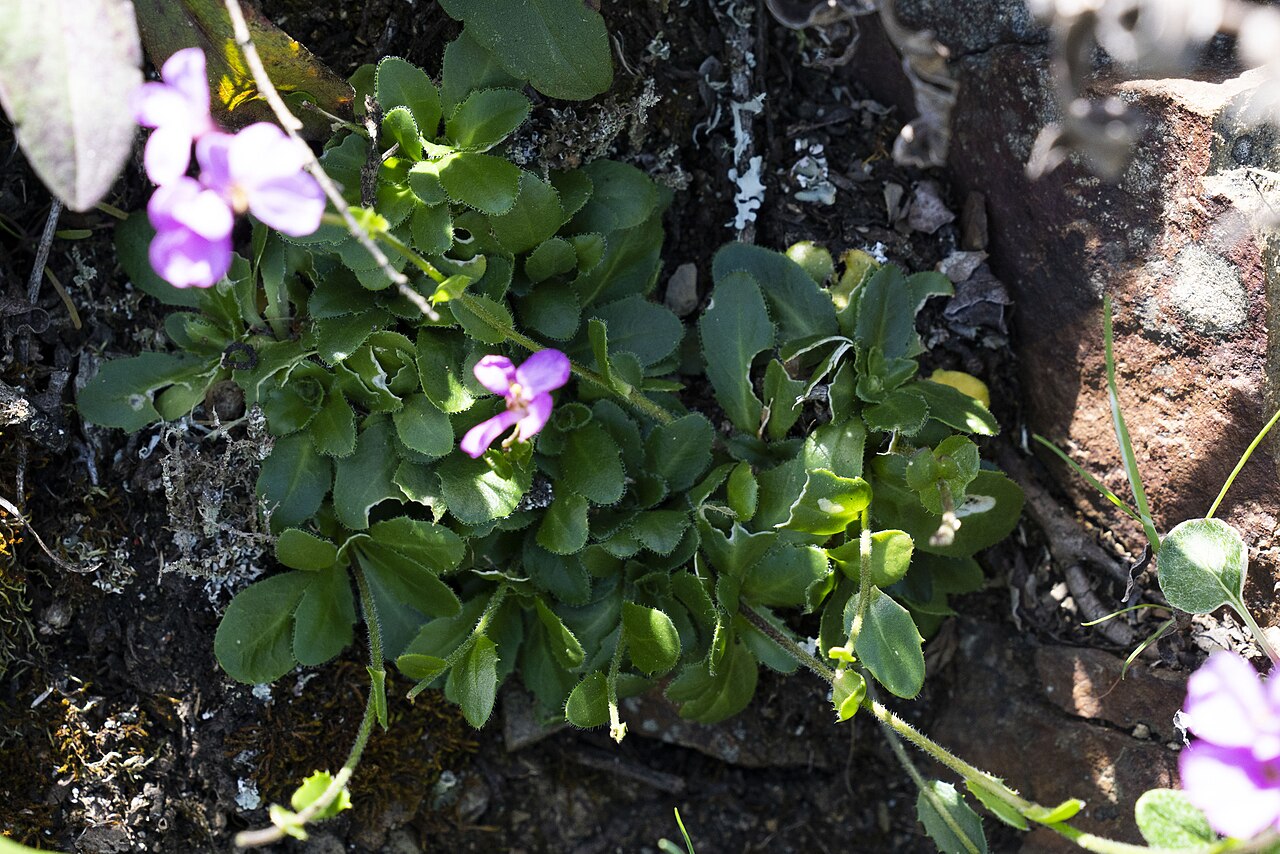
The leaves form a dense basal rosette 2 to 4 inches across. Each leaf is oblong to spoon-shaped, about 1 to 3 inches long, dark green, often with a few shallow teeth, and edged with stiff, eyelash-like hairs. A few smaller leaves clasp the flowering stems. Plants often form small clumps of several rosettes.
Flowers
Short, stout, hairy stems 4 to 8 inches tall (occasionally to about 1 foot) carry dense clusters of flowers from about February to April. Each flower is about ¾ inch across, with four broad, rose-purple to magenta petals arranged in a cross, as is typical of the mustard family. The flowers have a sweet fragrance.
Fruit
After flowering, the stems lengthen and produce narrow, flattened, upright seed pods (siliques) about 1 to 2 inches long, which split open to release small, winged seeds in late spring.
Similar Species
Other rockcresses in California, such as species of Boechera, usually have white to pale pink or lavender flowers and taller, slimmer stems. The cultivated Aubrieta and garden Arabis caucasica are Eurasian plants with gray-green mats; coast rockcress has darker, fringed rosette leaves and larger, more vivid rose-purple flowers. Elsewhere in North America, Lyreleaf Rockcress (Arabis lyrata) is a white-flowered relative.
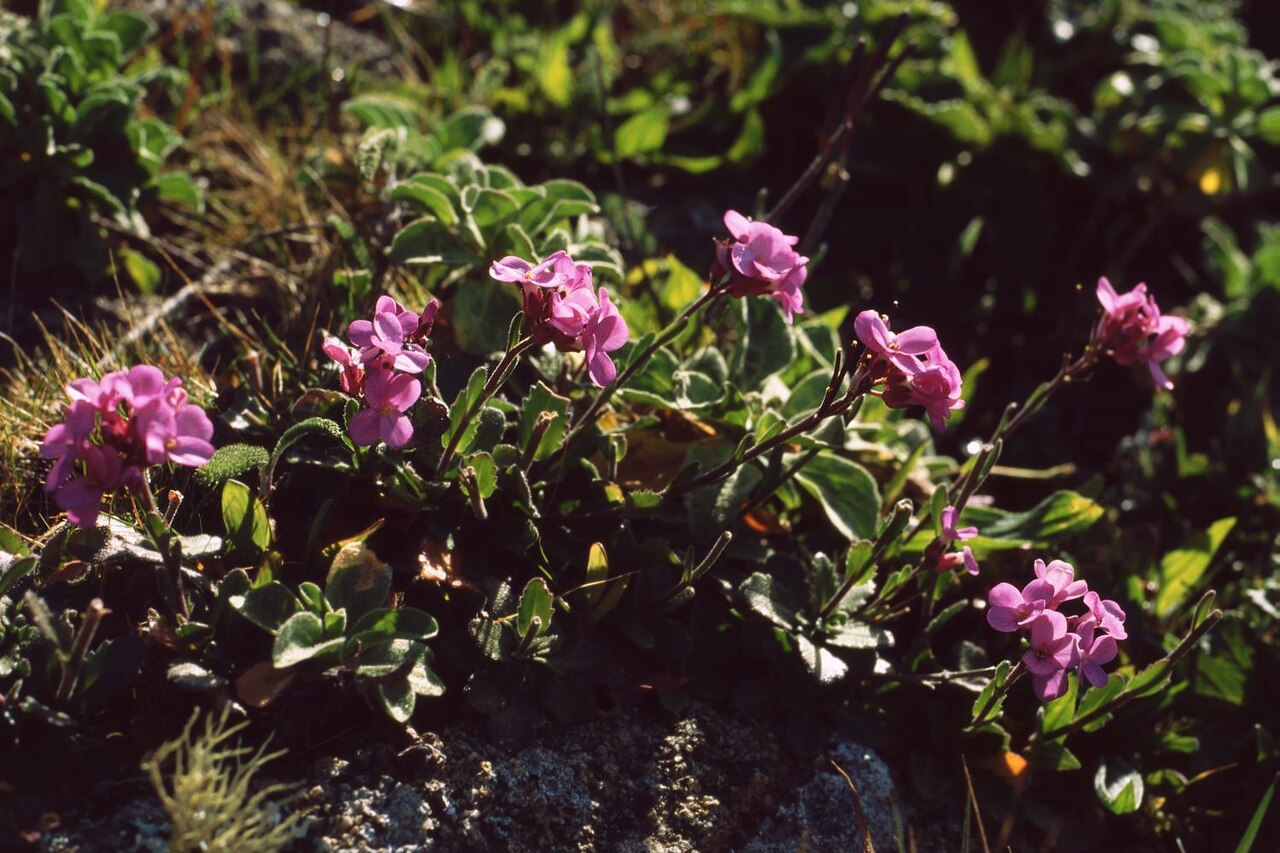
Quick Facts
| Scientific Name | Arabis blepharophylla Hook. & Arn. |
| Family | Brassicaceae (mustard family) |
| Plant Type | Short-lived herbaceous perennial |
| Mature Height | 4–8 in (to about 12 in) |
| Mature Spread | 4–8 in |
| Growth Rate | Moderate |
| Sun Exposure | Full sun to partial shade |
| Water Needs | Low to moderate; dry in summer |
| Soil Type | Well-drained rocky, gravelly or sandy soils |
| Soil pH | About 6.0–7.5 |
| Bloom Time | February–April |
| Flower Color | Rose-purple to magenta (fragrant) |
| Fall Color | None; evergreen rosettes |
| Fruit | Narrow flattened seed pod (silique) |
| Deer Resistant | Somewhat; low rosettes are occasionally browsed |
| USDA Hardiness Zones | 7–10 (cultivars often grown in 5–8) |
Native Range
Coast rockcress is endemic to California. It grows mainly in the San Francisco Bay Area and the adjacent Central Coast, from Sonoma and Marin counties south through San Francisco and San Mateo counties to the Santa Cruz Mountains and the Monterey Bay area. It is uncommon in the wild and usually found in small, local populations.
Most populations are close to the ocean, on rocky coastal bluffs, headlands and coastal hills, and on rock outcrops of the inner Bay Area hills. Notable places to see it include the Point Reyes headlands, the Marin Headlands and San Bruno Mountain.
Its habitat is rocky outcrops, crevices, thin soils on coastal bluffs, and openings in coastal scrub and coastal grassland, generally at low elevations. Like many coastal wildflowers, it grows and flowers during the cool, wet winter and spring, and the rosettes rest through the dry summer, cooled by coastal fog.
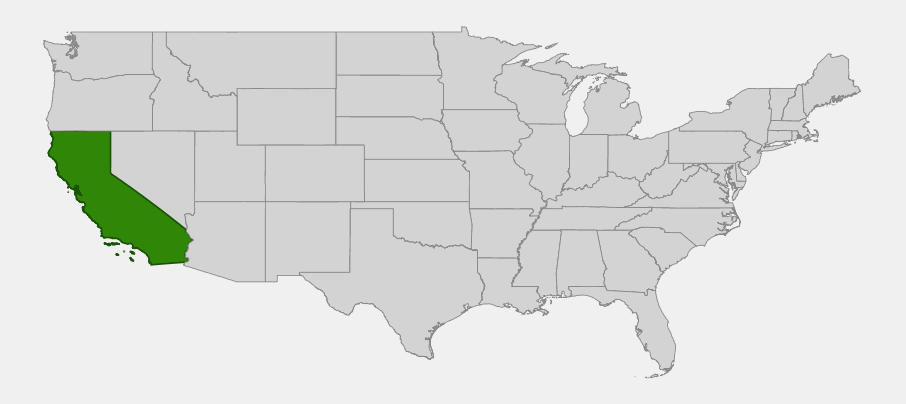
📋 Regional plant lists featuring Coast Rockcress: California & Nevada
Growing & Care Guide
Coast rockcress is a charming plant for rock gardens, containers and the front of a border. The species is sold by California native plant nurseries, and the cultivars ‘Spring Charm’ and ‘Rote Sensation’ are common in garden centers across the country. It is often short-lived, so plan to let it reseed or replace it every few years.
Light
Full sun on the cool coast; afternoon shade inland or in hot-summer climates. In too much shade it flowers sparsely.
Soil & Water
Excellent drainage is essential: rocky, gravelly or sandy soil, a rock garden, a wall crevice or a container with gritty mix. Water moderately in winter and spring while it grows and blooms. In California, keep it on the dry side in summer, with only occasional water; soggy soil causes crown rot.
Planting Tips
Plant in fall or early spring, 6 to 8 inches apart, with the crown slightly above the soil surface. Tuck plants among rocks or at the edge of paths and walls, where the early flowers can be seen up close and their fragrance enjoyed.
Pruning & Maintenance
Remove spent flower stems after blooming to keep plants tidy, or leave some to set seed. Plants often decline after two to four years; let a few seedlings grow on, or take divisions to keep it going. Watch for snails and slugs, which can damage the rosettes.
Propagation
Sow seed in fall or early spring; it germinates readily without special treatment. Mature clumps can be divided after flowering, and rosettes can be rooted as cuttings. Garden cultivars such as ‘Spring Charm’ are often grown from seed strains.
Landscape Uses
- Rock gardens and crevices: a low, early-blooming plant for gritty, well-drained spots
- Containers and troughs: fragrant spring color up close
- Coastal gardens: tolerates wind and salt spray on the California coast
- Edging and borders: a neat rosette for the front of beds and along paths
- Pollinator gardens: early-season nectar for bees and butterflies
Wildlife & Ecological Value
Coast rockcress blooms early, when few other flowers are open, making it a useful nectar source on the coast in late winter.
For Pollinators
The fragrant flowers attract native bees, including early-flying solitary bees, as well as bee flies and butterflies. Plants of the mustard family, including rockcresses, are larval hosts for white and orangetip butterflies, such as Sara’s orangetip, which feed on the flowers and young seed pods.
For Birds
Small seed-eating birds may eat the seeds, but coast rockcress is not a major bird food plant.
For Mammals
Rabbits and deer occasionally graze the rosettes. Because the plants grow among rocks and on steep bluffs, they are often out of reach.
Ecosystem Role
Coast rockcress is part of the rich wildflower flora of California’s coastal bluffs and rock outcrops, a habitat threatened by development, trampling and invasive plants such as iceplant and European grasses. Protecting these sites conserves this and many other local coastal species.
Cultural & Historical Uses
The species was described by William Jackson Hooker and George Arnott in The Botany of Captain Beechey’s Voyage, based on specimens collected around San Francisco Bay during the voyage of HMS Blossom in the 1820s.
Coast rockcress was introduced into European gardens and became a popular rock garden plant there. German and Dutch breeders developed compact, free-flowering seed strains such as ‘Frühlingszauber’ (sold in English as ‘Spring Charm’) and ‘Rote Sensation’, which are now sold widely as spring bedding and rock garden plants, often under the name “rose rockcress” or “fringed rockcress.”
In its home range it remains a local treasure, admired by Bay Area wildflower enthusiasts as one of the first coastal wildflowers of the year. Botanic gardens such as the Regional Parks Botanic Garden in Berkeley grow it to showcase the native flora of the region.
Frequently Asked Questions
Is Arabis ‘Spring Charm’ a native plant?
Yes. ‘Spring Charm’ (‘Frühlingszauber’) is a garden selection of Arabis blepharophylla, a wildflower native only to coastal California. It is grown widely as a garden plant outside its native range.
Where does coast rockcress grow wild?
Mainly on rocky coastal bluffs, headlands and rock outcrops in the San Francisco Bay Area and nearby Central Coast, including Point Reyes, the Marin Headlands and San Bruno Mountain.
When does coast rockcress bloom?
In the wild it blooms from about February to April, among the earliest coastal wildflowers. Garden plants bloom in early to mid spring depending on climate.
Why did my coast rockcress die after a few years?
It is a short-lived perennial and is sensitive to poor drainage and summer water. Grow it in gritty, well-drained soil, keep it on the dry side in summer, and let it reseed or divide it to keep it going.
Is coast rockcress edible?
Like other mustards it is not known to be toxic, but it is not a food plant and is uncommon in the wild. Do not collect wild plants.

Looking for a nursery that carries Coast Rockcress?
Browse our native plant nursery directory: California

