
Emory’s Barrel Cactus (Ferocactus emoryi)
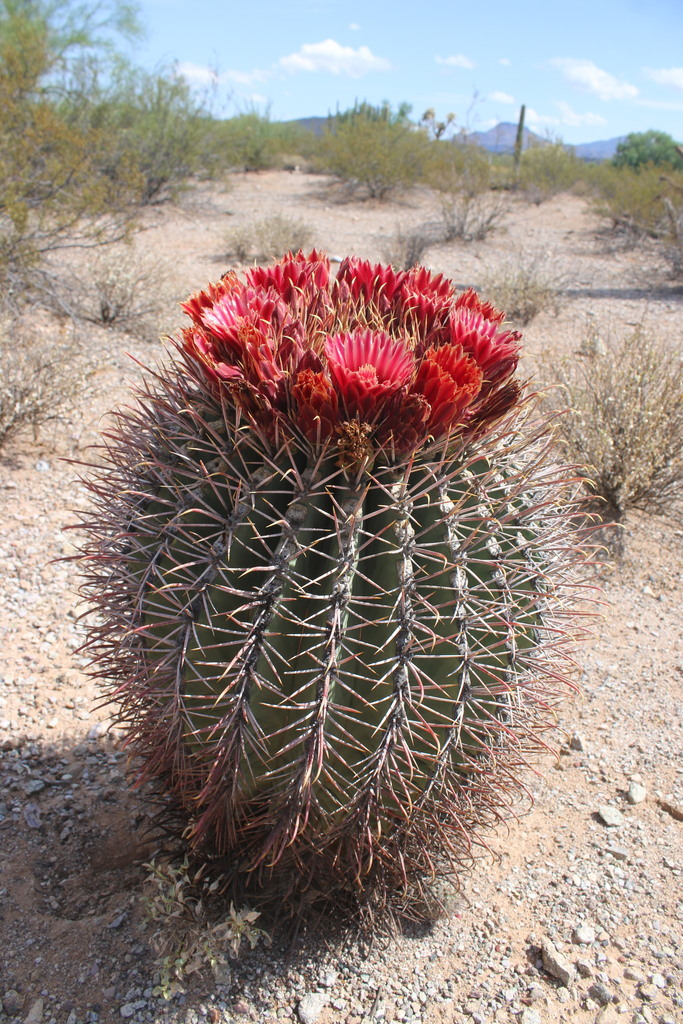
Ferocactus emoryi, known as Emory’s Barrel Cactus, Coville’s barrel cactus or biznaga, is a large, single-stemmed barrel cactus of the Sonoran Desert. Young plants are round; old ones become stout columns up to about 8 feet tall and 2 feet or more across. The stem is armed with thick, reddish spines, and in late summer the top is ringed with red flowers, followed by yellow fruits. Botanists once split the Arizona plants off as Ferocactus covillei, a name still seen on nursery labels; it is now treated as a synonym of F. emoryi.
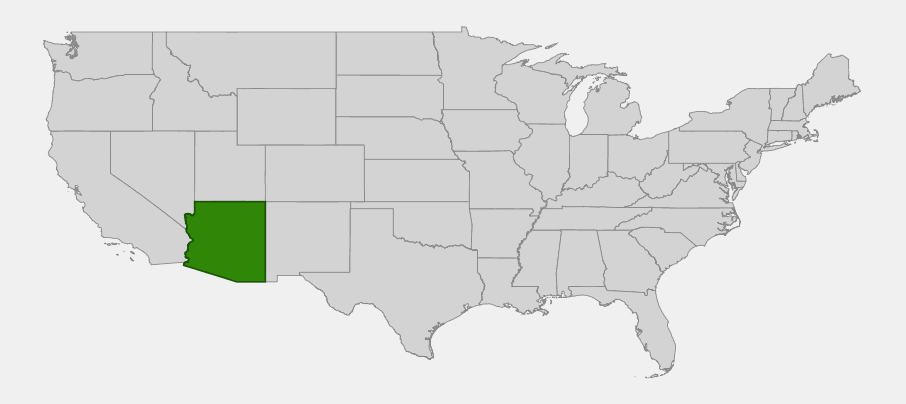
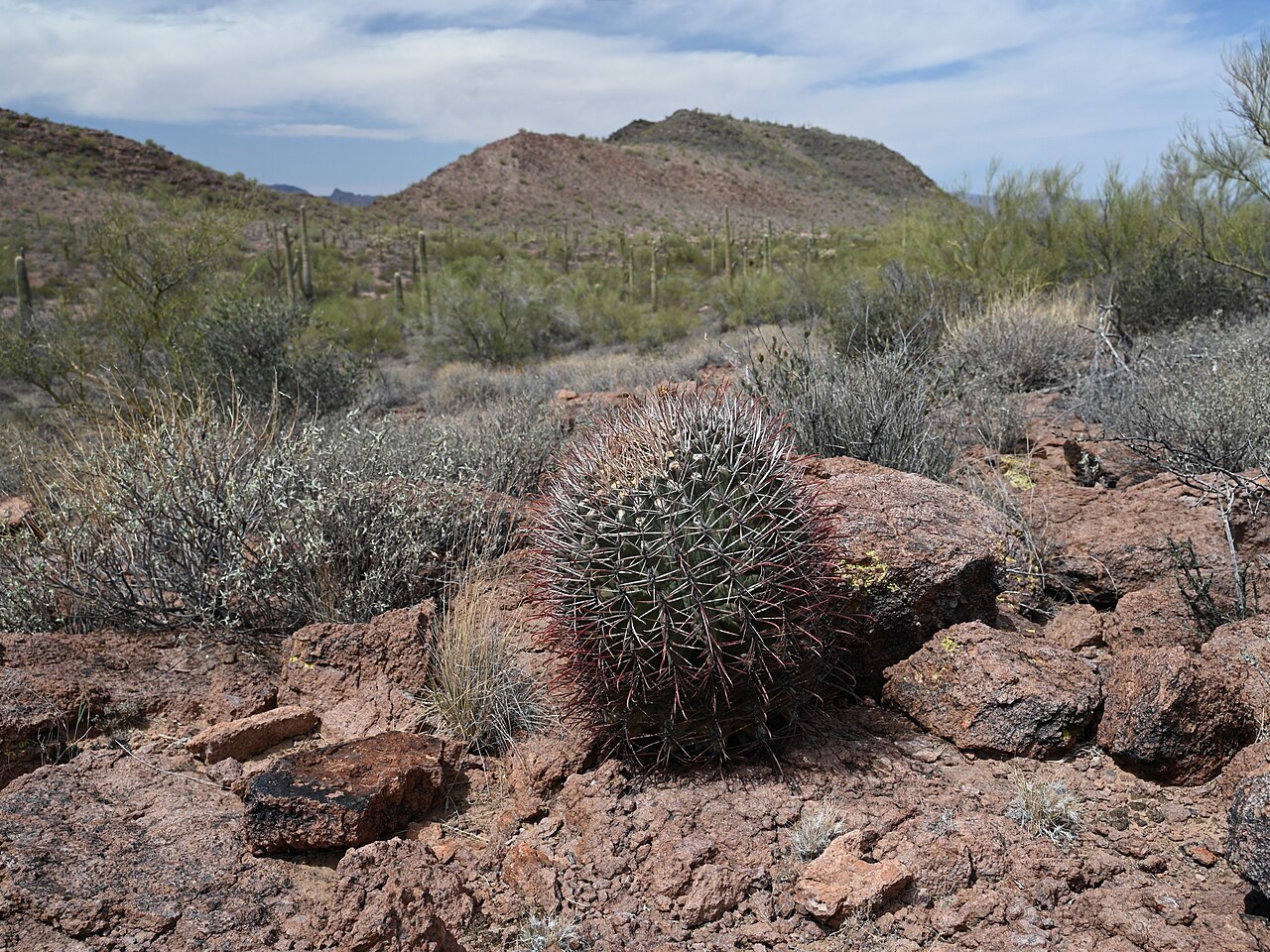
In the United States, Emory’s barrel cactus has the smallest range of Arizona’s three big barrel cacti. It grows only in a small area of far southern Arizona, centered on Organ Pipe Cactus National Monument and reaching north to around Ajo, plus nearby desert lands in Pima, Maricopa and Yuma counties. It is much more widespread in Sonora, Mexico, and extends south to Sinaloa and Baja California Sur. It grows on desert flats, rocky hillsides and gravelly bajadas from near sea level to about 4,000 feet.
You can tell it apart from Fishhook Barrel Cactus and California Barrel Cactus by its spines and flowers: it has no thin, bristly radial spines, only a few thick, ridged spines per cluster, and its flowers are usually red rather than yellow or orange. It is a striking, very drought-tolerant plant for desert gardens in frost-light areas. Like all native cacti in Arizona, it is protected under the Arizona Native Plant Law, so buy only nursery-grown or legally salvaged, tagged plants. This guide covers identification, native range, growing tips and wildlife value.
Identification
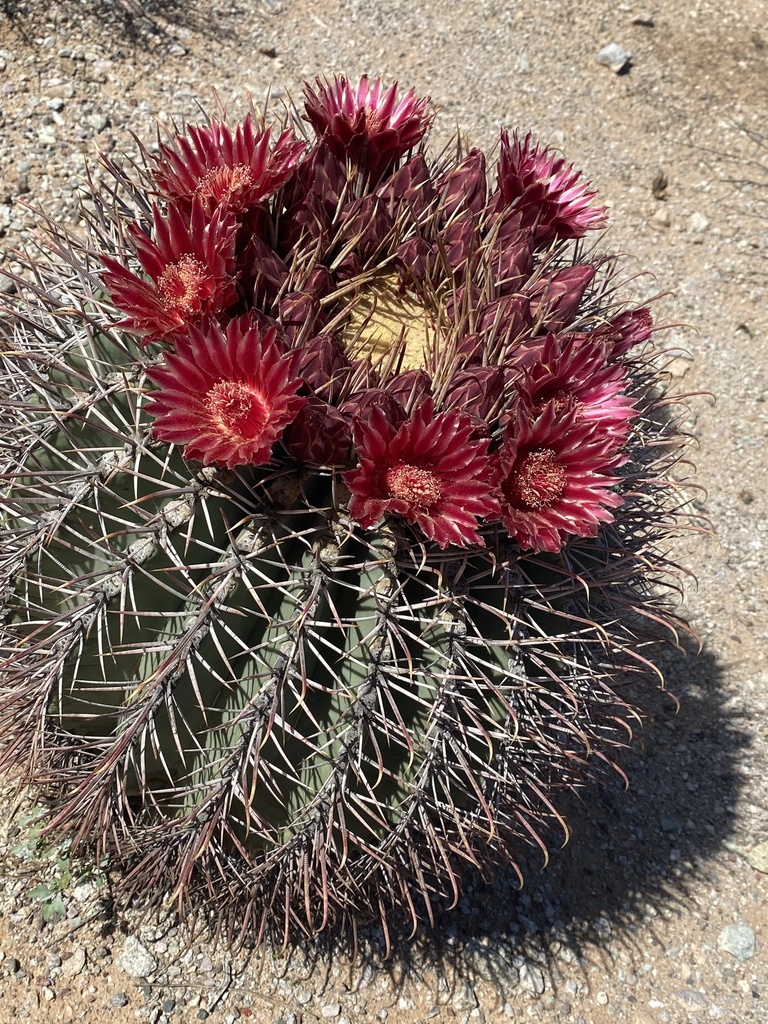
Emory’s barrel cactus is a big, green to gray-green barrel with stout, reddish spines and no fine, hair-like spines around them. In July and August look for red flowers ringing the top.
Stem & Growth Habit
The stem is solitary (it does not branch), globe-shaped when young and becoming cylindrical with age. Mature plants are usually 2 to 5 feet tall and can reach about 8 feet, with a diameter of 1 to 2 feet or more. The stem has roughly 20 to 30 prominent, notched ribs. Like other barrel cacti, old plants may lean, and very tall ones sometimes topple.
Spines
Each spine cluster has only stout spines, usually 6 to 10, without the thin, white bristle-like radial spines found on the other Arizona barrels. The spines are reddish to gray, flattened and crossed by fine ridges. The longest central spine, up to about 4 inches long, points outward and curves downward, often with a hooked tip. The others are about 2 to 3 inches long. A related form in Baja California Sur, subspecies rectispinus, has straight central spines up to 10 inches long or more, among the longest of any cactus.
Flowers
The funnel-shaped flowers are about 2 to 3 inches long and wide and open in a ring at the top of the stem in late summer, usually July and August after the monsoon rains start. In Arizona they are typically red throughout; plants in parts of Mexico can have yellow or red-and-yellow flowers. As in other Ferocactus, small nectar glands sit just above the spine clusters near the crown.
Fruit
The fruit is an egg-shaped, fleshy yellow berry about 2 inches long, with scales on the outside and many small black seeds. The fruits often stay on the plant for months.
Look-alikes
Fishhook Barrel Cactus has a strongly hooked central spine surrounded by many thin, bristly radial spines and yellow to orange flowers. California Barrel Cactus has a dense, tangled covering of spines that often hides the stem and yellow flowers. Both overlap with Emory’s barrel near Organ Pipe Cactus National Monument.
Safety
The spines are stiff and sharp, and the hooked tips catch skin and clothing, so wear thick gloves and use folded newspaper or carpet straps when moving a plant. Despite the old name “traveler’s friend,” the pulp of barrel cacti is not a safe source of drinking water; the juice is bitter and can cause stomach upset or diarrhea.
Quick Facts
| Scientific Name | Ferocactus emoryi (Engelm.) Orcutt; syn. F. covillei |
| Family | Cactaceae (cactus family) |
| Plant Type | Large solitary barrel cactus |
| Mature Height | 2–5 ft; occasionally to 8 ft |
| Mature Spread | 1–2 ft |
| Growth Rate | Slow |
| Sun Exposure | Full sun |
| Water Needs | Very low; extremely drought tolerant |
| Soil Type | Rocky, gravelly or sandy; fast-draining |
| Soil pH | Neutral to alkaline |
| Bloom Time | July–August |
| Flower Color | Red (sometimes yellow in Mexico) |
| Fall Color | None; evergreen succulent |
| Fruit | Yellow, egg-shaped fleshy fruit about 2 in |
| Deer Resistant | Yes |
| USDA Hardiness Zones | 9b–11 |
Native Range
In the United States, Ferocactus emoryi grows only in southern Arizona. USDA PLANTS lists it as native to the lower 48 states and records it only from Arizona. Its U.S. range is small and centered on Organ Pipe Cactus National Monument, extending north to the area around Ajo and into adjacent desert in Pima, Maricopa and Yuma counties.
Across the border it is common in the Sonoran Desert of Sonora, Mexico, and its range continues south into Sinaloa and Baja California Sur, where the long-spined subspecies rectispinus grows. It grows on desert flats, rocky hillsides, gravelly or sandy bajadas and desert scrub from near sea level to about 4,000 feet.
Emory’s barrel cactus is not federally listed, but its U.S. population is small and mostly within protected land. All cacti are protected in Arizona under the Arizona Native Plant Law, and collecting any plant within Organ Pipe Cactus National Monument is prohibited. All cacti are also listed in CITES Appendix II, which regulates international trade.
📋 Regional plant lists featuring Emory’s Barrel Cactus: Arizona & New Mexico
Growing & Care Guide
Emory’s barrel cactus is easy to grow in hot, dry, sunny places with fast-draining soil. It is slow-growing, so most gardeners start with a nursery-grown plant. Buy only nursery-propagated plants, or salvaged plants that carry an Arizona Department of Agriculture tag, and never dig cacti from the wild.
Light
Give it full sun. Young plants raised in a shade house should be moved into full sun gradually over several weeks, or given light afternoon shade the first summer, to prevent sunburn. In shade it grows thin and tends to lean.
Soil & Water
Plant it in fast-draining, rocky, gravelly or sandy soil. Raised beds, berms and slopes work well in heavier soil. Established plants need little or no extra water in the low desert; a deep soaking once a month in the hottest, driest months helps them look plump and flower. Do not water in winter. Constantly wet soil causes rot.
Planting Tips
Plant in spring or early fall, after the hottest weather. Keep the same side facing south as before if you know it, because the shaded side can sunburn. Do not plant it deeper than it was growing. Wait a week before the first watering so any damaged roots can heal. It is less cold hardy than fishhook barrel cactus and is best in USDA zones 9b–11; it tolerates brief light frosts, but hard freezes in the low 20s °F can damage it. In colder areas grow it in a large pot with gritty cactus mix and protect it in winter.
Pruning & Maintenance
No pruning is needed. Remove old fruit and debris from the crown if you like. Watch for cactus longhorn beetles and scale, and check the base for soft spots that signal rot from overwatering.
Propagation
Emory’s barrel cactus is grown from seed. Sow fresh seed on the surface of a gritty, sterile mix in warm conditions, keep it lightly moist and bright, and pot up seedlings after a year or two. Plants take many years to reach flowering size. It does not produce offsets, so cuttings and division are not practical.
Landscape Uses
- Desert and xeriscape gardens: a bold specimen for hot, dry, sunny sites
- Rock gardens and slopes: thrives in rocky, fast-draining soil
- Container specimens: grows well in large pots with gritty cactus mix
- Wildlife gardens: late-summer nectar and long-lasting fruit
- Sonoran Desert landscapes: pairs with saguaro, palo verde and bursage
Wildlife & Ecological Value
Emory’s barrel cactus offers flowers, nectar and fruit in the summer and fall, when many desert plants are dormant.
For Pollinators
The flowers are pollinated mainly by native bees, including specialized cactus bees. Ants are drawn to the sugary nectar glands near the spine clusters, and some studies of barrel cacti suggest the ants help guard the plant against insects that feed on it.
For Birds
Cactus wrens, Gila woodpeckers, doves and quail feed on the fruits and seeds, and the flowers attract insects that birds eat. The spiny stem gives small birds some protection from predators.
For Mammals
Javelinas, desert bighorn sheep, rodents and other mammals eat the fruits, and rodents gather the seeds. During drought, javelinas and bighorn sheep sometimes break open barrel cacti to reach the moist pulp.
Ecosystem Role
The long-lasting fruits are a reliable food supply after the summer flush is over. Seeds carried away and dropped by animals help the cactus establish under nurse plants such as palo verde and bursage, where young cacti get shelter from heat and frost.
Cultural & Historical Uses
The species is named for Major William H. Emory, an Army topographical engineer who led military and boundary surveys of the Southwest in the 1840s and 1850s. George Engelmann described it as Echinocactus emoryi in 1848, in the report of Emory’s expedition. Charles R. Orcutt moved it to Ferocactus in 1926.
The Arizona plants were later described as a separate species, Ferocactus covillei, named for the botanist Frederick V. Coville. Today they are included in F. emoryi, but the name Coville’s barrel cactus is still used.
In Mexico, large barrel cacti are called biznaga or biznaga de agua. Traditionally the flower buds and fruits of barrel cacti were eaten, and the pulp of some species was candied, a practice that is now discouraged to protect wild cacti.
Frequently Asked Questions
Where does Emory’s barrel cactus grow in the U.S.?
Only in southern Arizona, mainly in and around Organ Pipe Cactus National Monument and north to the Ajo area, in Pima, Maricopa and Yuma counties. It is much more common in Sonora, Mexico.
Is Ferocactus covillei the same as Ferocactus emoryi?
Yes. Coville’s barrel cactus (F. covillei) is now treated as a synonym of Ferocactus emoryi. You may still see the older name on nursery labels.
How do I tell Emory’s barrel from fishhook barrel cactus?
Emory’s barrel has only a few thick, ridged spines in each cluster, no thin, bristly radial spines, and usually red flowers. Fishhook barrel cactus has thin radial spines around a strongly hooked central spine and yellow to orange flowers.
How cold hardy is Emory’s barrel cactus?
It is best in USDA zones 9b–11. It tolerates brief light frost but can be damaged by hard freezes in the low 20s °F, so it is less hardy than fishhook barrel cactus.
Can you drink water from a barrel cactus?
No. Despite the old name “traveler’s friend,” barrel cactus pulp is not a safe water source. The juice is bitter and can cause stomach upset and diarrhea, which makes dehydration worse.

Looking for a nursery that carries Emory’s Barrel Cactus?
Browse our native plant nursery directory: Arizona

