
Showy Evening Primrose (Oenothera grandis)
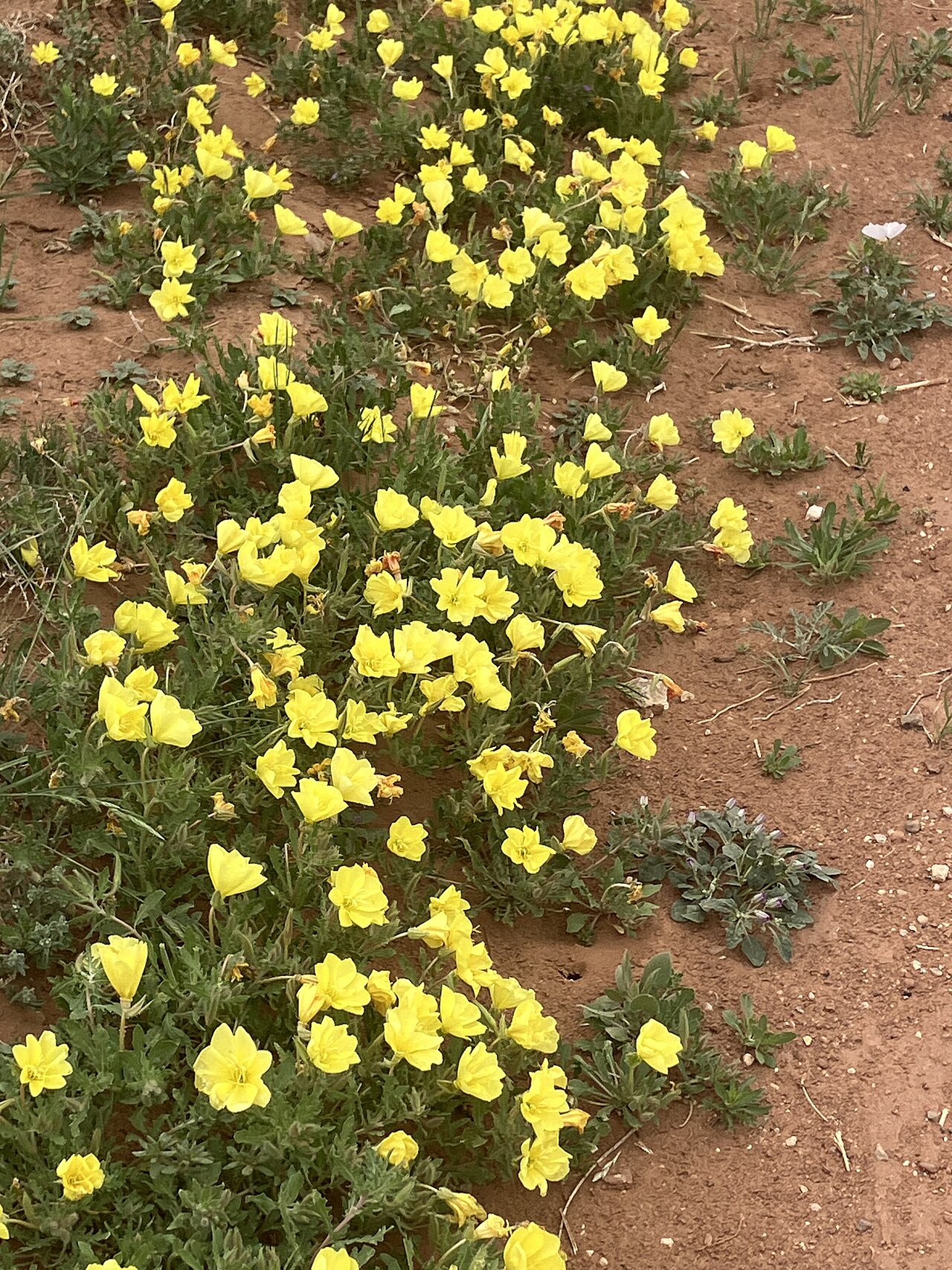
Oenothera grandis, the Showy Evening Primrose (also called large cutleaf evening primrose), is a native annual wildflower of sandy prairies, plains and roadsides in the south-central United States and northern Mexico. Its large, lemon-yellow flowers, often 2 to 3 inches across, open in the evening and through the morning, and in good spring years they carpet sandy ground in Texas, Oklahoma and the southern plains.
It was long treated as a large-flowered variety of the smaller, weedier cutleaf evening primrose (Oenothera laciniata), and you may still see it listed as O. laciniata var. grandis. Its much larger flowers and deeply lobed, hairy leaves set it apart. Do not confuse it with Pink Evening Primrose (O. speciosa), a pink-flowered perennial that is also sold as “showy evening primrose.”
This guide covers how to identify it, where it grows natively, how to grow it from seed in a sunny, sandy garden, and its value to moths, bees and seed-eating birds.
Identification
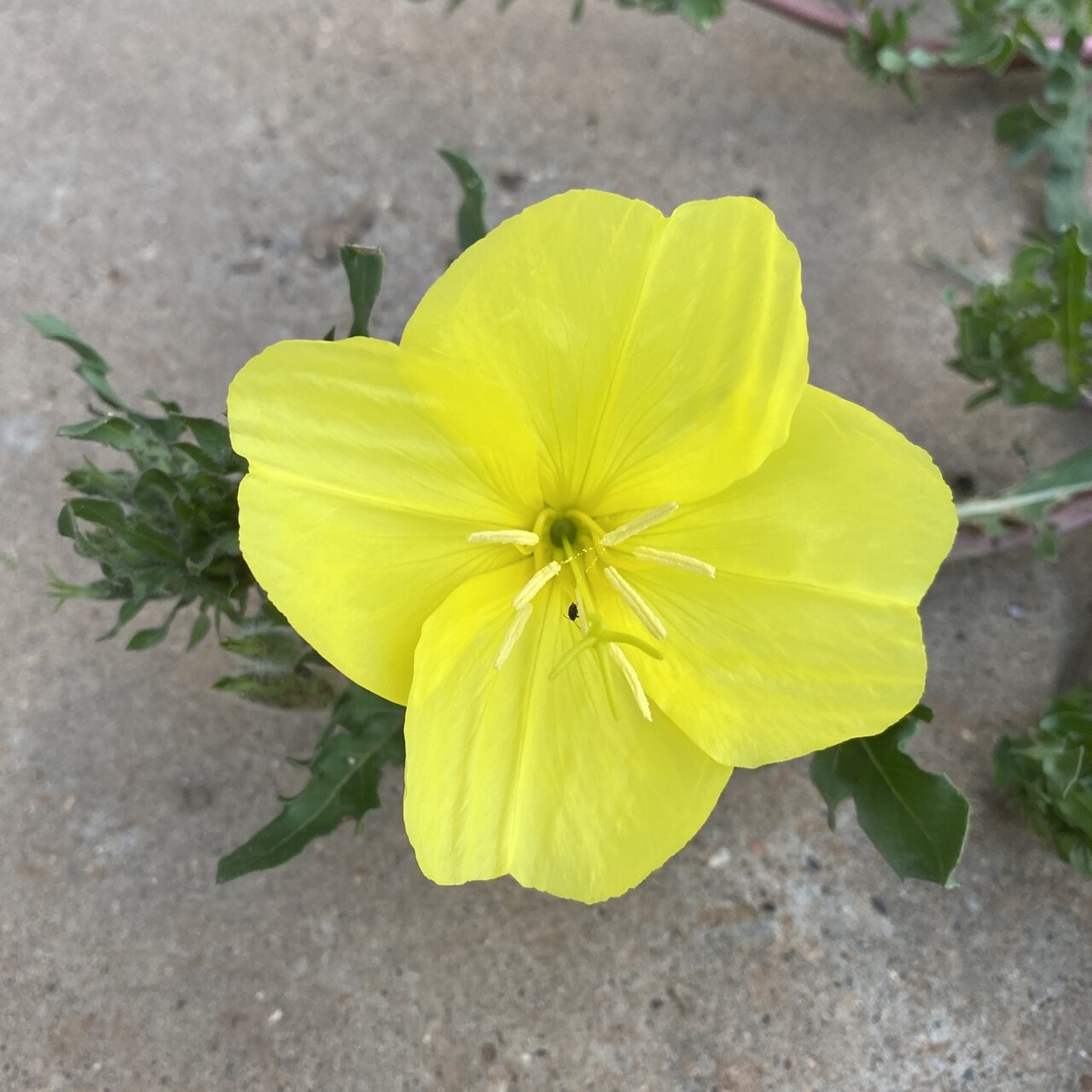
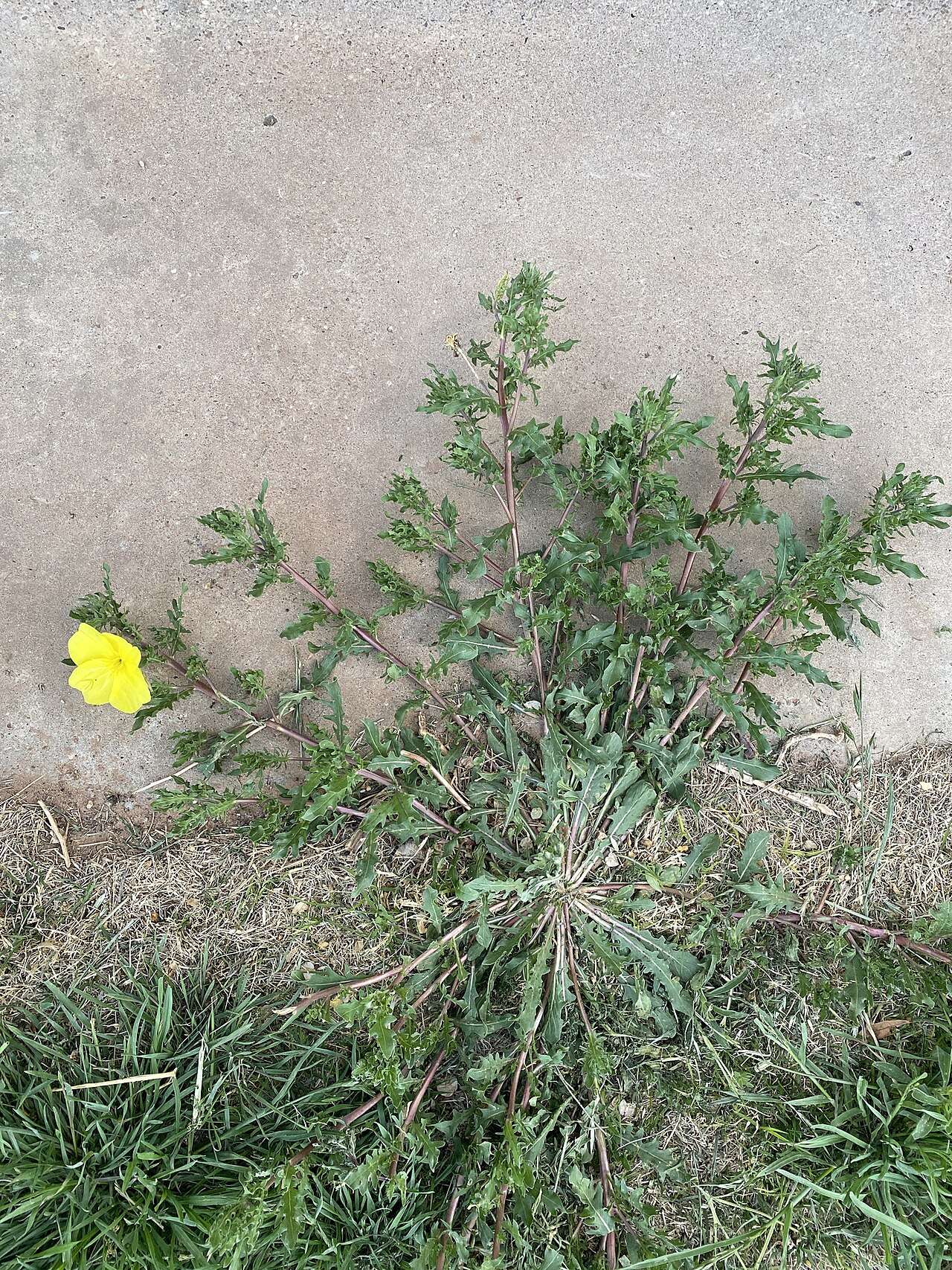
Showy evening primrose is a low, spreading annual or short-lived plant with sprawling hairy stems, deeply lobed leaves and large yellow four-petaled flowers held close to the leaves.
Stems & Leaves
The stems branch from the base and spread or curve upward, usually 6 inches to 2 feet long, and are covered with soft hairs. The leaves are alternate, 1 to 3 inches long, and deeply cut into irregular lobes or teeth, which gives the plant a ragged, feathery look.
Flowers
The flowers grow from the upper leaf axils on a long, slender floral tube that looks like a stalk. They have four broad, bright yellow petals, each about 1 to 1½ inches long, so open flowers are often 2 to 3 inches across. Eight stamens and a four-branched, cross-shaped stigma sit in the center. Each flower opens around sunset, stays open through the next morning and fades to orange or pinkish as it wilts. Bloom runs mainly from April to June, sometimes later after rains.
Fruit
The fruit is a narrow, hairy, cylindrical capsule about 1 to 2 inches long that splits open to release many small, pitted seeds.
Look-alikes
Cutleaf evening primrose (O. laciniata) looks similar but has much smaller flowers, usually ½ to 1 inch across. Common Evening Primrose is a tall, upright biennial with smaller flowers in a spike. Missouri Evening Primrose has even larger yellow flowers but narrow, unlobed leaves and large winged seed pods.
Quick Facts
| Scientific Name | Oenothera grandis (Britton) Smyth |
| Family | Onagraceae (evening primrose family) |
| Plant Type | Annual (sometimes short-lived) wildflower |
| Mature Height | 6–18 in |
| Mature Spread | 1–2 ft |
| Growth Rate | Fast |
| Sun Exposure | Full sun |
| Water Needs | Low; dry to moderately moist, well-drained soil |
| Soil Type | Sandy soils, sandy loam, disturbed ground |
| Soil pH | Slightly acidic to alkaline (about 6.0–8.0) |
| Bloom Time | April–June, sometimes later |
| Flower Color | Bright lemon yellow, fading to orange-pink |
| Fall Color | None; annual |
| Fruit | Narrow, hairy cylindrical capsule |
| Deer Resistant | Moderate |
| USDA Hardiness Zones | 5–9 (as an annual) |
Native Range
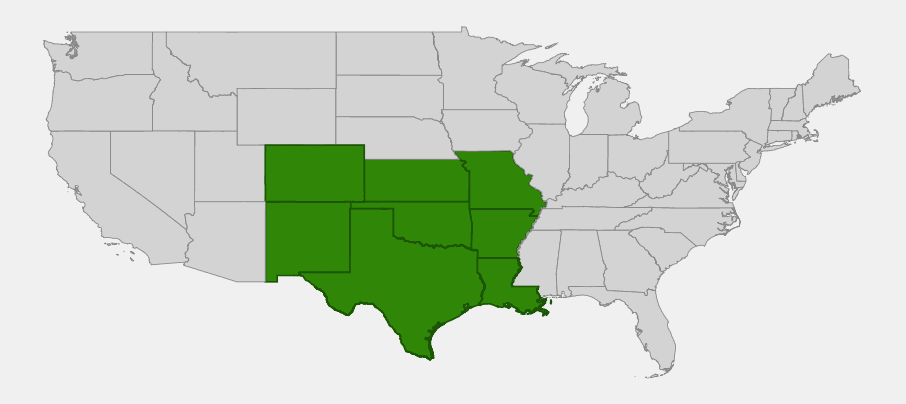
Showy evening primrose is native to the south-central United States and northern Mexico. Its native range covers Texas, Oklahoma, New Mexico, Colorado, Kansas, Missouri, Arkansas and Louisiana, and in Mexico it reaches south into states such as Tamaulipas and Durango. It is most common in the sandy soils of the Texas and Oklahoma plains and the Cross Timbers.
USDA PLANTS also has records from scattered states farther north and east, including Wisconsin, Illinois, Indiana, New York, Connecticut, New Jersey, Maryland, North Carolina, Alabama and Florida. Kew’s Plants of the World Online treats those populations as introduced, so this page maps only the south-central native range.
It grows in open, sunny, sandy places: sandy prairies and plains, old fields, sand dunes and blowouts, road shoulders and other disturbed ground. Like many annual wildflowers, its numbers swing widely with rainfall, and wet winters and springs produce mass blooms.
📋 Regional plant lists featuring Showy Evening Primrose: Arkansas, Louisiana, Eastern Oklahoma & Eastern Texas · South & West Texas · Nebraska, Kansas & Eastern Colorado · Illinois, Iowa & Missouri
Growing & Care Guide
Showy evening primrose is an easy, fast annual for sunny, sandy gardens and wildflower meadows in its native region. Grow it from seed. It reseeds where it is happy, which makes it a good choice for informal plantings and roadside-style meadows.
Light
Full sun. In shade the stems stretch and flower poorly.
Soil & Water
Sandy or gravelly soil with good drainage is best; it also grows in loam that drains well. Once established it needs little water. Rich soil and frequent watering make it leggy.
Planting Tips
Sow seed in fall or very early spring on bare, raked soil and barely cover it. Seed mixes for Texas and southern plains wildflower plantings sometimes include it. Thin seedlings to about a foot apart.
Pruning & Maintenance
No pruning is needed. Leave seed capsules to ripen if you want the plants to reseed, then pull the dead plants in summer. Lightly disturbing the soil in fall helps seedlings establish.
Propagation
By seed. Collect capsules as they turn brown and begin to split, dry them, and store the seed cool and dry. Seed germinates readily without special treatment.
Landscape Uses
- Wildflower meadows: fast, bright spring color in sandy soils
- Moon gardens: large flowers open in the evening
- Pollinator gardens: nectar for hawk moths and bees
- Roadside and erosion plantings: quick cover on disturbed sandy ground
Wildlife & Ecological Value
Like other evening primroses, showy evening primrose is tied to night-flying pollinators and supports seed-eating wildlife.
For Pollinators
The flowers open around dusk and are visited by hawk moths (sphinx moths), which hover and reach the nectar at the bottom of the long floral tube with their long tongues. In the morning, bees, including specialist evening-primrose bees, collect the pollen before the flowers wilt.
For Birds
Finches, sparrows and quail eat the small seeds from opened capsules and from the soil surface.
For Mammals
Deer and rabbits occasionally graze the plants, and small rodents eat the seeds.
Ecosystem Role
As a fast annual, it is one of the first wildflowers to cover bare, disturbed sand, helping stabilize soil while longer-lived prairie plants establish. Evening primrose foliage also feeds caterpillars of several moths, including sphinx moths.
Cultural & Historical Uses
Nathaniel Lord Britton first described this plant in the 1890s as a large-flowered variety, and the Kansas botanist Bernard Bryan Smyth soon raised it to species rank as Oenothera grandis. Grandis means “large,” for its large flowers.
The genus name Oenothera comes from ancient Greek and is linked to wine, a reference that has been explained in different ways. The name “evening primrose” describes the way the flowers open in the evening.
It is a familiar spring wildflower of the Texas and Oklahoma plains, where its yellow carpets mix with Indian blanket and other annuals along sandy roadsides.
Frequently Asked Questions
Is showy evening primrose the same as pink evening primrose?
No. Oenothera grandis has large yellow flowers and is an annual of sandy soils. Pink evening primrose (O. speciosa) is a pink-flowered perennial, though garden centers sometimes sell it as “showy evening primrose.” Check the scientific name.
When does showy evening primrose bloom?
Mainly from April to June, and sometimes later after rains. Each flower opens around sunset and stays open into the next morning.
Where is showy evening primrose native?
In the south-central United States, mainly Texas, Oklahoma, New Mexico, Colorado, Kansas, Missouri, Arkansas and Louisiana, and in northern Mexico. Populations farther north and east are considered introduced.
How do I grow showy evening primrose?
Sow seed in fall or early spring in full sun on bare, sandy or well-drained soil. It needs little water and will reseed if you let the capsules ripen.
What pollinates showy evening primrose?
Hawk moths visit the flowers at dusk and night, and bees collect pollen in the early morning before the flowers close.

Looking for a nursery that carries Showy Evening Primrose?
Browse our native plant nursery directory: Arkansas · Colorado · Kansas · Louisiana & Missouri · New Mexico & Oklahoma · Texas

