
Pinkflower Hedgehog Cactus (Echinocereus fendleri)
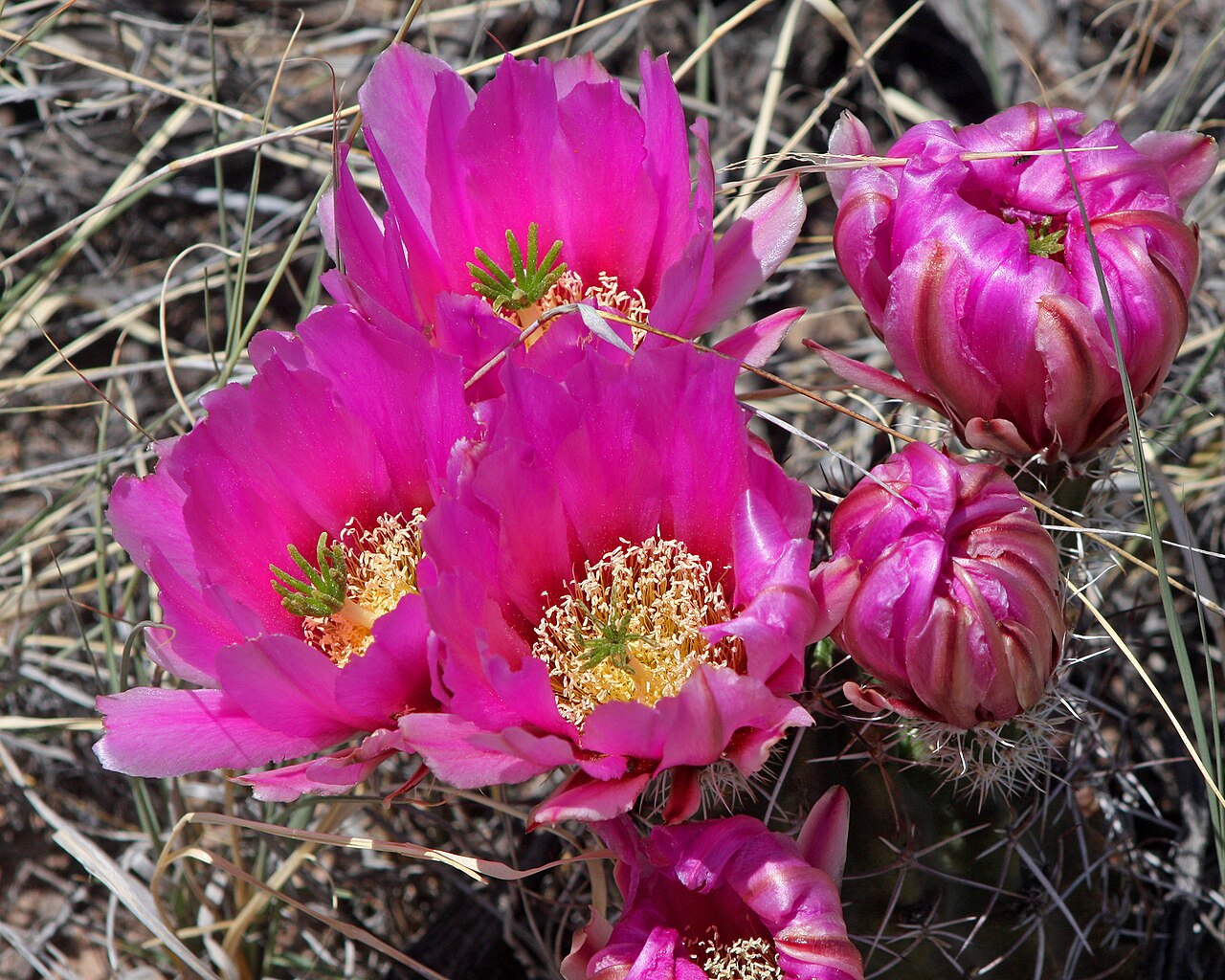
Echinocereus fendleri, the Pinkflower Hedgehog Cactus (also called Fendler’s hedgehog cactus or strawberry cactus), is a small cactus of the American Southwest with spectacular spring flowers. Its stems are usually only 3 to 8 inches tall, but in April and May it opens glossy magenta-pink to purple blooms up to 3 or 4 inches across, often larger than the stem itself.
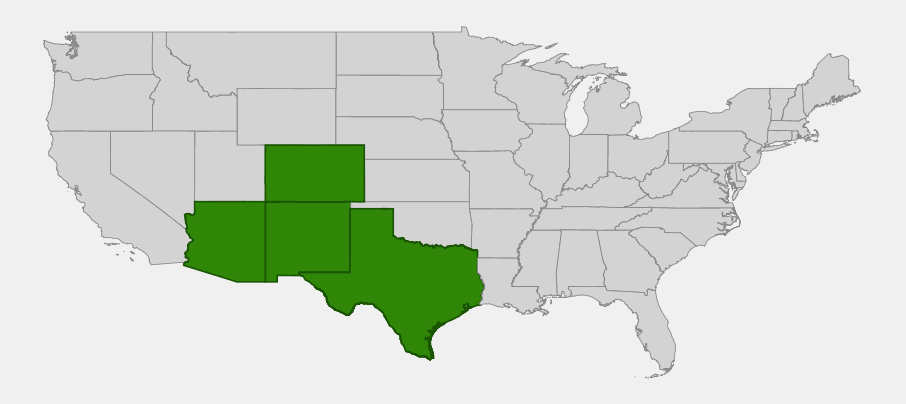
It is native to Arizona, New Mexico, southern Colorado and western Texas, and to northern Mexico. It grows in desert grasslands, pinyon-juniper woodlands and rocky hillsides from the Chihuahuan Desert to the Colorado Plateau, often hidden among grass clumps until it flowers. After blooming it produces red, spiny fruits that are sweet and edible once the spines are removed.
It is a rewarding cactus for dry, sunny rock gardens in the Southwest and cold-hardy enough for many high-desert gardens. This guide covers how to identify it, where it grows, how to grow it, and its value to native bees and wildlife. One variety, the Kuenzler hedgehog cactus of southern New Mexico, is federally protected, so buy only nursery-propagated plants.
Identification
Pinkflower hedgehog cactus is a small, usually single-stemmed or few-stemmed hedgehog cactus with soft-looking ribs, a single dark, upward-curving central spine in most areoles, and big magenta flowers with green stigma lobes.
Stems & Spines
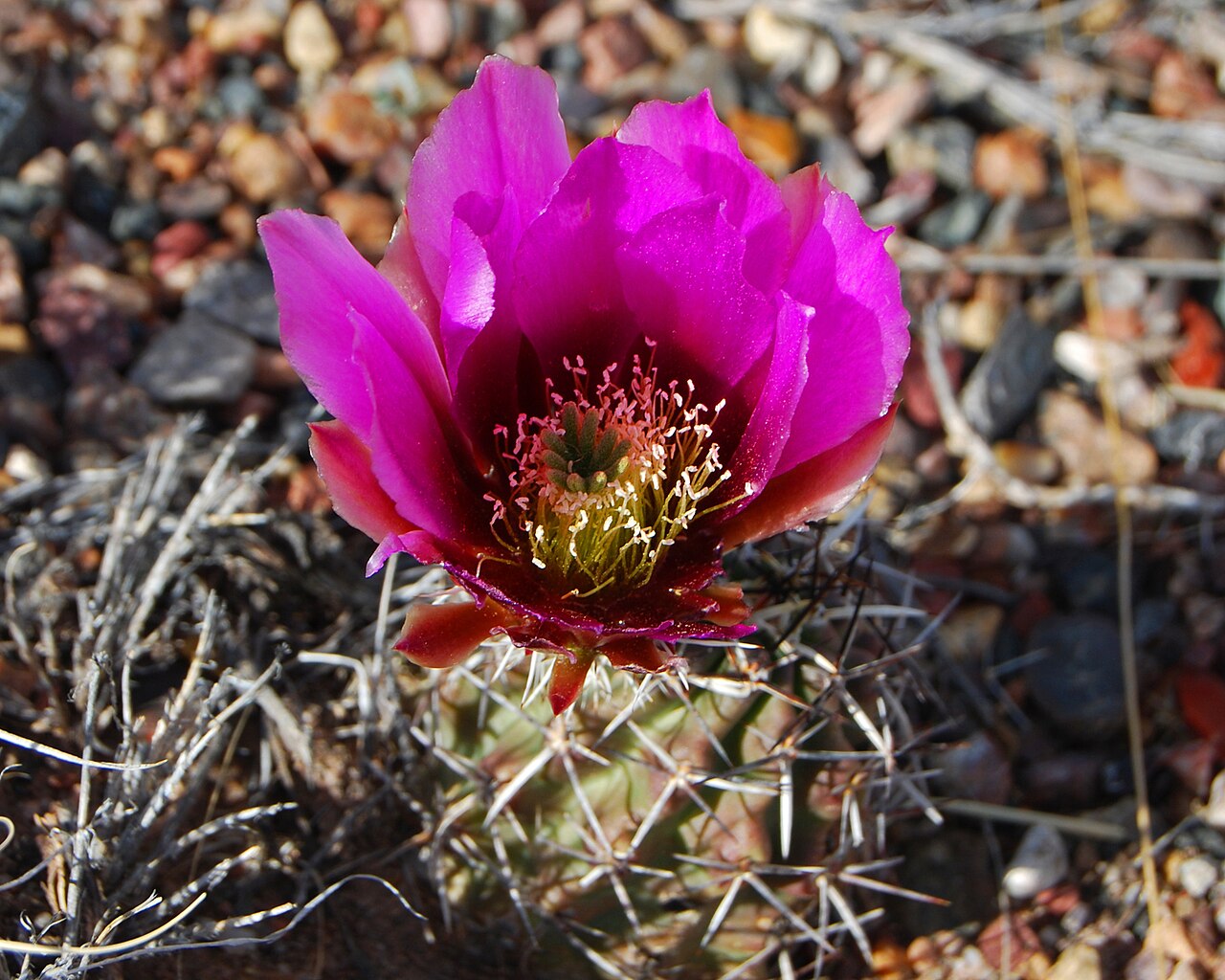
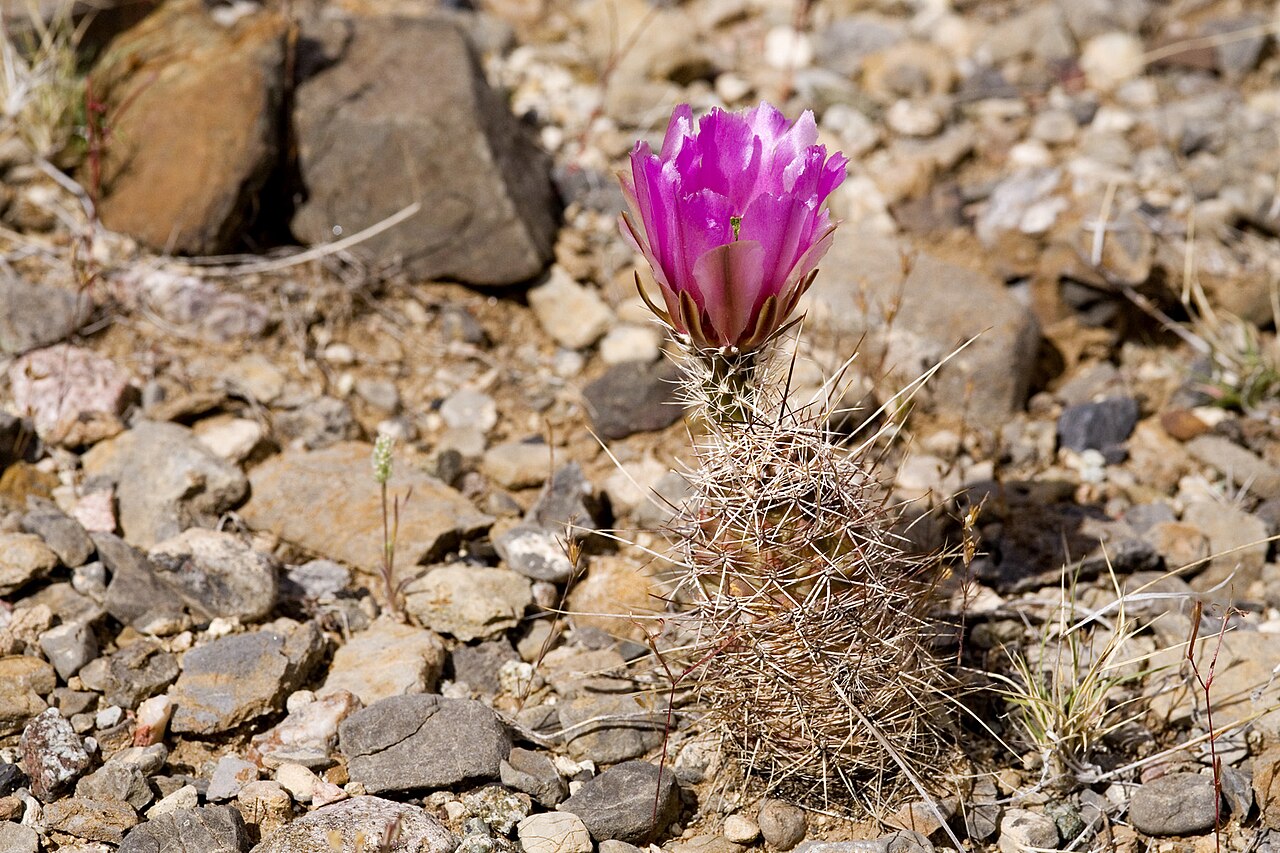
The stems are egg-shaped to short-cylindrical, usually 3 to 10 inches tall and 1½ to 3 inches thick, dark green and often somewhat soft and wrinkled in dry weather. Plants are usually single or have a few stems, rarely forming larger clumps. There are 8 to 12 ribs, broken into rounded bumps. Each areole has 5 to 11 whitish to gray radial spines and usually one longer central spine, dark brown to black or gray, that curves upward. In some varieties the central spine is straight or missing.
Flowers
The flowers open from April to June, near the top of the stem, and are 2 to 4 inches across. They are funnel-shaped, bright magenta, rose-pink or purple, with a darker red to purple throat, many cream to yellow stamens and a cluster of bright green stigma lobes in the center. Like most hedgehog cacti, the flowers open in the daytime and close at night for several days.
Fruit
The fruits are round to egg-shaped, about 1 inch long, green ripening to red or purplish, and covered with clusters of spines that fall off easily when ripe. The pulp is sweet and juicy with small black seeds, which is why hedgehog cacti are sometimes called strawberry cacti.
Look-alikes
Engelmann’s Hedgehog of the Sonoran and Mojave Deserts forms larger clumps with many stout, often colorful central spines. Strawberry Hedgehog of West Texas forms large mounds with long straw-colored spines. Claret Cup has scarlet, not pink, flowers. Lace Hedgehog has comb-like spines lying flat against the stem. Pincushion cacti such as Spinystar have flowers at the top of round stems and lack green stigmas.
Quick Facts
| Scientific Name | Echinocereus fendleri (Engelm.) Sencke ex J.N. Haage |
| Family | Cactaceae (cactus family) |
| Plant Type | Small stem succulent (cactus) |
| Mature Height | 3–10 in |
| Mature Spread | 2–8 in (single or few stems) |
| Growth Rate | Slow |
| Sun Exposure | Full sun to light shade |
| Water Needs | Very low; drought tolerant |
| Soil Type | Rocky, gravelly or sandy, very well drained |
| Soil pH | About 6.5–8.5 |
| Bloom Time | April–June |
| Flower Color | Magenta, rose-pink or purple with a darker throat |
| Fall Color | Evergreen; stems may shrink and redden in winter |
| Fruit | Red, spiny, edible fruit |
| Deer Resistant | Yes |
| USDA Hardiness Zones | 5–9 |
Native Range
Pinkflower hedgehog cactus is native to the southwestern United States and northern Mexico. USDA PLANTS lists it in Arizona, Colorado, New Mexico and Texas. It is most common in New Mexico and in central and eastern Arizona, including the Colorado Plateau and Mogollon Rim country, and reaches into southern Colorado and the Trans-Pecos region of West Texas. In Mexico it grows in Sonora and Chihuahua.
It grows in semi-desert grasslands, pinyon-juniper and oak woodlands, open ponderosa pine forest edges, Chihuahuan Desert scrub and rocky hills and mesas, mostly from about 4,000 to 8,000 feet in elevation. It is often tucked among grass clumps or shrubs, which protect it from browsing and sun, so many plants are noticed only when they bloom.
Several varieties are recognized. The widespread var. fendleri has a strongly curved central spine; var. rectispinus of southern Arizona and New Mexico has a straight central spine. The Kuenzler hedgehog cactus (var. kuenzleri), with no central spine and large flowers, grows only in a small area of south-central New Mexico and is protected under the Endangered Species Act.
📋 Regional plant lists featuring Pinkflower Hedgehog Cactus: Arizona & New Mexico · South & West Texas
Growing & Care Guide
Pinkflower hedgehog cactus is grown by cactus enthusiasts and is sold by some Southwestern native and cactus nurseries. Buy only nursery-grown plants. Collecting cacti from the wild is illegal on public lands and in several states without a permit, and the Kuenzler hedgehog variety is federally protected. Once established in the right spot, it is long-lived and nearly carefree.
Light
Full sun to light afternoon shade. In the hottest low-desert gardens, a little shade from a shrub or rock imitates its natural grassland setting.
Soil & Water
Plant it in very fast-draining, rocky or gravelly soil, such as a raised bed of decomposed granite or a mix of sand, gravel and a little loam. Water occasionally in spring and summer during dry spells, and keep it dry in winter. Too much water, especially in cold weather, causes rot. In containers, use a gritty cactus mix and a pot with a drainage hole.
Planting Tips
Plant in spring or early summer at the same depth it grew in the pot, with gravel around the base to keep the stem dry. It looks natural among rocks and native bunchgrasses, or with other small cacti and yuccas. In high-desert areas it tolerates hard frost and snow if kept dry in winter.
Pruning & Maintenance
No pruning is needed. Remove weeds carefully with long tweezers or tongs. Do not fertilize heavily; a dilute cactus fertilizer once in spring is enough for potted plants.
Propagation
Grow it from seed sown in spring on the surface of a gritty mix, kept warm and moist until seedlings appear, then gradually given more light and less water. Seedlings may take several years to flower. Offsets from clumping plants can be removed and rooted after the cut end has dried for a week.
Landscape Uses
- Rock and cactus gardens: huge spring flowers on a compact plant
- Xeriscapes: needs little or no water once established
- Containers and troughs: a small cactus suited to pots in full sun
- Pollinator gardens: native bees love its open flowers
Wildlife & Ecological Value
Pinkflower hedgehog cactus is an important spring nectar and pollen source in dry grasslands and woodlands, and its fruits feed birds and mammals.
For Pollinators
Its large, bowl-shaped flowers are pollinated mainly by native bees, including cactus bees and other solitary bees that roll in the pollen-rich stamens. Beetles also visit the flowers.
For Birds
Birds such as cactus wrens, thrashers and finches eat the ripe red fruits and spread the seeds.
For Mammals
Rodents, rabbits, coyotes and other animals eat the fruits. Rabbits and rodents sometimes chew on the stems in drought, which is one reason plants often grow sheltered among grasses and shrubs.
Ecosystem Role
As a long-lived perennial of open grasslands and woodlands, it adds to the plant diversity of the Southwest and is part of a pollinator community that depends on spring-blooming cacti. Seeds dispersed by animals help it establish in new rocky openings.
Cultural & Historical Uses
The cactus is named after August Fendler, a German-born naturalist who collected plants around Santa Fe, New Mexico, in 1846–1847. George Engelmann described it from Fendler’s specimens in 1849 as Cereus fendleri, and it was later moved into Echinocereus, the hedgehog cactus genus.
Hedgehog cactus fruits have long been eaten across the Southwest. Many Native peoples harvested the sweet fruits, brushing off the spines, and they were said to taste like strawberries. They were eaten fresh or dried and are still enjoyed by hikers today.
The Kuenzler hedgehog cactus, a variety found only in a few mountain ranges of south-central New Mexico, was listed as endangered under the Endangered Species Act in 1979 because of illegal collecting, grazing and habitat loss. It remains federally protected, a reminder to buy cacti only from reputable nurseries that grow them from seed.
Frequently Asked Questions
Are pinkflower hedgehog cactus fruits edible?
Yes. The ripe red fruits are sweet and juicy, with small seeds. Remove the spines first. They have been eaten across the Southwest for centuries, which is why hedgehog cacti are sometimes called strawberry cacti.
When does pinkflower hedgehog cactus bloom?
Mostly in April and May, sometimes into June at higher elevations. Each flower stays open for several days, opening in the daytime and closing at night.
How cold-hardy is it?
It grows wild at elevations up to about 8,000 feet in New Mexico and Arizona and tolerates hard freezes and snow when kept dry. It is generally hardy in USDA zones 5 to 9 in well-drained soil.
How do I tell it from Engelmann’s hedgehog?
Pinkflower hedgehog usually has single or few stems with soft, bumpy ribs and one dark central spine curving upward from each areole. Engelmann’s hedgehog forms larger clumps with several stout, often straight central spines.
Is pinkflower hedgehog cactus endangered?
The species as a whole is common, but one variety, the Kuenzler hedgehog cactus of south-central New Mexico, is federally protected. Buy only nursery-propagated plants and never dig cacti from the wild.

Looking for a nursery that carries Pinkflower Hedgehog Cactus?
Browse our native plant nursery directory: Arizona · Colorado · New Mexico · Texas

