
Prairie Thistle (Cirsium canescens)
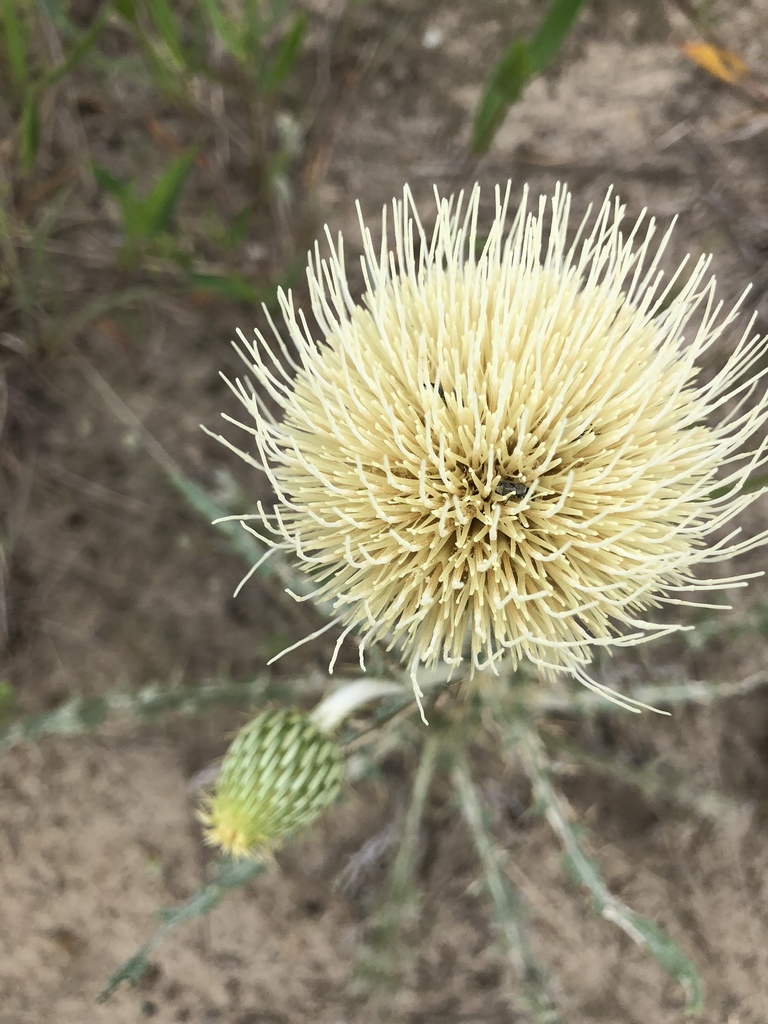
Cirsium canescens, the Prairie Thistle (also called Platte thistle), is a native thistle of the western Great Plains and the Rocky Mountain foothills. It is especially characteristic of the sandhills and sandy prairies of Nebraska, the Dakotas, Colorado and Wyoming, where it grows on dunes, blowouts and dry, open grassland.
Unlike the purple-flowered weedy thistles most people know, prairie thistle has creamy white to pale yellow flower heads and a gray, woolly look from the dense hairs on its leaves and stems. It is a biennial or short-lived perennial that forms a rosette, sends up a single flowering stem and dies after setting seed.
Native thistles like this one are valuable wildflowers for bees, butterflies and seed-eating birds, and they are not the invasive weeds that give thistles a bad name. This guide covers how to tell prairie thistle from invasive thistles, where it grows, how to grow it and its value to wildlife.
Identification
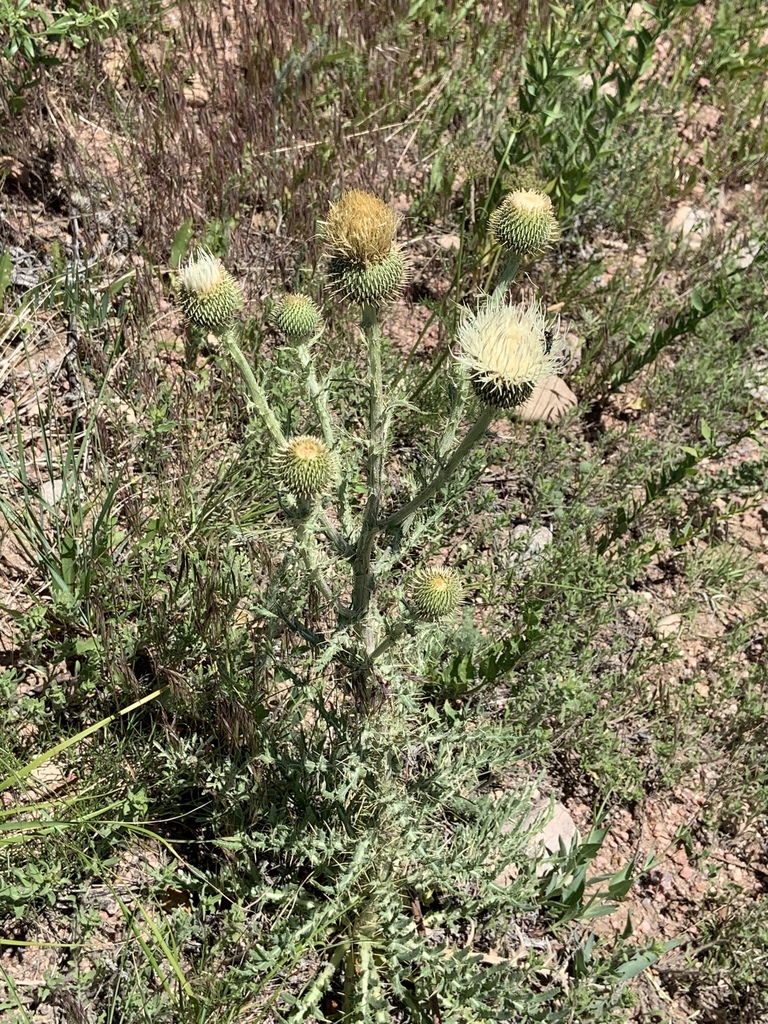
Prairie thistle is a gray-woolly thistle of sandy prairies with deeply lobed, spiny leaves and large cream-colored flower heads.
Rosette & Leaves
In its first year (or several years) it forms a flat rosette of narrow, deeply lobed, spiny leaves 4 to 12 inches long. The leaves are gray-green and covered with dense, white, woolly hairs, especially on the underside. Stem leaves are smaller, lobed and spiny, and their bases run a short way down the stem.
Stems
The flowering stem grows 1 to 3 feet tall, usually single and branched near the top, and is woolly-white with hairs. The plant has a deep, thick taproot that lets it survive in loose sand and drought.
Flowers
From late May to July, it bears several flower heads about 1½ to 2 inches across, made up of many creamy white to pale yellow (rarely pale pink) tubular disk florets. The heads sit on bracts tipped with short, sharp spines. The flowers are fragrant and attract many pollinators.
Look-alikes
The native Wavyleaf Thistle is similarly gray and woolly but usually has pink to purple flowers and broader leaves. Non-native musk thistle and bull thistle have purple to reddish heads and green leaves; Canada thistle has small purple heads and spreads by creeping roots. A cream-colored head on a gray-woolly plant in sandy prairie is a good sign of prairie thistle.
Quick Facts
| Scientific Name | Cirsium canescens Nutt. |
| Family | Asteraceae (aster family) |
| Plant Type | Biennial or short-lived perennial wildflower |
| Mature Height | 1–3 ft |
| Mature Spread | 1–2 ft |
| Growth Rate | Moderate |
| Sun Exposure | Full sun |
| Water Needs | Low; very drought tolerant |
| Soil Type | Sandy, gravelly or loamy; well-drained |
| Soil pH | About 6.0–8.0 |
| Bloom Time | Late May–July |
| Flower Color | Creamy white to pale yellow |
| Fall Color | None significant |
| Fruit | Achene with a feathery plume |
| Deer Resistant | Yes; spiny leaves |
| USDA Hardiness Zones | 3–7 |
Native Range
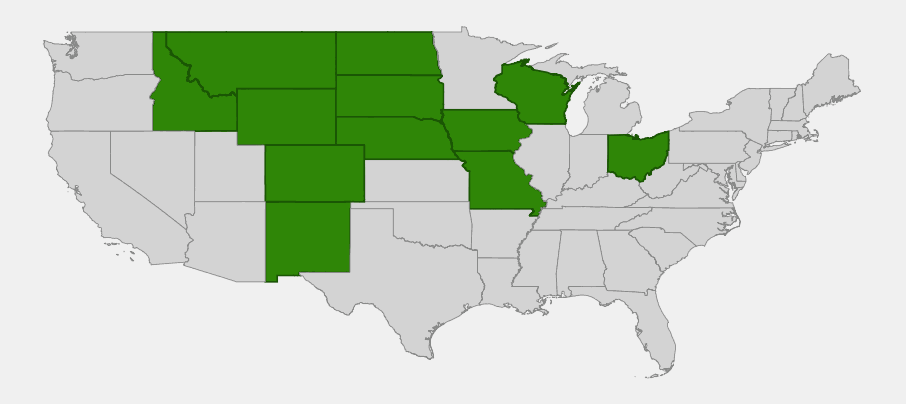
Prairie thistle is native to the western Great Plains and the eastern Rocky Mountain region. Its core range runs from Montana and the Dakotas south through Wyoming, Nebraska and Colorado to northern New Mexico, with populations in Idaho. USDA PLANTS also lists outlying records from Iowa, Missouri, Wisconsin and Ohio, well east of the plant’s main range; some of these may have arrived along railroads.
It is most abundant in the Nebraska Sandhills and the sandy prairies along the Platte River, which gave it the name Platte thistle, and on the shortgrass and mixed-grass prairies and foothills of eastern Colorado and Wyoming.
It grows in sandy and gravelly soils of dunes, blowouts, sandhill prairie, dry plains, roadsides and open foothill slopes, from the plains up into the montane zone in the Rocky Mountains.
📋 Regional plant lists featuring Prairie Thistle: Nebraska, Kansas & Eastern Colorado · North Dakota, South Dakota & Western Minnesota · Montana & Wyoming · Idaho, Eastern Oregon & Eastern Washington · Illinois, Iowa & Missouri · Ohio & Indiana · Michigan, Wisconsin & Eastern Minnesota
Growing & Care Guide
Prairie thistle is occasionally offered as seed by native seed suppliers on the Great Plains. It is a good plant for dry, sandy prairie restorations and wildlife gardens in full sun. It is a native species, not a noxious weed, and it does not spread aggressively the way introduced thistles do.
Light
Full sun. It does poorly in shade and in competition with tall, dense vegetation.
Soil & Water
It needs well-drained sandy or gravelly soil and is very drought tolerant once its taproot is established. It rots in heavy, wet soil.
Planting Tips
Sow seed in fall on bare, sandy soil, or set out young rosettes in spring. Space plants 1 to 2 feet apart. Because the taproot is deep, transplant only small plants.
Pruning & Maintenance
Little care is needed. Leave the seed heads for goldfinches. Plants die after flowering, so leave some to reseed if you want a lasting population.
Propagation
Grow from seed. A few weeks of cold, moist stratification or fall sowing improves germination. Seedlings form a rosette the first year and flower in the second or a later year.
Landscape Uses
- Prairie and sandhill restoration: native forb for dry, sandy sites
- Pollinator gardens: fragrant nectar for bees and butterflies
- Bird gardens: thistle seed and down for goldfinches
- Xeric gardens: very drought tolerant, gray foliage
Wildlife & Ecological Value
Like most native thistles, prairie thistle is a magnet for insects and seed-eating birds.
For Pollinators
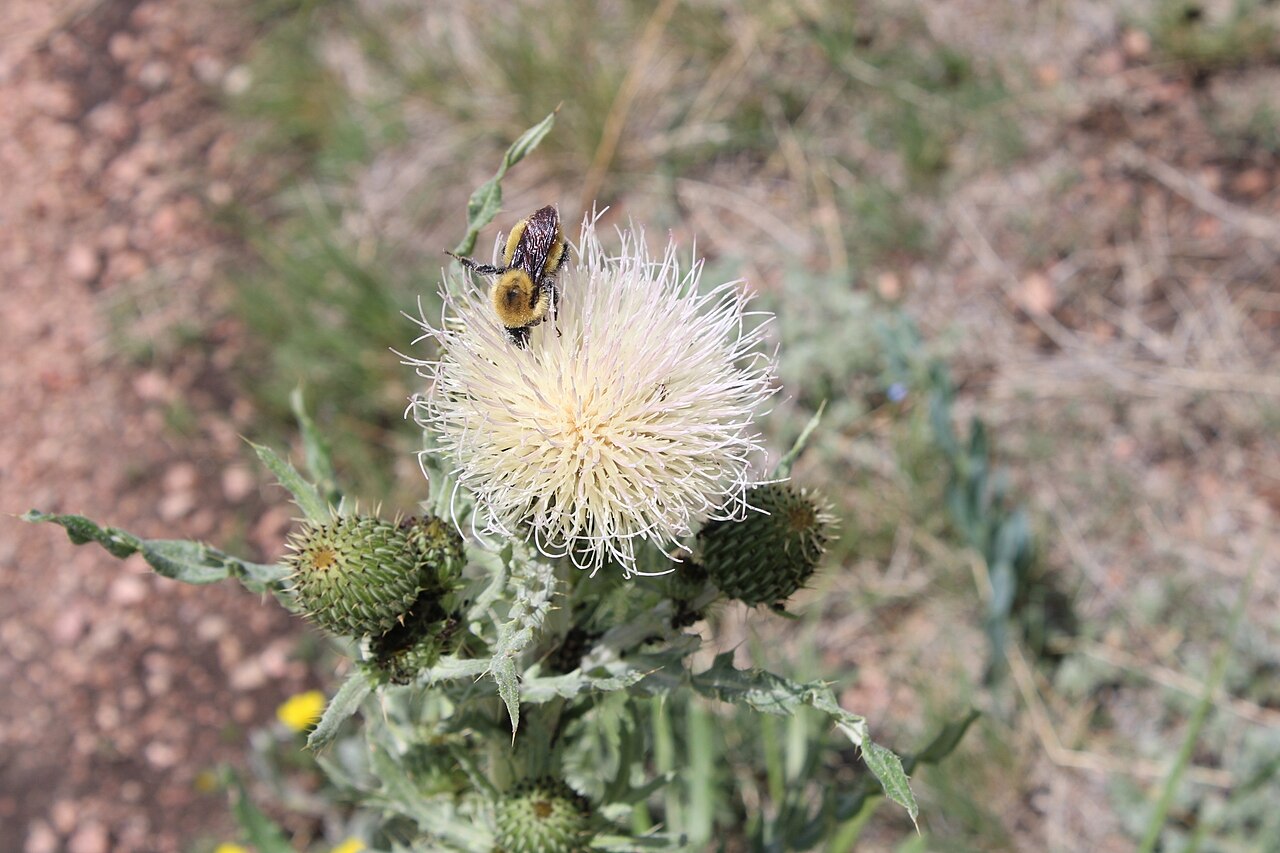
The fragrant flower heads are visited by bumble bees, many native solitary bees, butterflies such as fritillaries and swallowtails, and moths. Thistles are larval host plants for the painted lady butterfly.
For Birds
American goldfinches eat the seeds and line their nests with the thistle down, and other finches and sparrows also feed on the seeds.
For Mammals
The spiny leaves discourage most grazing animals, so it often stands out in grazed pastures. Small mammals eat fallen seeds.
Ecosystem Role
It is a typical plant of dynamic sandhill habitats such as blowouts, where its deep taproot helps it survive shifting sand. It supports many native insects, including specialist flower-head feeders.
Cultural & Historical Uses
Thomas Nuttall described Cirsium canescens in the early 1800s from plants collected on the plains. The species name means “grayish,” for its woolly gray leaves.
Prairie thistle became a well-known example of unintended effects of biological control. The flower-head weevil Rhinocyllus conicus, released to control introduced musk thistle, was found in the 1990s attacking native thistles, including Platte thistle in the Nebraska Sandhills and reducing its seed production.
The federally threatened Pitcher’s thistle (Cirsium pitcheri) of the Great Lakes dunes is a close relative and is thought to have descended from prairie thistle-like ancestors that migrated east after the last ice age.
Frequently Asked Questions
Is prairie thistle a noxious weed?
No. It is a native wildflower. Noxious-weed laws target introduced thistles such as Canada, musk, plumeless and Scotch thistle, not native species like prairie thistle.
How do I tell prairie thistle from invasive thistles?
Look for creamy white to pale yellow flower heads and gray, woolly leaves on a plant growing in sandy prairie. Most invasive thistles have purple heads and greener leaves.
Where does prairie thistle grow?
In sandy and gravelly prairies, sandhills and foothills of the western Great Plains and Rocky Mountain states, especially Nebraska, Colorado, Wyoming and the Dakotas.
When does prairie thistle bloom?
From about late May to July.
Is prairie thistle good for wildlife?
Yes. Its flowers feed many bees and butterflies, and goldfinches eat its seeds and use its down for nests.

Looking for a nursery that carries Prairie Thistle?
Browse our native plant nursery directory: Colorado · Idaho & Iowa · Missouri & Montana · Nebraska, New Mexico, North Dakota & Ohio · South Dakota · Wisconsin & Wyoming

