
San Diego Barrel Cactus (Ferocactus viridescens)
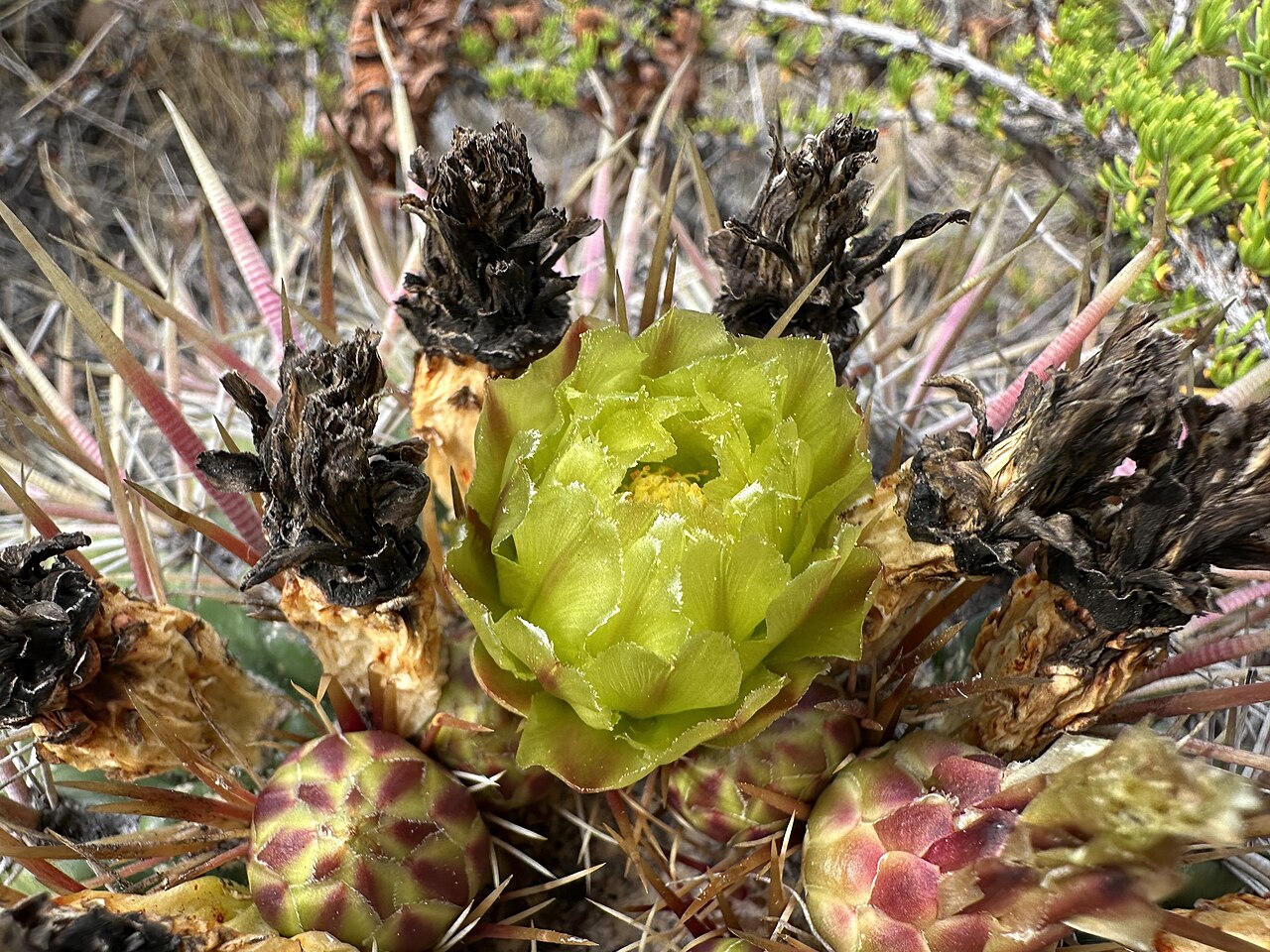
Ferocactus viridescens, the San Diego Barrel Cactus (also called coast barrel cactus or keg cactus), is a small, rare barrel cactus native to coastal southern California and northern Baja California, Mexico. In the United States it grows almost entirely in San Diego County, on mesas, bluffs and hillsides in coastal sage scrub, chaparral and grassland.
It is a low, rounded cactus, usually less than a foot tall, with bright green ribs armed with stout red to pinkish spines. In spring and early summer it bears a ring of greenish-yellow flowers on top, followed by bright yellow, barrel-shaped fruits.
Much of its coastal habitat has been lost to development, and it is considered a rare plant in California. It is grown from nursery stock for native and succulent gardens; never collect it from the wild. This guide covers how to identify it, where it grows, how to grow it and its role in coastal ecosystems.
Identification
San Diego barrel cactus is a solitary, squat barrel cactus with bright green ribs, reddish spines and greenish-yellow flowers, much smaller than desert barrel cacti.
Body & Ribs
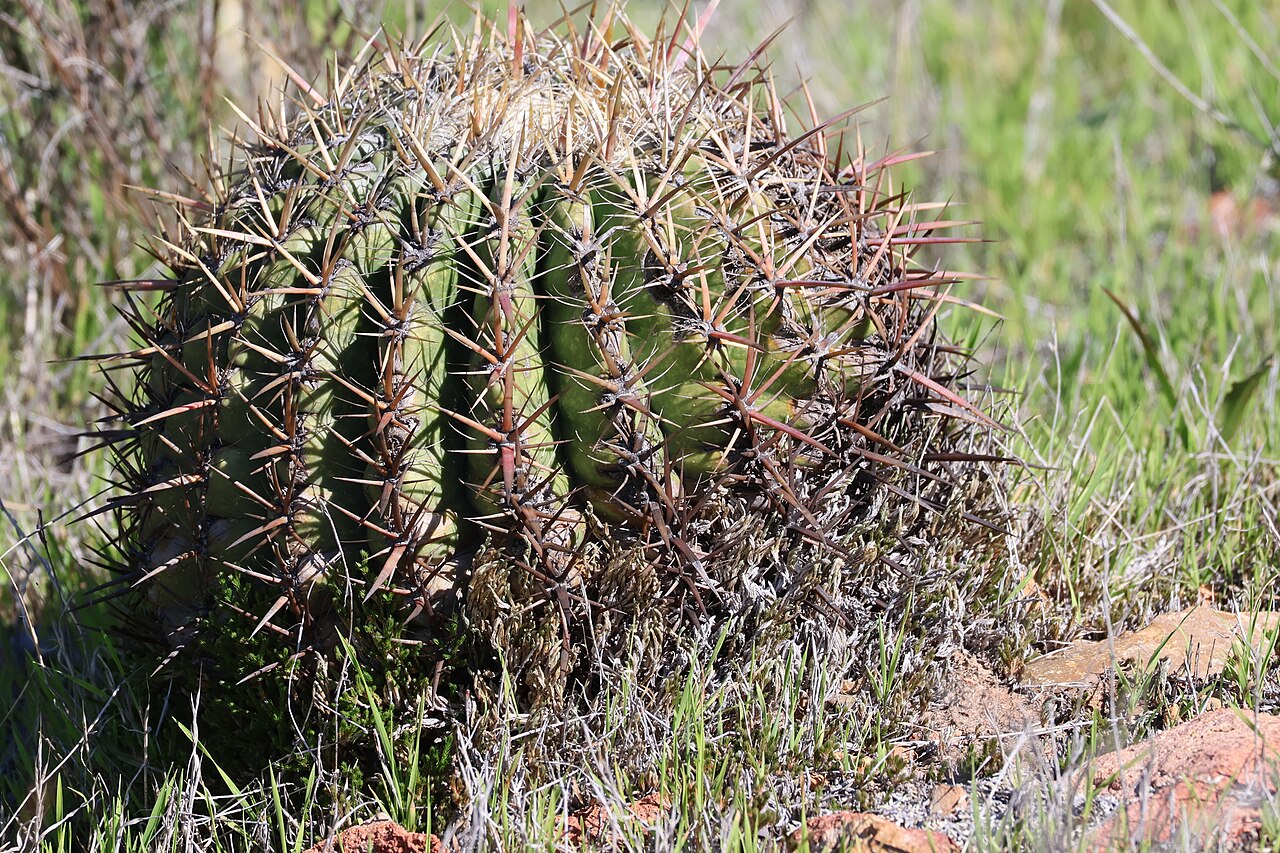
It is usually solitary, round to slightly flattened or short-cylindrical, about 4 to 12 inches tall (rarely up to 18 inches) and 4 to 8 inches wide, occasionally larger. The flesh is bright to dark green, divided into about 13 to 34 blunt ribs. Plants sometimes grow in small clusters.
Spines
Each areole bears about 10 to 20 spines. The stout central spines are red, pink or yellowish when young, fading to gray with age, about 1¼ to 2 inches long, flattened and slightly curved but not strongly hooked. The radial spines are similar but shorter.
Flowers
From about April to June, a ring of funnel-shaped flowers 1 to 2½ inches across opens around the top of the plant. They are greenish-yellow, sometimes tinged with pink or red on the outer segments, with yellow stigma lobes.
Fruit & Look-alikes
The fruits are barrel-shaped, about 1 to 1½ inches long, bright yellow (rarely reddish) and edible, with a tart flavor. California Barrel Cactus (F. cylindraceus) of the deserts is much taller, with yellow flowers and dense, interwoven spines, and does not grow on the coast. Coastal plants of Coastal Prickly Pear and California Cholla have jointed, segmented stems.
Quick Facts
| Scientific Name | Ferocactus viridescens (Torr. & A. Gray) Britton & Rose |
| Family | Cactaceae (cactus family) |
| Plant Type | Barrel cactus |
| Mature Height | 4–12 in (rarely to 18 in) |
| Mature Spread | 4–8 in (occasionally to 14 in) |
| Growth Rate | Slow |
| Sun Exposure | Full sun to light shade |
| Water Needs | Very low; drought tolerant |
| Soil Type | Well-drained sandy, gravelly or rocky; tolerates clay on slopes |
| Soil pH | About 6.0–8.0 |
| Bloom Time | April–June |
| Flower Color | Greenish-yellow, sometimes pink-tinged |
| Fall Color | None |
| Fruit | Yellow, barrel-shaped, edible fruit |
| Deer Resistant | Yes |
| USDA Hardiness Zones | 9–11 |
Native Range
San Diego barrel cactus is native to coastal southern California and northern Baja California. USDA PLANTS lists it in California only, where it grows mainly in western San Diego County, from the coast inland to the foothills.
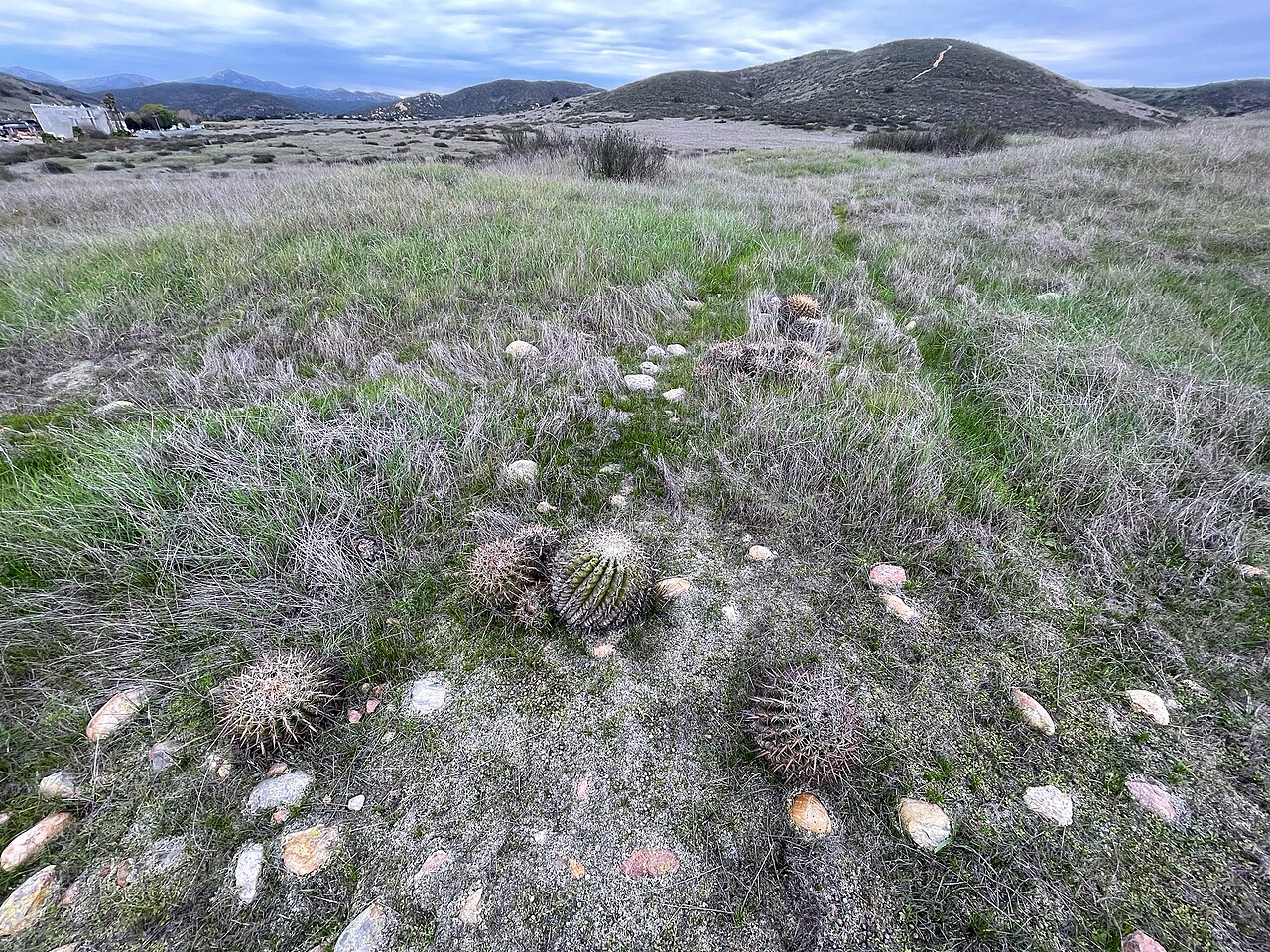
It grows on dry mesas, coastal bluffs, rocky or gravelly hillsides and the edges of vernal pool terraces, in coastal sage scrub, maritime chaparral and native grassland at low elevations. It is often found with other succulents such as cholla and dudleyas.
Because so much of coastal San Diego County has been developed, the species has lost a large part of its habitat. It is on the California Native Plant Society’s Inventory of Rare and Endangered Plants Some populations are protected in parks and reserves, and illegal collection can be an added threat.
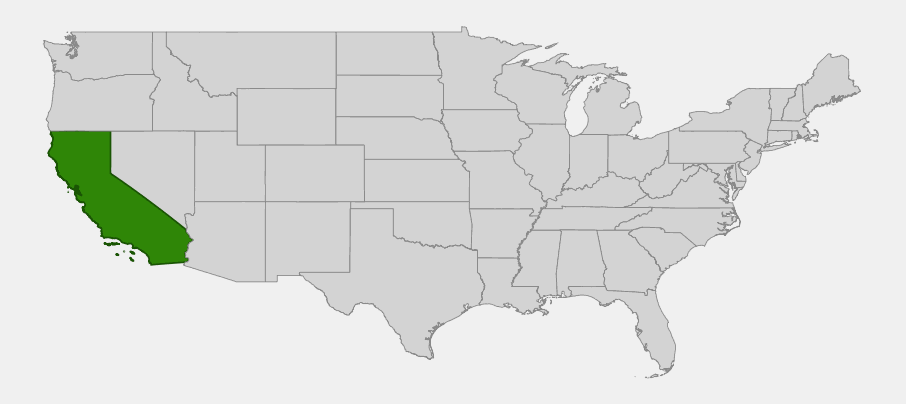
📋 Regional plant lists featuring San Diego Barrel Cactus: California & Nevada
Growing & Care Guide
San Diego barrel cactus is grown by cactus and native plant nurseries and is a compact, attractive cactus for coastal southern California gardens and containers. Buy only nursery-propagated plants; digging wild plants is illegal on public land and harms a rare species. It suits zones 9 to 11 and is best in frost-free, mild coastal climates.
Light
Full sun near the coast; light afternoon shade in hot inland gardens. In too much shade it grows soft and leans toward the light.
Soil & Water
Plant it in fast-draining sandy or gravelly soil or a cactus mix. It is very drought tolerant and needs little water beyond winter rain; in containers, water deeply only when the soil is completely dry, and keep it dry in winter cold spells.
Planting Tips
Plant in spring or fall on a slope, mound or rock garden for good drainage. Handle it with folded newspaper or thick gloves. It works well in shallow containers and combines with dudleyas, buckwheats and sages.
Pruning & Maintenance
No pruning is needed. Remove old dried flowers and fruits if desired. Watch for rot in wet, heavy soil and for mealybugs in containers.
Propagation
Grow from seed sown on the surface of a sandy mix in warm weather; seedlings grow slowly. Offsets from clustering plants can be removed and rooted after drying for a few days.
Landscape Uses
- Coastal native gardens: compact, sculptural cactus for dry slopes
- Rock and succulent gardens: red spines and yellow-green spring flowers
- Containers: small size suits pots and patios
- Habitat gardens: flowers for native bees; fruit for wildlife
Wildlife & Ecological Value
San Diego barrel cactus is part of the rich and highly threatened coastal sage scrub community of southern California.
For Pollinators
The flowers are pollinated mainly by native bees, including cactus bees, which collect pollen and nectar.
For Birds
Cactus wrens and other birds may peck at the fruits, and the spiny plants offer shelter to small animals at ground level.
For Mammals
Rodents and rabbits eat the fallen fruits and help disperse the seeds. Spines protect the plant from most browsing.
Ecosystem Role
It is one of many rare plants of coastal sage scrub and maritime chaparral, habitats that also support the coastal California gnatcatcher and other sensitive animals. Protecting it helps protect the wider coastal ecosystem.
Cultural & Historical Uses
The English naturalist Thomas Nuttall collected the plant near San Diego in 1836, during a stop by the hide ship Pilgrim, the vessel made famous by Richard Henry Dana’s Two Years Before the Mast. John Torrey and Asa Gray described it as Echinocactus viridescens in 1840, and Britton and Rose moved it to Ferocactus in 1922.
The species name viridescens means “becoming green,” referring to the bright green body and greenish flowers.
Barrel cactus fruits have been eaten by people in the Southwest and Baja California, and the fruits of this species have a pleasant, tart flavor. In the wild, they should be left for wildlife and natural reproduction.
Frequently Asked Questions
Is San Diego barrel cactus endangered?
It is not federally listed, but it is considered rare in California and is on the California Native Plant Society’s rare plant inventory because of habitat loss.
How big does San Diego barrel cactus get?
It usually stays 4 to 12 inches tall and 4 to 8 inches wide, much smaller than desert barrel cacti.
When does San Diego barrel cactus bloom?
From about April to June, with a ring of greenish-yellow flowers on top.
Can I grow San Diego barrel cactus?
Yes, from nursery-grown plants, in very well-drained soil and full sun in frost-free climates. Never dig plants from the wild.
Where does San Diego barrel cactus grow?
On coastal mesas, bluffs and hillsides in San Diego County, California, and in northern Baja California, Mexico.

Looking for a nursery that carries San Diego Barrel Cactus?
Browse our native plant nursery directory: California

