
Slenderleaf Sundew (Drosera linearis)
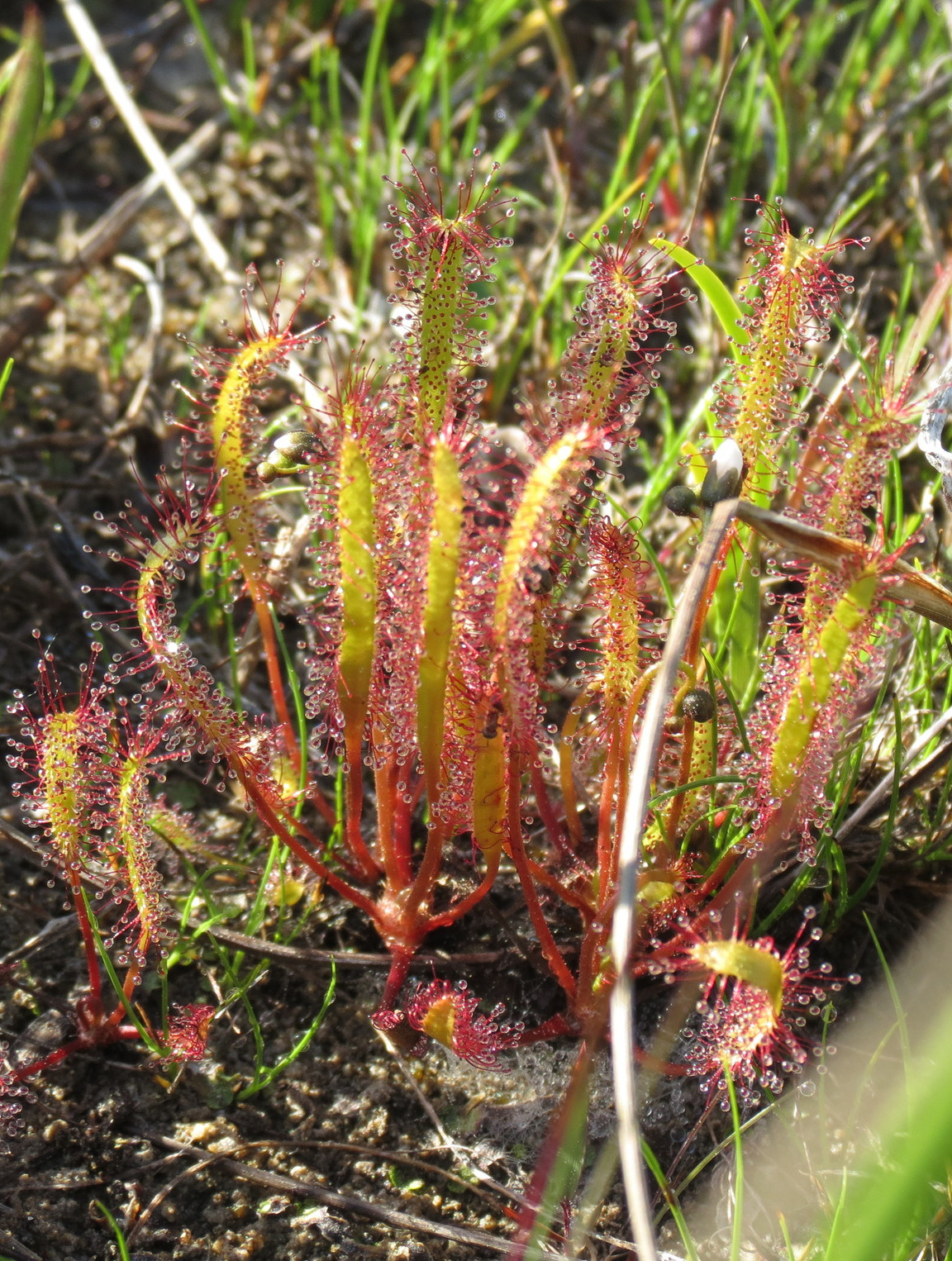
Drosera linearis, the Slenderleaf Sundew (also called linear-leaved sundew), is a small carnivorous perennial of cold, wet fens in northern North America. Its leaves are long and narrow, with parallel sides and a blunt tip, and they stand upright from a small rosette, glistening with sticky red glandular hairs that catch small insects. In midsummer it sends up short stalks with one to four small white flowers.
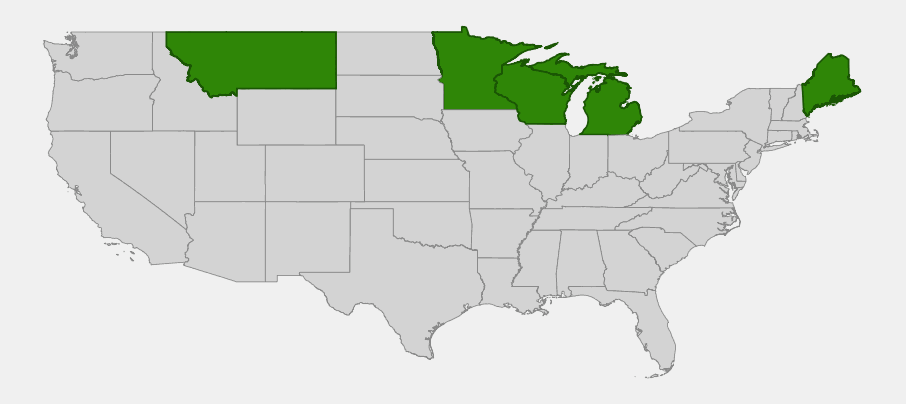
Unlike most sundews, which grow in acidic sphagnum bogs, slenderleaf sundew is a specialist of alkaline, mineral-rich fens, especially the marl fens and wet flats of the Great Lakes region. In the United States it is native to Michigan, Wisconsin, Minnesota, Maine and Montana, and it is rare over most of that range. Minnesota lists it as a Threatened species.
It is also a notable plant for botanists: the widespread Great Sundew is believed to have arisen long ago from a hybrid between slenderleaf sundew and Round-leaved Sundew. This guide covers identification, range and habitat, and why this sundew should only ever be enjoyed in the wild or grown from nursery-propagated stock.
Identification
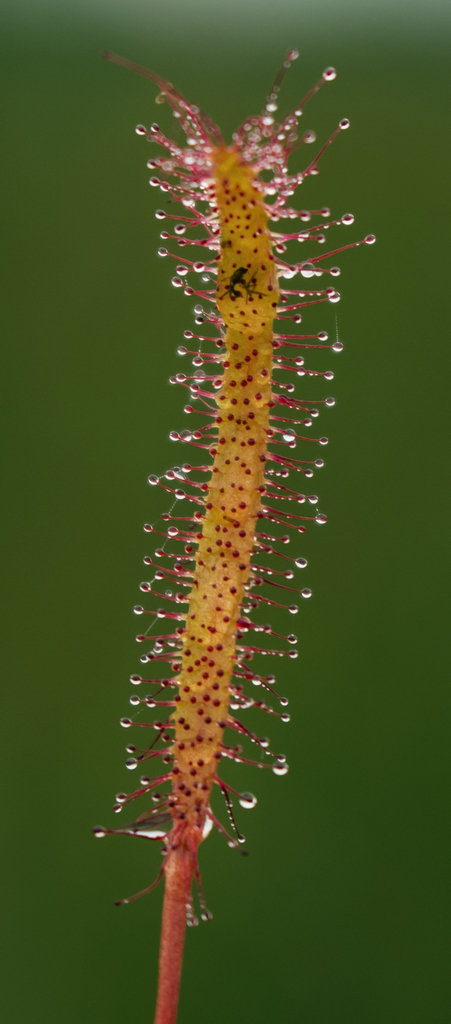
Slenderleaf sundew is easiest to recognize by its leaf shape. Among North American sundews, only the thread-leaved sundews of the eastern coastal plain have narrower leaves, and they lack a distinct leaf stalk.
Leaves & Growth Habit
The plant forms a loose rosette about 2½ to 6 inches across. Each leaf has a smooth, hairless stalk 1 to 3 inches long and a narrow, strap-shaped blade ⅜ to 2⅓ inches long and only about 1/16 to ⅛ inch wide, with parallel edges and a rounded tip. The leaves are held upright or angled upward. The blades are covered with reddish, gland-tipped hairs that produce glistening droplets of sticky mucilage.
Flowers
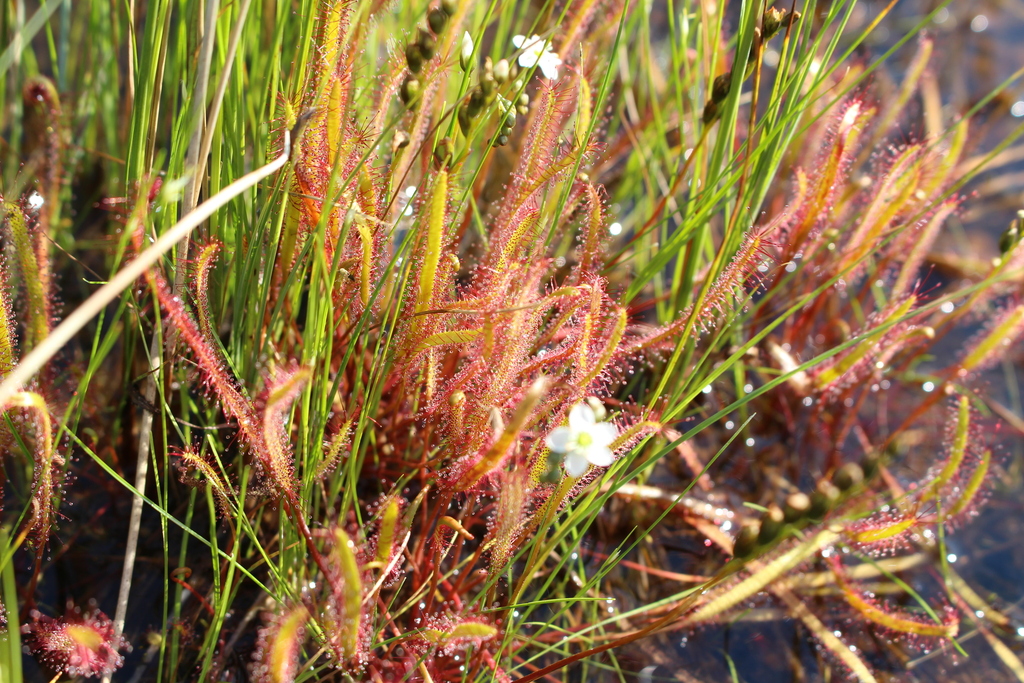
From June to August the plant produces one or more smooth flower stalks, about 2½ to 5 inches tall, each carrying 1 to 4 white flowers about ¼ inch across with five rounded petals. As in other sundews, the flowers open for only a few hours, usually on sunny mornings, and often self-pollinate.
Fruit & Seeds
The fruit is a small capsule, about ⅛ to 3/16 inch long, holding many tiny black seeds with a pitted surface. In late summer the plant forms a tight winter bud (hibernaculum) at the center of the rosette and dies back to it for the winter.
Look-alikes
Great Sundew also has long, upright leaves, but its blades widen toward the tip (narrowly spoon-shaped) rather than staying parallel-sided. Spoonleaf Sundew has shorter, distinctly spoon-shaped blades, and its flower stalk curves up from below the rosette. Round-leaved Sundew has round blades on long, hairy stalks. Where slenderleaf and round-leaved sundews grow together, they sometimes form sterile hybrids with intermediate leaves.
Quick Facts
| Scientific Name | Drosera linearis Goldie |
| Family | Droseraceae (sundew family) |
| Plant Type | Carnivorous herbaceous perennial |
| Mature Height | 2–6 in in flower |
| Mature Spread | 2½–6 in |
| Growth Rate | Slow |
| Sun Exposure | Full sun |
| Water Needs | Wet; constantly saturated |
| Soil Type | Marl, wet calcareous peat and mineral-rich fen soils |
| Soil pH | Neutral to alkaline (unusual for a sundew) |
| Bloom Time | June–August |
| Flower Color | White |
| Fall Color | Leaves often redden; dies back to a winter bud |
| Fruit | Small capsule with tiny black, pitted seeds |
| Deer Resistant | Not documented; rarely browsed |
| USDA Hardiness Zones | About 2–5 |
Native Range
Slenderleaf sundew is a northern species. USDA PLANTS lists it as native in Michigan, Wisconsin, Minnesota, Maine and Montana. In Canada it ranges from Newfoundland and Labrador and the Maritime provinces west through Quebec, Ontario, Manitoba and Saskatchewan to Alberta. Its range is centered on the Great Lakes region, with scattered outlying populations to the east and west.
In the United States its strongholds are the fens and wet shoreline flats of northern Michigan and nearby Wisconsin. In Minnesota it grows in remote peatlands of the northwestern and north-central part of the state, in fens fed by mineral-rich groundwater, and the state lists it as Threatened. Populations in Maine and Montana are small and widely separated from the Great Lakes core. Other states treat it as rare as well, and natural heritage programs across its U.S. range track its occurrences.
Its habitat is very specific: open, constantly wet, alkaline fens, especially marl fens, where calcium carbonate settles out of groundwater as a pale, muddy deposit, and the wet hollows and pools of patterned peatlands. It often grows in shallow water or on bare, saturated marl where few other plants can root. These fens depend on steady groundwater flow and are easily harmed by drainage, road building, off-road vehicles and changes to nearby land use.
📋 Regional plant lists featuring Slenderleaf Sundew: New Hampshire, Maine & Vermont · Michigan, Wisconsin & Eastern Minnesota · Montana & Wyoming · North Dakota, South Dakota & Western Minnesota
Growing & Care Guide
Slenderleaf sundew is one of the most difficult North American sundews to grow, and it is rarely offered even by carnivorous plant specialists. Never dig it from the wild: it is rare, state-listed in Minnesota, and its fen habitat is fragile. If you want to try it, buy only plants or seed that a reputable nursery has propagated, and treat it as an experiment.
Light
Full sun. In its native fens it grows in open, unshaded ground, and in shade it becomes weak and green rather than red.
Soil & Water
It needs constantly wet conditions, ideally with shallow standing water much of the season. Unlike most carnivorous plants, it is adapted to mineral-rich, alkaline water; growers who have succeeded with it often use a mix of peat and sand with some limestone or marl added, kept wet with clean water. Do not fertilize the soil.
Planting Tips
It is a cold-climate plant that needs a cool summer and a long, cold winter dormancy of several months. It does best outdoors in a bog garden or tray in the northern states and Canada, and generally fails in warm climates or on a windowsill.
Pruning & Maintenance
No pruning is needed. Remove fallen leaves and keep taller sedges from shading it. In fall it forms a small winter bud; leave it in place and keep it cold and moist until spring.
Propagation
It can be grown from fresh seed sown on the surface of a wet medium after several weeks of cold, moist stratification, and from leaf cuttings laid on a moist medium. Use only legally obtained, nursery-propagated material.
Landscape Uses
- Carnivorous plant collections: for experienced growers in cold climates, from nursery-propagated stock only
- Fen and wetland conservation: an indicator of intact, alkaline, groundwater-fed fens
- Nature viewing: look for it on boardwalks through Great Lakes fens in summer
- Botanical study: one of the parent species of the great sundew
Wildlife & Ecological Value
Slenderleaf sundew is a small predator in a nutrient-poor world, and an indicator of high-quality fen habitat.
For Pollinators
Its small white flowers are open only briefly and are visited by small bees and flies, but they are often self-pollinated. The flowers are held above the sticky leaves on bare stalks, which keeps pollinators away from the traps.
For Birds
It is not a food plant for birds, but the open fens where it grows support insects, amphibians and nesting birds such as sedge wrens and rails.
For Mammals
It is not eaten by mammals. Trampling by people, livestock or vehicles is a much greater threat than browsing.
Ecosystem Role
Like other sundews, it traps small insects such as midges, gnats and mosquitoes on its sticky leaves, then curls its tentacles around the prey and digests it with enzymes, absorbing nitrogen and phosphorus that are scarce in fen water. Its presence indicates a healthy, mineral-rich fen with steady groundwater flow.
Cultural & Historical Uses
The Scottish-Canadian botanist John Goldie described Drosera linearis in 1822 from plants he found in Canada during his travels in North America. The species name means “linear,” describing the narrow, parallel-sided leaf blades. The genus name Drosera comes from the Greek word for “dewy,” for the droplets of mucilage that glisten on the leaves.
Slenderleaf sundew has played a role in the study of plant evolution. Great sundew (Drosera anglica) has twice the chromosome number of slenderleaf and round-leaved sundews, and botanists believe it originated from a hybrid between these two species that later doubled its chromosomes, becoming fertile. Sterile first-generation hybrids between them are still found where both species grow.
Because it is limited to one uncommon kind of wetland, slenderleaf sundew is a useful indicator for conservation planners. Protecting the groundwater that feeds marl fens protects it along with many other rare fen plants, insects and snails.
Frequently Asked Questions
Where does slenderleaf sundew grow?
In alkaline fens and marl flats of northern North America. In the U.S. it is native to Michigan, Wisconsin, Minnesota, Maine and Montana; in Canada it ranges from Newfoundland west to Alberta.
Is slenderleaf sundew endangered?
It is not federally listed, but it is rare in much of its range. Minnesota lists it as Threatened, and natural heritage programs in other states track it as a rare plant. Never collect it from the wild.
How do I tell it from great sundew?
Slenderleaf sundew’s leaf blades are narrow with parallel sides and a blunt tip. Great sundew’s blades are longer and widen gradually toward the tip, like a narrow spoon.
What does it eat?
Small insects such as midges, gnats, mosquitoes and small flies, which get stuck to the sticky glandular hairs on its leaves and are slowly digested.
Can I grow slenderleaf sundew?
It is difficult and rarely available. It needs full sun, constantly wet and somewhat alkaline conditions, and a long cold winter. Only buy nursery-propagated plants or seed; never dig plants from a fen.

Looking for a nursery that carries Slenderleaf Sundew?
Browse our native plant nursery directory: Maine, Michigan, Minnesota & Montana · Wisconsin

