
Wright’s Beebrush (Aloysia wrightii)
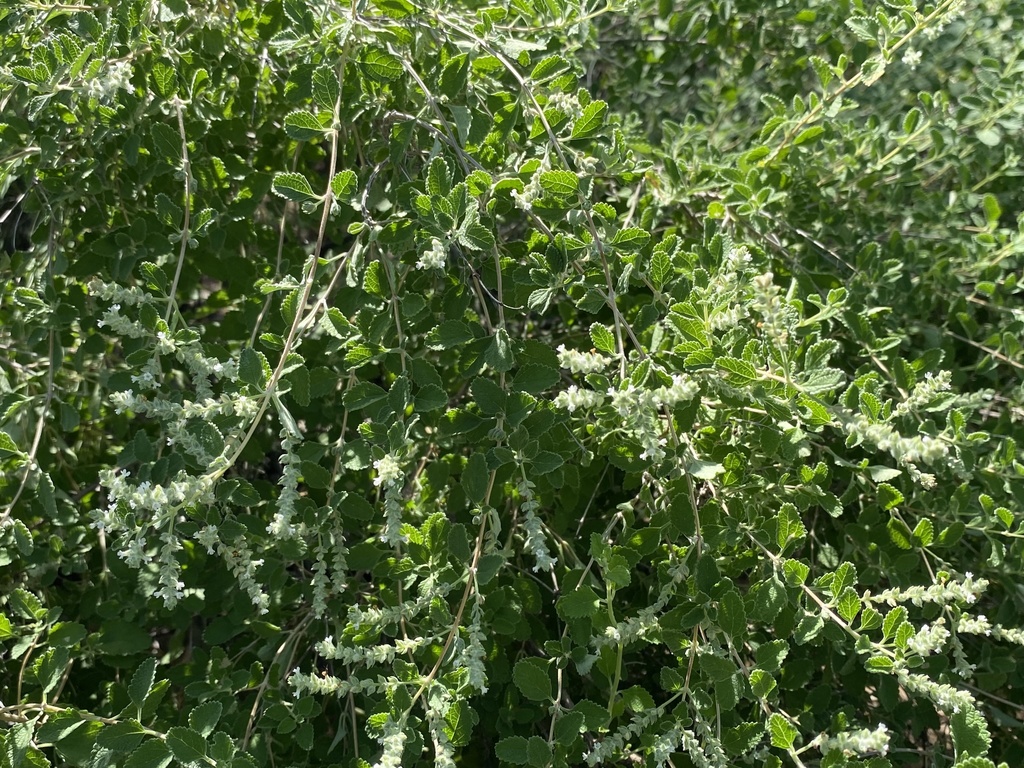
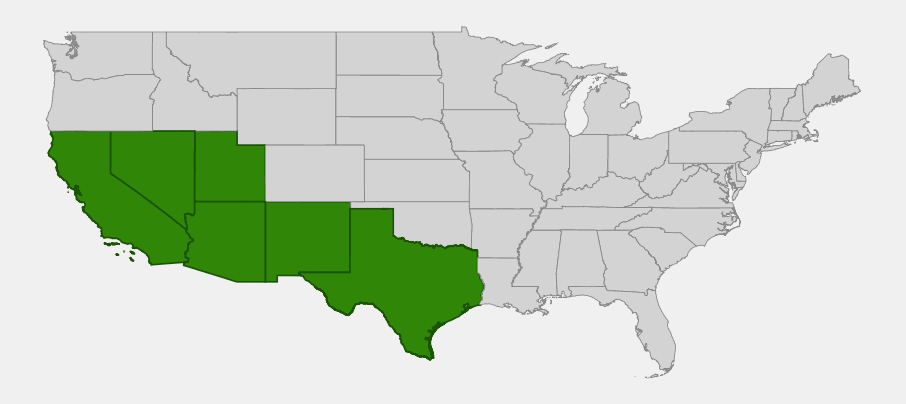
Aloysia wrightii, Wright’s Beebrush, also called oreganillo or Wright’s lippia, is an aromatic native shrub of the desert Southwest. It grows on rocky slopes, in canyons and along washes from western Texas across southern New Mexico and Arizona to southern Nevada, southwestern Utah and the eastern Mojave Desert of California, and south into northern Mexico.
It is a much-branched, rounded shrub with small, round, scalloped, softly hairy leaves that smell like oregano when crushed. After summer rains it covers itself with slender spikes of tiny white flowers that hum with bees, which is how it earned the name beebrush.
It is a tough, drought-tolerant shrub for desert gardens and pollinator plantings. This guide covers how to identify it, where it grows, how to grow it and its value to bees, butterflies and moths.
Identification
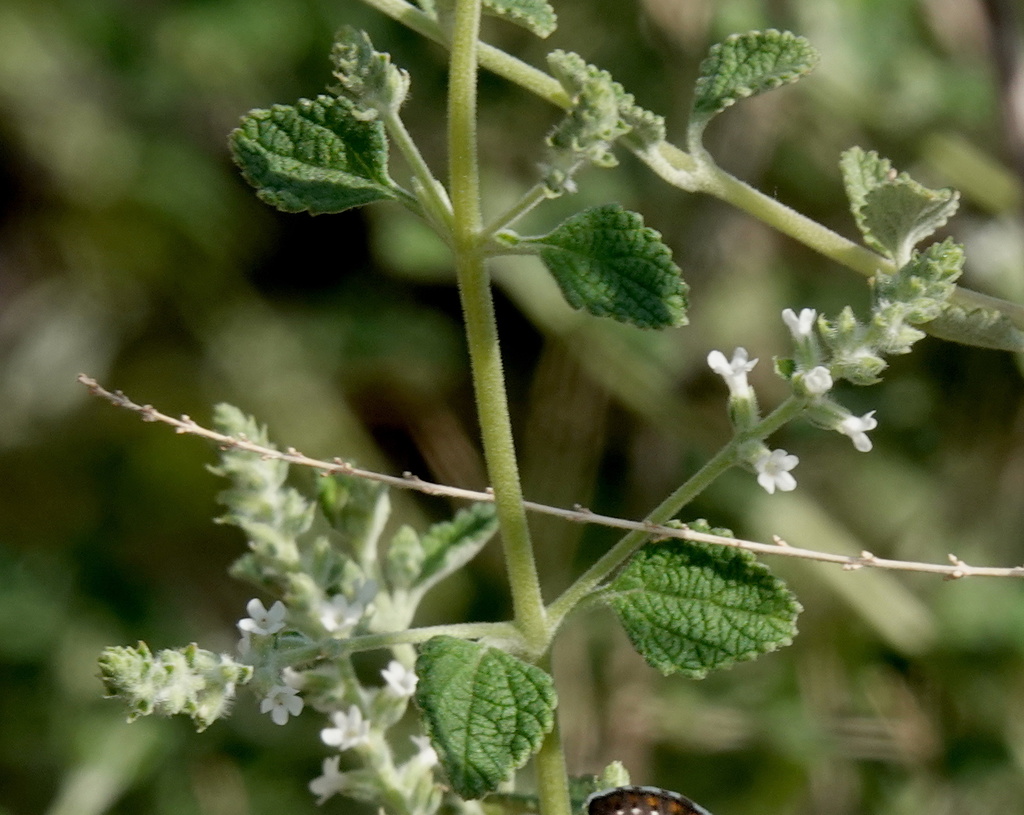
Wright’s beebrush is a rounded, twiggy, aromatic shrub with small, round, toothed, hairy leaves and slender, woolly spikes of tiny white flowers.
Shape & Stems
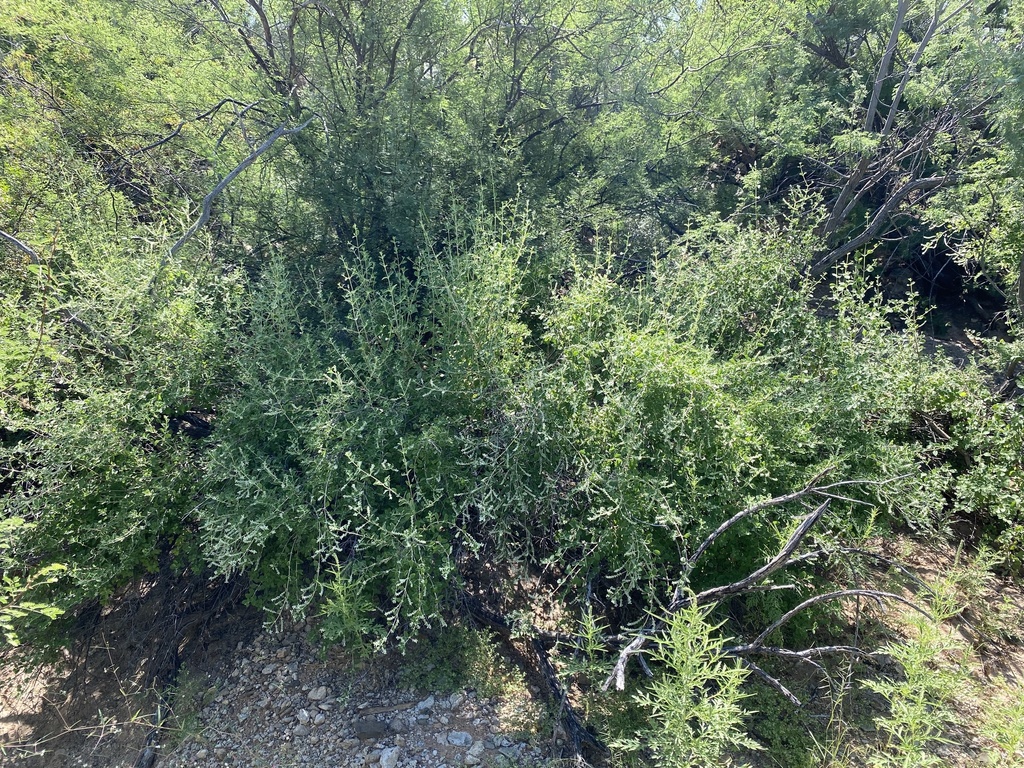
It grows 2 to 6 feet tall and about as wide, with many slender, gray to whitish, finely hairy branches. Plants are often semi-deciduous, dropping many leaves during drought and cold, and the bare, twiggy stems can look dead in the dry season.
Leaves
The leaves are opposite, round to broadly oval, only about ¼ to ¾ inch long, with scalloped (crenate) edges, a wrinkled surface and soft gray hairs, especially underneath. They have a strong oregano-like scent when crushed.
Flowers
The tiny white flowers, each about ⅛ inch long, are set along slender, woolly spikes 1 to 2½ inches long at the branch tips and in the leaf axils. Flowering follows rain, mainly in late summer and fall, and sometimes in spring. They are mildly fragrant.
Fruit & Look-alikes
The fruit is tiny and dry, splitting into two small nutlets inside the persistent calyx. Whitebrush (A. gratissima) is taller, with longer, narrow, mostly smooth-edged leaves, often spine-tipped twigs, and very fragrant flowers. Bushy lippia has larger, longer leaves and purple flower heads.
Quick Facts
| Scientific Name | Aloysia wrightii A. Heller ex Abrams |
| Family | Verbenaceae (verbena family) |
| Plant Type | Aromatic deciduous to semi-evergreen shrub |
| Mature Height | 2–6 ft |
| Mature Spread | 2–5 ft |
| Growth Rate | Moderate |
| Sun Exposure | Full sun to light shade |
| Water Needs | Low; very drought tolerant |
| Soil Type | Rocky, gravelly, sandy or limestone soil; well-drained |
| Soil pH | About 7.0–8.5 |
| Bloom Time | Mainly August–October after rains; sometimes spring |
| Flower Color | White |
| Fall Color | None; may drop leaves in drought or cold |
| Fruit | Tiny dry nutlets |
| Deer Resistant | Yes; aromatic foliage is rarely browsed |
| USDA Hardiness Zones | 7–10 |
Native Range
Wright’s beebrush is native to the deserts and desert mountains of the Southwest. USDA PLANTS lists it in Texas, New Mexico, Arizona, Nevada, Utah and California. In Texas it grows in the Trans-Pecos; in New Mexico mostly in the southern half; in Arizona across much of the southern and central part of the state, including the Sonoran Desert around Tucson and Phoenix; and it reaches its northern and western limits in southern Nevada, southwestern Utah and the eastern Mojave Desert mountains of California.
South of the border it grows in the northern Mexican states of Sonora, Chihuahua and Coahuila.
It grows on rocky and gravelly hillsides, limestone and volcanic slopes, canyons, ravines and the banks of desert washes, in desert scrub, desert grassland and the lower edges of oak and juniper woodland, mostly between roughly 1,500 and 6,500 feet.
📋 Regional plant lists featuring Wright’s Beebrush: Arizona & New Mexico · California & Nevada · Utah & Western Colorado · South & West Texas
Growing & Care Guide
Wright’s beebrush is grown by native plant nurseries in Arizona, New Mexico and West Texas and is easy to find at native plant sales in the Southwest. It is a fine-textured, fragrant, low-maintenance shrub for xeriscapes, desert gardens and pollinator plantings, thriving in heat and poor, rocky soil.
Light
Full sun to light shade. It flowers most heavily in full sun.
Soil & Water
Well-drained rocky, gravelly or sandy soil, including alkaline and limestone soils. Water deeply every week or two during the first summer; after that it survives on rainfall in most of its range, although an occasional deep summer watering brings on extra flowers.
Planting Tips
Plant in fall or early spring, 3 to 5 feet apart, on slopes, along dry washes, in a hedge or mixed with other desert shrubs and wildflowers. Avoid heavy, poorly drained clay.
Pruning & Maintenance
Lightly shear or cut back by up to a third in late winter to keep it dense and tidy. Do not overwater or fertilize, which leads to weak, floppy growth.
Propagation
Grow from fresh seed sown in warm weather, or from softwood or semi-hardwood cuttings taken in late spring and summer, which root fairly easily.
Landscape Uses
- Pollinator gardens: a magnet for native bees and butterflies after rains
- Xeriscapes and desert gardens: fine-textured, drought-tolerant shrub
- Informal hedges and slopes: dense, rounded habit
- Herb gardens: oregano-scented leaves
Wildlife & Ecological Value
As its name says, Wright’s beebrush is a top bee plant of the desert Southwest.
For Pollinators
The small white flowers produce abundant nectar for honey bees and many native solitary bees, and attract butterflies such as hairstreaks, blues, skippers and queens, as well as wasps and flies. It is a larval food plant for the rustic sphinx moth (Manduca rustica), whose adults also visit flowers.
For Birds
Sparrows, quail and other small birds forage for insects and seeds among the dense branches and use the shrub for cover.
For Mammals
Its aromatic foliage is rarely browsed, though deer and javelina may nibble it when other forage is scarce. Small mammals shelter beneath it.
Ecosystem Role
Its late-season flowers provide nectar after the summer monsoon, when many other desert plants have finished blooming, and its roots help stabilize rocky slopes and wash banks.
Cultural & Historical Uses
The species is named for Charles Wright (1811–1885), a Connecticut-born botanist who collected plants across Texas and the Southwest in the mid-1800s and later on expeditions around the world.
The name oreganillo, “little oregano,” reflects its scent. In the Southwest and northern Mexico the leaves are used locally like oregano to season food and are also brewed as an herbal tea.
The genus Aloysia also includes lemon verbena (A. citrodora) of South America, a well-known culinary herb.
Frequently Asked Questions
Why is it called beebrush?
Its many small, nectar-rich white flowers are heavily visited by bees, especially after summer rains.
Does Wright’s beebrush smell like oregano?
Yes. The crushed leaves have an oregano-like scent, which is why it is also called oreganillo.
Where does Wright’s beebrush grow?
On rocky slopes, canyons and desert washes from West Texas across New Mexico and Arizona to southern Nevada, southwestern Utah and southeastern California, and into northern Mexico.
How do I grow Wright’s beebrush?
Plant it in full sun in well-drained, rocky or sandy soil, water it through its first summer, and then let it get by mostly on rainfall.
How is it different from whitebrush?
Whitebrush (Aloysia gratissima) is larger, with longer, narrow, mostly smooth-edged leaves and spine-tipped twigs, while Wright’s beebrush has small, round, scalloped leaves.

Looking for a nursery that carries Wright’s Beebrush?
Browse our native plant nursery directory: Arizona · California · Nevada & New Mexico · Texas & Utah

