
ʻĀkia (Wikstroemia oahuensis)
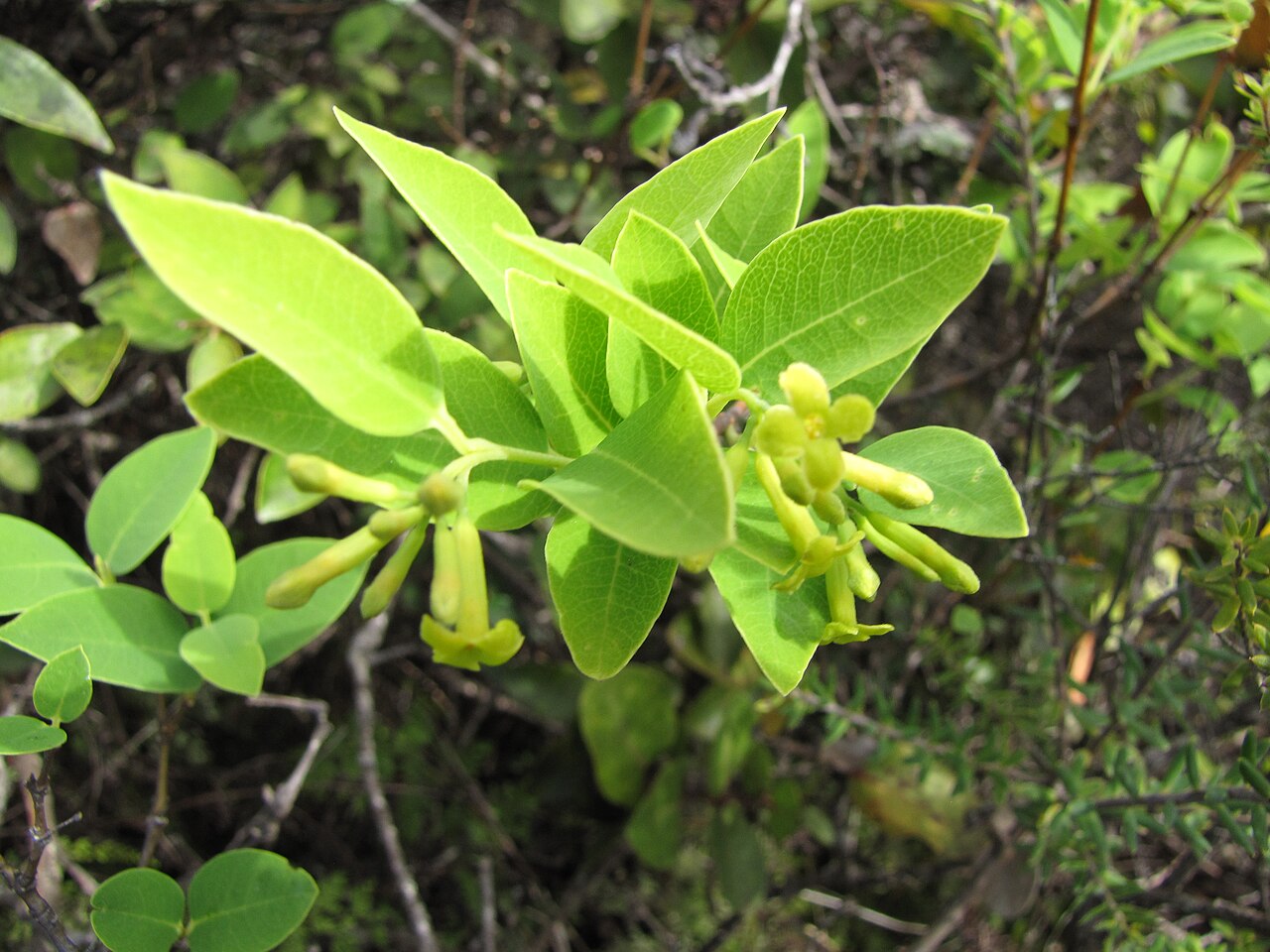
Wikstroemia oahuensis, known in Hawaiian as ʻĀkia and in English as the Oʻahu false ʻōhelo, is a shrub or small tree in the mezereon family (Thymelaeaceae) that grows wild only in the Hawaiian Islands. It has neat, opposite, oval leaves, clusters of small yellow-green tubular flowers at the branch tips, and glossy orange to red fruits that look a little like ʻōhelo berries, which is where the English name comes from.
It is the most widespread of the roughly dozen ʻākia species endemic to Hawaiʻi, and it is remarkably variable. Depending on where it grows, ʻākia can be an upright, tree-like shrub on a windward ridge, a low mound on a dry slope, or a dwarf plant in a Kauaʻi bog. That adaptability, plus its tidy foliage and colorful fruit, has made it a popular landscape plant in Hawaiʻi.
ʻĀkia also has a serious side. Its bark, roots and leaves contain toxic compounds, and Native Hawaiians pounded them to stun fish in tide pools. This guide covers how to recognize ʻākia, where it grows, how to grow it safely, and its place in Hawaiian culture.
Identification
ʻĀkia species are notoriously hard to tell apart, and W. oahuensis itself varies so much from place to place that botanists have named several varieties and forms. A few features hold for the whole group: tough, fibrous bark, opposite leaves, and small four-lobed tubular flowers without petals.
Growth Habit & Bark
ʻĀkia is a much-branched shrub or small tree, usually 3 to 6 feet tall in the wild and occasionally taller. In gardens it often stays around 3 feet tall and spreads wider than it is tall. Young twigs are gray, yellowish or reddish brown. The bark is extremely fibrous: a bent stem peels and bends rather than snapping cleanly, a useful field test for the genus.
Leaves
The leaves are opposite, simple and smooth-edged, oval to nearly round, and usually under an inch to about 2 inches long. They are dark green or grayish green above and paler beneath, and on many plants they crowd and overlap along the stems. Leaf size and shape vary a great deal between populations, from long and narrow to small and round.
Flowers
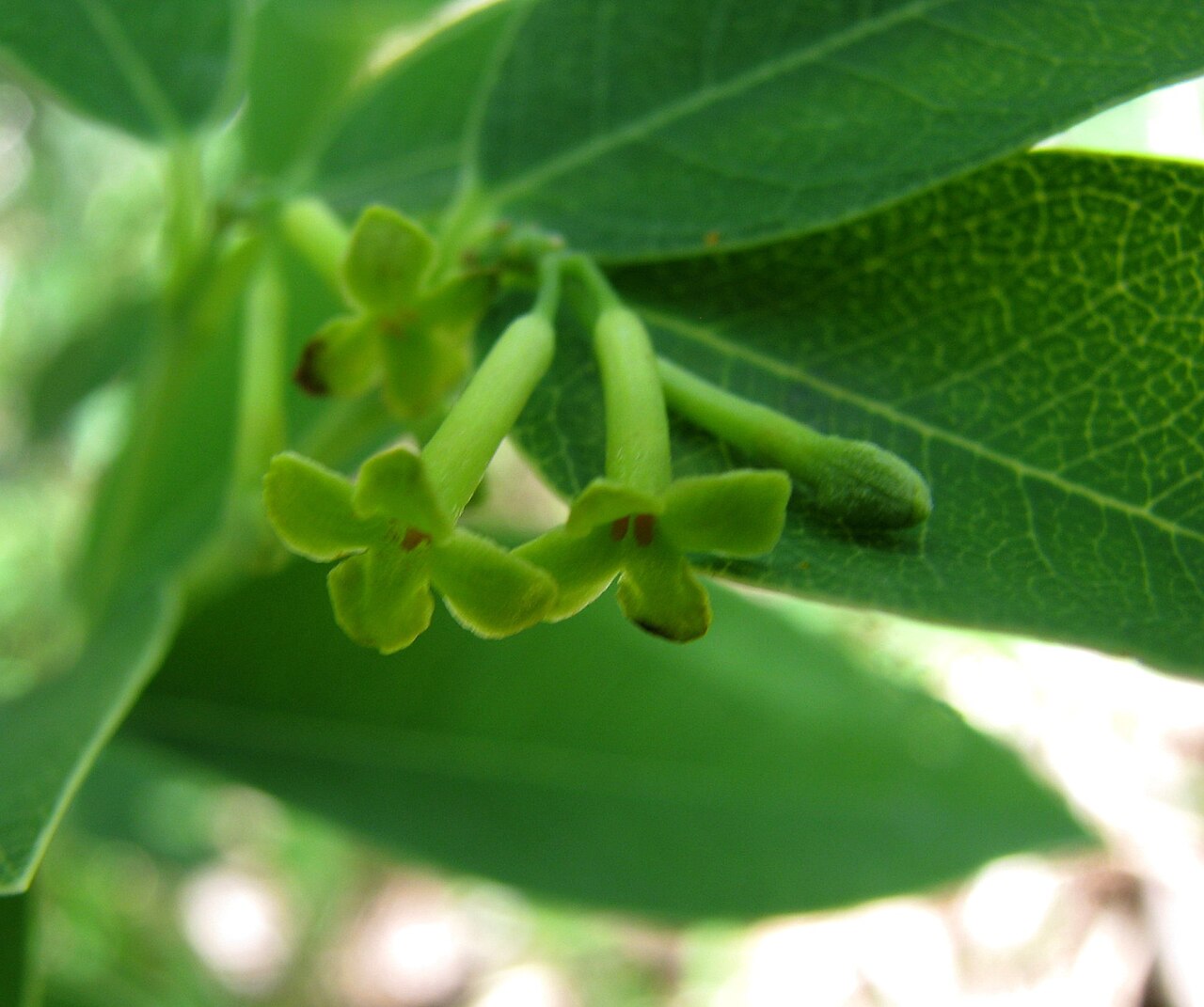
The flowers are small (under half an inch long), tubular, and yellow to yellow-green, opening into four short spreading lobes. They form in small clusters at the ends of the branches. Individual plants may carry bisexual flowers or flowers that are functionally male or female. ʻĀkia blooms irregularly through much of the year, with fewer flowers while a crop of fruit is ripening.
Fruit
The fruit is a small, fleshy, egg-shaped drupe about a quarter to half an inch long that ripens yellow-orange to bright orange or red. Each holds a single seed. The fruit is attractive, but like the rest of the plant it should be treated as poisonous.
Similar Species
Other Hawaiian ʻākia, such as ʻĀkia (W. uva-ursi), a low, gray-green coastal species from Kauaʻi, Oʻahu, Molokaʻi and Maui, can be very similar, and range and leaf details are often needed to tell them apart. True ʻōhelo (Vaccinium) has alternate, toothed leaves and bell-shaped flowers, so the “false ʻōhelo” is easy to separate on a closer look.
Quick Facts
| Scientific Name | Wikstroemia oahuensis (A. Gray) Rock |
| Family | Thymelaeaceae (mezereon family) |
| Plant Type | Evergreen shrub or small tree; endemic to Hawaiʻi |
| Mature Height | 3–6 ft (occasionally taller in the wild) |
| Mature Spread | 3–10 ft |
| Growth Rate | Moderate |
| Sun Exposure | Full sun to part shade |
| Water Needs | Low to medium; drought tolerant once established |
| Soil Type | Well-drained soils, including rocky and volcanic soils |
| Soil pH | About 5.5–7.0 |
| Bloom Time | Irregularly through the year |
| Flower Color | Yellow to yellow-green |
| Fall Color | None; evergreen |
| Fruit | Small yellow-orange to red drupe; poisonous |
| Deer Resistant | Generally avoided because of its toxic sap |
| USDA Hardiness Zones | 10–12 (frost-free) |
Native Range
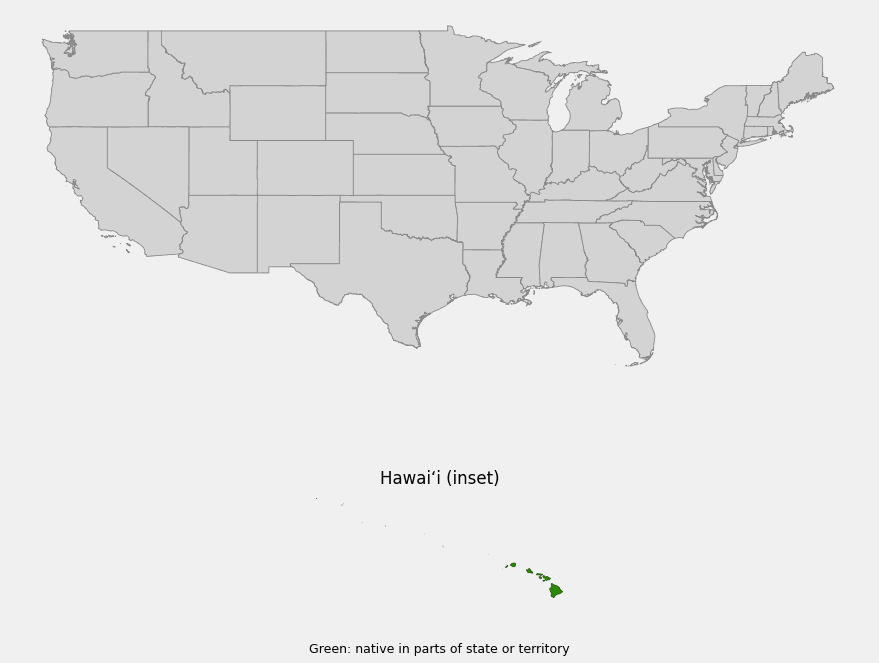
ʻĀkia is endemic to the Hawaiian Islands. USDA PLANTS records Wikstroemia oahuensis only from Hawaiʻi, and it grows on Kauaʻi, Oʻahu, Molokaʻi, Lānaʻi and Maui. It is not native to Hawaiʻi Island, which has its own ʻākia species.
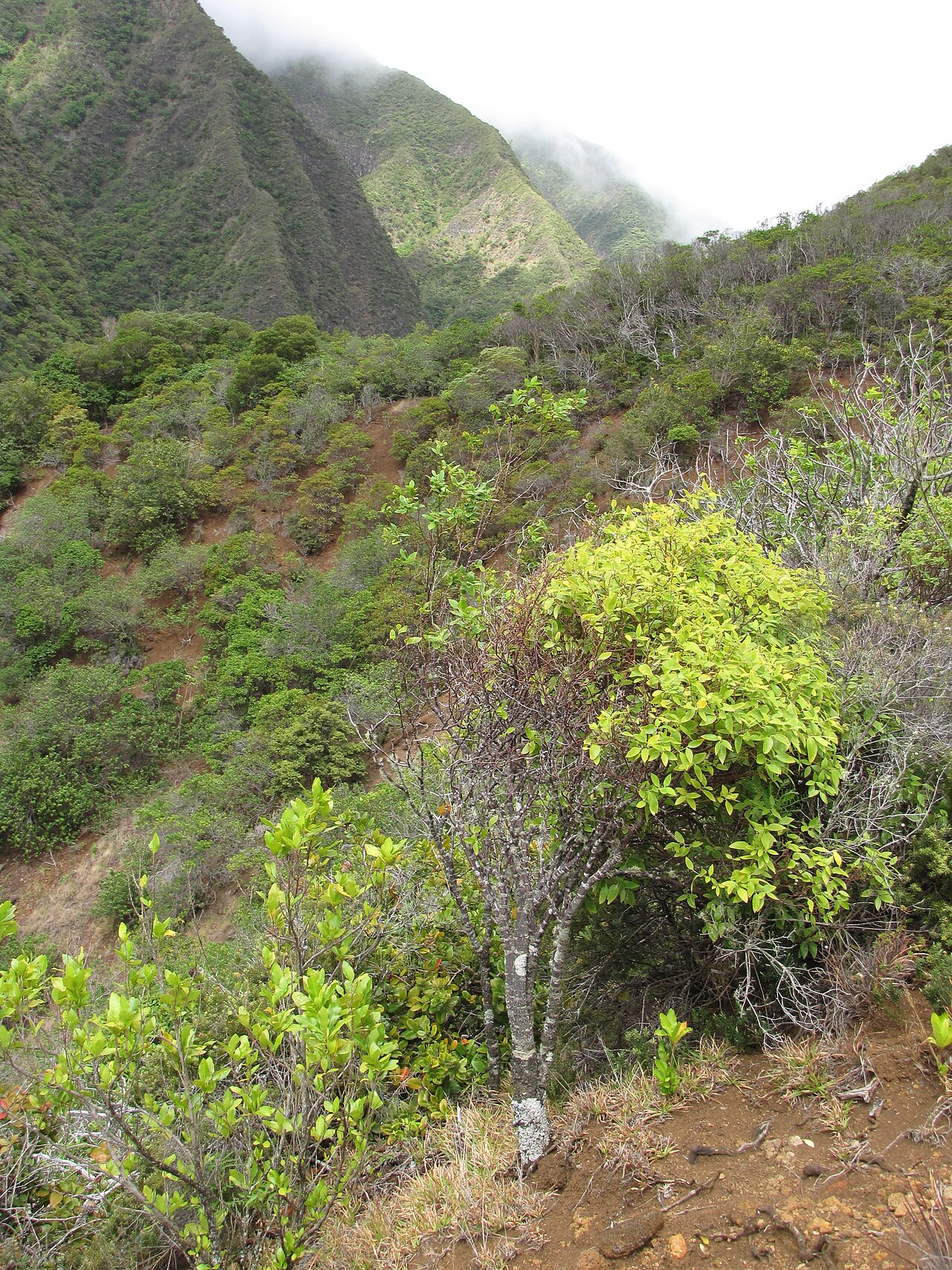
Few Hawaiian shrubs occupy such a wide range of habitats. ʻĀkia grows on exposed ridges and rocky slopes, in hala (Pandanus) groves, in dry to mesic forest and shrubland, in wet forest and even in bogs, at elevations from about 330 to 4,600 feet (100 to 1,400 m). On Oʻahu it is a familiar shrub along trails in the Koʻolau and Waiʻanae mountains, such as the ʻAiea Loop Trail.
ʻĀkia is not listed under the federal Endangered Species Act and is still fairly common in suitable habitat, although several of its Hawaiian relatives are federally Endangered. Like most Hawaiian native plants it is affected by invasive weeds, fire, feral goats and pigs, and habitat loss, so wild populations deserve care.
📋 Regional plant lists featuring ʻĀkia: Hawaii
Growing & Care Guide
ʻĀkia is one of the easier Hawaiian natives to grow. It tolerates heat, wind, poor soil and some drought, and it is widely sold by native plant nurseries in Hawaiʻi. Buy nursery-propagated plants from a Hawaii native plant nursery rather than collecting from the wild. Because the whole plant is poisonous, place it where small children and pets will not chew on the leaves or fruit.
Light
Full sun gives the densest growth and the most flowers and fruit. ʻĀkia also grows in part shade, especially in hot, dry lowland gardens, but it becomes more open and leggy in deep shade.
Soil & Water
Any well-drained soil works, from rocky volcanic cinder to amended garden loam; avoid heavy, waterlogged soils, which cause root rot. Water regularly for the first few months after planting, then taper off. Established plants in most of Hawaiʻi need only occasional deep watering during long dry spells, and plants from dry-site forms are quite drought tolerant.
Planting Tips
Use ʻākia as a low hedge, a foundation shrub, a mass planting or a specimen in a native garden, and space plants 3 to 6 feet apart. Low, spreading forms work well as a groundcover on banks. It grows from sea level to upland gardens in Hawaiʻi and handles the warm coastal conditions of most residential areas. Outside Hawaiʻi it can only be grown in frost-free climates or in a greenhouse, and Hawaiʻi restricts bringing plant material in from other states, so source plants locally.
Pruning & Maintenance
ʻĀkia takes light shaping well and can be kept compact with a trim after a flush of flowering. Wear gloves when pruning, because the sap and bark are irritating and toxic, and do not compost clippings where animals forage. Watch for scale insects and mealybugs on stressed plants, and keep mulch a few inches away from the stems.
Propagation
ʻĀkia is propagated from fresh seed and from cuttings. Clean the pulp from ripe fruit (wear gloves), then sow seed in a well-drained mix; germination can take several weeks to a few months. Semi-hardwood tip cuttings treated with rooting hormone root in a few weeks under mist or in a humid propagation box. Only collect seed or cuttings with permission, and never from protected areas.
Landscape Uses
- Native hedges and borders: a tidy, evergreen shrub that takes light shaping
- Xeriscape and coastal gardens: tolerates heat, wind and dry spells once established
- Groundcover forms: low spreading forms cover banks and slopes
- Restoration plantings: a hardy shrub for dry to mesic restoration sites
- Cultural plantings: fruit, flowers and fiber with a long history of Hawaiian use
Wildlife & Ecological Value
In the wild, ʻākia is part of the shrub layer that holds Hawaiian ridges and slopes together, and its fruit and flowers are used by native wildlife.
For Pollinators
The small yellow-green flowers produce nectar and are visited by small insects. Their irregular, year-round blooming makes ʻākia a steady, if modest, nectar source.
For Birds
The bright fruits are eaten by birds, which disperse the seeds, and the dense branches give cover to small birds. ʻĀkia is one of the native shrubs that provided fruit for native birds before many of them declined.
For Mammals
Hawaiʻi has only one native land mammal, the Hawaiian hoary bat, which forages for insects over the forests and shrublands where ʻākia grows. The plant’s toxic sap gives it some protection from introduced browsing animals.
Ecosystem Role
ʻĀkia colonizes rocky ridges, landslide scars and disturbed ground, helping to stabilize soil and starting the recovery of native shrubland. A bacterium, Flavobacterium akiainvivens, was first isolated from decaying ʻākia wood and is named after the plant.
Cultural & Historical Uses
Native Hawaiians knew ʻākia well. Its pounded bark, roots and leaves were used, often with other plants, to stupefy fish in tide pools and streams so they could be gathered by hand. Historical accounts also describe preparations of ʻākia used as a poison in the execution of criminals. Because of this toxicity, no part of the plant should be eaten.
The plant’s strong, fibrous bark was used for cordage, and its colorful fruits and flowers are strung into lei. ʻĀkia also has a place in traditional Hawaiian medicine, where it was used as a laxative and for asthma, but these uses rely on knowledge of dosage and preparation and should not be tried at home. Researchers have studied compounds from Wikstroemia for possible anti-tumor activity.
Today ʻākia is one of the most widely planted Hawaiian natives in landscapes, from home gardens to commercial plantings, thanks to its toughness and neat appearance. It was first described by Asa Gray from specimens collected in Hawaiʻi, and its scientific name honors Oʻahu, where it is still a familiar trailside shrub.
Frequently Asked Questions
Is ʻākia poisonous?
Yes. The bark, roots, leaves and fruit contain toxic compounds; Native Hawaiians used the plant to stun fish. Do not eat any part of ʻākia, wear gloves when pruning, and plant it away from areas where young children or pets might chew on it. If someone swallows part of the plant, contact Poison Control (1-800-222-1222).
Is ʻākia native to Hawaiʻi?
Yes. Wikstroemia oahuensis is endemic to Hawaiʻi, meaning it grows wild nowhere else. It is found on Kauaʻi, Oʻahu, Molokaʻi, Lānaʻi and Maui.
Is ʻākia endangered?
Wikstroemia oahuensis is not federally listed and is still fairly common, though some other Hawaiian Wikstroemia species are federally Endangered. Buy nursery-propagated plants from Hawaii native plant nurseries and never dig plants from the wild.
Why is it called the false ʻōhelo?
The bright orange to red fruits resemble the berries of ʻōhelo (Vaccinium), the edible native Hawaiian blueberry relative. Unlike ʻōhelo berries, ʻākia fruits are poisonous.
How big does ʻākia get in a garden?
Most garden plants stay about 3 feet tall and spread 3 to 10 feet, depending on the form. Wild plants can reach about 5 or 6 feet, and some upright forms become small trees.

Looking for a nursery that carries ʻĀkia?
Browse our native plant nursery directory: Hawaii

