
Poʻola Nui (Bidens cosmoides)
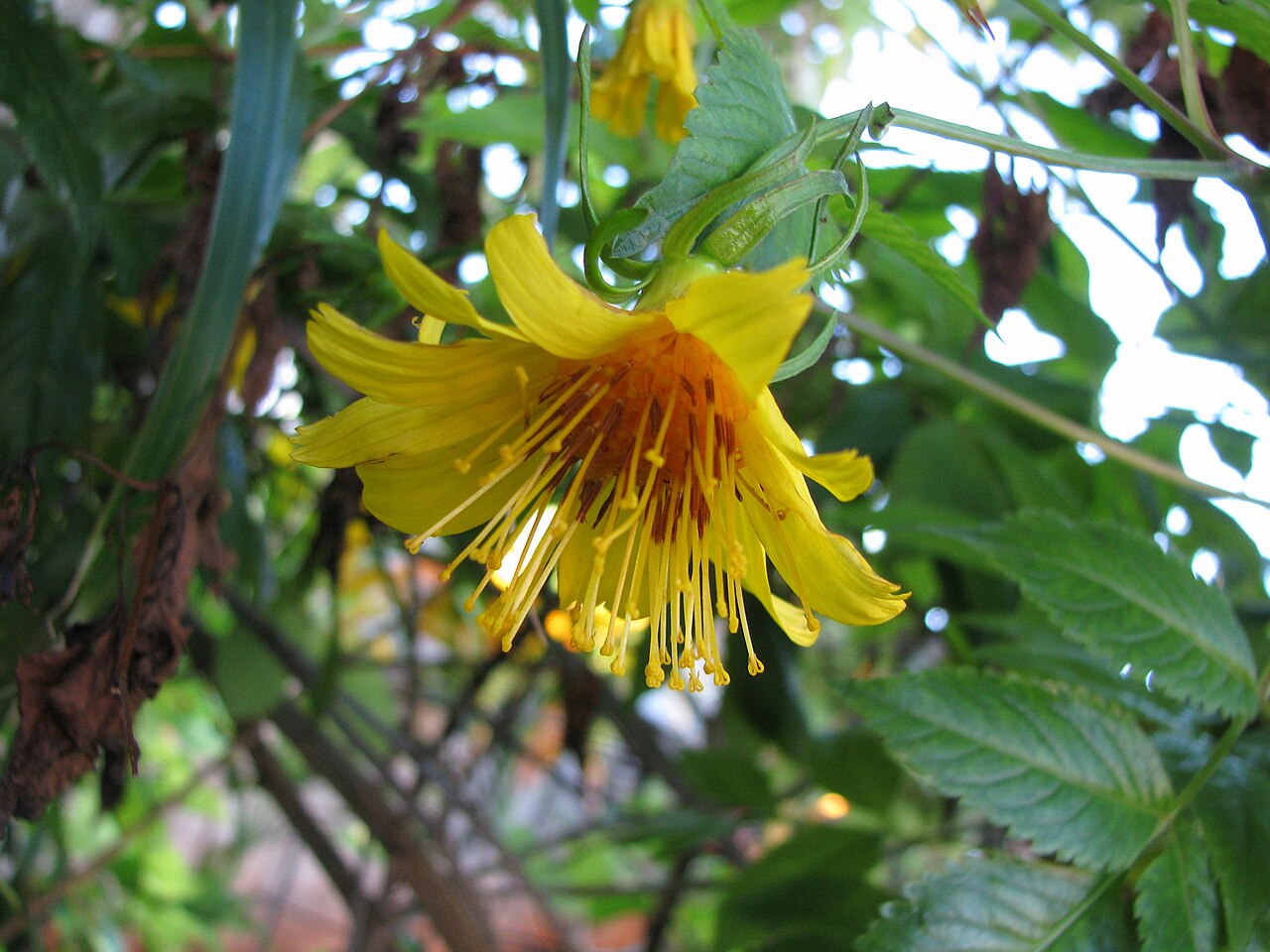
Bidens cosmoides, known in Hawaiian as poʻola nui and in English as cosmosflower beggarticks, is a rare member of the sunflower family (Asteraceae) found only on the island of Kauaʻi. It belongs to the Hawaiian Bidens group called koʻokoʻolau, but it is the most unusual member of that group: a large, sprawling plant up to about 7 feet tall with big, hanging, yellow-orange flower heads that are adapted to pollination by birds.
Poʻola nui is endemic to Kauaʻi, where it grows in mixed mesic forest at roughly 2,000 to 3,000 feet in the uplands of the island’s west side. NatureServe ranks it as imperiled. It is not listed under the federal Endangered Species Act, but its habitat is threatened by invasive weeds, fire and feral animals, and the loss of the native honeycreepers that once pollinated it has also hurt the species.
It is occasionally grown by botanical gardens and native plant enthusiasts in Hawaiʻi, where it is a striking plant for a cool, moist garden. Buy only nursery-propagated plants, and never collect plants, cuttings or seeds from the wild. This guide covers how to identify poʻola nui, where it grows, what it needs in cultivation, and the story behind its name.
Identification
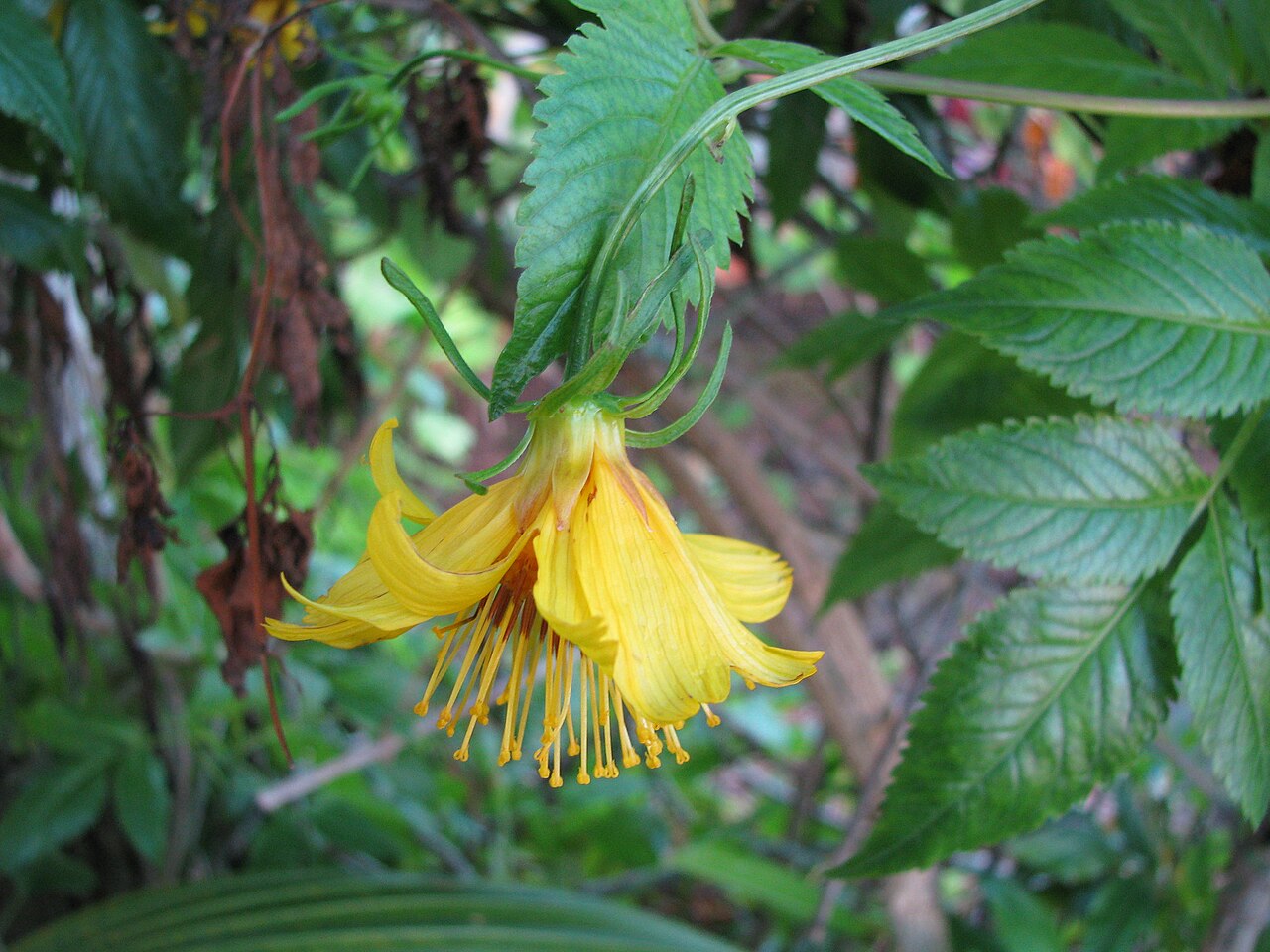
Most koʻokoʻolau have small, upright, daisy-like yellow heads. Poʻola nui is easy to tell apart: its heads are much larger and hang down, with long florets that stick out below the rays like a fringe.
Growth Habit
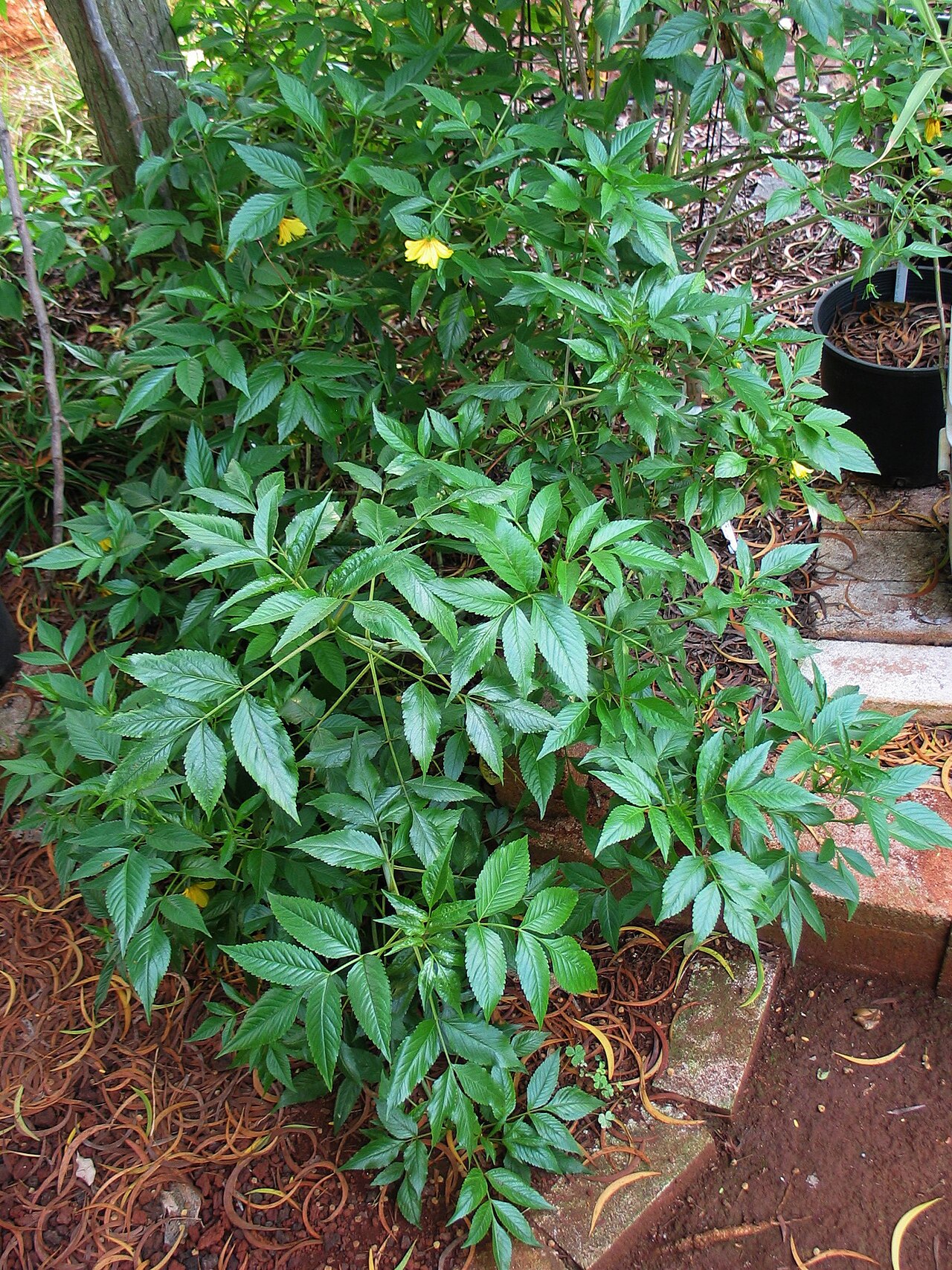
A soft-wooded perennial that branches from the base and sprawls or leans on surrounding shrubs, reaching about 3 to 7 feet tall. Stems are green to reddish and become somewhat woody at the base with age.
Leaves
Leaves are opposite and compound, divided into several lance-shaped leaflets with toothed edges. They are fairly large, bright to dark green, and give the plant a lush, leafy look that is quite different from the fine-leaved koʻokoʻolau of dry habitats.
Flowers
The flower heads are the plant’s signature feature. They hang on long, curved stalks, and each has broad, overlapping yellow rays around a large disk of orange-yellow florets whose stamens and styles protrude well beyond the rays. Plants can flower sporadically through the year.
Fruit & Look-alikes
Like other Bidens, it produces narrow, dry, one-seeded fruits (achenes) in the flower head after blooming. Other Kauaʻi koʻokoʻolau, such as Bidens sandvicensis, have much smaller, upright heads. Introduced weedy relatives such as Bidens alba have small heads with white rays and barbed fruits that cling to clothing. The Hawaiian name compares its leaves and habit to poʻola (Claoxylon sandwicense), an unrelated native shrub that has no showy flowers.
Quick Facts
| Scientific Name | Bidens cosmoides (A. Gray) Sherff |
| Family | Asteraceae (sunflower family) |
| Plant Type | Sprawling perennial or subshrub; endemic to Kauaʻi |
| Mature Height | 3–7 ft |
| Mature Spread | 3–6 ft |
| Growth Rate | Fast |
| Sun Exposure | Partial shade to morning sun |
| Water Needs | Moderate; evenly moist, well-drained soil |
| Soil Type | Rich, well-drained soil with organic matter |
| Soil pH | Slightly acidic |
| Bloom Time | Sporadically year-round |
| Flower Color | Yellow rays with an orange-yellow disk |
| Fall Color | None; evergreen |
| Fruit | Narrow dry achenes |
| Deer Resistant | No; feral goats and pigs damage wild plants |
| USDA Hardiness Zones | 10–12 (outdoors in Hawaiʻi) |
Native Range
Poʻola nui is endemic to Kauaʻi and grows nowhere else in the world. USDA PLANTS lists it as native only in Hawaiʻi. It is part of a remarkable radiation of Hawaiian Bidens: about 19 species descended from a single ancestor that reached the islands, and they now range from coastal cliffs to wet forest. Poʻola nui is the member of the group with the largest flowers and the most specialized pollination.
It grows in mixed mesic forest, the moderately rainy forest between the dry lowlands and the very wet summit bogs, at about 2,000 to 3,000 feet in the uplands of western Kauaʻi, including the Kōkeʻe area. Its wild occurrences are few and localized, often on slopes and gulch sides in partly open forest of koa and ʻōhiʻa.
The main threats are invasive plants that crowd out the native understory, fire, and feral goats and pigs. The decline of Kauaʻi’s nectar-feeding forest birds is a further problem, because the plant’s hanging, nectar-rich heads appear to be adapted to them. Seed collection and propagation by conservation programs and botanical gardens help safeguard the species.
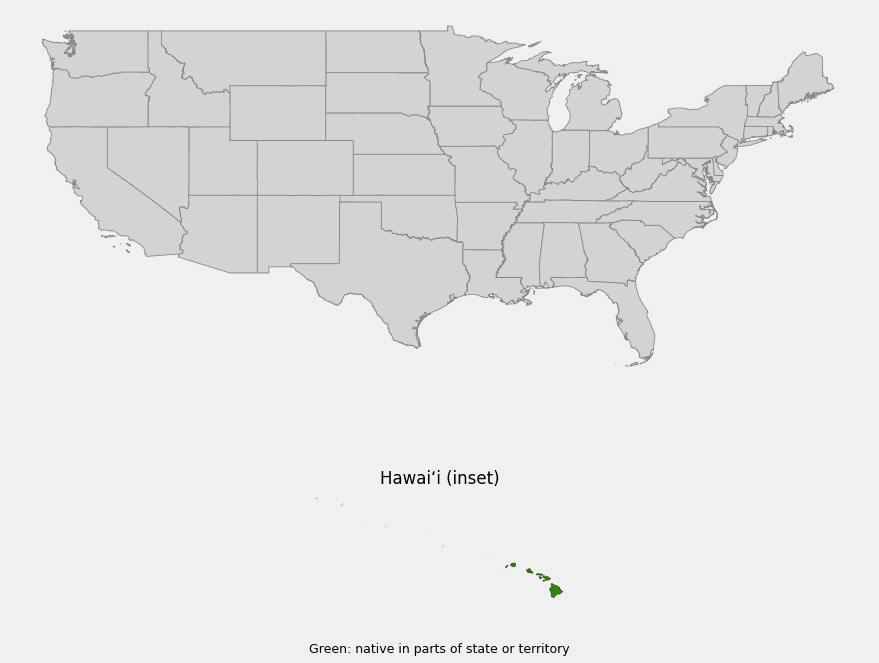
📋 Regional plant lists featuring Poʻola Nui: Hawaii
Growing & Care Guide
Poʻola nui is not as easy as the dry-land koʻokoʻolau, but it can be grown in Hawaiʻi by gardeners who can give it the cool, moist, partly shaded conditions of its mesic forest home. It is best suited to gardens at middle elevations; in hot, dry lowland gardens it needs extra shade and water. It grows outdoors only in frost-free climates (about USDA zones 10–12). Buy only nursery-propagated plants from Hawaiʻi native plant growers or botanical garden sales, and never collect from the wild. Hawaiʻi also restricts bringing plants in from other states, so it should be sourced from growers within the islands.
Light
Partial shade or morning sun with afternoon shade. Full sun in the lowlands tends to scorch the large leaves and stress the plant.
Soil & Water
Rich, well-drained soil with plenty of organic matter. Keep it evenly moist, especially during dry spells, but avoid waterlogged soil, which can rot the roots and stems.
Planting Tips
Give it room to sprawl, or plant it near a sturdy shrub or low fence it can lean on. A spot along a shaded path lets you look up into the hanging flower heads. Shelter it from strong wind, which can break the soft stems.
Pruning & Maintenance
Cut back leggy or spent stems to encourage fresh, bushy growth; like many Hawaiian Bidens, it can be short-lived and benefits from regular renewal. Watch for aphids, mites and slugs on new growth. A light mulch keeps the roots cool and moist.
Propagation
It can be grown from fresh seed and from stem cuttings, which root fairly readily in a moist, shaded propagation area. To keep wild populations genetically distinct, conservation growers keep it away from other Bidens species when collecting seed. Home gardeners should propagate only from their own nursery-bought plants.
Landscape Uses
- Mesic native gardens: a rare Kauaʻi endemic for cool, moist, partly shaded gardens
- Specimen plant: large hanging flower heads unlike any other koʻokoʻolau
- Conservation and education: a living example of Hawaiian adaptive radiation and bird pollination
- Restoration plantings: outplanting in Kauaʻi mesic forest projects with appropriate permits
Wildlife & Ecological Value
Poʻola nui is a good example of how Hawaiian plants evolved in partnership with native birds, and of how losing those birds affects the plants.
For Pollinators
Its large, hanging, nectar-rich heads with protruding stamens and styles are adapted for pollination by birds, a rare trait in Bidens. Studies of its floral biology found the flowers suited to nectar-feeding birds, and native Hawaiian honeycreepers are thought to have been its main pollinators. Insects also visit the flowers.
For Birds
Nectar-feeding forest birds such as Hawaiian honeycreepers are its natural partners. Several of Kauaʻi’s honeycreepers have declined sharply or disappeared, which limits pollination in the wild.
For Mammals
Hawaiʻi’s only native land mammal, the Hawaiian hoary bat (ʻōpeʻapeʻa), forages over Kauaʻi’s forests. Feral goats and pigs damage the plant and its habitat and are among its main threats.
Ecosystem Role
It is a fast-growing understory component of mixed mesic forest, filling openings and slopes. Its seeds and foliage support native insects, and its presence is a sign of relatively intact Kauaʻi mesic forest.
Cultural & Historical Uses
The Hawaiian name poʻola nui means “great poʻola.” It compares the plant’s leaves and growth form to poʻola (Claoxylon sandwicense), an unrelated native shrub of the spurge family, while recognizing that poʻola nui is far larger and showier. Other Hawaiian Bidens are known collectively as koʻokoʻolau (or kokoʻolau), and poʻola nui is sometimes listed under that name too.
The leaves of several koʻokoʻolau species were traditionally steeped as a tonic tea in Hawaiʻi. Poʻola nui, by contrast, is so rare that it is valued mainly as a conservation and garden plant. It was illustrated in the 19th century by Frances Sinclair in Indigenous Flowers of the Hawaiian Islands under the name “Poolanui.”
The species was first described by the American botanist Asa Gray and later moved into Bidens by Earl Edward Sherff, who monographed the genus. Botanists studying the evolution of Hawaiian Bidens have highlighted poʻola nui as a striking case of a plant lineage shifting from insect to bird pollination after arriving on remote islands.
Frequently Asked Questions
Where does po’ola nui grow?
Only on Kauaʻi, in mixed mesic forest at about 2,000 to 3,000 feet in the uplands on the west side of the island.
Is po’ola nui endangered?
It is rare and ranked imperiled by NatureServe, but it is not listed under the federal Endangered Species Act. Invasive plants, fire, feral animals and the loss of native pollinating birds threaten it.
What makes po’ola nui different from other Bidens?
Its flower heads are much larger and hang downward, with long protruding florets, and it is pollinated by birds instead of mainly by insects.
Can I grow it?
Yes, in Hawaiʻi or other frost-free climates with partial shade, regular moisture and rich, well-drained soil. It is easiest at middle elevations. Buy only nursery-propagated plants, and never collect from the wild.
Is it related to cosmos?
Both are in the sunflower family, and the name cosmoides means “like Cosmos,” referring to its large, showy flower heads. But it belongs to the genus Bidens, the beggarticks.

Looking for a nursery that carries Poʻola Nui?
Browse our native plant nursery directory: Hawaii

