
ʻŌhā Kēpau (Clermontia hawaiiensis)
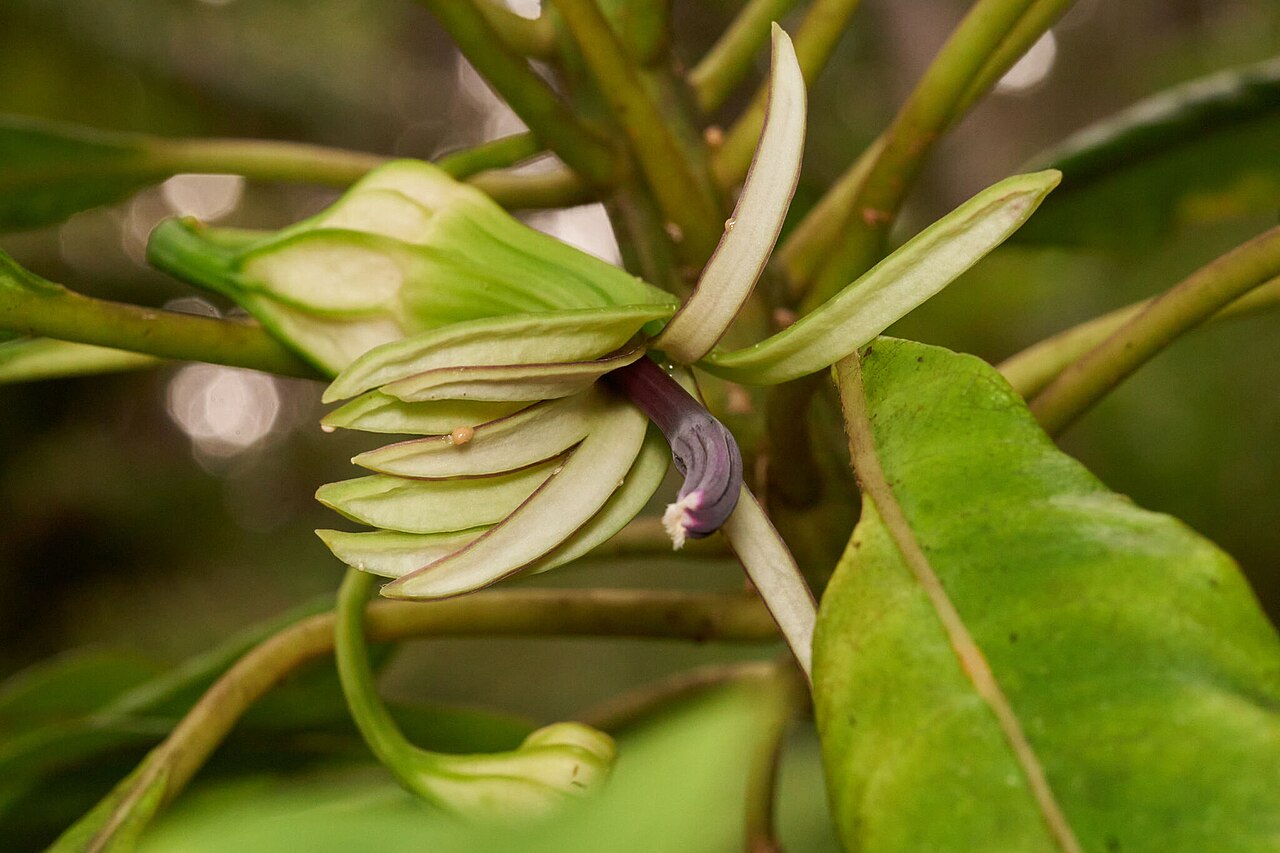
Clermontia hawaiiensis, known in Hawaiian as ʻŌhā kēpau, is a shrub or small tree in the Hawaiian lobelioid group of the bellflower family (Campanulaceae). It grows only on Hawaiʻi Island, in the wet forests on the windward and eastern slopes of the volcanoes, and it is one of the lobelioids that visitors are most likely to see, because it is fairly common in parts of Hawaiʻi Volcanoes National Park around Kīlauea.
Like other Clermontia, it has long, glossy leaves clustered at the ends of its branches, curved tubular flowers whose green sepals look like a second set of petals, and fleshy, bright orange, ribbed fruits. The Hawaiian name joins ʻōhā, the general name for Clermontia, with kēpau, a word for sticky gum or pitch; all Hawaiian lobelioids have a milky, sticky sap. The flowers evolved alongside Hawaiian honeycreepers with long, curved bills, a relationship that has been disrupted as many of those birds have become rare or extinct.
ʻŌhā kēpau is not federally listed under the Endangered Species Act, but it is considered vulnerable: its range is small, and feral pigs, rats, slugs and invasive plants damage wild populations. It is occasionally grown by Hawaiʻi native plant nurseries and collectors in cool, wet upland gardens such as those around Volcano. Buy only nursery-propagated plants, and never collect plants, cuttings, fruit or seeds from the wild. This guide covers how to identify it, where it grows, how to grow it, and its place in Hawaiian forests.
Identification
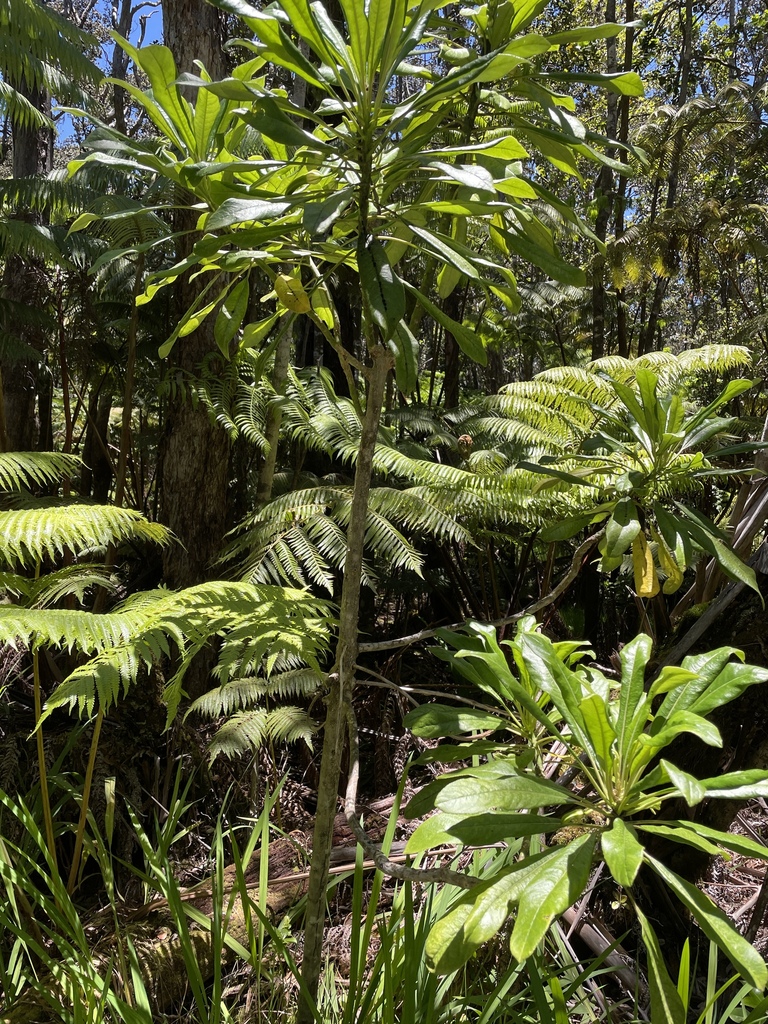
ʻŌhā kēpau is easiest to recognize by its candelabra-like branches, each ending in a rosette of long, narrow leaves, and by its curved, greenish-white to purple flowers or orange fruits hanging below the rosettes.
Growth Habit
A sparsely branched shrub or small tree, usually a few feet to about 15 feet tall but occasionally reaching about 30 feet. The stems are smooth, greenish to gray and somewhat soft-wooded, and the branches fork to give the plant an open, candelabra-like shape. Broken stems and leaves bleed a milky latex.
Leaves
Leaves are crowded in rosettes at the branch tips. They are long and narrow, oblong to lance-shaped, up to about 9 inches long, glossy medium green above and paler beneath, with finely toothed edges and a pale midrib. Fallen leaves leave prominent scars along the stems.
Flowers
Flowers hang on stalks from the leaf axils, in small groups of two to four. Each is a strongly curved tube about 2 to 2½ inches long. As in other Clermontia, the sepals are shaped and colored like the petals, so the flower looks double. The color ranges from greenish white to purple and magenta, and a dark purple column of fused stamens arches out of the center. The curved shape fits the bills of nectar-feeding Hawaiian honeycreepers.
Fruit & Look-alikes
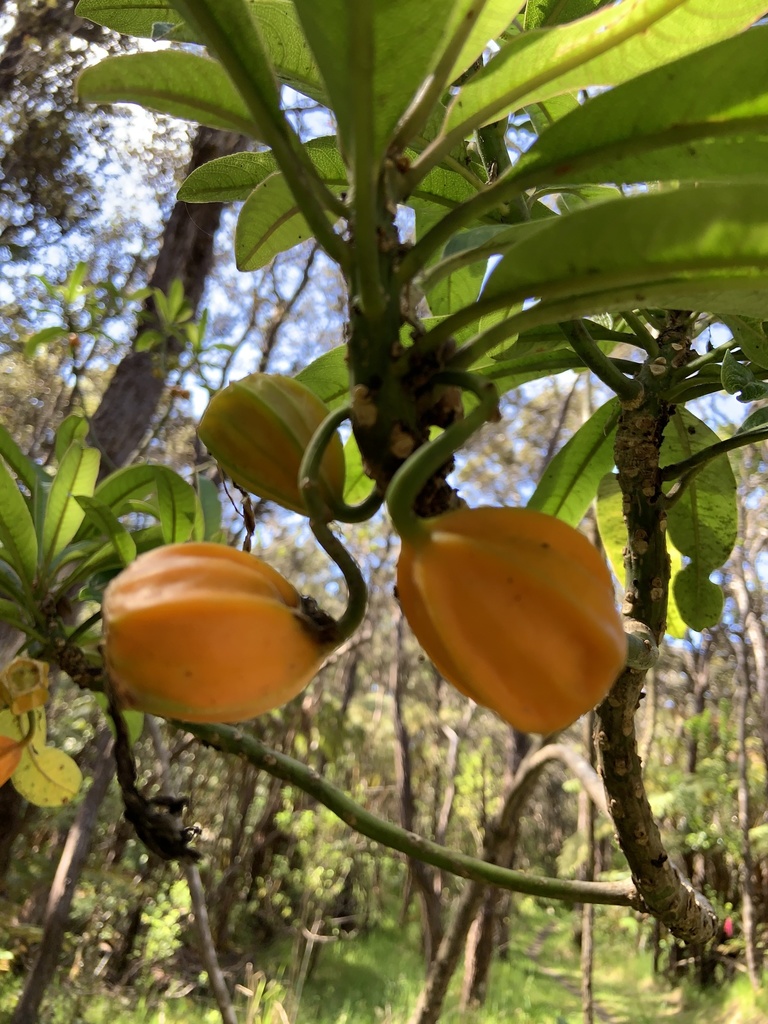
The fruit is a fleshy, bright orange berry about 1¼ inches across, broader than long, with raised horizontal ridges and a ring-like scar at the tip. It is packed with tiny seeds in soft pulp. Several other Clermontia species grow on Hawaiʻi Island, such as the small-flowered C. parviflora; flower size and color, the number of flowers per stalk and fruit shape separate them. Cyanea species are usually unbranched, with a palm-like crown of leaves.
Quick Facts
| Scientific Name | Clermontia hawaiiensis (Hillebr.) Rock |
| Family | Campanulaceae (bellflower family; Hawaiian lobelioids) |
| Plant Type | Evergreen shrub or small tree; endemic to Hawaiʻi Island |
| Mature Height | 6–15 ft (rarely to 30 ft) |
| Mature Spread | 3–8 ft |
| Growth Rate | Moderate |
| Sun Exposure | Partial shade to filtered sun; full sun in cool, cloudy uplands |
| Water Needs | High; constantly moist but well-drained soil |
| Soil Type | Humus-rich, organic soil over cinder or rocky lava |
| Soil pH | Acidic to slightly acidic |
| Bloom Time | Flowers and fruit can be found at various times of year |
| Flower Color | Greenish white to purple and magenta |
| Fall Color | None; evergreen |
| Fruit | Ribbed, bright orange berry about 1¼ in across |
| Deer Resistant | No; heavily damaged by feral pigs and rats |
| USDA Hardiness Zones | 10–12 (cool, wet uplands of Hawaiʻi) |
Native Range
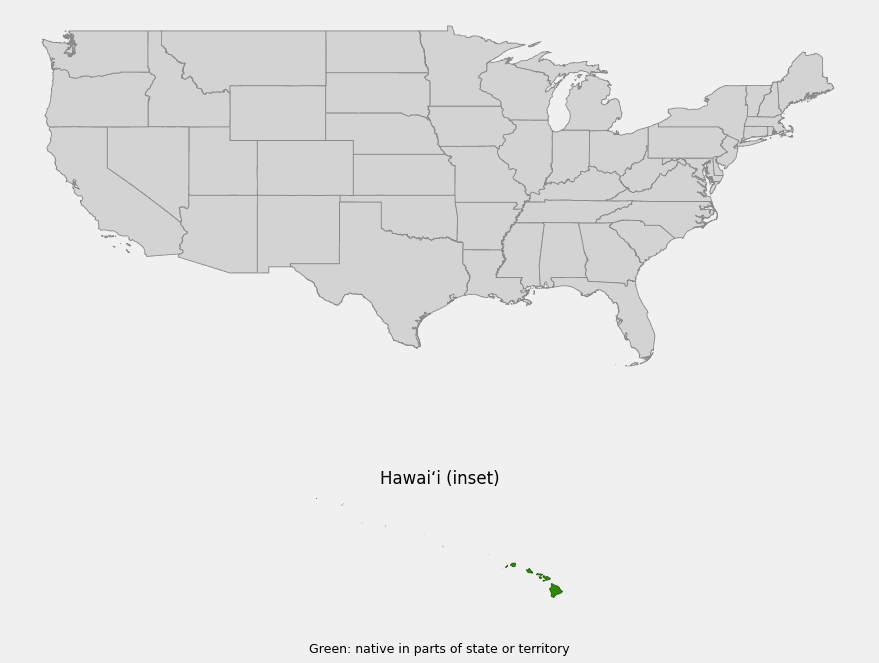
ʻŌhā kēpau is endemic to the island of Hawaiʻi and grows nowhere else in the wild. USDA PLANTS lists it as native only in Hawaiʻi. It is found on the windward, eastern side of the island, in wet forest at roughly 1,800 to 5,800 feet, especially around the town of Volcano and Kīlauea caldera. Older museum records place it as far north as the eastern slopes of Mauna Kea.
Its home is the montane wet forest of ʻōhiʻa lehua and hāpuʻu tree ferns, where rain falls through most of the year and young lava flows are covered by a thin layer of organic soil and moss. It grows in the forest understory and along forest edges, and like many Hawaiian lobelioids it can start life on mossy logs or tree-fern trunks.
Today it is most common inside fenced, protected areas such as parts of Hawaiʻi Volcanoes National Park, where feral pigs have been removed. Outside those areas, pigs rooting and trampling the forest floor, rats chewing stems and eating fruit, and invasive plants crowding out seedlings have reduced its numbers.
📋 Regional plant lists featuring ʻŌhā Kēpau: Hawaii
Growing & Care Guide
ʻŌhā kēpau can be grown, but it is a plant for cool, wet upland gardens rather than hot, dry lowlands. It does best in Hawaiʻi at middle elevations with frequent rain or mist, such as the Volcano and upper Puna areas, and it is occasionally offered by Hawaiʻi native plant nurseries. Buy only nursery-propagated plants, and never collect plants, cuttings, fruit or seeds from the wild. Hawaiʻi restricts bringing plants in from other states, so gardeners in Hawaiʻi should buy it from local native plant nurseries. Outside Hawaiʻi it is grown only in a few botanical gardens and conservatories with cool, humid, frost-free conditions.
Light
Partial shade or filtered sun under a tree canopy suits it best. In cloudy, misty uplands it tolerates more sun, but in hot, sunny lowland gardens the leaves scorch and the plant declines.
Soil & Water
Use a loose, humus-rich soil that stays moist but drains freely, such as compost or leaf mold over cinder. Keep it evenly moist and never let it dry out completely; regular rain or irrigation and high humidity are essential. Avoid heavy, waterlogged clay, which rots the soft stems.
Planting Tips
Plant it in a sheltered spot under ʻōhiʻa or tree ferns, out of strong wind, with mulch to keep the roots cool and moist. In pig country it must be fenced. Large containers work in cool, humid locations, which also make it easier to protect from slugs and rats.
Pruning & Maintenance
Little pruning is needed; remove dead or damaged branches with clean tools. Slugs and snails can strip seedlings and young leaves, and rats chew the stems and eat the fruit, so control them. Scale insects and mealybugs occasionally appear and can be treated with horticultural oil or soap. A light feeding with a balanced, slow-release fertilizer helps container plants.
Propagation
Nurseries grow it from seed cleaned from ripe fruit and sown on the surface of a fine, moist mix; the seeds are tiny and need light and steady humidity to germinate. Stem cuttings can also be rooted under mist. Home gardeners should propagate only from their own nursery-bought plants.
Landscape Uses
- Hawaiʻi native gardens: a striking endemic for cool, wet upland landscapes
- Shade and fern gardens: fits under ʻōhiʻa and among hāpuʻu tree ferns
- Specimen and container plants: candelabra branches, curved flowers and bright orange fruit
- Conservation and restoration plantings: outplanting in protected, pig-free wet forest with appropriate permits
Wildlife & Ecological Value
ʻŌhā kēpau is a good example of how Hawaiian plants and birds evolved together, and of how much that relationship has been disrupted.
For Pollinators
The curved flowers match the bills of nectar-feeding Hawaiian honeycreepers such as the ʻiʻiwi, which pollinate Clermontia. With many of these birds rare or gone, introduced birds and insects visit some flowers, but pollination in the wild is less reliable than it once was.
For Birds
Native forest birds feed on the nectar, and the fleshy orange fruits are eaten by birds, which spread the tiny seeds. Introduced birds also eat the fruit today. The shrubs give cover in the forest understory.
For Mammals
Hawaiʻi has only one native land mammal, the Hawaiian hoary bat, which forages over the forest for insects. Introduced feral pigs and rats are serious threats: pigs knock over and eat the soft-stemmed plants and root up seedlings, and rats chew the stems and eat fruit and seeds.
Ecosystem Role
As part of the wet forest understory, it adds structure and food for birds and native insects beneath the ʻōhiʻa canopy. Protecting it depends on fencing out pigs, controlling rats and slugs, and keeping invasive plants out of native forest.
Cultural & Historical Uses
ʻŌhā (also written ʻōhā wai) is the Hawaiian name for the genus Clermontia, and kēpau refers to sticky gum, pitch or resin, a fitting name for a plant with milky, sticky sap. The genus Clermontia was named by the French botanist Charles Gaudichaud-Beaupré in honor of the Marquis de Clermont-Tonnerre, a French minister of the navy. The species was first described by William Hillebrand in the 19th century and later raised to species rank by Joseph F. Rock, who studied the Hawaiian lobelioids in detail.
The Hawaiian lobelioids are the largest group of plant species to have evolved from a single ancestor on any island chain, with more than 125 species in six genera, all found only in Hawaiʻi. Studies of their DNA suggest that the whole group descends from one lobelia-like ancestor that reached the islands millions of years ago. Their curved flowers and the curved bills of honeycreepers are a classic example of plants and birds shaping each other.
Today many lobelioids are endangered or extinct. ʻŌhā kēpau is still fairly common in protected parts of Hawaiʻi Volcanoes National Park, which makes it one of the easiest Hawaiian lobelioids for visitors to see in the wild. Please enjoy it from the trail and leave the plants, fruit and seeds where they grow.
Frequently Asked Questions
Is ʻōhā kēpau endangered?
It is not federally listed under the Endangered Species Act, but it is considered vulnerable because it grows only in a limited area of Hawaiʻi Island and is damaged by feral pigs, rats, slugs and invasive plants.
Where can I see it in the wild?
In wet forest on the windward side of Hawaiʻi Island, especially in parts of Hawaiʻi Volcanoes National Park near Kīlauea, such as the forest around Thurston Lava Tube.
Can I grow it in my garden?
Yes, in cool, wet, frost-free upland gardens with humus-rich, moist soil and partial shade. It struggles in hot, dry lowlands. Buy only nursery-propagated plants from Hawaiʻi native plant nurseries, and never collect from the wild.
Is it poisonous?
There are no well-documented reports of toxicity. The milky sap is sticky and may irritate sensitive skin, and the plant is not a food plant, so keep children and pets from chewing on it.
What pollinates its flowers?
Its curved flowers evolved to be pollinated by nectar-feeding Hawaiian honeycreepers with long, curved bills, such as the ʻiʻiwi.

Looking for a nursery that carries ʻŌhā Kēpau?
Browse our native plant nursery directory: Hawaii

