
Sickle Spleenwort (Asplenium polyodon)
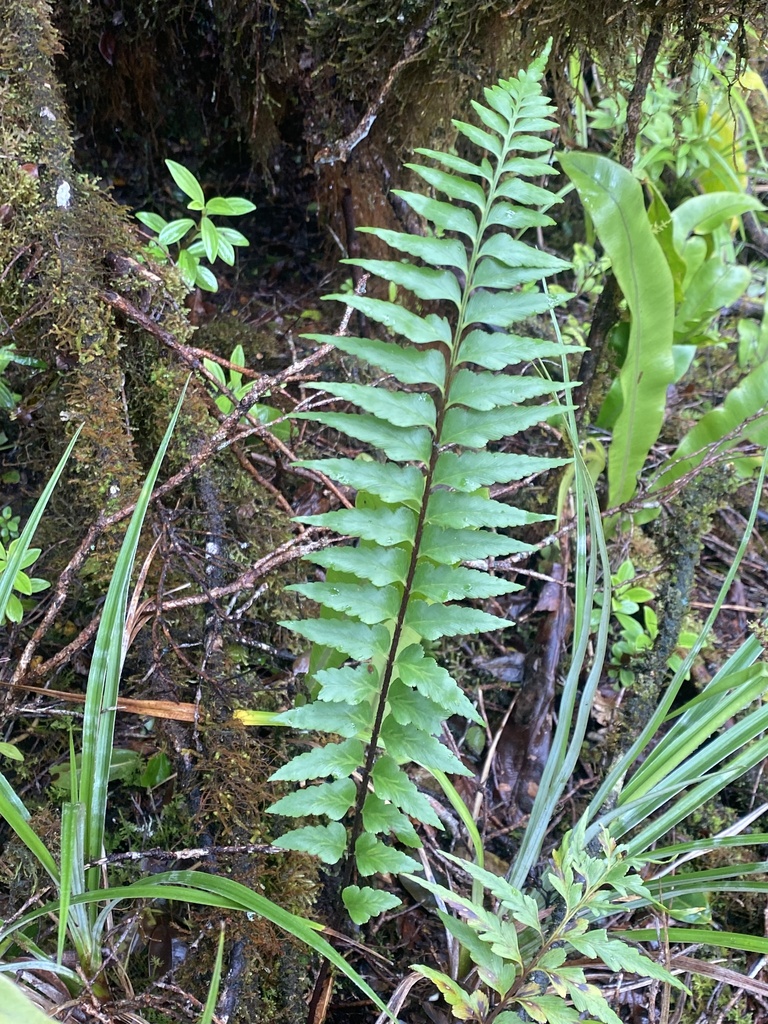
Asplenium polyodon, known as Sickle Spleenwort or mare’s tail fern, is a native fern of Hawaiʻi’s mountain forests. It grows mostly as an epiphyte, perched on the trunks and branches of trees, with long, arching to drooping fronds divided into a neat ladder of curved, sharply toothed leaflets. iNaturalist and some Hawaiian plant lists record the Hawaiian name pūnana manu for it, a name also applied to other nest-forming aspleniums.
Unlike many Hawaiian plants, sickle spleenwort is indigenous rather than endemic. It is native to Hawaiʻi and also grows widely across the tropical and warm-temperate Old World, from Africa and the Indian Ocean through Southeast Asia to Australia, New Zealand and the Pacific islands. In New Zealand it is called petako.
In Hawaiʻi it is a characteristic fern of mesic and wet forests on all the main islands, where it shares tree trunks with mosses, filmy ferns and other epiphytes. It is not a beginner’s plant, but it can be grown in a cool, humid shade garden or mounted on a tree fern. This guide covers how to recognize it, where it grows and how to grow it.
Identification
Sickle spleenwort is one of several native Hawaiian Asplenium species. Its once-divided fronds with curved, toothed pinnae and its habit of hanging from tree trunks make it fairly easy to recognize.
Growth Habit
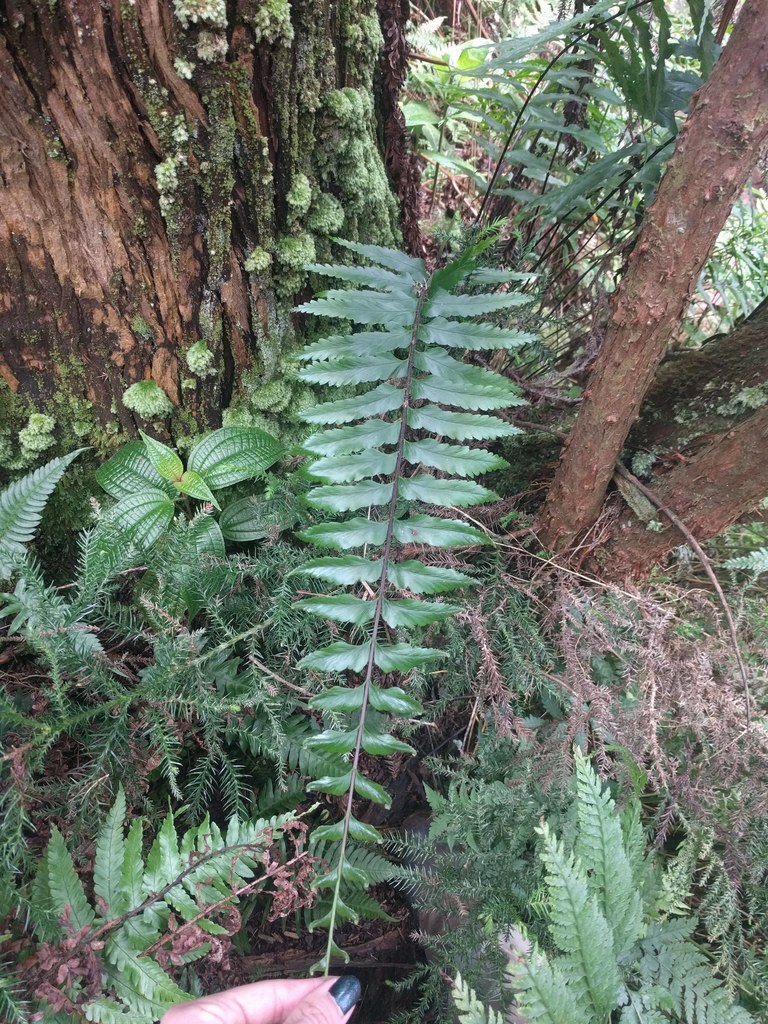
Plants grow from a short, scaly rhizome attached to bark, mossy rock or forest soil. Fronds arise in a loose tuft and arch outward or hang down, usually 1 to 3 feet long. Epiphytic plants on trunks often have pendulous fronds, while those on the ground are more upright.
Fronds
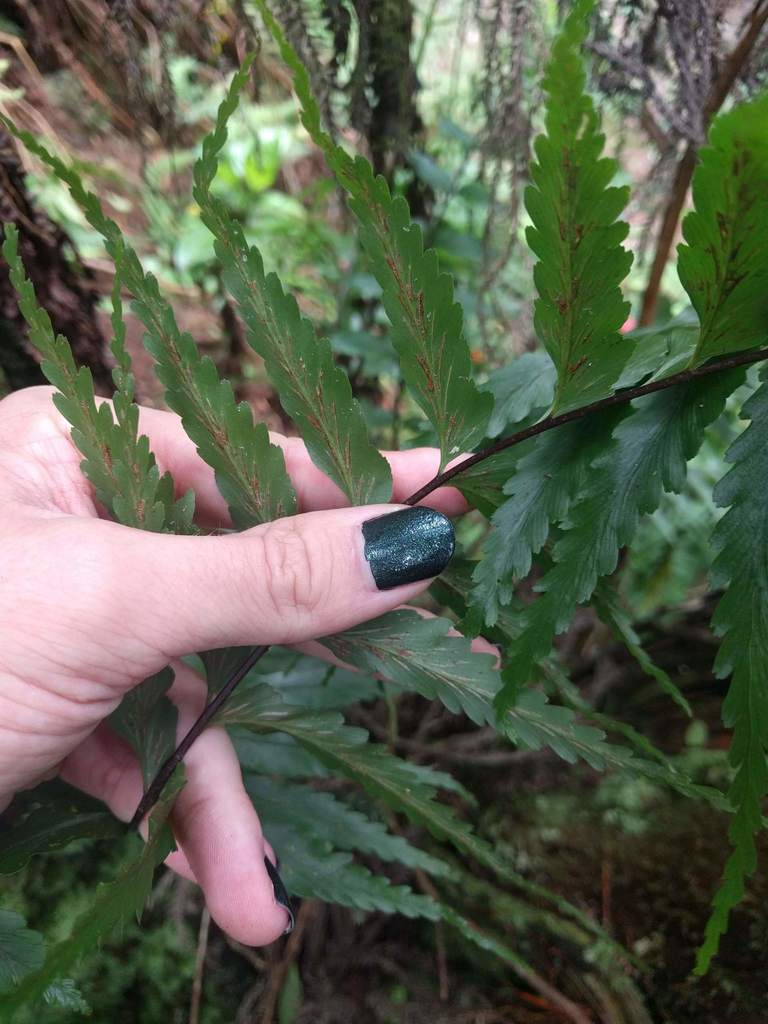
Each frond is once-pinnate, with a dark, shiny stalk and midrib. The pinnae (leaflets) are numerous, leathery and glossy green, about 1 to 3 inches long, and curved upward like a sickle. Their edges are sharply and often doubly toothed, which is the origin of the name polyodon, meaning many-toothed. The lower side of each pinna base is cut away more than the upper side, giving the pinnae a lopsided look.
Sori
On the underside of fertile fronds, long, narrow sori (clusters of spore cases) run along the side veins in a herringbone pattern, each covered at first by a thin flap called an indusium. Mature sori turn rusty brown.
Variation
The species is variable, and several varieties have been described across its wide range, differing in frond size, scaliness and how deeply the pinnae are toothed. Hawaiian plants can range from small, stiff fronds in exposed sites to large, drooping fronds in deep shade.
Similar Species
The native ʻĒkaha (Bird’s Nest Fern) has large, undivided strap-shaped fronds. Other native spleenworts, such as Maidenhair Spleenwort, are much smaller. Native sword ferns (Nephrolepis) have pinnae with smooth or finely toothed edges and round sori near the margins rather than long lines along the veins.
Quick Facts
| Scientific Name | Asplenium polyodon G. Forst. |
| Family | Aspleniaceae (spleenwort family) |
| Plant Type | Evergreen epiphytic or rock-dwelling fern; indigenous to Hawaiʻi |
| Mature Height | Fronds 1–3 ft long, arching or hanging |
| Mature Spread | 1–3 ft |
| Growth Rate | Slow to moderate |
| Sun Exposure | Part shade to full shade |
| Water Needs | High; constant moisture and humidity |
| Soil Type | Bark, tree fern fiber, moss or very open, humus-rich mix |
| Soil pH | About 5.0–6.5 |
| Bloom Time | None; reproduces by spores |
| Flower Color | None (fern) |
| Fall Color | None; evergreen |
| Fruit | None; linear sori with spores on frond undersides |
| Deer Resistant | Largely; high epiphytes are out of reach of browsers |
| USDA Hardiness Zones | 10–12 (cool, humid conditions) |
Native Range
Sickle spleenwort is indigenous to Hawaiʻi, meaning it arrived on its own and is also native elsewhere. In the Hawaiian Islands it grows on all the main islands. Outside Hawaiʻi its native range covers much of the Old World tropics and warm-temperate regions, including Africa, Madagascar, Southeast Asia, Australia, New Zealand and many Pacific islands; USDA PLANTS also records it from Guam and Palau.
In Hawaiʻi it grows mainly in mesic and wet forests at middle to high elevations, where it perches on trunks and branches of ʻŌhiʻa Lehua, Koa and tree ferns, and sometimes on mossy rocks, banks and fallen logs. It favors places with frequent cloud, mist and rain.
It is not federally listed and remains fairly common in intact native forest, such as the Alakaʻi on Kauaʻi and the forests of Hawaiʻi Volcanoes National Park. As an epiphyte it depends on mature trees, so it declines where native forest is cleared or invaded by weeds, and it is also vulnerable to the loss of ʻōhiʻa trees to Rapid ʻŌhiʻa Death.
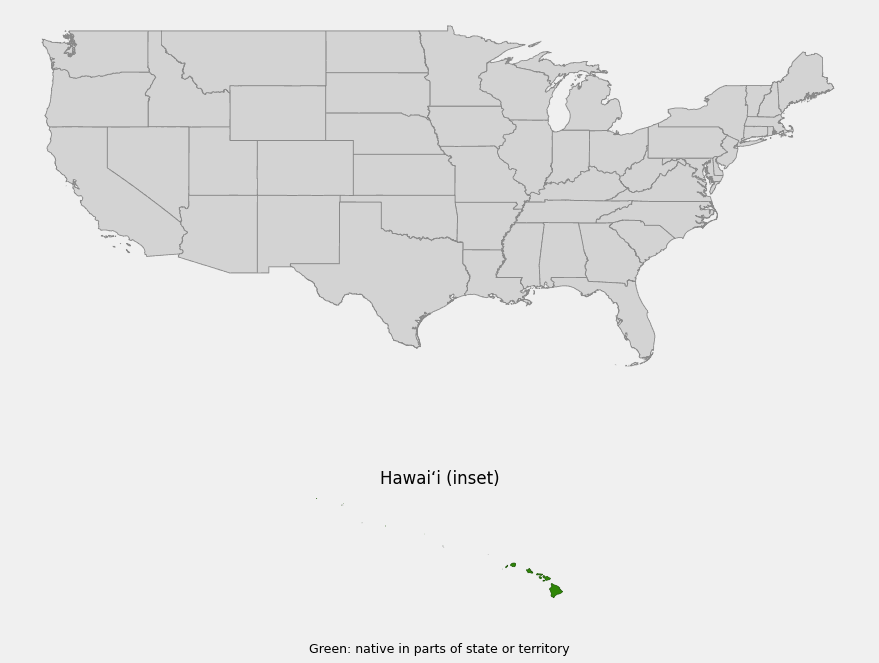
📋 Regional plant lists featuring Sickle Spleenwort: Hawaii
Growing & Care Guide
Sickle spleenwort is not often sold, and like most epiphytic ferns it is hard to keep outside cool, humid forest conditions. In Hawaiʻi it can be grown in shady upland gardens or in a shade house, mounted on a tree fern log or in a hanging basket. It rarely does well in hot, dry lowland gardens. Buy plants or spores only from Hawaiʻi native plant nurseries or fern growers, and don’t strip plants from trees in the wild. Hawaiʻi restricts bringing plants in from other states.
Light
Give it bright, indirect light to full shade. Direct midday sun scorches the fronds. A spot under a tree canopy, on the shady side of a tree fern trunk or in a shade house works well.
Soil & Water
Grow it on a slab of tree fern fiber or cork, or in a basket with a very open mix of bark, chopped sphagnum moss and a little compost. The roots need air as well as moisture. Keep it constantly moist and humid by misting or watering often in dry weather, but never let the mix stay soggy. Rainwater or low-mineral water is best.
Planting Tips
To mount a plant, tie the rhizome firmly against the mount with fishing line or soft wire and pack a little moss around the roots until they attach. In an upland garden you can establish it on the trunk of a hāpuʻu (tree fern) or a mossy log. Shelter it from wind, which dries the fronds.
Pruning & Maintenance
Trim old, brown fronds at the base. Feed sparingly, if at all, with a very dilute fertilizer, since epiphytic ferns are sensitive to salts. Watch for slugs and scale insects.
Propagation
Grow it from spores sown on sterile, moist medium under cover in bright shade; spore-grown plants take a year or more to reach a useful size. Large clumps can sometimes be divided by cutting the rhizome into pieces with several fronds and roots each.
Landscape Uses
- Shade and fern gardens: an elegant arching fern for cool, humid upland gardens
- Mounted epiphyte: grown on tree fern slabs, logs or living tree fern trunks
- Hanging baskets: fronds drape gracefully over the sides
- Forest restoration: part of the epiphyte layer of restored wet forest
- Education: a widespread indigenous fern that shows how ferns reached remote islands
Wildlife & Ecological Value
Epiphytic ferns like sickle spleenwort are part of the hanging gardens that make Hawaiian rainforests so lush.
For Pollinators
Ferns do not flower and are not visited by pollinators. Their fronds and the moss around them do shelter many small native insects, spiders and snails.
For Birds
Native forest birds such as the ʻapapane, ʻamakihi and ʻelepaio search epiphytic ferns and mossy trunks for insects and spiders.
For Mammals
Hawaiʻi’s only native land mammal, the Hawaiian hoary bat, forages for insects in the forest canopy. Because it grows on trunks, sickle spleenwort is less exposed to pigs and goats than ground plants.
Ecosystem Role
Epiphytes catch and hold rain, mist and fallen leaf litter, creating small pockets of moisture and organic matter high above the ground. Sickle spleenwort and its companions add to the structure and humidity of the forest and provide habitat for many invertebrates.
Cultural & Historical Uses
The species was described in 1786 by Georg Forster, the naturalist who sailed with Captain James Cook on his second Pacific voyage, from plants collected in the South Pacific. Its name comes from Greek words meaning many-toothed, after the toothed pinnae.
Ferns reached Hawaiʻi more readily than most plants, because their dust-like spores can travel thousands of miles on the wind. Indigenous ferns such as sickle spleenwort show this clearly: the same species grows on islands and continents across a huge part of the globe.
In New Zealand, where it is called petako, it is a familiar epiphyte on trees such as rimu. In Hawaiʻi it is part of the native fern flora of the upland forests, a group of well over 100 native fern species that helps define the character of the islands’ rainforests.
Frequently Asked Questions
Is sickle spleenwort native to Hawaiʻi?
Yes. It is indigenous to Hawaiʻi, meaning it is native there and also native elsewhere, across much of the Old World tropics, Australia, New Zealand and the Pacific.
Does sickle spleenwort grow on trees?
Usually. It is mainly an epiphyte that grows on the trunks and branches of trees and tree ferns, though it also grows on mossy rocks, banks and logs.
Can I grow sickle spleenwort?
Yes, with effort. It needs shade, high humidity, constant moisture and an airy, bark-based mix or a mount, so it does best in cool upland gardens or shade houses in Hawaiʻi. It usually struggles in hot, dry places.
Is sickle spleenwort harmful to the tree it grows on?
No. Epiphytes use trees only for support. They take water and nutrients from rain, mist and debris, not from the tree.
How do I propagate sickle spleenwort?
Grow it from spores sown on moist, sterile medium, or carefully divide a large clump. Spore-grown plants are slow but reliable.

Looking for a nursery that carries Sickle Spleenwort?
Browse our native plant nursery directory: Hawaii

