
Pilo (Coprosma montana)
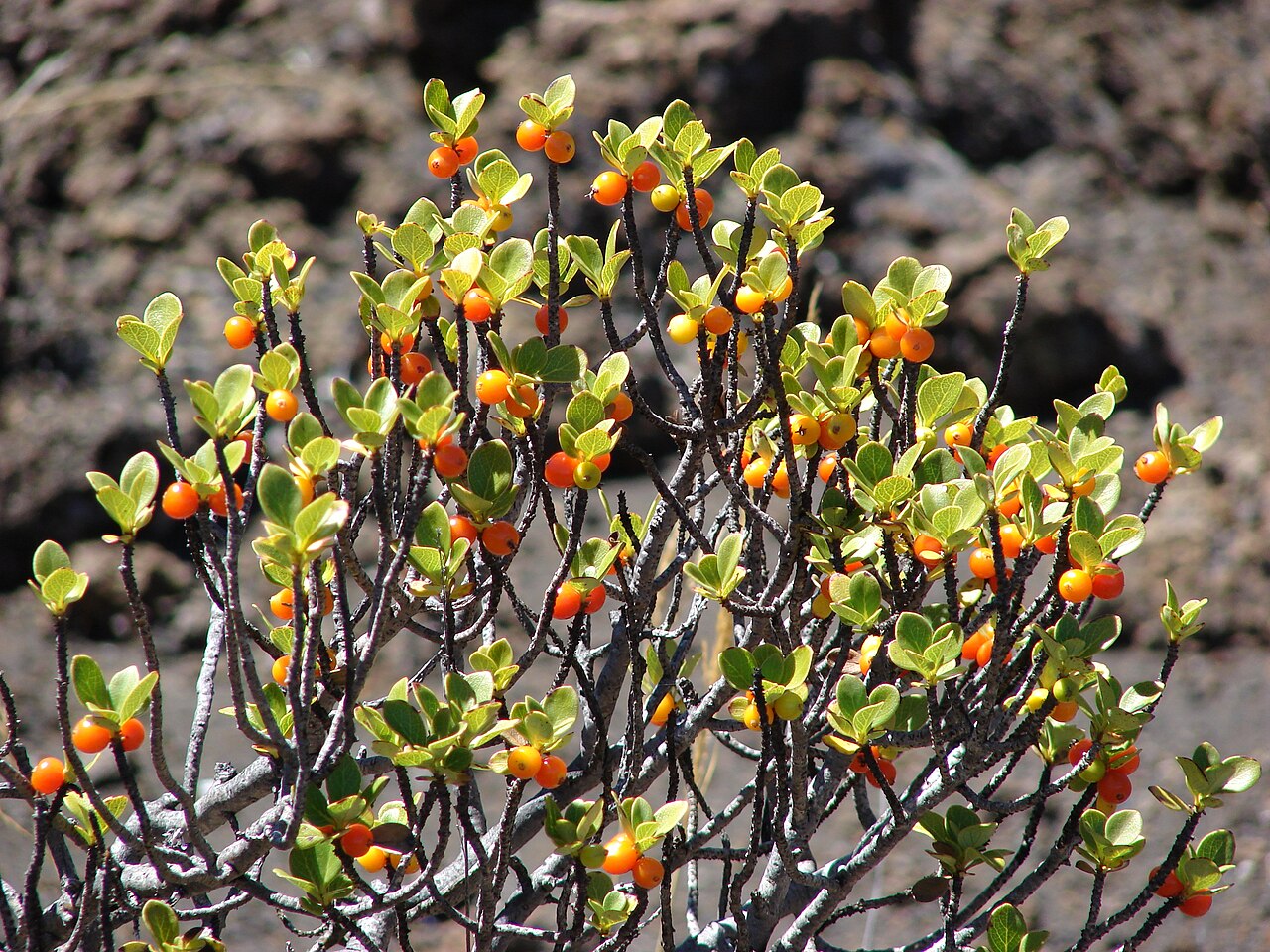
Coprosma montana, known in Hawaiian as Pilo or Hupilo, and in English as the alpine mirrorplant, is an endemic Hawaiian shrub or small tree of the high mountains of East Maui and Hawaiʻi Island. It has small, thick, rounded leaves and, on female plants, masses of glossy orange to red fruit that brighten the subalpine shrublands of Haleakalā, Mauna Kea, Mauna Loa and Hualālai.
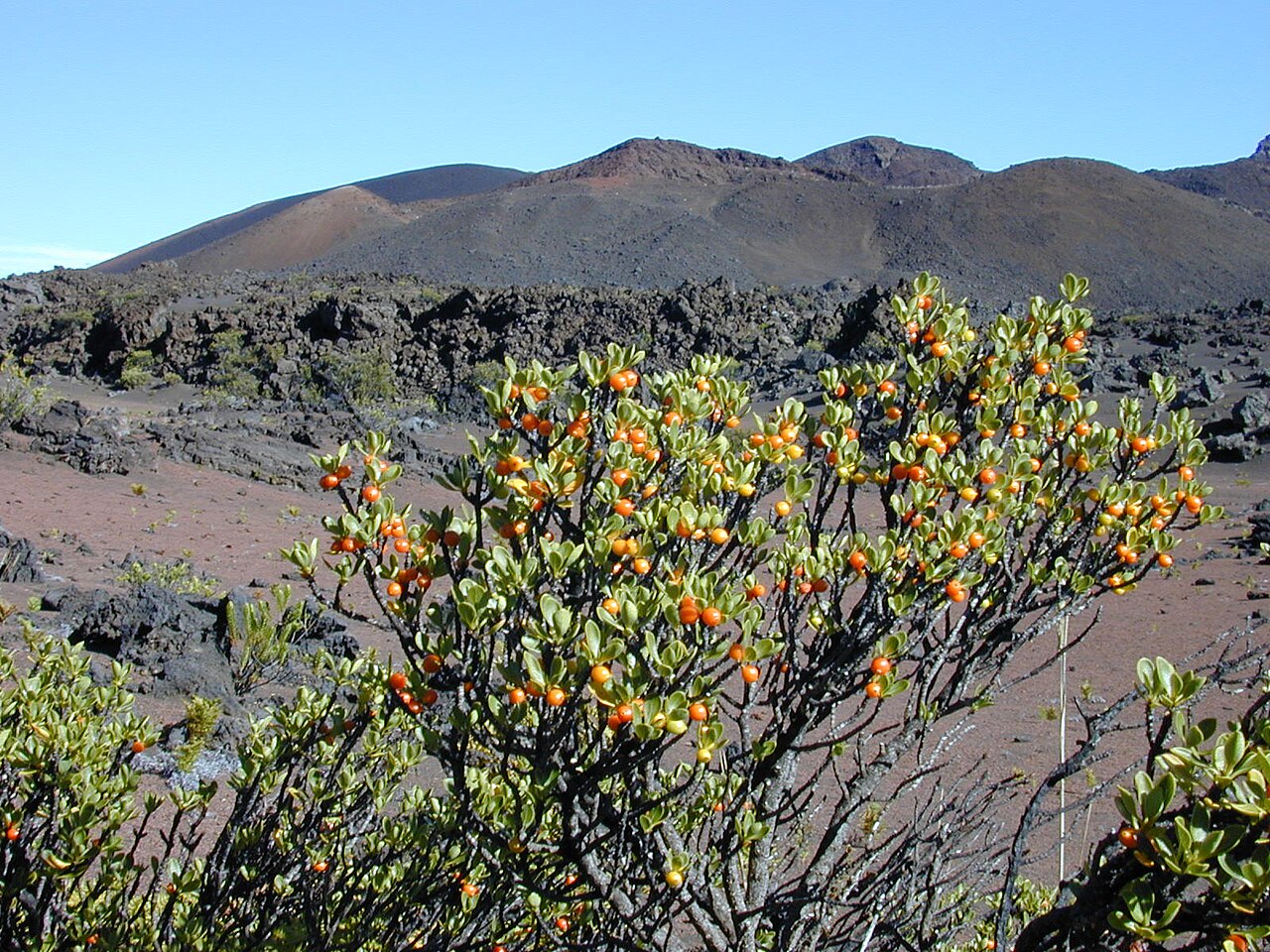
Pilo grows higher than almost any other native Hawaiian woody plant, from about 6,000 to 10,000 feet, and it is often one of the dominant shrubs of subalpine woodland and shrubland, together with Māmane and Pūkiawe. Its fruit is a major food of the nēnē, the endangered Hawaiian goose and state bird.
Despite its high-elevation home, pilo is a hardy, drought- and wind-tolerant plant that native plant growers report will also grow at lower elevations. This guide covers how to recognize it, where it grows, how to grow it, and its role in Hawaiʻi’s mountain ecosystems.
Identification
Hawaiʻi has about thirteen endemic Coprosma species, all called pilo, in the coffee family (Rubiaceae). The genus name means “dung smell,” because the crushed leaves of some species give off a sulfurous, rotten-cabbage odor. Other Hawaiian relatives include the forest Pilo (Coprosma ochracea) and the tiny creeping Coral Bead Plant.
Growth Habit
Pilo is a much-branched, often sprawling evergreen shrub, usually 3 to 10 feet tall, that becomes a small tree up to about 15 feet or more in sheltered spots. In windswept alpine areas it may be low and spreading. Its stiff, gray-barked branches are often crowded with short leafy side shoots.
Leaves
The leaves are opposite, small (about ½ to 1½ inches long), thick and somewhat leathery, broadly oval to nearly round, with a short stalk. They are dark to yellowish green, sometimes with reddish margins, and the leaf pairs are joined at the base by small stipules, typical of the coffee family. The dense foliage gives the plant a fine to medium texture.
Flowers
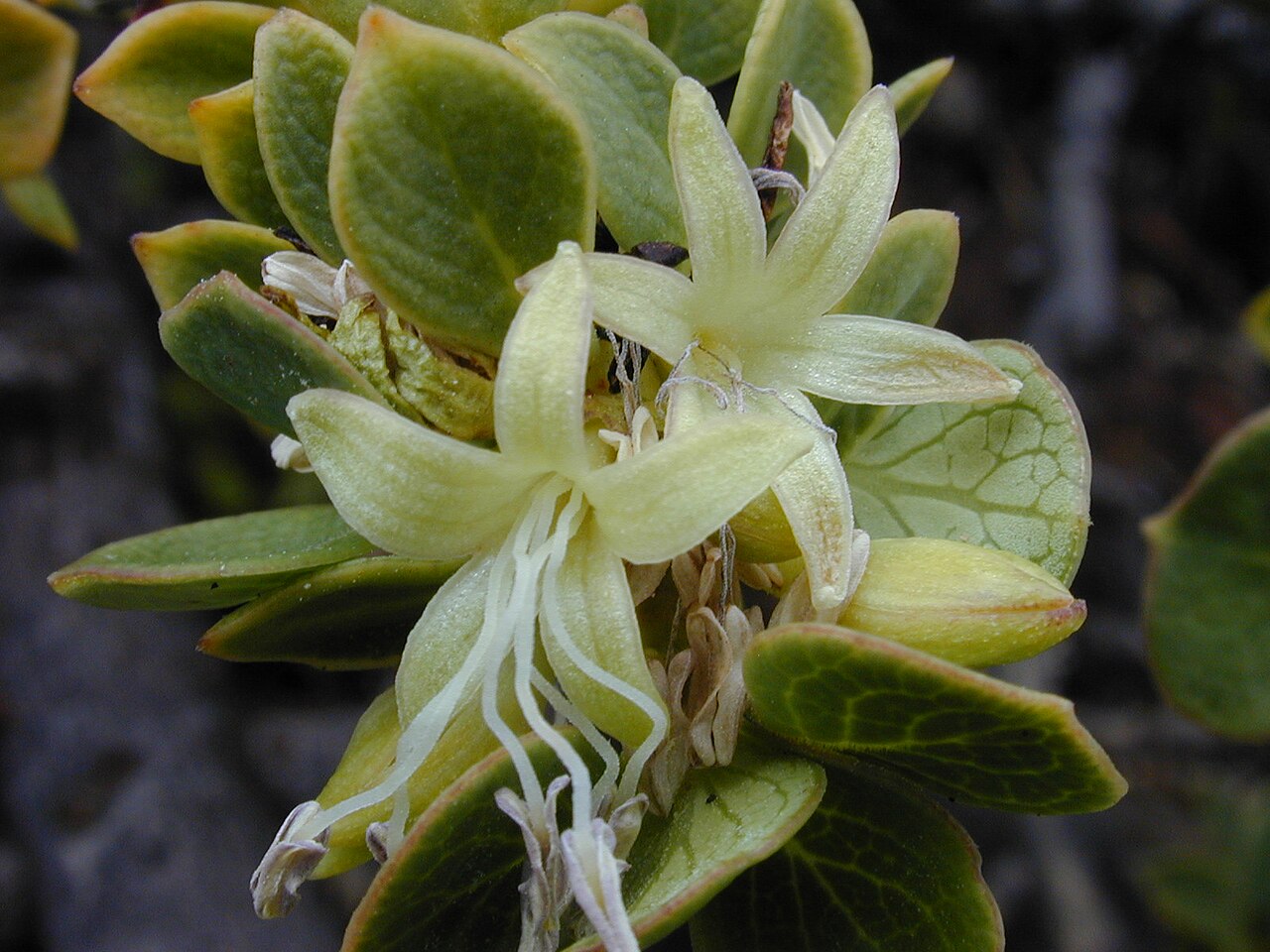
Male and female flowers grow on separate plants. The flowers are small, greenish white to pale yellow, and star-shaped, with male flowers carrying dangling stamens and female flowers long, threadlike stigmas that catch wind-blown pollen. They are not showy.
Fruit
Female plants produce small, round, fleshy drupes about ¼ to ⅓ inch across that ripen yellow-orange to bright orange or red. Borne in large numbers along the branches, they make a striking display and are eaten by birds, including nēnē.
Similar Species
Pūkiawe has tiny, needle-like leaves and white, pink or red fruit. ʻŌhelo (Vaccinium) has alternate, toothed leaves and red, juicy berries. ʻAiakanēnē or kūkaenēnē (Coprosma ernodeoides), a low, creeping pilo of lava and cinder, has tiny needle-like leaves and shiny black fruit.
Quick Facts
| Scientific Name | Coprosma montana Hillebr. |
| Family | Rubiaceae (coffee family) |
| Plant Type | Evergreen shrub to small tree; endemic to Hawaiʻi |
| Mature Height | 3–10 ft (occasionally a small tree to 15 ft or more) |
| Mature Spread | 3–8 ft |
| Growth Rate | Slow to moderate |
| Sun Exposure | Full sun |
| Water Needs | Low to medium; drought tolerant once established |
| Soil Type | Well-drained cinder, rocky or organic soils |
| Soil pH | Acidic to neutral, about 5.0–7.0 |
| Bloom Time | Mainly spring |
| Flower Color | Greenish white to pale yellow (not showy) |
| Fall Color | None; evergreen |
| Fruit | Small, round orange to red drupes on female plants |
| Deer Resistant | No; browsed by goats, sheep and deer |
| USDA Hardiness Zones | 9–11 (tolerates light frost at high elevation) |
Native Range
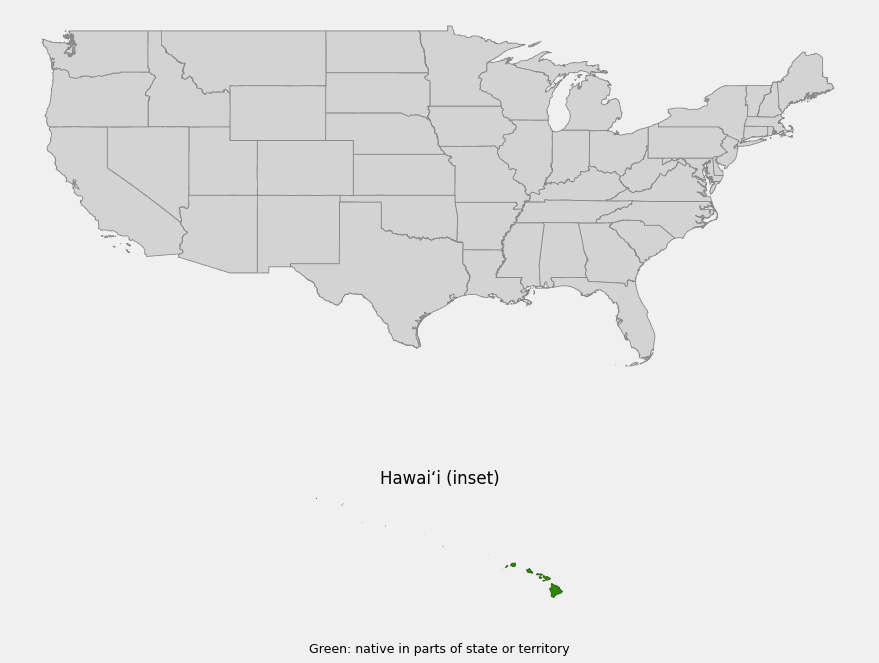
Pilo is endemic to the Hawaiian Islands. USDA PLANTS records it only from Hawaiʻi, and it grows on East Maui (Haleakalā) and Hawaiʻi Island (Mauna Kea, Mauna Loa and Hualālai). On Maui it is common in Haleakalā National Park, at Polipoli and in the Kahikinui area; most iNaturalist records come from Haleakalā.
It grows mainly from about 6,000 to 10,000 feet elevation, in subalpine woodland and shrubland, on lava flows and cinder, along gulches, and occasionally in upper mesic forest. It is often a dominant component of the vegetation with Māmane, Pūkiawe, ʻōhelo and ʻAʻaliʻi, and it grows around the rim and on the floor of Haleakalā crater near ʻĀhinahina.
Pilo is not federally listed; on the USFWS ECOS database no Coprosma montana taxon is listed. It remains common in protected areas. Like other subalpine plants, it was heavily damaged by feral goats and sheep, and it recovers well where they have been fenced out. It also resprouts after fire.
📋 Regional plant lists featuring Pilo: Hawaii
Growing & Care Guide
Pilo is a tough, attractive shrub for sunny upland gardens in Hawaiʻi, and nursery growers report that, although it is a high-elevation plant, it will also grow at lower elevations. It performs best in cool, upland gardens with sharp drainage. Buy plants from Hawaiian native plant nurseries; don’t collect from parks or reserves. Hawaiʻi restricts bringing plants in from other states, and pilo is not available on the mainland.
Light
Plant pilo in full sun. In its subalpine home it grows in open, bright conditions, and in shade it becomes leggy and fruits poorly.
Soil & Water
Give it well-drained soil: cinder, rocky soil or an organic soil with good drainage. Water regularly while young; once established it is drought tolerant and needs only occasional watering in dry spells. Avoid soggy soil, especially in warm lowland gardens, where root rot is more likely.
Planting Tips
Pilo tolerates wind well, so it can be used on exposed sites and as an informal hedge or screen. Because male and female flowers are on separate plants, plant several to make sure you get a fruiting female and a pollinating male. Combine it with other upland natives such as māmane, pūkiawe and ʻaʻaliʻi.
Pruning & Maintenance
Little pruning is needed; light shaping keeps it compact. Fertilize lightly, if at all. In rural upland areas, protect young plants from goats, sheep and deer.
Propagation
Grow pilo from seed cleaned from ripe orange fruit and sown in a well-drained mix; germination can be slow and uneven. Semi-hardwood cuttings can also be rooted under mist. Cuttings let you choose female plants for fruit.
Landscape Uses
- Upland native gardens: a tough evergreen shrub with colorful orange fruit
- Windbreaks and hedges: tolerates wind and drought on exposed sites
- Nēnē habitat: fruit is a major food of the Hawaiian goose
- Subalpine restoration: a dominant shrub of Haleakalā and Mauna Kea shrublands
- Rock and cinder gardens: thrives in sharp drainage and full sun
Wildlife & Ecological Value
Pilo is a keystone shrub of Hawaiʻi’s high mountains, feeding native birds and helping shelter subalpine plants and insects.
For Pollinators
Pilo is wind-pollinated, like other Coprosma; its long, dangling stamens and stigmas are built to shed and catch pollen in the mountain wind, so it does not depend on bees.
For Birds
The orange fruit is one of the main foods of the nēnē, the endangered Hawaiian goose, in its upland range on Haleakalā and Hawaiʻi Island. Other native and introduced birds also eat the fruit and spread the seeds.
For Mammals
Hawaiʻi’s only native land mammal, the Hawaiian hoary bat, forages over subalpine shrublands. Feral goats and sheep browse pilo heavily, and their removal from Haleakalā and parts of Mauna Kea has allowed it to recover.
Ecosystem Role
As one of the dominant shrubs of subalpine shrubland, pilo shelters other plants, holds cinder and soil, and adds organic matter on young lava. Its fruit supports nēnē and other birds, and its foliage hosts native insects.
Cultural & Historical Uses
Pilo is the Hawaiian name shared by the native Coprosma species, and hupilo is another name recorded for this one. One of its relatives, the creeping ʻaiakanēnē or kūkaenēnē (“nēnē food” and “nēnē droppings”), is also named for the goose, a reminder of how closely these geese and pilo shrubs are linked. The bright orange fruit of pilo is a familiar sight to hikers on Haleakalā.
The species was described by William Hillebrand, the German physician and botanist whose Flora of the Hawaiian Islands (1888) was the first comprehensive account of Hawaiian plants. The epithet montana means “of the mountains.” Its link to the nēnē has made pilo important in nēnē recovery work in Haleakalā National Park.
Today pilo is a characteristic plant of the trails of Haleakalā National Park, including the Halemauʻu Trail and the crater floor, and of the slopes of Mauna Kea, where restoration programs work to recover subalpine shrubland after decades of browsing by feral animals.
Frequently Asked Questions
Is pilo native to Hawaiʻi?
Yes. Coprosma montana is endemic to the Hawaiian Islands. It grows on East Maui and Hawaiʻi Island, mainly from about 6,000 to 10,000 feet.
Is pilo fruit edible?
The fruit is not a common food, and pilo is not grown for fruit. It is an important food for nēnē and other birds, so it’s best left for wildlife.
Why doesn’t my pilo have fruit?
Pilo has male and female flowers on separate plants, and only females bear fruit. You need at least one male plant nearby for pollination.
Can I grow pilo at low elevation?
Growers report it will grow at lower elevations, though it is a high-elevation plant and does best in cool, sunny, well-drained upland gardens.
Is pilo endangered?
No. It is not federally listed and is common in subalpine areas on Haleakalā and the volcanoes of Hawaiʻi Island.

Looking for a nursery that carries Pilo?
Browse our native plant nursery directory: Hawaii

