Plan a Native Garden With a Mown Path: Width, Turns, and Maintenance Access
Last updated: November 7, 2026
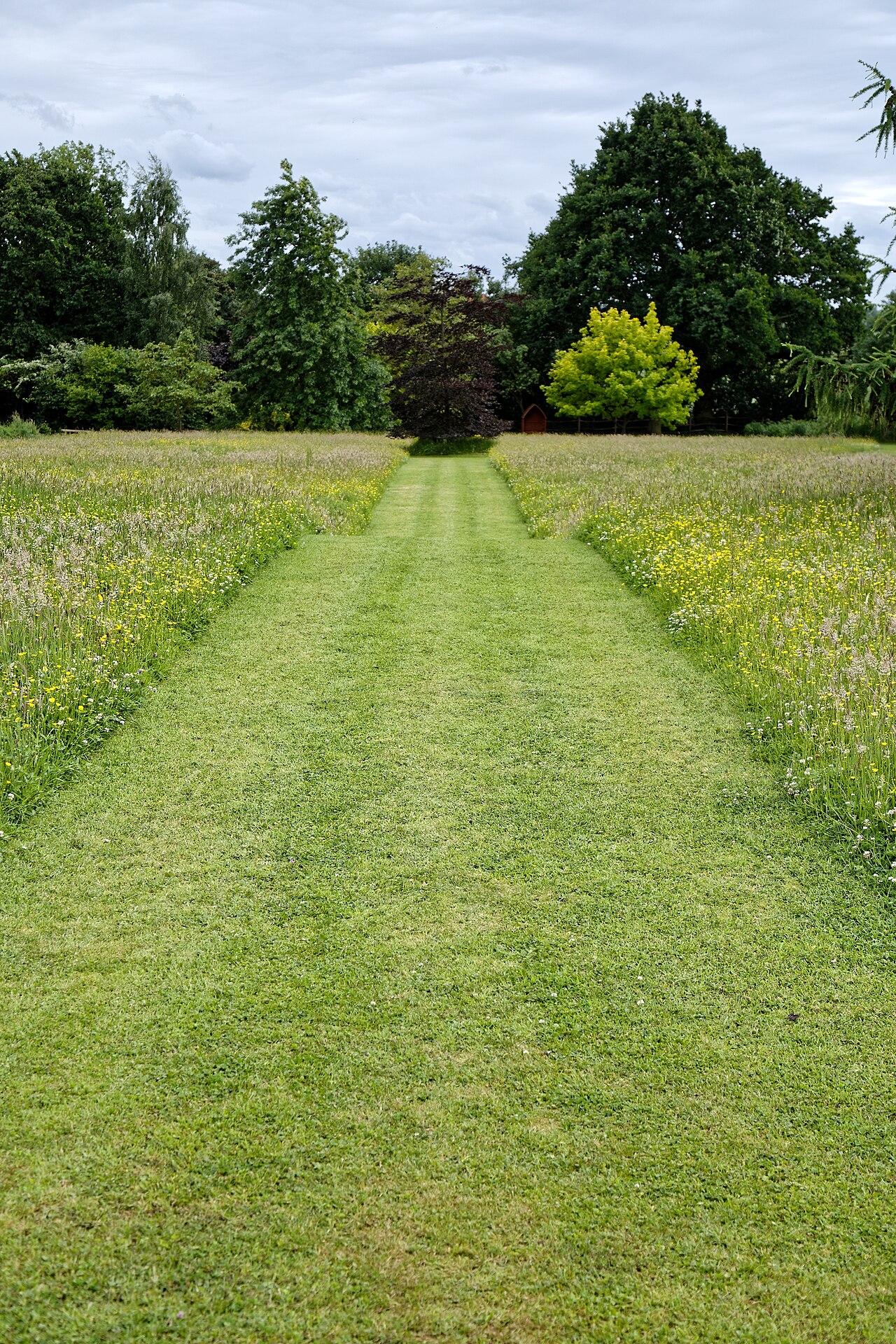
When you convert part of a lawn to native plants, the easiest path is the strip of lawn you choose not to convert. A mown path costs nothing to build, and you can widen, narrow, or reroute it in a single afternoon.
It also does real work. The path is how you reach the planting to weed it, carry a bucket of mulch in, and cut the bed back in late winter. A path that is too narrow, too twisty, or too far from the middle of the bed makes all of those jobs harder.
This plan covers how wide to make a mown path, how to shape its turns so a mower can follow them, and how to space paths so every part of the planting stays within reach.
Plan at a Glance
| Site | A sunny lawn area being converted to a native bed or small meadow |
| Size | Works from a 15-by-20-foot bed up to a backyard meadow |
| Sun | Full sun to part sun for the example palette |
| Soil | Average lawn soil; avoid routing paths through low, wet spots |
| Maintenance | Mow the path every week or two in the growing season; edge it two or three times a year |
| Best regions | Layout works anywhere; plant choices below suit much of the eastern and central US, with western swaps |
Assess the Site Before You Draw a Line
Walk the area with your mower before you plan anything. Note where you already step, where the hose reaches, and where you will haul mulch or compost from.
Mark low spots that hold water after rain. A path through a soggy dip turns into ruts, and mowing wet turf tears it up, so route paths along slightly higher ground where you can.
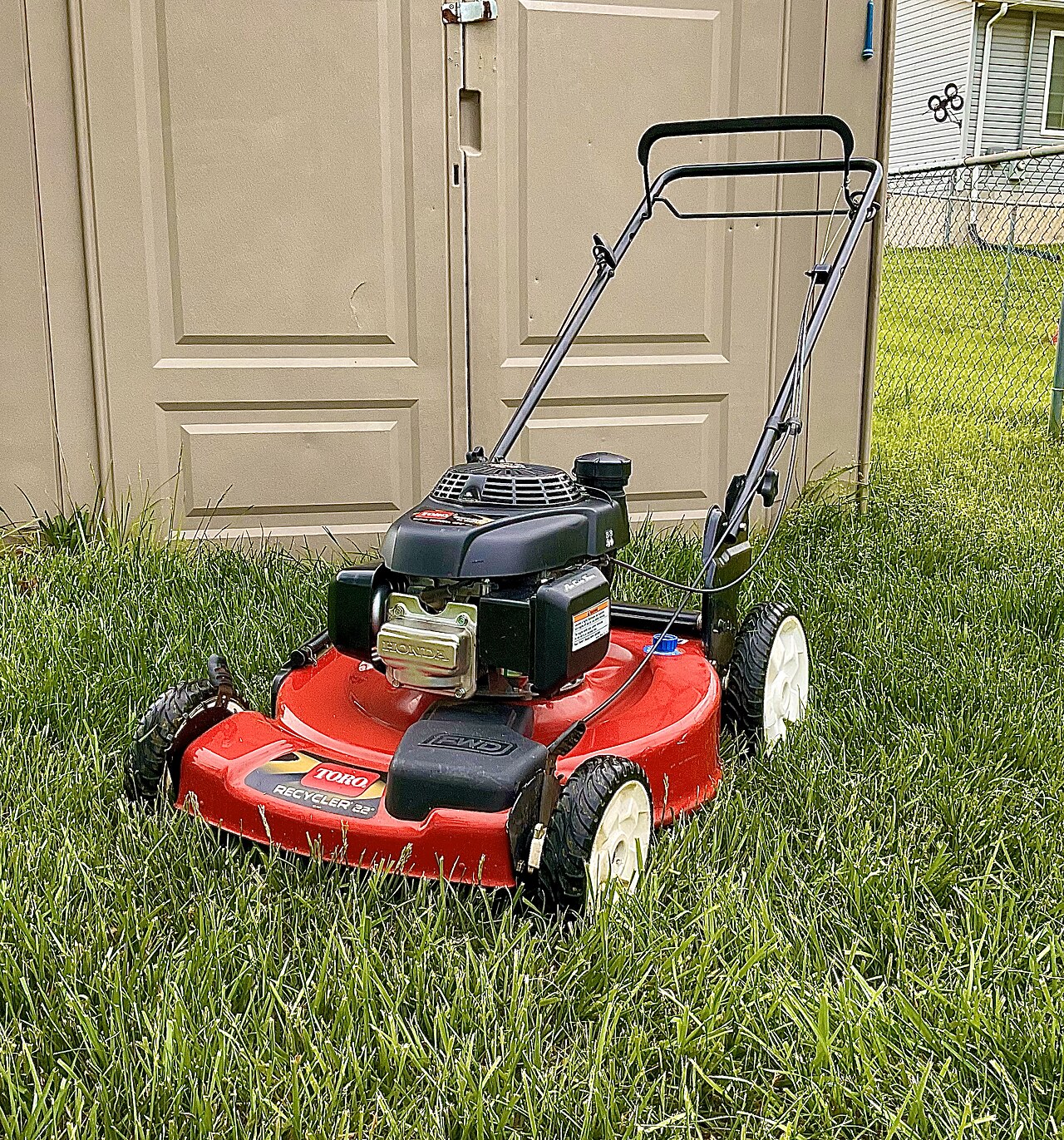
Measure your mower’s cutting width. Walk-behind mowers are sold by deck size, such as the 22-inch model below, and the size is usually printed on the deck or in the manual. That one number shapes every path width in the plan.
Set Path Width by Use
NC State Extension’s Extension Gardener Handbook chapter on landscape design describes a path hierarchy. Main paths that carry two people side by side are 4½ to 5 feet wide. Secondary paths are 2½ to 3 feet, and paths meant for one person can be 1 to 2½ feet.
For a mown path, round those widths to whole mower passes. Two passes with a 22-inch deck, overlapping a few inches, gives a path a little over 3 feet wide. Three passes gives close to 5 feet.
Then add room for plants that lean. Tall native grasses and flowers bend toward open ground, especially after rain, and a 3-foot path can shrink to 2 feet by late summer. Either plant short species along the edge or add half a mower pass of width.
Path Width Planner
Widths from the NC State path hierarchy, rounded to passes of a 21- to 22-inch mower.
| Path type | Use | NC State width | Mower passes |
|---|---|---|---|
| Main path | Two people, wheelbarrow, garden cart | 4½–5 ft | 3 passes |
| Secondary path | One person with tools | 2½–3 ft | 2 passes |
| Access trail | Weeding and cutback only | 1–2½ ft | 1–2 passes |
| Edge strip | Frames the bed against lawn or paving | At least 1 pass | 1 pass |
Shape Turns a Mower Can Follow
NC State’s handbook advises avoiding sharp angles, tight corners, narrow strips of lawn, and irregular edges that are hard to mow. Those details also make a native bed look messy, because the plants next to them get scalped or skipped.
Lay out curves with a garden hose and push the mower along them before you dig or smother anything. If you have to stop, back up, or lift the deck to get around a bend, widen the curve.
Avoid dead ends that force you to turn the mower around in a tight space. A loop, or a path that ends at a wider landing such as a bench pad, is easier to maintain.
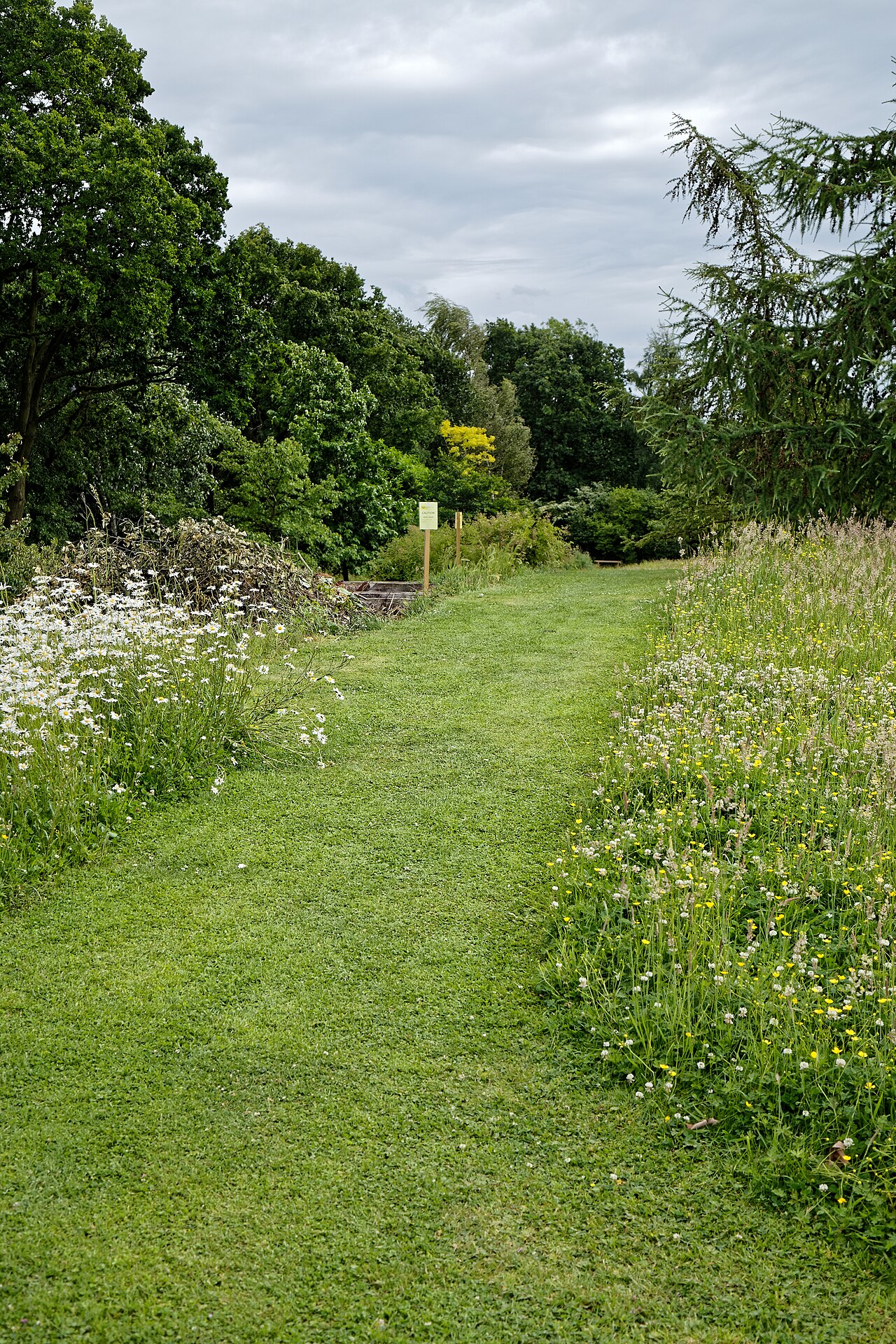
Space Paths So Every Plant Is Within Reach
University of Minnesota Extension uses arm’s reach to size raised beds. You should be able to reach the center without stepping in, because walking in the bed compacts the soil.
The same idea scales up to native beds. A strip of planting that you work from one path should be about one comfortable reach deep. A strip with paths on both sides can be about two reaches deep.
Larger beds and meadows are too deep to reach across, so they need either a path through the middle or a few stepping stones. Our guide to keeping a small meadow organized with paths and edges covers how paths and destinations make a meadow look planned. This guide focuses on the measurements.
Plan Junctions and Access Points
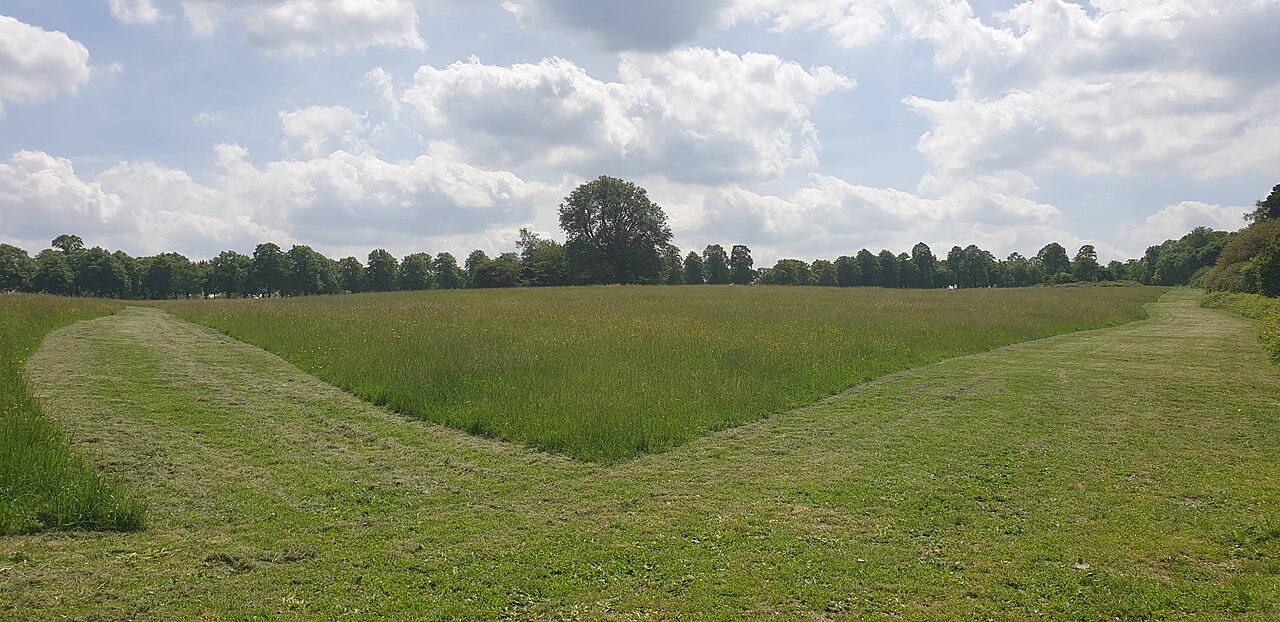
Where two paths meet, widen the junction so you can turn a mower and a wheelbarrow around. A broad Y or V junction is easier to mow than a sharp T.
Put one main entry where you bring in materials, close to the hose, compost pile, or driveway. Add a short access trail toward any part of the bed more than a reach away from an existing path.
Keep at least one route open in late winter. That is when you cut back and remove last year’s stems, and you will be carrying armloads of debris out.
Keep the Path From Spreading Into the Bed
A mown path is usually existing lawn, and lawn grass does not stay put. Kansas State University’s guide to Kentucky bluegrass lawns notes that this common turfgrass spreads by underground stems called rhizomes.
Cut a clean edge between path and bed with a half-moon edger or flat spade two or three times a season. A shallow trench edge or a buried edging strip slows creeping grass further.
The same K-State guide recommends mowing Kentucky bluegrass at 2 to 3 inches. Keeping the path at that height helps it stay dense and resist weeds, which keeps it from becoming a source of weed seed for the planting next to it.
Plant Palette for Path Edges
Plants along a mown path should stay upright, tolerate a little brushing, and stay short enough that they do not close the path. Put taller, floppier species several feet back.
Plant Palette
Edge and back-row choices for a sunny path. Confirm each one is native to your area before buying.
| Plant | Role | Height | Sun / moisture | Native range (LBJ) |
|---|---|---|---|---|
| Wild strawberry | Low edge groundcover | Under 1 ft | Sun to part shade; dry to medium | Nf. & e. Que. to Man., south to GA & OK |
| Lanceleaf coreopsis | Edge flower | 1–3 ft | Sun to part shade; dry | FL to e. TX & n. NM, north to VA, Ont., MI, WI, MO & CO |
| Prairie dropseed | Edge grass, stays mounded | 2–3 ft | Sun to part shade; dry to medium | Que. to Sask., locally south to NC, KY, e. TX & CO |
| Blue grama | Short edge grass (West and Plains) | 0.5–2 ft | Full sun; dry | S. Canada to Mexico; west of the Mississippi, east to IL and w. MO |
| Little bluestem | Second-row grass | 2–4 ft | Full sun; dry to medium | Most of the US east of the Rockies |
| New England aster | Back-row flower, keep away from path | 3–6 ft | Sun to part shade; moist | Que. & ME to SC, west to e. Great Plains |
| Pennsylvania sedge | Shady path edge | Under 1 ft | Part shade to shade; dry to medium | S. Que. to ND & MT, south to GA, AR & WY |
Heights and widths are from NC State Extension’s Plant Toolbox. Native ranges are from the Lady Bird Johnson Wildflower Center database.
In the Southeast, lanceleaf coreopsis is native, but prairie dropseed is only local there, so little bluestem is the more reliable edge grass. In the dry West, blue grama works as a low edge grass where lawn grasses struggle.
Installation Steps
- Measure your mower’s cutting width and decide the width of each path in whole passes.
- Lay out paths with a garden hose or rope, and test every curve by pushing the mower along it.
- Mark the bed edges with marking paint, leaving the path as existing lawn.
- Remove or smother the turf in the planting areas only, keeping a clean cut edge along each path.
- Plant edge species first, a short step back from the path edge, then fill in the rows behind.
- Mulch the bed, but keep mulch off the path so the turf edge stays clear.
- Walk the route with a wheelbarrow before the plants grow to check that every turn and junction works.
First Three Years: Path and Bed Maintenance Calendar
- Year one, spring to fall: Mow paths at lawn height every week or two, and edge them two or three times over the season so turf does not creep in. If you sowed seed, the Xerces Society’s meadow establishment guide recommends mowing the seeded area whenever growth reaches about 12 inches during the first year to stop annual weeds from setting seed.
- Year one, late fall: Note which edges flopped onto the path. Mark those spots for shorter plants or a wider path next year.
- Year two, early spring: Cut back last year’s stems and carry them out along the main path. Re-cut path edges before the turf greens up fully.
- Year two, summer: Widen any path that has closed in by more than a foot. Move tall plants away from the edge in fall.
- Year three: The layout should be settled. Keep up mowing and edging, and adjust paths only where your traffic has changed.
Mistakes to Avoid
- Picking a path width that is not a whole number of mower passes, which leaves a ragged uncut strip.
- Making turns too tight to mow without stopping and backing up.
- Running a path through a low spot that stays wet after rain.
- Planting tall, floppy species right at the path edge.
- Leaving parts of the bed more than one reach away from any path or stepping stone.
- Skipping edging, so lawn grass creeps into the native planting.
To work out how many plants fill the beds between your paths, use our guide to calculating native plant spacing and bed coverage. For a broader view of converting turf, see replacing lawn with wildflowers and planning a meadow transition at the lawn edge. Our guide to making a native front yard look intentional covers paths as a design cue.
Once the paths are in, use them for a regular weed-monitoring walk through the planting.
📋 Check edge plants against your regional list: Illinois, Iowa and Missouri, Nebraska, Kansas and eastern Colorado, or Maryland, Virginia and West Virginia.
Frequently Asked Questions
How wide should a mown path through a native garden be?
NC State Extension suggests 4½ to 5 feet for paths two people share and 2½ to 3 feet for secondary paths. Round to whole mower passes, and add width where tall plants will lean in.
Can I just let the lawn grow and mow a path through it?
You can, but unmown lawn grass is not a native planting. The path works best when the area around it is converted to native plants that you choose and place.
How do I keep lawn grass out of the native bed?
Kentucky bluegrass spreads by rhizomes, so cut a clean edge two or three times a year with a half-moon edger or spade, or install a buried edging strip.
Should the path be mowed as short as the rest of the lawn?
Mowing the path at normal lawn height, such as the 2 to 3 inches K-State recommends for Kentucky bluegrass, keeps it dense and easy to walk.
Can a mown path go through a seeded meadow in its first year?
Yes. Mark it clearly and mow it at lawn height, while the seeded area is mown higher during establishment, as the Xerces Society guide describes.
Sources
- NC State Extension Gardener Handbook, Chapter 19: Landscape Design (path hierarchy and widths, maintenance design)
- University of Minnesota Extension: Raised Bed Gardens (arm’s-reach bed width)
- Kansas State University Research and Extension: Kentucky Bluegrass Lawns
- Xerces Society: Establishing Pollinator Meadows from Seed
- NC State Extension Gardener Plant Toolbox: plant heights
- Lady Bird Johnson Wildflower Center Native Plant Database: native distribution