
Ashe’s Calamint (Calamintha ashei)
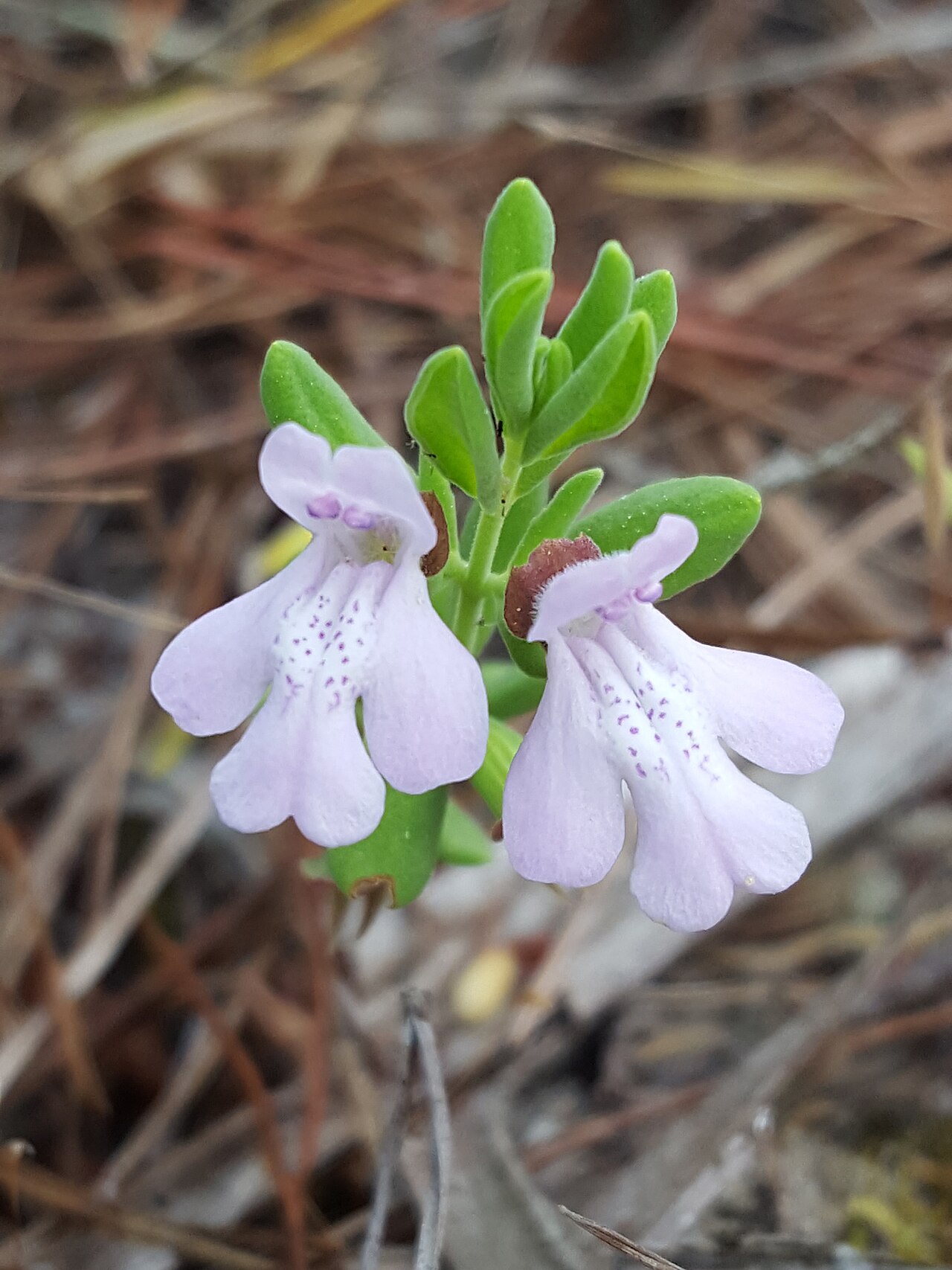
Calamintha ashei, known as Ashe’s Calamint, is a small, intensely aromatic shrub of the white-sand scrub of central Florida and southeastern Georgia. It forms low, rounded mounds of slender branches crowded with tiny, gray-green, mint-scented leaves. In spring it is covered with pale lavender, two-lipped flowers spotted with purple, which attract a stream of bees, including one of Florida’s rarest native bees.
Ashe’s calamint is a member of the mint family (Lamiaceae). Gardeners and most Florida references know it as Calamintha ashei, while USDA PLANTS and some recent floras place it in the genus Clinopodium as Clinopodium ashei (USDA symbol CLAS2); it has also been called Satureja ashei. All three names refer to the same plant.
It is listed as Threatened by the State of Florida (FDACS Regulated Plant Index). Its scrub habitat has been reduced sharply by development and citrus groves, and the remaining patches need fire to stay open. Gardeners who want to grow it should buy nursery-propagated plants and never collect plants, cuttings or seed from the wild. This guide covers how to identify it, where it grows, and how to grow it in a dry, sunny Florida garden.
Identification
Several aromatic mints grow in Florida scrub and sandhills. Ashe’s calamint is recognized by its small, rounded, many-branched form, its very small, narrow leaves held in clusters, and its pale lavender flowers with purple-spotted lips.
Growth Form
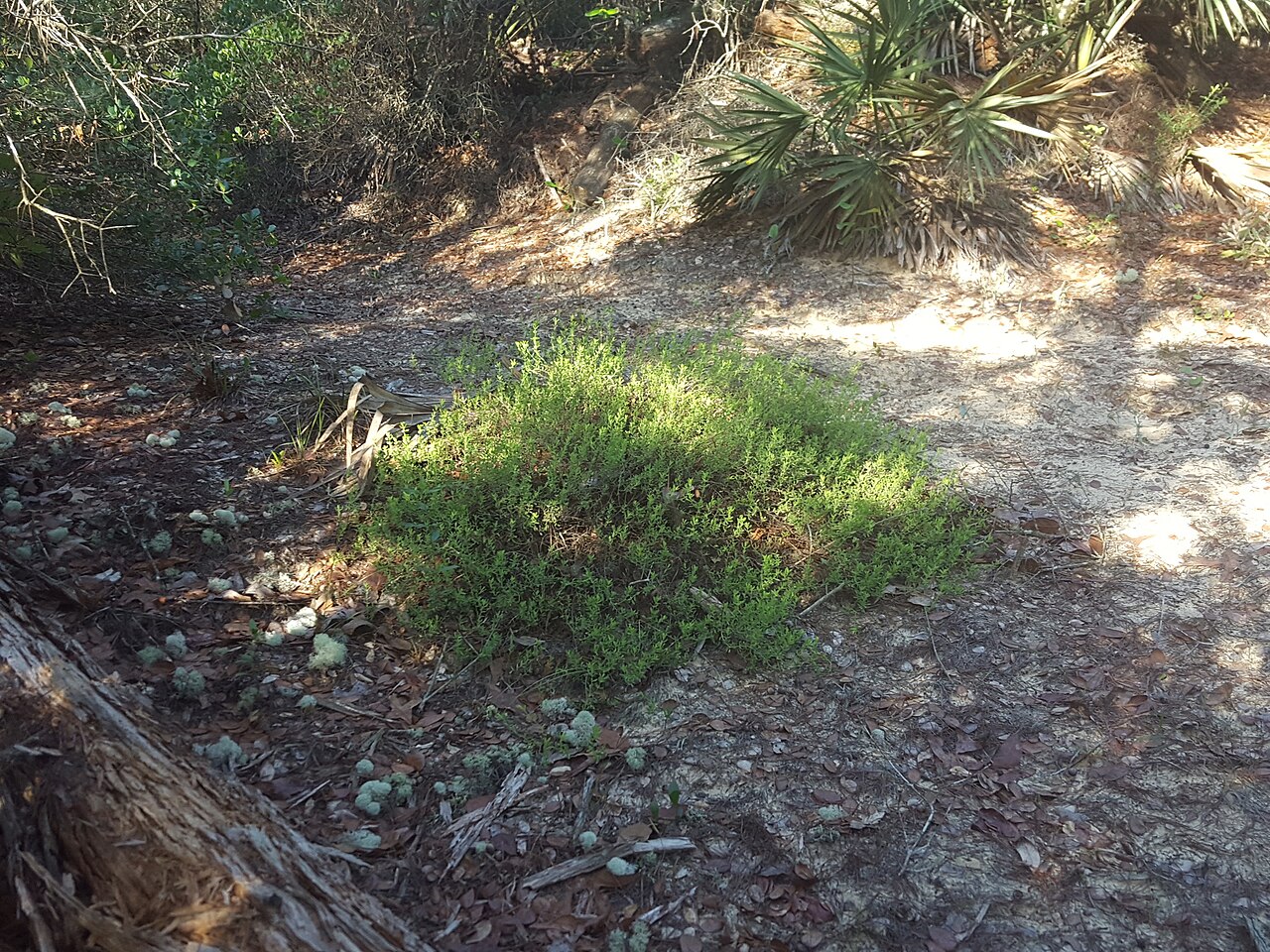
It is a low, evergreen to semi-evergreen subshrub, usually 1 to 2 feet tall and about as wide, with many slender, upright to spreading branches from a woody base. Older plants are dense and rounded; young ones are more open. The whole plant has a strong, pleasant minty scent, especially on warm days or when brushed.
Leaves
The leaves are opposite, tiny (about ¼ to ½ inch long), narrow and thick, with edges rolled under. Clusters of even smaller leaves grow in the leaf axils, so the branches look densely leafy. They are gray-green and dotted with small glands that hold the aromatic oils.
Flowers
The flowers grow in small clusters in the upper leaf axils. Each is about ½ to ¾ inch long, tubular and two-lipped, pale lavender to pinkish lilac. The broad, three-lobed lower lip is marked with darker purple spots that guide bees to the nectar. The calyx is ribbed and often reddish. Flowering is mostly from March to May, with scattered flowers at other times of year.
Fruit & Seeds
Each flower can produce up to four tiny, smooth nutlets that ripen inside the persistent calyx in late spring and early summer. Seedlings appear mainly in bare sand openings.
Similar Species
Calamintha coccinea (scarlet calamint) has bright red, hummingbird-pollinated flowers and grows in sandhills and coastal scrub. Calamintha dentata (toothed savory) of the Florida Panhandle has toothed leaves. Florida false rosemary (Conradina species) has similar spotted lavender flowers but longer, needle-like leaves and a different calyx.
Quick Facts
| Scientific Name | Calamintha ashei (USDA accepted: Clinopodium ashei; syn. Satureja ashei) |
| Family | Lamiaceae (mint family) |
| Plant Type | Aromatic evergreen subshrub |
| Mature Height | 1–2 ft |
| Mature Spread | 1–2 ft |
| Growth Rate | Slow to moderate |
| Sun Exposure | Full sun |
| Water Needs | Very low; needs dry, fast-draining sand |
| Soil Type | Deep, white or yellow scrub sand |
| Soil pH | About 4.5–6.0 (acidic) |
| Bloom Time | March–May; occasional flowers later |
| Flower Color | Pale lavender to pinkish lilac with purple spots |
| Fall Color | None; foliage stays gray-green |
| Fruit | Four tiny nutlets inside the calyx |
| Deer Resistant | Yes; strongly aromatic foliage is seldom browsed |
| USDA Hardiness Zones | 8b–10a |
Native Range
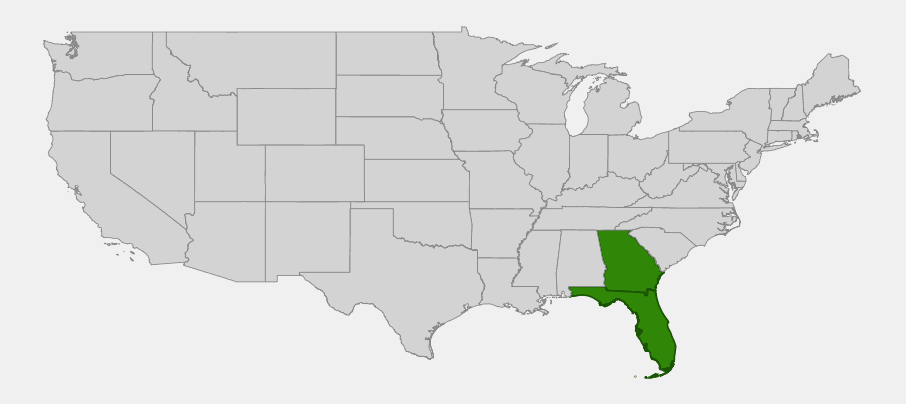
Ashe’s calamint has a small range. USDA PLANTS and the Lady Bird Johnson Wildflower Center record it from only two states, Florida and Georgia. In Georgia it is known from coarse sand dunes along the Ohoopee River in the east-central part of the state. In Florida it grows on the central sand ridges, from the Ocala National Forest area south along the Mount Dora and Lake Wales Ridges to Highlands County.
It grows in openings in Florida scrub and in scrubby flatwoods and sandhills, on deep, sterile, quickly drying sand. Typical neighbors are sand pine, myrtle oak, Chapman oak, sand live oak, Florida rosemary, saw palmetto and patches of reindeer lichen. It is often found along sandy firelanes, trails and road edges next to scrub, where the ground stays open and sunny.
It is listed as Threatened by the State of Florida (FDACS Regulated Plant Index). The main threats are the conversion of scrub to housing and citrus, and fire suppression, which allows scrub to grow too tall and dense for small, sun-loving plants. Prescribed fire and mechanical treatment on public lands help keep populations healthy.
📋 Regional plant lists featuring Ashe’s Calamint: North & South Florida · Alabama, Georgia & Mississippi
Growing & Care Guide
Ashe’s calamint is a lovely, fragrant small shrub for dry Florida gardens, and it is occasionally offered by native nurseries in Florida. Because it is listed as Threatened by the State of Florida, buy only nursery-propagated plants from a reputable native nursery and never dig plants or take cuttings from the wild.
Light
It needs full sun. In the wild it disappears when scrub oaks and sand pines shade it out, and garden plants in shade become leggy and short-lived.
Soil & Water
Plant it in deep, dry, very well-drained sand. Do not add compost, topsoil or fertilizer. Water a new plant every few days for the first few weeks, then taper off sharply. Once established it rarely needs irrigation, and too much water or a heavy, rich soil is the most common reason it dies.
Planting Tips
Plant small container plants in fall or winter so the roots establish during the cooler, drier months. Set the top of the root ball slightly above grade, and keep wood mulch away from the stems; bare sand or a thin layer of pine straw is better. It looks best in small groups, in a scrub-style garden with other low shrubs, or along a sunny path where people can brush it and smell it. Remember to buy nursery-propagated plants and never collect from the wild.
Pruning & Maintenance
Lightly shear plants after spring flowering to keep them dense, but do not cut into old, leafless wood. Remove encroaching taller plants that would shade it. Individual plants may live only several years in gardens, so allow some seedlings to grow as replacements.
Propagation
Nurseries propagate it from seed and from softwood or semi-hardwood cuttings taken from cultivated stock plants. Cuttings root fairly readily in a sandy, well-drained mix under mist. Home gardeners should propagate only from plants they already own and should not take cuttings or seed from wild populations.
Landscape Uses
- Scrub-style gardens: a fragrant, compact shrub for dry, sunny, white-sand sites
- Pollinator gardens: spring flowers attract many native bees and butterflies
- Scrub restoration: planted from nursery-propagated stock on protected lands
- Fragrance gardens: the foliage releases a strong minty scent when brushed
- Low-water landscapes: needs no irrigation once established
Wildlife & Ecological Value
Ashe’s calamint is a key spring nectar plant in central Florida scrub and is closely tied to at least one rare native bee.
For Pollinators
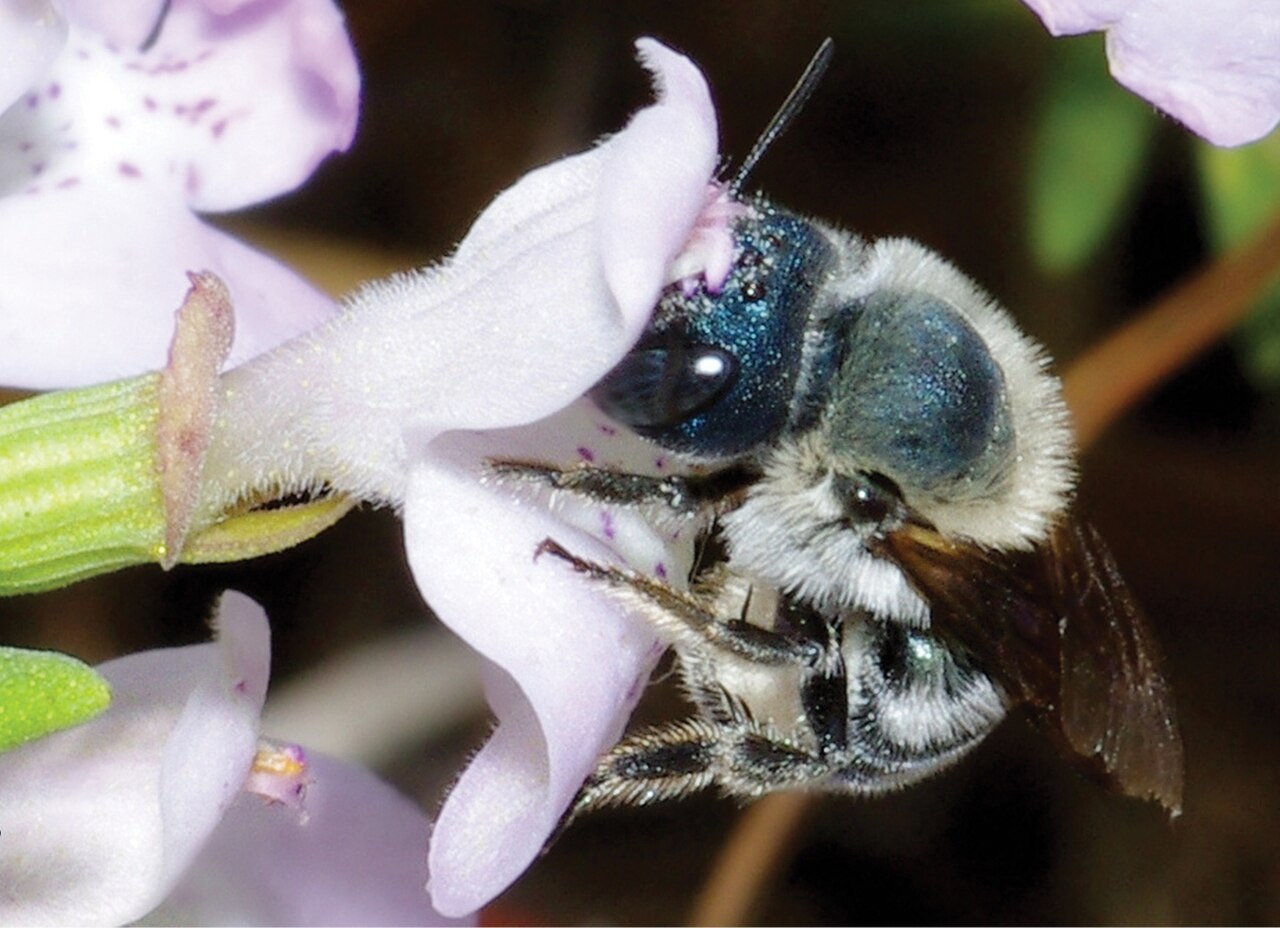
The flowers are visited by many native bees, bee flies and butterflies. They are especially important to the blue calamintha bee (Osmia calaminthae), a small, metallic blue mason bee described in 2011 and known only from a few sites on the Lake Wales Ridge. Females gather pollen mainly from Ashe’s calamint, and they have a distinctive habit of rubbing their faces on the flowers, which helps them collect pollen with special hairs on their heads.
For Birds
Birds do not feed on it directly, but it is part of the scrub habitat used by the Florida scrub-jay and other scrub birds, which feed on the insects it supports.
For Mammals
Its strongly aromatic leaves are rarely eaten by deer or other mammals.
Ecosystem Role
Ashe’s calamint is a characteristic plant of the open, sunny gaps in Florida scrub. Research in Florida scrub has suggested that aromatic compounds from its leaves can reduce germination of some nearby plants, which may help keep the sand around it bare. It depends on periodic fire or other disturbance to keep the scrub open, and it recovers by seedlings in bare sand after a burn.
Cultural & Historical Uses
The plant is named for William Willard Ashe, a forester and botanist of the U.S. Forest Service who collected widely in the Southeast in the late 1800s and early 1900s. It was first described as Satureja ashei and later moved to Calamintha, and more recently to Clinopodium, the name used by USDA PLANTS. Florida gardeners and nurseries still mostly use Calamintha ashei.
The leaves have a strong, pleasant, minty aroma, and the related calamints of Europe have long been used as culinary and medicinal herbs. Ashe’s calamint is not a commercial herb, and because it is a state-listed species, wild plants should never be picked for their leaves.
Ashe’s calamint has become a symbol of the conservation value of Florida scrub, especially since the discovery that the rare blue calamintha bee depends heavily on it. Growing it in gardens from propagated stock, and supporting prescribed fire on public scrub lands, are ways to help both the plant and the insects that rely on it.
Frequently Asked Questions
Is Ashe’s calamint protected in Florida?
Yes. It is listed as Threatened by the State of Florida (FDACS Regulated Plant Index). Buy only nursery-propagated plants, and never dig plants, take cuttings or collect seed from the wild.
Is Calamintha ashei the same as Clinopodium ashei?
Yes. They are two names for the same plant. USDA PLANTS uses Clinopodium ashei, while most Florida gardeners and nurseries use Calamintha ashei. The older name Satureja ashei also appears in some references.
Why does my Ashe’s calamint keep dying?
Usually because of too much water, rich soil or shade. It needs full sun and deep, sterile, fast-draining sand, with almost no irrigation once established.
What bees use Ashe’s calamint?
Many native bees visit it, including the rare blue calamintha bee (Osmia calaminthae), which is known only from the Lake Wales Ridge and gathers pollen mainly from this plant.
Does Ashe’s calamint smell like mint?
Yes. The leaves are strongly aromatic, with a fresh, minty scent that is released when the plant is brushed or on warm days.

Looking for a nursery that carries Ashe’s Calamint?
Browse our native plant nursery directory: Florida & Georgia