
Broad-leaved Cockspurthorn (Crataegus persimilis)
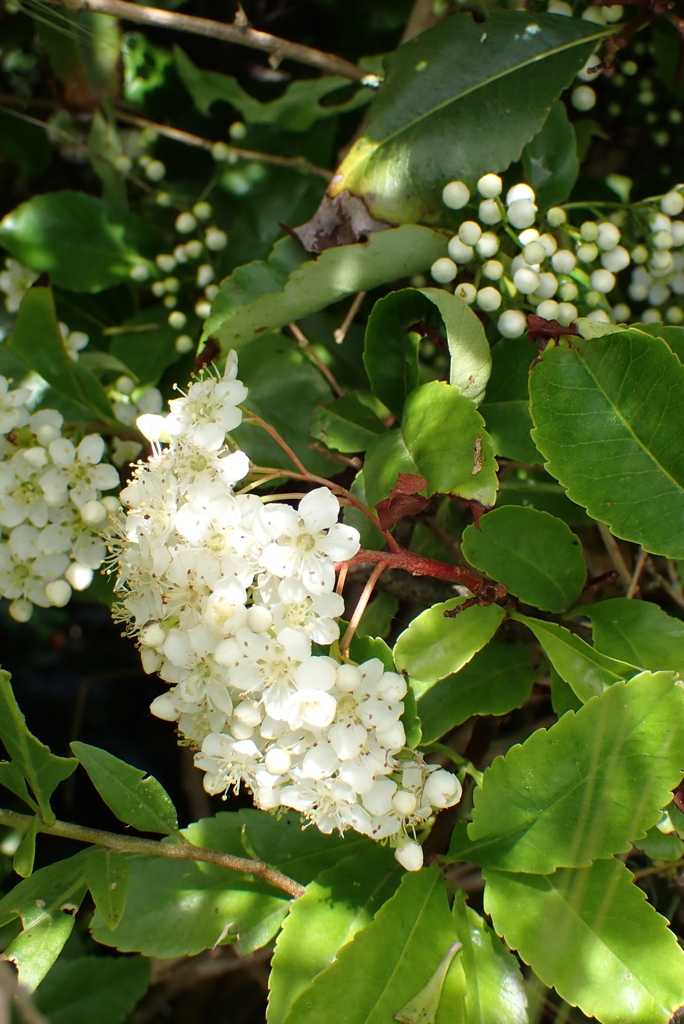
Crataegus persimilis, Broad-leaved Cockspurthorn, also called plumleaf hawthorn, is a small, round-headed native hawthorn with glossy, leathery leaves, flat clusters of white flowers in May, red fruit in fall and some of the best autumn color of any hawthorn. It usually grows 15 to 20 feet tall and about as wide, armed with long, shiny thorns.
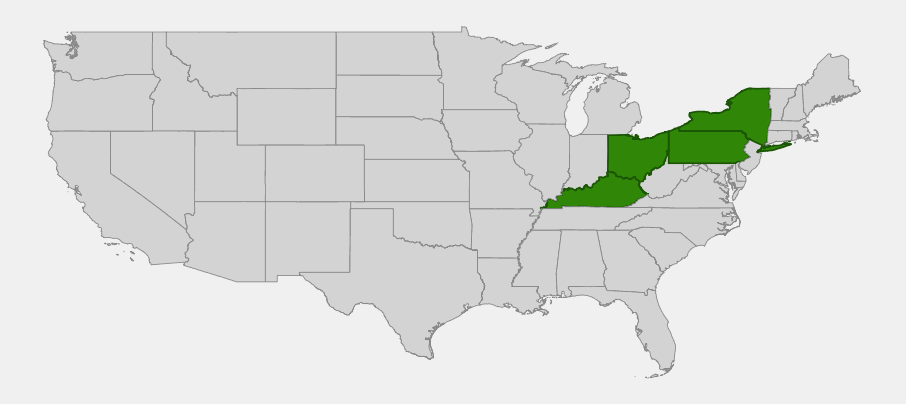
Gardeners mostly know it through the cultivar ‘Prunifolia’, sold as Crataegus prunifolia or Crataegus ×persimilis ‘Prunifolia’, a popular street and garden tree in Europe and one of the most widely planted ornamental hawthorns there. Fewer people know that it is an American native, with a small, scattered wild range in western New York, Pennsylvania, Ohio and Kentucky, and in southern Ontario.
Botanists consider it a probable natural hybrid between cockspur hawthorn (C. crus-galli) and fleshy hawthorn (C. succulenta) that now reproduces on its own by seed. This guide covers how to recognize it, where it grows wild and how to grow it as a tough small tree for wildlife and fall color.
Identification
Broad-leaved cockspurthorn looks like a broader-leaved cockspur hawthorn. Its glossy, leathery leaves, long dark thorns and spectacular fall color separate it from most other eastern hawthorns, but it varies a lot from tree to tree, as hybrid-derived species often do.
Form & Thorns
It is a dense, broad-crowned small tree or large shrub, usually 15 to 20 feet tall and wide. Young twigs are smooth and purplish-brown, and older bark is dull gray. The twigs carry straight or slightly curved thorns 1½ to nearly 3 inches long, which turn shiny purplish-black in their second year. Old branches and trunks are usually thornless.
Leaves
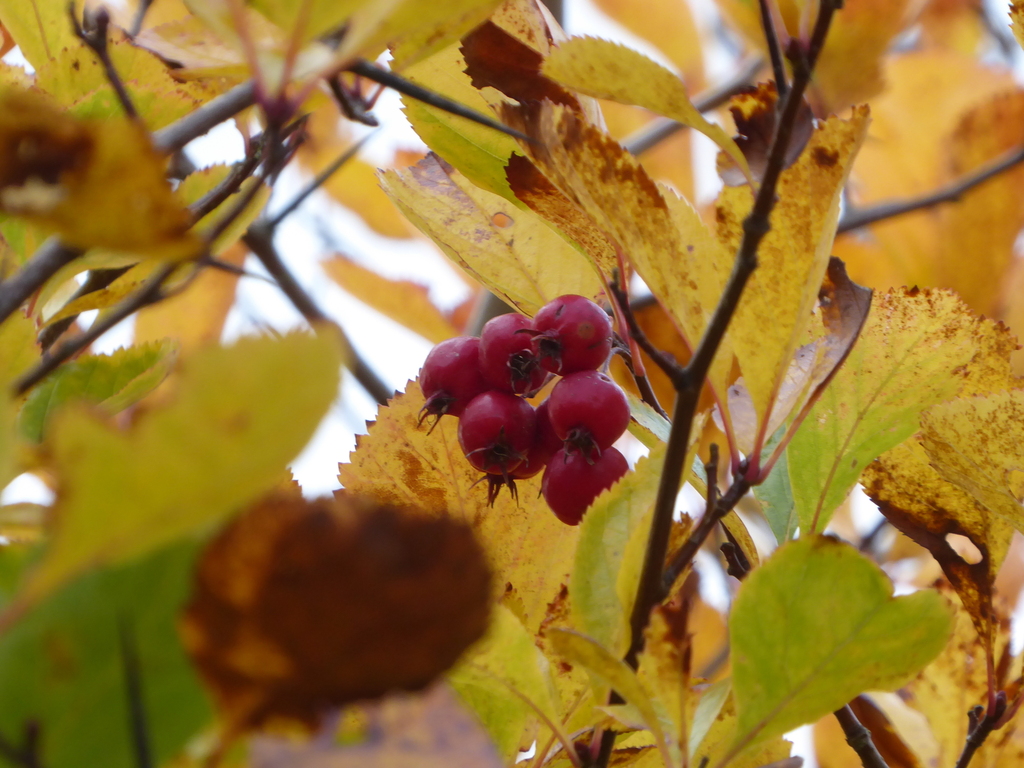
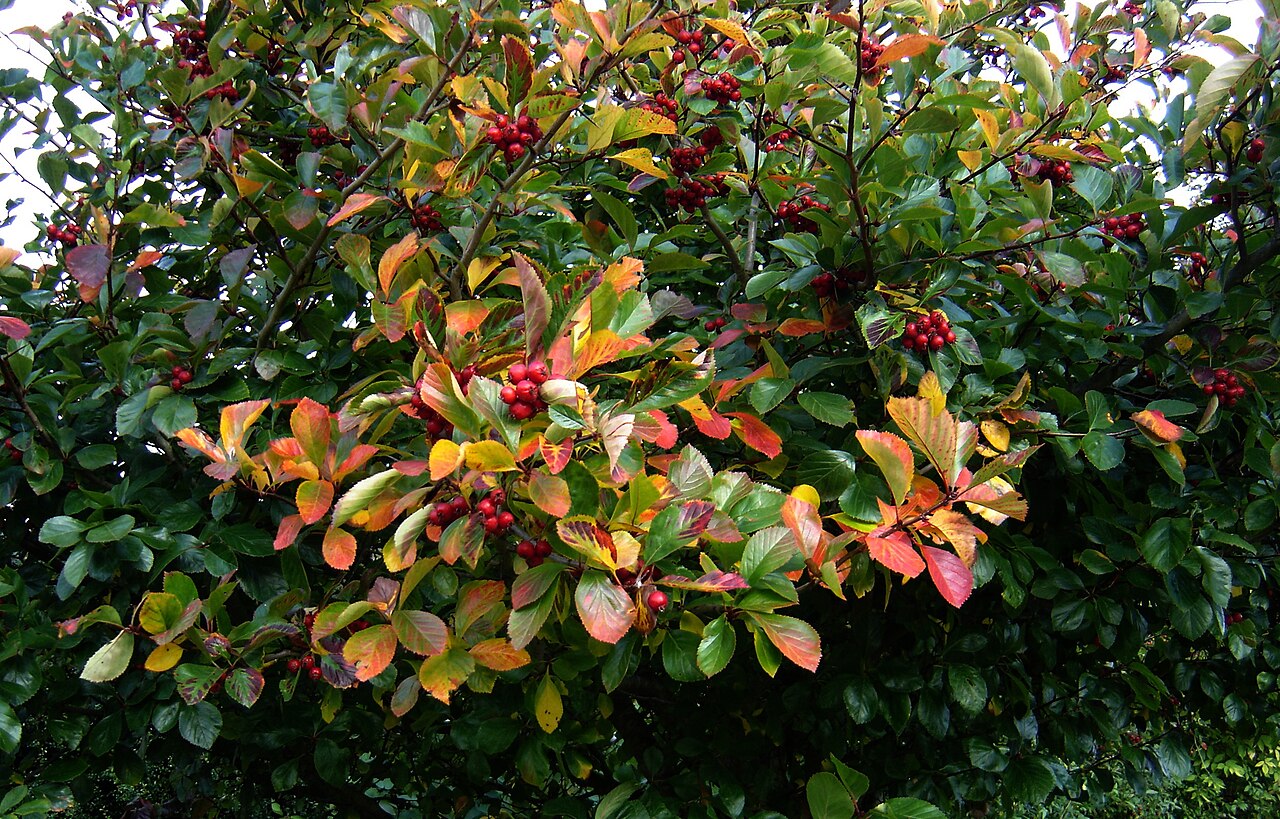
Leaves are about 1½ to 3 inches long, obovate to elliptic, finely toothed above the middle, dark glossy green and somewhat leathery, and smooth on both sides. They are broader than those of cockspur hawthorn, which gives the plant its common names. In fall they turn yellow, orange, scarlet and purple, often all on the same tree.
Flowers
In May it bears flat to slightly domed clusters of white, five-petaled flowers about ½ to ¾ inch across, with 10 to 20 stamens and pink or cream anthers, at the ends of short leafy shoots.
Fruit
The fruit is a small, round pome (haw), about ½ inch across, ripening bright red to dark red in September and October and often hanging on into winter. Each contains a few hard nutlets.
Look-alikes
Cockspur hawthorn has narrower, more strongly spoon-shaped leaves. Fleshy hawthorn has duller, more deeply veined leaves that are often hairy beneath, and larger, juicier fruit. Hawthorns hybridize freely, so wild trees may be hard to name with certainty.
Quick Facts
| Scientific Name | Crataegus persimilis (syn. C. prunifolia, C. ×persimilis) |
| Family | Rosaceae (rose family) |
| Plant Type | Deciduous thorny small tree or large shrub |
| Mature Height | 15–20 ft (occasionally to 25 ft) |
| Mature Spread | 15–20 ft |
| Growth Rate | Moderate |
| Sun Exposure | Full sun to part shade |
| Water Needs | Low to medium; drought tolerant once established |
| Soil Type | Most well-drained soils, including clay and limestone soils |
| Soil pH | About 5.5–8.0 |
| Bloom Time | May |
| Flower Color | White |
| Fall Color | Yellow, orange, scarlet and purple |
| Fruit | Red haws, September–October, persisting into winter |
| Deer Resistant | Moderately; thorns deter browsing of older plants |
| USDA Hardiness Zones | 4–7 |
Native Range
Broad-leaved cockspurthorn is native to a small part of eastern North America. USDA PLANTS records it from four states, New York, Pennsylvania, Ohio and Kentucky, and from southern Ontario in Canada; Flora of North America also reports it from West Virginia and Virginia. The type specimen was collected along the Genesee River near Rochester, New York.
Within that range it is scattered and uncommon, appearing as single trees or small groups rather than large stands. This sporadic pattern, along with its variable features, is one reason botanists think it arose as a natural hybrid. Trees seen in parks and streets, both in North America and Europe, are almost always the cultivated ‘Prunifolia’.
In the wild it grows in old fields, pastures, thickets, woodland edges, fencerows and river terraces, the same open, sunny habitats as its probable parents, cockspur and fleshy hawthorn.
📋 Regional plant lists featuring Broad-leaved Cockspurthorn: New York, Pennsylvania & Northern New Jersey · Delaware, Southern New Jersey & Long Island · Ohio & Indiana · Kentucky & Tennessee
Growing & Care Guide
Broad-leaved cockspurthorn is one of the easiest hawthorns to grow, and the cultivar ‘Prunifolia’ is widely available. It makes a tidy, dense small tree for lawns, hedges and wildlife plantings, with flowers in spring, fruit in fall and outstanding fall color. Plant it away from paths and play areas because of its long thorns.
Light
Full sun gives the densest crown, the most flowers and fruit and the best fall color. It tolerates part shade.
Soil & Water
It grows in almost any well-drained soil, from sandy to clay and acidic to alkaline, and tolerates urban conditions. Water through the first summer; after that it is quite drought tolerant. Avoid sites that stay waterlogged.
Planting Tips
Plant container or balled-and-burlapped trees in spring or fall, at the same depth they grew in the nursery. Space them 15 to 20 feet apart as specimens, or about 6 to 8 feet apart for a dense, thorny hedge or screen. Wear heavy gloves.
Pruning & Maintenance
Prune in late winter to remove crossing or damaged branches and to raise the crown if needed. Like other hawthorns it can get fire blight, leaf spot, rusts and hawthorn leaf miners; it is moderately resistant to fire blight, and good air circulation and avoiding heavy nitrogen fertilizer reduce problems. Cut out blighted shoots well below the damage.
Propagation
Hawthorn seed is slow: the hard nutlets usually need a warm period followed by cold stratification and may take two years to germinate. Sow cleaned seed outdoors in fall and be patient. Cultivars such as ‘Prunifolia’ are propagated by grafting onto hawthorn seedlings.
Landscape Uses
- Small specimen or street tree: compact, round-headed and tolerant of urban soils
- Thorny hedge or barrier: dense and well-armed, and can be clipped
- Fall color: one of the most colorful hawthorns in autumn
- Wildlife gardens: spring flowers for bees, fruit for birds and safe nesting cover
- Naturalized plantings: old-field and woodland-edge restorations within its native range
Wildlife & Ecological Value
Like other native hawthorns, broad-leaved cockspurthorn supports a wide range of wildlife, from early bees to winter birds.
For Pollinators
Its May flowers provide pollen and nectar for native bees, including mining bees and sweat bees, as well as flies and beetles. Native hawthorns as a group host the caterpillars of many moths and butterflies, including hairstreaks and swallowtails.
For Birds
Cedar waxwings, robins, thrushes and other birds eat the haws, which often hang on into winter. The dense, thorny crown is excellent nesting cover for songbirds such as catbirds, cardinals and brown thrashers, and shrikes are known for using hawthorn thorns to store prey.
For Mammals
Foxes, raccoons, squirrels and other small mammals eat fallen fruit. Deer browse young growth but the thorns protect older plants.
Ecosystem Role
Hawthorns are pioneer trees of old fields and pastures. Their thorny thickets shelter young trees and wildlife, and their fruit feeds birds that spread their seeds. As a probable hybrid that now reproduces by seed, broad-leaved cockspurthorn is also an example of how hawthorns evolve new species.
Cultural & Historical Uses
Charles Sprague Sargent described Crataegus persimilis in the early 20th century, from trees along the Genesee River near Rochester, New York. The name means ‘very similar’, probably comparing it with related hawthorns. Sargent named hundreds of hawthorn species in the early 20th century, and most have since been merged, but this one has survived, though some authors treat it as a named hybrid, C. ×persimilis.
Long before it was described, an American hawthorn of this type was grown in European gardens under the name Crataegus prunifolia, the plum-leaved thorn. The cultivar now called ‘Prunifolia’ became a favorite small tree in Britain and Europe for its glossy leaves, compact shape and brilliant fall color, and it is often recommended as one of the best trees for small gardens.
Hawthorn fruit has been eaten, cooked into jellies and used in traditional medicine in many cultures. The haws of this species are edible but small and mealy, and the seeds should not be eaten; most people leave them for the birds.
Frequently Asked Questions
Is Crataegus prunifolia the same as Crataegus persimilis?
Yes. The tree sold as Crataegus prunifolia or C. ×persimilis ‘Prunifolia’ is a selection of C. persimilis, the broad-leaved cockspurthorn, a hawthorn native to the northeastern United States and Ontario.
Is broad-leaved cockspurthorn native?
Yes. It is native to New York, Pennsylvania, Ohio and Kentucky (and reported from West Virginia and Virginia) and southern Ontario, although it is uncommon in the wild.
How big does it get?
Usually 15 to 20 feet tall with a similar spread, making it a good small tree for gardens and streets.
Does it have thorns?
Yes. The twigs carry long, sharp thorns up to about 3 inches long. Plant it away from paths and play areas.
Are the berries edible?
The red haws are edible and can be cooked into jelly, but they are small and mealy. Do not eat the seeds. Birds value them more than people do.

Looking for a nursery that carries Broad-leaved Cockspurthorn?
Browse our native plant nursery directory: Kentucky · New York & Ohio · Pennsylvania

