
Buckhorn Cholla (Cylindropuntia acanthocarpa)
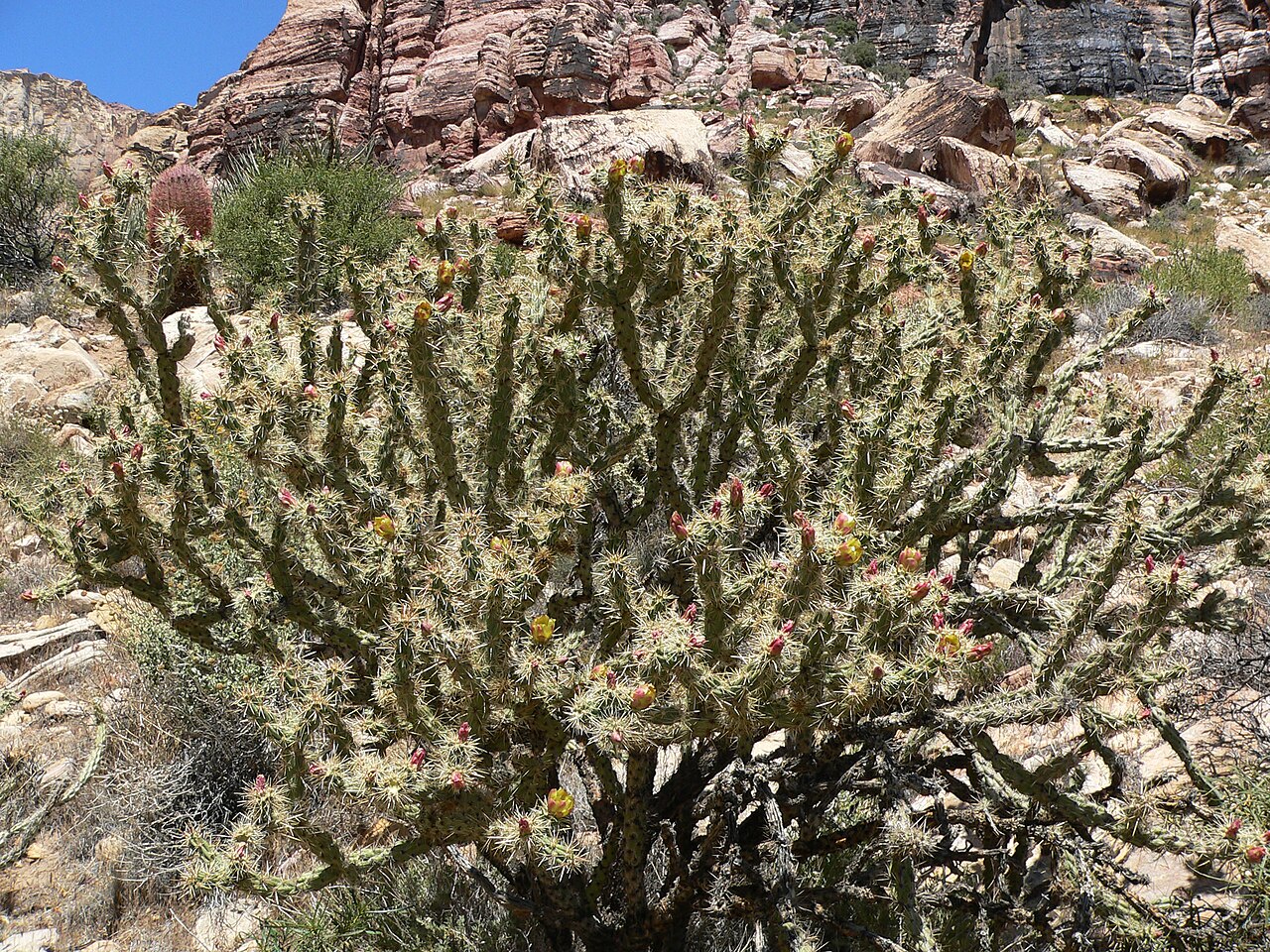
Cylindropuntia acanthocarpa, the Buckhorn Cholla, is a branching, shrubby cactus of the Mojave and Sonoran Deserts. Its long, jointed, cylindrical stems fork and spread like the antlers of a buck, which gives the plant its name. Most plants are 3 to 6 feet tall, and old ones in favorable spots can reach about 9 feet or more. In spring the stem tips carry showy, cup-shaped flowers that range from yellow to orange, copper, red or purple, often on the same hillside.
Along with teddy bear cholla, buckhorn cholla is one of the most common chollas in the deserts of Arizona, southern California and southern Nevada, and it reaches southwestern Utah. It is less fiercely spiny than teddy bear cholla, with greener stems visible between the spine clusters, and its stem joints do not detach at the slightest touch the way those of jumping cholla do. The species name acanthocarpa means “spiny fruit,” after the dry, spine-covered fruits that follow the flowers.
Buckhorn cholla is a valuable desert plant for wildlife, a traditional food plant of the Tohono O’odham and other desert peoples, and a dramatic, almost carefree sculpture for dry gardens within its range. This guide covers how to identify it, where it grows, and how to grow it safely in a desert landscape.
Identification
Buckhorn cholla is one of several chollas that share the same deserts. The combination of loose, antler-like branching, long segments, prominent elongated tubercles and dry, spiny fruit identifies it.
Growth Habit & Stems
Plants are open, much-branched shrubs, sometimes with a short woody trunk, usually 3 to 6 feet tall and as wide or wider. The stems are made of cylindrical joints, roughly 4 to 20 inches long and about an inch thick, which branch at wide angles. The surface is covered with long, narrow, raised tubercles (bumps) that give the stems a lumpy texture. Stem color is green to gray-green, often turning purplish in drought or cold. As the plant ages, the lower stems become woody and the dead skeletons show a characteristic net-like pattern of holes.
Spines
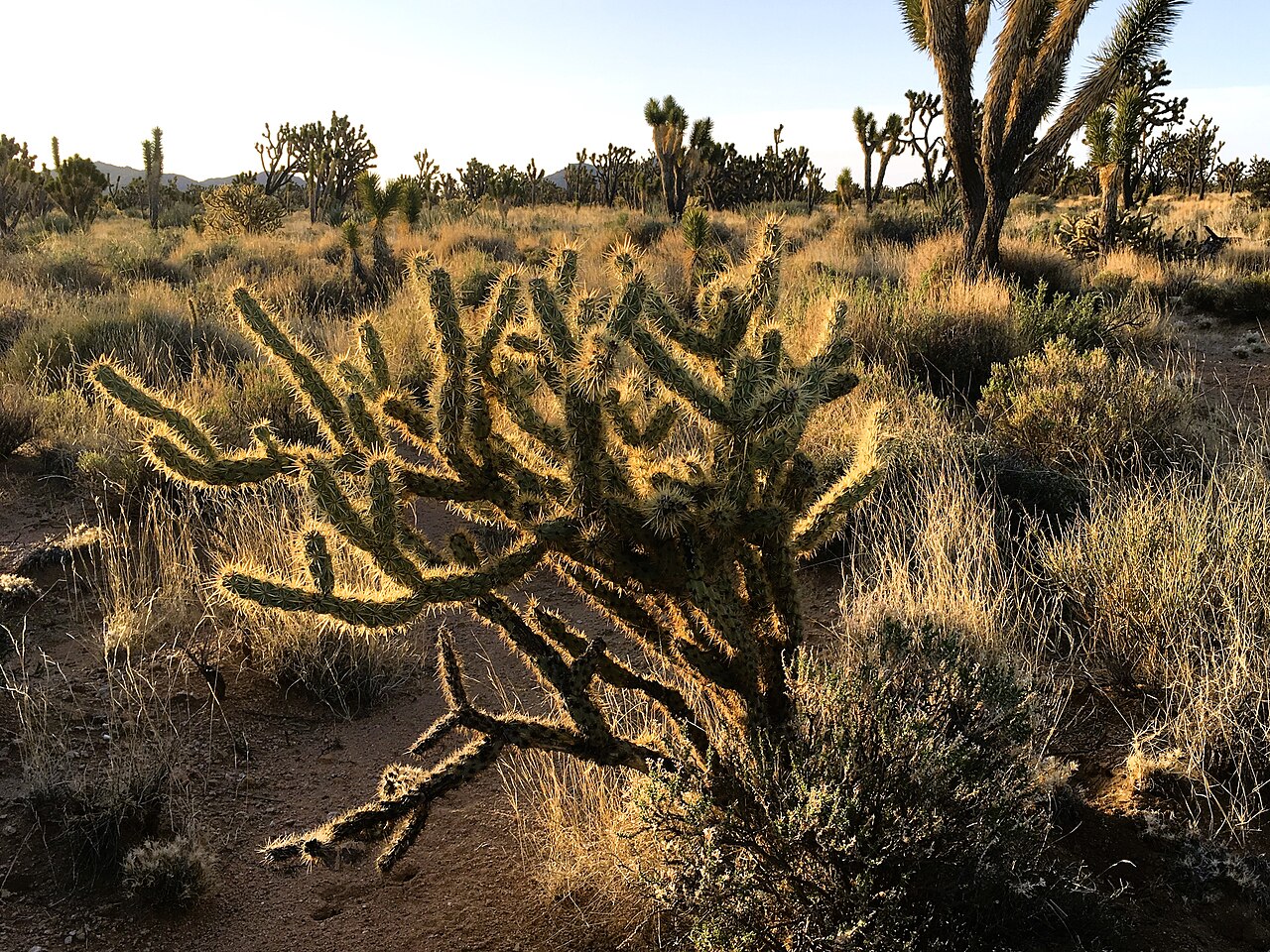
Each areole carries a cluster of about 6 to 25 stiff spines up to about an inch and a half long. Like all chollas, the spines are wrapped in thin papery sheaths, which are straw-colored to tan and give the plant a golden or silvery glow in low sunlight. Areoles also contain glochids, tiny barbed bristles that lodge in skin. Spine density varies; plants in the Colorado Desert (var. coloradensis) are among the spiniest.
Flowers
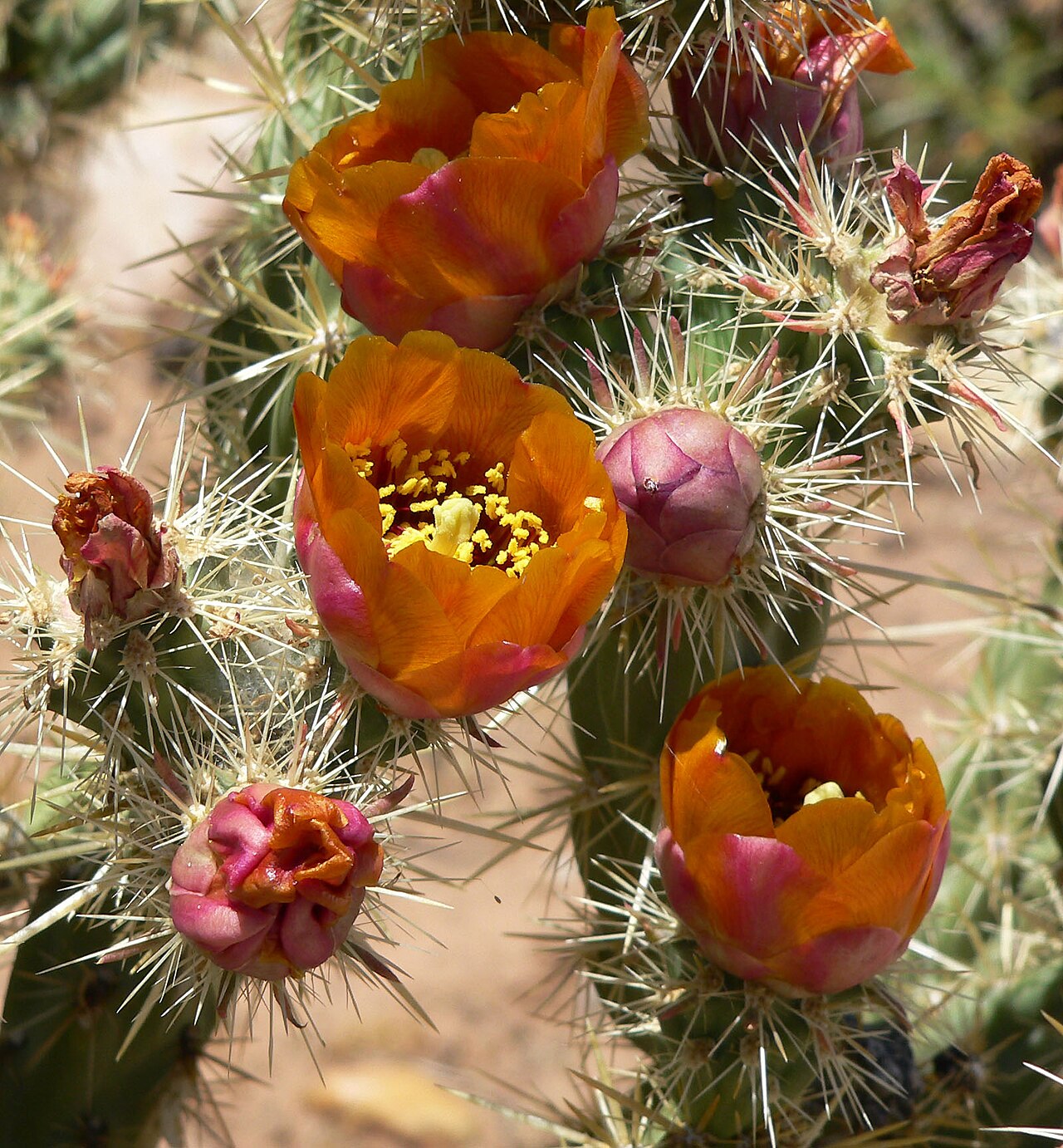
Flowers appear in spring, mostly April and May, at the tips of the previous year’s stem joints. They are cup-shaped, about 1½ to 2½ inches across, with satiny petals that may be lemon yellow, orange, bronze, brick red, rose or purple. The center is filled with numerous stamens and a pale green or cream stigma. Before opening, the buds are reddish and conspicuous, often appearing all over the plant.
Fruit & Seeds
The fruit is dry when mature, roughly egg-shaped, about an inch long, tan, tuberculate and spiny. It usually falls off within a few months rather than hanging on in chains as jumping cholla’s fruit does. Each fruit holds pale, flattened seeds that are dispersed by rodents and other animals.
Quick Facts
| Scientific Name | Cylindropuntia acanthocarpa (Engelm. & J.M. Bigelow) F.M. Knuth (syn. Opuntia acanthocarpa) |
| Family | Cactaceae (cactus family) |
| Plant Type | Shrubby cholla cactus |
| Mature Height | 3–6 ft (occasionally to about 9–12 ft) |
| Mature Spread | 3–6 ft |
| Growth Rate | Slow to moderate |
| Sun Exposure | Full sun |
| Water Needs | Very low; drought tolerant once established |
| Soil Type | Well-drained gravelly, rocky or sandy soils; desert slopes, bajadas and washes |
| Soil pH | Neutral to alkaline (about 7.0–8.5) |
| Bloom Time | April–May (sometimes March–June) |
| Flower Color | Yellow, orange, bronze, red, rose or purple |
| Fall Color | None; evergreen stems, purplish under stress |
| Fruit | Dry, spiny, tan, egg-shaped fruit about 1 in long |
| Deer Resistant | Yes |
| USDA Hardiness Zones | 8–11 |
Native Range
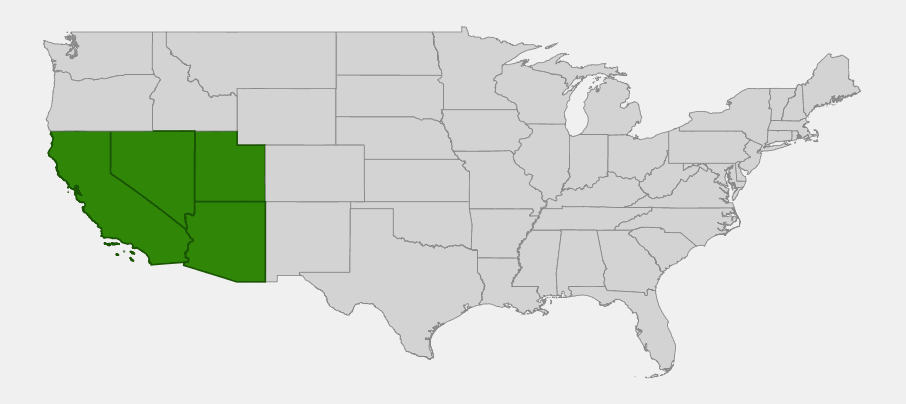
USDA PLANTS lists buckhorn cholla as native in four states: Arizona, California, Nevada and Utah. It is widespread across the Sonoran Desert of southern and western Arizona and the Mojave Desert of southeastern California and southern Nevada, and it reaches the Colorado Desert of southeastern California and the far southwestern corner of Utah in the Virgin River area. South of the border it extends into northern Sonora and Baja California in Mexico.
Buckhorn cholla grows on rocky slopes, gravelly bajadas, desert flats and the edges of washes, mostly from about 1,000 to 4,000 feet and locally from near sea level to around 6,000 feet. It is often a dominant cactus in creosote bush scrub, mixed with white bursage, brittlebush, barrel cactus and other chollas, and it extends upward into Joshua tree woodland and the lower edge of desert grassland.
Several varieties are recognized. Var. acanthocarpa and var. major are the widespread forms of Arizona; var. coloradensis grows in the Colorado and Mojave Deserts of California, Nevada and Arizona; var. thornberi is a more slender, sparsely spined form of central Arizona; and var. ganderi, from the deserts of San Diego County and Baja California, is sometimes treated as its own species.
📋 Regional plant lists featuring Buckhorn Cholla: Idaho, Eastern Oregon & Eastern Washington · Utah & Western Colorado · Arizona & New Mexico
Growing & Care Guide
In the low and middle deserts, buckhorn cholla is one of the easiest native cacti to grow. It needs full sun, sharp drainage and very little water. The main challenge is handling it safely, and placing it where its spines will not be a hazard to people, children or pets.
Light
Plant in full sun. Buckhorn cholla tolerates intense desert sun and reflected heat. In too much shade it grows thin and leggy and flowers poorly.
Soil & Water
It needs fast-draining, gravelly or sandy soil; heavy, poorly drained clay leads to root rot. Water new plantings every two to three weeks during their first warm season. Once established, plants within its native range usually survive on rainfall alone, though an occasional deep soak during long summer droughts keeps them looking fuller. Do not fertilize, and avoid placing it in irrigated lawns or beds.
Planting Tips
Wear heavy leather gloves and long sleeves, and handle the stems with tongs, a folded newspaper or old carpet. Set the plant at the same depth it grew before, firm gravelly soil around it and wait about a week before the first watering so any damaged roots can heal. Give it room: plant at least 4 to 6 feet away from paths, patios, play areas and driveways.
Pruning & Maintenance
Little maintenance is needed. Remove dead or damaged stems with long-handled loppers. Glochids and fallen joints can stick in shoes, tires and pet paws, so rake up dropped joints with a metal rake. Rodents may chew stems, especially in drought; a wire cage can protect young plants.
Propagation
Buckhorn cholla roots easily from stem joints. Cut a healthy segment, let the cut end callus for a week or two in shade, and then set it upright in dry, gravelly soil. Roots form within a few weeks in warm weather. Seeds also germinate, but growth is slow. Only collect cuttings from your own plants or with landowner permission; native cacti are protected from unauthorized collection in Arizona and on public lands.
Landscape Uses
- Desert and xeriscape gardens: a sculptural accent with colorful spring flowers and almost no water needs
- Wildlife gardens: nesting and shelter for cactus wrens and other desert birds
- Barrier plantings: a living fence along property lines where people should not walk
- Habitat restoration: revegetation of disturbed desert slopes and bajadas within its native range
- Edible landscaping (traditional): flower buds were a traditional spring food for Tohono O’odham and other desert peoples
Wildlife & Ecological Value
Buckhorn cholla is a keystone plant in many desert communities. It feeds pollinators in spring and shelters birds and small mammals all year behind a barrier of spines that predators avoid.
For Pollinators
The large, open flowers are visited mainly by native bees, including cactus-specialist bees such as Diadasia, along with honey bees and beetles. The abundant pollen and nectar come at a time when many desert annuals are fading.
For Birds
Cactus wrens, Arizona’s state bird, often build their football-shaped nests in the protected crotches of cholla branches, and curve-billed thrashers and other desert birds also nest in or under chollas. Gambel’s quail and doves shelter beneath the plants and pick up fallen seeds.
For Mammals
Pack rats (woodrats) use fallen cholla joints to protect their middens and dens, and they and other rodents eat the fruits, seeds and sometimes the stems. Desert bighorn sheep and mule deer occasionally eat the fruit and flowers, especially in drought.
Ecosystem Role
As a long-lived shrub cactus, buckhorn cholla provides shade and protected microhabitats where seedlings of other plants and small animals can survive. It spreads by seed and by fallen joints that root, helping to stabilize desert slopes. Its woody, net-like dead skeletons persist for years and continue to provide cover.
Cultural & Historical Uses
For the Tohono O’odham of southern Arizona, the end of winter was traditionally a hungry time. Before the wheat and saguaro fruit harvests, families gathered thousands of cholla flower buds, brushed off the spines, and pit-roasted them with hot stones and plant layers. The dried buds stored well and were an important source of calcium. Many O’odham families still harvest, roast or boil cholla buds today, and they have become better known in Southwestern cooking, where their flavor is often compared to asparagus or artichoke.
The species was first described by George Engelmann and John Milton Bigelow in the 1850s, from specimens collected during the Pacific Railroad surveys across the Southwest. It was long known as Opuntia acanthocarpa before chollas were separated into the genus Cylindropuntia.
The woody skeletons of dead chollas, with their net-like pattern of holes, are widely used in Southwestern crafts, walking sticks, furniture and aquarium decorations. Collecting cholla wood on public land often requires a permit, and harvesting live plants is restricted under state native plant laws.
Frequently Asked Questions
Is buckhorn cholla dangerous?
Its spines and tiny barbed glochids can cause painful injuries, and they are hard to remove from skin, clothing and pets. The plant is not poisonous, but it should be planted well away from paths and play areas. Use tweezers for spines and a comb or adhesive tape for glochids.
How is buckhorn cholla different from teddy bear and jumping cholla?
Teddy bear cholla is densely covered in golden spines that hide its stems, and its joints break off at a touch. Jumping cholla has hanging chains of green fruit. Buckhorn cholla has longer, more open, antler-like branches with green stems visible between the spines, and dry, spiny fruit that fall within a few months.
Can you eat buckhorn cholla?
The flower buds are a traditional food of the Tohono O’odham and other desert peoples. They must be carefully de-spined and cooked before eating. Only harvest from your own plants or with permission, and leave plenty for wildlife and pollinators.
How fast does buckhorn cholla grow?
In good conditions it can add several inches of new stem each year. Plants grown from cuttings may reach flowering size in a few years, but full-sized shrubs take many years.
Can buckhorn cholla grow outside the desert?
It is best suited to the hot, dry deserts of the Southwest. It tolerates short frosts and occasional snow, but in humid climates or heavy, wet soils it is prone to rot. Gardeners outside its range should choose cacti native to their own region.

Looking for a nursery that carries Buckhorn Cholla?
Browse our native plant nursery directory: Arizona · California · Nevada · Utah