Christmas Cactus / Tasajillo (Cylindropuntia leptocaulis)
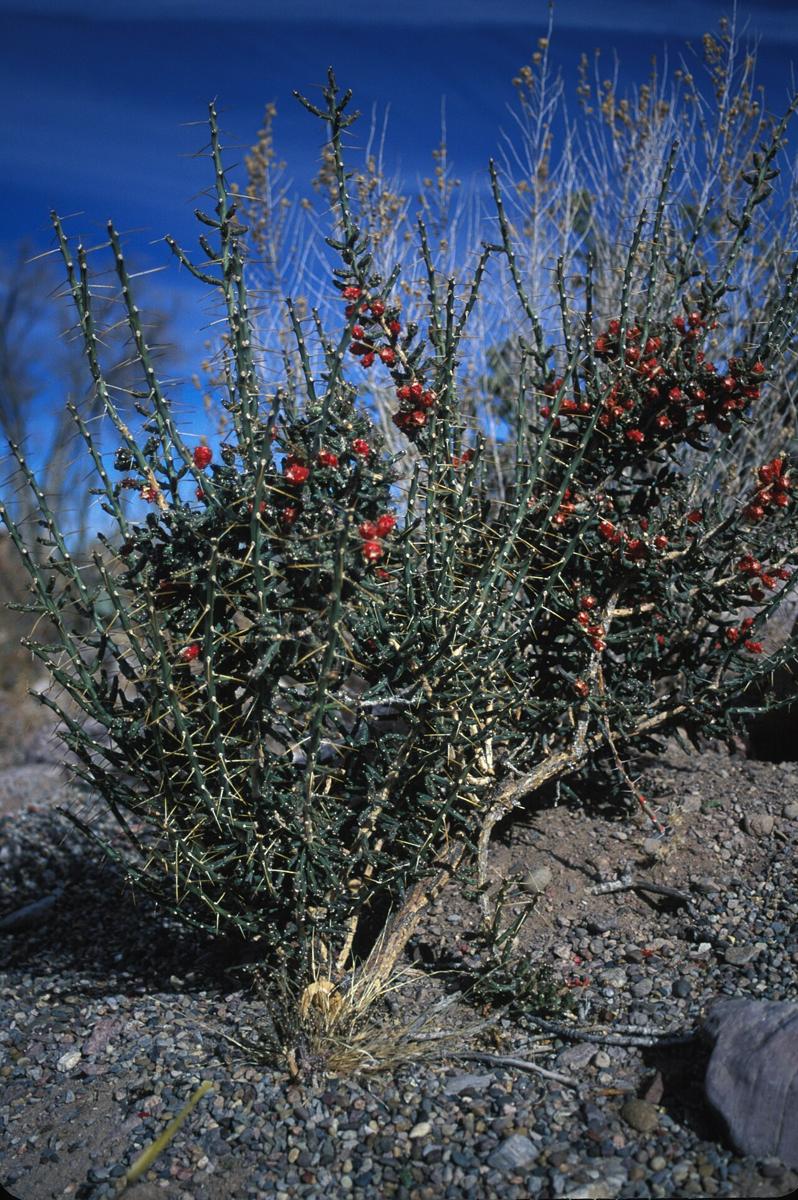
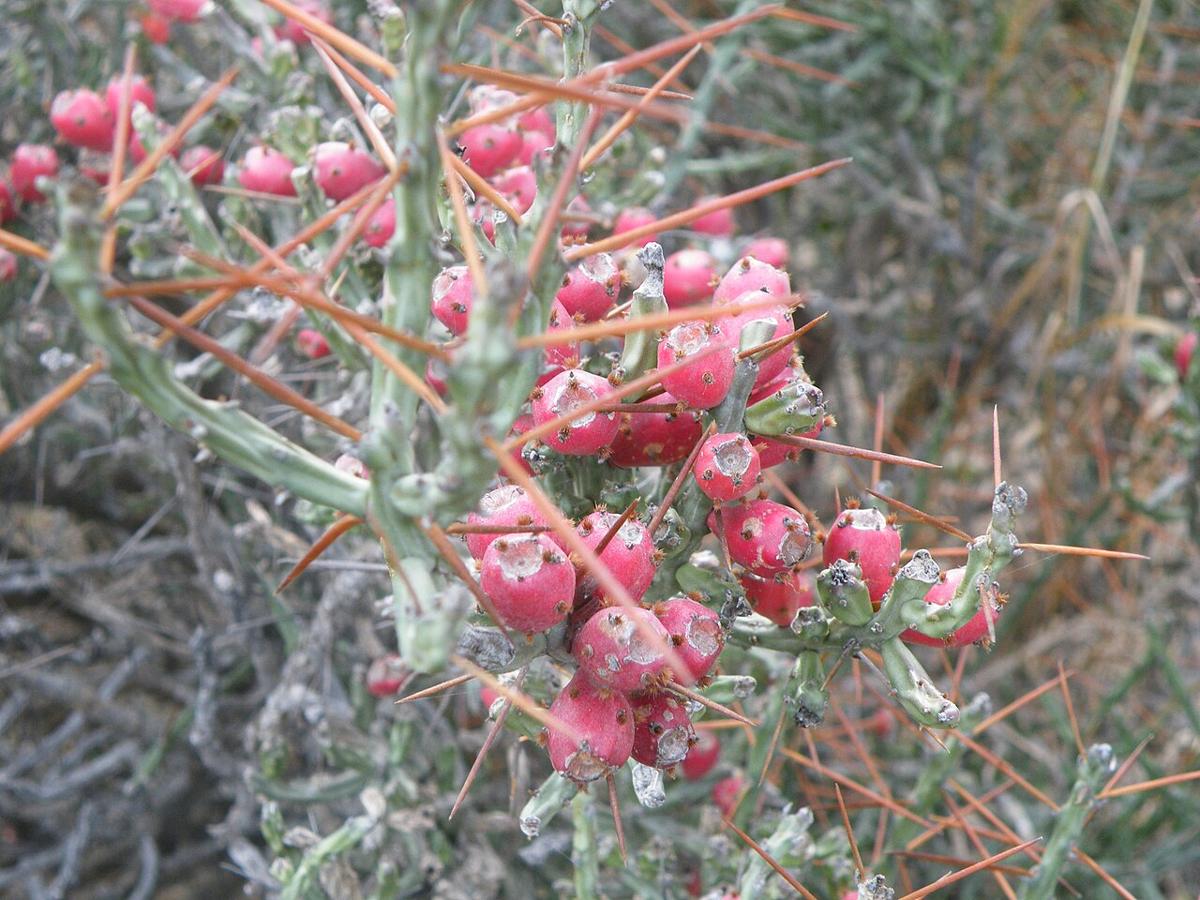
Cylindropuntia leptocaulis, known as Christmas Cactus or Tasajillo (also desert Christmas cholla or pencil cholla), is a slender, wiry, often nearly invisible cactus of the southwestern deserts and Texas brushlands that transforms every fall into one of the showiest native plants in its range. For most of the year it reads as a tangle of thin, pencil-thick green stems scattered through mesquite and creosote scrub, easy to miss entirely. Then from late fall into winter its stems load up with small, bright red, holly-berry-like fruit that persist for months, giving the whole plant a festive glow that gave rise to its common name.
Tasajillo is a true shrub-cactus, usually growing 1 to 3 feet tall and often wider, with stems only about a quarter inch thick, covered in widely spaced, needle-sharp spines. It is frequently found growing up through and sprawling over nurse shrubs like mesquite or lotebush, using them for support and partial shade while its roots tap into the open desert and brush-country soil below.
For gardeners in its native Southwestern range, tasajillo is an easy, carefree, and genuinely wildlife-rich choice: nearly pest-free, needing no irrigation once rooted, and valuable as both cover and a reliable winter food source for birds. Like all chollas its spines are sharp and readily detach, so it earns a spot at the back of the border or tucked among other shrubs rather than along a path.
Identification
Tasajillo is easy to overlook until fruiting season, when its slender form and bright red berries make it unmistakable. Mature plants form loose, open, sprawling shrubs 1 to 3 feet tall (occasionally taller when supported by a nurse plant) and 2 to 4 feet across.
Stems
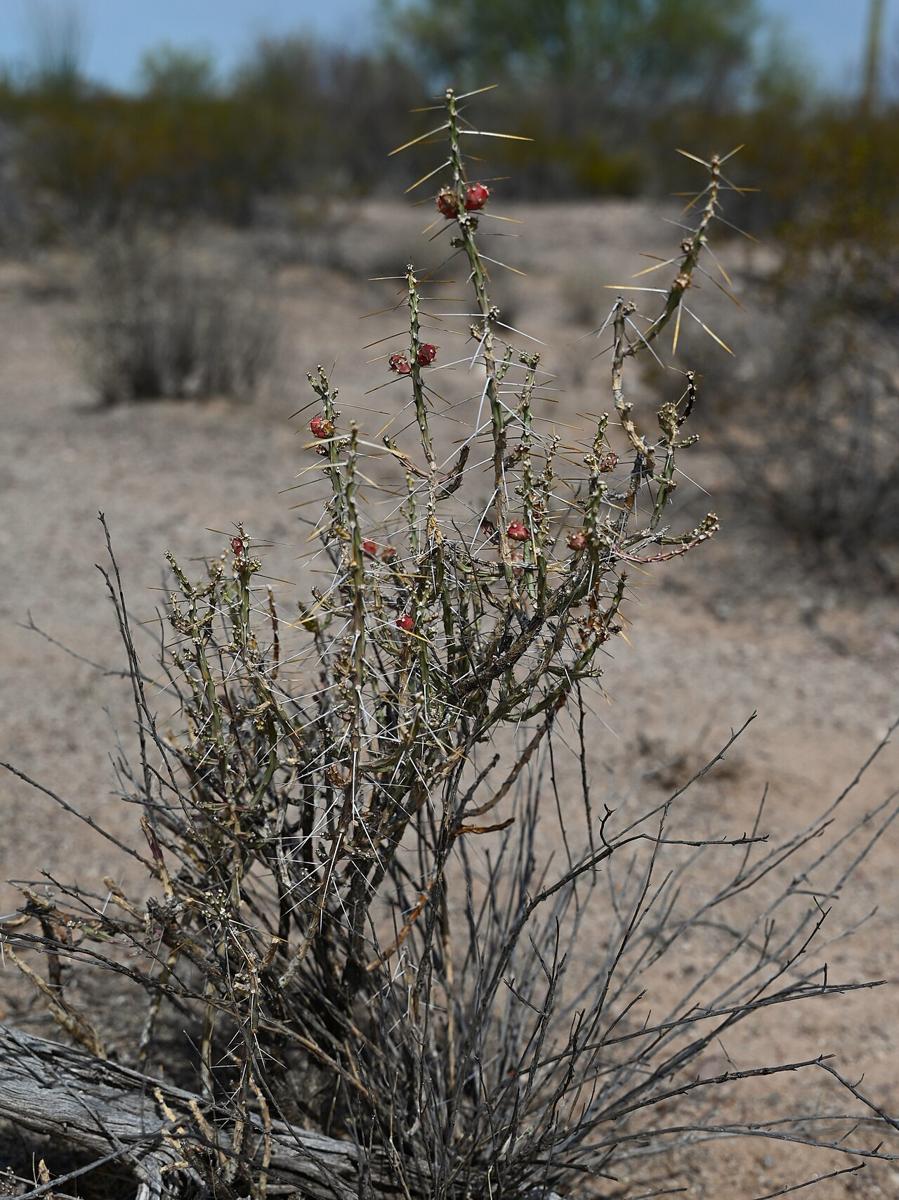
The stems are cylindrical and notably thin, about ¼ inch in diameter, bright to dull green, and jointed, breaking apart easily at the joints, which is the origin of the Spanish name “tasajillo” (little dried strip of meat), describing the thin, jerky-like segments. Older basal stems become slightly woody and gray-brown.
Spines
Each areole bears just one to a few spines, but they are long relative to the stem, ½ to 1½ inches, needle-sharp, and whitish to pale yellow, with a thin papery sheath. Despite being sparser than on many chollas, the spines are stiff and detach readily, making tasajillo surprisingly easy to brush against without noticing until it’s too late.
Flowers
Small, greenish-yellow to bronze flowers, about ½ inch across, appear in spring and are easy to miss among the thin stems. They are rarely the plant’s main attraction, especially compared to the fruit display that follows.
Fruit & Seeds
The real show: bright red, smooth, egg-shaped berries about ⅓ to ½ inch long form in late summer and ripen through fall, often persisting on the stems all winter and sometimes until the following year’s new fruit appears. Like several other chollas, the fruit can proliferate, sprouting a second fruit or small plantlet from the tip of the first.
Quick Facts
| Scientific Name | Cylindropuntia leptocaulis |
| Family | Cactaceae (Cactus) |
| Plant Type | Slender shrub-form cholla cactus |
| Mature Height | 1–3 ft (taller when supported by a nurse shrub) |
| Mature Spread | 2–4 ft, open and sprawling |
| Growth Rate | Slow to moderate |
| Sun Exposure | Full Sun to Part Shade |
| Water Needs | Low; drought tolerant once established |
| Soil Type | Sandy, rocky or caliche; sharply drained |
| Soil pH | Neutral to alkaline (about 6.5–8.5) |
| Bloom Time | Spring (April – May) |
| Flower Color | Greenish-yellow to bronze |
| Fall Color | None; prized instead for red fall/winter fruit |
| Fruit | Bright red, spineless berries, fall–winter, long-persisting |
| Deer Resistant | Yes |
| USDA Hardiness Zones | 8–11 |
Native Range
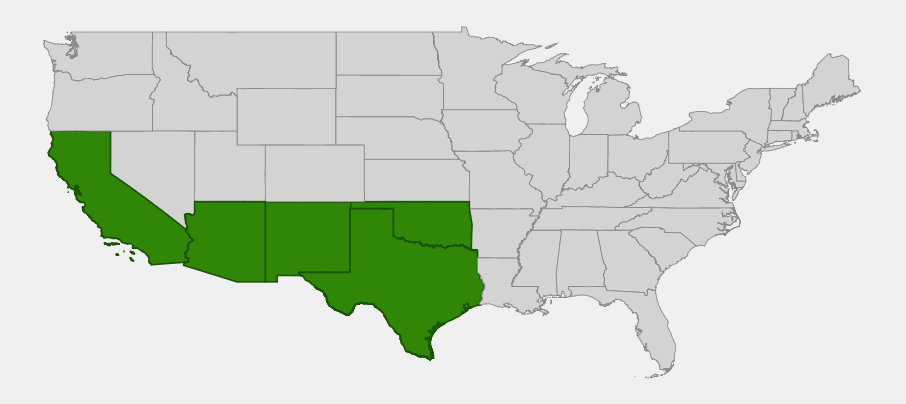
Tasajillo ranges across the warm deserts and brush country of the far southern United States, from the southeastern corner of California through southern Arizona and New Mexico, across most of Texas, into the Oklahoma panhandle region, and south through much of northern and central Mexico. In California it is uncommon and largely restricted to the low desert of Imperial County near the Arizona border; it is not a widespread California native, so gardeners elsewhere in the state should not expect it to be locally appropriate.
Across its core range in Texas, New Mexico and Arizona, tasajillo is a common component of desert grassland, Chihuahuan Desert scrub, thornscrub and mesquite savanna, typically below about 5,000 feet elevation. It is especially characteristic of South Texas brush country, where it is one of the most frequently encountered native cacti, often growing up through honey mesquite, lotebush, and other thorny shrubs that offer it some support and shade.
Because the stem joints detach and root readily, tasajillo can spread locally into disturbed, overgrazed rangeland, but within its native range this is simply part of its normal ecology rather than an invasive problem. Plant it only inside the states listed here, where it belongs as a long-standing part of the native plant community.
📋 Regional plant lists featuring Christmas Cactus (Tasajillo): California & Nevada · Arizona & New Mexico · Texas
Growing & Care Guide
Tasajillo asks for almost nothing once it is in the ground: sun, sharp drainage, and patience while it slowly fills out into its wiry, sprawling form.
Light
Full sun produces the densest growth and heaviest fruit set, though tasajillo also tolerates the light, dappled shade it often gets in the wild while growing up through a mesquite or acacia canopy.
Soil & Water
Plant in sandy, rocky or caliche soil with fast drainage; it is very forgiving of poor, infertile ground and actually performs worse in rich, moisture-retentive soil. Water to establish the first season, then rely on natural rainfall; mature plants are thoroughly drought tolerant and rarely need any supplemental water within their native range.
Planting Tips
Set out container plants in spring. Because the thin stems and spines are easy to miss until you brush against them, mark the plant’s location or plant it behind lower groundcovers so it isn’t an ambush hazard near paths. Pairing it with a small native shrub such as lotebush or a young mesquite lets it grow in a more natural, supported form, as it does in the wild.
Pruning & Maintenance
Little to no pruning is needed. If stems need to be removed, use long tongs, since joints detach and root easily and can start unwanted new plants wherever they land. Tasajillo has no significant pest or disease issues and needs no fertilizer.
Propagation
Stem-joint cuttings root easily: remove a joint with tongs, let the cut end dry and callus for a week or more, then set it shallowly in dry, sandy soil and withhold water until roots form, usually within a few weeks. Seed can also be used but germinates slowly and less predictably.
Landscape Uses
- Winter interest in xeriscape beds, where the red fruit display peaks when little else is in color
- Wildlife gardens paired with honey mesquite for natural support and habitat value
- Understory accent beneath taller native shrubs in Southwestern brush-country landscaping
- Barrier or discouragement plantings along property edges where low-profile deterrence is useful
- Naturalistic desert restoration plantings within its native range
Wildlife & Ecological Value
Tasajillo’s winter fruit crop makes it one of the more valuable native plants for wildlife through the lean months of the year.
For Pollinators
The small spring flowers attract native bees and occasionally other insects, though the plant’s wildlife value is weighted much more heavily toward its fruit than its bloom.
For Birds
Northern mockingbirds, curve-billed thrashers, cactus wrens and many other birds rely on the persistent red fruit as a reliable winter food source when other fruits and insects are scarce. Birds also nest and shelter within the dense, spiny tangle the plant forms when supported by a nurse shrub.
For Mammals
Javelina, coyotes, foxes and rodents eat the fruit and help disperse the seeds, and the thorny cover gives small mammals protection from predators.
Ecosystem Role
Tasajillo is a classic component of South Texas and Chihuahuan Desert brush, adding a low, spiny layer that supports nesting birds and provides cover and food through winter when the rest of the landscape is dormant and food is scarce.
Cultural & Historical Uses
The Spanish name tasajillo, meaning “little dried meat strip” or “little jerky,” reflects both the thin, jointed stems and a historical regional use: the stems, once de-spined, were sometimes dried and used in folk remedies in parts of Mexico and South Texas. The fruit, though small, was gathered and eaten by some Indigenous and rural communities, usually fresh, as a minor seasonal food.
Ranchers and rural landowners across its range have long regarded tasajillo with mixed feelings: valued as a hardy, low-maintenance native that provides winter bird food and modest ground cover, but also known to spread through overgrazed pasture via its easily rooting stem joints, so it has sometimes been managed as a rangeland nuisance even though it is a true native species rather than an invasive.
In home landscaping, tasajillo’s main appeal today is as a low-key but reliable native accent, valued by Southwestern and South Texas gardeners for its carefree habit and its distinctive, holiday-season fruit display that gives the plant its most memorable common name.
Frequently Asked Questions
Why is it called Christmas cactus if it isn’t the houseplant?
The name refers to the bright red fruit that ripens in late fall and persists through winter, giving the plant a festive look unrelated to the tropical, leaf-jointed houseplant (Schlumbergera) that shares the common name. They are not related.
Is tasajillo dangerous to touch?
Yes, the spines are sharp, detach easily, and are often hard to see against the thin green stems, so people frequently brush against it without warning. Plant it away from paths and handle it with gloves and tongs.
Is the fruit edible?
The ripe red fruit has been eaten fresh in parts of its native range, but it is mainly valued as wildlife food rather than a garden food crop, and the fruit and stems are not cultivated for eating. If you want to try it, be certain of identification and remove the surface glochids first.
Will tasajillo take over my garden?
Within reason. Broken stem joints root easily, so it can spread slowly if joints are left on bare soil, but it is not aggressive in a maintained garden bed. Remove fallen joints promptly if you want to control its spread.
Is tasajillo native to California?
Only in a narrow part of the far southeastern California desert near the Arizona border (Imperial County). It is not a general California native and should be planted there only within that specific desert region, not statewide.

Looking for a nursery that carries Christmas Cactus (Tasajillo)?
Browse our native plant nursery directory: California · Arizona · New Mexico & Oklahoma · Texas