
Creeping Charlie (Pilea nummulariifolia)
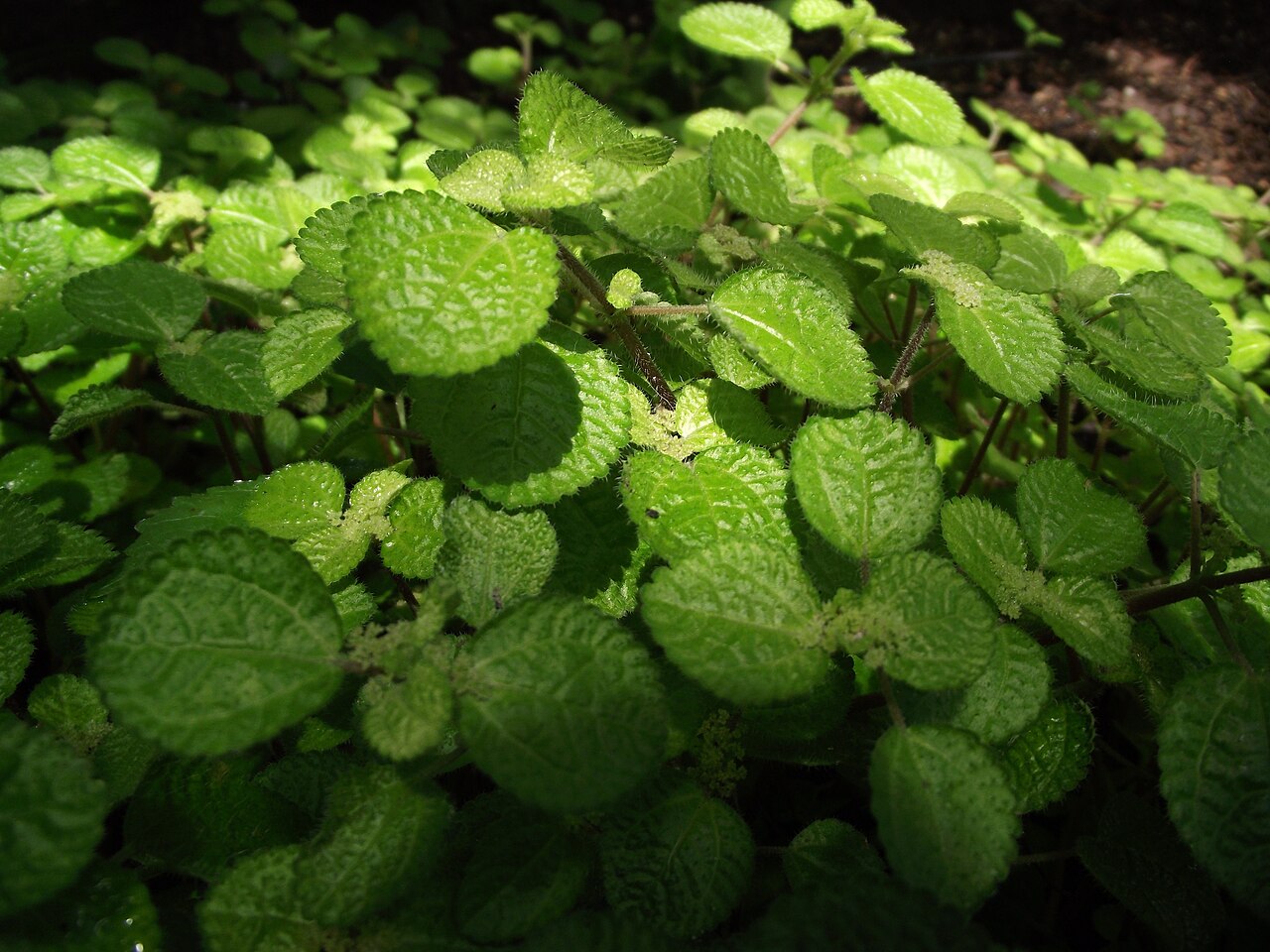
Pilea nummulariifolia, known as Creeping Charlie or creeping pilea, is a low, mat-forming tropical herb in the nettle family (Urticaceae). Its slender, reddish stems creep along the ground and root as they go, carrying round, quilted, scallop-edged leaves about the size of a coin. The species name means “with leaves like coins.”
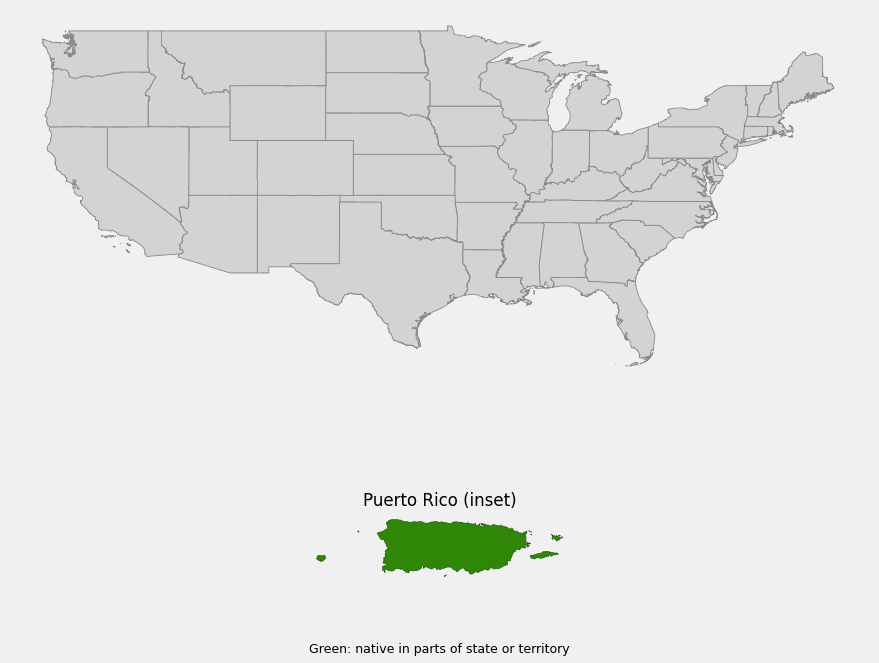
Within the United States it is native to Puerto Rico and the U.S. Virgin Islands, where it grows in moist forests from the limestone hills to the wet mountains of El Yunque. Its wider native range covers the Caribbean islands, Central America and tropical South America. USDA PLANTS also lists Florida, but the Atlas of Florida Plants treats Florida plants as non-native escapes, so this guide maps it as native only in Puerto Rico. It is widely grown in the tropics and sometimes escapes from gardens elsewhere.
It is widely sold as a hanging-basket and terrarium plant. This guide explains how to recognize it, how to tell it from the lawn weed also called creeping Charlie, where it grows wild, and how to grow it indoors or outdoors in zones 10–13.
Identification
“Creeping Charlie” is a name shared by several unrelated plants. In lawns across the U.S. it usually means ground ivy (Glechoma hederacea), a Eurasian mint with square stems, opposite leaves, a strong minty smell and purple flowers. Pilea nummulariifolia has round stems, alternate leaves, no mint scent and tiny greenish flowers. Plants sold as Swedish ivy (Plectranthus) are also sometimes called creeping Charlie, but they have larger, glossy leaves.
Stems & Growth Habit
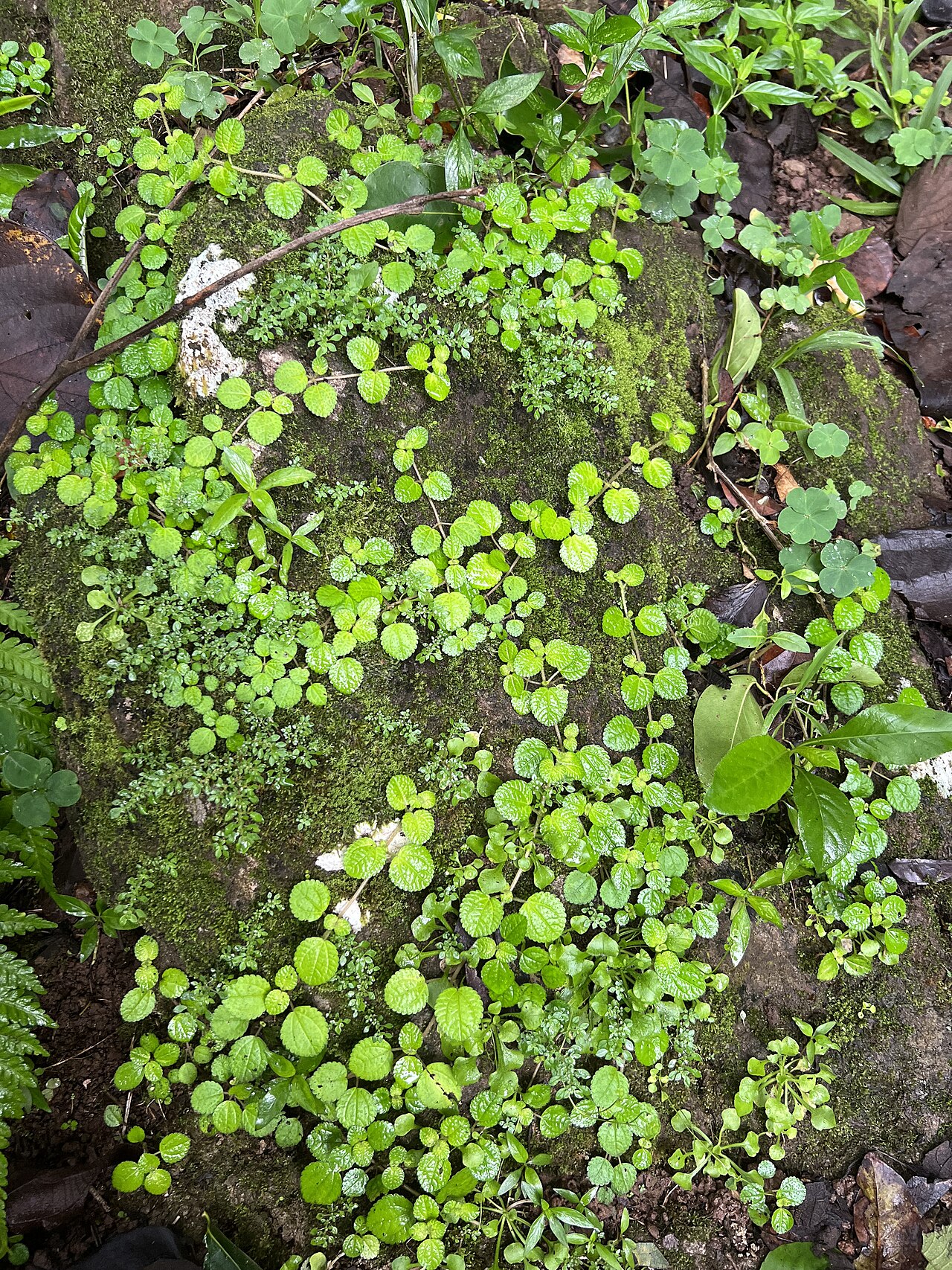
A low, creeping perennial herb, usually only 2 to 4 inches tall but spreading 1 to 2 feet or more. The stems are thin, reddish to green and finely hairy, and they root at the nodes wherever they touch moist soil or moss, forming dense mats. In hanging baskets the stems trail over the edge. Although it belongs to the nettle family, it has no stinging hairs.
Leaves
Leaves alternate along the stem on short stalks. They are nearly round, about ½ to ¾ inch across, with scalloped (crenate) edges, and the surface is softly hairy and puckered or quilted between the veins. They are light to medium green above, often paler beneath, and give off no scent when crushed.
Flowers
The flowers are tiny, greenish to whitish and without petals, borne in small, dense clusters in the leaf axils. Male and female flowers are separate. Like those of the related artillery plant, the stamens are held under tension and spring open to release a puff of pollen. The flowers are easy to overlook.
Fruit
The fruit is a minute, dry, seedlike achene. Plants spread mostly by creeping and rooting stems, and in cultivation they are grown from cuttings.
Quick Facts
| Scientific Name | Pilea nummulariifolia (Sw.) Wedd. |
| Family | Urticaceae (nettle family) |
| Plant Type | Creeping evergreen perennial herb; groundcover and houseplant |
| Mature Height | 2–4 in |
| Mature Spread | Stems creep or trail 1–2 ft or more |
| Growth Rate | Fast |
| Sun Exposure | Part shade to shade (bright, indirect light indoors) |
| Water Needs | Moderate; keep evenly moist but not soggy |
| Soil Type | Moist, humus-rich soil, moss and rock in the wild; light, peaty potting mix in pots |
| Soil pH | About 5.5–7.5 |
| Bloom Time | Sporadic, much of the year |
| Flower Color | Greenish to whitish (tiny clusters in the leaf axils) |
| Fall Color | None; evergreen |
| Fruit | Minute dry achenes |
| Deer Resistant | Not usually an issue; mostly grown in containers |
| USDA Hardiness Zones | 10–13 outdoors (frost-tender); houseplant everywhere |
Native Range
USDA PLANTS lists Pilea nummulariifolia as native in Puerto Rico and the U.S. Virgin Islands. Outside the United States it grows wild through the Greater and Lesser Antilles, in Central America and in tropical South America. In Puerto Rico herbarium collections come from much of the island, from the moist limestone forests of Guajataca and Río Abajo to the wet montane forest of El Yunque and the central mountains, and from Vieques.
It grows on the forest floor, on shady stream and road banks, on mossy rocks and logs, and along trails, typically in moist shade. It also appears in disturbed, damp places such as ditches and garden edges, which makes it one of the more familiar small forest herbs on the island.
USDA also lists Florida, but the Atlas of Florida Plants treats Florida plants as escapes from cultivation, not native populations, and plants growing outside gardens in Hawaii are escapes from cultivation. It is widely grown in greenhouses and homes. Outside its native range, do not plant it in natural areas, because its creeping stems can spread into moist woods.
📋 Regional plant lists featuring Creeping Charlie: Puerto Rico
Growing & Care Guide
Creeping Charlie is a fast, easy plant for hanging baskets, terrariums and shady groundcover in the tropics. It wants what it gets on a Puerto Rican forest floor: steady moisture, humidity and shade. Unlike succulent peperomias, it does not like to dry out completely.
Light
Give it bright, indirect light indoors, such as an east or north window or a spot back from a sunny window. It tolerates lower light but grows sparse. Direct afternoon sun bleaches and scorches the thin leaves. Outdoors in zones 10–13, grow it in part to full shade.
Soil & Water
Use a light, moisture-holding but well-drained mix, such as potting mix with some peat or coir and perlite. Water when the top half inch of mix feels dry, keeping it evenly moist but never waterlogged. It wilts quickly if it dries out and rots if it sits in water. It likes moderate to high humidity, which makes it a good terrarium plant.
Planting Tips
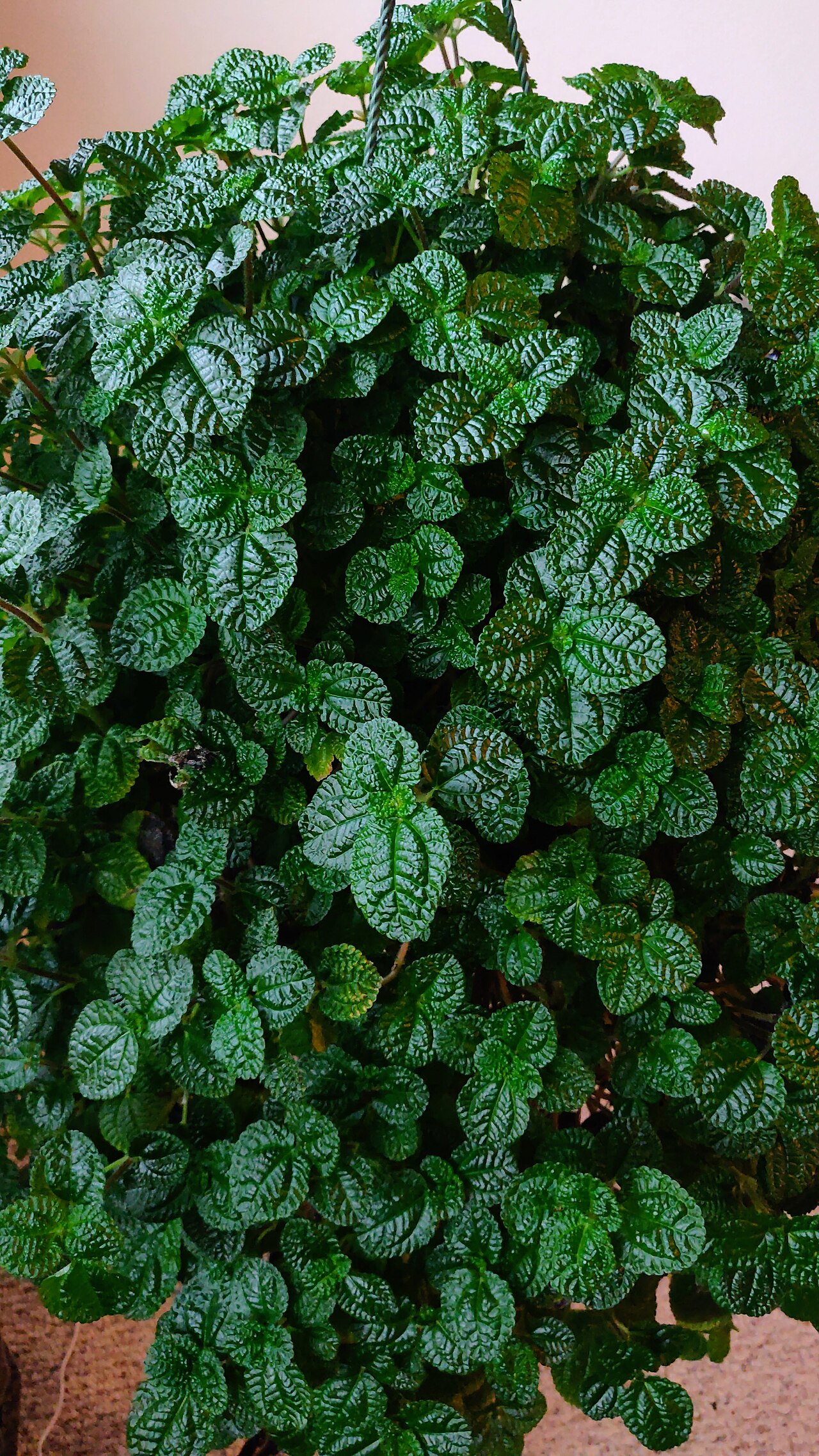
Plant several rooted cuttings together for a quick, full hanging basket. In terrariums, give it room, because it spreads fast and can smother slower plants. Keep it above about 55°F (13°C). Outdoors in Puerto Rico it makes a soft groundcover in shady, moist beds and between stepping stones in shade.
Pruning & Maintenance
Trim long or straggly stems often to keep it dense, and root the trimmings. Feed lightly once a month in spring and summer. Older plants can become woody and bare at the center; restart them from cuttings every year or two. Watch for mealybugs, spider mites in dry air, and fungus gnats in soggy pots.
Propagation
It is one of the easiest plants to propagate. Stem cuttings root within a week or two in moist mix or water, and stems laid on moist soil root at the nodes on their own. Divide established mats in spring.
Landscape Uses
- Hanging baskets: dense, trailing foliage for shady porches and indoor windows
- Terrariums and bottle gardens: loves humidity; trim to keep it in check
- Shade groundcover in zones 10–13: moist, shady beds, rock gardens and between pavers in Puerto Rico
- Pet-friendly plantings: the ASPCA lists creeping Charlie (Pilea nummulariifolia) as non-toxic to cats and dogs
- Living mulch in containers: under larger potted plants that like the same moist conditions
Wildlife & Ecological Value
In Caribbean forests, creeping Charlie is part of the low layer of herbs, ferns and mosses that carpets moist ground, banks and rocks under the canopy.
For Pollinators
Like other Pilea, it is mostly wind-pollinated: the springing stamens throw pollen into the air. Its tiny flowers have little to offer bees or butterflies.
For Birds
It has little direct food value for birds, though ground-foraging birds search its mats for insects.
For Mammals
It has little direct food value for mammals.
Ecosystem Role
Its creeping, rooting stems knit loose soil on shady banks and trail edges, reducing erosion in heavy tropical rain, and its mats keep the forest floor moist. Snails, insects, spiders and small frogs such as coquís shelter among its leaves.
Cultural & Historical Uses
Olof Swartz described the plant as Urtica nummulariifolia in his work on West Indian plants, placing it with the stinging nettles, and Hugh Algernon Weddell later moved it to Pilea. The genus name comes from the Latin pileus, a felt cap, for the cap-like sepal that covers the fruit in many species.
Pilea is a large tropical genus that also includes the artillery plant, the aluminum plant and the Chinese money plant (Pilea peperomioides). Creeping Charlie has been grown in greenhouses and homes since the 19th century as a basket and edging plant.
Because the name “creeping Charlie” is shared with the weedy ground ivy of North American lawns, many people searching for this plant find lawn-weed advice instead. In Puerto Rico and the Virgin Islands, however, Pilea nummulariifolia is a true native of the forest floor.
Frequently Asked Questions
Is creeping Charlie (Pilea nummulariifolia) toxic to cats and dogs?
The ASPCA lists creeping Charlie, Pilea nummulariifolia, as non-toxic to cats and dogs. Eating a lot of any houseplant can still cause mild stomach upset. Note that the lawn weed ground ivy, also called creeping Charlie, is a different plant and can sicken horses that eat large amounts.
Is this the same creeping Charlie that grows in lawns?
No. The lawn weed is ground ivy (Glechoma hederacea), a Eurasian mint with square stems, opposite leaves, a minty smell and small purple flowers. Pilea nummulariifolia is a tropical nettle-family plant with round stems, alternate, quilted leaves and tiny greenish flowers. It is not winter-hardy and does not invade northern lawns.
Is Pilea nummulariifolia native to the United States?
Yes, in Puerto Rico and the U.S. Virgin Islands. Plants found in Florida and Hawaii are escapes from cultivation.
Why is my creeping Charlie losing leaves or turning crispy?
Usually because the mix dried out, the air is too dry or it gets direct hot sun. Keep the mix evenly moist, raise the humidity or move it into a terrarium, and give it bright but indirect light. Root healthy stem tips to refresh the plant.
Does creeping Charlie need a terrarium?
No. It grows well in ordinary pots and hanging baskets with regular watering, but it thrives in the extra humidity of an open terrarium. In closed terrariums it can grow quickly enough to need regular trimming.

Looking for a nursery that carries Creeping Charlie?
Our nursery directory does not yet include Puerto Rico. Browse the native plant nursery directory by state: Alabama–Arkansas · California · Colorado–Hawaii · Idaho–Kansas · Kentucky–Montana · Nebraska–Oklahoma · Oregon · Pennsylvania–Virginia · Washington · West Virginia–Wyoming

