
Devilshead (Echinocactus horizonthalonius)
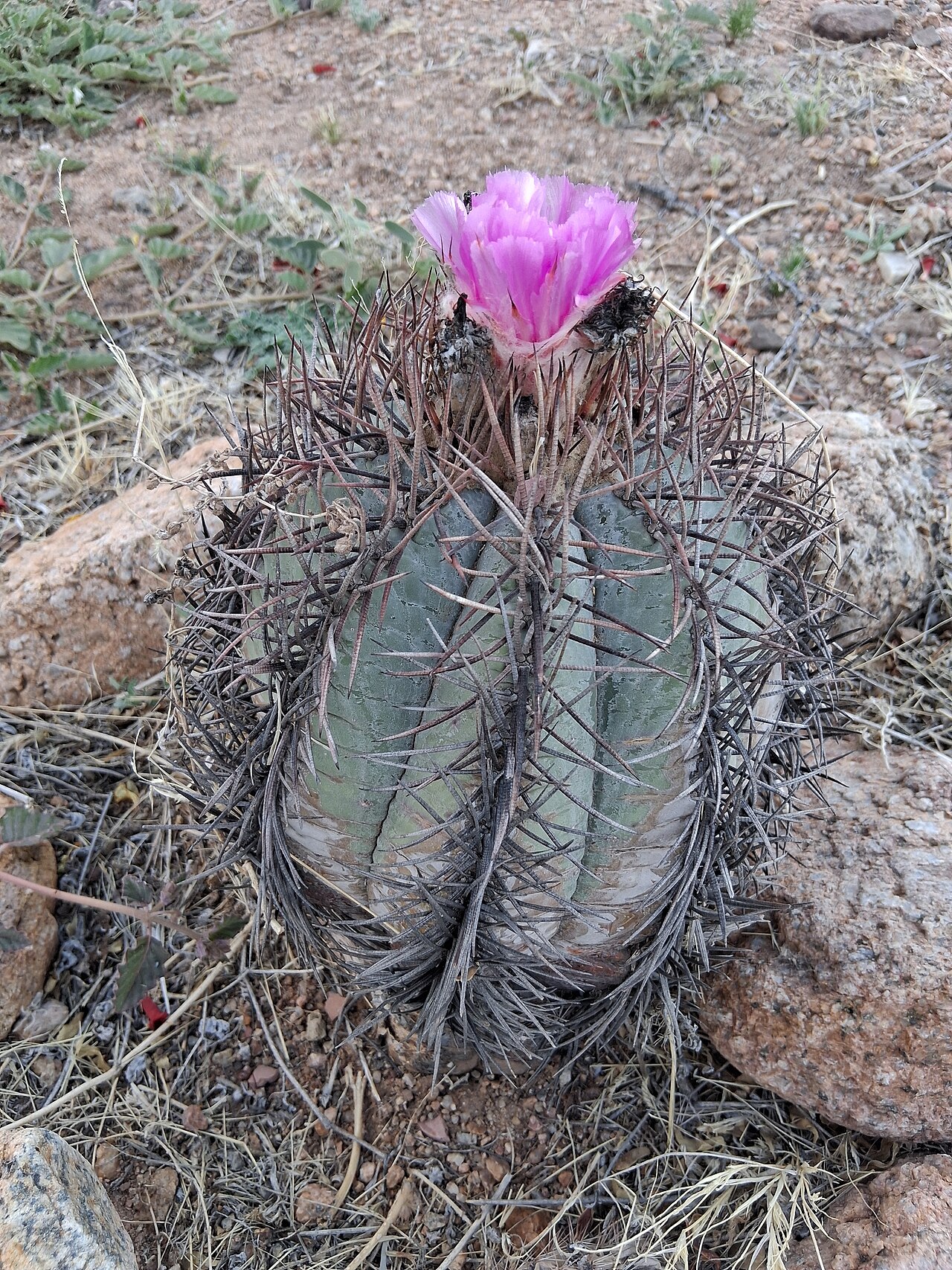
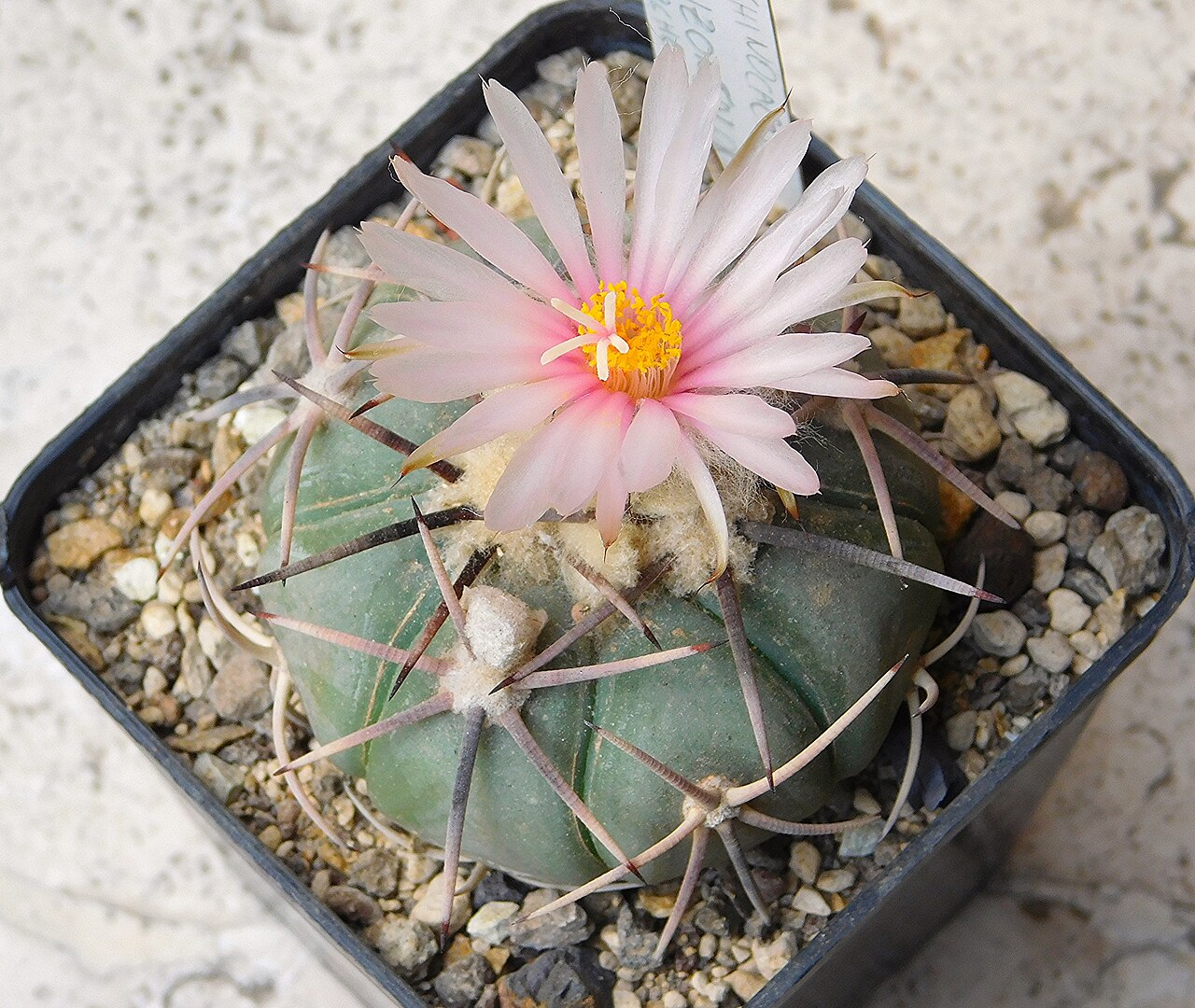
Echinocactus horizonthalonius, known as Devilshead, Turk’s head cactus, eagle’s claw or blue barrel, is a small, slow-growing barrel cactus of the Chihuahuan and Sonoran deserts. It has a low, rounded to slightly flattened, blue-gray to gray-green body with a few broad, sometimes spiraling ribs, armed with stout, curved, gray to reddish spines. In spring and summer it bears large, satiny pink to magenta flowers that seem far too big for such a small plant.
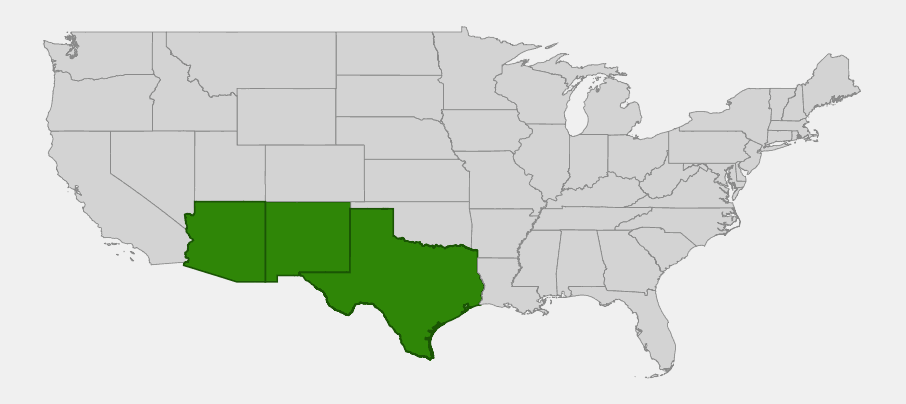
In the United States devilshead is native to western Texas, southern New Mexico and southern Arizona, and it extends south across much of northern and central Mexico. In Texas it is a plant of the Trans-Pecos, especially rocky limestone hills, not East Texas. The Arizona plants, known as Nichol’s Turk’s head cactus (var. nicholii), grow in only a few mountain ranges west of Tucson and are listed as endangered under the U.S. Endangered Species Act.
Devilshead is prized by cactus collectors, and that popularity has hurt wild populations. Never dig it from the wild; buy only nursery-propagated plants from reputable growers. This guide covers how to identify it, where it grows, how to grow it in a container or desert garden, its wildlife value, and how to handle its very sharp spines safely.
Identification
Devilshead is one of the easiest small cacti to recognize in the Chihuahuan Desert, thanks to its blue-gray color, few broad ribs and stout, curved spines. It rarely grows much bigger than a large grapefruit.
Body & Ribs
The stem is usually single, low and rounded to somewhat flattened, about 3 to 8 inches wide and up to about 6 inches tall, occasionally a little taller with age. The color is blue-gray, gray-green or olive, often with a frosty bloom. It has about 7 to 13 broad, rounded ribs, often 8, which may twist slightly in a spiral. The top of the plant is covered in pale wool.
Spines
Each areole carries about 5 to 9 thick, rigid, flattened spines, gray to reddish or pinkish, often banded, and usually curved back toward the plant body. One central spine is often present. The spines are very stiff and sharp and can easily puncture skin and shoes, giving the plant names like devilshead and eagle’s claw.
Flowers
The flowers open at the crown, usually one to a few at a time, from about April to July, often after rains. They are funnel-shaped, about 2 to 3 inches across, with satiny, rose-pink to magenta petals, often with a darker center and yellow stamens. They usually open in the morning and close in the afternoon.
Fruit
The fruit is a small, red to pinkish oval berry covered in white wool, which dries and splits to release black seeds.
Similar Species
Horse Crippler (Echinocactus texensis) of South Texas and the Rio Grande region is lower and flatter, with more numerous ribs, green color and pale pink flowers with fringed petals. Cottontop Cactus (E. polycephalus) of the Mojave Desert grows in clumps with yellow flowers. Young barrel cacti (Ferocactus) have hooked central spines and many more ribs.
Quick Facts
| Scientific Name | Echinocactus horizonthalonius Lem. (incl. var. nicholii L.D. Benson) |
| Family | Cactaceae (cactus family) |
| Plant Type | Small solitary barrel cactus |
| Mature Height | 2–6 in (rarely taller) |
| Mature Spread | 3–8 in |
| Growth Rate | Very slow |
| Sun Exposure | Full sun |
| Water Needs | Very low; very well-drained soil, dry winters |
| Soil Type | Rocky, gravelly limestone soils |
| Soil pH | Neutral to alkaline (about 7.0–8.5) |
| Bloom Time | April–July |
| Flower Color | Rose-pink to magenta |
| Fall Color | Evergreen; blue-gray body |
| Fruit | Small red, woolly berry |
| Deer Resistant | Yes |
| USDA Hardiness Zones | 7–10 |
Native Range
USDA PLANTS lists devilshead as native in Arizona, New Mexico and Texas. In Texas it grows in the Trans-Pecos region of West Texas, from El Paso east and south through the Chihuahuan Desert to the Big Bend country. In New Mexico it occurs in the southern Chihuahuan Desert counties. In Arizona the species is represented only by var. nicholii, found in a few ranges of Pima and Pinal counties, including the Waterman, Silver Bell and Vekol mountains.
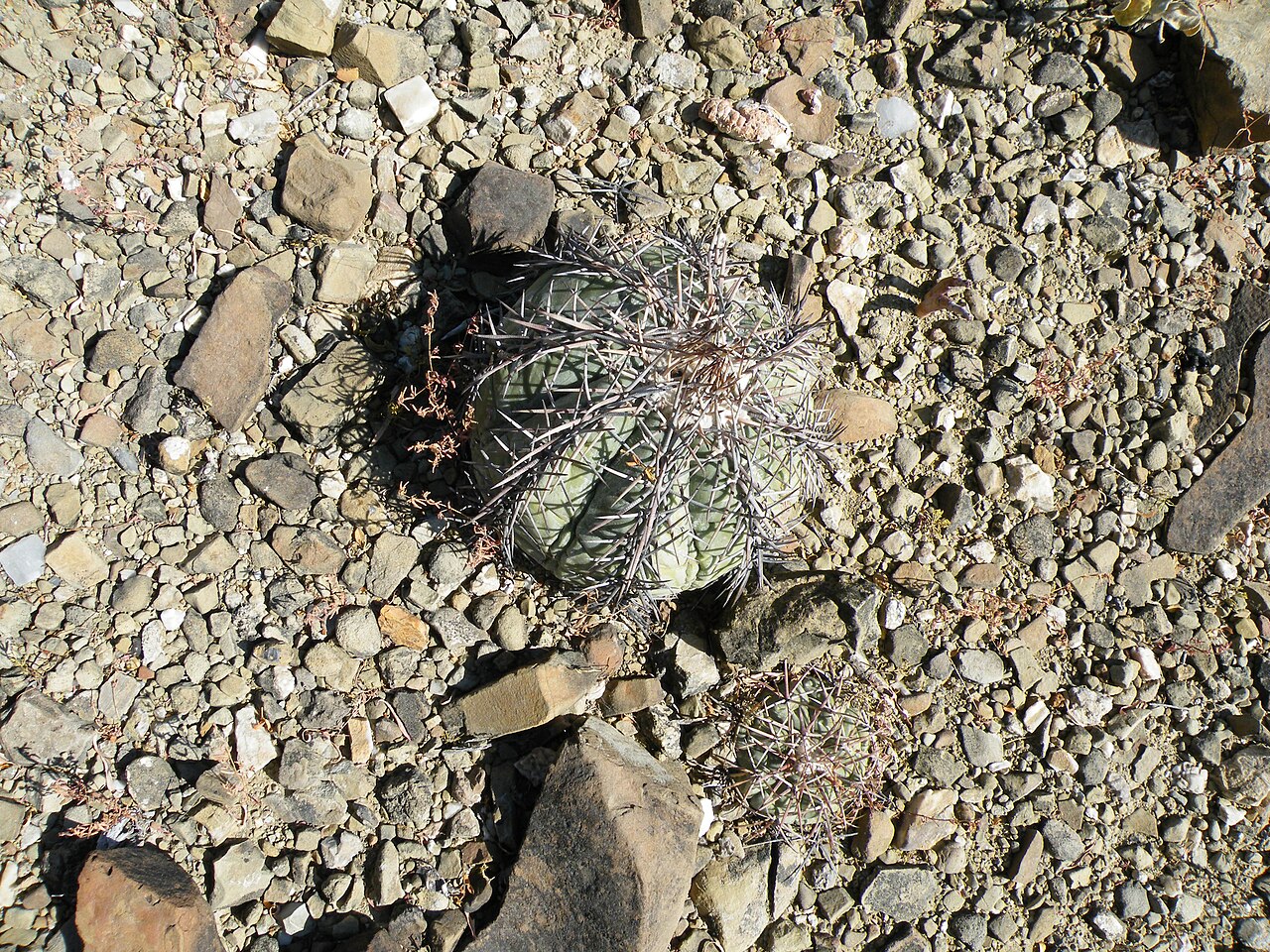
It grows on rocky and gravelly slopes, ridges and hills, mostly on limestone, in desert scrub with creosote bush, lechuguilla and other succulents. Its low, gray body blends in with the stones, and plants are often hard to see until they flower.
Most of its range lies in Mexico, from Chihuahua, Coahuila and Sonora south to San Luis Potosí, Zacatecas and neighboring states. Mexican populations include a variety of plant shapes and colors, and some botanists recognize several varieties or subspecies.
📋 Regional plant lists featuring Devilshead: South & West Texas · Arizona & New Mexico
Growing & Care Guide
Devilshead is a choice plant for cactus collectors and desert rock gardens, but it is slow and less forgiving than most cacti. Buy only nursery-propagated plants grown from seed; never dig plants from the wild. The Arizona var. nicholii is federally endangered, and removing plants from public land without a permit is illegal. Seed-grown plants are widely available from specialist nurseries.
Light
Give it full sun in desert gardens, or very bright light with some direct sun as a container plant. Too little light makes it soft and pale.
Soil & Water
It needs very fast-draining, mineral soil, such as a mix of gravel, coarse sand, pumice and some crushed limestone, with little organic matter. Water sparingly during the warm season, letting the soil dry completely between waterings, and keep it dry in winter. Overwatering, especially in cool weather, quickly causes root rot.
Planting Tips
In the ground, plant it on a raised, rocky berm or slope in a sunny spot, with a gravel mulch around the base. In containers, use a shallow clay pot with a large drainage hole. It is hardy to about 0 to 10°F if kept dry, but cold, wet soil is fatal.
Pruning & Maintenance
No pruning is needed. Remove dead flowers and fallen debris from the crown with long tweezers, and check for mealybugs and scale. Handle plants with thick leather gloves, folded newspaper or kitchen tongs.
Propagation
Devilshead is grown from seed, which germinates readily in warm, bright, humid conditions on a gritty mix, but seedlings grow very slowly and may take many years to flower. Plants rarely produce offsets. Collect seed only from cultivated plants.
Safety Note
The spines are thick, very sharp and curved, and can puncture skin, gloves and even thin shoe soles. Keep plants away from paths and where children and pets play, wear thick gloves when handling them, and remove spines carefully with tweezers if you are stuck. The plant is not considered poisonous.
Landscape Uses
- Cactus collections: a sought-after small cactus for pots and cold frames, admired for its blue-gray color and large flowers
- Desert rock gardens: a small accent on a sunny, rocky berm in West Texas, New Mexico and Arizona gardens
- Containers: a long-lived pot plant in very fast-draining mix, kept dry in winter
- Xeriscapes: pair it with low agaves, hedgehog cacti and desert wildflowers in a gravel garden
- Where to see it wild: rocky limestone hills of the Trans-Pecos, such as the Big Bend region and the Franklin Mountains near El Paso
Wildlife & Ecological Value
Devilshead is small, but its big flowers and fruits play a part in desert food webs.
For Pollinators
The large, open pink flowers attract native bees, especially cactus bees and other solitary bees, as well as beetles, which crawl inside to feed on pollen.
For Birds
Birds and small mammals eat the fruits and seeds, and ants carry off seeds, which helps disperse them.
For Mammals
Its heavy spines protect it from most grazing animals, though rodents and javelinas sometimes damage cacti when water is scarce.
Ecosystem Role
Devilshead is part of the rich community of small cacti on Chihuahuan Desert limestone hills. Its populations recover very slowly from losses, because seedlings are rare and plants grow slowly. Illegal collecting, mining, roads and off-road vehicles are the main threats to its rare Arizona variety.
Cultural & Historical Uses
The genus name Echinocactus means “hedgehog cactus,” from the Greek echinos (hedgehog). The species name horizonthalonius was coined by the French botanist Charles Lemaire in 1839, probably referring to the low, horizontally spreading form of the plant.
Common names such as devilshead, Turk’s head and eagle’s claw all refer to its fierce, curved spines. Its Spanish names in Mexico include biznaga meloncillo, “little melon cactus,” for its rounded, ribbed shape.
Nichol’s Turk’s head cactus, the Arizona variety, was named for A.A. Nichol, an early Arizona naturalist, and was listed as endangered by the U.S. Fish and Wildlife Service in 1979 because of its small range and collecting pressure. It is one of a number of rare southwestern cacti protected under federal law.
Frequently Asked Questions
Is devilshead cactus endangered?
The species as a whole is not, but its Arizona variety, Nichol’s Turk’s head cactus (var. nicholii), is listed as endangered under the U.S. Endangered Species Act. Never dig devilshead from the wild anywhere; buy nursery-propagated plants only.
Where does devilshead grow?
It grows on rocky limestone hills in the Chihuahuan Desert of West Texas and southern New Mexico, in a few mountain ranges of southern Arizona, and across much of northern and central Mexico.
How do you care for devilshead cactus?
Give it full sun, a very gritty, fast-draining, lime-rich soil, and little water: water in the warm season only when the soil is completely dry, and keep it dry in winter. It grows very slowly.
Is devilshead cactus dangerous?
It is not poisonous, but its thick, curved spines are very sharp and can puncture skin and shoes. Handle it with thick gloves or tongs and keep it away from paths and play areas.
How is devilshead different from horse crippler?
Both are low Echinocactus, but devilshead has fewer, broader ribs, a blue-gray body and rose-pink to magenta flowers, while horse crippler is flatter and greener with more ribs and pale pink flowers with fringed petals.

Looking for a nursery that carries Devilshead?
Browse our native plant nursery directory: Arizona · New Mexico · Texas

