
Drummond’s Woodsorrel (Oxalis drummondii)
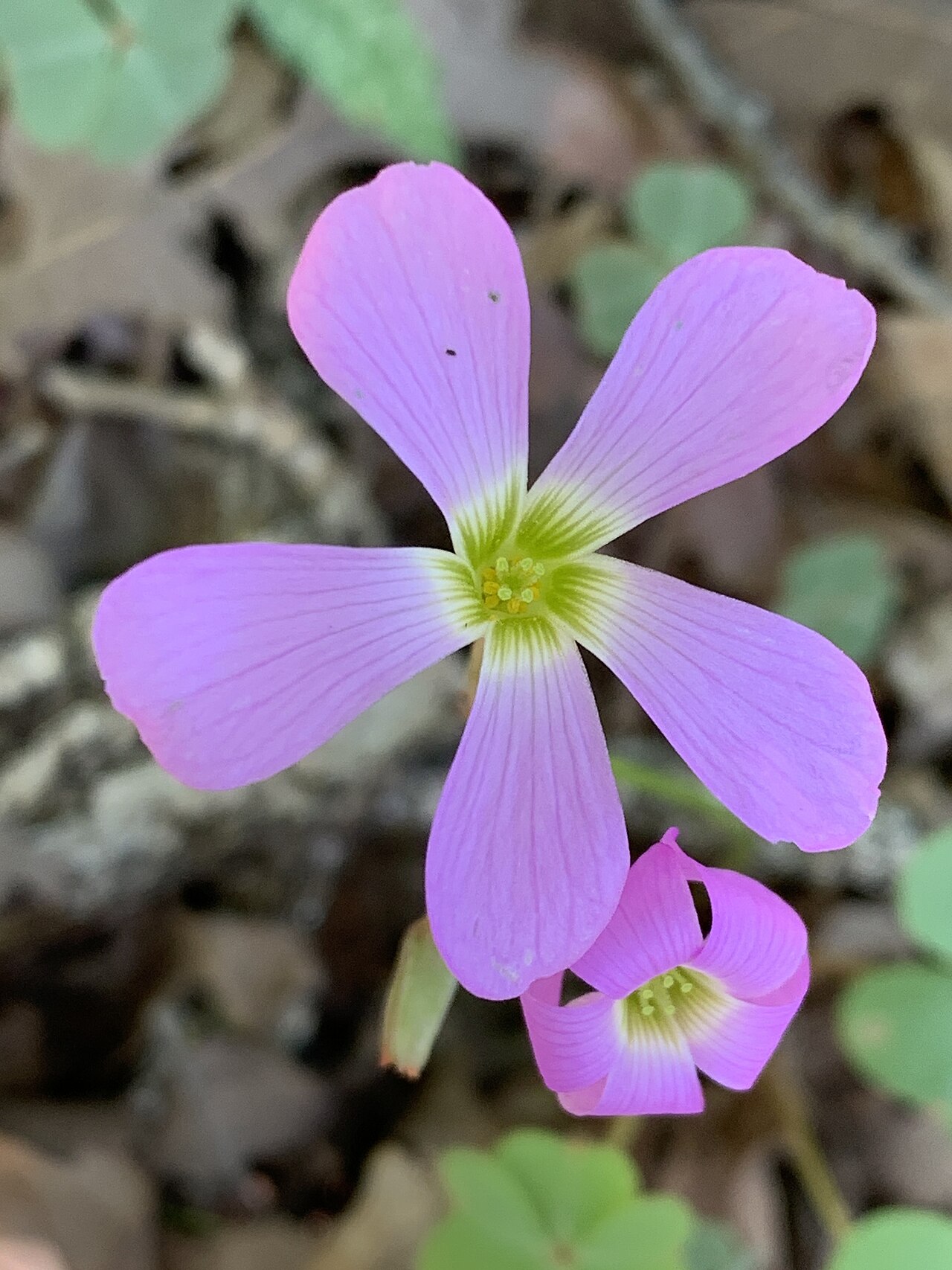
Oxalis drummondii, known as Drummond’s Woodsorrel or Drummond’s wood-sorrel, is a low perennial of the woodsorrel family (Oxalidaceae) native to central and western Texas, southern New Mexico, southeastern Arizona and northern Mexico. It grows from a small, scaly bulb and forms clumps of clover-like leaves 4 to 12 inches tall. In late summer and fall, usually after rain, it sends up clusters of lavender-pink to rose-purple flowers about an inch across.
It grows in grasslands, oak and juniper woodlands, brushy hillsides and shady lawns, on both limestone and sandy soils. Because it blooms when most spring wildflowers are long finished, it is a welcome splash of color in the fall, and it makes a charming small ground cover for the edge of a shady garden or a short-grass meadow.
Unlike its weedy yellow-flowered relatives, Drummond’s woodsorrel spreads slowly and politely. The leaves have a sour, lemony taste from oxalic acid. A few leaves are sometimes nibbled as a trail snack, but oxalic acid is harmful in large amounts, so do not eat it in quantity, and keep pets and livestock from grazing large patches.
Identification
Look for a low clump of three-parted, clover-like leaves with broad, notched leaflets and long-stalked clusters of pink-lavender flowers in late summer or fall.
Growth Habit
It is a stemless perennial: the leaves and flower stalks all rise directly from an underground bulb covered with brown, papery scales. Plants are 4 to 12 inches tall and form loose colonies as the bulbs multiply.
Leaves
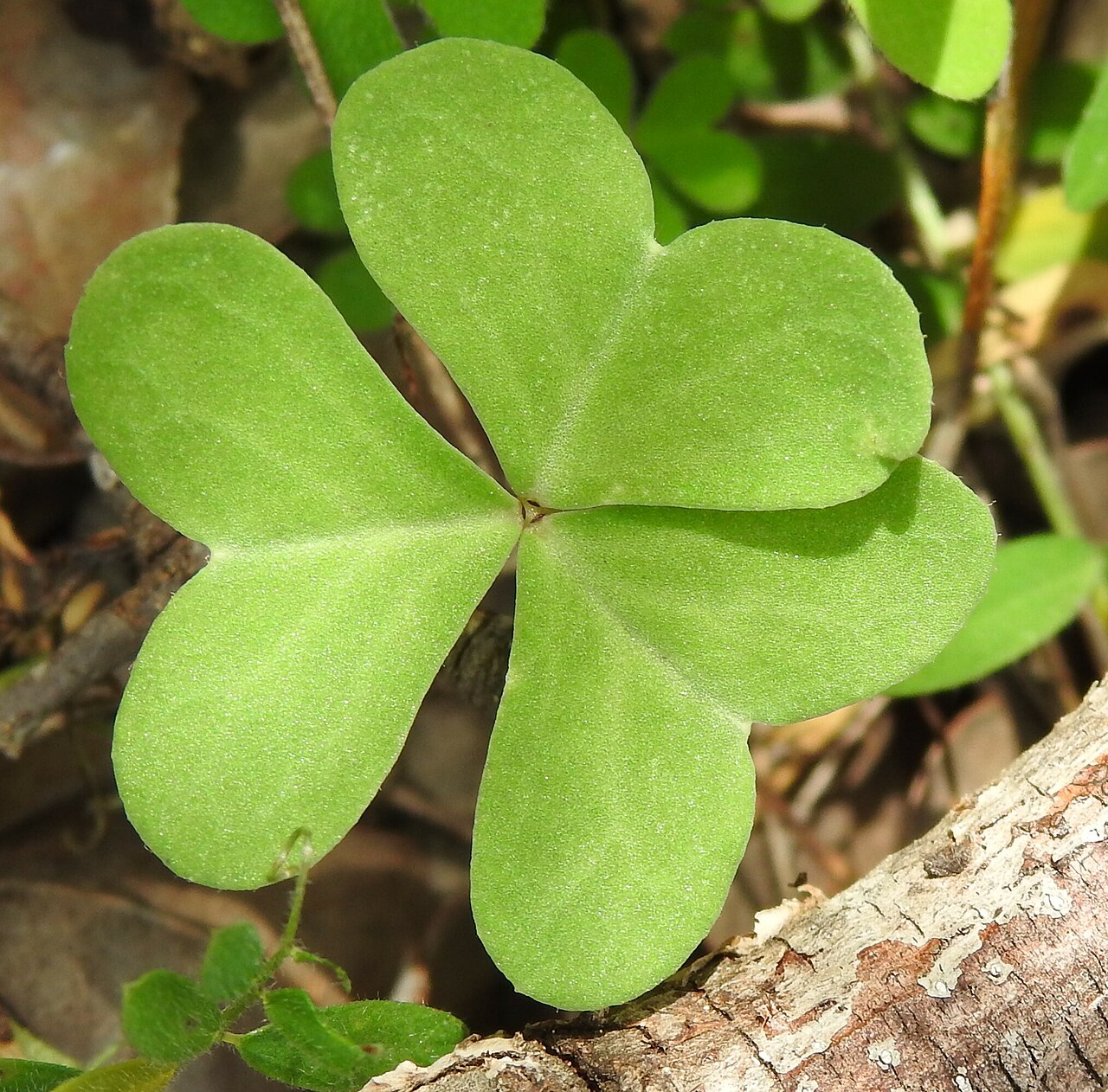
Each leaf has a long stalk and three leaflets, so it looks much like a large clover. The leaflets are broad and wedge-shaped, with a wide notch at the tip that divides each one into two spreading lobes. They are bright green on both sides, often 1 inch or more long. Like other woodsorrels, the leaflets fold down along their midribs at night and during heat or cloudy weather.
Flowers
Flowers are held in umbels of several flowers on leafless stalks that rise above the leaves. Each flower is funnel-shaped, about 3/4 to 1 inch across, with five lavender, pink or rose-purple petals and a green to yellow-green throat. Only one or two flowers in a cluster are usually open at a time. The main bloom is from late August to November, often triggered by fall rains, with occasional spring flowers.
Fruit
The fruit is a small, upright, five-chambered capsule that splits open when ripe and can fling out its small seeds. Most new plants come from the bulbs, which produce small offsets.
Look-alikes
Violet woodsorrel (Oxalis violacea) is a spring bloomer with smaller, rounded leaflets that are often purplish underneath. Yellow wood sorrel and other yellow-flowered woodsorrels have yellow flowers and spread by seed and stems. Clovers (Trifolium) have toothed leaflets without a notch and dense, rounded flower heads.
Quick Facts
| Scientific Name | Oxalis drummondii |
| Family | Oxalidaceae (woodsorrel family) |
| Plant Type | Bulbous perennial wildflower |
| Mature Height | 4–12 in |
| Mature Spread | 6–12 in; forms slow colonies |
| Growth Rate | Moderate |
| Sun Exposure | Full sun to part shade |
| Water Needs | Low to medium; dormant in dry periods |
| Soil Type | Limestone, clay-loam or sandy soils; well drained |
| Soil pH | Neutral to alkaline (about 6.5–8.0) |
| Bloom Time | Late August–November |
| Flower Color | Lavender, pink or rose-purple |
| Fall Color | None; foliage stays green until dormancy |
| Fruit | Small upright five-chambered capsule |
| Deer Resistant | Yes; rarely browsed |
| USDA Hardiness Zones | 7–10 |
Native Range
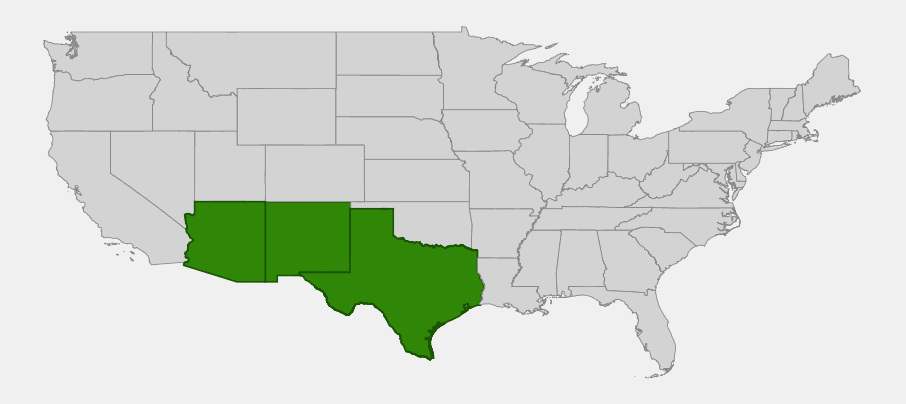
Drummond’s woodsorrel is native to the southwestern United States and Mexico. USDA PLANTS lists it as native in Arizona, New Mexico and Texas. Its range continues south into the mountains and plateaus of northern and central Mexico.
In Texas it is most common on the Edwards Plateau and in the Hill Country, and it extends west through the Trans-Pecos and south toward the Rio Grande. In New Mexico and Arizona it grows mainly in the southern mountains and grasslands, including the sky-island ranges of southeastern Arizona.
It grows in open grasslands, oak and juniper woodlands, brushy slopes, canyon bottoms, roadsides and old lawns, on calcareous (limestone) or sandy soils. It is often found in the light shade of live oaks and junipers.
📋 Regional plant lists featuring Drummond’s Woodsorrel: South & West Texas · Arizona & New Mexico · Arkansas, Louisiana, Eastern Oklahoma & Eastern Texas
Growing & Care Guide
Drummond’s woodsorrel is an easy, low-maintenance plant for dry gardens in Texas and the Southwest. It goes dormant in summer drought, then returns with fresh leaves and flowers when fall rains arrive.
Light
Full sun to part shade. It looks best and holds its leaves longer in light shade under oaks or along a woodland edge.
Soil & Water
It grows in well-drained limestone, clay-loam or sandy soils. Once established it needs no regular watering. In very dry summers it may lose its leaves and rest underground; an occasional deep watering in late summer can bring on earlier fall blooms.
Planting Tips
Plant bulbs or potted plants in fall or early spring, about 2 inches deep and 4 to 6 inches apart. Use it in small groups along paths, between stepping stones, under trees or at the front of a bed, where its small flowers can be seen up close.
Pruning & Maintenance
No pruning is needed. Leave the foliage until it dies back on its own so the bulbs can store energy. It is not aggressive and is easy to pull or move if it shows up where it isn’t wanted.
Propagation
Divide clumps when dormant and replant the small bulbs. It can also be grown from seed, but bulbs flower much sooner. Buy plants from native nurseries or share divisions; don’t dig bulbs from the wild.
Landscape Uses
- Shady ground cover: a small, clover-like cover under oaks and along paths
- Fall color: pink flowers in the season when few wildflowers bloom
- Short-grass meadows: mixes well with grama grasses and buffalograss
- Rock gardens and containers: small enough for pots and between stones
- Pollinator gardens: late-season nectar and pollen for small bees
Wildlife & Ecological Value
Drummond’s woodsorrel is a small plant, but its late-season flowers come at a useful time for insects in the dry Southwest.
For Pollinators
Small native bees, including sweat bees, visit the flowers for pollen and nectar. Small butterflies and flies also visit. Fall bloom makes it a useful food source after summer wildflowers are finished.
For Birds
Ground-feeding birds such as quail and sparrows may eat the small seeds, although the plant is not a major bird food.
For Mammals
Deer usually leave it alone. Rodents may dig and eat the small bulbs.
Ecosystem Role
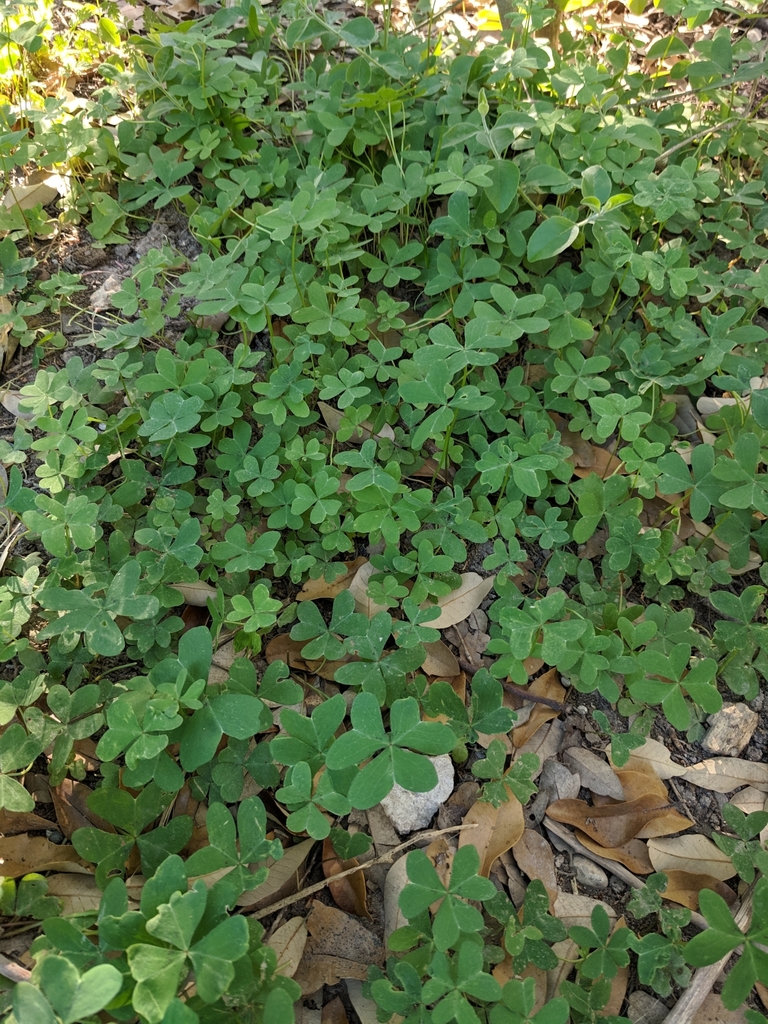
As a low perennial that disappears in drought and returns after rain, it fills open gaps in grasslands and woodland floors and helps cover the soil in the fall. Its bulbs let it survive long dry spells underground.
Cultural & Historical Uses
The species is named for Thomas Drummond, a Scottish naturalist who collected plants in Texas in the 1830s. Many Texas plants, including Drummond phlox, carry his name.
The genus name Oxalis comes from the Greek word for sour, a reference to the sharp taste of the leaves. That sour taste comes from oxalic acid, the same compound found in rhubarb leaves and spinach. People have long nibbled woodsorrel leaves as a thirst-quencher, but only in small amounts.
Gardeners in the Hill Country often first notice Drummond’s woodsorrel when it pops up in a lawn or under oaks after the first fall rain, surprising people with pink flowers in October. Its leaves folding at night, a habit called sleep movement, has made woodsorrels a favorite plant for teaching children about how plants respond to light.
Frequently Asked Questions
Is Drummond’s woodsorrel invasive?
No. It is a native plant that spreads slowly by small bulbs. It is much less aggressive than the weedy yellow-flowered woodsorrels.
When does Drummond’s woodsorrel bloom?
Mainly from late August to November, usually after fall rains, with occasional flowers in spring.
Can you eat Drummond’s woodsorrel?
The leaves are sour from oxalic acid. A few leaves are sometimes nibbled, but oxalic acid is harmful in large amounts, so don’t eat it in quantity, and keep pets and livestock from grazing large patches.
Why do the leaves fold up?
Like other woodsorrels, the leaflets fold down at night and in hot, dry or cloudy weather. This helps the plant save water and is a normal daily movement.
How is it different from violet woodsorrel?
Violet woodsorrel blooms in spring and has smaller, rounded leaflets often purplish underneath. Drummond’s woodsorrel has larger, wide-notched leaflets and blooms mainly in fall.

Looking for a nursery that carries Drummond’s Woodsorrel?
Browse our native plant nursery directory: Arizona · New Mexico · Texas

