
Eastern Green Violet (Hybanthus concolor)
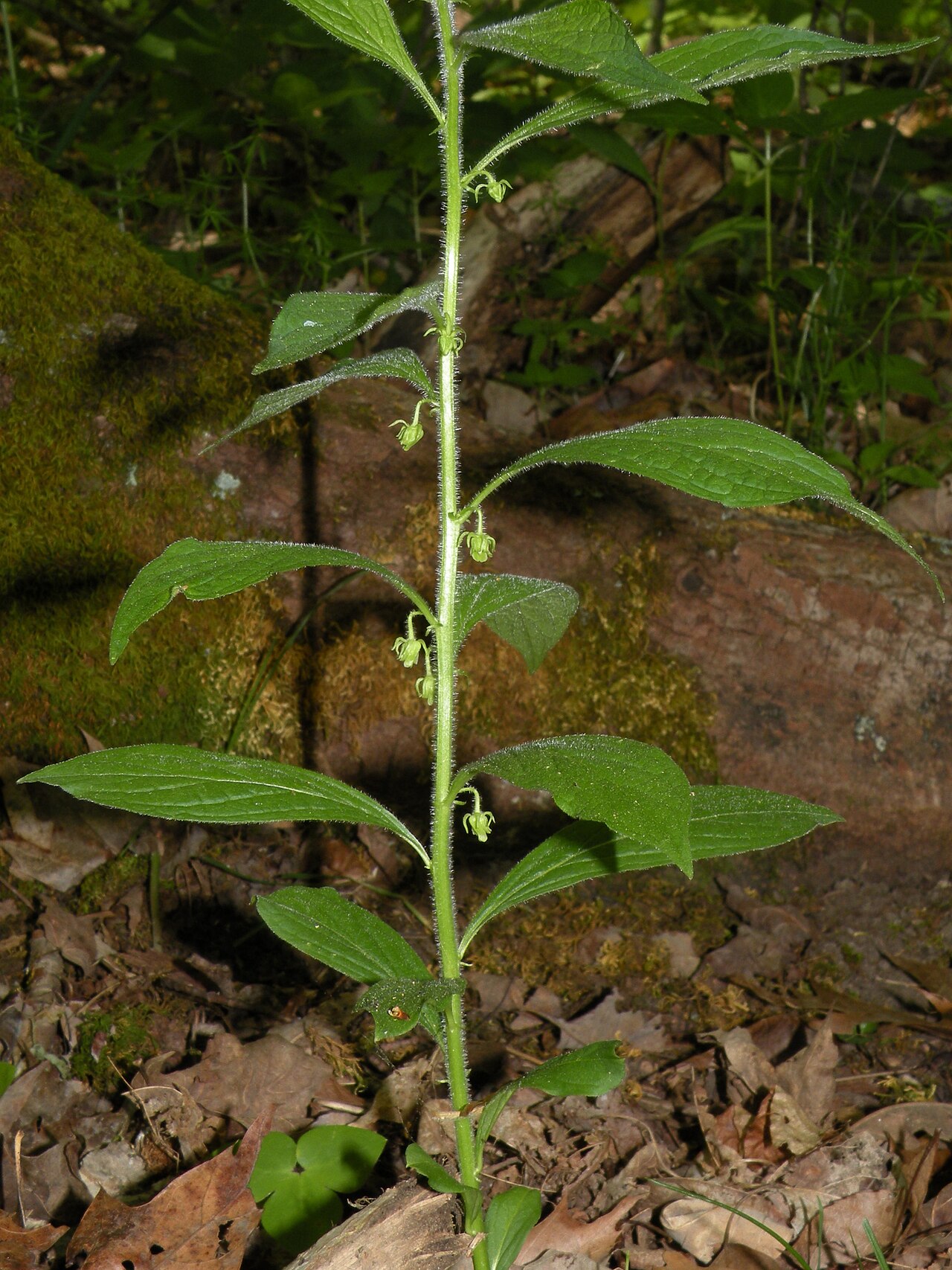
Hybanthus concolor, known as Eastern Green Violet or green-violet, is an upright woodland perennial of the violet family (Violaceae) native to the eastern United States and southern Ontario. Some botanists now call it Cubelium concolor. Unlike the familiar low violets, it grows 1 to 3 feet tall on leafy, unbranched stems, and its tiny green flowers hang beneath the leaves where few people notice them.
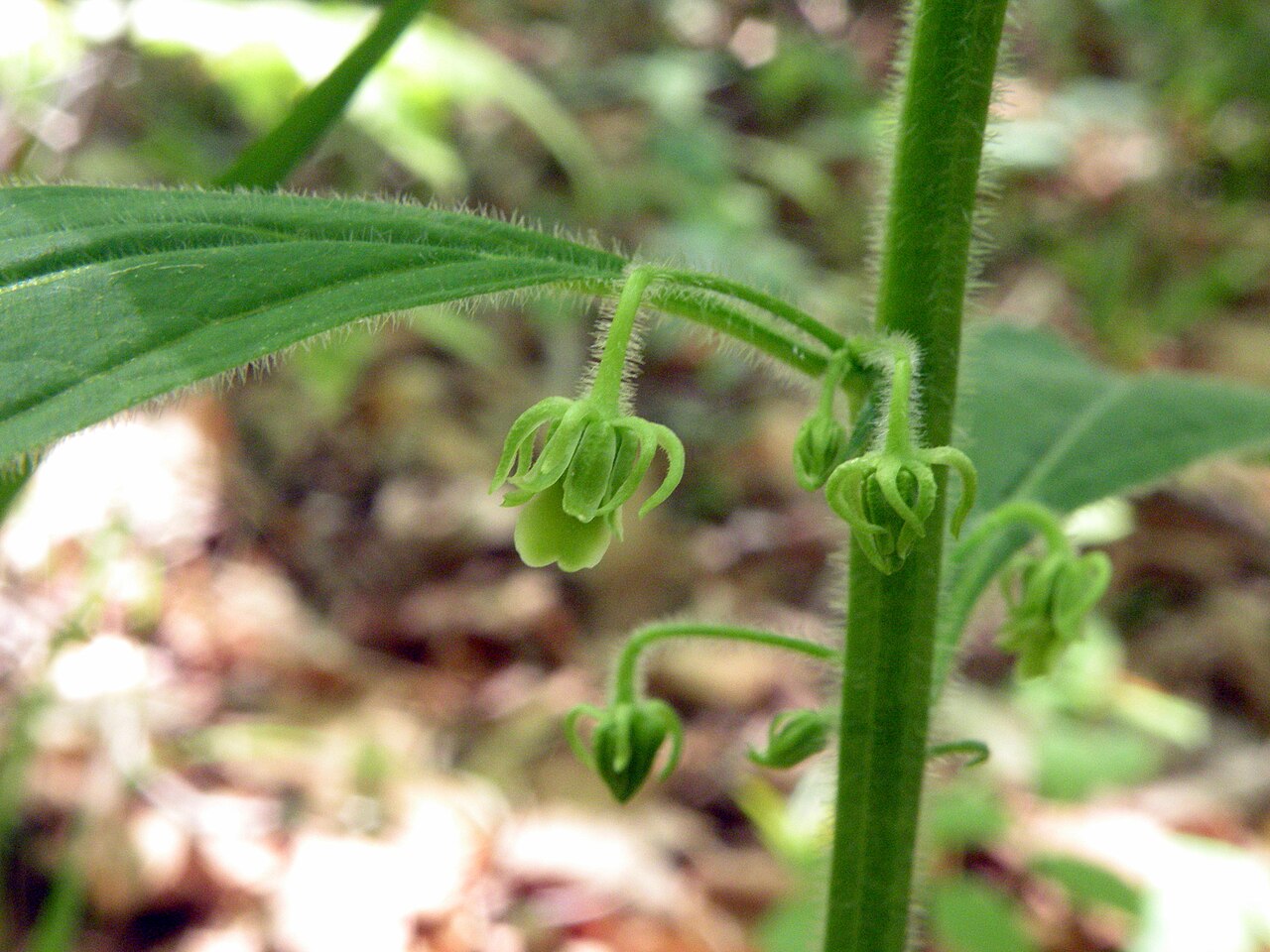
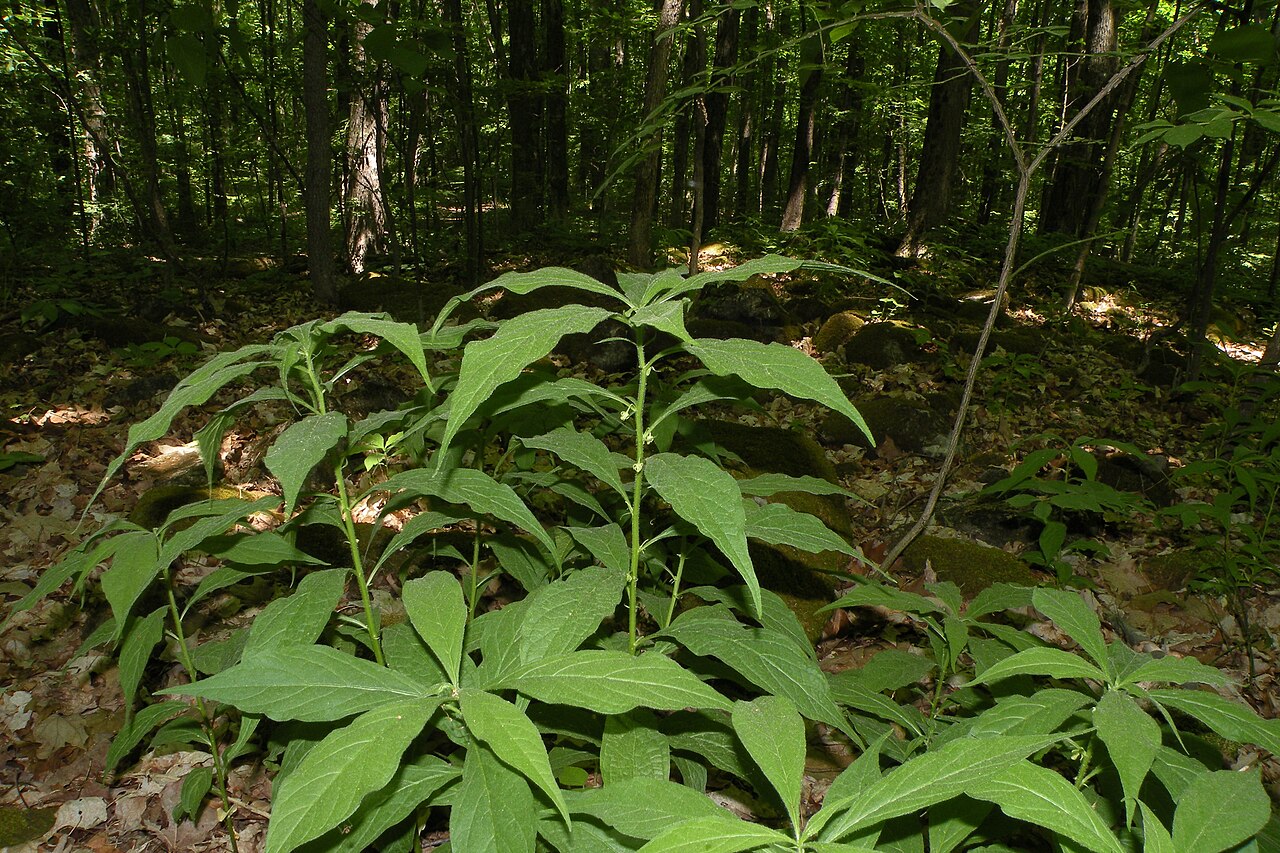
It grows in rich, moist deciduous forests, wooded ravines, floodplain terraces and the bases of limestone bluffs, often in colonies. In late spring and early summer, small, nodding, bell-like green flowers hang in ones to threes from the leaf axils, followed by plump three-parted seed capsules.
Green violet is a quiet plant, valued more by naturalists than by gardeners, but it makes an interesting addition to a shady woodland garden with rich soil. It is uncommon to rare at the edges of its range, so buy plants only from native nurseries and never dig them from the wild.
Identification
Look for upright, leafy, hairy stems 1 to 3 feet tall in rich woods, with long pointed leaves and tiny greenish flowers or round capsules dangling from the leaf bases.
Growth Habit
It is a herbaceous perennial with one to several unbranched, upright stems from a woody rootstock. Stems are 1 to 3 feet tall and covered with short hairs. Plants often form loose colonies.
Leaves
The leaves are alternate, elliptic to lance-shaped, 3 to 6 inches long, pointed at both ends, with smooth or slightly toothed edges and short hairs. Small, narrow stipules sit at the leaf bases. At a glance, the plant looks more like a young shrub or an aster than a violet.
Flowers
The flowers are about 1/4 inch long, green to greenish-white, and hang on short, drooping stalks from the leaf axils, singly or in small groups of two or three. The five petals are nearly equal, forming a small bell, and the lower petal has a short pouch-like spur, a sign of the violet family. Bloom time is April to June.
Fruit
The fruit is a three-parted capsule about 3/4 inch long that splits open in summer and shoots out its fairly large, round seeds, as violets do.
Look-alikes
Before flowering it can be confused with young asters, goldenrods or false Solomon’s seal, but those lack the small stipules and nodding green flowers. Other violets in the East are low plants with showy purple, white or yellow flowers.
Quick Facts
| Scientific Name | Hybanthus concolor (syn. Cubelium concolor) |
| Family | Violaceae (violet family) |
| Plant Type | Herbaceous woodland perennial |
| Mature Height | 1–3 ft |
| Mature Spread | 1–2 ft; forms colonies |
| Growth Rate | Slow to moderate |
| Sun Exposure | Part shade to full shade |
| Water Needs | Medium; evenly moist soil |
| Soil Type | Rich loam, often over limestone |
| Soil pH | Neutral to alkaline (about 6.5–8.0) |
| Bloom Time | April–June |
| Flower Color | Green to greenish-white |
| Fall Color | Yellowish |
| Fruit | Three-parted capsule that ejects its seeds |
| Deer Resistant | Moderate; occasionally browsed |
| USDA Hardiness Zones | 4–8 |
Native Range
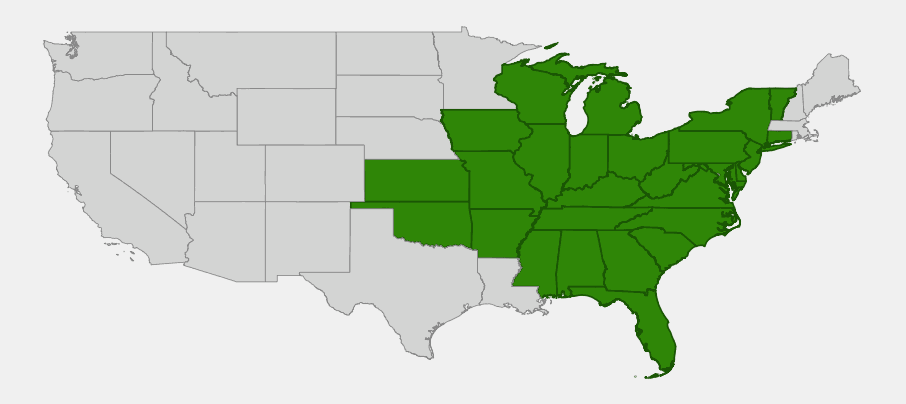
Eastern green violet is native to eastern North America. USDA PLANTS lists it as native in Alabama, Arkansas, Connecticut, Delaware, Florida, Georgia, Illinois, Indiana, Iowa, Kansas, Kentucky, Maryland, Michigan, Mississippi, Missouri, New Jersey, New York, North Carolina, Ohio, Oklahoma, Pennsylvania, South Carolina, Tennessee, Vermont, Virginia, West Virginia and Wisconsin, and in Ontario, Canada.
It is most common in the Ohio and middle Mississippi valleys, the Ozarks, the Interior Low Plateaus of Kentucky and Tennessee, and the southern Appalachians. It reaches eastern Kansas and Oklahoma in the west and the Florida Panhandle in the south. In New England, New Jersey, Delaware, the Deep South and the upper Great Lakes it is scattered and uncommon.
It grows in rich, moist deciduous woods, wooded ravines and coves, floodplain terraces, and at the base of limestone and dolomite bluffs, usually on fertile, neutral to alkaline soils.
📋 Regional plant lists featuring Eastern Green Violet: North & South Florida · Alabama, Georgia & Mississippi · North & South Carolina · Maryland, Virginia & West Virginia · Kentucky & Tennessee · Arkansas, Louisiana, Eastern Oklahoma & Eastern Texas · Illinois, Iowa & Missouri · Ohio & Indiana · Nebraska, Kansas & Eastern Colorado · Michigan, Wisconsin & Eastern Minnesota · New York, Pennsylvania & Northern New Jersey · Delaware, Southern New Jersey & Long Island · Connecticut, Massachusetts & Rhode Island · New Hampshire, Maine & Vermont
Growing & Care Guide
Eastern green violet is an easy, long-lived perennial for rich, shady woodland gardens. It is grown for its graceful foliage and botanical interest rather than for showy flowers.
Light
Part shade to full shade. It does best under deciduous trees that let in spring sun.
Soil & Water
Rich, moist, well-drained loam with plenty of leaf litter. It prefers neutral to limy soils but tolerates slightly acidic ones. Keep the soil from drying out completely in summer.
Planting Tips
Plant in spring or fall, 1 to 2 feet apart, with woodland wildflowers and ferns. Its upright form adds height among low ground covers such as wild ginger. Buy plants from native nurseries; never dig them from the wild.
Pruning & Maintenance
No pruning is needed. Leave fallen leaves in place as mulch. Stems die back in fall and can be cut or left standing.
Propagation
Grow from fresh seed sown outdoors in fall; seeds need a cold, moist winter period to sprout. Collect capsules just as they begin to yellow, before they shoot the seeds away. Established clumps can be divided in early spring.
Landscape Uses
- Woodland gardens: an upright, leafy plant for rich shade
- Native plant collections: a curious green-flowered member of the violet family
- Ravine and floodplain restoration: part of the rich-woods ground layer
- Mixed shade plantings: adds height among wild ginger, waterleaf and ferns
- Nature study: a good example of how varied the violet family can be
Wildlife & Ecological Value
Eastern green violet supports a modest but interesting set of woodland animals.
For Pollinators
Small bees and flies visit the inconspicuous flowers for nectar and pollen. Its flowers are not showy, and much of its seed may be set without large insect visitors.
For Birds
Ground-feeding birds may eat seeds that are thrown from the capsules.
For Mammals
Deer occasionally browse the stems and leaves. Small mammals may eat the seeds.
Ecosystem Role
As a colonial perennial of rich woods, it helps cover and hold soil on slopes and floodplain terraces. Its exploding capsules spread seeds a short distance from the parent plant, and ants may move them farther.
Cultural & Historical Uses
The genus name Hybanthus comes from Greek words meaning “humpbacked flower,” describing the swollen lower petal. The species name concolor means “of one color,” because all of the petals are the same green color.
Green violet surprises many people who know violets only as low plants with purple or yellow flowers. It shows how varied the violet family is: tropical relatives include shrubs and even small trees.
Some Native American groups, including the Cherokee, are recorded as using green violet in traditional medicine. It is not a food plant and should not be harvested from the wild.
Frequently Asked Questions
Is green violet really a violet?
Yes. It belongs to the violet family (Violaceae), but it is in a different genus from the common violets (Viola). Its small flowers and exploding capsules show the family resemblance.
Why haven’t I noticed it before?
Its flowers are tiny, green and hang under the leaves, so it is easily mistaken for a young aster or other leafy plant.
Where does eastern green violet grow?
In rich, moist deciduous woods, ravines and floodplain terraces of the eastern U.S. and southern Ontario, often on limestone soils.
Can I grow it in my garden?
Yes, in part to full shade with rich, moist, well-drained soil. Buy plants from native nurseries and plant it with other woodland wildflowers.
Is it rare?
It is fairly common in the Ohio Valley and Ozarks but uncommon to rare at the edges of its range, so never dig it from the wild.

Looking for a nursery that carries Eastern Green Violet?
Browse our native plant nursery directory: Alabama & Arkansas · Connecticut, Delaware, Florida & Georgia · Illinois, Indiana, Iowa & Kansas · Kentucky, Maryland, Michigan, Mississippi & Missouri · New Jersey, New York, North Carolina, Ohio & Oklahoma · Pennsylvania, South Carolina, Tennessee, Vermont & Virginia · West Virginia & Wisconsin

