
Elf Orpine (Diamorpha smallii)
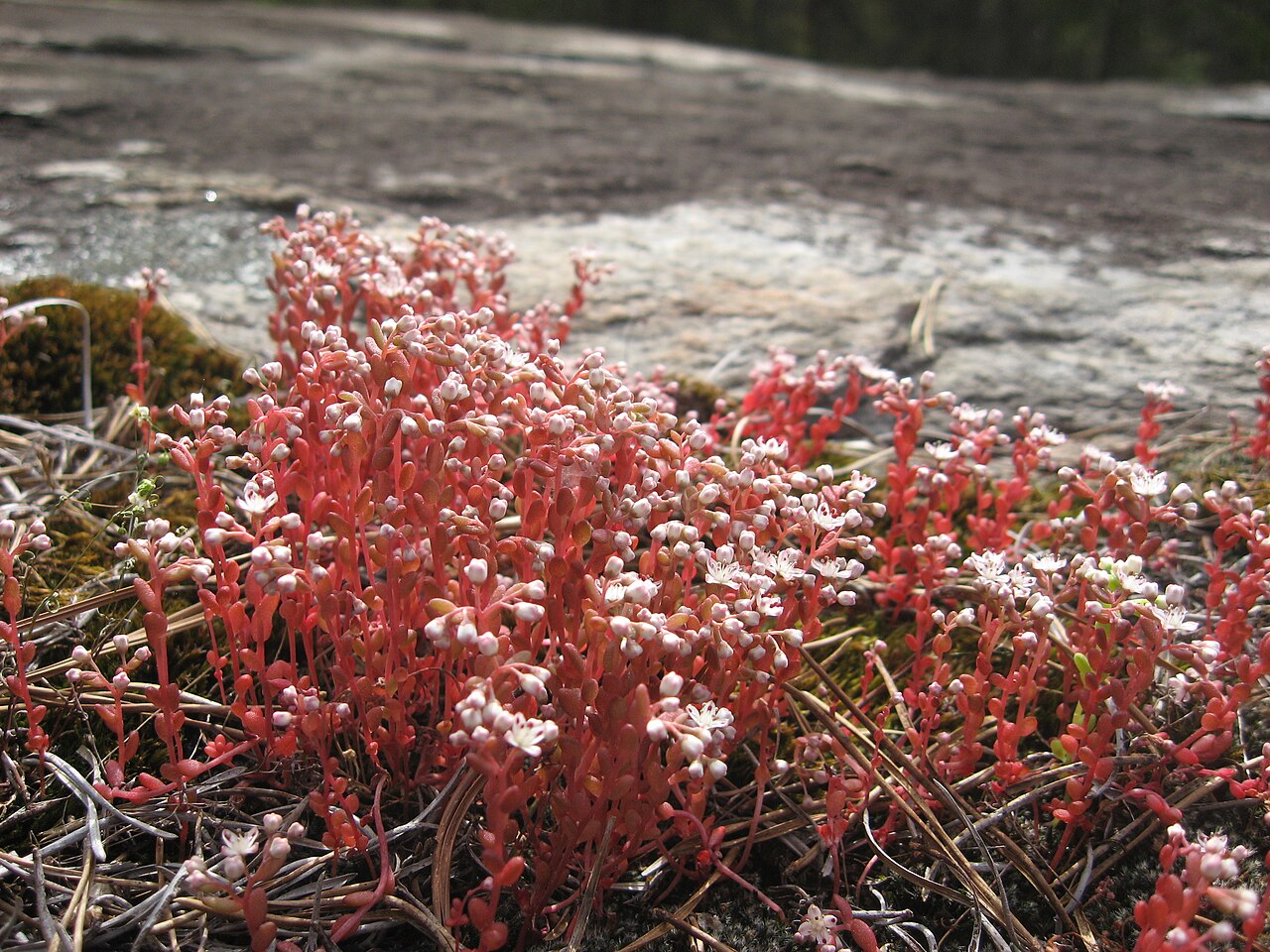
Diamorpha smallii, known as Elf Orpine or Small’s stonecrop, is a tiny succulent of the granite and sandstone outcrops of the southeastern United States. Only 1 to 4 inches tall, it grows by the thousands in shallow depressions on bare rock, and in early spring it turns whole patches of gray granite brilliant red, then covers them with tiny white flowers. Many botanists now place it in the stonecrop genus as Sedum smallii, but it is still widely known as Diamorpha, the name used by USDA PLANTS.
Elf orpine is a winter annual and one of the most specialized plants in the region. Its seeds lie dormant on the rock through the hot summer, germinate with the cool rains of late fall, and the seedlings grow slowly through winter. In March and April the plants flower, set seed and die, completing their life cycle before the shallow soil bakes dry in early summer.
Because it depends on a rare and fragile habitat, elf orpine is uncommon or protected in several states at the edges of its range, and it is endangered in Tennessee. It is a plant to enjoy where it grows, not to collect. This guide covers how to identify elf orpine, where to see it, and why the outcrops it calls home need protection.
Identification
In spring, few plants are as easy to recognize: dense colonies of tiny, bright red, succulent plants with white, star-like flowers growing directly on rock. Its habitat alone narrows the possibilities.
Growth Habit
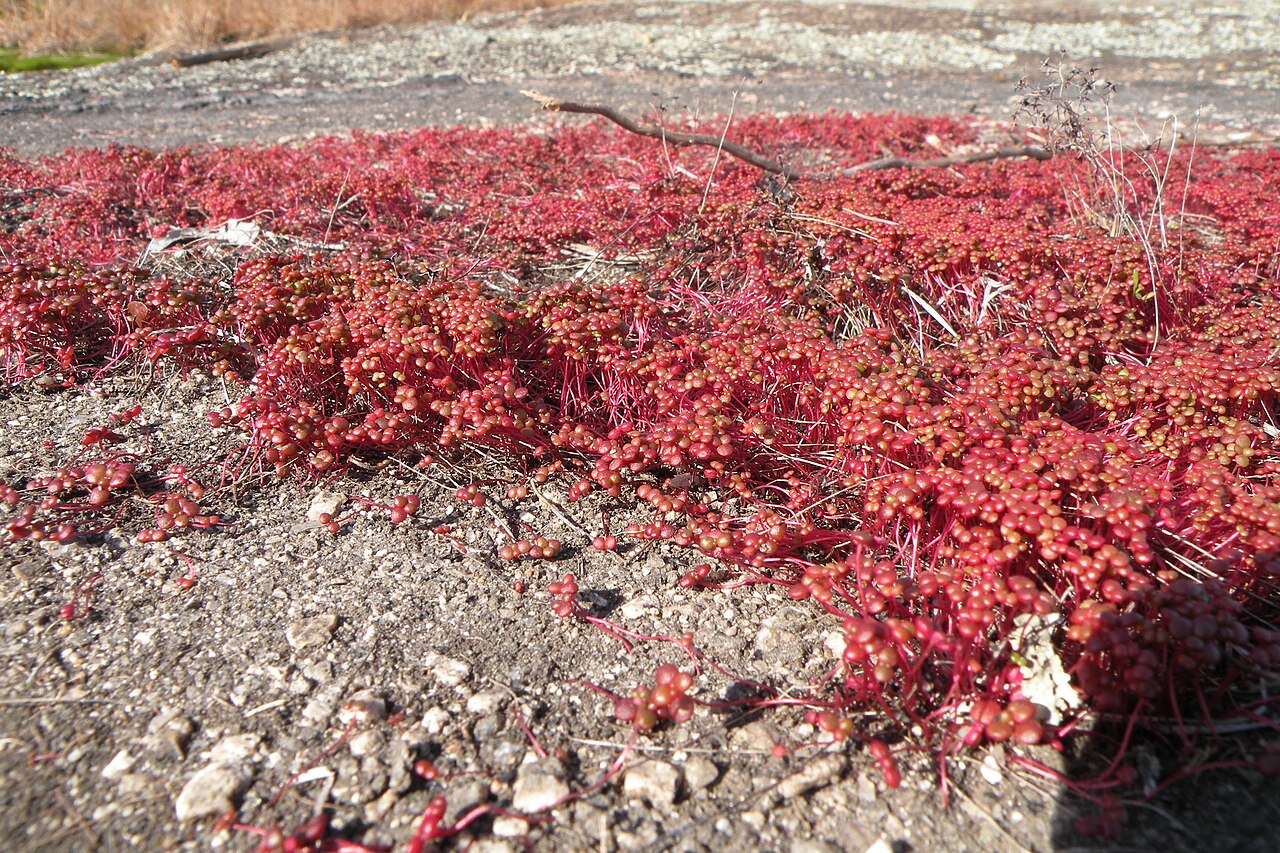
Each plant is a small, branched annual, usually 1 to 4 inches tall, with fleshy, reddish stems. Plants grow in dense stands, sometimes thousands per square yard, in shallow soil over rock. In fall and early winter the young plants are small and green to reddish; by early spring they turn deep red as they mature.
Leaves
The leaves are tiny, about 1/8 to ¼ inch long, thick, succulent and nearly round to slightly elongated, crowded along the stems. They are green to bright red; the red pigment is thought to protect the plants from intense sun on the bare rock. The leaves often fall away as the plant flowers.
Flowers
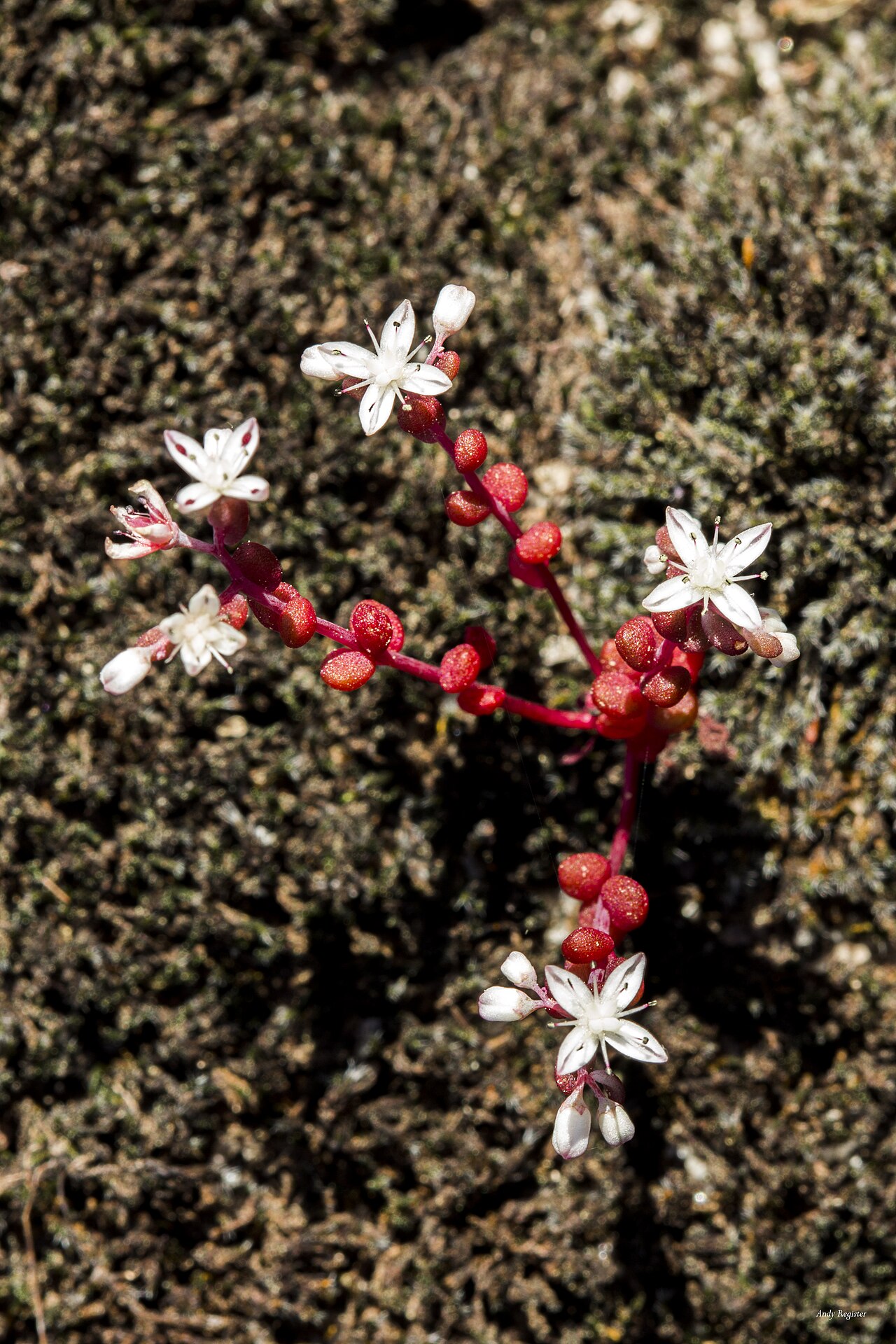
From about March to April, each plant produces a branched cluster of small white flowers at the top of the stem. Each flower is about ¼ inch across, with four white petals, four small sepals and eight stamens with dark red to purplish anthers. In full bloom, large colonies look like a white haze over a carpet of red.
Fruit & Seeds
Each flower produces four small, spreading follicles (seed pods) that split to release tiny seeds. The seeds stay on the rock or in the thin soil through the summer and germinate in late fall when cool, wet weather returns. The plants die soon after seeding in late spring.
Look-alikes
Small-leaved Sedum species that grow on the same outcrops, such as granite stonecrop (Sedum pusillum) and widow’s cross (Sedum pulchellum), have five-petaled flowers and more elongated leaves. Elf orpine is distinguished by its four-petaled flowers, its very small, rounded red leaves, and its habit of forming dense red carpets in rock pools and depressions.
Quick Facts
| Scientific Name | Diamorpha smallii (syn. Sedum smallii) |
| Family | Crassulaceae (stonecrop family) |
| Plant Type | Succulent winter annual |
| Mature Height | 1–4 in |
| Mature Spread | 1–2 in per plant; forms dense colonies |
| Growth Rate | Fast for an annual; lives about six months |
| Sun Exposure | Full sun |
| Water Needs | Wet in winter and spring, dry and dormant (as seed) in summer |
| Soil Type | Very shallow, gritty soil over granite or sandstone |
| Soil pH | Acidic |
| Bloom Time | March–April (occasionally into May) |
| Flower Color | White with dark red anthers |
| Fall Color | Plants turn bright red in late winter and spring |
| Fruit | Four small follicles with tiny seeds |
| Deer Resistant | Yes; rarely browsed |
| USDA Hardiness Zones | 7–8 (in the wild only) |
Native Range
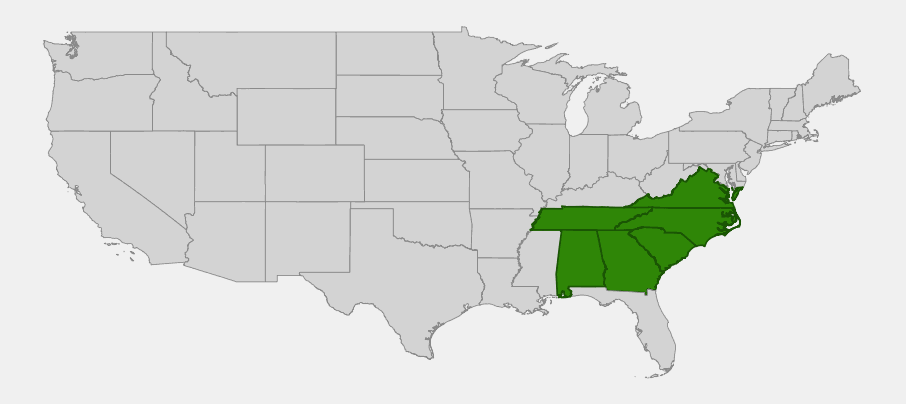
Elf orpine is endemic to the southeastern United States. USDA PLANTS lists it in Alabama, Georgia, North Carolina, South Carolina, Tennessee and Virginia. It is most abundant on the granite outcrops of the Georgia Piedmont, such as Arabia Mountain and Panola Mountain near Atlanta, and it is also common on granite flatrocks in the Carolinas, such as Forty Acre Rock in South Carolina.
Outside Georgia and the Carolinas it is scattered and uncommon. It grows on a few sandstone outcrops in northeastern Alabama and Tennessee, and on a small number of outcrops in southern Virginia. It is listed as endangered in Tennessee, and is rare at the edges of its range in other states.
Its habitat is the most important part of its story. It grows almost entirely in shallow soil islands, solution pits and depressions on bare granite, gneiss and sandstone outcrops, where water collects in winter and spring and the thin soil dries completely in summer. Few other plants can survive these extremes, which is why outcrop communities include many rare and endemic species.
📋 Regional plant lists featuring Elf Orpine: Kentucky & Tennessee · Maryland, Virginia & West Virginia · Alabama, Georgia & Mississippi · North & South Carolina
Growing & Care Guide
Elf orpine is not a garden plant in the usual sense. It is an annual tied to the extreme conditions of bare rock outcrops, it is rarely if ever sold, and attempts to grow it outside its habitat seldom succeed for more than a season. Never dig plants or collect soil from outcrops; the plants will not survive, and outcrop habitats recover very slowly from damage. The best way to enjoy elf orpine is to visit it in spring on a protected outcrop.
Light
In the wild it grows in full sun on open rock, with little or no shade from trees.
Soil & Water
It needs a very thin layer of gritty, acidic soil over solid rock, kept wet by winter and spring rains and allowed to dry completely in summer. Garden soil, fertilizer and summer irrigation are all harmful to it.
Planting Tips
If you are lucky enough to own land with a granite or sandstone outcrop where elf orpine grows, the best care is protection. Keep vehicles, bicycles and foot traffic off the soil islands and pools, especially from late fall through spring when the plants are growing. Do not move rocks, rake soil or build fire rings on the outcrop.
Pruning & Maintenance
No care is needed. Allow plants to set seed and die back naturally; the seeds lie on the rock through summer and start the next generation in fall. Remove invasive plants and trash from the outcrop, and keep dumping and off-road vehicle use away.
Propagation
Elf orpine regenerates naturally from seed every year. In botanical gardens and research settings it has been grown from seed sown on shallow, gritty mixes over rock in fall, but it is not a practical home garden project, and seed should not be collected from wild populations without permission.
Landscape Uses
- Outcrop visits: Arabia Mountain and Panola Mountain in Georgia and Forty Acre Rock in South Carolina are known for spring displays
- Nature photography: the red carpets and white flowers make striking spring photos from mid-March to April
- Habitat education: a classic example of a plant adapted to extreme conditions on rock outcrops
- Land stewardship: protect outcrops on private land from vehicles, trampling and dumping
- Botanical gardens: some southeastern botanical gardens interpret outcrop plant communities
Wildlife & Ecological Value
Elf orpine is a small plant with an outsized role on the bare rock outcrops of the Southeast, where it is one of the first plants to colonize shallow soil and one of the first to flower in spring.
For Pollinators
The tiny white flowers bloom early in spring, when few other flowers are open on the outcrops, and attract small bees, flies and other small insects.
For Birds
Elf orpine has little direct value for birds, but it is part of the outcrop plant communities that provide insects for birds feeding on the open rock.
For Mammals
It is rarely eaten by mammals. Its main threat from animals and people is trampling.
Ecosystem Role
Elf orpine is part of a succession of plant communities on granite outcrops. In the thinnest soil, mosses, lichens and elf orpine colonize depressions, adding organic matter as they grow and die. Over time, this allows deeper soils and other plants, such as grasses, herbs and eventually shrubs, to establish. Its red pigments are thought to help it tolerate the intense light and heat on bare rock.
Cultural & Historical Uses
The species name smallii honors John Kunkel Small, a prolific botanist of the southeastern United States at the New York Botanical Garden in the early 1900s. The common names elf orpine and Small’s stonecrop both refer to its small size and its place in the stonecrop family; “orpine” is an old name for stonecrops.
The red carpets of elf orpine are one of the signature sights of spring on the granite outcrops near Atlanta. Arabia Mountain National Heritage Area and Panola Mountain State Park are well known for their outcrop plants, and spring visits to see them are popular with photographers and naturalists.
Genetic studies have shown that elf orpine is nested within the large stonecrop genus Sedum, so many botanists now call it Sedum smallii. Both names are in use, and older references treat Diamorpha as a separate genus with this single species.
Frequently Asked Questions
Why is elf orpine red?
The red pigment in its stems and leaves is thought to protect the plant from intense sunlight and heat on bare rock. Plants are often greener in winter and turn bright red as they mature in spring.
When can I see elf orpine?
Plants are visible from late fall through spring. The best displays are from mid-March to April, when the red plants are in bloom with white flowers.
Can I grow elf orpine in my garden?
Not practically. It is a specialized annual of rock outcrops, it is rarely sold, and it seldom survives outside its habitat. Never dig plants or collect soil from outcrops.
Is elf orpine the same as Sedum smallii?
Yes. Many botanists now place it in the genus Sedum as Sedum smallii; USDA PLANTS still uses Diamorpha smallii.
Is elf orpine protected?
It is listed as endangered in Tennessee and is rare at the edges of its range in other states. Its outcrop habitat is protected in several parks and preserves.

Looking for a nursery that carries Elf Orpine?
Browse our native plant nursery directory: Alabama · Georgia · North Carolina · South Carolina, Tennessee & Virginia

