
False Babystars (Leptosiphon androsaceus)
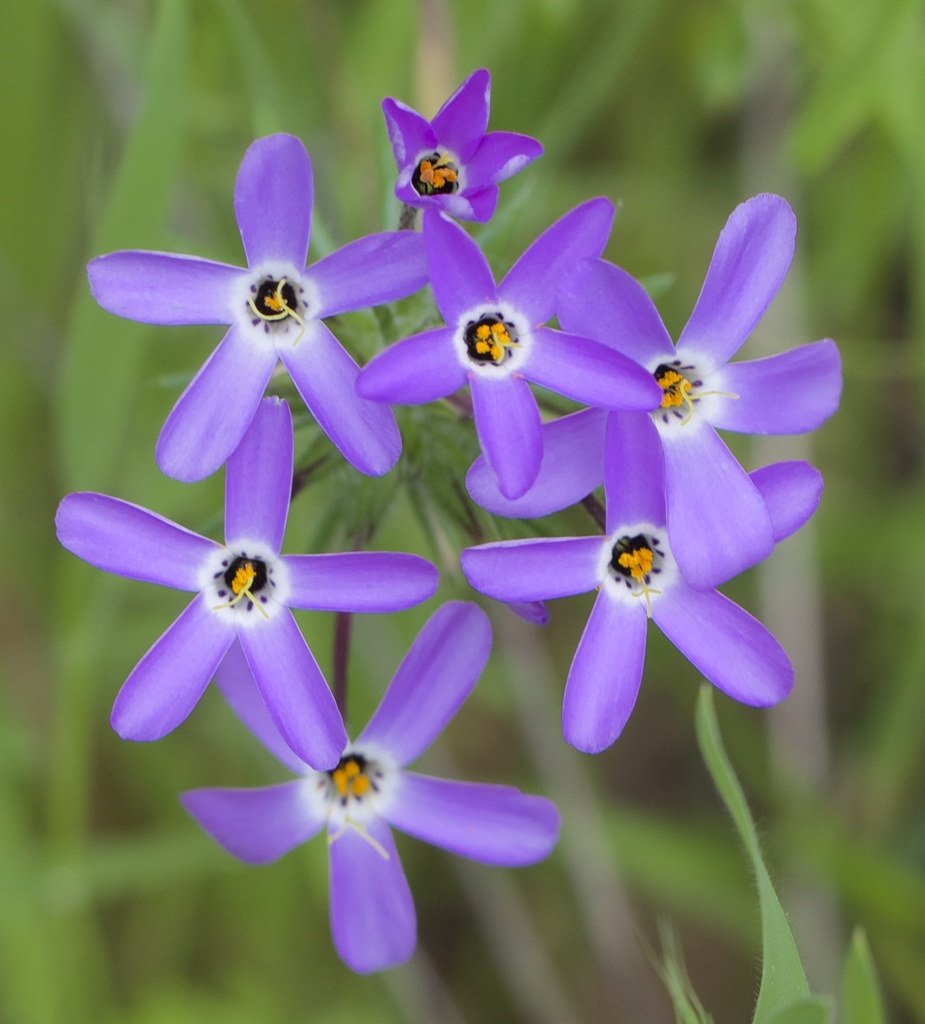
Leptosiphon androsaceus, known as False Babystars, is a small spring annual in the phlox family (Polemoniaceae) that grows only in California. Its slender stems end in tight clusters of starry, five-petaled flowers in pink, lavender or white, each with a yellow or white throat, held above whorls of bristly, needle-like leaves. It was formerly called Linanthus androsaceus, and older garden books list it as Gilia androsacea.
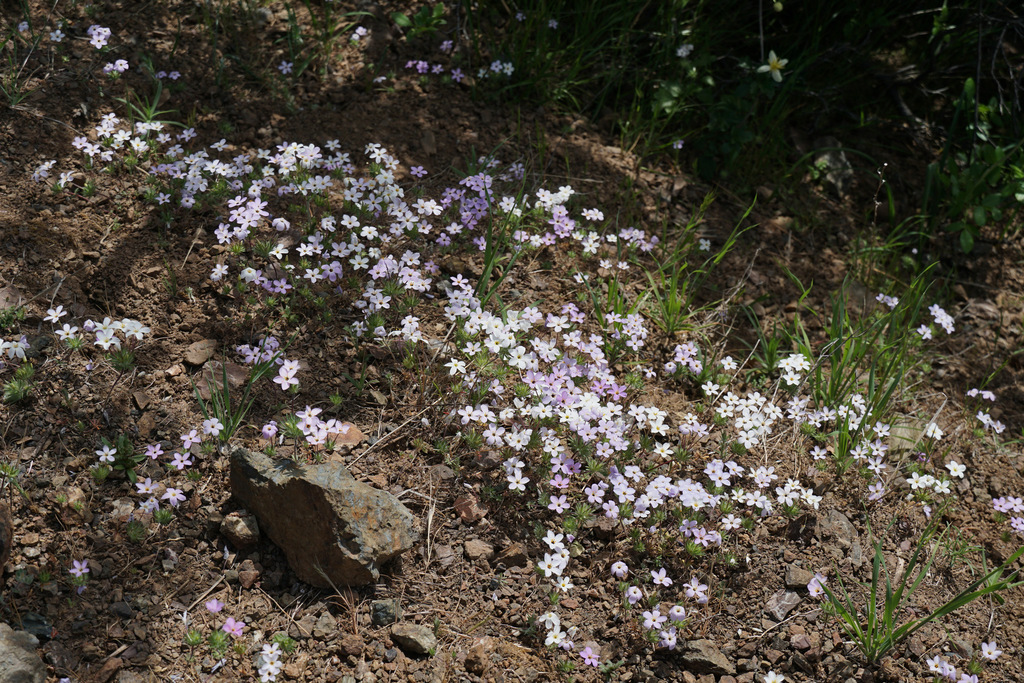
It is a common wildflower of grassy openings, oak woodland and chaparral, especially in the San Francisco Bay Area and the Coast Ranges, with scattered populations in the southern Sierra Nevada foothills and the mountains of southern California. In April and May it can cover open slopes with pastel color, often mixed with other spring annuals.
False babystars has been grown as a garden annual since the 1830s, when seed was sent to England. It is easy to grow from seed sown in fall, and it looks charming at the front of a sunny border, in a meadow mix or in a pot.
Identification
Look for a slender spring annual with bristly, finely divided leaves that seem to be in whorls, topped by a head-like cluster of small, flat, five-petaled flowers with long, thin tubes.
Growth Habit
A winter-germinating annual with one to a few slender, upright stems, about 2 to 18 inches tall, usually unbranched or branched only near the base. Stems are covered with short hairs.
Leaves
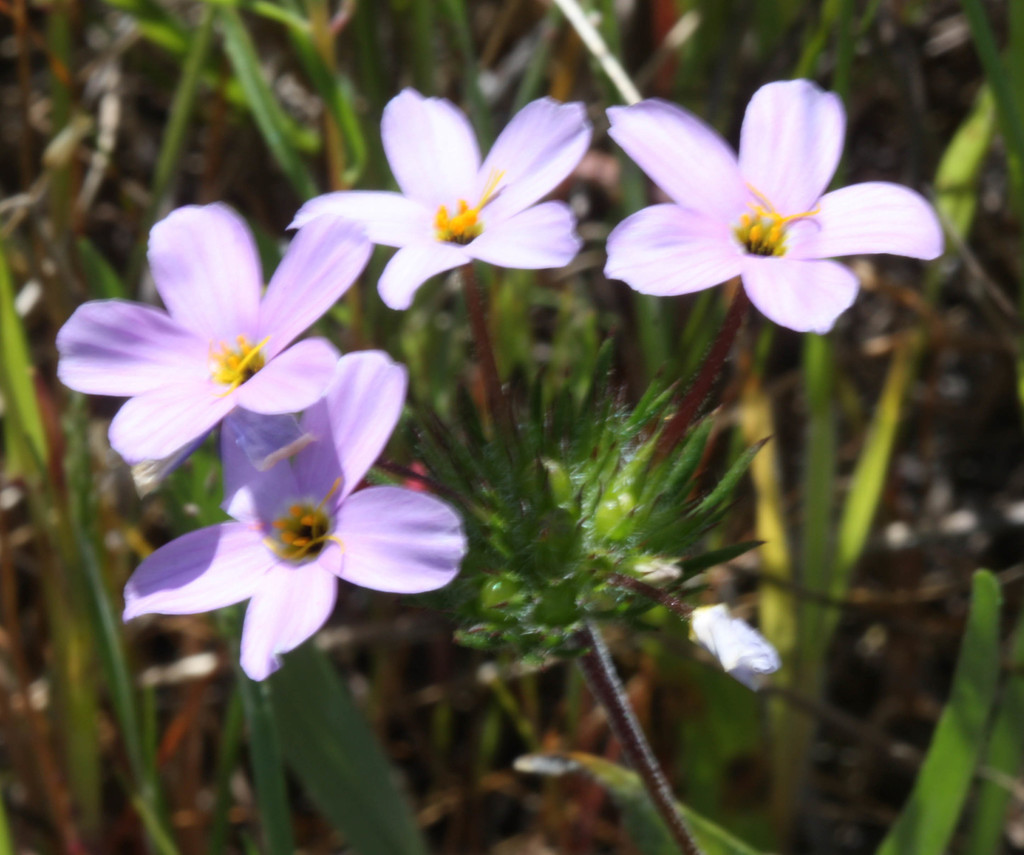
The leaves are opposite, but each is divided almost to the base into 5 to 11 narrow, linear to needle-like lobes up to about 1 1/4 inches long, so each pair looks like a whorl of bristles around the stem. They are often fringed with stiff hairs.
Flowers
Flowers grow in a dense, head-like cluster at the stem tip, surrounded by bristly leafy bracts. Each flower has a very slender tube, about 1/2 to 1 inch long, that opens into five flat, oval petals forming a star or wheel about 1/2 to 1 inch across. Petals are pink, lavender, lilac or white, and the throat is yellow or white, sometimes with a darker ring. Flowers open from about March to June.
Fruit
The fruit is a small, three-chambered capsule that splits open to release several small seeds by early summer, after which the plant dies.
Look-alikes
Bicolor babystars (L. bicolor) has smaller flowers with a yellow throat and white to pink petals, and a much longer, more slender tube relative to the petals. Variable linanthus (L. parviflorus) has smaller petals on a very long, thread-like tube, and whiskerbrush (L. ciliatus) has smaller pink flowers in very bristly heads. Close relatives such as L. latisectus and L. rosaceus grow in limited parts of the North Coast and Bay Area.
Quick Facts
| Scientific Name | Leptosiphon androsaceus (syn. Linanthus androsaceus) |
| Family | Polemoniaceae (phlox family) |
| Plant Type | Cool-season annual wildflower |
| Mature Height | 2–18 in |
| Mature Spread | 3–6 in |
| Growth Rate | Fast (germination to bloom in a few months) |
| Sun Exposure | Full sun to light shade |
| Water Needs | Low; moist in winter and spring, dry in summer |
| Soil Type | Well-drained loam, sand, gravel or clay; grassland and chaparral openings |
| Soil pH | Slightly acidic to neutral (about 6.0–7.5) |
| Bloom Time | March–June |
| Flower Color | Pink, lavender or white with a yellow or white throat |
| Fall Color | None; plants die back by early summer |
| Fruit | Small three-chambered capsules |
| Deer Resistant | Moderately |
| USDA Hardiness Zones | Annual; best as a fall-sown annual in zones 7–10 |
Native Range
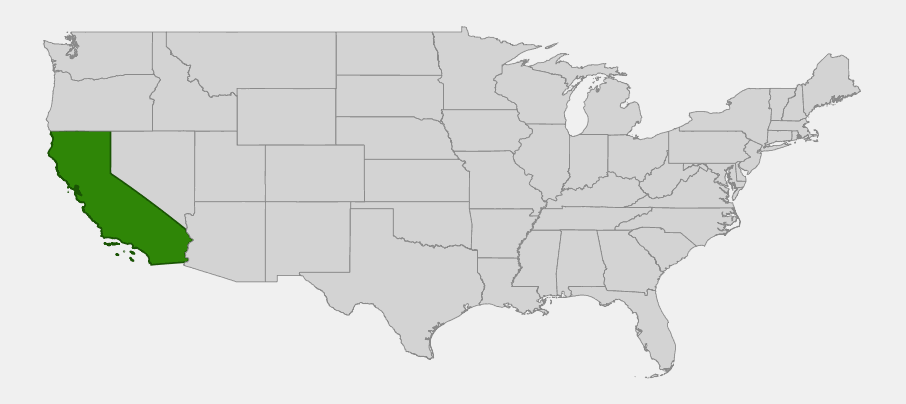
False babystars is endemic to California; USDA PLANTS lists it only there. It is most common in the San Francisco Bay Area and the inner and outer Coast Ranges of northern and central California.
Scattered populations also occur in the foothills of the southern Sierra Nevada and in the Transverse and Peninsular Ranges of southern California. It generally grows below about 3,900 feet.
Its habitats are open, sunny or lightly shaded places with thin vegetation: grassland, oak woodland openings, chaparral clearings and rocky slopes, including serpentine soils in some areas. It often blooms with other annuals and bulbs in spring wildflower displays at places such as Mount Diablo and Mount Tamalpais.
📋 Regional plant lists featuring False Babystars: California & Nevada
Growing & Care Guide
False babystars is an easy annual to grow from seed in Mediterranean climates. Like most California annuals, it grows through the cool, wet season and finishes before summer drought.
Light
Full sun or light shade. In hot inland gardens it appreciates a little afternoon shade.
Soil & Water
Any well-drained soil, from sandy loam to clay loam, works if it doesn’t stay soggy. Rely on winter rain, and water every week or two in a dry winter or spring. Stop watering once the plants begin to dry and set seed.
Planting Tips
Sow seed in fall or early winter directly where you want the plants, on bare, weeded soil. Barely cover the seed with soil and keep it moist until the seedlings appear. It looks best in small drifts at the front of a border, among grasses in a meadow, or in pots and window boxes.
Pruning & Maintenance
Weed carefully while the seedlings are small; they are easily overwhelmed by non-native grasses. Leave the dry plants in place until the seed has dropped if you want them to come back next year.
Propagation
By seed. Collect the small capsules as they dry in late spring and store the seed in a paper envelope until fall.
Landscape Uses
- Wildflower meadows: pastel color with native bunchgrasses
- Borders and edging: small, neat plants for the front of a sunny bed
- Containers: spring color in pots and window boxes
- Pollinator gardens: nectar for butterflies, bee flies and long-tongued bees
- Rock gardens: fills gaps between stones in spring
Wildlife & Ecological Value
False babystars is part of the rich spring annual flora of California grasslands and woodlands, which supports many native insects.
For Pollinators
The long, slender flower tube holds nectar that only long-tongued insects can reach, such as bee flies, butterflies, day-flying moths and some long-tongued native bees. Small beetles and flies also visit for pollen.
For Birds
Seed-eating birds such as sparrows and finches may forage on the small seeds after the plants dry.
For Mammals
Small rodents eat the seeds, and deer and rabbits may nibble the plants in spring.
Ecosystem Role
As a native annual, it fills the spaces between perennial grasses and shrubs, and its seed bank helps it return after fire and dry years.
Cultural & Historical Uses
The genus name Leptosiphon means “slender tube,” referring to the long, narrow flower tube. The species name androsaceus compares the flowers to those of Androsace, the rock jasmines.
The plant was first collected by the Scottish botanist David Douglas in California around 1833. Its seed was grown in England soon after, and it became a popular Victorian garden annual under the name Leptosiphon androsaceus or Gilia androsacea.
DNA studies in the 1990s and 2000s showed that the plants once grouped in Linanthus belong to several separate lineages. False babystars and its relatives were moved back to Leptosiphon, the name George Bentham had given them in 1833.
Frequently Asked Questions
Is false babystars native only to California?
Yes. It is a California endemic, found mainly in the Bay Area and Coast Ranges, with scattered populations in the southern Sierra foothills and southern California mountains.
Is it an annual?
Yes. It sprouts with fall or winter rain, blooms in spring and dies by early summer.
How is false babystars different from bicolor babystars?
False babystars has larger pink, lavender or white flowers with a shorter tube relative to the petals. Bicolor babystars has smaller flowers with a very long, thread-like tube and a yellow throat.
When should I plant false babystars seed?
Sow it in fall or early winter, before the rainy season, in a sunny or lightly shaded spot.
Does it reseed?
Often, yes, if the ground stays open and weeds are kept down.

Looking for a nursery that carries False Babystars?
Browse our native plant nursery directory: California

