
Finger-leaved Gourd (Cucurbita digitata)
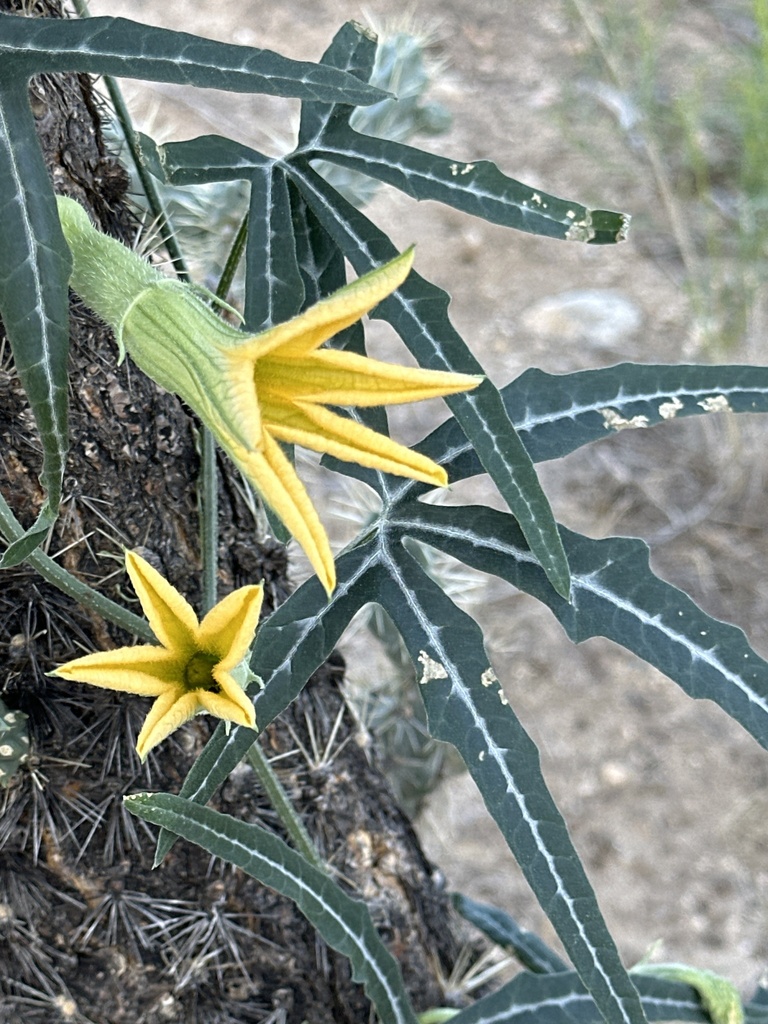
Cucurbita digitata, the Finger-leaved Gourd, also called fingerleaf gourd or coyote gourd, is a wild squash of the Sonoran and Chihuahuan Deserts. It grows from a large, fleshy, carrot-like root and sends long trailing vines across sandy washes, roadsides and desert flats after the summer rains. Its leaves are its signature: each one is split nearly to the base into five long, narrow, finger-like lobes, often marked with silvery-white stripes along the veins.
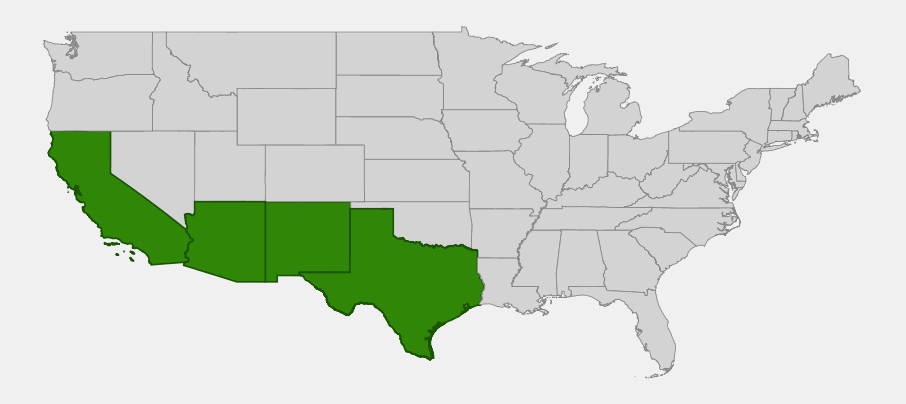
It is a close relative of garden squash and pumpkins, and of the other wild gourds of the Southwest, such as Buffalo Gourd and Coyote Melon. Like them, it has bright yellow, trumpet-shaped flowers that open at dawn and close by late morning, and round, striped gourds that ripen to yellow. In the United States it grows wild in southern Arizona, southwestern New Mexico, far western Texas and a small part of southeastern California, and its range continues south into Sonora and Chihuahua, Mexico.
Safety note: the gourds and roots of finger-leaved gourd are very bitter because they contain cucurbitacins, the same compounds that occasionally make garden squash and zucchini toxic. Eating the flesh can cause severe vomiting, diarrhea and stomach cramps. Do not eat any part of the plant, and keep children and pets from chewing the gourds. This guide covers identification, native range, growing it in a desert garden and its value to native bees.
Identification
Finger-leaved gourd is easy to recognize once you have seen its leaves. In summer, look for long, flat vines with deeply divided leaves trailing across bare ground, yellow flowers in the morning, and striped, tennis-ball-sized gourds.
Growth Habit & Root
It is a perennial vine that dies back to the ground in winter and drought. It grows from a thick, fleshy taproot that can become very large on old plants and stores water and starch through the dry season. In summer, the plant produces several trailing stems, usually 3 to 10 feet long, that run along the ground or scramble over low shrubs, holding on with branched tendrils.
Leaves
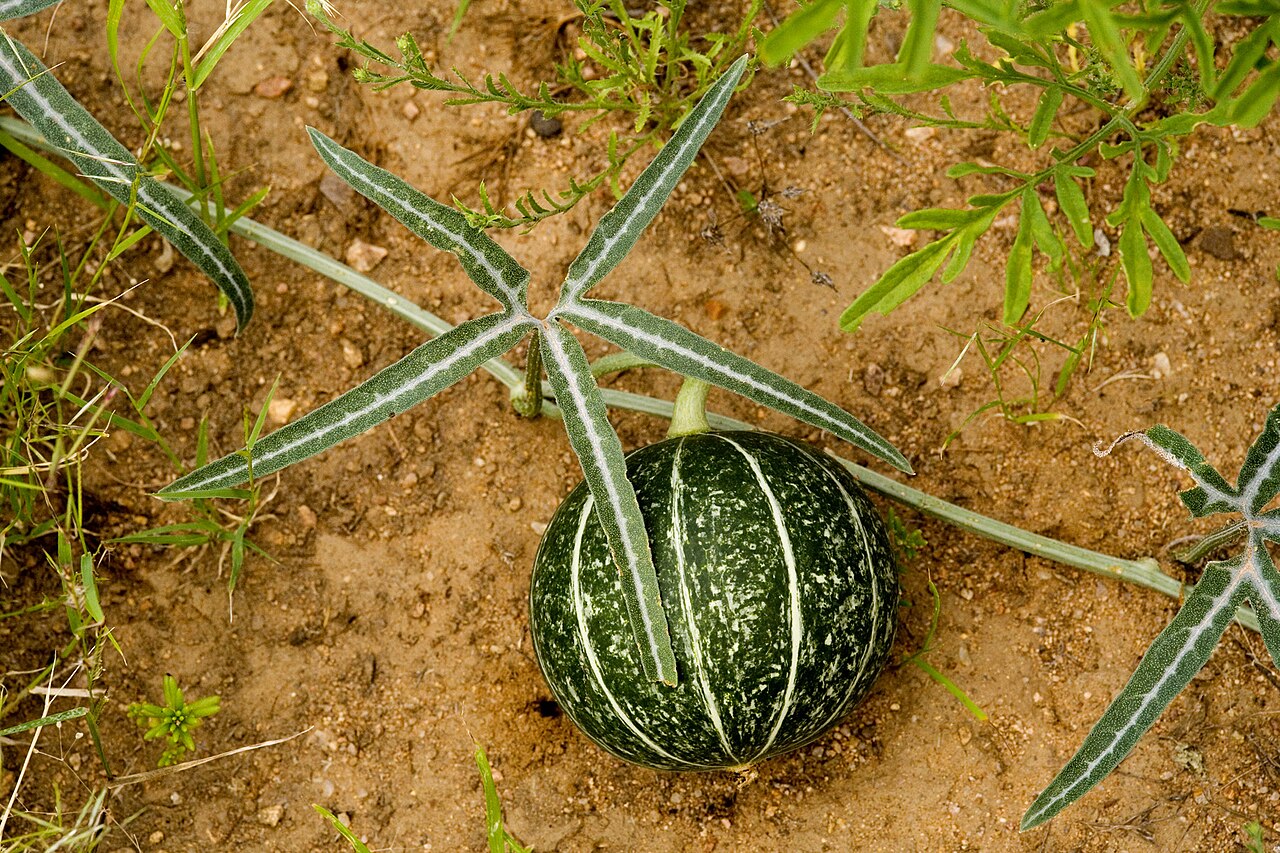
The leaves are palmately divided into five, sometimes three or seven, very narrow, lance-shaped to almost linear lobes, each 2 to 6 inches long. They are gray-green and rough to the touch, often with a pale silvery stripe down the middle of each lobe. These narrow “finger” lobes separate it from Buffalo Gourd, which has large, triangular, undivided leaves, and from Coyote Melon, which has broader, shallower lobes.
Flowers
Male and female flowers are borne separately on the same plant. They are bright yellow to yellow-orange, bell- to trumpet-shaped and about 2 to 3 inches long, with five pointed lobes. Male flowers grow on long stalks; female flowers have a small, round ovary below the petals that becomes the gourd. Each flower opens around sunrise and closes by late morning.
Fruit
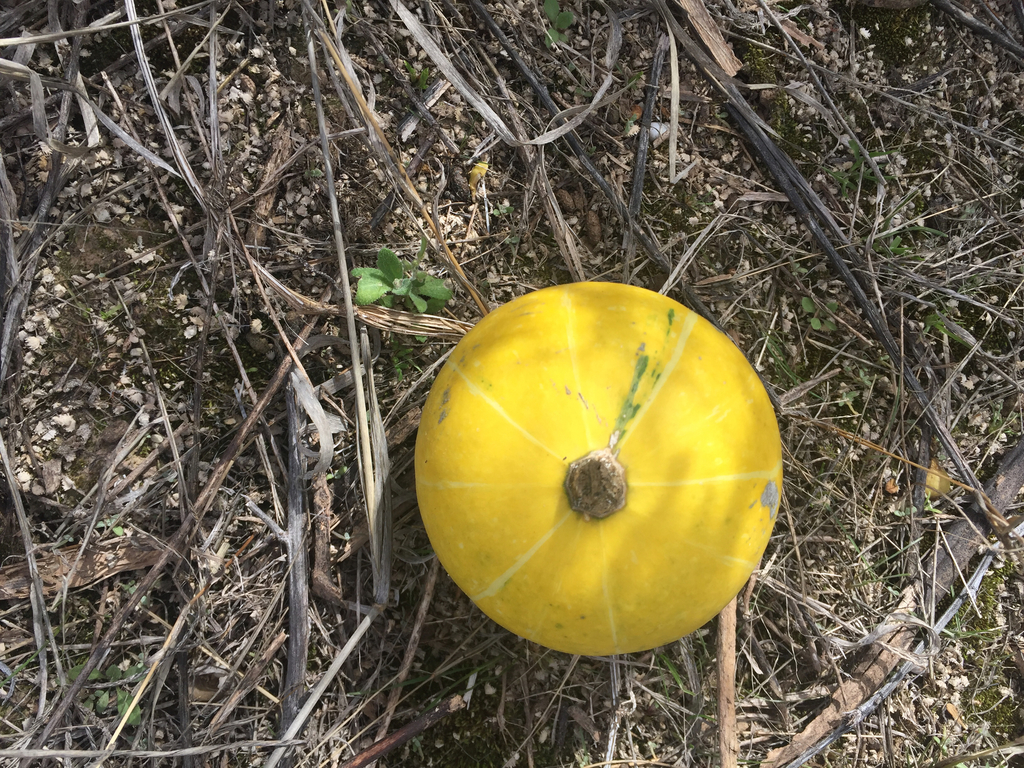
The gourd is round, about 2 to 3½ inches across, dark green with lighter stripes and mottling while young, and ripens to yellow or tan. The rind dries hard, and dry gourds often lie on the ground for months. They contain many flat, cream-colored seeds in bitter pulp.
Hybrids
Finger-leaved gourd hybridizes with Coyote Melon (Cucurbita palmata) and related wild gourds where their ranges meet, and some botanists treat these desert gourds as a closely related group. Plants with intermediate leaf shapes are found in parts of Arizona and California.
Quick Facts
| Scientific Name | Cucurbita digitata A. Gray |
| Family | Cucurbitaceae (gourd family) |
| Plant Type | Herbaceous perennial vine from a large fleshy root |
| Mature Height | Under 1 ft (trailing) |
| Mature Spread | Vines 3–10 ft long |
| Growth Rate | Fast in summer heat and rain |
| Sun Exposure | Full sun |
| Water Needs | Low; drought-tolerant |
| Soil Type | Sandy, gravelly or loamy, well-drained soils |
| Soil pH | About 6.5–8.5 |
| Bloom Time | Mainly June–September (with summer rains) |
| Flower Color | Bright yellow |
| Fall Color | Leaves dry and die back |
| Fruit | Round, striped gourd 2–3½ in, ripening yellow (bitter, toxic) |
| Deer Resistant | Yes; bitter foliage |
| USDA Hardiness Zones | 8–11 |
Native Range
USDA PLANTS lists finger-leaved gourd as native to Arizona, California, New Mexico and Texas. It is most common in southern and central Arizona, from the Sonoran Desert around Phoenix and Tucson east into the desert grasslands of Cochise County, and in the southwestern corner of New Mexico. In Texas it reaches the far western Trans-Pecos region, and in California it is known only from the southeastern deserts. In Mexico it grows in Sonora, Chihuahua and nearby states.
It grows in the warm deserts and desert grasslands, typically from about 1,000 to 5,000 feet in elevation. Typical places are sandy washes and their banks, floodplains, roadsides, the edges of fields and other open, often disturbed ground where its long root can reach deep moisture. Plants are often most obvious along road shoulders, where runoff collects.
Like many desert perennials, it is tied to the monsoon. The plant stays dormant underground through the dry spring, and new vines appear quickly after the first summer storms in July. In wet years, vines may also grow and bloom in spring and early fall.
📋 Regional plant lists featuring Finger-leaved Gourd: Arizona & New Mexico · California & Nevada · South & West Texas
Growing & Care Guide
Finger-leaved gourd is an easy, tough plant for a hot, sunny desert garden within its native range. It needs very little care once its root is established. Give it room to sprawl, because the vines can cover a large area during the monsoon season and then disappear in winter.
Light
Plant in full sun. It grows in the hottest, most exposed places and will not flower well in shade.
Soil & Water
It needs well-drained sandy or gravelly soil. Heavy, wet soil can rot the storage root, especially during winter dormancy. In the low desert, summer rain is usually enough once the plant is established; in a very dry summer, a deep watering every two to three weeks keeps the vines growing. Do not water a dormant plant in winter.
Planting Tips
Sow seed directly in late spring or early summer, about an inch deep, in warm soil. Soaking seeds overnight or nicking the coat speeds germination. Plant it where the vines can spread over bare ground, a slope or a wash bank. Young plants put their energy into the root first, so the vines may stay small in the first year. Because the gourds and roots are toxic, avoid areas where small children play, and do not grow it near garden squash if you save seed, because some bees move between them.
Pruning & Maintenance
No pruning is needed. Let the vines die back naturally in fall and clear away the dead stems in winter if you want a tidier look. Mark the planting spot, because the plant is invisible while dormant and the root can be damaged by digging. Mature roots are very hard to move, so choose the location carefully.
Propagation
Grow it from seed collected from dry, ripe gourds in fall. Clean the seeds of pulp and store them dry. Established plants can also be divided at the root crown while dormant, but the large taproot does not transplant well.
Landscape Uses
- Desert and xeriscape gardens: a tough, low-water ground cover that grows with the summer rains
- Native bee gardens: its flowers feed specialist squash bees and other desert bees
- Erosion control on wash banks and slopes: long vines and a deep root help hold loose soil
- Education and heritage gardens: a wild relative of cultivated squash, useful for teaching crop origins
- Dried gourds: the hard, round gourds are used for crafts and decoration (not for food)
Wildlife & Ecological Value
Finger-leaved gourd supports a small but remarkable group of native pollinators in the desert Southwest.
For Pollinators
Its flowers are visited and pollinated mainly by squash bees, native bees in the genera Peponapis and Xenoglossa that collect pollen only from Cucurbita plants. They fly at dawn, when the flowers open, and males often spend the night inside the closed flowers. These bees evolved with wild gourds such as this one long before squash was domesticated. Other native bees and some beetles also visit the flowers.
For Birds
Birds use the vines and their shade as cover on bare ground, and some birds feed on seeds from broken gourds. The bitter pulp is avoided by most animals.
For Mammals
Coyotes, javelinas and rodents sometimes break open dry gourds and eat the seeds, which are much less bitter than the pulp. The common name “coyote gourd” refers to the old idea that only coyotes would eat them. Deer and livestock generally avoid the bitter leaves.
Ecosystem Role
As a fast-growing, deep-rooted perennial of washes and disturbed ground, finger-leaved gourd shades and stabilizes bare soil during the monsoon. It is also an important wild relative of cultivated squash. Plant breeders and botanists study it as a source of drought tolerance and pest resistance.
Cultural & Historical Uses
The American botanist Asa Gray named Cucurbita digitata in the 1850s from specimens collected in the American Southwest. Digitata means “fingered,” after the leaves.
Wild gourds of this group were used by Indigenous peoples of the Southwest and northern Mexico. The seeds were roasted and eaten, and the crushed roots and gourds, which contain soap-like saponins, were used to wash clothes and hair. Dried gourds were made into rattles and containers. These uses relied on careful preparation, and the bitter flesh was not eaten.
Today finger-leaved gourd draws interest from botanists and crop scientists as one of the xerophytic, or drought-adapted, wild squashes. Its deep storage root lets it survive long droughts and return year after year, a very different strategy from that of its annual garden relatives.
Frequently Asked Questions
Is finger-leaved gourd edible?
No. The gourds and roots are extremely bitter because of cucurbitacins and can cause severe vomiting and diarrhea. Indigenous peoples roasted the seeds, but the pulp and flesh should never be eaten. Keep children and pets from chewing on the gourds.
How do I tell finger-leaved gourd from buffalo gourd?
Look at the leaves. Finger-leaved gourd has leaves split into five long, narrow lobes like fingers. Buffalo Gourd has large, triangular, undivided gray leaves and a strong, unpleasant smell.
When does finger-leaved gourd bloom?
Mainly from June to September, after the summer monsoon rains begin. Each flower opens around dawn and closes by late morning, so look for blooms early in the day.
Does it come back every year?
Yes. It is a perennial that dies back to its large, fleshy root in fall and dry spells, then sends up new vines when warm weather and rain return.
What pollinates finger-leaved gourd?
Mainly native squash bees in the genera Peponapis and Xenoglossa, which specialize in Cucurbita flowers and are active at dawn when the flowers open.

Looking for a nursery that carries Finger-leaved Gourd?
Browse our native plant nursery directory: Arizona · California · New Mexico · Texas

