
Hairy Matilija Poppy (Romneya trichocalyx)
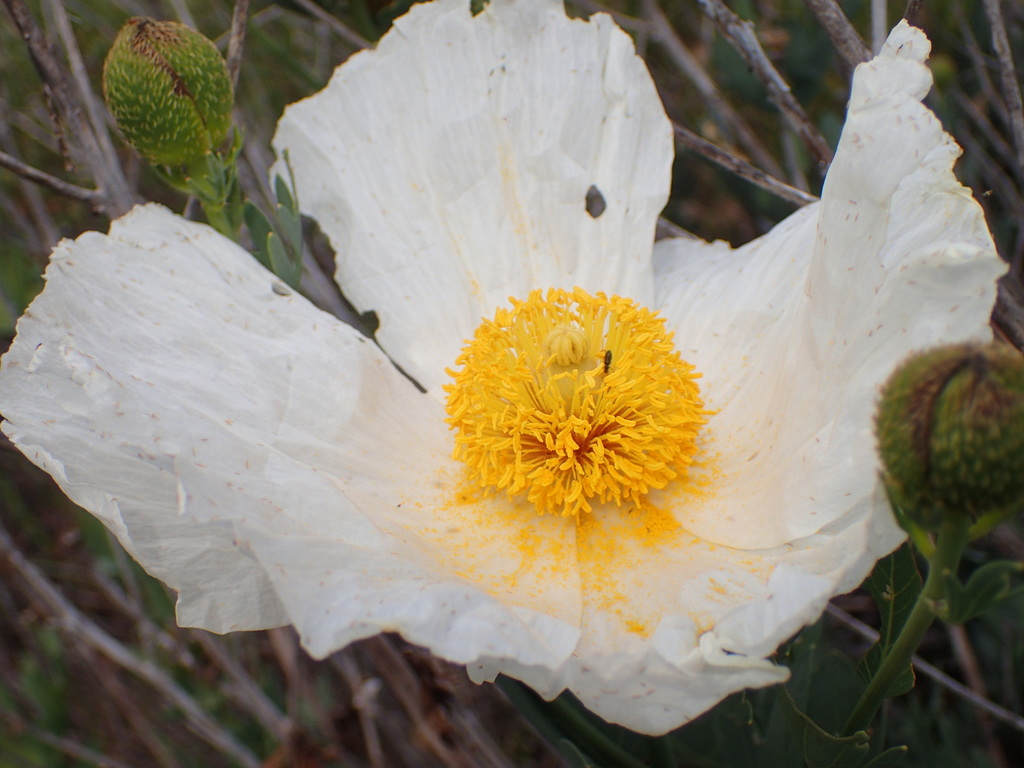
Romneya trichocalyx, known as Hairy Matilija Poppy or bristly Matilija poppy, is a large native subshrub of Southern California and northern Baja California. It is one of only two species of Matilija poppy, famous for having the largest flowers of any plant in the poppy family: crinkled white petals around a bright golden ball of stamens, often called “fried egg flowers”.
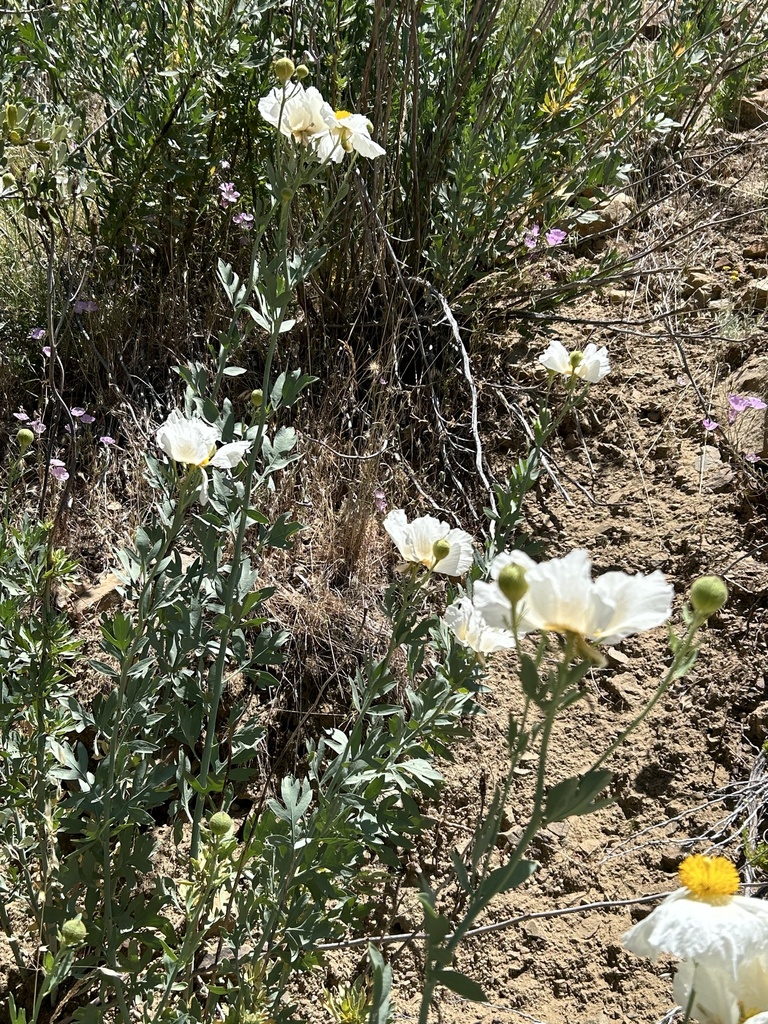
It grows in dry canyons, washes and openings in chaparral and coastal sage scrub, spreading by underground rhizomes into large colonies of gray-green stems 3 to 8 feet tall. It is a fire follower, often appearing in great numbers after a burn, and blooms from late spring into summer.
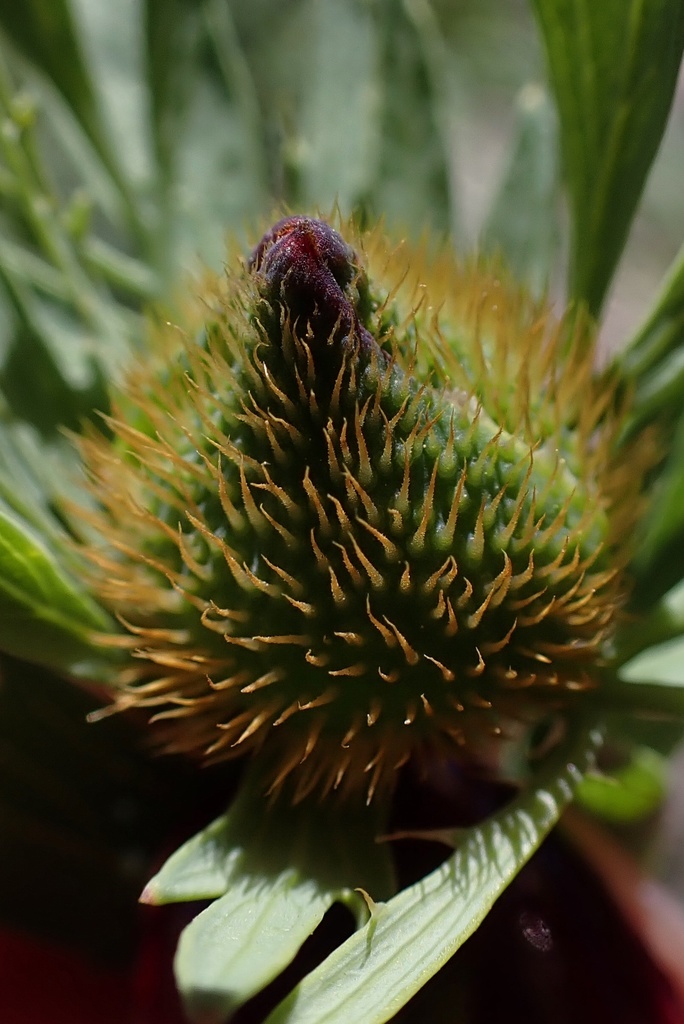
Hairy Matilija poppy is very similar to its better-known relative, Coulter’s Matilija Poppy (Romneya coulteri), and the two were once treated as one species. It differs most clearly in its bristly flower buds. This guide covers how to identify it, where it grows, and how to grow it in dry, sunny gardens.
Identification
Hairy Matilija poppy is unmistakable as a Matilija poppy, with its huge white flowers and gray-green, deeply cut leaves. To tell it from Coulter’s Matilija poppy, look at the buds.
Growth Habit
A large, multi-stemmed perennial subshrub, about 3 to 8 feet tall, with stems that are woody only at the base. It spreads by rhizomes to form clumps or broad colonies, and in dry summers the stems may die back after flowering.
Leaves
The leaves are alternate, gray-green to blue-green and smooth, 2 to 4 inches long, deeply divided into a few lance-shaped lobes, sometimes with a small fringe of bristly hairs along the edges.
Flowers & Fruit
The flowers are borne singly at the tips of the stems and are about 4 to 6 inches across, with six white, crinkled, satiny petals around a dense mass of yellow stamens. The flower bud is egg-shaped with a short point and is covered with flattened, bristly hairs, as are the three sepals. The fruit is an egg-shaped capsule about 1 to 1½ inches long, covered in bristles, holding many tiny seeds. Bloom is mainly April to July.
Look-alikes
Coulter’s Matilija Poppy (R. coulteri) has round, smooth, hairless buds without a point, and slightly larger flowers and fruits. Garden selections such as ‘White Cloud’ are often hybrids between the two species. Prickly poppies (Argemone) also have white petals and yellow centers but are spiny all over, with smaller flowers.
Quick Facts
| Scientific Name | Romneya trichocalyx (syn. R. coulteri var. trichocalyx) |
| Family | Papaveraceae (poppy family) |
| Plant Type | Rhizomatous perennial subshrub |
| Mature Height | 3–8 ft |
| Mature Spread | 3 ft to large colonies |
| Growth Rate | Fast once established |
| Sun Exposure | Full sun |
| Water Needs | Low; summer-dry once established |
| Soil Type | Well-drained sandy, gravelly or rocky soil |
| Soil pH | Neutral to slightly alkaline |
| Bloom Time | April–July |
| Flower Color | White with a yellow center |
| Fall Color | Stems dry and are cut back in fall |
| Fruit | Bristly egg-shaped capsule with tiny seeds |
| Deer Resistant | Yes |
| USDA Hardiness Zones | 8–10 |
Native Range
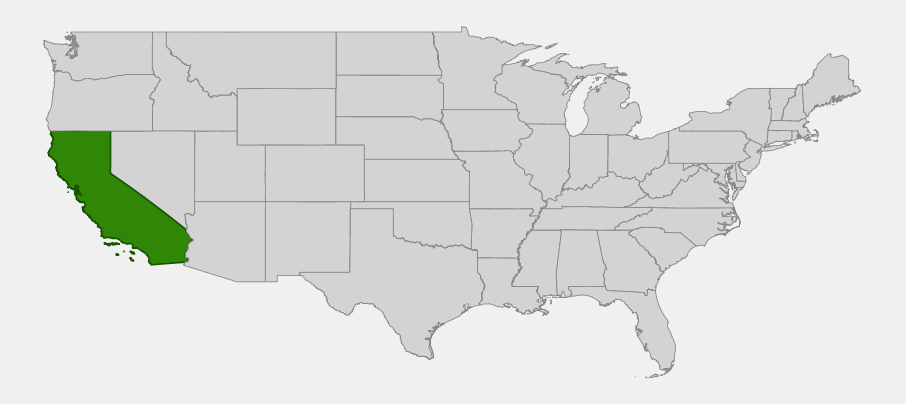
Hairy Matilija poppy is native to Southern California and northern Baja California, Mexico. In California it is found mainly in San Diego County, with scattered populations farther north in the foothills of Ventura and Santa Barbara counties. In Baja California it grows south into the northern part of the peninsula.
It grows in dry, sandy or gravelly washes, canyon bottoms and slopes in chaparral and coastal sage scrub, most often in openings and in areas that have recently burned. Because both Matilija poppies have long been planted in gardens and along roads, a few populations outside the main range may come from cultivated plants.
It is not listed as rare or endangered. Like other chaparral plants, it depends on periodic fire, but too-frequent fires and spreading invasive grasses threaten the shrublands where it grows.
📋 Regional plant lists featuring Hairy Matilija Poppy: California & Nevada
Growing & Care Guide
Hairy Matilija poppy is grown in California native gardens, and Matilija poppies sold by native nurseries are often this species or hybrids with Coulter’s Matilija poppy. It is a dramatic plant for large, dry, sunny spaces, but it is famous for being hard to establish and then hard to contain.
Light
Full sun. It flowers poorly and becomes floppy in shade.
Soil & Water
Needs fast-draining sandy, gravelly or rocky soil; it rots in heavy, wet clay. Water regularly during the first summer, then little or not at all once established. A deep watering once a month in summer prolongs flowering but encourages more spreading.
Planting Tips
Plant from containers in fall or winter, disturbing the roots as little as possible; transplants often sulk or fail. Give it plenty of room, at least 6 to 10 feet, or plant it where its spreading rhizomes are contained by paving, a wall or dry, unwatered ground. It is excellent on slopes, at the back of large borders and in wild, dry gardens.
Pruning & Maintenance
In late fall, after the stems dry, cut the whole plant down to a few inches above the ground. New stems come up in winter and spring and flower the following summer. Remove suckers that spread where they are not wanted.
Propagation
Commercial growers propagate it from root or rhizome cuttings taken in winter. Seed is slow and unpredictable; it germinates best after treatment with smoke or charred wood, imitating the conditions after a wildfire.
Landscape Uses
- Large dry gardens: a bold, showy plant with huge white flowers
- Slopes and banks: rhizomes help bind dry soil
- Pollinator gardens: abundant pollen for bees and beetles
- Cut flowers: stems with buds open in a vase
Wildlife & Ecological Value
In chaparral and coastal sage scrub, hairy Matilija poppy is a showy part of the plant community that recovers after fire.
For Pollinators
The large, open flowers produce huge amounts of pollen and are visited by bumblebees, carpenter bees, honeybees, many smaller native bees and pollen-eating beetles.
For Birds
The tall, dense stems offer cover for small birds such as towhees, wrens and sparrows, and birds may pick insects from the flowers and foliage.
For Mammals
The bitter, bluish foliage is rarely browsed by deer. Small mammals use the clumps for shelter.
Ecosystem Role
As a fire follower, it sprouts from rhizomes and germinates from long-lived seed after burns, helping cover and hold bare soil on slopes and in washes during the first years of recovery.
Cultural & Historical Uses
The genus name honors the Irish astronomer John Thomas Romney Robinson, a friend of the botanist Thomas Coulter, who collected the first Matilija poppy in California in the early 1830s. The name trichocalyx means “hairy calyx”, referring to the bristly sepals covering the bud.
The common name Matilija comes from Matilija Canyon near Ojai in Ventura County, which in turn is said to be named for a Chumash leader. Matilija poppies have been prized garden plants in California, Europe and elsewhere for well over a century.
California botanists long debated whether the two Matilija poppies are separate species or varieties of one. Current California floras, including the Jepson Manual, treat them as two species, Romneya coulteri and Romneya trichocalyx.
Frequently Asked Questions
How do I tell hairy Matilija poppy from Coulter’s Matilija poppy?
Look at the flower buds. Hairy Matilija poppy has pointed buds covered in flattened, bristly hairs, while Coulter’s Matilija poppy has round, smooth, hairless buds.
Why is it hard to establish?
Matilija poppies have brittle, fleshy roots that resent disturbance, and young plants often rot in wet, heavy soil. Plant from containers in well-drained soil and water carefully the first year.
Will it spread in my garden?
Yes. Once established it spreads by underground rhizomes and can form large colonies, especially with summer water. Give it room or contain it with paving or dry ground.
When should I cut it back?
In late fall or early winter, after the stems have dried, cut the whole plant down to a few inches. New stems grow the following spring and bloom in summer.
Is it a California poppy?
It is a California native in the poppy family, but it is not the state flower. The California poppy is Eschscholzia californica, a much smaller orange wildflower.

Looking for a nursery that carries Hairy Matilija Poppy?
Browse our native plant nursery directory: California

