
American Frogbit (Limnobium spongia)
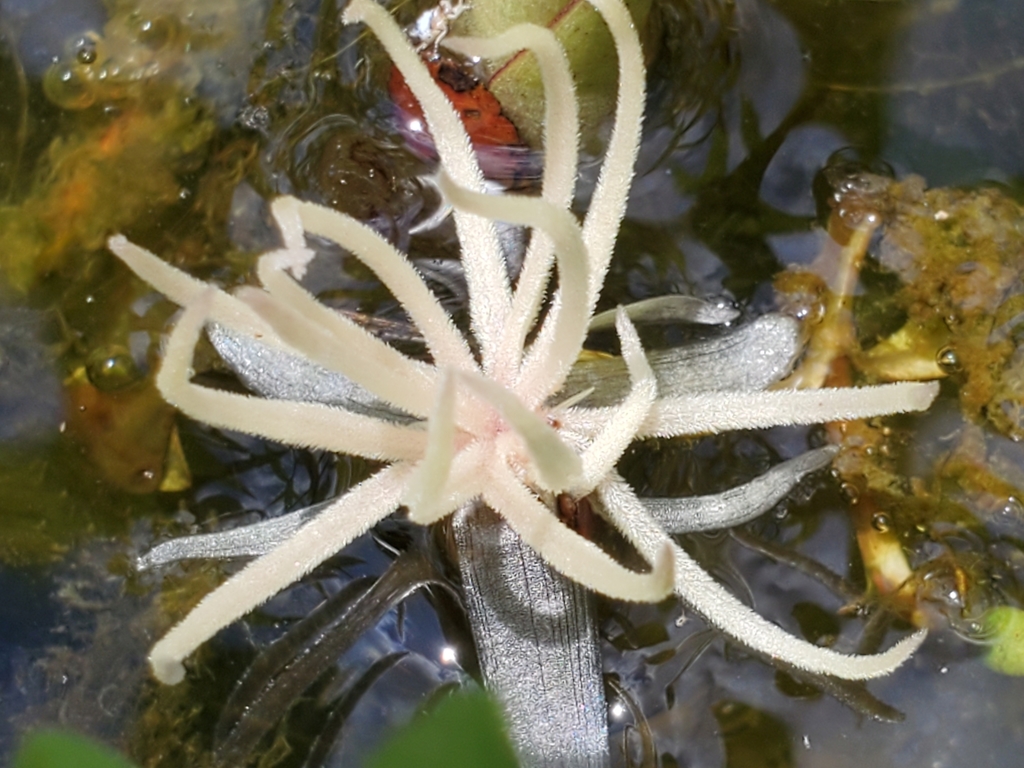
Limnobium spongia, the American Frogbit (USDA: American spongeplant), is a native aquatic perennial of the southeastern and eastern United States. It grows in quiet, shallow fresh water, such as swamps, ponds, ditches, bayous, oxbow lakes and the slow edges of streams, where its rosettes of round to heart-shaped, glossy leaves float on the surface or stand a few inches above it.
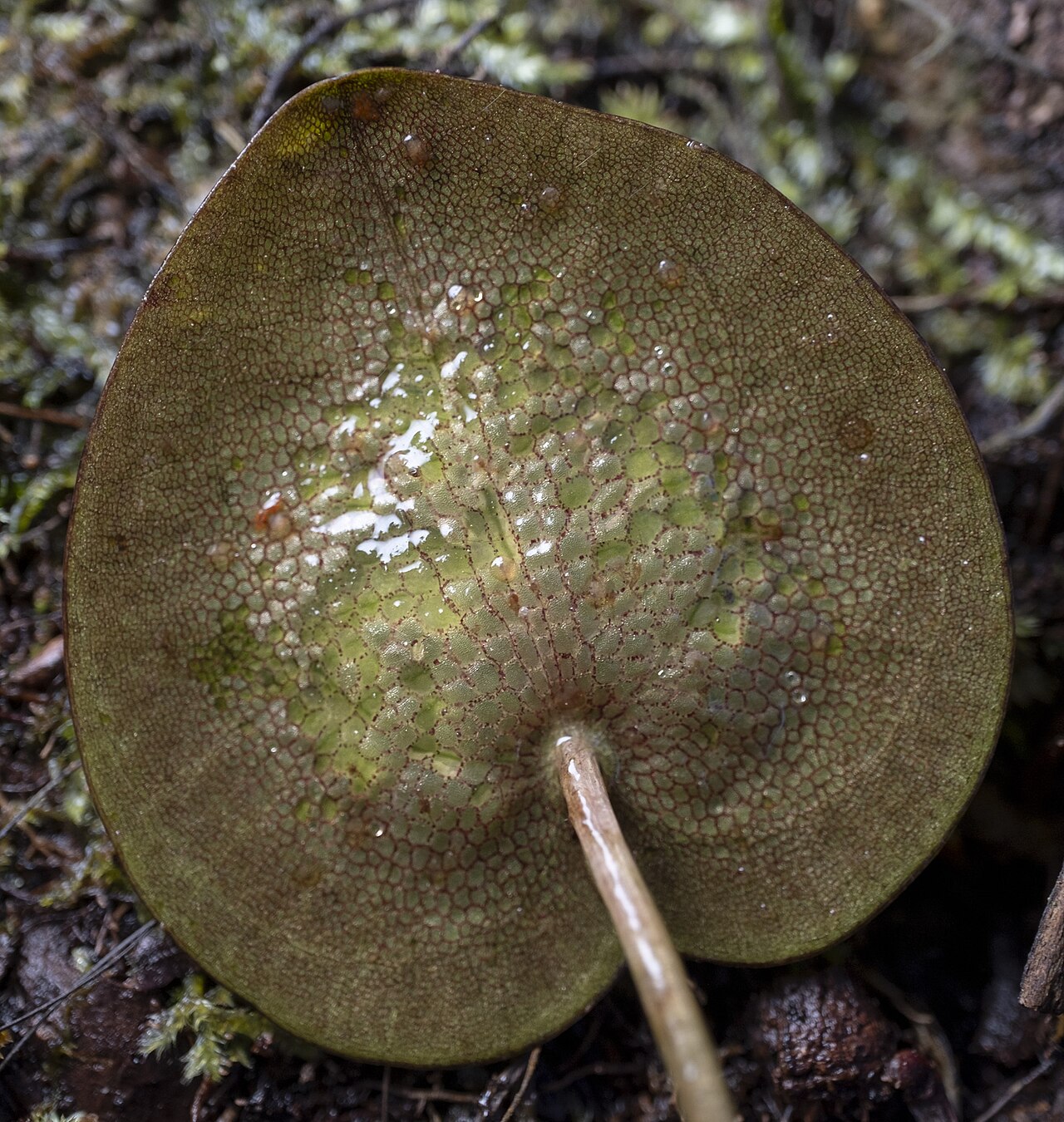
Its key feature is the thick, spongy, honeycomb-like tissue on the underside of the floating leaves, which keeps them buoyant and gives it the name spongeplant. From early summer into fall it bears small white flowers, the female ones with a showy starburst of long, thread-like stigmas. Plants spread by runners to form loose colonies.
American frogbit is easily confused with two non-native relatives: Amazon frogbit (Limnobium laevigatum), a tropical aquarium plant that has become invasive in California, and European frogbit (Hydrocharis morsus-ranae), an invasive plant of the Great Lakes and Northeast. This guide covers how to tell them apart, where the native species grows, how to grow it in a pond and its value to wildlife.
Identification
American frogbit is a floating or shallowly rooted aquatic plant with rosettes of round to heart-shaped leaves, a spongy leaf underside, runners and small white flowers.
Growth Form
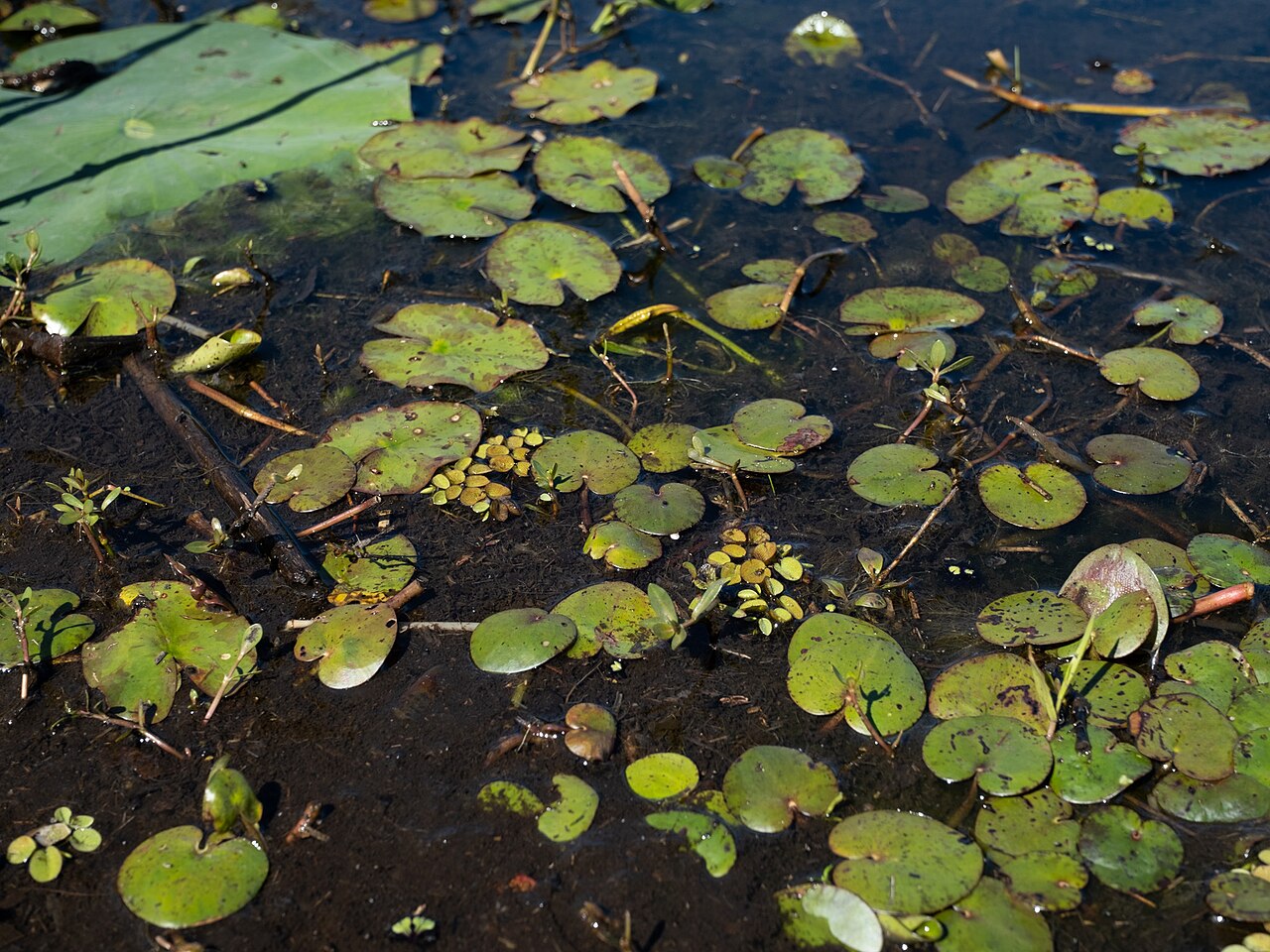
It grows as free-floating rosettes or as plants rooted in mud in shallow water, linked by long runners (stolons) that produce new rosettes. Feathery, unbranched roots hang into the water or anchor in the mud. In drying pools it can become stranded on wet mud and continue to grow.
Leaves
The long-stalked leaves are round to broadly heart-shaped, about ¾ to 3 inches long, with smooth edges and fine, curving veins. Floating leaves have a thick, purplish to reddish-brown, spongy layer of air-filled cells across most of the underside. In crowded or shallow conditions, the plant produces emergent leaves on longer stalks that stand up out of the water and lack the spongy layer.
Flowers
The small, white flowers are unisexual, with male and female flowers on the same plant, emerging from leafy bracts at the base of the leaves from about June to November. Male flowers have a cluster of stamens on a long stalk. Female flowers have three narrow white petals and six long, two-forked, white stigma branches that spread like a starburst.
Fruit & Look-alikes
After flowering, the stalk of the female flower curves down, pulling the berry-like fruit underwater, where it ripens and releases many small, hairy seeds. Amazon Frogbit has smaller, spongier, more strongly cupped rosettes and is native only to tropical America (including Puerto Rico), not the mainland. Invasive European frogbit has smaller, kidney-shaped leaves with spongy tissue limited to a narrow band beside the midrib, and showy three-petaled white flowers with a yellow center. American White Waterlily and Spatterdock have much larger leaves with a deep notch.
Quick Facts
| Scientific Name | Limnobium spongia (Bosc) Rich. ex Steud. |
| Family | Hydrocharitaceae (frogbit family) |
| Plant Type | Floating or rooted aquatic perennial |
| Mature Height | Floating; emergent leaves up to about 8 in above water |
| Mature Spread | Spreads by runners to form colonies |
| Growth Rate | Fast in warm water |
| Sun Exposure | Full sun to partial shade |
| Water Needs | Aquatic; still or slow fresh water up to about 2 ft deep, or wet mud |
| Soil Type | Mucky or organic pond bottoms; floats free in water |
| Soil pH | Acidic to neutral water (about 5.5–7.5) |
| Bloom Time | June–November |
| Flower Color | White |
| Fall Color | None notable |
| Fruit | Berry-like capsule ripening underwater |
| Deer Resistant | Not usually browsed by deer |
| USDA Hardiness Zones | 6–10 |
Native Range
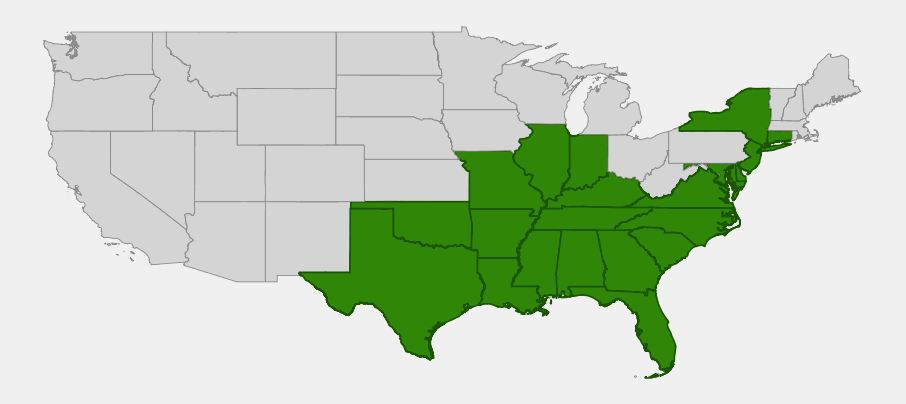
American frogbit is native to the eastern and southeastern United States. USDA PLANTS lists it from Texas, Oklahoma, Missouri and southern Illinois and Indiana east to Florida, the Carolinas, Virginia, Maryland, Delaware and New Jersey. It is most common on the Gulf and Atlantic Coastal Plains and in the lower Mississippi Valley.
USDA also lists outlying records from Connecticut and New York, at the northern edge of its range, where it is rare and known from only a few sites; some northern records may be introductions or misidentified European frogbit, so it should be identified carefully there.
It grows in calm, shallow fresh water: swamps, cypress ponds, marshes, oxbow lakes, bayous, drainage ditches, beaver ponds and the backwaters of slow streams, often in partial shade among other floating and emergent plants. It can also persist stranded on wet mud along shores.
📋 Regional plant lists featuring American Frogbit: North & South Florida · Alabama, Georgia & Mississippi · North & South Carolina · Maryland, Virginia & West Virginia · Kentucky & Tennessee · Arkansas, Louisiana, Eastern Oklahoma & Eastern Texas · Illinois, Iowa & Missouri · Ohio & Indiana · New York, Pennsylvania & Northern New Jersey · Delaware, Southern New Jersey & Long Island
Growing & Care Guide
American frogbit is a good native alternative to imported floating plants for water gardens, ponds and aquariums in the Southeast, and it is sometimes offered by aquatic plant nurseries. Make sure you are buying Limnobium spongia, not Amazon frogbit or European frogbit, which are often sold under similar names. It is not known to be toxic, but it can multiply quickly in warm, nutrient-rich water, so thin it as needed and never release it into waters outside its native range.
Light
Full sun to partial shade. In deep shade, growth is slower and plants rarely flower.
Soil & Water
Grow it floating in still or slow-moving water, or rooted in a container of heavy, mucky soil placed in a few inches of water. It prefers soft, slightly acidic to neutral water rich in nutrients. In colder parts of its range, it survives winter as dormant buds that sink to the bottom.
Planting Tips
Float a few rosettes on the surface of a pond or tub garden in late spring, ideally along a sheltered edge among other plants. Avoid strong currents and splashing fountains. In a small pond, keep it to part of the surface so that submerged plants still get light.
Pruning & Maintenance
Scoop out excess rosettes with a net when it covers more than about half the water surface, and compost them away from natural waterways. Remove yellowing leaves. Aphids sometimes feed on the leaves in hot weather; hosing them off into the water lets fish eat them.
Propagation
Separate young rosettes from the runners at any time during the growing season. It also grows from seed, which ripens underwater and germinates in shallow water or on wet mud.
Landscape Uses
- Native water gardens and ponds: floating cover and shade for fish and frogs
- Wetland and rain-garden basins: for permanently wet pockets within its native range
- Native aquariums and tub gardens: an alternative to non-native floating plants
- Education: a classroom example of air-filled aquatic leaf tissue
Wildlife & Ecological Value
American frogbit provides shade, shelter and food in quiet southern waters.
For Pollinators
Small flies, bees and other insects visit the flowers for pollen; the female flowers’ long stigmas catch pollen from visiting insects or drifting on the water surface.
For Birds
Ducks and other waterfowl eat the leaves and seeds, and wading birds hunt for small fish, frogs and insects among the floating mats.
For Mammals
Muskrats and other aquatic mammals may eat the plants. It also provides cover for frogs, salamanders and young fish.
Ecosystem Role
Its floating rosettes shade the water, slow algae growth, take up excess nutrients and provide habitat for aquatic insects and snails, which in turn feed fish and amphibians. It is a natural part of the floating plant community of southern swamps and ponds.
Cultural & Historical Uses
The French naturalist Louis Bosc first described this plant as Hydrocharis spongia in the early 1800s, after his travels in the Carolinas. The genus name Limnobium means “living in a lake,” and the species name spongia refers to the spongy leaf underside.
The name frogbit was first given to the European Hydrocharis morsus-ranae, whose scientific name means “frog’s bite,” and was later applied to its American relatives. Today, the similar names cause frequent confusion between the native American frogbit and its invasive cousins.
In some southern ponds and canals, American frogbit can become abundant enough that pond managers thin it, but it is a native part of these waters and an important habitat plant for wildlife.
Frequently Asked Questions
Is American frogbit invasive?
No. It is native to the eastern and southeastern United States, though it can spread quickly in warm, nutrient-rich ponds. The invasive frogbits are Amazon frogbit (Limnobium laevigatum) and European frogbit (Hydrocharis morsus-ranae).
How do I tell American frogbit from Amazon frogbit?
American frogbit has larger, rounder leaves, often with emergent leaves held above the water, and occurs naturally in the Southeast. Amazon frogbit has smaller, cupped, very spongy rosettes and is a tropical species sold for aquariums.
Where does American frogbit grow?
In swamps, ponds, ditches and slow streams from Texas and Oklahoma east to Florida and north to New Jersey, with rare outlying records in New York and Connecticut.
Can I grow American frogbit in my pond?
Yes, within its native range. Float a few rosettes in still water in sun or partial shade, and thin them as they multiply.
Why is it called spongeplant?
Its floating leaves have a thick, spongy, air-filled layer on the underside that keeps them afloat.

Looking for a nursery that carries American Frogbit?
Browse our native plant nursery directory: Alabama & Arkansas · Connecticut, Delaware, Florida & Georgia · Illinois & Indiana · Kentucky, Louisiana, Maryland, Mississippi & Missouri · New Jersey, New York, North Carolina & Oklahoma · South Carolina, Tennessee, Texas & Virginia

