
Late Figwort (Scrophularia marilandica)
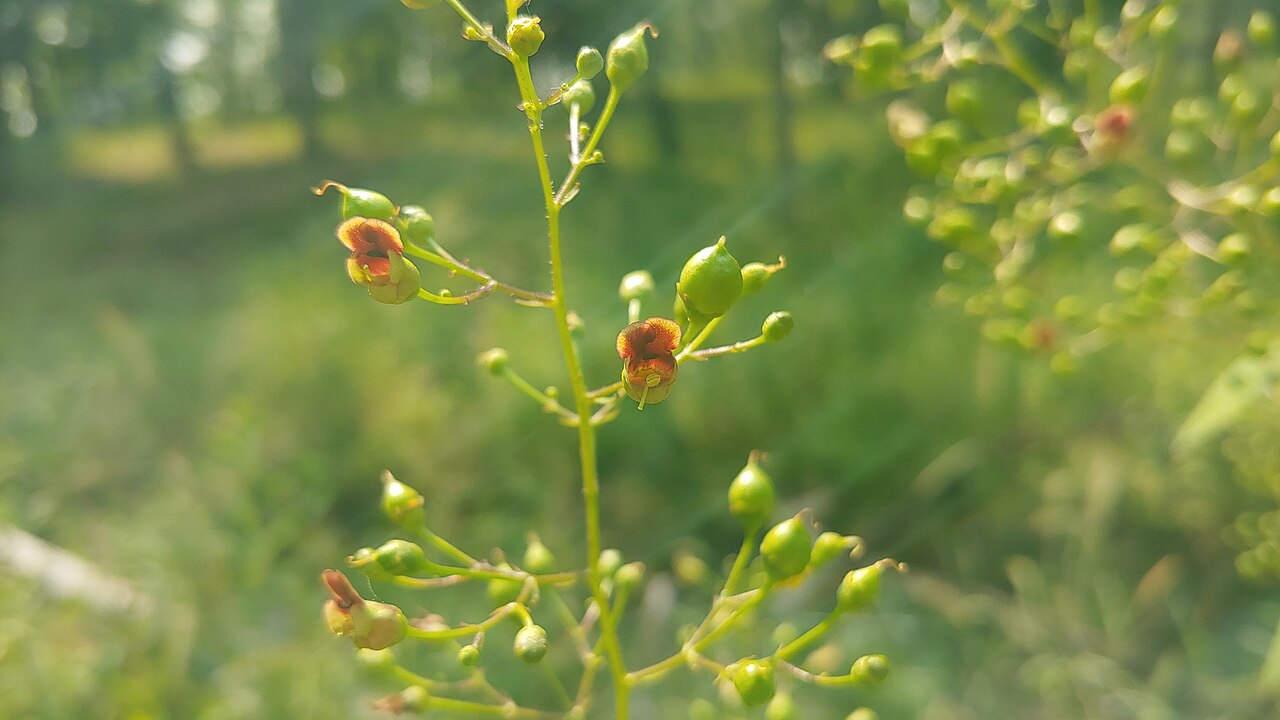
Scrophularia marilandica, known as Late Figwort, eastern figwort, Maryland figwort or carpenter’s square, is a tall, branching perennial of rich woods, thickets and woodland edges across the eastern half of the United States. It grows 3 to 8 feet tall on a square, grooved stem and from midsummer into fall carries a loose, open spire of small, hooded flowers that are green outside and glossy reddish brown within.
The flowers are easy to overlook, but insects find them at once. Each one holds a large drop of nectar, and late figwort is regularly listed among the best native plants for wasps and bees; ruby-throated hummingbirds also visit. It belongs to the figwort family (Scrophulariaceae) and is the eastern counterpart of California bee plant (Scrophularia californica) of the West Coast.
The name “late” separates it from early or lanceleaf figwort (Scrophularia lanceolata), which blooms earlier in the summer. This guide covers how to identify late figwort, where it grows, how to use it in a woodland or pollinator garden, and its value to wildlife.
Identification
Late figwort is a plant you notice by its shape and its visitors rather than its color: a tall, square stem with paired, toothed leaves, topped by a wide, open panicle of tiny brownish flowers buzzing with wasps in August.
Growth Habit
It is an upright, clump-forming perennial, usually 3 to 8 feet tall, with one or a few stems from a short, knobby rootstock. The upper part of the plant branches into a broad, pyramid-shaped flower cluster that can be 1 to 2 feet long.
Stem
The stem is distinctly four-sided and grooved, which gave the plant the folk name carpenter’s square. It is mostly smooth below and becomes finely glandular in the flower cluster.
Leaves
The leaves are opposite, ovate to lance-shaped, 3 to 10 inches long, and sharply toothed along the edges, with a rounded or broadly wedge-shaped base and a distinct leaf stalk. They are larger and broader toward the base of the plant and smaller up the stem.
Flowers
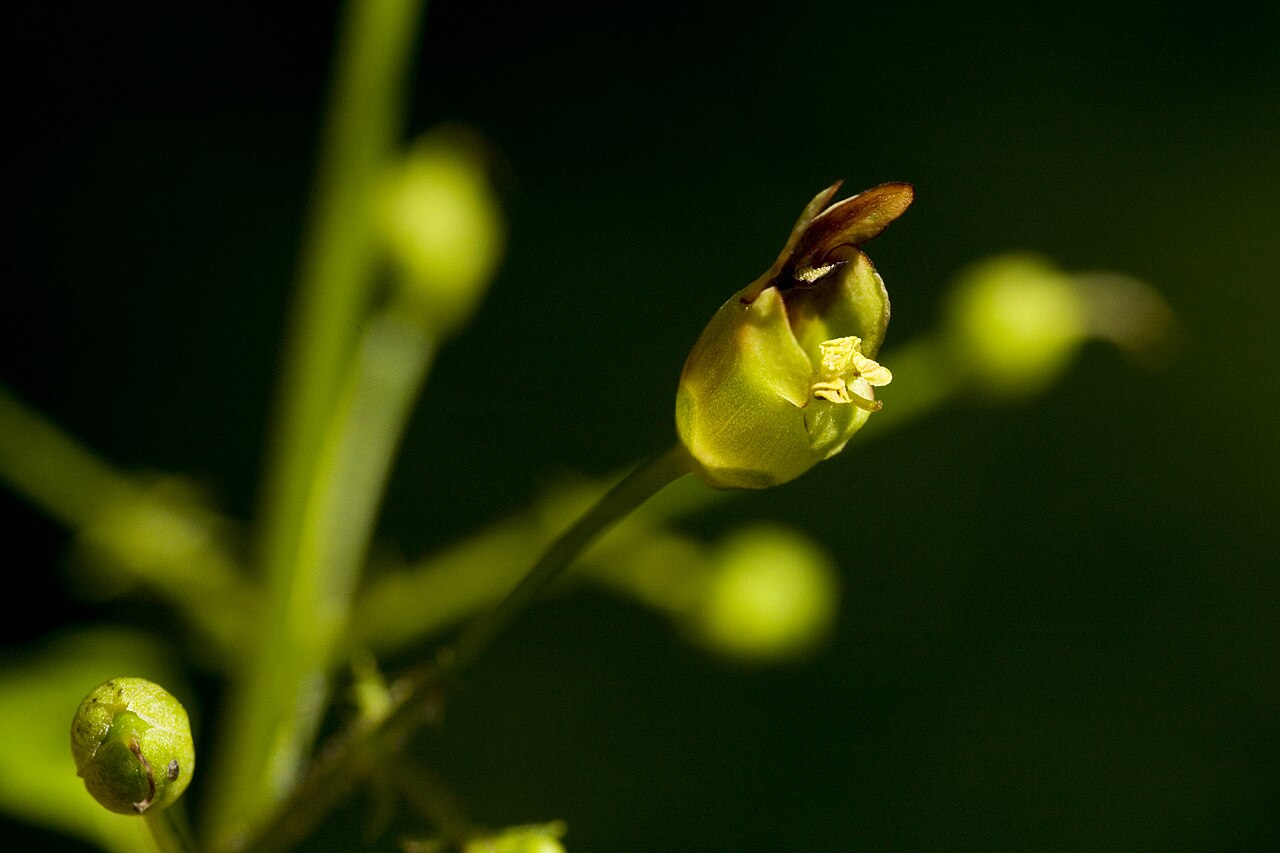
The flowers are only about 1/4 to 3/8 inch long. Each is a rounded, pouch-like tube with two short upper lobes forming a hood and three smaller lower lobes; the outside is dull green and the inside and upper lobes are shiny reddish brown to maroon. Inside, a small sterile stamen (staminode) at the top of the flower is purple to dark brown. Bloom runs from about July into September or October.
Fruit & Seeds
After flowering, each blossom forms an egg-shaped, pointed capsule about 1/4 inch long. It splits open in fall to release many tiny brown seeds, and the dry, branched stalks often stand into winter.
Look-alikes
Lanceleaf or early figwort (Scrophularia lanceolata) is very similar but blooms mainly from May to July, has a duller, more yellowish-green sterile stamen, and often a more sharply ridged stem. Late figwort’s purple to brown staminode and later flowering separate it. Out of flower, its square stem and toothed, opposite leaves can be confused with mints or nettles, but it lacks the minty smell and stinging hairs.
Quick Facts
| Scientific Name | Scrophularia marilandica L. |
| Family | Scrophulariaceae (figwort family) |
| Plant Type | Herbaceous perennial wildflower |
| Mature Height | 3–8 ft |
| Mature Spread | 1–3 ft |
| Growth Rate | Moderate to fast |
| Sun Exposure | Part shade to full sun |
| Water Needs | Moderate; average to moist soil |
| Soil Type | Rich loam; tolerates clay and rocky soils |
| Soil pH | About 5.5–7.5 |
| Bloom Time | July–September (into October) |
| Flower Color | Green outside, reddish brown to maroon inside |
| Fall Color | Not showy; dry branched seed stalks stand into winter |
| Fruit | Egg-shaped capsule with many tiny seeds |
| Deer Resistant | Usually lightly browsed; bitter foliage |
| USDA Hardiness Zones | 3–9 |
Native Range
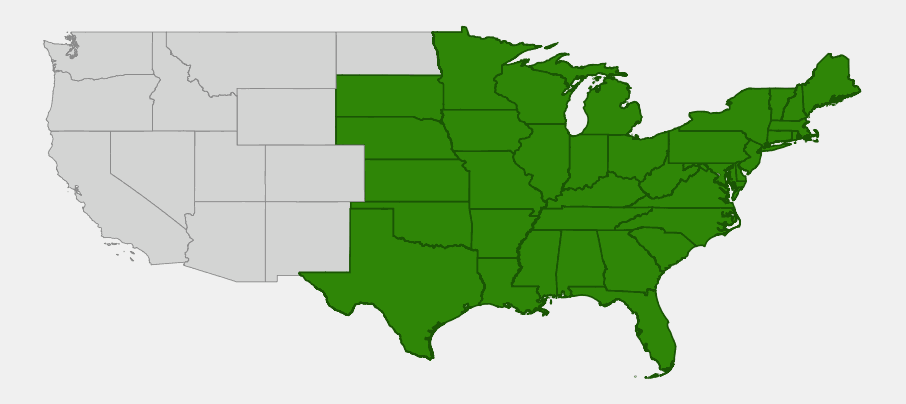
Late figwort is native to eastern and central North America. USDA PLANTS lists it in 36 states, from Maine and Vermont south to Florida and west to Minnesota, South Dakota, Nebraska, Kansas, Oklahoma and Texas, and in southern Ontario and Quebec in Canada. It is common through much of the Midwest and the Appalachian region and becomes scarcer at the edges of its range, such as northern New England, Florida and the western Plains.
In Texas and Oklahoma it is mainly a plant of the wooded eastern parts of the states, and in the Plains states it follows wooded river valleys westward. In Florida it is rare and confined to the northern part of the state.
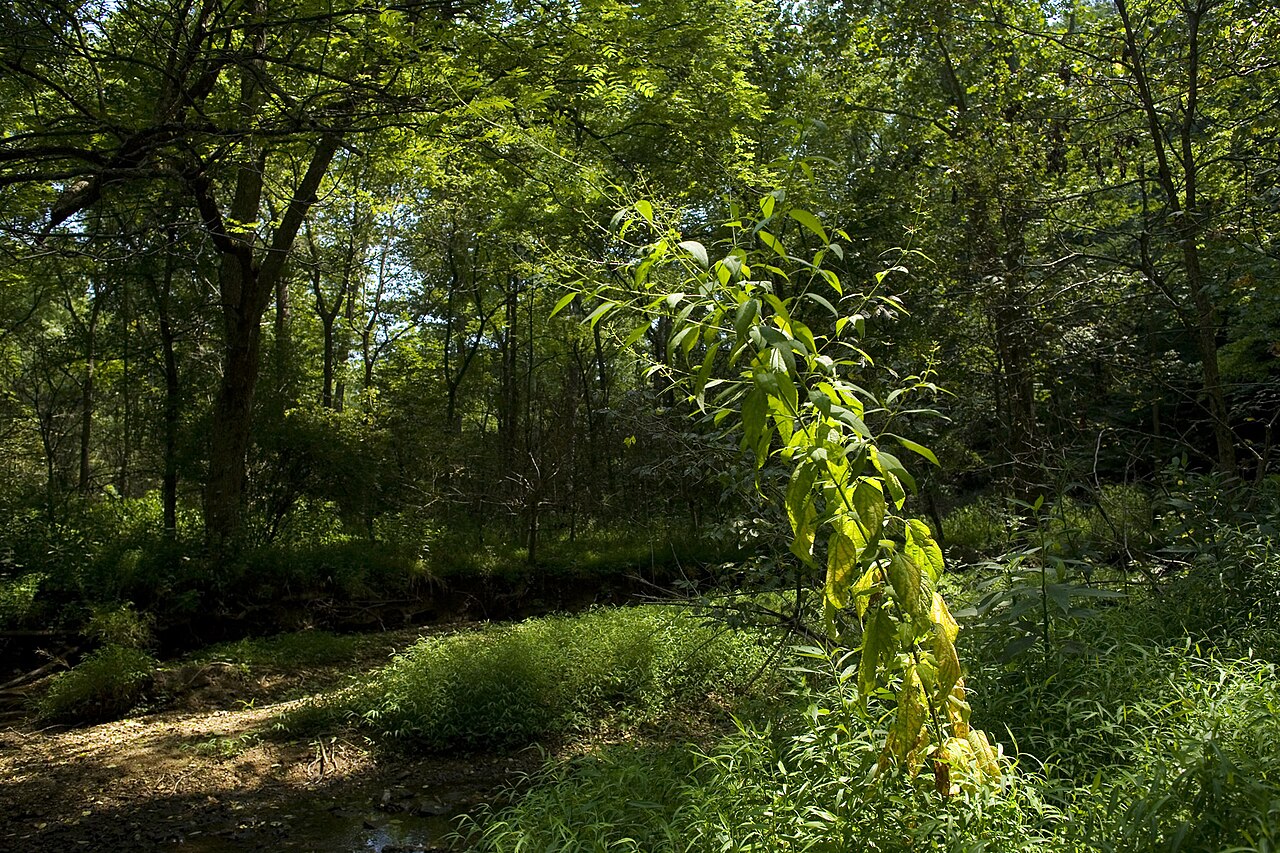
It grows in moist to fairly dry deciduous woods, along woodland edges and clearings, in thickets and floodplain forests, on stream banks and along shaded roadsides and fencerows. It often appears after the canopy is opened by logging or windthrow and does best in rich, loamy soil.
📋 Regional plant lists featuring Late Figwort: New York, Pennsylvania & Northern New Jersey · Ohio & Indiana · Michigan, Wisconsin & Eastern Minnesota · Kentucky & Tennessee · Nebraska, Kansas & Eastern Colorado · Connecticut, Massachusetts & Rhode Island · New Hampshire, Maine & Vermont · Maryland, Virginia & West Virginia · Delaware, Southern New Jersey & Long Island · Illinois, Iowa & Missouri · Alabama, Georgia & Mississippi · North & South Florida · North & South Carolina · Arkansas, Louisiana, Eastern Oklahoma & Eastern Texas · North Dakota, South Dakota & Western Minnesota
Growing & Care Guide
Late figwort is not a showy plant, but it is one of the most useful native perennials for pollinators, easy to grow and happy in the partly shaded, average to moist spots where many prairie flowers sulk. Plant it where you can watch its visitors, at the back of a border, along a woodland edge or in a rain garden.
Light
It grows in part shade to full sun. Dappled light or morning sun with afternoon shade suits it well; in full sun it needs soil that stays reasonably moist.
Soil & Water
Give it average to moist, humus-rich soil. It tolerates clay and is fine with occasional flooding along streams, but it also manages in drier, well-drained woodland soil once established. Water young plants through their first summer.
Planting Tips
Space plants 2 to 3 feet apart. Because the plants are tall and open, set them behind lower perennials such as wild bergamot, great blue lobelia or woodland asters, or let them rise through a mixed woodland-edge planting. A clump of three or more makes a bigger pollinator draw than a single stem.
Pruning & Maintenance
Little care is needed. Stems can lean in rich soil or shade; a neighbor plant or a cut-back to about half height in early June will keep them shorter and sturdier. Leave the dry seed stalks standing over winter for structure and for insects that overwinter in stems, or cut them back if you want to limit self-sowing.
Propagation
Grow it from seed sown outdoors in fall, or give the tiny seed about 30 to 60 days of cold, moist stratification before spring sowing; press it onto the soil surface, as it needs light to germinate. Established clumps can be divided in early spring. Plants often self-sow lightly in good conditions. Buy seed or plants from native plant nurseries rather than digging them from the wild.
Landscape Uses
- Pollinator gardens: a top nectar source for native wasps, bees and hummingbirds from midsummer into fall
- Woodland edges: a tall, airy perennial for part shade and forest margins
- Rain gardens and stream banks: tolerates moist soil and occasional flooding
- Back of the border: adds height and fine texture behind showier perennials
- Habitat restoration: a native for woodland, floodplain and savanna restorations across the East and Midwest
Wildlife & Ecological Value
Late figwort is a small-flowered plant with an outsized wildlife value, offering abundant nectar over a long season in the shady habitats where few other late-summer flowers grow.
For Pollinators
Each flower produces a generous amount of nectar in an open, cup-like tube, and the plant is famous for the variety of wasps it attracts, including paper wasps, yellowjackets and many solitary hunting wasps, along with bumble bees, honey bees, sweat bees and other native bees. Many of these wasps prey on caterpillars and other garden insects, so the plant is valued in conservation biological control. Ruby-throated hummingbirds also feed from the flowers.
For Birds
Hummingbirds take nectar, and the many insects drawn to the flowers provide food for warblers, flycatchers and other insect-eating birds. The tiny seeds are of little value to birds.
For Mammals
The bitter foliage is usually lightly browsed by deer and rabbits, so the plant persists in areas with heavy deer pressure where many woodland wildflowers have disappeared.
Ecosystem Role
As a long-blooming nectar plant of woodland edges and openings, late figwort helps sustain predatory wasps and native bees in late summer, when spring woodland flowers are long finished. Its old stems and the leaf litter at its base offer shelter for overwintering insects.
Cultural & Historical Uses
The name figwort comes from the old European use of related Scrophularia species to treat hemorrhoids, once called “figs”, and the genus name itself refers to scrofula, a disease of the lymph glands for which these plants were once used. In North America, several Native American nations used late figwort medicinally, for example as a tea or a wash, and the root was later listed in nineteenth-century American herbals as a tonic and diuretic. These traditional uses are not a substitute for medical care.
The folk name carpenter’s square comes from the crisply four-sided stem, which can be felt by rolling it between your fingers. Carl Linnaeus named the species marilandica, “of Maryland”, in 1753, which is why it is also called Maryland figwort.
Beekeepers in the nineteenth century noticed how much nectar the flowers produce, and figworts were promoted in bee journals as honey plants, under names such as Simpson honey plant. Today late figwort is valued less for honey than for supporting native wasps and bees.
Frequently Asked Questions
Why is it called late figwort?
It blooms from about July into fall, later than its close relative, early or lanceleaf figwort (Scrophularia lanceolata), which flowers mainly in late spring and early summer.
Does late figwort attract wasps?
Yes. Its nectar-rich flowers are a favorite of paper wasps, yellowjackets and many solitary wasps, along with native bees and hummingbirds. The wasps are not aggressive while feeding, but give the plant a little room on a path.
Will late figwort grow in shade?
It grows well in part shade and dappled light along woodland edges. In deep shade it becomes thin and flowers less, and in full sun it needs soil that stays moist.
How tall does late figwort get?
Usually 3 to 6 feet, and up to about 8 feet in rich, moist soil, with a wide, branching flower cluster at the top.
Is late figwort invasive?
No. It is a native perennial that forms clumps and may self-sow lightly, but it does not spread aggressively. Cutting off the seed stalks in fall limits seedlings.

Looking for a nursery that carries Late Figwort?
Browse our native plant nursery directory: Alabama & Arkansas · Connecticut, Delaware, Florida & Georgia · Illinois, Indiana, Iowa & Kansas · Kentucky, Louisiana, Maine, Maryland, Massachusetts, Michigan, Minnesota, Mississippi & Missouri · Nebraska, New Hampshire, New Jersey, New York, North Carolina, Ohio & Oklahoma · Pennsylvania, Rhode Island, South Carolina, South Dakota, Tennessee, Texas, Vermont & Virginia · West Virginia & Wisconsin

