
Early Buttercup (Ranunculus fascicularis)
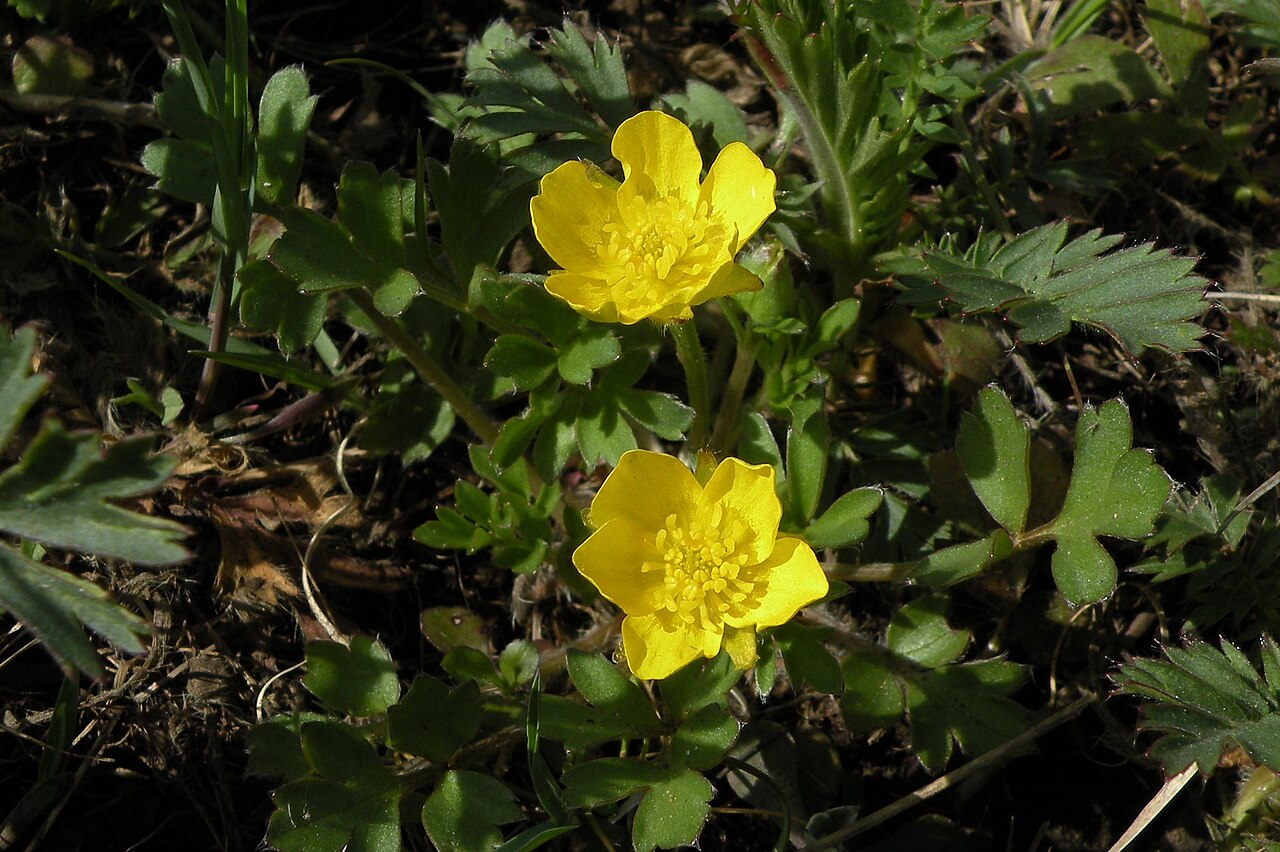
Ranunculus fascicularis, known as Early Buttercup, early crowfoot or tufted buttercup, is a small native perennial wildflower of dry, open woods, rocky bluffs and prairies across eastern and central North America. It is one of the first buttercups to bloom each year, opening glossy yellow flowers in March and April, often while the surrounding grasses are still brown. The whole plant is usually only 4 to 10 inches tall, with silky, finely divided leaves and a cluster of thickened roots.
It belongs to the buttercup family (Ranunculaceae), along with columbines, anemones and marsh marigold. The species name fascicularis means “in bundles” and refers to the tuft of thick, somewhat tuberous roots at the base of the plant. Unlike the weedy creeping buttercup of lawns and pastures, early buttercup does not spread by runners and stays in neat, compact clumps.
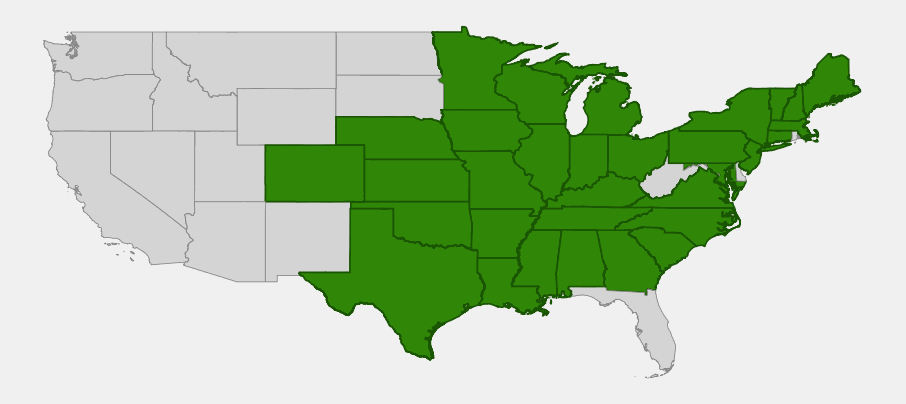
It ranges from New England and southern Ontario west to Minnesota, Nebraska and Kansas, and south to Georgia, Louisiana and Texas. This guide covers how to identify early buttercup, where it grows, how to grow it in a dry rock garden or prairie planting, its value to early spring pollinators, and the toxicity it shares with other buttercups.
Identification
Early buttercup is easiest to recognize in early spring, when it is one of very few yellow wildflowers in bloom on dry, open ground. Look for a low tuft of silky, divided leaves with a few bright yellow flowers on short stems, growing in thin soil rather than in wet places.
Growth Habit
It is a small, clump-forming perennial, usually 4 to 10 inches tall and occasionally to about a foot. Several stems rise from a short crown with a bundle of thickened, fleshy roots. The stems are erect or spreading but do not root at the nodes, so the plant stays in a tight clump.
Leaves
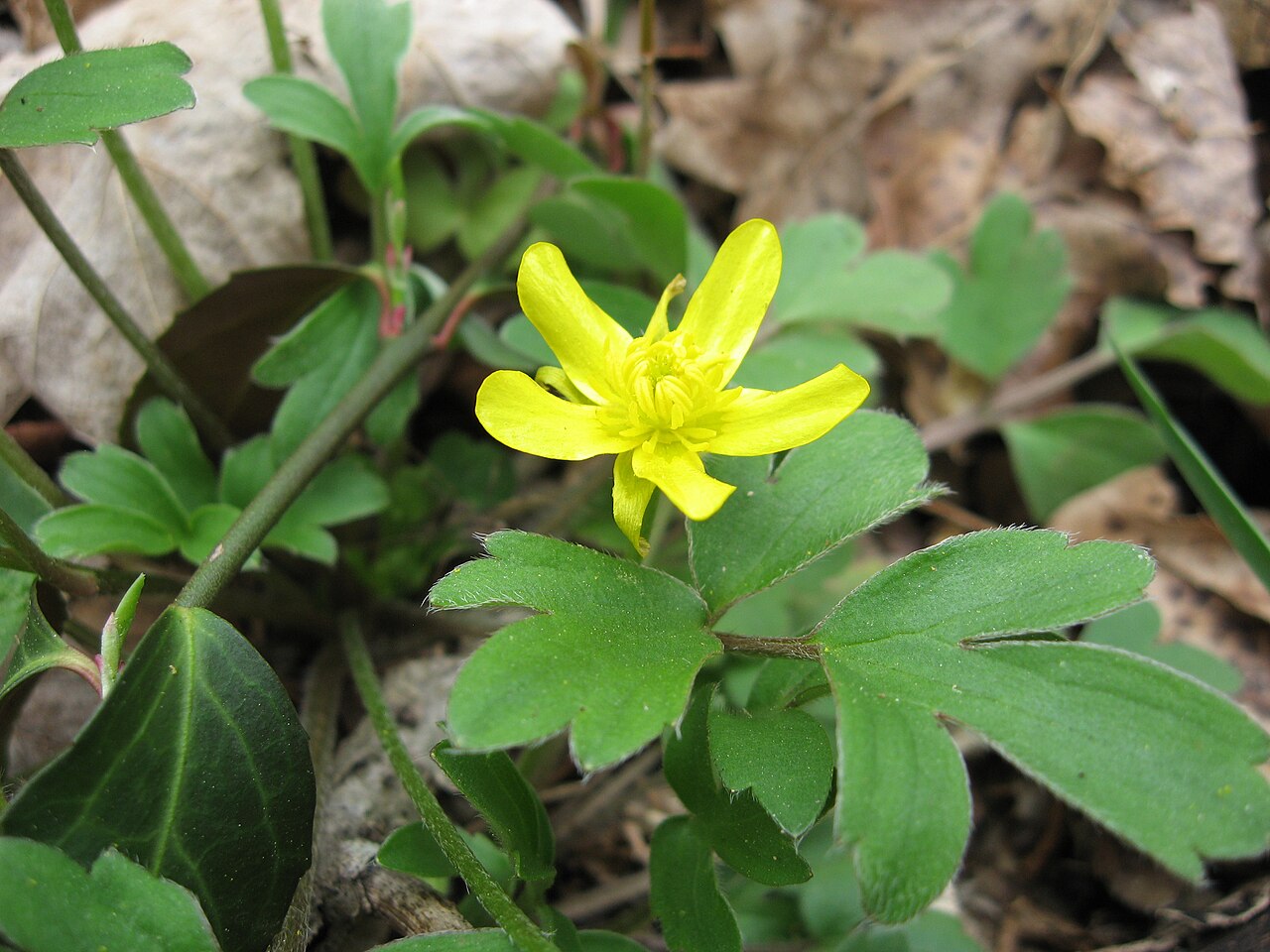
Most leaves are basal, on long stalks. Each blade is divided into three to five main segments, which are lobed again into narrow, blunt divisions, giving the leaf a lacy, fan-like look. The leaves and stems are covered in soft, flat-lying silky hairs, which give the young foliage a grayish sheen. A few smaller, simpler leaves grow on the flowering stems.
Flowers
The flowers are about 3/4 to 1 1/4 inches across, with five (sometimes up to seven or more) glossy, bright yellow petals that are noticeably longer and narrower than those of most buttercups. The waxy shine on the petals is typical of the genus. Five green sepals spread beneath the petals, and the center holds a dense ring of stamens around a cluster of pistils. Flowering runs mainly from March to May, earliest in the South.
Roots
Digging is not recommended, but the root system is the plant’s namesake: a bundle (fascicle) of thick, spindle-shaped roots that store food and help the plant survive drought and summer heat on thin soils.
Fruit & Seeds
After flowering, each flower forms a small round head of flattened, dry one-seeded fruits (achenes). Each achene ends in a slender, nearly straight beak. The heads ripen in late spring, and the plant becomes inconspicuous as the surrounding vegetation grows up.
Look-alikes
Hooked buttercup grows in moist woods and has broad, three-lobed leaves and tiny pale flowers with hooked achene beaks. Hairy buttercup (Ranunculus hispidus) is larger, with coarser, more spreading hairs and broader leaflets. Prairie buttercup (Ranunculus rhomboideus) has undivided, diamond-shaped basal leaves. The introduced creeping buttercup (Ranunculus repens) spreads by long runners in wet, disturbed ground, and the invasive lesser celandine (Ficaria verna) has glossy heart-shaped leaves and forms carpets in moist floodplains.
Quick Facts
| Scientific Name | Ranunculus fascicularis Muhl. ex Bigelow |
| Family | Ranunculaceae (buttercup family) |
| Plant Type | Herbaceous perennial wildflower |
| Mature Height | 4–10 in (occasionally to 12 in) |
| Mature Spread | 4–8 in |
| Growth Rate | Moderate; slow to form larger clumps |
| Sun Exposure | Full sun to part shade |
| Water Needs | Low to moderate; tolerates dry, thin soils |
| Soil Type | Well-drained, rocky, sandy or thin soils; limestone and other outcrops |
| Soil pH | About 5.5–8.0 |
| Bloom Time | March–May |
| Flower Color | Glossy bright yellow |
| Fall Color | None; foliage fades after flowering |
| Fruit | Round head of small, beaked achenes |
| Deer Resistant | Yes; bitter, toxic foliage is rarely browsed |
| USDA Hardiness Zones | 3–8 |
Native Range
Early buttercup is native to eastern and central North America. USDA PLANTS lists it in 32 states, from Maine, Vermont and New Hampshire south to Georgia, and west to Minnesota, Iowa, Nebraska, Kansas, Oklahoma and Texas, as well as in southern Ontario and Manitoba. A record from Colorado lies well west of the main range and is best regarded as an outlying record.
It is most common in the Midwest and the interior Southeast, especially on the limestone glades, bluffs and dry oak woods of the Ozarks, the Interior Low Plateaus of Kentucky and Tennessee, and the prairie and oak savanna country of Illinois, Wisconsin and Missouri. In the Northeast it is more scattered and local, mainly on dry, rocky ledges and in thin-soiled grasslands such as the alvars of northern New York. In Texas it grows mainly in the eastern and north-central parts of the state.
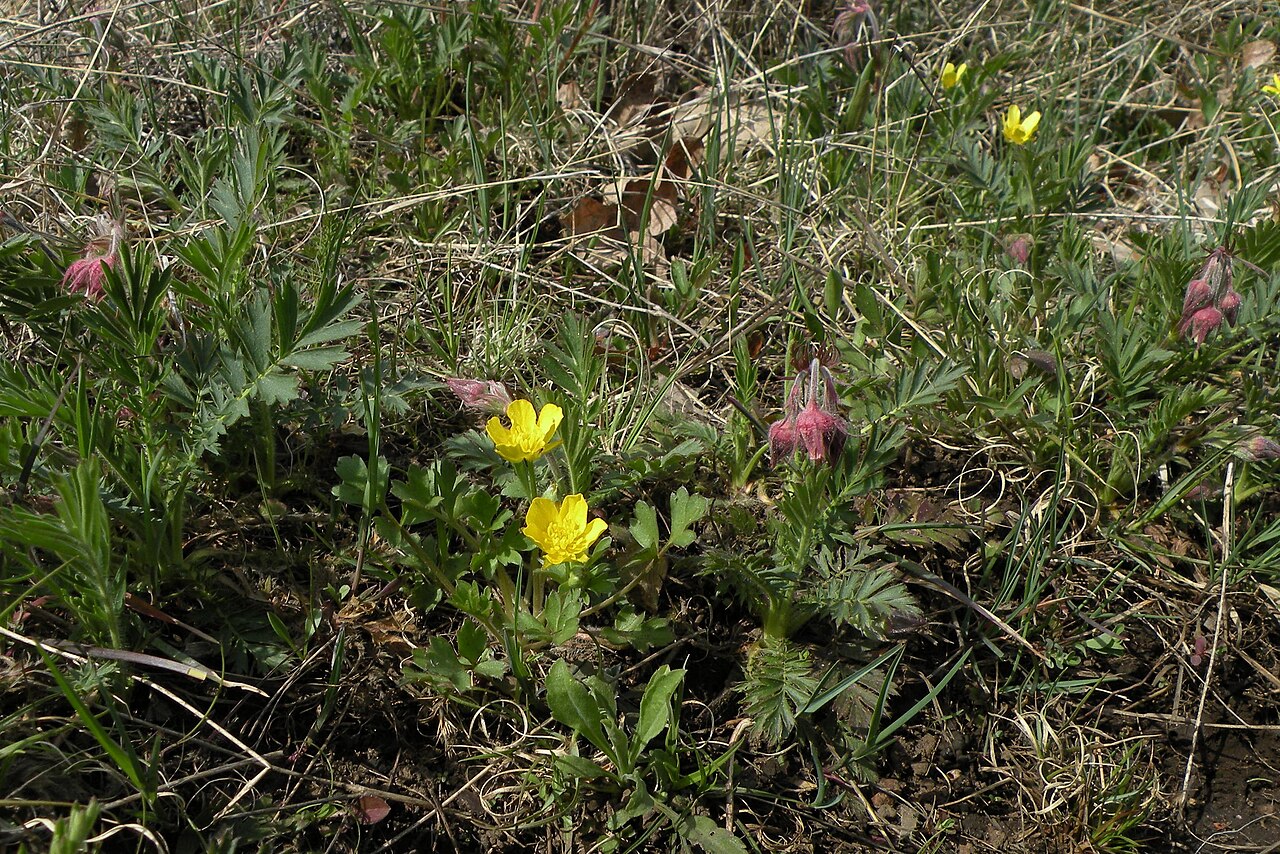
It grows on dry, open sites with little competition: rocky and sandy slopes, cedar glades, limestone and dolomite outcrops, bluff tops, open oak and oak-hickory woods, savannas and upland prairies. It is a plant of low to moderate elevations, mostly below about 2,000 feet across most of its range.
📋 Regional plant lists featuring Early Buttercup: New York, Pennsylvania & Northern New Jersey · Ohio & Indiana · Michigan, Wisconsin & Eastern Minnesota · Kentucky & Tennessee · Nebraska, Kansas & Eastern Colorado · Connecticut, Massachusetts & Rhode Island · New Hampshire, Maine & Vermont · Maryland, Virginia & West Virginia · Delaware, Southern New Jersey & Long Island · Illinois, Iowa & Missouri · Alabama, Georgia & Mississippi · North & South Carolina · Arkansas, Louisiana, Eastern Oklahoma & Eastern Texas · South & West Texas · North Dakota, South Dakota & Western Minnesota
Growing & Care Guide
Early buttercup is a charming, well-behaved plant for rock gardens, dry slopes, prairie plantings and the sunny edges of woodland gardens. It flowers when little else is in bloom, stays small and does not spread aggressively like the weedy buttercups. It is sold by some native plant nurseries, mostly in the Midwest, and is easy once sited in well-drained soil.
Light
Grow it in full sun to part shade. In the wild it often grows under open oaks that are still leafless when it blooms, so a spot that is sunny in spring and lightly shaded in summer suits it well.
Soil & Water
It needs well-drained soil: rocky, sandy or gravelly loam, thin soil over limestone, or a rock garden mix. It is drought tolerant once established and does not need summer watering in most of its range. Avoid rich, wet or heavily mulched beds, where it is crowded out or rots.
Planting Tips
Plant small potted plants in fall or early spring, a few inches apart in small groups so the flowers make a show. Place it where it will not be smothered by tall neighbors in spring, for example at the front of a dry border, among low prairie grasses, along a path or between stones. It combines well with pussytoes, birdsfoot violet, prairie smoke and other short spring wildflowers.
Pruning & Maintenance
Little care is needed. Remove fallen leaves that cover the clumps in late winter so the early shoots get light. The foliage may die back or become inconspicuous in summer heat and drought; this is normal. Wear gloves if you handle the plants a lot, since the sap can irritate sensitive skin.
Propagation
Sow fresh seed outdoors in late spring or fall, or give stored seed a period of cold, moist stratification. Seedlings are slow and usually flower in their second or third year. Established clumps can be carefully divided in fall, keeping a few thick roots with each piece. Buy plants from nurseries that propagate them, and do not dig them from the wild.
Landscape Uses
- Rock gardens: a compact, early-blooming plant for thin, rocky soil
- Prairie and savanna plantings: adds very early color among short grasses and spring wildflowers
- Woodland edges: under open oaks and other deciduous trees that leaf out late
- Pollinator gardens: one of the first nectar and pollen sources for native bees in spring
- Habitat restoration: for glades, bluff tops, dry prairies and oak savannas
Wildlife & Ecological Value
Early buttercup is small, but because it blooms so early it is an important resource for insects that emerge on the first warm days of spring.
For Pollinators
The open, bowl-shaped flowers offer easy access to nectar and pollen. They are visited by early-flying native bees, including small sweat bees, mining bees and other solitary bees, as well as flies and beetles. The Xerces Society lists it as having special value to native bees. The glossy petals reflect light and help guide insects to the center of the flower.
For Birds
The achenes are small and the plant is little used by birds, though ground-feeding birds may pick up some seeds. Its main value to birds is indirect, through the insects it supports.
For Mammals
The foliage contains irritant compounds and is avoided by deer, rabbits and livestock, which is why buttercups often persist in grazed pastures. Small rodents may eat some seeds.
Ecosystem Role
Early buttercup is part of the spring flora of glades, prairies and open woods, completing much of its growth before taller plants shade it. Its thick roots let it survive drought and fire on thin, rocky soils. It is a good indicator of high-quality, open, thin-soiled habitats, many of which have been lost to development or to the spread of eastern red cedar and invasive shrubs in the absence of fire.
Cultural & Historical Uses
Like other buttercups, early buttercup is poisonous. All parts contain ranunculin, which breaks down when the plant is crushed or chewed into protoanemonin, an irritant. Eating it can cause burning of the mouth, nausea, vomiting and diarrhea, and handling the crushed plant can redden and blister the skin of sensitive people. Keep children and pets from chewing it, and wear gloves when dividing plants. The irritant is lost when the plant is fully dried.
The genus name Ranunculus is Latin for “little frog,” because many buttercups grow in wet places where frogs live. Early buttercup is an exception, growing on dry ground. The name crowfoot, used for many species, refers to the divided leaves, which suggest a bird’s foot. The species was first described in the early nineteenth century by Jacob Bigelow, a Boston physician and botanist, from a name proposed by the Pennsylvania botanist Henry Muhlenberg.
For many naturalists in the Midwest and the upper South, early buttercup is one of the first signs of spring, blooming on sunny glades and bluff tops alongside pussytoes and bird’s-foot violet. It is a reminder that many beautiful native wildflowers grow in the thin, rocky places that are easy to overlook.
Frequently Asked Questions
When does early buttercup bloom?
Mainly from March to May, earlier in the South and later in the North. It is one of the first buttercups to flower each spring.
Is early buttercup poisonous?
Yes. Like other buttercups it contains compounds that irritate the mouth, stomach and skin. Do not eat it, keep pets from chewing it and wear gloves when handling crushed plants.
Will early buttercup take over my garden?
No. It forms small clumps and does not spread by runners like the weedy creeping buttercup. It may self-sow lightly in open, well-drained spots.
Where does early buttercup grow best?
In full sun to part shade on dry, well-drained, rocky or sandy soil, such as a rock garden, dry slope or short prairie planting.
How is it different from other buttercups?
It has narrow, glossy petals, silky, finely divided leaves, a bundle of thick roots and a preference for dry, open ground. Most other common buttercups grow in moist places or have broader leaves.

Looking for a nursery that carries Early Buttercup?
Browse our native plant nursery directory: Alabama & Arkansas · Colorado, Connecticut & Georgia · Illinois, Indiana, Iowa & Kansas · Kentucky, Louisiana, Maine, Maryland, Massachusetts, Michigan, Minnesota, Mississippi & Missouri · Nebraska, New Hampshire, New Jersey, New York, North Carolina, Ohio & Oklahoma · Pennsylvania, South Carolina, Tennessee, Texas, Vermont & Virginia · Wisconsin

