
Powdery Thalia (Thalia dealbata)
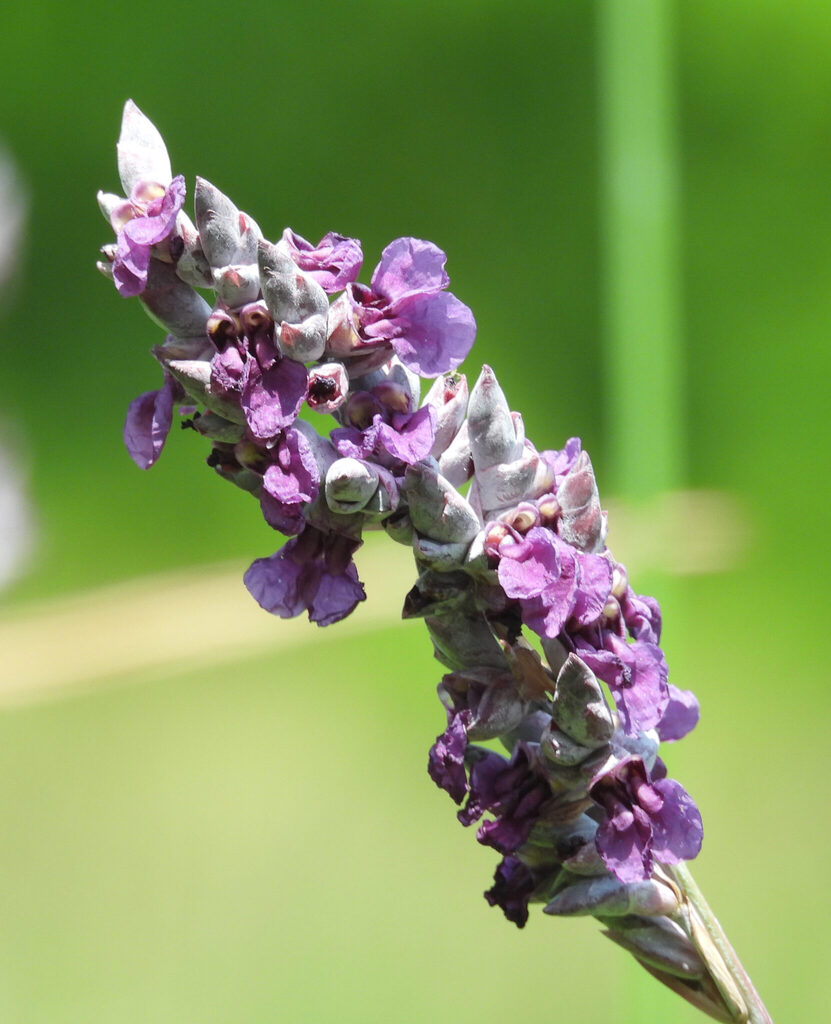
Thalia dealbata, called Powdery Thalia, powdery alligator-flag or hardy water canna, is one of the most striking native plants for ponds and water gardens. From shallow water it raises bold, canna-like, blue-green leaves 3 to 6 feet tall, and in summer it sends up taller stalks topped with clusters of violet-purple flowers. Every part of the plant is dusted with a chalky white powder, which is what dealbata (“whitened”) means.
Powdery thalia belongs to the prayer-plant or arrowroot family (Marantaceae), a mostly tropical family that includes the familiar Calathea and Maranta houseplants. It is the hardiest member of that family in North America. In the wild it grows in swamps, sloughs, ditches and the shallow edges of ponds and bayous across the lower Mississippi Valley, the Gulf Coast states and the southern Atlantic Coastal Plain.
Because it is hardy to about USDA zone 6 when its roots stay under water, powdery thalia is widely sold for water gardens far outside its native range. This guide covers how to identify it, how it differs from its tropical cousin alligator-flag, where it grows wild and how to grow it in a pond or container water garden.
Identification
Powdery thalia is easy to recognize in summer: a large, blue-green, canna-like wetland plant with a white bloom on its leaves and stalks. The only similar native species is alligator-flag (Thalia geniculata), a taller, greener plant of Florida and the Gulf Coast.
Leaves
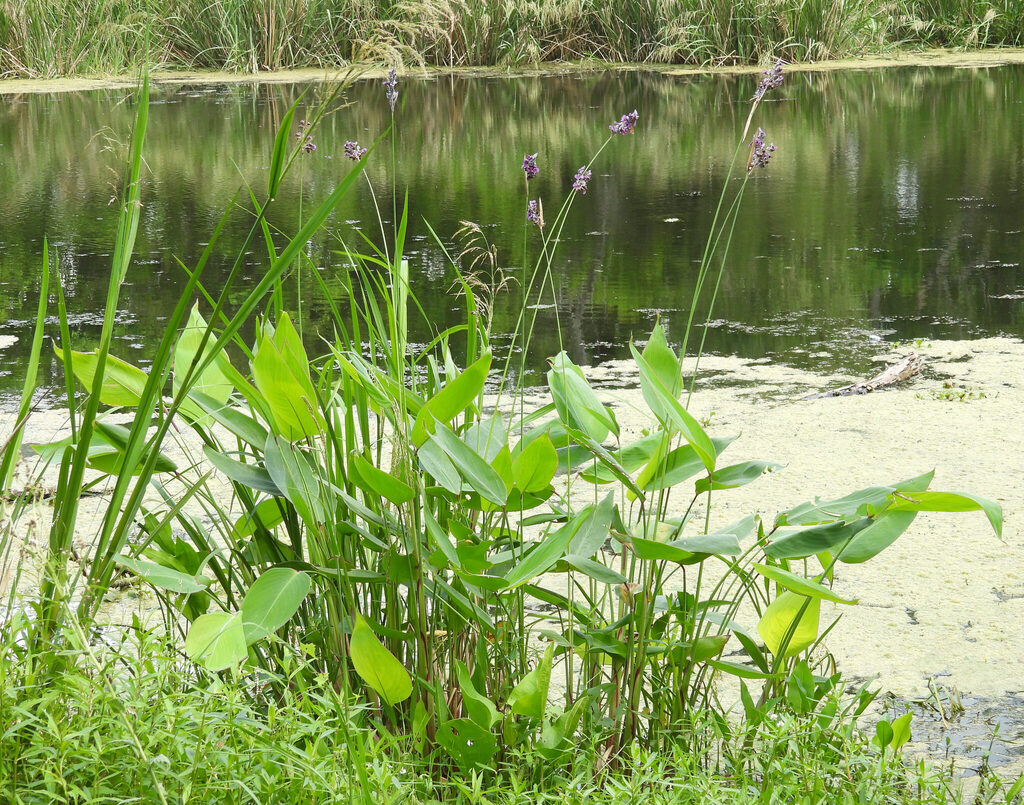
The leaves rise on long, stiff stalks from a thick rhizome. Each blade is broadly lance-shaped to oval, 8 to 20 inches long, smooth-edged and pointed, blue-green to gray-green with a powdery white coating that rubs off. In water gardens they often stand above the surface like a clump of canna or banana-like foliage.
Flower Stalks
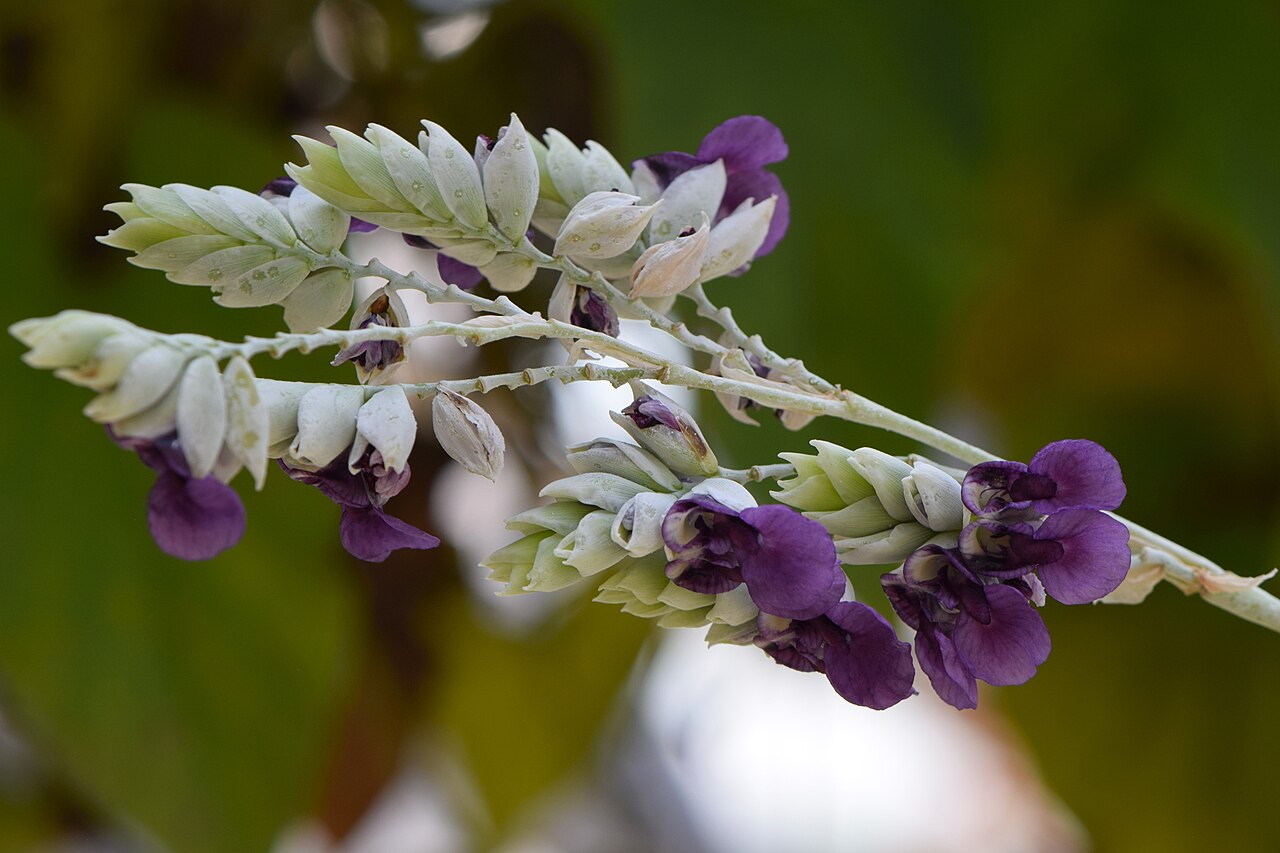
In summer a leafless stalk rises well above the leaves, often to 6 feet or more. It ends in a compact, erect cluster (a panicle) of short, stiff branches. The stalk and the overlapping bracts are coated with chalky white powder, giving the whole flower head a frosted look.
Flowers
The flowers appear from June to September, in pairs among the bracts. Each is small, about ½ inch long, with deep violet to purple petal-like parts and a pale base. Like other members of the family, the flowers have a spring-loaded pollination mechanism: when a bee pushes into the flower, it trips a hood-like staminode, and the style snaps forward to collect pollen from the bee and deposit its own.
Fruit
The fruits are round, pea-sized capsules, each with a single hard seed, held in the dry, powdery bracts. They ripen in late summer and fall and often float when they drop, carrying the seed along the water.
Quick Facts
| Scientific Name | Thalia dealbata |
| Family | Marantaceae (prayer-plant family) |
| Plant Type | Emergent aquatic herbaceous perennial |
| Mature Height | 3–6 ft in leaf; flower stalks to about 8 ft |
| Mature Spread | 2–4 ft; slowly spreads by rhizomes |
| Growth Rate | Moderate to fast |
| Sun Exposure | Full sun to part shade |
| Water Needs | Very high; saturated soil or standing water up to about 12–18 in deep |
| Soil Type | Muck, silt, clay or loam under water |
| Soil pH | About 6.0–7.5 |
| Bloom Time | June–September |
| Flower Color | Violet to purple, with chalky white bracts |
| Fall Color | Leaves turn tan to brown after frost |
| Fruit | Round, single-seeded capsules in late summer and fall |
| Deer Resistant | Yes; rarely browsed in its aquatic habitat |
| USDA Hardiness Zones | 6–10 (roots must stay under water in cold winters) |
Native Range
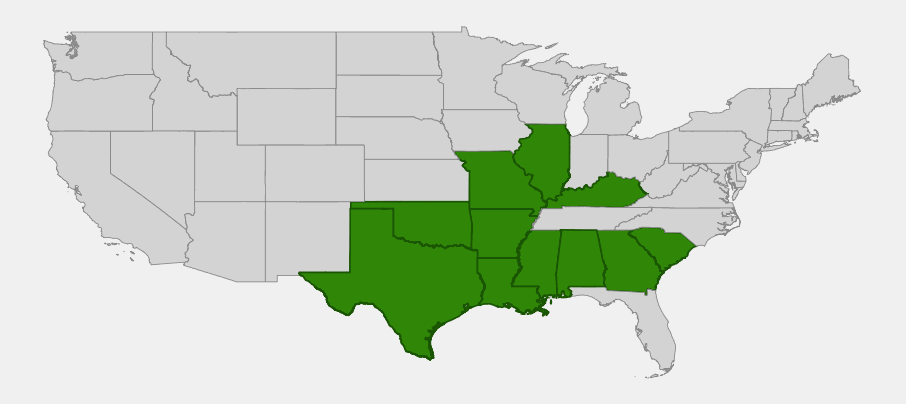
Powdery thalia is native to the south-central and southeastern United States. USDA PLANTS records it from 11 states: Texas, Oklahoma, Arkansas, Louisiana, Missouri, Illinois, Kentucky, Mississippi, Alabama, Georgia and South Carolina. It is the only Thalia whose natural range extends this far north.
Its core range is the lower Mississippi River Valley and the Gulf Coastal Plain, in cypress swamps, oxbow lakes, sloughs, marshes, roadside ditches and the shallow margins of ponds and bayous. It reaches north up the Mississippi Embayment into southeastern Missouri, southern Illinois and western Kentucky, and west into eastern Oklahoma and eastern and coastal Texas.
At the northern edge of its range, and in Georgia and South Carolina, it is uncommon and known from relatively few sites. Because it is grown so widely in water gardens, plants found outside these areas are usually escapes or deliberate plantings.
📋 Regional plant lists featuring Powdery Thalia: Arkansas, Louisiana, Eastern Oklahoma & Eastern Texas · Alabama, Georgia & Mississippi · North & South Carolina · Kentucky & Tennessee · Illinois, Iowa & Missouri
Growing & Care Guide
Powdery thalia is one of the easiest and most dramatic native plants for water gardens. It is widely available from aquatic plant nurseries, often labeled hardy water canna.
Light
Full sun gives the strongest growth and the most flowers. It tolerates part shade, but flower stalks become fewer and leaves may lean toward the light.
Soil & Water
Grow it in wet, heavy soil: muck, silt or clay loam. It thrives in saturated soil at a pond edge or in standing water up to about 12 to 18 inches deep. Container plants should sit with 6 to 12 inches of water over the pot. In cold-winter areas (zones 6 and 7), keep the rhizomes submerged below the ice line over winter to protect them from freezing.
Planting Tips
Plant rhizomes or potted plants in spring once the water warms. In ponds with liners, use a wide aquatic basket or a 5- to 10-gallon pot filled with heavy garden soil or aquatic planting media, topped with gravel to keep soil from clouding the water. Give each plant room: a mature clump can be 3 to 4 feet across.
Pruning & Maintenance
Cut off old leaves and flower stalks after frost, or in late winter, to keep debris out of the pond. Fertilize potted plants in spring with aquatic fertilizer tablets pushed into the soil. Divide crowded clumps every few years.
Propagation
Divide the rhizomes in spring, making sure each piece has a growing point. Fresh seed can also be sown in pots of wet soil set in shallow water; it may take several weeks to germinate and benefits from warmth.
Landscape Uses
- Water gardens and ponds: a bold, architectural focal point at the edge or in shallow water
- Container water gardens: grows well in a large tub or stock tank
- Rain gardens and stormwater basins: in the wettest zones that hold standing water
- Wetland restoration: for swamp and marsh projects within its native range
- Wildlife ponds: summer nectar for large bees and cover for frogs and other aquatic animals
Wildlife & Ecological Value
Powdery thalia is a valuable plant for wildlife in southern wetlands, providing food, cover and structure in shallow water.
For Pollinators
The flowers are pollinated mainly by large bees, such as bumblebees and carpenter bees, which are strong enough to trigger the spring-loaded style. Smaller insects may visit for nectar without pollinating the flowers.
For Birds
Ducks, rails and other marsh birds use stands of thalia for cover, and some waterfowl eat the seeds. Wading birds such as herons and egrets hunt along its edges, and red-winged blackbirds and other marsh birds perch on the tall flower stalks.
For Mammals
Muskrats and nutria eat the rhizomes and foliage in some areas. Its dense stands shelter small mammals at the water’s edge.
Ecosystem Role
Its thick rhizomes and dense clumps help stabilize pond and swamp margins, slow the flow of water and trap sediment. The submerged stems and leaf bases provide habitat for aquatic insects, tadpoles and small fish, and dragonflies use the stems to emerge and perch.
Cultural & Historical Uses
The genus name honors Johannes Thal, a sixteenth-century German physician and botanist who wrote one of the first regional floras, describing plants of the Harz Mountains. Linnaeus named Thalia after him.
Powdery thalia was introduced to British gardens in the late eighteenth century from plants collected in South Carolina by the Scottish plant explorer John Fraser, whose name appears in its author citation. It became a favorite of Victorian conservatories and water gardens, and it remains one of the most widely planted aquatic perennials in Europe and North America.
In its native range it has few recorded traditional uses. Today it is valued above all as an ornamental and for wetland restoration, and it is often recommended as a native alternative to tropical cannas and non-native water plants in southern ponds.
Frequently Asked Questions
What is the difference between powdery thalia and alligator-flag?
Powdery thalia (Thalia dealbata) is covered in white powder and has a compact, erect flower cluster; it is hardy to about zone 6. Alligator-flag (Thalia geniculata) is taller and greener, with long, zigzag, drooping flower branches, and is a tropical species of Florida and the Gulf Coast. See our alligator-flag guide.
Is powdery thalia hardy?
Yes, to about USDA zone 6, as long as the rhizomes stay under water below the ice line in winter. It is more cold-hardy than any other thalia.
How deep should I plant powdery thalia?
It grows best in saturated soil or with 6 to 18 inches of water over the crown. In shallow water it also tolerates seasonal drawdowns, but it should never dry out completely.
Is powdery thalia invasive?
No. It is native to the southeastern and south-central United States. It spreads slowly by rhizomes and is easy to keep in bounds in a pot.
Why is it called “powdery”?
All parts of the plant, especially the leaves, flower stalks and bracts, are covered with a white, waxy powder that gives it a frosted look. The species name dealbata means “whitened.”

Looking for a nursery that carries Powdery Thalia?
Browse our native plant nursery directory: Alabama & Arkansas · Georgia · Illinois · Kentucky, Louisiana, Mississippi & Missouri · Oklahoma · South Carolina & Texas

