
Black Spleenwort (Asplenium adiantum-nigrum)
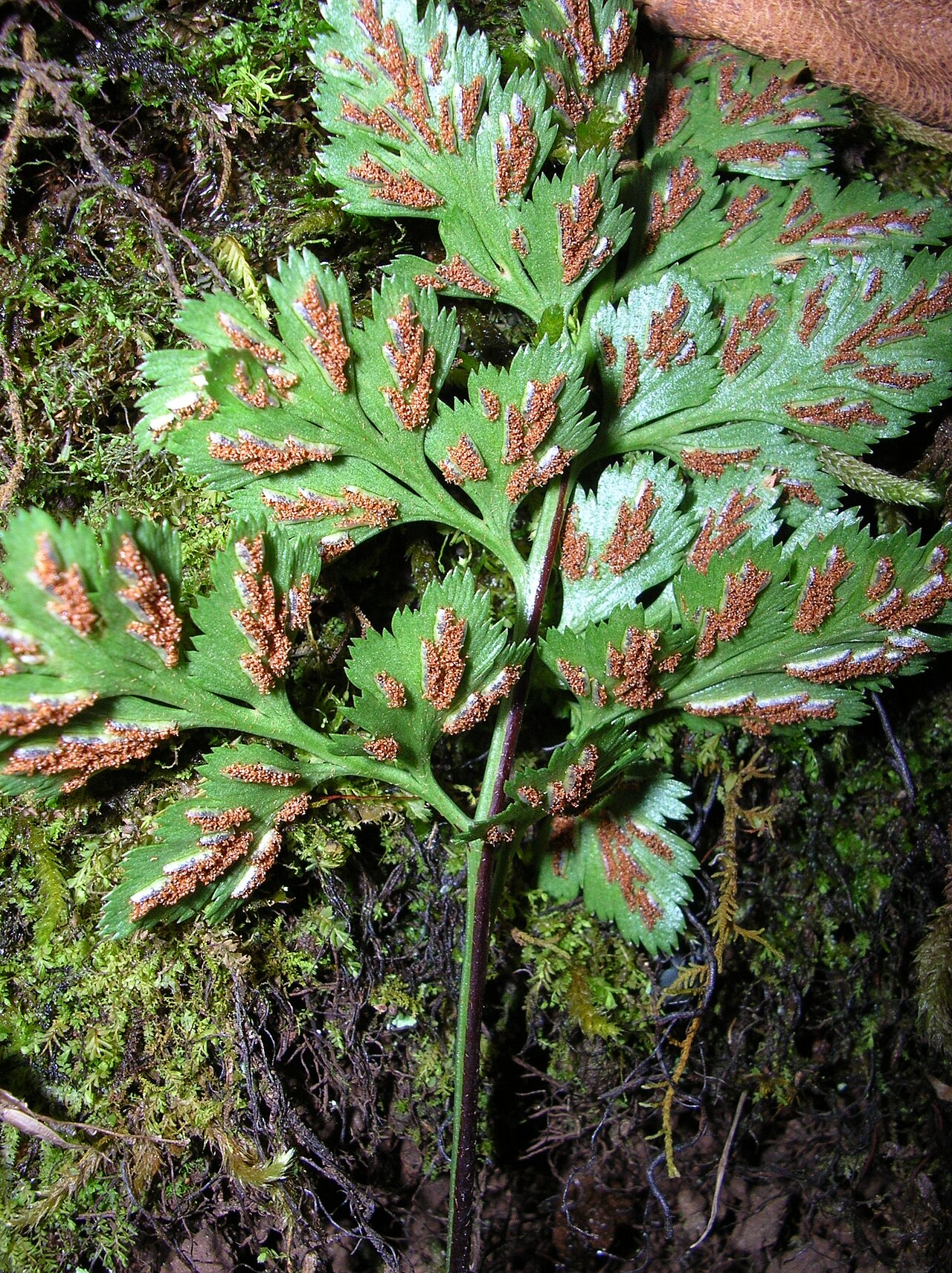
Asplenium adiantum-nigrum, the Black Spleenwort, is a small evergreen fern with glossy, triangular, finely divided fronds on dark, shiny stalks. It is a common fern of rocks, walls and hedge banks in Europe, but in the United States it is a rarity: it grows wild only in Hawaii, on lava and cinder in the mountains, and in a handful of rocky sites in Arizona, Colorado and Utah.
The “black” in its name refers to the dark, purplish-black to reddish-brown stalk, and adiantum-nigrum means “black maidenhair”, an old herbal name. In Hawaii it is sometimes called ʻiwaʻiwa, a name also used for other small ferns.
This guide covers how to identify black spleenwort, where it grows in the United States, and how it can be grown in rock and crevice gardens from nursery-propagated plants. In Arizona, Colorado and Utah it is critically imperiled, so wild plants should never be dug or disturbed.
Identification
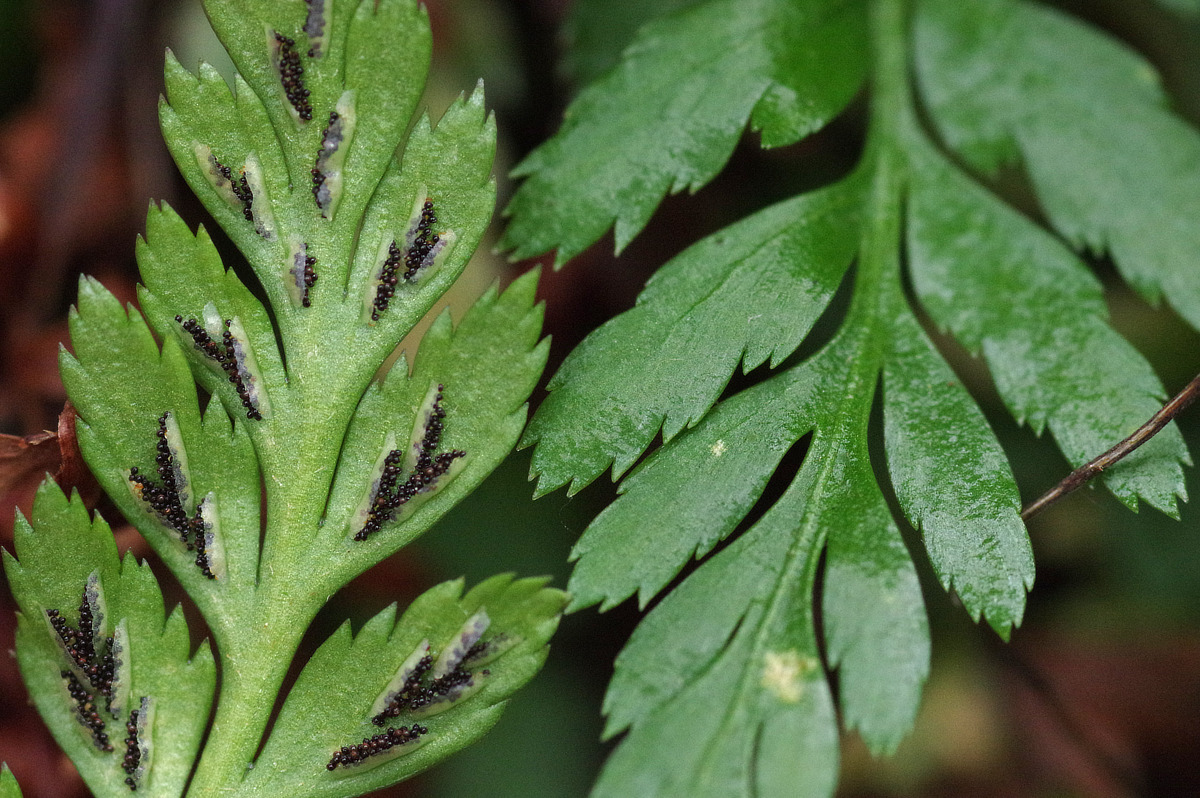
Spleenworts (Asplenium) are mostly small, tufted rock ferns with long, narrow sori along the veins, each covered by a flap-like indusium that opens toward the midrib. Black spleenwort stands out for its triangular, two- to three-times-divided blade and its shiny, dark stalk. Compare the narrow, once-divided fronds of maidenhair spleenwort (A. trichomanes) and ebony spleenwort (A. platyneuron).
Fronds
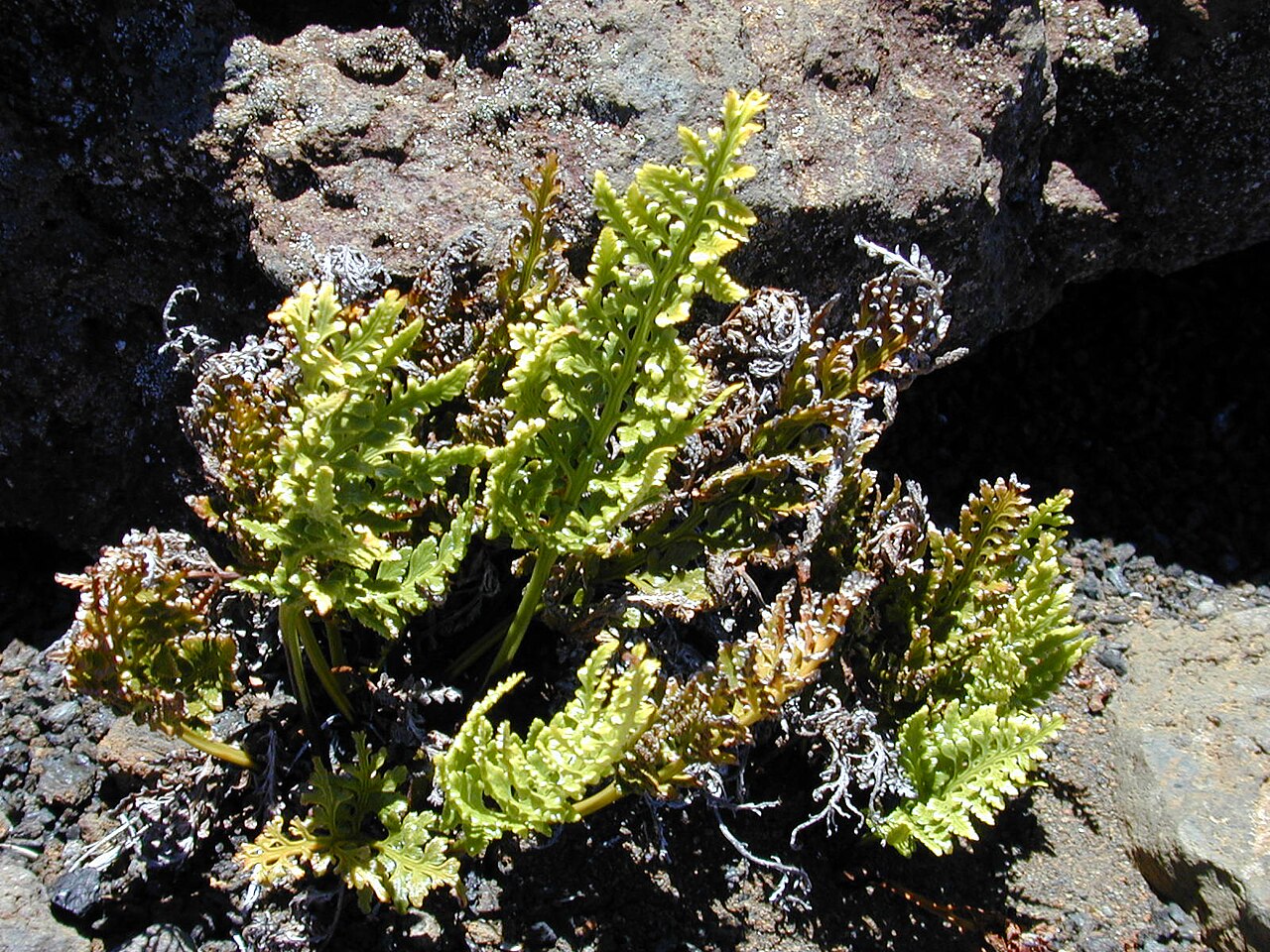
The fronds grow in small tufts from a short, scaly rhizome and are usually 4 to 12 inches long, sometimes longer in sheltered sites. The blade is triangular to lance-triangular, dark green, leathery and glossy, and divided two or three times into toothed, wedge-shaped segments. Plants on exposed lava and rock are often smaller, more compact and yellowish green.
Stalks
The stalk (stipe) is often as long as the blade or longer, shiny and dark reddish-brown to purplish-black, at least toward the base, with a few narrow scales near the bottom. The dark color continues partway up the midrib.
Sori
On the underside, long, narrow sori run along the veins of the segments, often merging into dense brown bands as they mature. Each is covered at first by a thin, pale indusium. Spores ripen mainly from summer to fall.
Habit
The plant is evergreen, and old fronds persist at the base of the tuft. It is an allotetraploid fern, which formed from a cross between two Mediterranean species, A. onopteris and A. cuneifolium, followed by chromosome doubling.
Quick Facts
| Scientific Name | Asplenium adiantum-nigrum L. |
| Family | Aspleniaceae (spleenwort family) |
| Plant Type | Small evergreen rock fern |
| Mature Height | 4–12 in |
| Mature Spread | 6–12 in |
| Growth Rate | Slow |
| Sun Exposure | Part shade; tolerates sun in cool, rocky sites |
| Water Needs | Low to moderate; sharp drainage |
| Soil Type | Rock crevices, lava, cinder and gritty, well-drained soil |
| Soil pH | Acidic to neutral (about 5.0–7.0) |
| Bloom Time | None; spores ripen summer to fall |
| Flower Color | None (fern) |
| Fall Color | None; evergreen |
| Fruit | None; spores in linear sori |
| Deer Resistant | Yes |
| USDA Hardiness Zones | 6–10 |
Native Range
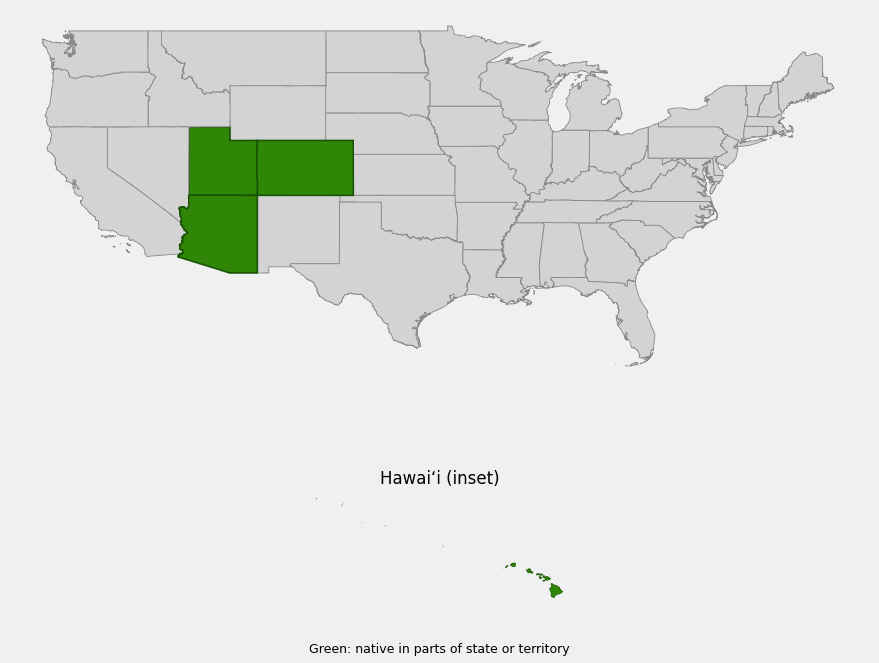
In the United States, USDA PLANTS lists black spleenwort as native in Hawaii, Arizona, Colorado and Utah. In Hawaii it grows in dry to mesic montane and subalpine areas, especially on lava flows, cinder cones and rocky slopes, from forest openings to the upper slopes of Haleakalā on Maui and the volcanoes of Hawaiʻi Island, including Hawaiʻi Volcanoes National Park. Photographs record it at Kalahaku, Science City and Polipoli on Maui.
On the mainland it is very rare, known from only a few sites on cliffs, ledges and rock crevices in mountainous areas, among mountain brush and ponderosa pine, in Arizona, Colorado and Utah. NatureServe ranks it critically imperiled (S1) in all three states. These isolated populations are far from the nearest others, in Mexico.
Worldwide, black spleenwort is widespread in Europe from Scandinavia and the British Isles to the Mediterranean, in western and central Asia, North and southern Africa, and on the Atlantic islands of the Azores, Madeira and the Canaries. Where it is common it grows on rocks, walls, banks and woodland edges.
📋 Regional plant lists featuring Black Spleenwort: Arizona & New Mexico · Hawaii · Utah & Western Colorado
Growing & Care Guide
Black spleenwort is a charming fern for rock gardens, crevice gardens, old walls and alpine troughs. It is slow-growing but long-lived when its basic needs are met: sharp drainage, shelter from strong afternoon sun, and no soggy soil. Use only nursery-propagated plants, usually grown from spores; never dig wild plants, especially in Hawaii and the Southwest, where its populations are small.
Light
Light shade or morning sun with afternoon shade is best. It tolerates more sun in cool, humid climates and in deep crevices, as on Hawaiian lava, but scorches in hot afternoon sun in dry gardens.
Soil & Water
Plant in a gritty, well-drained mix, such as equal parts loam, grit and leaf mold, or in rock crevices with a little soil behind them. Water during dry spells, but let the mix dry slightly between waterings. Wet, compacted soil and water sitting around the crown cause rot. It tolerates neutral to slightly acidic conditions.
Planting Tips
Wedge the root ball into a crevice between rocks, in a dry-stone wall, or among stones in a trough, with the crown at or slightly above the surface. Top-dress with grit. In Hawaii, it suits dry, rocky upland gardens with other native plants. It is generally hardy to about USDA zone 6 in well-drained sites.
Pruning & Maintenance
Remove old, brown fronds in early spring before new growth starts. It needs no fertilizer. Keep it free of competition from vigorous plants, which can smother it.
Propagation
It is propagated from spores sown on a sterile, moist surface under cover, a slow process best left to specialist growers. Established clumps can occasionally be divided carefully in spring. Never take plants or spores from rare wild populations.
Landscape Uses
- Rock and crevice gardens: tucked into crevices between stones
- Walls and troughs: in dry-stone walls and alpine troughs
- Hawaiian native gardens: in dry, rocky upland plantings with lava rock
- Fern collections: an unusual, finely cut evergreen spleenwort
Wildlife & Ecological Value
Black spleenwort is a small plant, but on bare lava and rock it is part of the pioneering community that slowly turns rock into living habitat.
For Pollinators
As a fern, it has no flowers and provides no nectar or pollen.
For Birds
It offers little direct food for birds, but its tufts shelter insects and other small invertebrates that birds feed on.
For Mammals
Ferns are rarely eaten by mammals, and black spleenwort is of no known food value to wildlife.
Ecosystem Role
On young lava flows and cinder, ferns like black spleenwort are among the first plants to colonize cracks and pockets, trapping moisture and organic matter and helping start soil formation. On the mainland its isolated populations are of scientific interest as outliers of a mainly Old World species.
Cultural & Historical Uses
Linnaeus described Asplenium adiantum-nigrum in his Species Plantarum of 1753. The genus name comes from the Greek for “without spleen”, from the ancient belief that spleenworts could cure ailments of the spleen. The species name, “black maidenhair”, was an older herbal name that compared it to maidenhair ferns (Adiantum).
Genetic studies have shown that black spleenwort is an allotetraploid: it formed from a hybrid between two Mediterranean ferns, Asplenium onopteris and A. cuneifolium, whose chromosome sets doubled. Black spleenwort itself sometimes hybridizes with other spleenworts in Europe.
In Britain and Ireland it is a familiar fern of old walls, hedge banks and rocky places, and it was collected during the Victorian fern craze, or “pteridomania”. In the United States, its scattered occurrences in Hawaii and the Southwest make it a fern that few gardeners have seen in the wild.
Frequently Asked Questions
Is black spleenwort (Asplenium adiantum-nigrum) native to the United States?
Yes. USDA PLANTS lists it as native in Hawaii and in Arizona, Colorado and Utah. It is fairly widespread on lava and rocky slopes in the Hawaiian mountains, but very rare on the mainland, where NatureServe ranks it critically imperiled in all three states.
How do I recognize black spleenwort?
Look for small tufts of glossy, triangular fronds divided two or three times, on shiny dark reddish-brown to black stalks, with long, narrow sori along the veins beneath. It usually grows in rock crevices, on lava or on cliffs.
Can I grow black spleenwort in my garden?
Yes, in a rock garden, crevice, wall or trough with sharp drainage and light shade, using plants grown from spores by a specialist nursery. Never collect plants from the wild.
Is black spleenwort poisonous?
It is not known to be poisonous, but it is not an edible plant. Like many ferns, it should not be eaten.
How is black spleenwort different from ebony spleenwort?
Ebony spleenwort (A. platyneuron), common in the eastern United States, has narrow, once-divided fronds with a dark stalk. Black spleenwort has broader, triangular fronds divided two or three times, and in the U.S. it grows only in Hawaii and the Southwest.

Looking for a nursery that carries Black Spleenwort?
Browse our native plant nursery directory: Arizona · Colorado & Hawaii · Utah

