
Thread-leaved Sundew (Drosera filiformis)
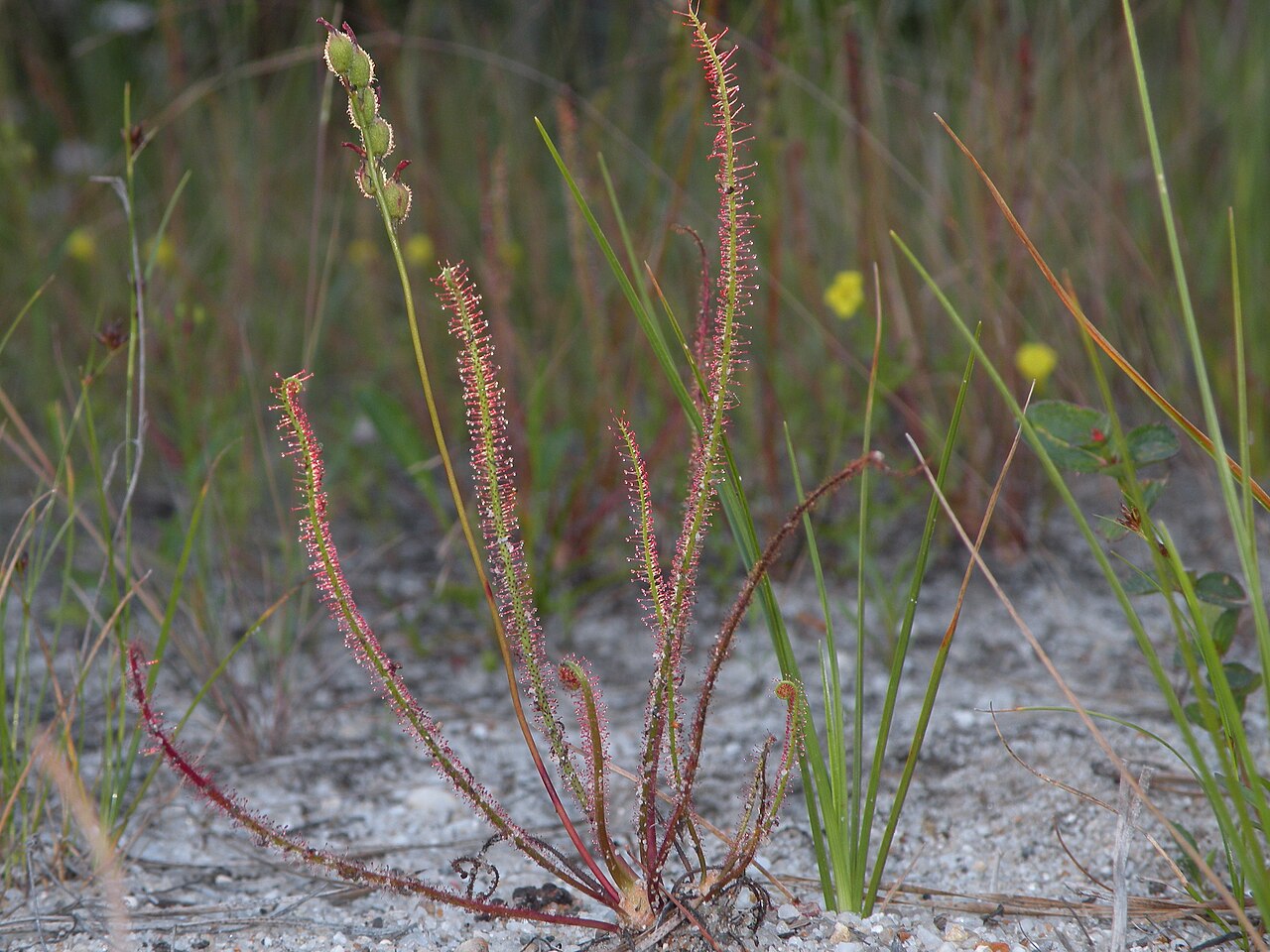
Drosera filiformis, the Thread-leaved Sundew (also threadleaf sundew), is one of the most striking carnivorous plants of the eastern United States. Instead of the small rosettes of round or spoon-shaped leaves that most sundews have, it sends up a tuft of upright leaves as thin as threads and up to about 10 inches long. Every leaf is covered with reddish glandular hairs, and each hair ends in a glistening drop of sticky “dew” that traps small insects. In summer, a curled stalk of pink to purple flowers rises above the leaves.
Thread-leaved sundew is a plant of the Atlantic Coastal Plain. It grows on the wet, sandy shores of coastal plain ponds, in pine barrens bogs and in other open, acidic, nutrient-poor wetlands from Massachusetts and Rhode Island through New Jersey’s Pine Barrens to the Carolinas, with a small, distinctive population in the Florida panhandle and an isolated outpost in Nova Scotia. The similar Gulf Coast plant with longer, green-haired leaves is now usually treated as a separate species, Tracy’s Sundew (Drosera tracyi).
Like most of its bog companions, it is threatened by drainage, development, shoreline disturbance and the loss of open habitats, and it is rare in several states. It is also a popular and easy carnivorous plant in cultivation. This guide covers identification, native range, how it catches prey, and how to grow nursery-propagated plants in a bog garden.
Identification
Thread-leaved sundew is unmistakable in its native range. No other sundew in the Northeast has long, upright, thread-like leaves. Its closest relative, Tracy’s sundew, grows on the Gulf Coastal Plain and is larger and greener.
Leaves
The leaves grow in a tuft from a short stem at ground level. Each is a slender, nearly cylindrical thread about 4 to 10 inches long, standing upright or slightly arching. New leaves unroll from the tip like the fiddleheads of a fern, a pattern called circinate vernation. Along most of their length the leaves are covered in purple-red glandular hairs (tentacles) tipped with clear droplets of sticky mucilage. The leaf itself is greenish, but the dense red hairs make the whole plant look reddish or bronze in full sun.
Flowers
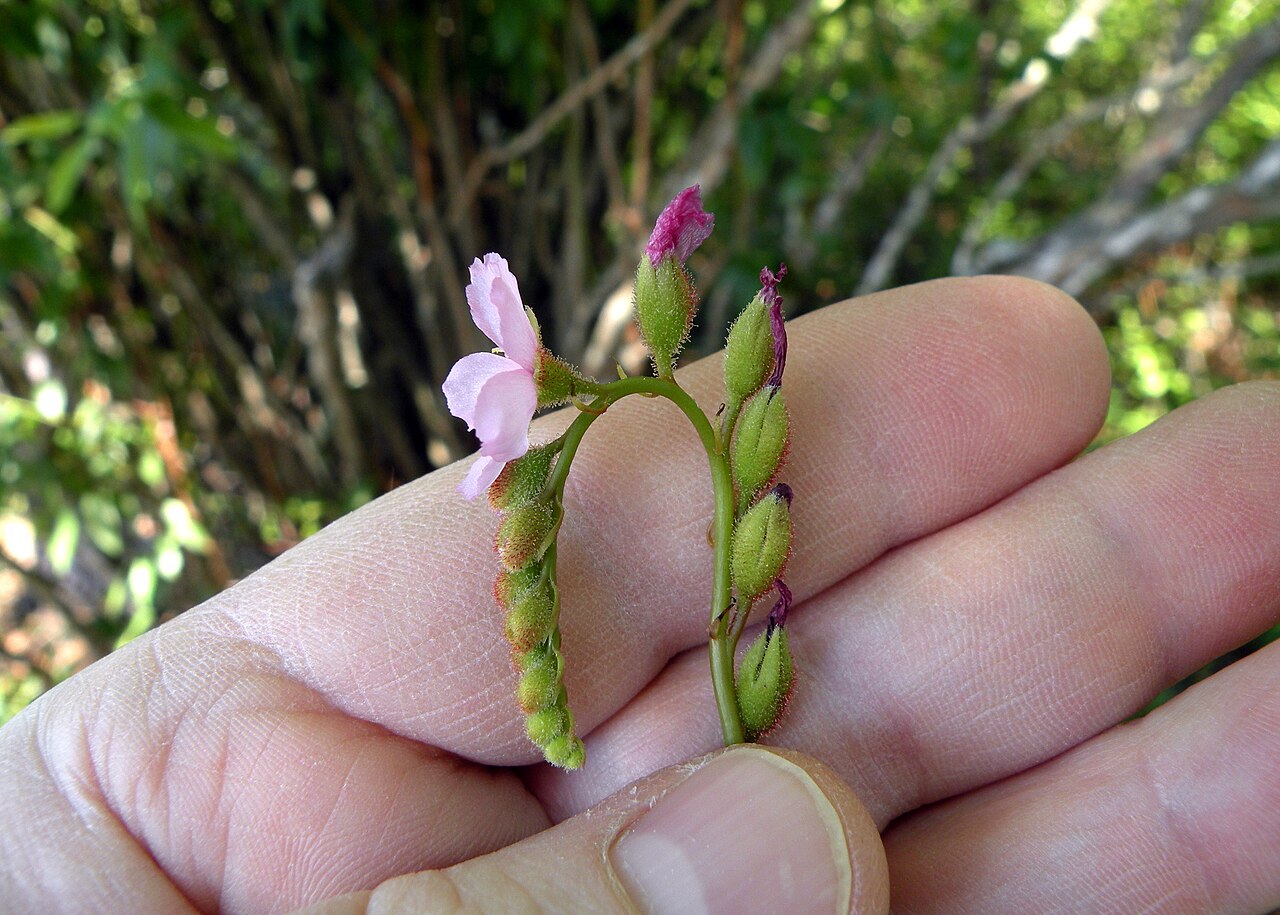
The flowers appear from June to September. They are carried on a leafless stalk about as tall as the leaves or slightly taller, which is curled at the tip like a scorpion’s tail and straightens as the buds open. Each flower is about half an inch to three-quarters of an inch across, with five rounded petals that are pink, lavender-rose or purple. Only one or a few open at a time, usually in the morning on sunny days, and each flower lasts less than a day.
Winter Bud & Roots
In fall the leaves die back, and the plant forms a tight, hairy winter resting bud (a hibernaculum) at the soil surface. This bud survives freezing and sprouts new leaves in spring. The roots are few and weak, since the plant gets much of its nitrogen and phosphorus from captured insects rather than from the soil.
Seeds
The flowers develop into small capsules filled with tiny dark seeds. Seed is scattered near the parent, and new plants appear on bare, wet sand where competition is low. Plants also produce small offsets from the base.
Quick Facts
| Scientific Name | Drosera filiformis Raf. |
| Family | Droseraceae (sundew family) |
| Plant Type | Carnivorous herbaceous perennial |
| Mature Height | 4–10 in (flower stalks to about 12 in) |
| Mature Spread | 3–6 in per plant; slowly forms small clumps |
| Growth Rate | Moderate |
| Sun Exposure | Full sun |
| Water Needs | High; soil must stay wet to saturated |
| Soil Type | Acidic, nutrient-poor wet sand, sandy peat or sphagnum |
| Soil pH | About 4.0–5.5 |
| Bloom Time | June–September |
| Flower Color | Pink, lavender-rose or purple |
| Fall Color | Leaves die back to a hairy winter bud |
| Fruit | Small capsule with many tiny seeds |
| Deer Resistant | Yes |
| USDA Hardiness Zones | 6–9 |
Native Range
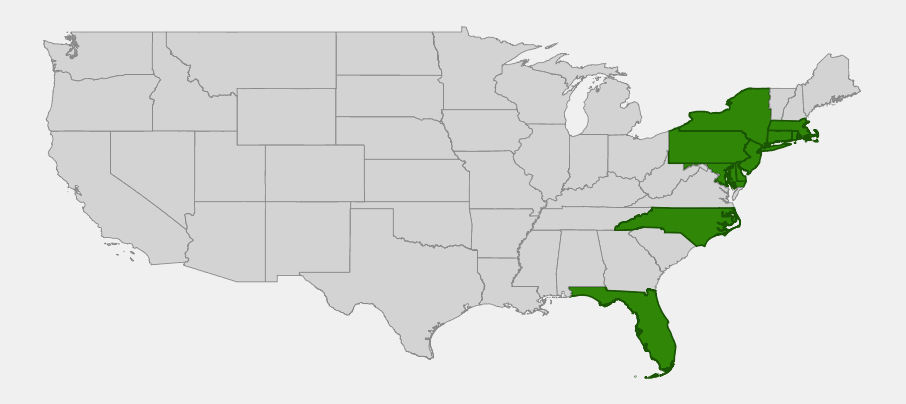
USDA PLANTS records thread-leaved sundew from ten states: Massachusetts, Rhode Island, Connecticut, New York, New Jersey, Pennsylvania, Delaware, Maryland, North Carolina and Florida. Outside the United States it grows only in southwestern Nova Scotia, where a few populations survive on the shores of lakes and bogs, far from the rest of its range.
Its strongholds are the coastal plain pond shores of southeastern Massachusetts, Cape Cod and Long Island and the Pine Barrens of New Jersey, where it can be common in open, wet, sandy places. It is scarcer to the south and in Pennsylvania, Maryland and Delaware, and in North Carolina it is limited to a few Coastal Plain sites. The Florida records come from a small area of the panhandle, where plants with intensely red hairs grow in wet pine savannas and seepage bogs.
Thread-leaved sundew depends on open, sunny wetlands with fluctuating water levels. On pond shores, the water rises in winter and falls in summer, exposing the wet sand where it grows and keeping out shrubs. Shoreline development, groundwater pumping, off-road vehicles, nutrient pollution and the loss of fire in pine barrens bogs all threaten it.
📋 Regional plant lists featuring Thread-leaved Sundew: Connecticut, Massachusetts & Rhode Island · New Hampshire, Maine & Vermont · New York, Pennsylvania & Northern New Jersey · Delaware, Southern New Jersey & Long Island · Maryland, Virginia & West Virginia · North & South Carolina · North & South Florida
Growing & Care Guide
Thread-leaved sundew is one of the easiest hardy sundews to grow, and nursery-propagated plants are widely available from carnivorous plant nurseries. Always buy cultivated plants or seed, never plants dug from wild bogs or pond shores. Wild populations are small and declining in many areas, and in several states the plant is protected.
Light
Full sun is essential. Plants in strong light produce the most dew and the deepest red color. In shade, the leaves become pale, weak and floppy, and flowering stops.
Soil & Water
Use a nutrient-poor, acidic mix such as equal parts sphagnum peat and coarse, lime-free sand. Keep it constantly wet by standing pots in a tray of water or growing the plant in a lined bog garden. Water only with rainwater, distilled water or reverse-osmosis water. Never fertilize the soil, and avoid feeding the plant meat or human food; it will catch all the insects it needs outdoors.
Planting Tips
Plant in spring in a sunny bog garden, a container bog or the wet margin of a lined pond. Thread-leaved sundew looks best planted in groups, which also increases seed set. Combine it with pitcher plants, other sundews and low bog plants that need the same conditions, but keep taller plants from shading it.
Pruning & Maintenance
The plant needs a cold winter dormancy of about three to four months. Outdoors within zones 6 to 9, leave it in place over winter; it survives as a hairy bud at the soil surface. In containers in colder areas, protect the pot from hard freezing in an unheated garage or cold frame. Remove dead leaves in spring, and divide crowded clumps then if needed.
Propagation
Thread-leaved sundew is easy to grow from seed. Sow the tiny seed on the surface of a wet peat and sand mix, give it about four to six weeks of cold, moist stratification, then keep it warm, bright and wet. It can also be propagated from leaf cuttings: lay a section of leaf on wet sphagnum or float it in distilled water, and small plantlets form along its length. Clumps can be divided in spring.
Landscape Uses
- Bog gardens: a vertical, sparkling accent among pitcher plants and other bog plants
- Container bogs: thrives in a pot or tub of peat and sand standing in rainwater
- Carnivorous plant collections: one of the hardiest and most dramatic sundews for outdoor growing
- Pond margins: the wet, sandy edge of a lined pond in full sun suits it well
- Education: a vivid demonstration of how carnivorous plants catch insects
Wildlife & Ecological Value
Thread-leaved sundew is a small plant, but in good years it can carpet whole pond shores and trap thousands of insects over a season.
For Pollinators
The pink flowers are held well above the sticky leaves, so pollinators can visit them without being caught. Small bees, syrphid flies and butterflies visit the flowers. The plant can also self-pollinate when insect visits are scarce.
For Birds
Thread-leaved sundew is not a food plant for birds, but it is part of the open bog and pond shore habitat used by shorebirds, sparrows and other wetland birds.
For Mammals
Mammals do not eat sundews. Trampling by people and vehicles along pond shores is a more serious threat than browsing.
Ecosystem Role
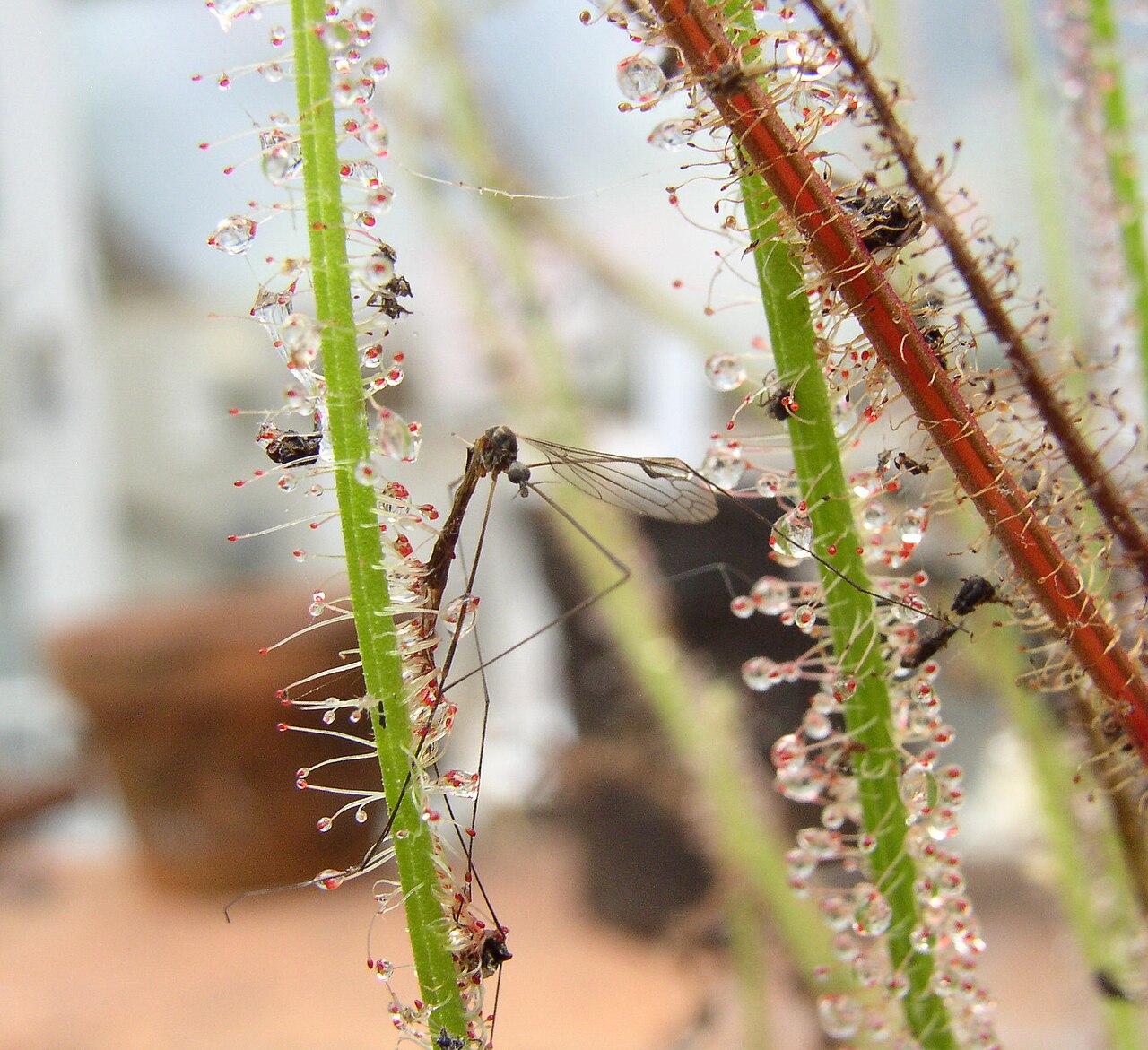
The sticky leaves catch gnats, mosquitoes, midges, small flies and crane flies, and sometimes larger insects such as moths, horse flies and small butterflies. Enzymes in the mucilage digest the soft parts of the prey, giving the plant nitrogen and phosphorus that are scarce in the soil. Thread-leaved sundew is an indicator of high-quality coastal plain pond shores and pine barrens wetlands, which support many other rare plants and insects.
Cultural & Historical Uses
The name Drosera comes from the Greek droseros, “dewy,” a reference to the glistening drops on the leaves. Filiformis means “thread-shaped.” The species was named by Constantine Rafinesque, a prolific and eccentric early American naturalist.
In the 1870s, the New Jersey naturalist Mary Treat studied the movements of the sundews near her home, including thread-leaved sundew, and recorded how the leaves slowly bend toward trapped insects. She corresponded with Charles Darwin, who cited her observations in his book Insectivorous Plants (1875).
Today the plant is a symbol of the coastal plain pond shores of Cape Cod and the New Jersey Pine Barrens, and a favorite with carnivorous plant growers. Natural hybrids with spoonleaf sundew occur where the two grow together in New Jersey, and growers keep several distinctive regional forms in cultivation.
Frequently Asked Questions
Is thread-leaved sundew easy to grow?
Yes, if you give it full sun, constantly wet, nutrient-poor acidic soil, pure water and a cold winter rest. It is one of the easier hardy carnivorous plants for bog gardens and container bogs. Buy nursery-propagated plants rather than collecting from the wild.
What does thread-leaved sundew eat?
Mostly small flying insects such as gnats, mosquitoes, midges and small flies. Its long, sticky leaves can also hold crane flies, moths and even small butterflies. It digests prey with enzymes in the sticky droplets.
Is Drosera tracyi the same as Drosera filiformis?
They are close relatives and were once treated as one species. Most botanists now treat Tracy’s sundew (Drosera tracyi), a larger, green-haired plant of the Gulf Coast, as a separate species. Thread-leaved sundew is the Atlantic Coastal Plain species with red hairs.
Does thread-leaved sundew go dormant?
Yes. In fall the leaves die back and the plant forms a tight, hairy winter bud. It needs about three to four months of cold to grow well the following year, so it is not suited to a warm windowsill all year.
Is thread-leaved sundew endangered?
It is not federally listed, but it is rare in several states within its range, and its habitat is declining. Treat wild populations as protected: do not dig plants or collect seed without permission.

Looking for a nursery that carries Thread-leaved Sundew?
Browse our native plant nursery directory: Connecticut, Delaware & Florida · Maryland & Massachusetts · New Jersey, New York & North Carolina · Pennsylvania & Rhode Island

