
Tracy’s Sundew (Drosera tracyi)
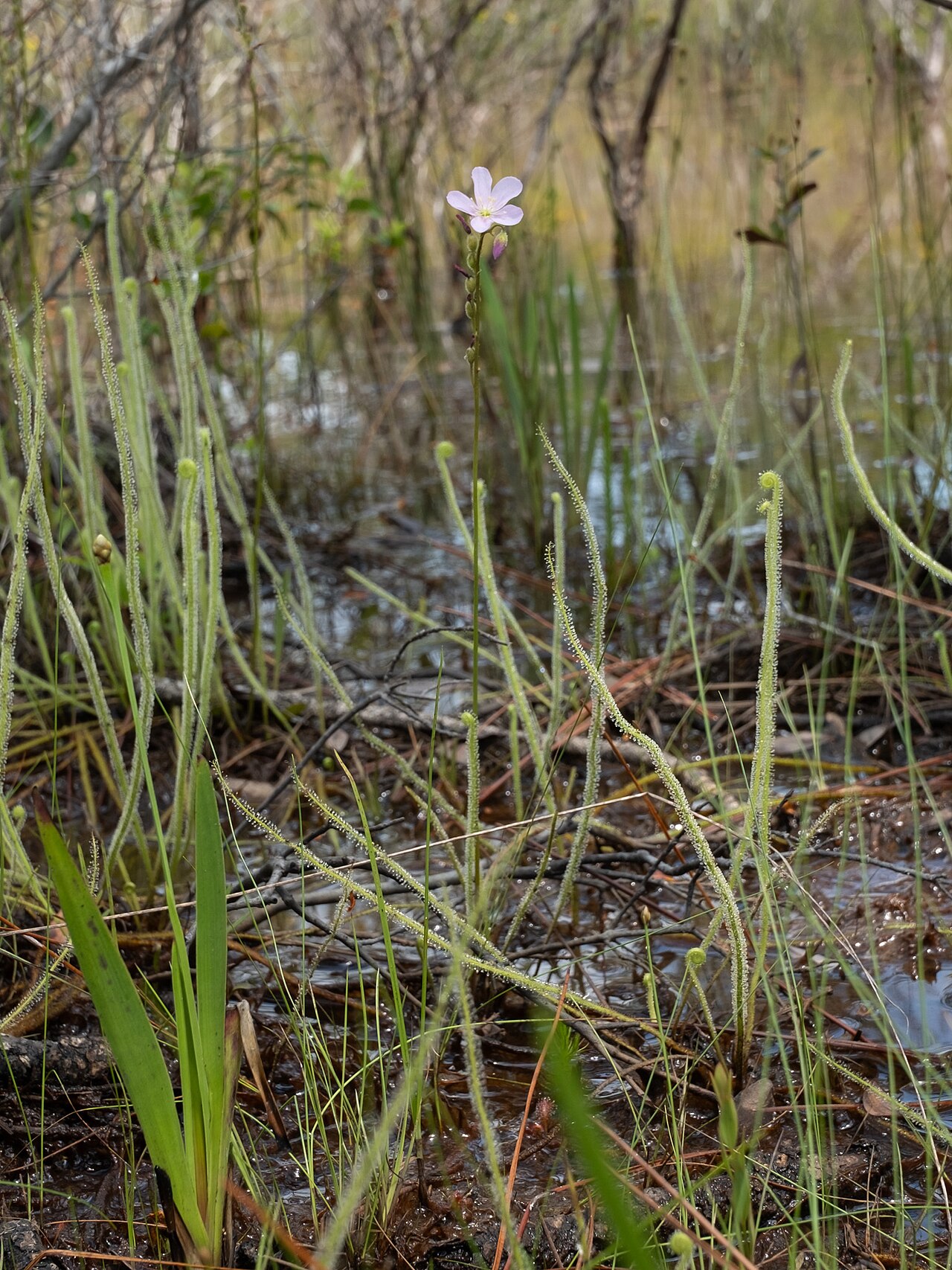
Drosera tracyi, known as Tracy’s Sundew or Gulf Coast threadleaf sundew, is the largest sundew native to North America. Its leaves are long, upright threads, often 12 to 20 inches or more, covered along their length with glistening, sticky droplets that trap small insects. In late spring and early summer, slender stalks carry pink to lavender flowers above the leaves.
It is a carnivorous plant of the wet pine savannas and seepage bogs of the Gulf Coastal Plain, where it grows alongside pitcher plants, butterworts and other bog specialists. The sticky leaves supplement the plant’s diet with nitrogen and other nutrients from captured prey, which lets it thrive in the extremely poor, acidic soils of its habitat.
Some botanists treat it as a variety of the threadleaf sundew (Drosera filiformis var. tracyi); USDA PLANTS lists it as a species. Like other carnivorous plants, it should only be bought as nursery-propagated stock and never dug from the wild. This guide covers how to identify it, where it grows, how to grow it in a bog garden, and its role in savanna ecosystems.
Identification
In a wet Gulf Coast savanna or bog, look for tufts of tall, wiry, bright green leaves that sparkle with sticky dew. The leaves are entirely green, with no red glands, and in late spring pink flowers open one at a time on a slender stalk.
Growth Habit
It is a perennial herb that grows from a short stem as a tuft of erect, thread-like leaves, usually 8 to 20 inches tall and sometimes taller. Plants die back in winter to a tight, fuzzy resting bud (hibernaculum) at the soil surface and regrow in spring.
Leaves
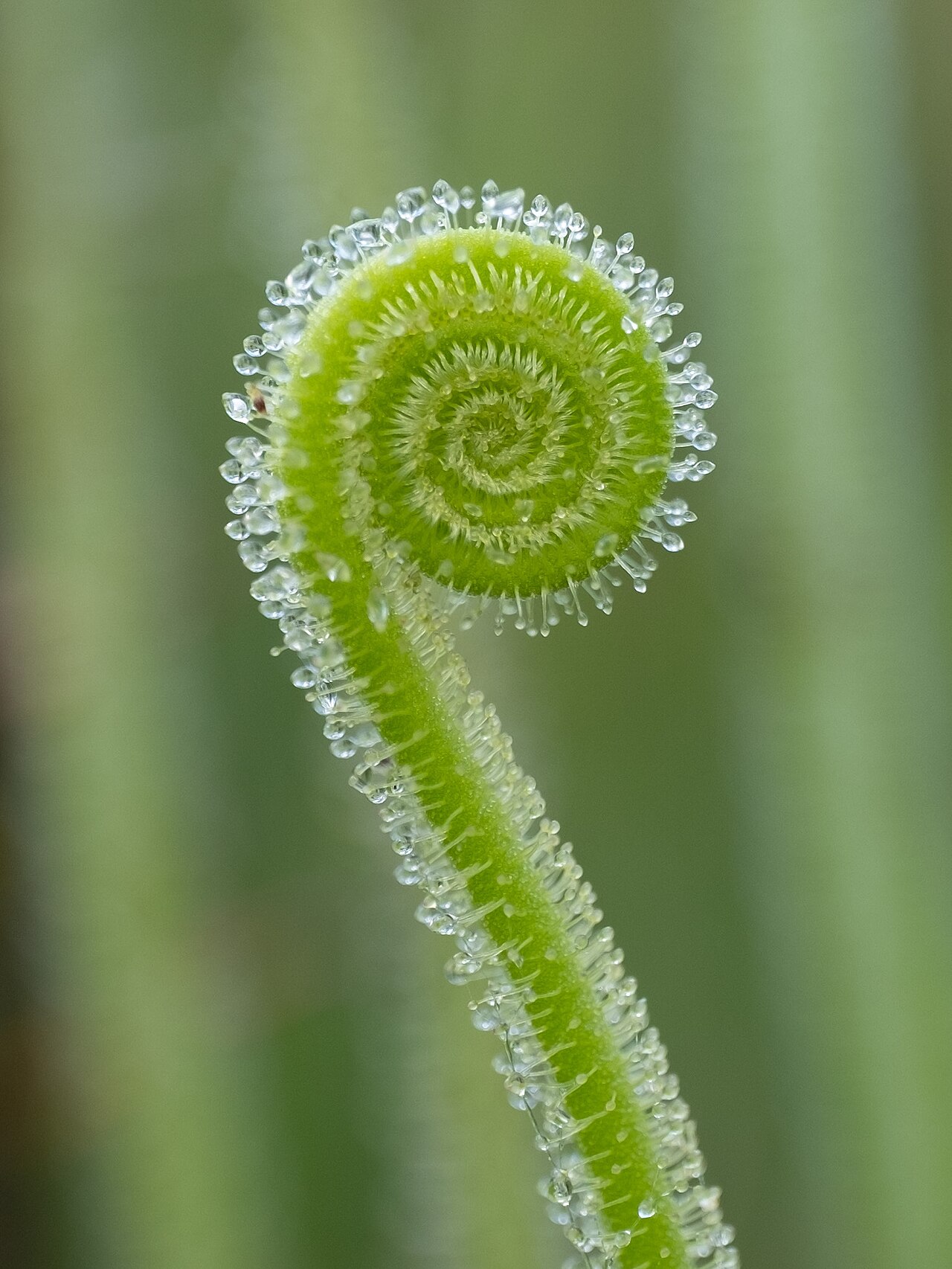
The leaves are filiform (thread-like), unrolling from a coil like a fern fiddlehead. Their upper side is covered with stalked glandular hairs, each tipped with a drop of sticky mucilage. In Tracy’s sundew the leaves and glands are green to whitish, while in the northern threadleaf sundew the glands are purplish red.
Flowers
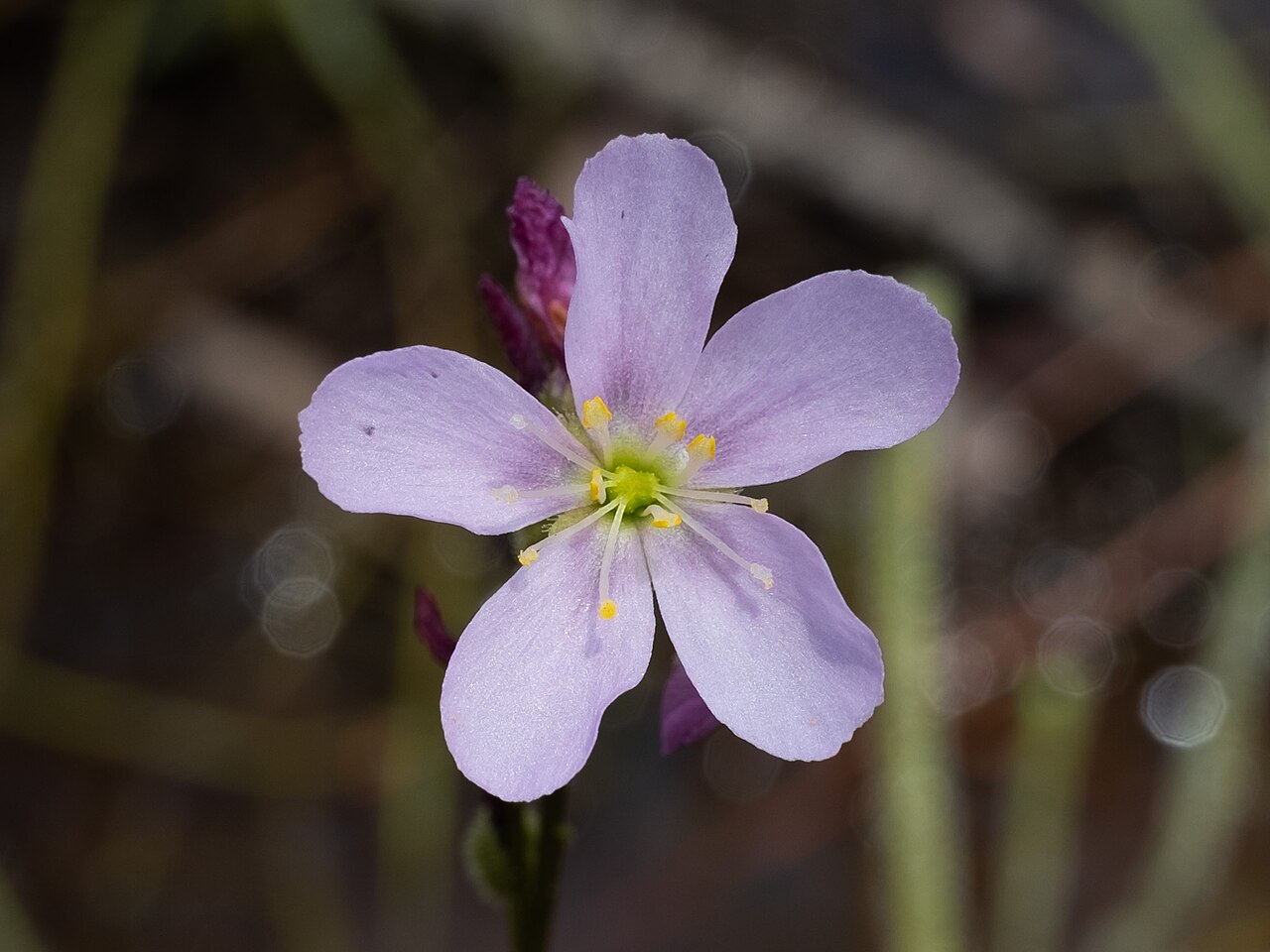
Flowers are borne on a leafless stalk that is often as tall as the leaves, with several buds opening one after another along a one-sided, curving cluster. Each flower is about 3/4 to 1 inch across, with five pink to rose-lavender petals. Bloom time is mainly May and June.
Fruit & Seeds
The fruit is a small capsule that splits to release many tiny, dark seeds in summer.
Look-alikes
Pink sundew and dwarf sundew are tiny rosette plants with spoon-shaped leaves. Spoonleaf sundew has paddle-shaped leaves on long stalks. Threadleaf sundew (Drosera filiformis), of the Atlantic coast, is shorter and has red glands. Tracy’s sundew is far taller than any of them.
Quick Facts
| Scientific Name | Drosera tracyi Macfarl. (syn. Drosera filiformis var. tracyi) |
| Family | Droseraceae (sundew family) |
| Plant Type | Carnivorous perennial herb |
| Mature Height | 8–20 in (occasionally taller) |
| Mature Spread | 3–8 in per clump |
| Growth Rate | Moderate |
| Sun Exposure | Full sun |
| Water Needs | High; constantly wet soil |
| Soil Type | Acidic, nutrient-poor wet sand or peat |
| Soil pH | About 4.0–5.5 (strongly acidic) |
| Bloom Time | May–June |
| Flower Color | Pink to rose-lavender |
| Fall Color | Leaves die back to a winter resting bud |
| Fruit | Small capsule with many tiny seeds |
| Deer Resistant | Generally not browsed |
| USDA Hardiness Zones | 7–9 |
Native Range
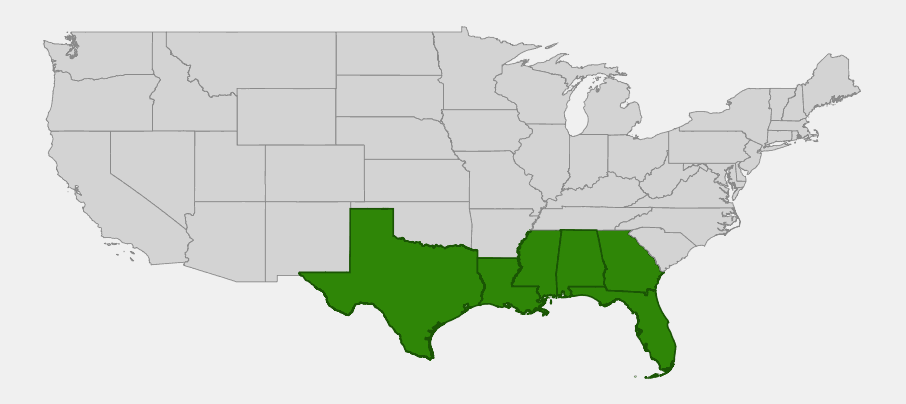
Tracy’s sundew is native to the Gulf Coastal Plain of the southeastern United States. USDA PLANTS lists it in Alabama, Florida, Georgia, Louisiana, Mississippi and Texas, and also in California; the California plants are an introduced population of eastern threadleaf sundews, which Calflora lists as not native to California, so California is left off this page’s map.
Its main range is the Florida Panhandle, southern Alabama and southern Mississippi, extending east into southwestern Georgia and west into southeastern Louisiana. The Texas record is an outlying collection from the pine savannas of Tyler County in the Big Thicket region of East Texas.
It grows in open, sunny, wet habitats with acidic, nutrient-poor soil: wet longleaf pine savannas and flatwoods, seepage slopes, pitcher plant bogs, pond and lake margins and wet roadside ditches, from near sea level to a few hundred feet. Frequent fire keeps these habitats open, and without it, shrubs crowd out the sundews.
📋 Regional plant lists featuring Tracy’s Sundew: Alabama, Georgia & Mississippi · North & South Florida · Arkansas, Louisiana, Eastern Oklahoma & Eastern Texas
Growing & Care Guide
Tracy’s sundew is a rewarding plant for a bog garden or a container of wet peat in full sun, and it is one of the easier threadleaf sundews to grow in the Southeast. Buy only nursery-propagated plants from reputable carnivorous plant growers. Never dig it from the wild: its savanna and bog habitats have largely disappeared, and wild collection harms the populations that remain.
Light
Give it full sun. In too little light the leaves become weak and floppy and produce little dew.
Soil & Water
Grow it in a nutrient-poor, acidic mix such as sphagnum peat with sand or perlite, never in potting soil or garden soil. Keep it constantly wet, ideally with the pot standing in a tray of water. Use rainwater, distilled water or reverse-osmosis water: tap water and fertilizer build up minerals that kill carnivorous plants.
Planting Tips
Plant it in a bog garden (a lined bed of wet peat and sand) or a deep pot, alongside pitcher plants and butterworts that need the same conditions. Don’t feed it by hand; it catches its own insects outdoors.
Pruning & Maintenance
Remove dead leaves in late winter before new growth begins. It needs a cool winter dormancy, during which it rests as a fuzzy bud; keep the soil damp but not flooded through winter. In its native range it can stay outdoors year-round.
Propagation
It is easy to grow from seed sown on the surface of wet peat in spring; seedlings grow on in bright light. Established clumps can be divided, and leaf cuttings laid on wet sphagnum will also root. Collect seed only from cultivated plants.
Landscape Uses
- Bog gardens: a tall, glittering sundew for wet, sunny, acidic beds
- Carnivorous plant collections: the largest native North American sundew
- Container water gardens: grows well in a pot of peat standing in water
- Education: a striking way to show children how carnivorous plants catch prey
- Savanna restoration: part of the native herb layer of wet longleaf pine savannas, using nursery-grown stock
Wildlife & Ecological Value
Tracy’s sundew is a predator, a pollinator plant and a sign of healthy, fire-maintained savanna, all at once.
For Pollinators
The pink flowers are visited by small bees, flies and other insects. They are held on tall stalks above the sticky leaves, which may help keep pollinators from being caught.
For Birds
It has little direct value for birds, but its savanna and bog habitats support many species, including the birds of longleaf pine ecosystems.
For Mammals
It has no significant food value for mammals.
Ecosystem Role
Its sticky leaves capture gnats, mosquitoes, small flies and other small insects, and some specialized insects and spiders live on or near sundews and steal their prey. It depends on frequent fire to keep its habitat open and sunny; fire suppression, drainage and development are the main threats to its populations.
Cultural & Historical Uses
The species is named for Samuel Mills Tracy, an American botanist and agronomist who collected plants on the Gulf Coast in the late nineteenth and early twentieth centuries. It was described by the botanist John Muirhead Macfarlane. The genus name Drosera comes from the Greek for “dewy”, a reference to the glistening drops on the leaves.
Sundews digest their prey with enzymes in the mucilage and glands of the leaves. When an insect lands, it sticks to the drops, and the leaves of threadleaf sundews can slowly bend around their prey over a few hours, bringing more glands into contact with it.
Many of the pitcher plant bogs and wet savannas of the Gulf Coast where Tracy’s sundew grows have been lost to drainage, pine plantations, development and fire suppression. Several state and federal preserves in the Florida Panhandle, southern Alabama and Mississippi protect remaining habitat, and some hold spectacular displays of sundews and pitcher plants in spring.
Frequently Asked Questions
Is Tracy’s sundew a carnivorous plant?
Yes. Its long leaves are covered with sticky glands that trap and digest small insects, which supply nutrients missing from its poor, acidic soil.
Where does Tracy’s sundew grow?
It grows in wet pine savannas and bogs of the Gulf Coastal Plain, mainly in the Florida Panhandle, southern Alabama, southern Mississippi, southeastern Louisiana and southwestern Georgia, with an outlying record in East Texas.
How is Tracy’s sundew different from threadleaf sundew?
Tracy’s sundew is taller and has entirely green leaves and glands, while threadleaf sundew of the Atlantic coast is shorter and has red glands. Some botanists treat them as varieties of one species.
Can I collect Tracy’s sundew from the wild?
No. Buy only nursery-propagated plants from reputable growers. Its habitats are shrinking, and digging plants harms wild populations and is often illegal on public land.
How do I grow Tracy’s sundew?
Grow it in full sun in wet, acidic peat and sand, keep it constantly wet with rainwater or distilled water, and give it a cool winter rest. Don’t fertilize it.

Looking for a nursery that carries Tracy’s Sundew?
Browse our native plant nursery directory: Alabama · Florida & Georgia · Louisiana & Mississippi · Texas

