
Prairie Iris (Iris savannarum)
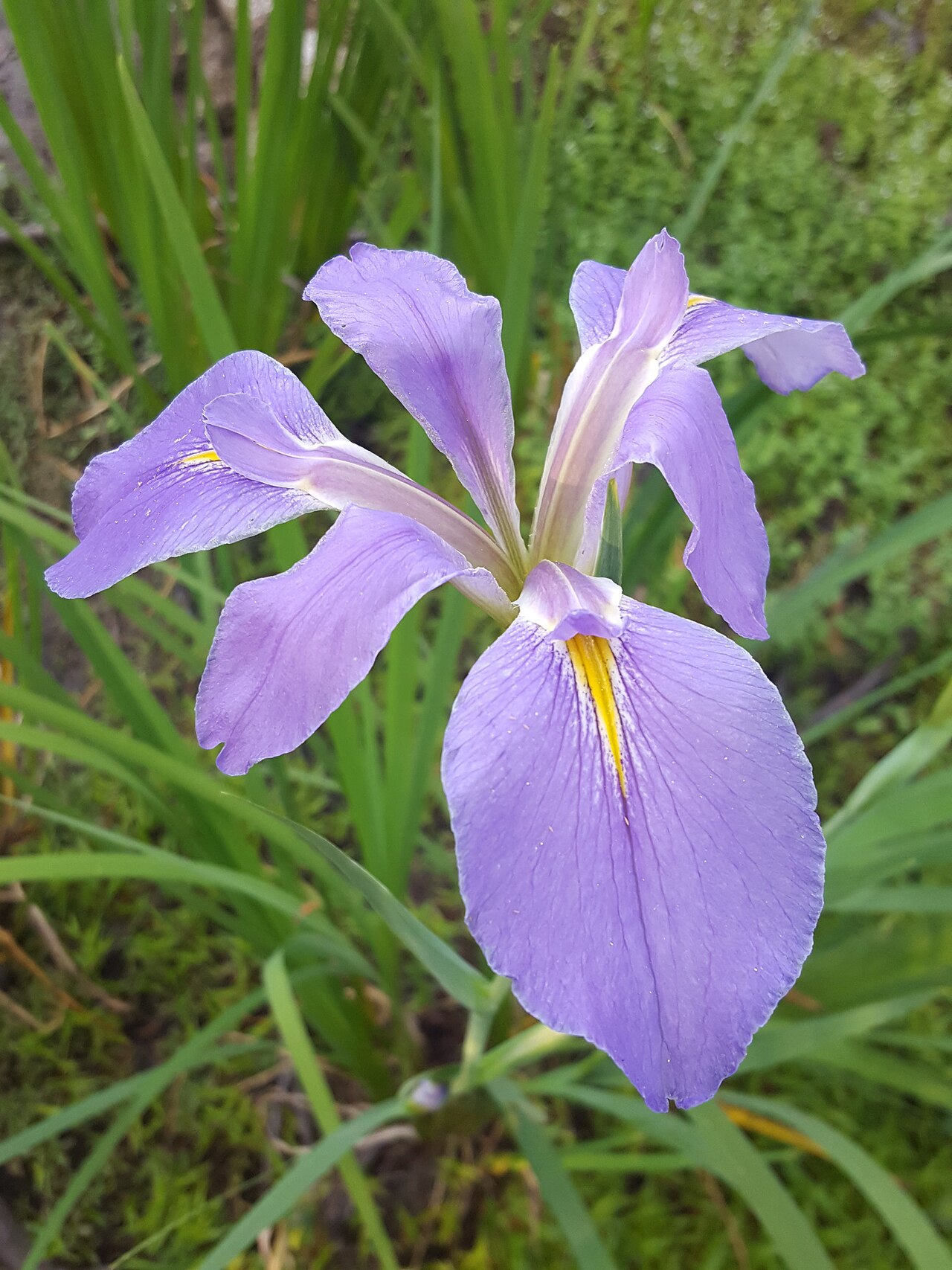
Iris savannarum, known as Prairie Iris or savanna iris, is a large, beardless native iris of Florida’s marshes, wet prairies and swamp edges. In spring it raises stems 2 to 4 feet tall with showy flowers, 4 to 5 inches across, in shades of lavender to deep blue-violet, each of the three broad, drooping sepals marked with a bright yellow crest. It grows from thick rhizomes and forms clumps of long, sword-shaped leaves. It belongs to the iris family (Iridaceae).
The Atlas of Florida Plants and FNPS treat it as its own species, Iris savannarum. USDA PLANTS treats it as a variety of the Dixie iris, Iris hexagona var. savannarum (symbol IRHES). Our Dixie Iris page covers Iris hexagona in the broad sense. Under the narrower treatment now followed in Florida, true I. hexagona is limited mainly to South Carolina and a few parts of north Florida, and most Florida plants once called Dixie iris are prairie iris.
FNPS describes prairie iris as the most common iris species in Florida. It is not state-listed. It is one of the finest native plants for a Florida rain garden, pond edge or moist wildflower bed, and it is widely available from native nurseries. This guide covers how to identify prairie iris, where it grows, and how to grow it.
Identification
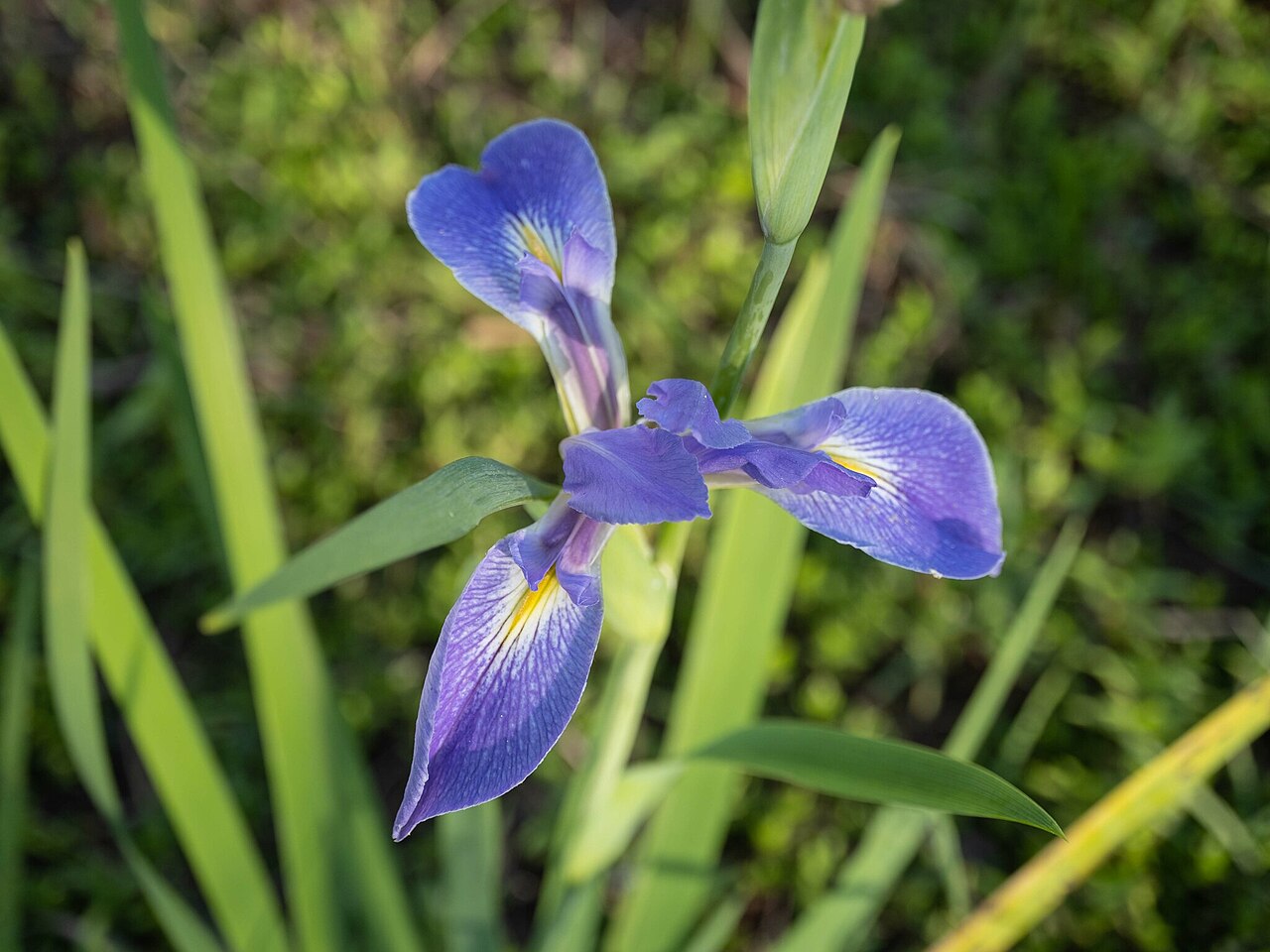
Prairie iris is a big, clump-forming iris with long, bright green, sword-shaped leaves. In bloom, look for large blue to lavender flowers with a yellow crest on each of the three falls (sepals) and no beard.
Growth Habit
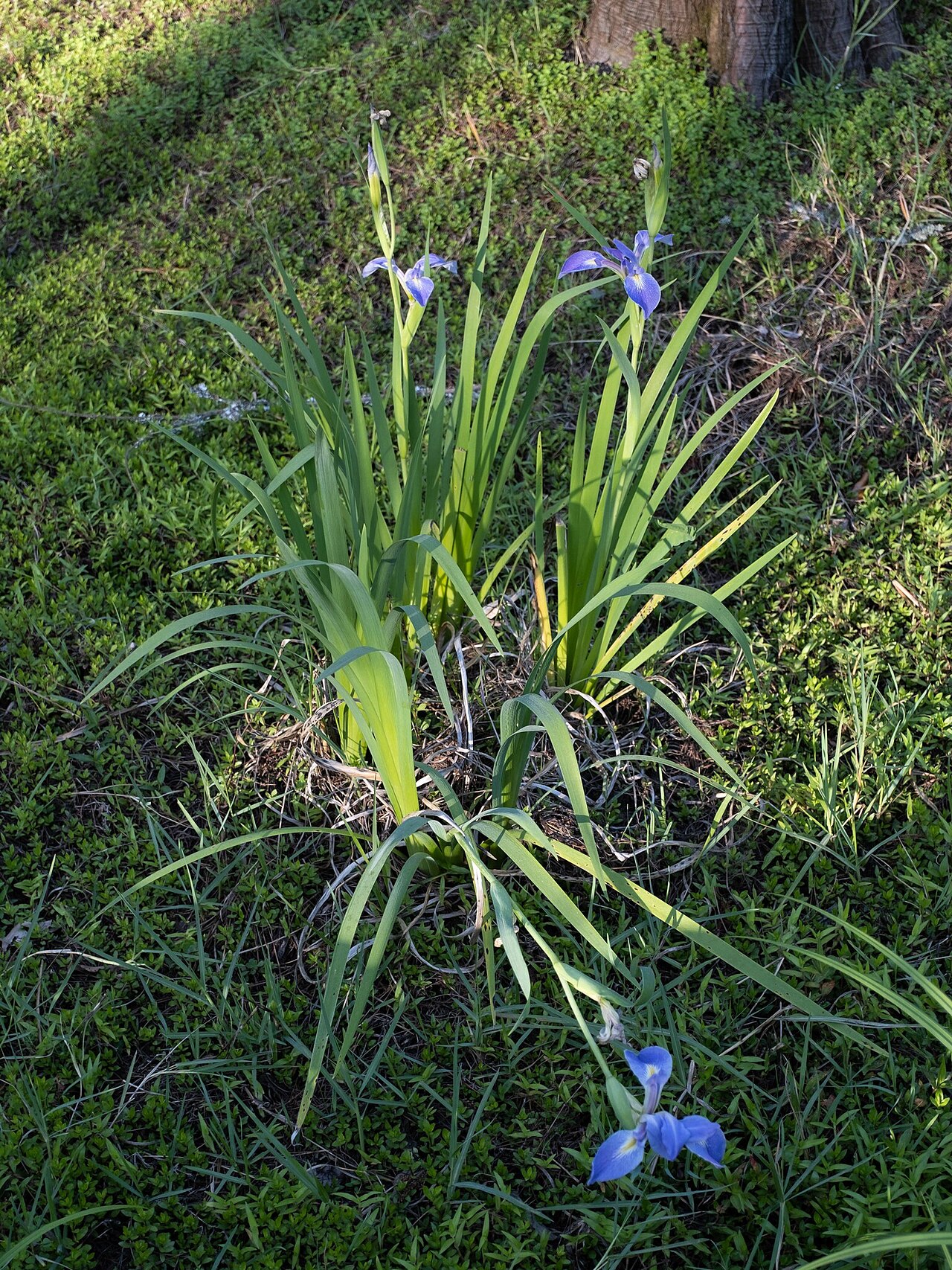
A long-lived perennial that grows from thick, creeping rhizomes in wet soil, slowly forming clumps and small colonies. FNPS gives a size of 3 to 4 feet tall and 6 to 12 inches wide for each fan. The leaves die back or look ragged in winter in north Florida and resprout in late winter.
Leaves
The leaves are long, flat and sword-shaped, often 2 to 3 feet long and about 1 inch wide, arranged in flat fans. They are bright green and somewhat arching.
Flowers
Flowering stems carry several large flowers, each 4 to 5 inches across, from leaf-like bracts. Like other irises, each flower has three broad, drooping sepals (falls) and three narrower, more upright petals (standards). The falls have a yellow crest or signal patch at the base but no beard. FNPS lists the flower colors as white, purple and lavender; most plants are lavender-blue to deep blue-violet. Flowering is in spring, mainly March to May.
Fruit & Seeds
After flowering, the plant forms a large, green, six-angled capsule that turns brown and ripens by summer, according to FNPS. In this group of irises the seeds are large and corky, and they float on water, which helps disperse them through marshes and along streams.
Similar Species
Larger Blue Flag and Virginia Blue Flag have smaller flowers with a white-veined, yellowish patch on the falls and grow mostly further north. Giant Blue Iris (I. giganticaerulea), another member of the Dixie iris group, grows along the Gulf Coast from Alabama to Louisiana. Invasive Yellow Water Iris (I. pseudacorus) has yellow flowers and should not be planted.
Quick Facts
| Scientific Name | Iris savannarum (Atlas of Florida Plants); USDA: Iris hexagona var. savannarum |
| Family | Iridaceae (iris family) |
| Plant Type | Rhizomatous herbaceous perennial |
| Mature Height | 3–4 ft in flower |
| Mature Spread | 6–12 in per fan; slowly forms clumps |
| Growth Rate | Moderate |
| Sun Exposure | Full sun to part sun |
| Water Needs | High; moist to shallowly flooded soil |
| Soil Type | Sand, loam or organic muck |
| Soil pH | Acidic (about 5.0–6.5) |
| Bloom Time | March–May |
| Flower Color | Lavender to blue-violet, sometimes white, with a yellow crest |
| Fall Color | None notable |
| Fruit | Large six-angled capsule with corky, floating seeds |
| Deer Resistant | Yes; irises are seldom browsed |
| USDA Hardiness Zones | 8a–10a |
Native Range
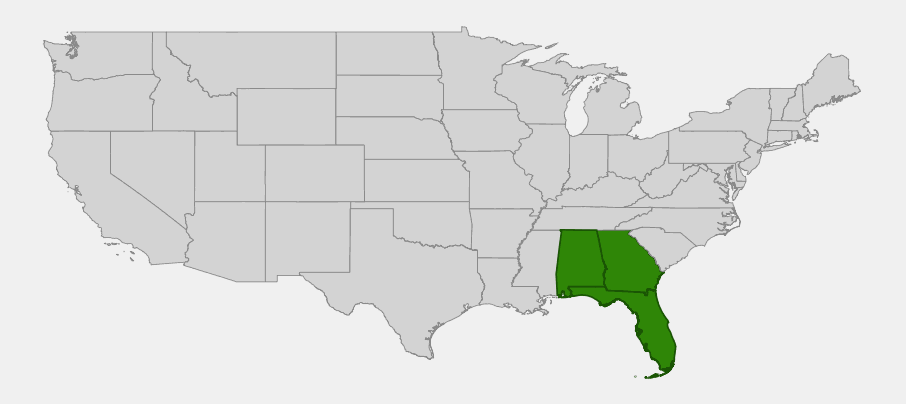
Prairie iris is a plant of the southeastern Coastal Plain, centered on Florida. USDA PLANTS lists Iris hexagona var. savannarum as native to the lower 48 states. Under the narrower treatment of the Dixie iris group, prairie iris is found in Florida, southern Georgia and southern Alabama. It is widespread throughout the Florida peninsula, from the north Florida prairies south into the Everglades, and FNPS describes it as the most common iris in the state.
FNPS lists its natural habitats as marshes, wet prairies, dome swamps and openings in riverine swamps. It also grows in wet ditches, along lake and pond shores, and in cypress and freshwater marsh edges where water stands for part of the year. The name prairie iris refers to the wet prairies of Florida, where it can bloom in large numbers in spring.
It is not listed as threatened, but drainage of marshes and wet prairies has reduced it in many areas. Plants in roadside ditches are often mowed before they can flower. Do not dig plants from the wild; buy nursery-grown plants, which are widely available in Florida.
📋 Regional plant lists featuring Prairie Iris: North & South Florida · Alabama, Georgia & Mississippi
Growing & Care Guide
Prairie iris is easy to grow in wet or regularly watered sunny spots. FNPS lists it as available from native nurseries and recommends it for moist wildflower gardens and wetland edges, noting that it is sometimes grown under an air conditioner drain.
Light
Full sun gives the most flowers. It tolerates part sun, but blooms less in shade.
Soil & Water
Grow it in acidic sand, loam or organic soil that stays moist. FNPS describes its moisture range as usually moist with occasional flooding through to somewhat moist without flooding. It thrives at pond and lake edges in a few inches of water and in rain gardens. It does not tolerate salt water or salt spray.
Planting Tips
Plant rhizomes just at or slightly below the soil surface, 12 to 18 inches apart, in fall or late winter. In a garden bed, keep the soil from drying out completely, especially in spring. Mass several plants together along a pond shore or swale for the best display.
Pruning & Maintenance
Remove spent flower stalks after blooming unless you want seed. Cut back ragged leaves in late winter before new growth. Divide crowded clumps every few years in fall. Prairie iris needs little or no fertilizer.
Propagation
FNPS lists propagation by division of the rhizomes. Divide clumps in fall, keeping a fan of leaves with each piece of rhizome. It can also be grown from fresh seed sown in pots kept wet, though seedlings take a couple of years to bloom.
Landscape Uses
- Rain gardens and swales: a showy perennial for areas that flood after rain
- Pond and lake edges: grows in shallow water along shorelines
- Wetland restoration: a characteristic wildflower of Florida marshes and wet prairies
- Moist wildflower gardens: spring color in regularly watered beds or wet spots
- Pollinator gardens: spring flowers visited by bumble bees
Wildlife & Ecological Value
Prairie iris flowers in spring, when bumble bees are building their colonies, and its dense clumps give cover along wetland edges.
For Pollinators
FNPS notes that it attracts bees, especially bumble bees, which are large enough to push under the style branches to reach the nectar and carry pollen between flowers.
For Birds
Marsh birds and wading birds use the dense clumps as cover along shorelines, and red-winged blackbirds perch on the tall stems.
For Mammals
Irises are seldom eaten by deer or other mammals because the leaves and rhizomes contain irritating compounds.
Ecosystem Role
Prairie iris helps stabilize soil along shorelines and ditches with its thick rhizomes and is part of the spring wildflower display of Florida marshes and wet prairies. Its floating seeds help it colonize new wet areas.
Cultural & Historical Uses
Prairie iris was described as Iris savannarum by John Kunkel Small in 1925, in the journal Addisonia. In 1937 the botanist Robert C. Foster reduced it to a variety of Iris hexagona, the treatment USDA PLANTS still follows. In 2002 Norlan Henderson, in the Flora of North America treatment of irises, again recognized it as a distinct species, and later Florida work by Daniel Ward and the Atlas of Florida Plants have followed that view. The name Iris kimballiae is now treated as a synonym.
It belongs to series Hexagonae, the Louisiana iris group, along with copper iris, giant blue iris, zigzag iris and Dixie iris. These species have been crossed to produce the popular Louisiana iris hybrids grown in water gardens around the world.
The names prairie iris and savanna iris both refer to its habitat in the wet, grassy prairies and savannas of Florida. Its species name, savannarum, means “of the savannas.”
Frequently Asked Questions
Is prairie iris the same as Dixie iris?
They are closely related. USDA PLANTS treats prairie iris as a variety of Dixie iris (Iris hexagona var. savannarum), while the Atlas of Florida Plants and FNPS treat it as a separate species, Iris savannarum. Under that view, most Florida plants once called Dixie iris are prairie iris.
Where does prairie iris grow?
Mainly in Florida, from the north Florida prairies to the Everglades, with populations in southern Georgia and Alabama. It grows in marshes, wet prairies, swamp openings and wet ditches.
Can prairie iris grow in standing water?
Yes. It grows well in a few inches of water at pond and lake edges, and also in moist garden soil that does not dry out.
Is prairie iris toxic?
Like other irises, the rhizomes and leaves contain compounds that can irritate the mouth and stomach if eaten, so keep pets and children from chewing on them.
Can I collect prairie iris from a ditch?
Please don’t. Buy nursery-propagated plants instead; they are widely available from Florida native nurseries, and digging wild plants damages local populations.

Looking for a nursery that carries Prairie Iris?
Browse our native plant nursery directory: Alabama · Florida & Georgia